

Protecting Joints With Hemophilia: Exercise, Physiotherapy and Everyday Precautions

Key Takeaways
- Joint bleeds account for roughly 70 to 80 percent of bleeding episodes in severe hemophilia, with ankles, knees and elbows most often affected, according to the WFH guidelines.
- A target joint is defined as three or more spontaneous bleeds into the same joint within six months, and it signals synovitis that rest alone may not settle.
- Strong muscles and retrained balance stabilize a joint that cartilage and ligaments cannot protect on their own, which is why physiotherapy focuses on strength and proprioception.
- Swimming, cycling and walking sit in the lowest-risk band because they avoid collision and falls, while contact sports are generally discouraged, especially with inhibitors or a target joint.
- Factor levels peak shortly after an infusion and fall over the following hours or days, so many teams suggest scheduling demanding activity soon after a dose.
- Women who carry the hemophilia gene can have low factor levels and heavy menstrual bleeding, and they benefit from the same joint protection planning as men.
People with hemophilia protect their joints by combining three things: bleed prevention prescribed by a hemophilia treatment team, regular low-impact exercise that strengthens the muscles around the ankles, knees and elbows, and everyday habits that reduce falls and knocks. Physiotherapy guides safe loading and recovery after a bleed. Contact and collision sports carry the highest joint risk, while swimming, cycling and walking are generally considered safer options.
The physiotherapist watched a 19-year-old balance on one leg with his eyes closed. He wobbled at eight seconds, laughed, and asked whether wobbling counted. It did. Twelve years of ankle bleeds had quietly dulled the small sensors in that joint, and retraining them was now the main event of his appointment, not an afterthought.
Scenes like this are the real face of joint protection hemophilia exercise: not a warning list pinned to a fridge, but a practical program built around one stubborn fact. Blood inside a joint is corrosive to cartilage, and the best defense against repeated bleeds is a joint surrounded by strong, responsive muscle.
This explainer walks through how joint damage happens, what physiotherapy actually does, which activities carry more or less risk, and the small daily habits that matter over decades. It also tackles the questions people type into search bars late at night, including disability, menstruation and what to avoid.
Can hemophilia cause joint damage?
Yes, and joints are the most common place hemophilia does lasting harm. Hemophilia is an inherited condition in which the blood lacks enough of a clotting protein, called a factor, so bleeding runs longer than it should. Hemophilia A involves factor VIII and affects roughly 1 in 5,000 male births; hemophilia B involves factor IX and is rarer (CDC).
The trouble starts with a hemarthrosis, the medical word for bleeding inside a joint. The World Federation of Hemophilia guidelines note that joint bleeds make up the large majority of bleeding episodes in severe hemophilia, typically 70 to 80 percent, with ankles, knees and elbows leading the list because they are hinge joints that absorb impact and twist under load.
Blood is not neutral tissue. Iron released from broken-down red cells irritates the synovium, the thin membrane that lines the joint and produces lubricating fluid. An irritated synovium thickens and grows extra fragile blood vessels, a state called synovitis. Those new vessels bleed more easily, so the joint enters a loop: bleed, inflammation, more vessels, another bleed. Clinicians call a joint stuck in this loop a target joint, defined in the WFH guidelines as three or more spontaneous bleeds into the same joint within six months.
Over years, enzymes from the inflamed lining eat into cartilage, the smooth cap on the bone ends. Bone beneath it hardens, cysts form and the joint space narrows. The end result, hemophilic arthropathy, looks much like advanced osteoarthritis on an X-ray but can arrive decades earlier. Mayo Clinic lists joint pain, swelling and tightness among the recognized signs of internal bleeding in hemophilia, and it is this cumulative process, more than any single bleed, that exercise and physiotherapy are designed to interrupt.
Why joint protection hemophilia exercise advice starts with muscles, not the joint
A joint cannot strengthen itself. Cartilage has no blood supply and repairs poorly; ligaments stretch but do not contract. What a joint can borrow is stability from the muscles around it, and that is where exercise earns its place.
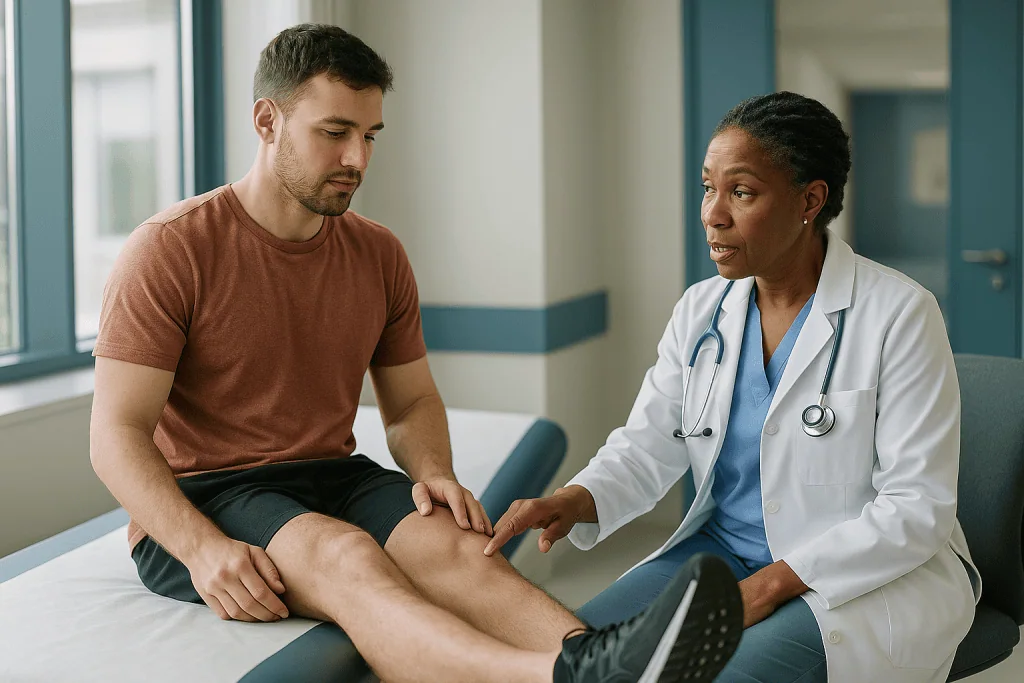
Consider the knee. The quadriceps at the front and the hamstrings behind act like guy ropes on a tent pole. When they fire quickly and evenly, the knee tracks straight and the shearing forces that tear tiny synovial vessels stay low. After a bleed, pain and swelling switch those muscles off within days; the thigh visibly shrinks, a change physiotherapists measure with a tape. A weaker thigh means a wobblier knee, and a wobblier knee bleeds more. Breaking that cycle is the core logic of joint protection hemophilia exercise.
Proprioception matters just as much. This is the body’s sense of where a joint sits in space, delivered by tiny sensors in ligaments and muscle. Blood in a joint and the swelling that follows blunt those sensors, which is why someone with a history of ankle bleeds may roll that ankle on a perfectly flat pavement. Balance drills, from standing on one leg to walking heel-to-toe, retrain the signal.
The third piece is range of motion. A joint that has lost its last few degrees of straightening changes how the whole limb loads. A knee that will not fully extend forces the hip and ankle to compensate, and the compensating joints pick up bleeds of their own. Gentle, regular movement through the available range keeps the fluid circulating and the capsule supple.
None of this is exotic. The NHS describes regular exercise as part of living well with hemophilia, and the WFH guidelines recommend physical activity to promote fitness, neuromuscular development and self-esteem, with attention to muscle strengthening, coordination and flexibility. The prescription is ordinary; the discipline of doing it for a lifetime is not.
Who is usually encouraged to train, and who is usually asked to wait
Most people with hemophilia are encouraged to be active, regardless of severity. Mayo Clinic groups the condition into mild, moderate and severe based on how much clotting factor circulates, and the level shapes the advice rather than cancelling it. Someone with mild hemophilia may bleed only after surgery or a significant injury and can often follow standard fitness guidance with a few added precautions. Someone with severe hemophilia, who may bleed spontaneously, is more likely to train under a plan agreed with a hemophilia treatment center and timed around prophylaxis.
Children are a special case in the best sense. The WFH guidelines encourage sport in childhood because muscles, bones and coordination developed early pay dividends for decades. Parents are usually asked to work with the treatment team on which sports fit, rather than to keep a child on the sidelines.
Certain situations lead clinicians to pause or modify training:
- An active bleed, or the first days after one, when the joint needs rest and the clot needs to hold.
- A new target joint under investigation, until imaging and examination clarify how much synovitis is present.
- Recent joint surgery, including synovectomy (removal of the inflamed lining) or joint replacement, where the surgical team sets the pace.
- Inhibitors, which are antibodies that neutralize infused factor; people with inhibitors bleed more unpredictably and often need a more conservative activity plan.
- Uncontrolled pain or a joint that is visibly hot and swollen without a clear cause.
Being asked to wait is rarely a permanent verdict. Physiotherapists describe it as changing the exercise, not stopping it: swapping a walk for pool work, or lower-limb loading for upper-body and core sessions while an ankle settles. The decision on timing sits with the treating team, who can see factor levels, imaging and bleed history together.
What does physiotherapy for hemophilia actually involve?
Physiotherapy in hemophilia is less about massage tables and more about measurement and coaching. A first visit typically starts with a structured joint assessment. Clinicians commonly score swelling, muscle bulk, range of motion, strength, gait and pain, often using a standardized hemophilia joint health tool described in the WFH guidelines. The numbers give a baseline, so that six months later a change in one ankle is a fact rather than a feeling.
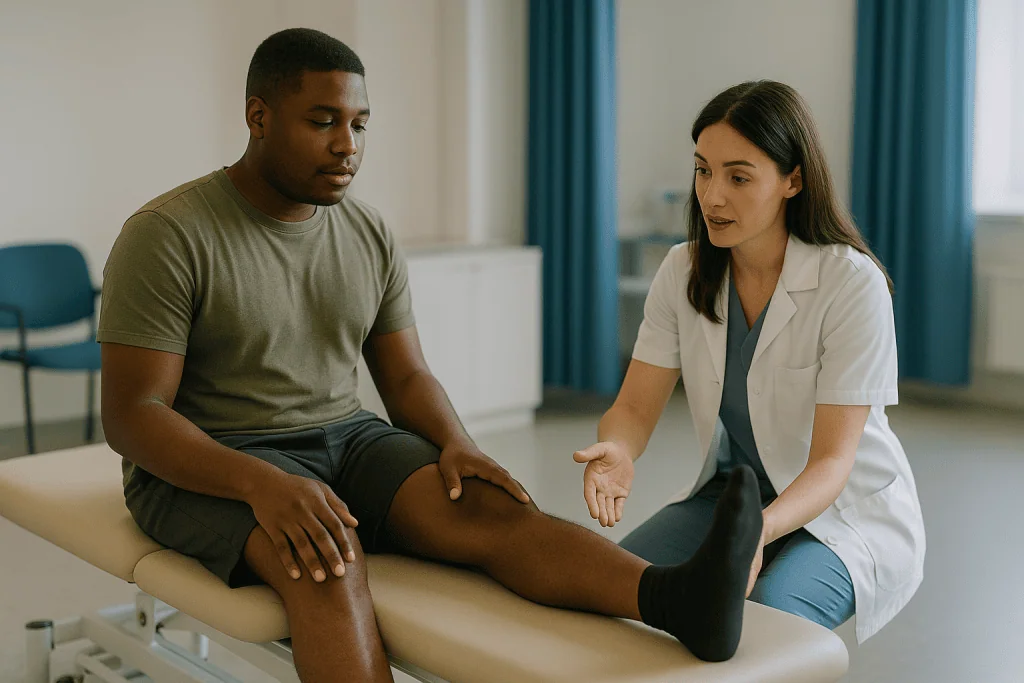
Treatment then splits into three modes that overlap across a lifetime.
During and just after a bleed, the physiotherapist focuses on protecting the clot and preventing stiffness. This can mean advice on rest, elevation and cold packs, guidance on crutches or a sling, and very gentle muscle-setting exercises, where a muscle is tensed without moving the joint. Movement is reintroduced in stages as swelling and pain settle, always alongside the factor replacement plan set by the hematologist.
In quieter periods, the emphasis shifts to conditioning: progressive strengthening of the muscles that stabilize the ankle, knee and elbow, balance retraining, stretching to reclaim lost degrees of motion, and cardiovascular work that does not pound the joints. Sessions often end with a home program, because two clinic visits a month cannot substitute for daily practice.
For established arthropathy, the goals become function and comfort: choosing supportive footwear or orthotics, adjusting how someone climbs stairs or lifts, sometimes trialing braces, and preparing for and recovering from surgery when the orthopedic team recommends it.
What people are often surprised by is the amount of education. A good physiotherapy for hemophilia program teaches someone to recognize the earliest tingling or fullness that precedes a visible bleed, to check joint circumference at home, and to know when a stiff morning is just a stiff morning and when it needs a call. That knowledge, more than any single exercise, is what protects joints over forty years.
Which exercise for hemophilia patients is generally considered safer?
No activity is risk-free, and none is universally forbidden. Hemophilia organizations and the WFH guidelines tend to sort activities by the likelihood of collision, falls and sudden twisting, then let the individual’s severity, joint history and prophylaxis fill in the rest. The table below summarizes the usual grouping used in patient education; it is a starting point for a conversation with a treatment team, not a rulebook.
| Risk band | Typical examples | Why it sits here | Common notes from physiotherapists |
|---|---|---|---|
| Generally lower risk | Swimming, walking, stationary or road cycling, elliptical training, tai chi, golf, rowing | Little or no contact, controlled loading, low fall likelihood | Good foundation for daily fitness; pool work is often the first return after a lower-limb bleed |
| Moderate risk | Running, tennis, basketball (non-contact leagues), skiing, hiking on uneven ground, weight training | Impact, jumping, pivoting or terrain that can twist an ankle | Often acceptable with prophylaxis, technique coaching and gradual progression |
| Higher risk | Football, rugby, ice hockey, boxing, martial arts with sparring, wrestling, motocross | Deliberate collision, blows to the head, high-speed falls | Usually discouraged, especially with inhibitors or a target joint; head injury risk is a separate concern |
A few patterns hold across the bands. Water reduces joint load and is forgiving of a stumble, which is why swimming appears in almost every published list. Cycling builds thigh strength without impact, though clipless pedals and traffic add fall risk. Weight training, once treated with suspicion, is now widely used in hemophilia physiotherapy when the load is progressed gradually and technique is supervised; the danger lies in sudden maximal lifts and poor form, not in resistance itself.
Exercise for hemophilia patients works best when it is regular. The muscle and balance gains that protect a joint fade within weeks of stopping, so a sustainable routine three or more days a week generally does more than a heroic but occasional session.
What activities should a hemophilia patient avoid?
The honest answer is that the list is shorter than most people expect, and the reasoning matters more than the list. Activities to avoid with hemophilia are those where a hard collision, a fall from height or a blow to the head is part of the design rather than an accident. Full-contact football, rugby, ice hockey, boxing and sparring martial arts fall here for most people with moderate or severe hemophilia, and hemophilia treatment centers generally advise against them.
The head deserves its own sentence. Bleeding inside the skull is the most dangerous complication of hemophilia, and the CDC lists it among the serious bleeds that can be life-threatening. Any sport that accepts repeated head impact as normal carries a risk that no amount of joint protection can offset.
Beyond that, individual history changes the map. A person with one target ankle may be asked to avoid trail running that they could otherwise manage, while a person with no joint damage and good prophylaxis might be cleared for recreational basketball. Someone with an inhibitor, whose bleeds are harder to control, is usually steered toward the lower-risk band across the board.
Several everyday choices carry more risk than they seem:
- Starting a new, intense activity without building up over weeks, which loads untrained muscles and joints.
- Training through the early fullness or warmth that signals a bleed, because a small bleed left to grow does far more damage.
- Exercising far from home or help without factor and a bleed plan, particularly on long hikes or bike rides.
- Taking over-the-counter pain relievers of the aspirin or NSAID class before sport without checking with the treatment team, since these medicines interfere with platelet function and can worsen bleeding (MedlinePlus).
Most clinicians frame the conversation as trade-offs. A moderate-risk sport that keeps a teenager active, socially connected and strong may protect joints better in the long run than a life spent avoiding everything. The final call rests with the person and their hemophilia team, weighing severity, prophylaxis, joint status and how much a particular activity matters to them.
How does prophylaxis fit into joint protection hemophilia exercise plans?
Exercise protects joints from the outside; prophylaxis protects them from the inside. Prophylaxis means giving treatment on a regular schedule to prevent bleeds, rather than waiting for a bleed and then treating it. The WFH guidelines recommend prophylaxis as the standard of care for people with severe hemophilia, precisely because preventing joint bleeds prevents the arthropathy that follows.
Several treatment classes exist, and a clinician chooses among them based on factor levels, inhibitor status, veins, lifestyle and age. Traditional therapy replaces the missing factor by intravenous infusion; standard products clear from the blood within a day or two, while extended half-life versions last longer. Non-factor therapies work differently: a bispecific antibody such as emicizumab, given by injection under the skin, mimics the role factor VIII plays in the clotting cascade, and other agents in development lower the body’s natural anticoagulants. Gene therapy aims to prompt the liver to produce factor. The specific product, schedule and dose belong to the prescribing team, and nothing here should be read as a recommendation to start, change or stop any of them.
What matters for exercise is timing. Factor levels are highest shortly after an infusion and fall over the following hours or days. Many treatment centers therefore suggest scheduling higher-demand activity for the period soon after a dose, when protection is greatest, and keeping quieter days for the trough. This is individual arithmetic that a hematologist can model from the person’s own pharmacokinetics, and it is one of the most practical conversations to have before starting a new sport.
Prophylaxis changes what is possible, not what is wise. A well-protected person can safely do more, and the WFH guidelines note that regular prophylaxis allows fuller participation in physical activity. It does not make collision sports safe, and it does not replace the muscle strength and proprioception that only training builds. The two approaches work as a pair: one keeps blood in the vessels, the other keeps the joint steady enough that the vessels are not torn in the first place.
What happens in the days and weeks after a joint bleed?
A joint bleed has a recognizable arc, and knowing it helps people judge when to move and when to hold back.
The first hours are about stopping the bleeding. Treatment centers teach people to treat early, ideally at the first tingle, warmth or sense of fullness, before swelling is visible. Alongside factor or other treatment prescribed by the team, first aid follows the familiar acronym of rest, ice, compression and elevation. Cleveland Clinic describes this approach for joint bleeds as a supplement to clotting factor treatment, never a replacement.
Over the next two to three days, pain and swelling usually peak and then begin to ease if the clot holds. This is when muscles switch off and stiffness sets in, so physiotherapists often introduce gentle muscle-setting exercises and small, pain-free movements as soon as the team confirms the bleed is controlled. Crutches or a sling may spare the joint weight during this window.
The following one to two weeks are about reclaiming range and strength. Blood is gradually reabsorbed, swelling fades and the joint tolerates more movement. Progression is guided by symptoms: if a movement provokes more warmth or swelling, the pace is too quick. A gradual return to normal walking, stairs and then sport typically follows, with the physiotherapist and hematologist agreeing when full activity resumes.
The WFH guidelines note that a joint that bleeds repeatedly in a short period needs a closer look, because it may be developing synovitis that ordinary rest will not settle. That look might involve ultrasound to check the synovial lining, a review of prophylaxis intensity, or referral to an orthopedic specialist.
A practical detail: the joint that just bled is the one most likely to bleed again in the coming weeks, because the irritated synovium is fragile. Many people are advised to be especially careful with that joint for a month or so after recovery, even when it feels fine. Timelines vary with severity, treatment and the joint involved, and the treating team sets the pace for each individual.
Everyday precautions at home, school and work
Most joint bleeds in adults are not dramatic sporting injuries. They happen on stairs, in kitchens and during ordinary commutes. That is good news, because ordinary risks respond to ordinary fixes.
Start with the floor. Loose rugs, trailing cables and cluttered hallways cause falls that a person with strong joints shrugs off and a person with a target ankle does not. Good lighting on stairs, a handrail on both sides and non-slip mats in bathrooms are unglamorous and effective. Footwear matters more than many realize: shoes with a firm heel counter and cushioned sole steady the ankle far better than flip-flops or worn-out trainers, and a physiotherapist can advise on orthotic inserts when arch or gait problems add strain.
Work and study bring their own patterns. Long hours in one position stiffen joints, so movement breaks every 30 to 60 minutes help; an adjustable chair and desk reduce elbow and knee loading. Lifting technique, bending at the hips and knees rather than the back and keeping loads close, protects joints and spine alike. Children benefit from a school plan that covers physical education, first aid for bleeds and who to call, something the treatment center can help write.
Habits around treatment count as precautions too. Carrying medical identification, keeping factor stored and travel-ready where the team has advised, and telling a gym instructor or coach about the condition all shorten the gap between a bleed and its treatment.
Two medical reminders round out the list. Vaccinations and injections are usually given under the skin rather than into muscle where possible, and dental care keeps gum bleeding, a common nuisance, from becoming a problem (NHS). Neither is a joint issue directly, but each reduces the total bleeding load and the number of clinic visits that interrupt a training routine.
The best precautions are the ones a person will actually keep. A treatment team can help rank which changes matter most for a particular home and life.
Body weight, bone health and the ankle problem
Three quieter factors shape joint outcomes in hemophilia, and they are worth naming without judgment.
The first is body weight. Every extra unit of body mass multiplies the load through the knees and ankles with each step, and joints already softened by arthropathy tolerate that load poorly. Weight is influenced by genetics, medicines, pain that limits activity and much else, so it is a medical topic rather than a moral one. What the evidence supports is that regular low-impact activity and dietary support, arranged with a clinician or dietitian, reduce joint stress and improve stamina. Someone in pain who cannot walk far can often swim or cycle, which is why physiotherapists reach for those options first.
The second is bone density. Bones strengthen in response to load, and people who spend childhood and adolescence avoiding activity because of bleeds may enter adulthood with thinner bones than their peers. The WFH guidelines flag bone health as a consideration in hemophilia care and note the role of weight-bearing activity, adequate vitamin D and calcium intake. Weight-bearing exercise chosen carefully, walking, stair climbing and supervised resistance training among them, addresses both muscle and bone at once.
The third is the ankle. It is the joint most often affected in modern cohorts on prophylaxis, partly because it bears full body weight through a small surface area and partly because ankle bleeds are easy to dismiss as a sprain. A stiff, mildly swollen ankle that is treated as a minor knock can quietly become a target joint. Physiotherapists therefore give ankles disproportionate attention: calf strengthening, balance work on unstable surfaces, mobility drills for the joint above and below, and footwear checks.
Together these three factors explain why joint protection looks different at 15, 35 and 55. In youth the priority is building bone and muscle; in midlife it is preserving range and managing load; later it is maintaining function around joints that have already changed. The exercise prescription evolves, but it rarely disappears.
Is being a hemophiliac a disability?
People search this question for two very different reasons: to understand how their body is likely to work, and to understand their legal rights. The answers differ.
Medically, hemophilia is a chronic condition whose impact ranges enormously. Someone with mild hemophilia may rarely think about it between dental appointments. Someone with severe hemophilia and established arthropathy in two knees and an ankle may have real limits on walking distance, standing time and stair climbing. The WFH guidelines describe hemophilic arthropathy as a major cause of chronic pain and reduced mobility, and it is these downstream joint changes, rather than the clotting defect itself, that most often restrict daily function. This is one more reason joint protection is worth the daily effort: it protects future capability, not just future comfort.
Legally, in the United States, hemophilia is generally recognized as a condition that can qualify as a disability under anti-discrimination law because it affects a major bodily function, the blood system. That recognition triggers rights to reasonable accommodation at school and work, such as time for infusions, a modified physical education plan or an adjusted workstation. Whether a specific person qualifies for disability benefits is a separate, individual determination made by the relevant agency based on functional limits, and it is outside the scope of medical advice.
Language is personal here. Many people prefer to say they have hemophilia rather than that they are a hemophiliac, and many do not think of themselves as disabled while still using accommodations that make work and school fairer. Both stances are reasonable.
The practical point for joints is this: the accommodations that exist are tools for protecting them. A school plan that lets a child skip contact drills but join swimming, or a workplace that allows a standing break every hour, is joint protection written into daily life. Treatment centers frequently help with the paperwork, and social workers attached to hemophilia programs are experienced guides.
How do female hemophiliacs menstruate, and what does it mean for joints?
Hemophilia was long described as a condition that women carry and men have, and that framing left many women under-diagnosed. The genetics explain the pattern: the affected genes sit on the X chromosome, so a male with one altered copy has hemophilia, while a female with one altered copy is described as a carrier (CDC). Carriers, however, are not automatically unaffected. Their factor levels vary widely, and a proportion fall into the mild hemophilia range, with bleeding symptoms to match. The NHS notes that carriers can experience bleeding problems, and current practice increasingly recognizes women with low factor levels as having hemophilia rather than simply carrying it.
Menstruation is where this shows up first. Periods happen in women with hemophilia just as they do in anyone else; the difference is that low clotting factor can make them heavy and long. Heavy menstrual bleeding, medically called menorrhagia, is a common presenting symptom, and it can cause iron deficiency and fatigue that interfere with exercise long before anyone considers a bleeding disorder. Bleeding after childbirth and with gynecological procedures are the other flags. Management is individualized and may involve hormonal treatments, medicines that support clot stability, or factor replacement around procedures; each choice belongs to the treating hematologist and gynecologist working together.
Joint bleeds are less frequent in women with mild hemophilia than in men with severe disease, but they do occur, especially after injury or in those with lower factor levels. The joint protection principles are identical: strong surrounding muscle, good proprioception, appropriate activity choices and early treatment of any bleed. Iron deficiency adds a twist, because low iron saps the energy needed for a consistent training routine, so checking and correcting it is part of the plan.
Girls and women who bleed heavily, bruise easily or have a family history of hemophilia are often advised to ask for factor testing rather than assume their symptoms are normal. Knowing the number changes how sport, surgery and pregnancy are planned, and it brings the same joint-protection support that boys and men have long received.
What people often get wrong
Myths around hemophilia and exercise tend to fall into two camps: too cautious and too casual. Both cost joints.
Rest is safest. A generation ago, children with hemophilia were often kept out of sport altogether. The result was weak muscles, poor balance and, paradoxically, more bleeds. The WFH guidelines now actively encourage physical activity; inactivity is itself a joint risk.
Prophylaxis makes any sport fine. Regular treatment raises the floor of protection but does not make a collision harmless. Factor levels fall between doses, and even a peak level does not protect the head or a joint from a hard tackle.
A joint that hurts should be pushed through. In hemophilia, warmth, fullness or a tingling sensation in a joint during activity is a possible early bleed, not a sign to work harder. Treating early is the single most protective habit a person can build.
Weight training is off limits. Supervised, gradually progressed resistance training is a standard part of modern hemophilia physiotherapy. The risk lies in sudden maximal efforts and poor technique, not in lifting itself.
Supplements protect joints. Online forums are full of questions about collagen, glucosamine and similar products. Evidence that any supplement prevents hemophilic arthropathy does not exist, and some products interact with clotting or with prescribed medicines. Anyone considering one should ask the treatment team first.
Women cannot have hemophilia. They can, and heavy periods are often the first sign. Under-recognition delays the joint protection and treatment planning that men with the same factor level receive.
Once a joint is damaged, exercise is pointless. Muscles around an arthritic joint still stabilize it, and pool-based or low-impact training routinely improves function and comfort even when cartilage is lost. Exercise changes shape as arthropathy advances; it does not stop.
The thread through all of these is the same: joints are protected by informed, regular, moderate activity, backed by early treatment of bleeds. Extremes in either direction leave them exposed.
Questions to ask your care team
Appointments are short and questions evaporate under fluorescent light. Writing them down beforehand helps, and the list below is a starting point that people commonly adapt to their own situation. None of the answers are generic; they depend on severity, treatment, inhibitor status and joint history, which is exactly why they belong in the room with the team.
- Which of my joints show early changes, and how are you measuring them over time?
- How does my treatment schedule affect my protection through the week, and which days are best for harder training?
- Are there specific sports or activities you would advise against for me, and what is the reasoning?
- Can I have a written home exercise program, and how often should it be reviewed?
- What are the earliest signs of a bleed in my particular joints, and exactly what should I do in the first hour?
- Should I have imaging, such as ultrasound, of a joint that has bled more than once recently?
- Do I need footwear advice, orthotics or a brace for any joint?
- Which pain relievers are safe for me before or after exercise, and which should I avoid?
- How do we handle a bleed that happens while I am traveling or away from home?
- Is my bone density something we should check, and what activity supports it?
- For women and girls: could my heavy periods or easy bruising be related to low factor levels, and should I be tested?
- Who do I contact after hours, and what counts as an emergency versus a next-day call?
Bring a training diary if one exists. A simple log of activity, any joint symptoms and treatment timing lets the physiotherapist and hematologist see patterns that a memory cannot hold. Some treatment centers also offer joint-health tracking apps; asking whether one is in use locally can save the paperwork.
Finally, ask who leads on what. Hemophilia care is a team sport: hematologist, specialist nurse, physiotherapist, sometimes an orthopedic surgeon and a social worker. Knowing which person answers which kind of question makes the whole system easier to use.
When to call your doctor
Most joint symptoms in hemophilia can be managed with the plan already agreed with a treatment center, but some need same-day advice and a few need emergency care. The following are widely recognized red flags drawn from CDC, NHS and Mayo Clinic guidance.
Seek emergency care immediately for:
- Any significant head injury, or a severe or persistent headache, repeated vomiting, confusion, drowsiness, weakness on one side or a seizure; bleeding inside the skull is the most dangerous complication of hemophilia.
- Neck or throat swelling, difficulty breathing or swallowing.
- Severe abdominal pain, black or bloody stools, or vomiting blood.
- A bleed into the hip, thigh or forearm with numbness, tingling, pallor or loss of movement, which can signal pressure on nerves or blood vessels.
- Bleeding that will not stop despite treatment, or heavy blood loss with faintness or a racing heart.
Call the hemophilia team the same day for:
- A suspected joint bleed that does not settle within the expected time after treatment, or that returns quickly.
- A joint that is hot, red and very painful with fever, since infection inside a joint can mimic a bleed and needs urgent assessment.
- Three or more bleeds into the same joint within a few months, the threshold at which the WFH guidelines define a target joint.
- Sudden loss of movement in a joint, or a limb that looks misshapen after a fall.
- Blood in the urine, or heavy menstrual bleeding that soaks through protection hourly.
Book a routine review for: a joint that feels stiffer than usual for more than a few weeks, new difficulty with stairs or walking distance, pain that changes sleep, or a training routine that has stalled because of discomfort.
When in doubt, treat and call. Hemophilia teams would far rather hear about a bleed that turned out to be minor than learn afterwards about one that was left to grow. Every decision about treatment, imaging or a change in activity rests with the treating team, who know the individual’s factor levels, history and joints.
Frequently asked questions
Can hemophilia cause joint damage even with regular treatment?
It can, although prophylaxis greatly reduces the risk. Small bleeds can occur between doses or go unnoticed, and each one irritates the synovial lining. Over years these subclinical bleeds can still lead to synovitis and arthropathy, which is why treatment centers monitor joints with examination and imaging even in people who report few bleeds. Regular exercise and early treatment of any symptoms add protection that prophylaxis alone cannot provide.
What is the best exercise for hemophilia patients who have never trained before?
Low-impact, gradual and regular beats any single ideal sport. Walking, swimming and stationary cycling are the usual starting points because they build stamina and leg strength without impact or collision. A physiotherapist can add simple balance and strengthening exercises for the ankles and knees. Progression over weeks matters more than intensity, and scheduling harder sessions around treatment timing is worth discussing with the hemophilia team.
What activities should a hemophilia patient avoid completely?
Activities designed around collision or head impact, such as boxing, full-contact football, rugby, ice hockey and sparring martial arts, are generally discouraged for people with moderate or severe hemophilia. Beyond that, the list is individual. A person with a target joint or an inhibitor is usually steered away from high-impact or twisting sports, while someone with mild hemophilia may have wider options. The treatment team weighs severity, joint status and prophylaxis.
Is being a hemophiliac a disability?
In legal terms in the United States, hemophilia is generally recognized as a condition that can qualify as a disability because it affects a major bodily function, which supports rights to reasonable accommodations at school and work. In practical terms, impact varies widely; many people live with few limits, while those with advanced joint damage may have real restrictions on walking and standing. Benefit eligibility is a separate, individual determination.
How do female hemophiliacs menstruate?
Menstruation itself follows the usual cycle, but low clotting factor can make periods heavy and prolonged, sometimes with iron deficiency and fatigue. Carriers of the hemophilia gene may have factor levels in the mild hemophilia range, so heavy bleeding is often the first sign. Management is individualized and may involve hormonal or clot-stabilizing treatments arranged by a hematologist and gynecologist. Women with these symptoms are usually advised to request factor testing.
Does physiotherapy for hemophilia help once arthritis has already developed?
Yes. Even when cartilage is lost, the muscles around a joint still provide stability, and strengthening them can improve walking, stair climbing and comfort. Physiotherapists shift the program toward low-impact and pool-based work, range-of-motion maintenance, footwear and brace advice, and preparation for or recovery from surgery when the orthopedic team recommends it. The aim becomes preserving function rather than preventing first damage.
Can I lift weights with hemophilia?
Supervised resistance training is widely used in modern hemophilia physiotherapy and is not generally off limits. The risks come from sudden maximal lifts, poor technique and rapid increases in load rather than from lifting itself. Starting light, progressing gradually and learning form with a physiotherapist or qualified trainer who knows about the condition are the usual conditions. Timing sessions around prophylaxis and stopping at any joint warmth or fullness are standard advice.
How long does it take to recover from a joint bleed?
Pain and swelling typically peak within the first two to three days after a treated bleed and then ease, with range and strength returning over the following one to two weeks in many cases, according to patterns described in the WFH guidelines and treatment-center education. Recovery varies with severity, the joint involved and how quickly treatment started. A joint that keeps bleeding needs review, and the treating team decides when full activity resumes.
Do joint supplements help prevent hemophilia joint damage?
No evidence shows that collagen, glucosamine or similar supplements prevent hemophilic arthropathy. Some products can affect clotting or interact with prescribed medicines, so they are worth mentioning to the treatment team before use. The interventions with evidence behind them are prophylaxis, early treatment of bleeds, regular exercise to strengthen surrounding muscle and physiotherapy to preserve range of motion and balance.
Which pain relievers are safe to take before exercising with hemophilia?
Aspirin and non-steroidal anti-inflammatory drugs affect platelet function and can worsen bleeding, so they are usually avoided unless a hematologist has specifically approved them. Other options exist, but the choice depends on liver health, other medicines and individual history. Because this is a treatment decision, it belongs with the hemophilia team, who can also address whether recurring exercise-related pain points to a joint that needs assessment rather than analgesia.
References
This article is for general information only and is not a substitute for professional medical advice. Please consult a qualified doctor about your individual situation.

More from the Blog

Growth-Factor Injections for Neutropenia: How They Support the Marrow and When They Are Used
Growth factor injections for neutropenia are laboratory-made versions of a natural protein, granulocyte colony-stimulating factor (G-CSF), that signal the bone marrow to produce and…

How Neutrophil Counts Are Followed as Neutropenia Recovers and When Precautions Ease
As neutropenia recovers, care teams repeat a complete blood count with differential and watch the absolute neutrophil count (ANC) climb back through defined thresholds:…
How a Bone Marrow Biopsy and Immune Testing Pin Down the Cause of Bone Marrow Failure
A bone marrow biopsy shows whether the marrow is empty, scarred, crowded with abnormal cells or making faulty cells, which a blood count alone…

Transfusion Support in Myelodysplastic Syndrome: How It Is Scheduled and Iron Is Monitored
Transfusion support in myelodysplastic syndrome means giving donated red cells or platelets on a schedule set by the person's symptoms, blood counts, and how…

Living With Myelofibrosis: Fatigue, Appetite and Activity Planning Between Visits
Living with myelofibrosis fatigue usually means working with, not against, a body whose bone marrow is scarred and whose spleen may be enlarged. Between…

Bone Marrow Transplant for Aplastic Anemia: Donor Matching, Conditioning and Recovery
A bone marrow transplant for aplastic anemia replaces a failing marrow with healthy blood-forming stem cells from a donor, usually an HLA-matched sibling or…