

PRP Hair Treatment Cost: Per-Session Pricing and How Many Sessions Studies Use
Key Takeaways
- Our guide range for PRP for hair is EUR 130-400 per session in Turkey, versus roughly GBP 150-600 in the UK and USD 400-1500 in the US.
- The most common protocol in published trials is three sessions about a month apart, almost no studies tested a single session.
- PRP stimulates existing miniaturized follicles; it cannot regrow hair on long-bald, smooth areas where follicles have died or scarred.
- Measured benefits peak around three to six months and fade without maintenance, so budget PRP as a recurring cost with top-ups every three to six months.
- Because PRP is made from your own blood, allergy and rejection risks are effectively nil: the main risks are soreness, bruising, and rare injection-site infection.
- Sudden shedding, patchy circles of loss, or hair loss with an itchy or scaling scalp warrant a doctor's assessment before any cosmetic treatment.
PRP hair treatment typically costs EUR 130-400 per session at internationally oriented hospitals in Turkey (our guide range), compared with roughly GBP 150-600 per session in the UK and USD 400-1500 in the US. Most clinical studies use three sessions spaced about a month apart, followed by maintenance every three to six months, so it is realistic to budget for a course rather than a single visit.
A reader recently sent us two screenshots. One clinic quoted her a tidy per-session figure for PRP. Another quoted almost triple, but bundled four sessions, photographs at each visit, and a scalp assessment with a dermatologist. Same city, same treatment name, wildly different maths. Which one was the fair deal?
That confusion is baked into how PRP is sold. It is priced like a haircut, per visit, but studied like a course of physical therapy: multiple sessions, then top-ups. Anyone comparing a single-session price against a package price is comparing apples to a fruit basket.
So this article does two jobs. It lays out what a session genuinely costs across Turkey, the UK and the US, and, more usefully, what the published research actually did: how many injections, how far apart, and for how long the measured benefit held. Once you see the study protocols, the pricing finally makes sense.
What exactly is PRP for hair, and how is it supposed to work?
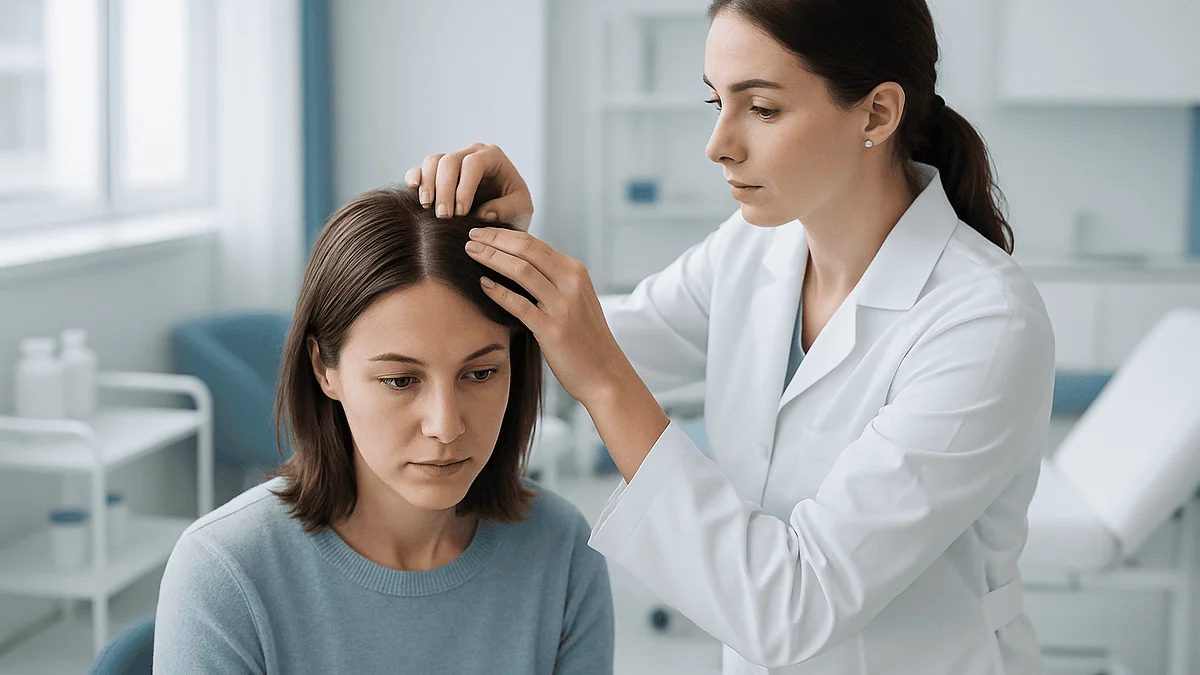
Platelet-rich plasma starts as an ordinary blood draw from your own arm. That sample goes into a centrifuge, which spins it hard enough to separate its components by density. The layer the clinician keeps is plasma with a concentrated load of platelets: the same cell fragments that rush to a cut and kick off clotting and repair.
Platelets matter here because they carry growth factors: signalling proteins that encourage blood vessel formation, cell proliferation and tissue repair. The working theory, described by sources such as Cleveland Clinic, is that injecting this concentrate into the scalp bathes weakened hair follicles in repair signals, nudging follicles that have shrunk (miniaturized) under the influence of androgenetic hair loss back toward producing thicker, longer hairs.
Two points follow from that mechanism, and both affect your wallet. First, PRP works on follicles that still exist. It is a stimulant, not a seed: it cannot conjure hair from skin where follicles have scarred over or died. Second, because the underlying cause of pattern hair loss doesn’t go away, whatever the platelets stimulate tends to need re-stimulating. That is why every credible protocol, in research and in clinics, involves repeated sessions rather than one dramatic visit. Keep that in mind every time you see a per-session price: the session is the unit of billing, not the unit of treatment.
How much does PRP hair treatment cost per session?
Here is how per-session pricing compares across the markets most international patients weigh up. The Turkish figures reflect the broad market; our guide range is what internationally oriented hospital settings typically charge, including the consumables and clinical oversight that some low-cost quotes quietly omit.
| Procedure | Turkey market average | Our guide range | UK typical | US typical |
|---|---|---|---|---|
| PRP for hair (per session) | EUR 100-300 | EUR 130-400 | GBP 150-600 | USD 400-1500 |
Prices last reviewed: August 2026. These are guide ranges for international patients, based on published market data – not a quote. Your exact price depends on your clinical assessment; you will receive a personalised treatment plan and fixed quote after consultation.
Notice the spread inside each column. A fourfold difference between the cheapest and priciest US sessions is not unusual, and the UK shows a similar stretch. That gap is rarely about the platelets themselves, your blood is free, and mostly about the preparation system used, who performs the injections, and what surrounds the needle: photographic tracking, dermatologist review, follow-up. We unpack those drivers below, because they are where a cheap session can turn out expensive and a pricier one can earn its keep.
How many sessions do clinical studies actually use?
This is the question that turns a per-session price into a real budget, and the research gives a reasonably consistent answer. The most common protocol in published trials of PRP for androgenetic alopecia is three sessions spaced about four weeks apart, with results measured around three to six months after the first injection. Some studies used four sessions; a few used monthly injections for six months. Almost none tested a single session, which tells you something about how seriously researchers take one-off treatment.
Maintenance is where protocols get vaguer. Several trials and clinical reviews describe a booster session every three to six months after the initial series, on the logic that the stimulus fades while the underlying hair loss continues. Harvard Health notes that maintenance injections are typically recommended, though the ideal interval hasn’t been settled by head-to-head research.
For planning purposes, a realistic first year therefore looks like this:
- Induction: three sessions, roughly a month apart
- Assessment: standardized photos and, ideally, hair-density measurement at three to six months
- Maintenance: one to two further sessions in the back half of the year, if the induction phase showed benefit
If a clinic proposes something dramatically different, say, ten sessions upfront, or one session sold as sufficient, ask which published protocol that mirrors. The honest answer is usually none.
What does a realistic first-year budget look like?
Simple arithmetic, no salesmanship. Take the study-standard induction course of three sessions and multiply the per-session ranges from the table above.
- Turkey (our guide range): three sessions at EUR 130-400 each comes to EUR 390-1,200 for the induction course.
- UK: three sessions at GBP 150-600 works out to GBP 450-1,800.
- US: three sessions at USD 400-1500 lands between USD 1,200 and 4,500.
Add one or two maintenance sessions later in the year and you can extend the same arithmetic yourself. The point of showing the math rather than a single glossy figure is that both ends of each range are genuinely available in the market, and the difference between them, compounded across a multi-session, multi-year commitment, is substantial.
Two budgeting notes deserve emphasis. First, PRP for hair loss is almost universally treated as cosmetic, so neither the NHS, private UK insurers, nor US health plans typically cover it; assume you are paying the full amount out of pocket. Second, ask every clinic whether their quote is per session or per course before you compare anything. Package pricing for three sessions is common and often discounts the per-session rate, but a package only saves money if you would have completed three sessions anyway, and it locks you in before you know whether you respond. A clinic confident in its results should be comfortable with either structure.
Why do per-session prices vary so much?
Strip away marketing and the price of a PRP session is driven by five things.
- The preparation system. Single-use commercial PRP kits with validated centrifuge protocols cost the clinic real money per patient; drawing blood into generic tubes costs very little. Kits don’t guarantee better results, but they do standardize platelet concentration, one of the variables researchers believe matters.
- Who holds the syringe. A dermatologist or physician who examines your scalp, confirms the diagnosis, and performs the injections costs more than a technician working from a script. Given that up to half the value of the process is correctly diagnosing why you’re losing hair, this is not a corner worth cutting.
- The area treated. A diffusely thinning crown plus a receding front takes more plasma, more injection points and more chair time than a small patch.
- What wraps around the injection. Standardized photography, hair-density tracking, review appointments and a plan for what happens if you don’t respond all add cost, and all add accountability.
- Geography and overheads. The same kit and the same fifteen minutes of injecting cost more in central London or Manhattan than in an Istanbul hospital, which is the main reason the columns in our table sit so far apart.
When a quote sits at the very bottom of the market, at least one of these five has usually been trimmed. Ask which.
What does the evidence actually show about PRP for hair loss?
Honest answer: encouraging, modest, and messier than the marketing suggests.
Multiple randomized trials and the meta-analyses that pool them have found that PRP produces statistically significant increases in hair count and hair density in androgenetic alopecia compared with placebo injections, typically measured at three to six months. Participants and blinded evaluators in several studies also rated appearance as improved. That is genuinely better evidence than most injectable cosmetic treatments can claim.
Now the caveats, which are just as real. The trials are mostly small, often a few dozen participants. Protocols vary enormously: different centrifuge speeds, platelet concentrations, session counts and injection techniques, which makes pooled results hard to interpret and means nobody can yet say which recipe works best. Follow-up is short; very few studies track patients beyond a year, so long-term durability is largely undocumented. And a minority of trials found no significant benefit at all. Harvard Health summarizes the field fairly: promising early data, more and larger studies needed. Mayo Clinic similarly lists PRP among treatments still under study rather than established therapy.
What this means for your decision: PRP is a reasonable, evidence-supported gamble for the right candidate, not a proven certainty for anyone. Any clinic presenting it as guaranteed regrowth is ahead of its own evidence.
Does PRP regrow hair permanently?
No, and understanding why saves you from the most expensive misunderstanding in this field.
Pattern hair loss is a progressive process. In genetically susceptible follicles, hormonal signalling gradually shrinks the follicle with each growth cycle, producing finer, shorter hairs until, eventually, the follicle stops producing visible hair at all. PRP does not switch off that hormonal signalling. What the growth factors appear to do is push miniaturizing follicles back toward a healthier growth phase, thicker shafts, longer growing cycles, better coverage.
Remove the stimulus and the underlying process resumes, exactly as you’d expect. This is why studies measure results at three to six months rather than five years, why clinical reviews describe maintenance sessions as standard practice, and why nobody publishing in a serious journal uses the word permanent.
There is a useful comparison here with hair transplantation. Transplanted follicles are taken from the back of the scalp, where hair is genetically resistant to the miniaturizing signal, which is why transplant results are considered lasting. PRP-stimulated follicles are the susceptible ones: that’s precisely why they needed help. Two different mechanisms, two different durability profiles, and two different cost structures: a transplant is a large one-time expense, PRP a smaller recurring one. Neither is dishonest; they are simply answering different questions. The dishonesty only enters when recurring treatment is sold with the language of permanence.
How long does PRP hair last between sessions?
The published trials give us decent visibility on the first six months and much less after that. Improvements in hair count and shaft thickness generally become measurable two to three months after the induction series begins, and peak somewhere around the three-to-six-month mark. Hair biology explains the lag: a follicle nudged into a new growth phase still needs weeks to push a visible, measurable hair through the skin, scalp hair grows roughly one centimeter a month, so patience is built into the treatment whether you like it or not.
Beyond six months, the picture rests more on clinical observation than trial data. Practitioners consistently report that gains fade over the months following the last session, gradually, not overnight, which is the basis for the widely used maintenance interval of every three to six months. Some patients seem to hold their results longer; some notice thinning resuming sooner. No published study yet predicts reliably which group you’ll fall into.
Practically, treat it like this:
- Months 0-3: induction sessions; little visible change yet: this is normal
- Months 3-6: the window where benefit, if any, shows up in photos and density counts
- Month 6 onward: maintenance decisions, based on measured results rather than habit
The measured part matters. Insist on standardized photographs from the first visit. Memory is a terrible instrument for judging gradual change on your own head.
Who is a good candidate, and who is likely wasting money?
PRP’s mechanism draws its own eligibility map: it needs living, underperforming follicles to act on.
The strongest candidates are adults with early-to-moderate androgenetic (pattern) hair loss, thinning at the crown, widening part lines, hair that has become finer rather than absent. Both men and women fall in this group; several trials specifically enrolled women with pattern thinning. If you can still see hair in the area, just less of it and finer than before, there is something for the growth factors to work with.
Poor candidates include:
- People with long-standing, completely smooth bald areas, where follicles have shut down entirely, there is nothing left to stimulate
- Scarring (cicatricial) alopecias, where follicles have been destroyed and replaced by scar tissue
- Active scalp infection or inflammatory skin disease at the injection site, which needs treating first
- People with platelet or clotting disorders, certain blood conditions, or active cancer: the raw material or the safety profile doesn’t cooperate
One more group deserves mention: anyone who hasn’t yet had a diagnosis. Hair loss has many causes, thyroid conditions, iron deficiency, medication effects, autoimmune disease, post-illness shedding, and several of them, as MedlinePlus outlines, are treatable at the root cause. Paying for a course of injections aimed at pattern hair loss you don’t actually have is the most avoidable waste in this entire market. Diagnosis first, always.
What happens during a PRP session, step by step?
The whole appointment usually runs 45 to 90 minutes, and most of that is preparation rather than injection.
- Blood draw (5 minutes). A standard venipuncture from your arm, typically somewhere between 10 and 60 milliliters, comparable to a routine lab test and far less than a blood donation.
- Centrifugation (10-15 minutes). The sample spins to separate red cells from plasma; some systems use a second spin to concentrate the platelets further. This is where preparation systems differ most between clinics.
- Scalp preparation. The treatment area is cleaned; many clinics apply a topical numbing preparation or use cooling to take the edge off.
- Injection (15-30 minutes). The concentrated plasma goes into the thinning areas through a series of small, shallow injections spaced across the scalp. Most people describe pressure and stinging rather than sharp pain, uncomfortable, tolerable.
- Aftercare briefing. Expect advice to skip washing the scalp for a day or so, avoid strenuous exercise briefly, and hold off on harsh hair treatments for a few days.
Downtime is minimal. Most patients return to work the same day, perhaps with a tender scalp and, occasionally, mild swelling of the forehead that settles within a day or two. There are no bandages and nothing visible beyond possible pinpoint marks. For international patients combining treatment with travel, a session fits easily into an ordinary trip, though remember the induction course means three trips or a locally arranged follow-up plan.
Can a PRP injection go wrong?
PRP carries one built-in safety advantage: it’s made from your own blood, so allergic reaction and rejection are effectively off the table. That said, no injection into the scalp is risk-free, and a clear-eyed list beats reassurance.
Common and short-lived: scalp soreness, tightness, pinpoint bleeding, bruising at injection sites, mild swelling that can drift toward the forehead, and headache. These typically resolve within a few days.
Uncommon but real: infection at injection sites (any breach of the skin carries this risk, sterile technique and single-use equipment are non-negotiable), nerve or blood vessel injury from poorly placed injections, and temporary shedding in the weeks after treatment, which usually reflects follicles resetting their growth cycle rather than damage.
The risk nobody advertises: financial. The most common bad outcome in PRP for hair isn’t a complication: it’s paying for a full course that was never likely to work, because the diagnosis was wrong or the bald area had no viable follicles left. That risk is managed at the consultation stage, not the injection stage.
Reduce all three categories the same way: choose a medical setting where a physician examines your scalp before anyone quotes a price, confirm single-use kit or sterile disposables, and ask what percentage of their patients they advise against treating. A clinic that never says no is running a sales operation, not a clinical one. Cleveland Clinic offers a sober overview of PRP’s general risk profile if you want a second reference point.
How does PRP fit alongside hair transplants and other treatments?
Think of the hair loss toolkit as three drawers, each doing a different job.
Licensed medicationsthe topical and oral treatments a doctor can prescribe for pattern hair loss, remain the first-line, best-evidenced option and the cheapest per month. They slow loss and can regrow some hair, but only while you keep using them. Sources like the NHS and Mayo Clinic describe these as the standard starting point, and nothing about PRP changes that.
PRP occupies the middle drawer: a procedural option for people who want to reinforce existing, thinning hair, sometimes alongside medication, sometimes for those who can’t tolerate or don’t want daily treatment. Several studies have explored combining PRP with standard therapy, on the reasonable logic that stacking mechanisms may outperform either alone, though the combination evidence is still young.
Hair transplantation handles what neither of the above can: areas where follicles are gone. It physically relocates resistant follicles from the back of the scalp, which is why its results are considered lasting, and why it costs an order of magnitude more per procedure than a PRP session.
Increasingly, clinics use PRP around a transplant: to thicken native hair adjacent to grafted zones, or as part of post-operative care. Whether that improves graft survival is still an open research question, so treat it as a plausible add-on rather than a proven necessity, and price it accordingly. The right sequence for most people is medication and diagnosis first, PRP as reinforcement where suitable, transplant where hair is truly gone.
Which questions should you ask before paying for a course?
Seven questions separate serious providers from session-sellers. Ask them all; the answers take five minutes and can save four figures.
- Who will examine my scalp and confirm the diagnosis? You want a physician’s assessment of why you’re losing hair before anyone proposes injections for it.
- What preparation system do you use? A confident clinic will name its kit or method and explain the platelet concentration it targets, without hand-waving.
- How many sessions are you proposing, and which published protocol does that follow? Three monthly sessions plus assessed maintenance is the defensible answer; radically more or fewer needs justification.
- Is this price per session or per course, and exactly what does it include? Photography, follow-up reviews and consumables should be itemized, not implied.
- How will we measure whether it worked? Standardized photographs at minimum; hair-density counts are better. “You’ll just notice” is not a measurement plan.
- What happens if I don’t respond after the induction course? The honest answer acknowledges that some patients don’t, and describes a plan B rather than more of the same.
- What would make you refuse to treat me? Scarring alopecia, fully bald zones, undiagnosed medical causes: a clinic that can’t name its own exclusion criteria hasn’t thought about them.
Bring these to every consultation, including ours. A provider irritated by the list is answering the most important question of all.
When should you see a doctor about hair loss?
Some hair loss is a cosmetic concern; some is a medical signal. Before spending anything on PRP, see a doctor promptly if any of the following apply:
- Sudden or rapid sheddinghandfuls in the shower or on the pillow over weeks, rather than gradual thinning over years. This pattern often points to a trigger (illness, major stress, nutritional deficiency, a new medication) that needs identifying, and as the NHS notes, may resolve once the cause is addressed.
- Patchy losswell-defined bald circles can indicate alopecia areata, an autoimmune condition with its own treatment pathway.
- An angry scalpitching, burning, scaling, redness or pain alongside hair loss suggests an inflammatory or infectious condition, and injecting into inflamed skin is exactly the wrong move.
- Hair loss with other symptomsfatigue, unexplained weight change, irregular periods or brittle nails can point toward thyroid, hormonal or iron-related causes that a blood test can uncover.
- Loss after starting a medicationflag it to the prescriber before assuming it’s genetic.
- Any hair loss in a childalways worth medical assessment.
Even for classic pattern hair loss, a medical consultation first is money well spent: it confirms you’re treating the right condition and establishes a baseline against which any treatment, PRP included, can honestly be judged. Mayo Clinic’s overview of how doctors evaluate hair loss shows what a proper workup looks like.
So is PRP for hair worth the money?
Our honest read of the evidence: PRP is worth considering for the right person, at the right price, with the right expectations, and each of those clauses carries weight.
The right person has diagnosed pattern hair loss with visible thinning rather than bare skin, has had medical causes ruled out, and ideally is already on (or has genuinely considered) first-line treatment. For that person, the trial data showing modest density gains at three to six months makes a three-session course a rational bet, not a leap of faith.
The right price means comparing course costs, not session costs, across the table above, and remembering that the recurring nature of maintenance makes this a subscription, not a purchase. Three sessions at our guide range of EUR 130-400 each is a very different lifetime commitment than the same protocol at the top of the US range, and both buy the same platelets.
The right expectations are the modest ones the research supports: thicker existing hair and slowed thinning, visible in comparison photographs, not a restored hairline, not permanence, and not certainty. Some people respond well; some barely respond; nobody can yet reliably tell you which you’ll be before treating.
What we’d push back on is PRP sold as a miracle, priced per session to obscure the true cost, or offered without a diagnosis. What we’d defend is PRP offered as what the evidence says it is: a low-risk, moderately promising, honestly recurring treatment for early thinning. Judged on those terms, it earns its place in the conversation, and only on those terms.
Frequently asked questions
Does PRP regrow hair permanently?
No. PRP stimulates existing weakened follicles but does not switch off the hormonal process driving pattern hair loss, so gains fade once treatment stops. Studies measure benefit at three to six months, and clinical practice relies on maintenance sessions every three to six months to hold results. Only transplanted follicles, taken from loss-resistant areas of the scalp, are generally considered a lasting change.
How much does PRP hair treatment cost per session?
Our guide range for internationally oriented hospitals in Turkey is EUR 130-400 per session, against a broader Turkish market of EUR 100-300. UK clinics typically charge GBP 150-600 per session and US clinics USD 400-1500. Because study protocols use three sessions plus maintenance, always compare course pricing rather than single-session quotes, and confirm exactly what each price includes before committing.
How many PRP sessions do I need for hair loss?
Most clinical studies used three sessions spaced about four weeks apart, with results assessed three to six months after starting; some trials used four or more. After that induction course, maintenance sessions every three to six months are widely recommended to preserve gains, though the ideal interval hasn’t been settled by research. Be wary of clinics proposing either a single session or an unusually long upfront package.
Is PRP for hair worth the money?
It can be, for the right candidate. Trials show modest but statistically significant improvements in hair count and density for people with early-to-moderate pattern thinning. It is a poor investment for smooth, long-bald areas, scarring hair loss, or undiagnosed shedding. Weigh the full course cost, induction plus ongoing maintenance, against realistic expectations of thicker existing hair, not a restored hairline.
How long does PRP hair treatment last?
Visible improvement typically appears two to three months after the induction course and peaks around three to six months. Without maintenance, gains gradually decline over the following months as the underlying hair loss process resumes. Most practitioners recommend a booster session every three to six months. Long-term data beyond a year is limited, so durability past that point is largely undocumented in published research.
Can a PRP injection go wrong?
Serious complications are rare, but yes. Common short-lived effects include scalp soreness, bruising, mild swelling and headache. Rarer risks include injection-site infection and injury to small nerves or vessels from poor technique. Because PRP comes from your own blood, allergic reactions are essentially not a concern. Choosing a medical setting with sterile, single-use equipment and physician oversight minimizes the genuine risks.
Does PRP work on a completely bald head?
No, and any clinic claiming otherwise should worry you. PRP works by delivering growth factors to follicles that still exist but have shrunk. In areas that have been smooth and bald for years, follicles have typically shut down or been replaced by fibrous tissue, leaving nothing to stimulate. For those areas, hair transplantation is the relevant conversation; PRP is suited to thinning, not absence.
Is PRP for hair painful?
Most people find it uncomfortable rather than truly painful. The treatment involves a routine blood draw followed by a series of small, shallow scalp injections, usually described as stinging and pressure. Many clinics apply topical numbing or cooling first. The scalp may feel tender and tight for a day or two afterward, and mild swelling can occur, but most patients return to normal activities the same day.
Can PRP be combined with other hair loss treatments?
Yes, and it often is. Licensed medications for pattern hair loss remain the best-evidenced first-line option, and several studies have examined PRP as an add-on rather than a replacement, on the logic that combining mechanisms may improve results. Some clinics also use PRP around hair transplant procedures. Combination evidence is still developing, so discuss sequencing with a doctor rather than buying a bundle unseen.
When will I see results from PRP hair treatment?
Expect nothing dramatic for the first two to three months, hair grows only about a centimeter per month, so even a well-stimulated follicle takes weeks to produce visible change. Most studies measured improvement at three to six months after the induction course began. Standardized photographs taken before treatment are the only reliable way to judge gradual change; day-to-day mirror checks will mislead you in both directions.
References
This article is for general information only and is not a substitute for professional medical advice. Please consult a qualified doctor about your individual situation.

More from the Blog
Crown Hair Transplant Cost: Why the Vertex Needs More Grafts Per Visible Result
A crown (vertex) transplant is usually priced as an all-inclusive FUE package: our guide range is EUR 2,600–5,850, rising to EUR 3,000–7,800 for sapphire…

1,500 to 5,000 Grafts: What Each Session Size Costs and Covers
A 2,000-graft hair transplant typically costs EUR 2,600–5,850 under our all-inclusive guide range in Turkey, where clinics price by package rather than per graft;…
Are Hair Transplants Worth It? Lifetime Cost, Satisfaction Evidence and Who Should Wait
For the right candidate, someone with stable pattern hair loss, a healthy donor area and realistic expectations, hair transplants show consistently high patient satisfaction,…
DHI Hair Transplant Cost: How Implanter-Pen Precision Is Priced
A DHI hair transplant typically costs EUR 3,000-5,850 as an all-inclusive package under our guide range, against a Turkish market average of EUR 2,300-4,500.…
Does Insurance Cover Hair Transplants? Cosmetic Rules and the Rare Exceptions
In most cases, no. Health insurers in the US, UK, and Europe classify hair transplants for pattern baldness as cosmetic surgery and exclude them…
Hair Transplant Cost in the UK: Clinic Prices, What They Include, and the Abroad Comparison
A hair transplant in the UK typically costs £3,000 to £10,000 for a full FUE session, with DHI and sapphire FUE usually starting around…