

Recovering From Laser Dentistry: Gum Tenderness, Hot Foods and the First Day

Key Takeaways
- Tenderness after laser gum treatment comes from ordinary healing inflammation and newly exposed root surfaces, not from a cut, and typically peaks within the first day or two.
- Hot food and drink are off limits while you are numb because of burn risk, and are kept lukewarm through day one because heat dilates vessels and can restart oozing.
- The greyish-white film on treated gums is a coagulated surface layer that acts like a scab, not a sign of infection.
- Mainstream reviews find that adding a laser to conventional root cleaning offers at most modest, inconsistent extra benefit, and lasers have not been shown to replace mechanical cleaning.
- Smoking constricts gum blood vessels and is the most significant modifiable factor slowing periodontal healing according to the NHS.
- Comfort returns in days but gum reattachment is judged over weeks to months, so the review appointment and ongoing maintenance cleaning are part of the treatment, not an afterthought.
After laser gum treatment, mild tenderness, slight swelling and sensitivity to temperature are common for the first day or two, and gums usually settle over one to two weeks. Most dental teams advise cool or lukewarm soft foods on day one, avoiding hot drinks while any numbness lasts, and gentle brushing as directed. Severe pain, heavy bleeding or fever warrant a prompt call to your dental team.
The appointment is over, the chair has tilted back upright, and you are standing in the parking lot pressing your tongue against a lower lip that feels like it belongs to someone else. The receptionist handed you a sheet of instructions. The only line you can remember is the one about the coffee you now, badly, want.
That small moment is where laser gum treatment recovery actually begins, and it is where most of the confusion lives. People rarely worry about the procedure itself; they worry about the next twelve hours. Can I eat? Why does the gum ache when nothing was cut? Is the pink tinge on my pillow a problem?
The honest answers are less dramatic than the internet suggests and more specific than a printed sheet usually manages. What follows is the version a careful clinician would give you if there were time to sit down and talk it through.
What actually happens during laser gum treatment?
Strip away the futuristic name and a dental laser is a very narrow, very controlled beam of light that tissue absorbs as heat. Different wavelengths are absorbed by different targets: some are taken up mostly by water and blood pigment in soft tissue, others by the minerals in tooth and bone. That selectivity is the whole point. A periodontist, a dentist who specialises in the gums and the bone that anchors teeth, chooses a wavelength and setting to affect the inflamed lining of a gum pocket while sparing the tooth root beside it.
In gum disease, the space between gum and tooth deepens into a pocket that fills with bacteria and hardened plaque, called calculus. According to the Mayo Clinic, standard treatment is scaling and root planing, meaning the calculus is scraped away and the root surface is smoothed so the gum can reattach. When a laser is part of the plan, it is usually used alongside that mechanical cleaning, not instead of it. The light energy removes the diseased pocket lining, reduces bacterial load in the pocket, and coagulates small blood vessels as it goes, which is why bleeding during laser procedures is often modest.
A few practical details matter for recovery. Most laser gum procedures are done under local anaesthetic, an injection that blocks nerve signals in one area, so the numbness you leave with is from the anaesthetic rather than the laser. The tissue surface after laser treatment carries a thin coagulated layer that acts a little like a natural dressing. And because the laser is working in a pocket you cannot see, the tenderness afterward comes from deep in the gum, not from a visible incision.
Why do gums feel tender after laser gum treatment?
Nothing was sliced, so why does it ache? Three overlapping reasons, and understanding them makes the first day far less alarming.
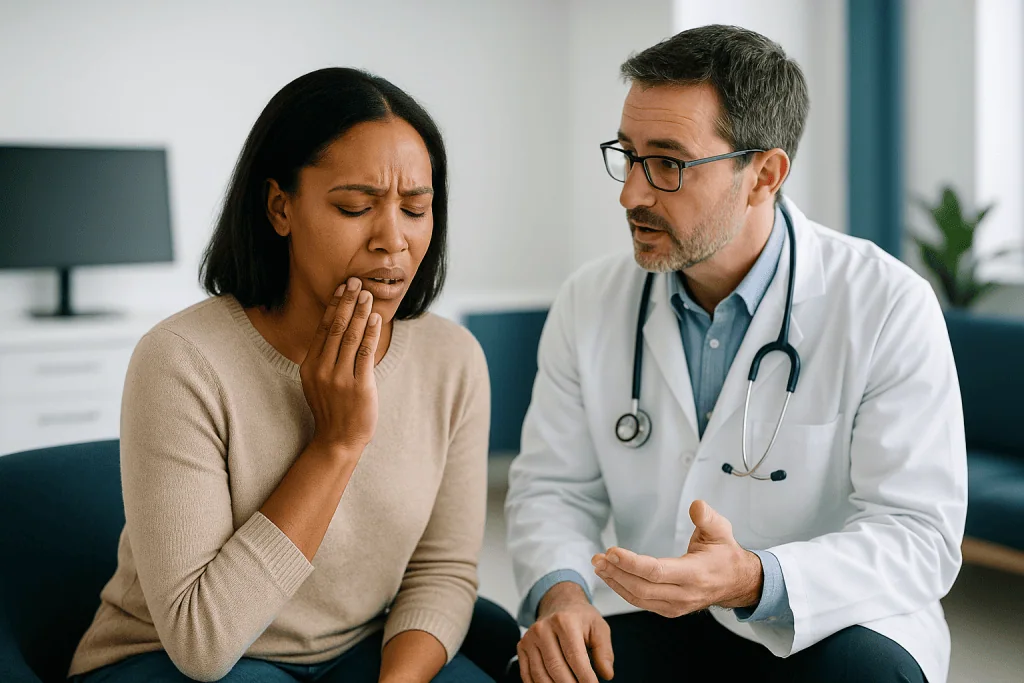
The first is inflammation, the body’s ordinary repair response. Heat from the laser and instrumentation on the root surface both signal local cells to release chemical messengers that widen blood vessels, bring in immune cells and make nerve endings more sensitive. That is healing doing its job, and it peaks in the first day or two before fading. The NHS notes that gums can feel sore after periodontal cleaning even without any surgical incision, for exactly this reason.
The second is exposure. Diseased gum tissue is puffy and sits away from the tooth. Once the infected lining is removed and swelling begins to reduce, a few millimetres of root that were previously buried can meet air, cold water and toothpaste for the first time in years. Root surfaces lack the insulating enamel that crowns the visible tooth, so they transmit temperature straight to the nerve. That zing when you sip something cool is sensitivity, not damage, and the Cleveland Clinic describes it as a common and usually temporary effect of deep cleaning.
The third reason is simply the anaesthetic wearing off. Local anaesthetic can leave the whole side of the jaw feeling bruised where the needle passed through muscle. People often attribute that to the laser.
What tenderness is not, in the usual course, is a sign that something went wrong. Pain that is dull, achy, eases with cool foods and improves each day is the expected pattern. Pain that is sharp, throbbing, keeps you awake or worsens after day three belongs in a different category, covered later.
Who is laser gum treatment usually for, and who is usually asked to wait?
Gum disease is not rare. The Centers for Disease Control and Prevention reports that nearly half of adults aged 30 and older show some form of periodontal disease, and the proportion rises with age. Most of those people will never need a laser. The NHS pathway begins with better home cleaning, professional scaling and, where pockets persist, root planing. Lasers enter the picture when a periodontist judges that reducing pocket depth and bacterial load with an adjunctive tool may help, typically in moderate to advanced periodontitis, in reshaping overgrown gum tissue, or in treating inflammation around dental implants.
Who tends to be asked to wait or to consider a different approach? Anyone with active, uncontrolled infection with swelling and fever, because acute infection is usually calmed first. People taking blood-thinning medicines are not excluded, but their dental and medical teams often coordinate before any gum procedure, and no one should adjust a prescribed medicine on their own. Those with poorly controlled diabetes may be advised to improve glucose control first, since high blood sugar slows tissue healing and raises infection risk, a link MedlinePlus describes clearly. Heavy smokers are usually counselled about smoking before treatment, because tobacco constricts gum blood vessels and blunts the very healing the procedure relies on.
Pregnancy deserves a specific word. Routine gum care is generally considered appropriate and often encouraged, but elective procedures are frequently timed around the second trimester or deferred, a decision that sits with the dental team and the person’s maternity care provider together.
The point is not that lasers are dangerous for these groups. It is that recovery goes more smoothly when the ground is prepared, and a good team will explain why they are pausing rather than simply saying no.
What does the first day of laser gum treatment recovery feel like?
Think of day one in three acts.
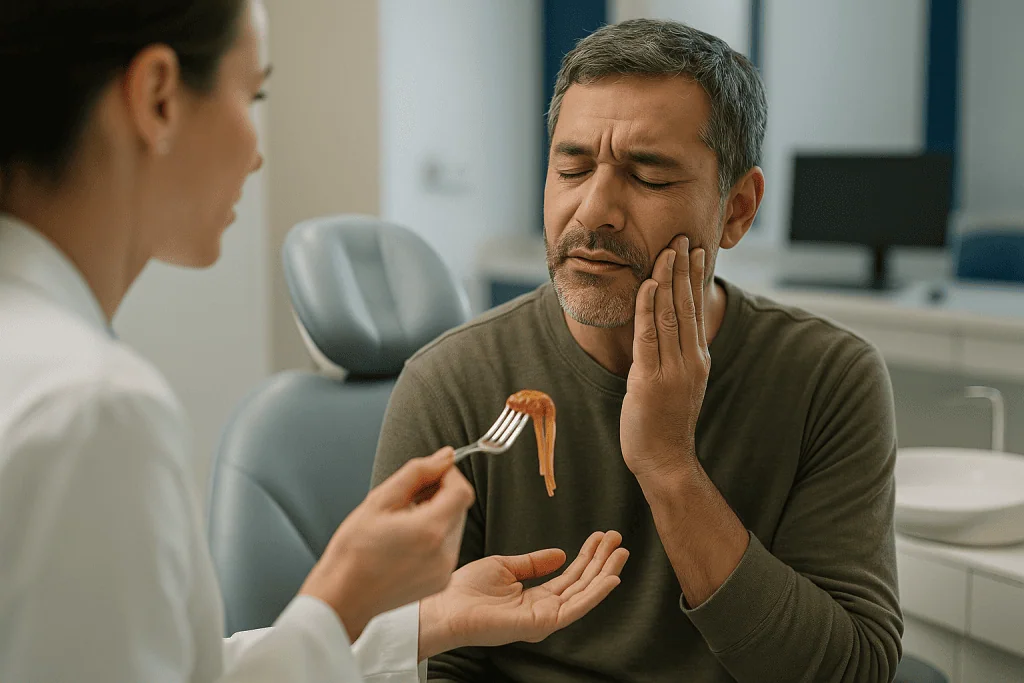
The first act is numb. Local anaesthetic commonly lasts a few hours after you leave, sometimes longer for lower jaw injections because the nerve there sits deeper. While you cannot feel your lip, cheek or tongue, you also cannot feel a bite or a scald, which is the single most important reason to keep food and drink cool and soft until sensation returns. Chewing on a numb cheek is a classic and entirely avoidable injury.
The second act is the wearing-off. This is when the dull ache arrives and people start to wonder whether it is normal. Your gums may look a little swollen or, in places, slightly greyish-white where the laser has left its coagulated surface layer. That whitish film is not infection; it is the equivalent of a scab and will lift on its own over the coming days. A faint taste of blood or a pink tinge to saliva is common.
The third act is the evening. Discomfort often feels most noticeable at night simply because there is nothing else to focus on. Sleeping with your head propped a little higher on an extra pillow reduces the blood pressure in the head slightly and can lessen throbbing and ooze, the same principle applied after many minor facial procedures.
Small habits help. Sip cool water regularly rather than rinsing forcefully. Skip straws, which create suction that can disturb the healing surface. Avoid poking the area with your tongue or a fingernail, however tempting. And plan a quiet evening; you will feel better than you expect, but nobody heals faster by proving they are fine.
Can I eat hot foods after laser gum treatment? What to eat after laser gum surgery
The coffee question deserves a straight answer: not while you are numb, and cautiously afterward.
There are two separate reasons. The first is burn risk. Anaesthetised tissue cannot report temperature, so a mouthful of soup that would ordinarily make you wince can blister the inside of a lip or the roof of the mouth without warning. Wait until full sensation has returned before anything above lukewarm.
The second reason is physiological. Heat dilates blood vessels. In freshly treated gum tissue, where small vessels have been sealed by the laser and a delicate protein layer is forming over the pocket, a hot drink can increase local blood flow enough to provoke oozing and to soften that protective layer. Most dental teams therefore advise keeping food and drink cool or room temperature for the rest of day one and easing back toward warm over the following day or two, a pattern consistent with the Cleveland Clinic’s aftercare guidance for deep cleaning.
What to eat, then? Soft, cool, and not sharp. Yoghurt, smoothies eaten with a spoon rather than a straw, mashed potato once it has cooled, scrambled eggs, soft fish, ripe banana, cottage cheese, lukewarm oatmeal. Chew on the side away from the treated area if only one region was worked on.
What to skip for a few days: crusty bread, chips, nuts, popcorn and seeds, all of which can lodge in a healing pocket; very spicy or acidic foods, which sting exposed root surfaces; and alcohol, which dries tissue and interacts with some pain medicines.
Nutrition matters more than people think. Healing tissue needs protein and vitamin C, and a day or two of only broth leaves you tired and slower to mend. Soft does not have to mean empty.
How long does laser gum treatment take to heal?
Healing happens on three timelines at once, and conflating them causes needless worry.
Comfort is the fastest. Tenderness usually peaks within the first day or two and eases steadily after that. The Cleveland Clinic describes soreness and sensitivity after deep periodontal cleaning as typically lasting several days, and many people are eating normally within the first week.
Surface tissue is the middle timeline. The greyish coagulated layer lifts, the gum margin firms up and its colour shifts from angry red toward the pale pink of health. Cleveland Clinic patient guidance on gum procedures puts this soft-tissue settling in the range of one to two weeks, though it varies with the extent of treatment, your general health and whether you smoke.
Reattachment is the slow timeline, and the one that actually determines whether treatment succeeded. Beneath the surface, the gum is trying to form a new, tighter seal against the cleaned root, and shallow pockets are re-measured at a follow-up visit. The Mayo Clinic notes that outcomes of periodontal therapy are judged over weeks to months, which is why your periodontist will not declare victory on day seven. Sensitivity to cold on exposed roots can persist during this phase and often improves as the tooth lays down protective mineral from within.
These are typical ranges from mainstream patient guidance, not promises. Deeper pockets, multiple quadrants treated in one sitting, diabetes, smoking and certain medicines all stretch the timeline. A single treated tooth may feel entirely ordinary in three days; a full-mouth procedure may take the full two weeks before you stop thinking about it. Neither is wrong.
Laser gum treatment recovery week by week
A calendar helps because it turns vague reassurance into something you can check against. The table below reflects common patterns described in NHS, Mayo Clinic and Cleveland Clinic patient guidance for periodontal treatment; your own instruction sheet takes precedence wherever it differs.
| Stage | What is commonly felt or seen | What usually helps |
|---|---|---|
| First hours | Numbness, possible faint pink saliva, no pain yet | Cool or lukewarm soft food only, no straws, no probing with tongue |
| Day 1 to 2 | Dull ache, mild swelling, greyish film on gum surface, cold sensitivity | Head elevated at night, cool foods, gentle brushing elsewhere, rinses only as directed |
| Day 3 to 7 | Ache fading, film lifting, gum colour improving, sensitivity may linger | Gradual return to warm foods, soft brush at treated site, resume flossing as advised |
| Week 2 | Tissue firmer and paler, comfort near normal, roots may still zing with cold | Normal diet unless told otherwise, desensitising toothpaste if suggested |
| Weeks 4 to 12 | Pockets re-measured, deeper healing assessed | Attend review, maintain daily cleaning, keep maintenance appointments |
Two things the table cannot show. Progress is rarely a straight line; a day of extra soreness after eating something crunchy is common and does not mean healing has reversed. And the review visit is not optional decoration. It is where the team decides whether pockets have closed enough, whether a site needs repeating and how often you should return for maintenance cleaning, which the NHS identifies as the key to keeping gum disease from advancing.
Brushing after laser gum treatment: how to clean without setting healing back
Here is the tension. Healing gums need to be left alone, yet plaque left on a healing gum feeds exactly the bacteria the treatment just cleared. The resolution is not to stop cleaning; it is to clean differently for a short while.
On the day of treatment, brush your other teeth normally and leave the treated area alone unless your team said otherwise. From the next day, most guidance favours an extra-soft brush used with very light pressure at the treated site, angled so the bristles sweep the gum margin rather than scrub it. Think of dusting a bruise. Electric brushes are fine if you let the head rest against the tooth without pushing; the motor does the work.
Flossing at the treated site is usually paused for a few days and then resumed gently, sliding the floss down the tooth surface rather than snapping it into the gum. Interdental brushes, the tiny bottle-brushes for gaps between teeth, are often reintroduced at the review visit when the team can confirm the size still fits a gum that has changed shape.
Mouth rinses deserve nuance. Some periodontists prescribe an antiseptic rinse containing chlorhexidine, an agent that binds to mouth surfaces and suppresses bacteria for hours. It is effective for that purpose, but it can stain teeth brown and alter taste with prolonged use, so it is a short-course prescription tool, not a permanent habit. A warm saltwater rinse, held gently rather than swished hard, is the traditional low-tech alternative many teams suggest after the first day. Use whichever your team recommended, for as long as they recommended, and no longer.
Skip whitening toothpastes and abrasive baking-soda products for a couple of weeks; exposed roots are softer than enamel and scratch easily.
Is bleeding after laser gum treatment normal?
A little, yes. A lot, no. The line between them is easier to draw than people fear.
One of the practical advantages periodontists cite for lasers is that the light energy seals small vessels as it works, so heavy bleeding during and immediately after treatment is less common than with a scalpel. Even so, gum tissue is richly supplied with blood, and a pink tinge to saliva on day one, a spot on the pillowcase in the morning, or a faint metallic taste are all within the expected range described in mainstream aftercare guidance.
Why it happens: the healing surface is thin, and anything that raises blood pressure in the head or disturbs the site can start a brief ooze. Bending over, lifting something heavy, hot drinks, vigorous rinsing and, above all, sucking through a straw are the usual culprits. Brushing the site too early with too much pressure is another.
What to do about ordinary oozing: sit upright, bite gently on a piece of clean damp gauze or a moistened tea bag placed over the area for a sustained period, and resist the urge to keep checking. Repeated rinsing washes away the forming protein layer and prolongs the very bleeding you are trying to stop.
Where the line sits: bleeding that is bright red and steady rather than a tinge, that soaks through gauze repeatedly, or that persists despite pressure needs a same-day call to the dental team. So does bleeding that starts fresh several days after treatment when the area had been quiet, which can signal that healing tissue has been disturbed or, less commonly, that infection has set in. People on anticoagulant medicines should have a lower threshold for calling, as their teams will have told them before the procedure.
Managing discomfort: what over-the-counter options do and do not do
Most people get through laser gum treatment recovery with modest pain relief and sensible eating. Understanding how the common options work helps you use whichever your team recommends wisely.
Acetaminophen, known as paracetamol in many countries, acts mainly in the central nervous system to raise the pain threshold. It does not reduce inflammation at the gum itself, but it is generally gentle on the stomach and does not affect clotting, which is why dental teams often suggest it first. Non-steroidal anti-inflammatory drugs such as ibuprofen work differently, blocking enzymes that produce the inflammatory chemicals responsible for swelling and soreness, so they address the cause of gum tenderness more directly. They are not suitable for everyone; people with stomach ulcers, kidney disease, certain heart conditions, those taking blood thinners and those in later pregnancy are commonly advised to avoid them. Which is appropriate for you, in what amount and for how long, is a decision for your dentist or pharmacist who knows your history, and product labels are not a substitute for that conversation.
Cold helps too. A wrapped cool pack held against the cheek in short intervals during the first day constricts vessels and dulls nerve signalling. Do not apply ice directly to skin, and do not use heat on the face in the first days, for the same vasodilation reason that rules out hot coffee.
Antibiotics are sometimes prescribed after periodontal procedures, particularly where infection was extensive or the person has conditions that raise infection risk. They are not routine, and the Mayo Clinic notes they are used selectively. If you are given a course, finish it as directed; if you are not, that reflects a judgement about your case, not an oversight.
Topical numbing gels marketed for mouth ulcers can interfere with the healing surface and are best avoided unless recommended.
Smoking, alcohol and exercise during laser gum treatment recovery
If there is one thing this article would like you to take seriously, it is smoking. The NHS lists smoking as the most significant modifiable risk factor for gum disease, and the reason bears on recovery directly. Nicotine constricts the small vessels that carry oxygen and immune cells to the gum, while the heat and chemicals in smoke irritate healing tissue and disturb the protective surface layer. Smokers heal more slowly after periodontal treatment and are more likely to see disease return. Not smoking for the duration of recovery is a genuine gift to the outcome, and if the procedure becomes the moment you stop altogether, your dental team and your primary care clinician can both point you to support. Vaping is not a neutral alternative for healing tissue; the heated vapour and nicotine carry similar concerns.
Alcohol is less dramatic but still worth pausing for a few days. It dries the mouth, irritates raw tissue, can increase oozing by dilating vessels, and interacts with several pain medicines in ways that stress the liver or the stomach lining.
Exercise is about pressure. Anything that sends blood to the head, whether heavy lifting, inversions in yoga, running hard or hanging upside down to fix something under the sink, can restart bleeding on day one and increase throbbing on day two. Gentle walking is fine and arguably helpful, since it keeps circulation moving without spikes. Most people return to full activity within a few days, sooner for minor treatment, with the usual caveat that your team’s advice for your case comes first.
One more everyday item: a very hot shower with your face in the stream, or a sauna, counts as heat to the face and belongs after the first couple of days rather than before.
Laser gum treatment side effects and how it compares with conventional deep cleaning
Marketing tends to present lasers as painless and superior. Evidence is more measured, and you deserve the measured version.
Side effects of laser gum treatment are, in the main, the same as those of conventional scaling and root planing: tenderness, temporary sensitivity to temperature, minor bleeding and some gum recession as swollen tissue shrinks back to a healthy contour, which can make teeth look slightly longer. Specific to lasers, there is a small risk of heat injury to tooth root or bone if settings or technique are wrong, and a transient white or grey surface layer that alarms people who were not warned about it. Eye protection during the procedure is standard because the beam can harm the retina.
On effectiveness, mainstream reviews of the research have generally found that when lasers are added to conventional mechanical cleaning, any additional improvement in pocket depth or gum attachment is modest and inconsistent between studies, and that lasers have not been shown to replace mechanical root cleaning. That is not a dismissal. Lasers may offer practical advantages in bleeding control and in reshaping soft tissue, and some patients report less discomfort. It is simply an honest statement that the evidence base is still developing, and any claim of dramatically better results should be treated with caution.
Alternatives include conventional scaling and root planing alone, which remains the foundation of treatment per the Mayo Clinic and NHS; locally placed antimicrobials in deep pockets; and, for advanced disease, surgical procedures that lift the gum to clean and reshape bone directly. Each has a recovery profile, and the choice depends on pocket depth, tooth by tooth, on your health and on your preferences. That decision belongs to you and your treating team together, not to a brochure.
What people often get wrong about laser gum treatment recovery
Myths cluster around this procedure precisely because it sounds high-tech. Here are the ones clinicians hear most, and what the evidence actually supports.
Laser means no pain, so any pain means something is wrong. Not so. The laser reduces bleeding and may reduce discomfort for some people, but the underlying inflammation of healing is the same biology as after any gum treatment. Dull tenderness for a day or two is expected.
The white film on my gums is infection. It is a coagulated surface layer, the laser’s equivalent of a scab. Infection looks different: increasing swelling, spreading redness, pus and worsening pain after day three.
I should rinse hard and often to keep it clean. Vigorous rinsing strips the healing surface and prolongs oozing. Gentle, held rinses only when advised, and gentle brushing of the surrounding teeth, are what protect the site.
Once it stops hurting, the treatment is finished. Comfort returns in days; reattachment of gum to root is judged over weeks to months, and the NHS is explicit that gum disease returns without ongoing maintenance cleaning and daily home care. The review appointment is part of the treatment.
My teeth look longer, so the laser damaged them. Swollen, diseased gum sat higher on the tooth than healthy gum does. As inflammation resolves, the true, healthy margin appears. This recession can bring sensitivity and, for some, cosmetic concern, and it is worth discussing beforehand, but it reflects tissue returning to health.
Hot drinks are only a problem while I am numb. Numbness is the burn risk. Heat’s effect on blood flow and the healing surface is a separate, shorter-lived reason to keep things cool through the first day.
Questions to ask your care team
The best recovery conversations happen before the anaesthetic goes in, when you can still ask follow-up questions. Bring these, and write the answers down, because you will not remember them through a numb lip.
- Which areas are being treated today, and is the laser being used alongside mechanical cleaning or for a different purpose such as reshaping tissue?
- How long should I expect numbness, and what should I do if it lasts much longer than that?
- When can I return to warm food and drink, and are there foods you want me to avoid for longer than a day?
- Should I brush the treated area tomorrow, and with what kind of brush and pressure?
- Are you prescribing a rinse, and if so, for how many days exactly, given the staining that can come with prolonged antiseptic use?
- Which pain reliever is appropriate for me given my other medicines and health conditions, and who should I call if it is not enough?
- Am I likely to see gum recession or longer-looking teeth afterward, and how much?
- How much bleeding is acceptable, and what amount means I should call the same day?
- When is my review appointment, what will you measure, and what would prompt a repeat treatment?
- How often will I need maintenance cleaning afterward, and what does that involve?
- What is your after-hours contact route if I develop swelling or fever at the weekend?
Notice that none of these questions asks whether the laser is better. That debate can happen at the planning stage. On the day, what you need is a clear, personal map of the next two weeks and a phone number that will be answered.
When to call your doctor
Most laser gum treatment recovery is uneventful, and the discomfort described throughout this article resolves on its own. A short list of signs, however, should prompt a same-day call to your dental team, or to an urgent care service or emergency department if the practice is closed and symptoms are severe.
Call promptly for bleeding that is bright red and steady, soaks through gauze repeatedly, or does not settle with sustained pressure. Call for pain that is getting worse rather than better after the third day, or pain that is severe and not eased by the relief your team recommended. Call for swelling of the gum, face or jaw that is increasing, particularly if the skin over it is hot or red, or if pus or a foul taste appears at the site. A fever, chills or a general feeling of being unwell after a dental procedure should never be waited out.
Seek urgent, in-person care immediately if swelling begins to affect your ability to swallow, breathe or open your mouth, if swelling spreads under the jaw or toward the eye, or if you develop a rapidly spreading rash, lip or tongue swelling, or wheeze after taking a newly prescribed medicine, which can indicate an allergic reaction.
Numbness that persists well beyond the timeframe your team described, or a loose tooth or filling that was not loose before, are not emergencies but warrant a call the next working day.
Trust the pattern. Healing gets a little better each day; infection and complications get a little worse. When you cannot tell which you are seeing, that uncertainty is itself reason enough to ring the number on your instruction sheet. Your treating team would far rather answer an unnecessary call than miss a necessary one.
Frequently asked questions
How long does laser gum treatment take to heal completely?
Comfort usually returns within several days, surface tissue settles over roughly one to two weeks, and deeper reattachment of gum to root is assessed at a review weeks to months later, according to Cleveland Clinic and Mayo Clinic patient guidance. Extent of treatment, smoking, diabetes and certain medicines can lengthen every stage. These are typical ranges, not guarantees, and your own team’s assessment is what counts.
What can I eat after laser gum surgery on the first day?
Cool or room-temperature soft foods: yoghurt, smoothies eaten with a spoon, cooled mashed potato, scrambled eggs, soft fish, ripe banana. Avoid anything hot while numb, and skip crunchy, spicy, acidic or seeded foods for a few days because they can lodge in or sting a healing pocket. Chew on the untreated side where possible, and keep protein intake up to support tissue repair.
Why can't I drink hot coffee after laser gum treatment?
Two reasons. While anaesthetic lingers you cannot feel a scald, so hot liquid can blister your mouth without warning. Once sensation returns, heat still dilates blood vessels in freshly treated tissue, which can provoke oozing and soften the protective layer forming over the gum pocket. Most teams suggest lukewarm at most through the first day, easing back to warm over the following day or two.
Should I brush the treated area the day after laser gum treatment?
Usually yes, gently, unless your team advised otherwise. Use an extra-soft brush with very light pressure angled to sweep the gum margin rather than scrub it, and brush the rest of your mouth normally. Flossing at the site is often paused for a few days and then resumed carefully. Avoid whitening or abrasive toothpastes for a couple of weeks because exposed root is softer than enamel.
What are the common laser gum treatment side effects?
The most common are tenderness, temporary sensitivity to hot and cold, minor bleeding, mild swelling and some gum recession as inflamed tissue shrinks to a healthy contour, making teeth appear slightly longer. A transient whitish surface layer is expected. Less common risks include heat injury to root or bone from incorrect settings, which is why training and eye protection are standard. Persistent or worsening symptoms warrant a call.
Is it normal for gums to look white or grey after laser treatment?
Yes. The laser coagulates the surface of the treated tissue, leaving a thin greyish-white layer that behaves like a scab and lifts on its own over the following days. It is not infection. Infection is suggested instead by increasing swelling, spreading redness, pus, foul taste, fever or pain that worsens after day three, all of which should prompt a same-day call to your dental team.
Is laser gum treatment better than regular deep cleaning?
The evidence does not clearly say so. Mainstream reviews generally find that adding a laser to scaling and root planing produces modest and inconsistent extra improvement in pocket depth, and lasers have not been shown to replace mechanical root cleaning. Lasers may offer advantages in bleeding control and soft-tissue reshaping. Whether one is appropriate for you depends on your pockets, health and preferences, decided with your treating team.
Can I smoke after laser gum treatment?
Dental teams strongly advise against it. Nicotine narrows the small vessels supplying the gum, reducing oxygen and immune cells at the healing site, while heat and chemicals in smoke irritate raw tissue. The NHS identifies smoking as the most significant modifiable risk factor for gum disease, and smokers heal more slowly and relapse more often after treatment. Vaping carries similar concerns for healing tissue.
When can I exercise after laser gum treatment?
Gentle walking is fine from day one. Activities that raise blood pressure in the head, such as heavy lifting, hard running or inverted positions, can restart bleeding and worsen throbbing during the first day or two, so most guidance suggests waiting a few days before returning to full intensity. Saunas and very hot showers on the face count as heat exposure and are best delayed similarly. Follow your team’s specific advice.
What pain relief is usually suggested after laser gum treatment?
Teams commonly suggest acetaminophen, which raises the pain threshold without affecting clotting, or an anti-inflammatory such as ibuprofen, which targets the swelling chemicals directly but is unsuitable for people with certain stomach, kidney, heart or bleeding conditions and in later pregnancy. Which is right for you, and how it should be taken, is a decision for your dentist or pharmacist who knows your medical history.
References
- NHS: Gum disease
- NIH National Institute of Dental and Craniofacial Research: Gum (Periodontal) Disease
- CDC: About Periodontal (Gum) Disease
- MedlinePlus: Gum Disease
This article is for general information only and is not a substitute for professional medical advice. Please consult a qualified doctor about your individual situation.

More from the Blog
When Is an Impacted Tooth Monitored, Exposed or Removed? How Dentists Decide
An impacted tooth is usually monitored when it is free of pain and disease and sits where it is unlikely to harm neighboring teeth.…
Metal Braces vs Clear Aligners: Bite Control, Compliance and Daily Upkeep Compared
Metal braces and clear aligners both straighten teeth with gentle, sustained pressure, and for mild to moderate crowding they reach broadly similar results. Fixed…
Oral and Maxillofacial Surgery for International Patients: Stay Length and Follow-Up
Oral surgery abroad follow up is the planned series of checks after a procedure, and it starts before you travel home. Surgeons usually ask…

What Halitosis Treatment Involves: Cleaning, Gum Care, Tongue Care and Referral When Needed
A halitosis treatment plan usually starts at the dentist: a professional cleaning, treatment of any gum disease, daily tongue cleaning and practical steps to…
How an Impacted Canine Is Surgically Exposed and Guided Into Place
Impacted canine exposure surgery is a short oral surgery in which a surgeon lifts or removes the gum (and sometimes a thin layer of…

How Long to Stay in Istanbul After Orthognathic Surgery Before You Travel Home
Most surgical teams ask patients who have had orthognathic (corrective jaw) surgery far from home to stay near the hospital through at least the…