

Red Light Therapy for Hair Loss: Devices, Evidence and Honest Expectations
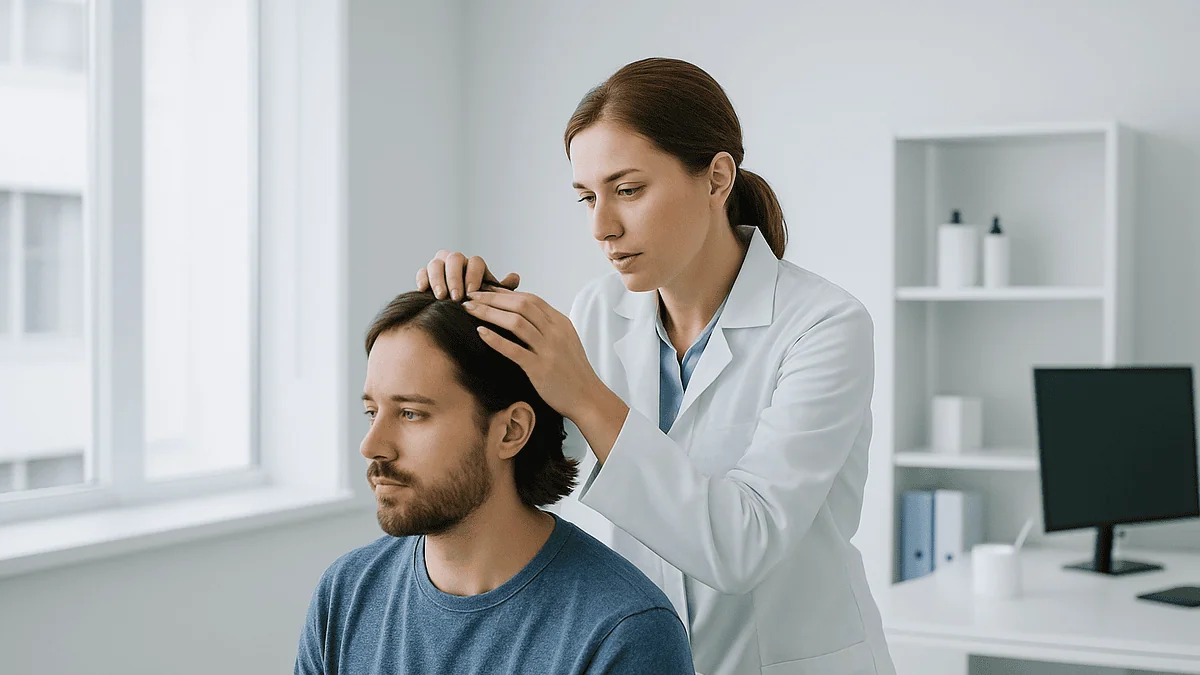
Key Takeaways
- In randomized sham-controlled trials, FDA-cleared devices at 650–680 nm increased hair counts on the order of 35 percent over 16–26 weeks, measurable under magnification, usually subtle in the mirror.
- Red light stimulates only living, miniaturized follicles; areas that have been smooth and bald for years generally will not respond to any consumer light device.
- The studied regimens cluster around three sessions per week for roughly 6–30 minutes; because of the biphasic dose response, extra or longer sessions add no benefit.
- Expect a four-to-six-month wait for visible change, possibly preceded by a brief shedding uptick as resting follicles cycle into growth: a common early sign of response, not failure.
- Gains are maintenance-dependent: like the approved hair loss medications, red light must be continued indefinitely or hair density gradually returns to its prior trajectory.
- Elon Musk has never disclosed how he restored his hair; hair-restoration surgeons commenting on public photos widely attribute it to surgical transplantation, and no evidence links it to red light.
Red light therapy, also called low-level laser therapy, has modest but genuine evidence for pattern hair loss. In sham-controlled trials, FDA-cleared devices emitting 630–680 nm light measurably increased hair density over 16–26 weeks in people with early thinning. It cannot revive long-bald scalp, requires several sessions weekly for months, and the gains typically fade if you stop using the device.
The cap arrives in a box that looks like it belongs to a gaming console. You put it on, press a button, and your scalp glows a faint sci-fi red for twenty minutes while you answer email. No prescription, no pills, no needles. The promise printed on the packaging is bold: thicker, fuller hair, clinically proven.
Somewhere between that promise and the skeptic muttering “snake oil” lies the actual science, and it is more interesting than either camp admits. Light-based hair devices have been studied in randomized, sham-controlled trials, some running six months long. The results are real. They are also smaller and slower than the marketing photos suggest.
So before you spend a few hundred dollars on a glowing helmet, it is worth knowing exactly what the trials measured, who responded, how much light is enough, and why the most famous head of regrown hair on the internet probably has nothing to do with red light at all.
Does red light therapy actually regrow hair?
Yes, with asterisks large enough to see from space. Red light therapy for hair loss, known in the research literature as low-level laser therapy (LLLT) or photobiomodulation, is one of the few device-based approaches with randomized, sham-controlled human trials behind it. The first light-emitting comb earned FDA clearance for pattern hair loss back in 2007, and dozens of caps, helmets, and bands have followed through the same regulatory pathway.
The asterisks matter, though. Trials show statistically significant increases in hair counts, usually measured within a small circle of scalp under magnification. That is not the same thing as a dramatic before-and-after photo. Researchers counting hairs per square centimeter can detect improvement that your bathroom mirror renders as “maybe slightly fuller.” The Cleveland Clinic characterizes the overall evidence for red light therapy as promising for certain uses but still maturing, encouraging early results, not settled science.
Two more caveats define honest expectations. First, red light works only on follicles that are still alive. A follicle that has been dormant for years and left the scalp smooth and shiny has, in most cases, closed for business; no consumer light device reopens it. Second, this is maintenance, not a cure. Like exercise for muscle, the stimulus must continue for the benefit to persist. Within those boundaries, early thinning, living follicles, consistent use, the answer to the question is a qualified but evidence-backed yes.
How can shining a light on your scalp possibly grow hair?
It sounds like wellness folklore until you look at the cell biology. Red and near-red light in the 630–680 nanometer range penetrates a few millimeters into skin, conveniently, about the depth where hair follicle bulbs sit. Inside cells, an enzyme in the mitochondria called cytochrome c oxidase absorbs photons at these wavelengths. That absorption appears to nudge the cell’s energy machinery, increasing production of ATP, the molecule cells spend as fuel.
Downstream, researchers have documented several plausible effects: release of nitric oxide, which widens blood vessels and improves local circulation; low-level signaling molecules that influence gene expression in dermal papilla cells, the command center at the base of each follicle; and, most relevant to a thinning scalp, a shift of follicles from telogen, the resting phase, into anagen, the active growth phase. A widely cited laboratory study of 650 nm red light on human follicles found it prolonged anagen and altered growth-related gene activity.
Here is the honest footnote: most of this mechanistic detail comes from cell cultures and animal models. Human scalps are messier laboratories. The mechanism is biologically plausible and consistent with the clinical trial results, but scientists are still mapping exactly which pathway does the heavy lifting. “Plausible and partially demonstrated” is a fair summary: a notch above wishful thinking, a notch below fully understood.
What do the clinical trials really show?
The trial that gets cited most is a 2014 multicenter, randomized, double-blind study published in the American Journal of Clinical Dermatology. Researchers gave 269 men and women with pattern hair loss either a 655 nm laser comb or an identical-looking sham device. After 26 weeks, the light-treated groups showed significantly greater terminal hair density, real, countable new hairs, not just thicker-looking strands, and the effect held for both sexes.
Helmet-style device trials have reported similar patterns: over 16-week runs, treated participants grew on the order of 35 percent more new hairs in the measured zone than sham-treated participants. Meta-analyses pooling multiple randomized trials have generally concluded that low-level laser therapy improves hair density in androgenetic alopecia compared with sham treatment.
Translate those numbers carefully. A 35 percent relative increase in hair counts within a one-centimeter test circle might mean going from roughly 130 to 150 hairs in that patch. Under a dermatologist’s magnifying camera, that is a clear win. Across a whole scalp viewed at conversation distance, it typically reads as “modestly fuller,” especially at the crown and part line where thinning started recently. Participants in these trials often rated their own improvement more conservatively than the hair counts suggested: a telling gap between what a camera measures and what a person perceives. The science supports “measurably better,” not “transformed.”
The fine print: why the evidence is weaker than the marketing
Every glowing product page cites “clinical studies.” Few mention the limitations, so let’s do it here.
- Small samples. Many device trials enrolled 40 to 120 people. Small trials can exaggerate effects, and a handful of strong responders can pull the average up.
- Industry funding. A substantial share of published studies were sponsored by the device manufacturers. That does not make the data false, but sponsored research tends, on average, toward favorable results: a pattern documented across medicine.
- Surrogate endpoints. Trials count hairs in a small tattooed or photographed circle. Whole-scalp photographic assessments, the thing patients actually care about, often show less impressive change.
- Short duration. Most trials ran 16 to 26 weeks. Pattern hair loss is a decades-long process; we have limited data on year-five outcomes or on what happens when people quit.
- Device soup. Combs, caps, and helmets differ wildly in wavelength, power, and diode count, yet marketing borrows credibility from trials of entirely different hardware.
None of this sinks the therapy. Sham-controlled designs are a high evidentiary bar, and the consistency of positive results across independent trials counts for something. But the honest reading is “modest benefit, demonstrated under specific conditions, with open questions”, which is not what the box says.
Who is most likely to benefit, and who is wasting money?
Red light therapy has been studied almost exclusively in androgenetic alopecia: the hereditary, hormone-driven pattern loss that produces a receding hairline and thinning crown in men and a widening part in women. That is where the evidence lives, and even there, the trials enrolled a specific slice of people: mild to moderate thinning, typically Norwood stages II through V in men and Ludwig stages I and II in women.
The biology explains why. Pattern loss works by miniaturization: follicles shrink over successive growth cycles, producing progressively finer, shorter hairs before eventually going dormant. Red light appears to work best on follicles that are miniaturized but still cycling, weakened workers who respond to encouragement. A crown that thinned over the past two or three years is a far better candidate than a scalp that has been bald for fifteen.
Who is likely wasting money? People with long-standing, fully bald areas; anyone with scarring alopecias, where inflammation has permanently destroyed follicles; and, pending better data, people with alopecia areata, the autoimmune form, where evidence for light therapy remains thin and preliminary. Hair loss driven by thyroid disease, iron deficiency, crash dieting, or a stressful event (telogen effluvium) needs the underlying cause addressed first; the NHS notes that these forms often recover on their own once the trigger resolves, which means a device may get credit it never earned.
Caps, helmets, combs, and bands: what's the difference?
Consumer devices deliver the same basic ingredient, red light in roughly the 630–680 nm band, through very different hardware, and the format shapes both the experience and the realistic dose your scalp receives.
| Device type | Typical session | Coverage | Practical reality |
|---|---|---|---|
| Comb or brush | 8–15 minutes, moved by hand | Wherever you point it | Cheapest category and the format used in the landmark 2014 trial, but demands active, even coverage, easy to shortchange the back of your head |
| Cap or helmet | 6–30 minutes, hands-free | Full scalp simultaneously | Best adherence in real life because you can do something else; costlier; check diode count and whether diodes are laser or LED |
| Headband | 10–20 minutes, repositioned | One scalp zone at a time | Middle ground; treating the whole scalp means multiple placements per session |
| Full-body panel | 10–20 minutes at a distance | Diffuse, indirect | Marketed for skin and muscle recovery; scalp dose through hair is poorly characterized, weakest choice for hair specifically |
One underrated variable: hair itself blocks light. Parting hair as you treat, or choosing a comb that physically separates strands, helps photons actually reach the scalp. And the boring truth of this entire category is that the best device is the one you will genuinely use three times a week for six months. A cap you wear while making breakfast beats a technically superior comb gathering dust in a drawer.
Laser vs. LED: does the type of light matter?
Walk into this corner of the internet and you will find holy war. Laser-device makers argue that coherent laser light penetrates tissue more effectively and that the pivotal trials used lasers, so LED caps are riding on borrowed evidence. LED-device makers counter that a photon of 655 nm light is a photon of 655 nm light, cytochrome c oxidase cannot tell whether it came from a laser diode or an LED, and that LEDs allow more diodes, broader coverage, and lower prices.
What does the evidence say? Honestly: not enough. It is true that most of the strongest sham-controlled hair trials used laser diodes. It is also true that photobiomodulation research in other fields, wound healing, skin conditions, has produced positive results with LEDs, and that no rigorous head-to-head trial has shown lasers beating LEDs for hair growth at matched wavelengths and doses. Some laboratory work suggests coherence matters less than skeptics of LEDs claim, once light scatters through tissue.
The pragmatic takeaway most researchers would sign off on: wavelength (630–680 nm), delivered energy, coverage, and consistency almost certainly matter more than the laser-versus-LED distinction. If you want to hew closest to the published trials, choose a laser-based device with FDA clearance for hair growth. If budget or coverage pushes you toward LED, you are extrapolating slightly, but from the same underlying biology, not from thin air. Just know which bet you are making.
How often should you do red light therapy for hair loss?
Less often than enthusiasm suggests, more often than laziness allows. The regimens that produced positive trial results cluster around a familiar rhythm: sessions every other day, or three times per week, lasting anywhere from about six to thirty minutes depending on the device’s power and design. The 26-week laser comb trial used treatments three times weekly. Helmet studies commonly used every-other-day schedules over 16 weeks.
Why the variation in session length? Dose. A helmet packed with 200 diodes bathing the whole scalp at once can deliver a comparable energy dose in fewer minutes than a small comb covering one strip of scalp at a time. This is why the only universally correct answer is: follow the protocol your specific device was cleared with. That protocol is the closest thing you have to the conditions under which any evidence was generated. Freelancing, doubling sessions, borrowing a friend’s schedule for a different device, takes you off the map.
The variable that actually predicts results is not intensity but consistency across months. Hair follicles cycle slowly; the stimulus has to be there week after week to shift resting follicles into growth and keep them there. A practical system beats willpower: anchor sessions to an existing habit: Monday, Wednesday, Friday during your podcast, or every other morning with coffee. People who treat it like brushing their teeth get the trial-like exposure. People who treat it like a gadget get a drawer ornament.
Can you overdo red light therapy for hair?
You can, though “overdo” here mostly means “waste your time,” not “injure yourself.” Photobiomodulation research consistently describes a biphasic dose response, sometimes called the Arndt-Schulz principle: low doses of light stimulate cellular activity, while substantially higher doses produce diminishing returns and, in laboratory studies, can actually inhibit the very processes you are trying to encourage. Cells respond to light the way muscles respond to training: a useful stimulus helps, and ten times the stimulus is not ten times better.
What does that mean at the bathroom-mirror level? Doubling your sessions or running the cap for an hour will not double your hair. At best, the extra photons are wasted; at worst, per the lab data, very high cumulative doses could blunt the stimulating effect. There is no evidence that consumer devices used excessively cause hair loss or burn the scalp, their power output is deliberately low, but there is also no evidence that exceeding the cleared protocol adds anything.
Two genuine cautions deserve mention. First, eyes: laser-based devices should never be pointed at them, and manufacturer eye-safety instructions are not decorative. Second, anyone taking medications or managing conditions that increase light sensitivity should check with a pharmacist or physician before starting, since photosensitivity reactions are a real, if uncommon, consideration with any light-based device. Otherwise, the ceiling on “too much” is mostly a ceiling on your time.
How long before you see results, and why patience is non-negotiable
Set your calendar, not your hopes, to four to six months. This is not marketing hedging; it is follicle arithmetic. A hair follicle nudged from resting into growth phase must then actually grow hair, at roughly a centimeter per month, before the change becomes visible. Trials measured their outcomes at 16 and 26 weeks precisely because meaningful differences take that long to accumulate. Anyone reporting dramatic results at week three is describing optimism, lighting, or a haircut.
There is also a plot twist worth knowing in advance: some people notice a brief increase in shedding during the first several weeks. It sounds like the device is failing. Usually the opposite: when resting follicles are pushed into a new growth cycle, the old resting-phase hairs they were holding get released to make room. The same phenomenon is well documented with other hair growth treatments. It typically settles within weeks.
Because month-to-month change is nearly invisible to the person watching daily, measurement beats memory. Take photos on day one, top-down at the crown, straight-on at the hairline, same room, same lighting, damp hair, and repeat monthly. Compare month four to month zero, never today to yesterday. And decide your exit criteria in advance: if six months of consistent, protocol-faithful use shows nothing in the photos, the evidence suggests you are not a responder, and your money is better redirected to a dermatology consultation.
What did Elon Musk use to regrow hair?
People search this question thousands of times a month, so let’s handle it honestly: he has never publicly said, and no verified account of his hair restoration exists. What the public record shows is simply the before-and-after, photos from the late 1990s showing significant thinning at the crown and hairline, and photos from the mid-2000s onward showing a dense, restored head of hair.
Hair-restoration surgeons who have commented publicly on those photos, analyzing images, not treating the man, have generally described the transformation as most consistent with surgical hair transplantation, likely performed in stages. Their reasoning is straightforward: the pattern and completeness of the change, particularly the rebuilt frontal hairline, goes well beyond what any studied non-surgical option produces. No medication, no light device, no supplement has demonstrated that degree of reversal in clinical trials. That remains informed speculation, not confirmation.
What we can say with confidence: there is no evidence he used red light therapy, and he has never endorsed it. When a light-device advertisement implies a celebrity-grade transformation, it is writing a check the clinical literature cannot cash.
The broader lesson outlasts the gossip. Celebrity scalps are not data. A single famous head tells you nothing about diagnosis, method, cost, number of procedures, or concurrent treatments. The sham-controlled trial, boring, slow, unglamorous, remains the only honest way to know whether something works, and by that standard red light earns its modest, asterisked yes.
How does red light stack up against other evidence-backed options?
Context is everything, because red light does not exist in a vacuum. For pattern hair loss, the strongest evidence belongs to two FDA-approved medications: a topical solution applied to the scalp and, for men, an oral prescription tablet, which we will not name or dose here, but which any physician or pharmacist can discuss with you. Both have larger trial programs, longer track records, and generally bigger average effects than light devices. Both, like red light, require indefinite use to maintain results, a point Mayo Clinic makes plainly in its treatment overview.
Beyond medication, the landscape gets murkier. Microneedling has growing evidence as an add-on that enhances topical treatment. Platelet-rich plasma injections show mixed but intriguing results across studies of varying quality. Hair transplantation is the only option that relocates permanently resistant follicles into bald areas: the most dramatic fix, at the highest cost and with surgical realities attached.
Where does red light fit? Three honest niches. First, as a drug-free option for people who cannot or prefer not to use medication: the most defensible use case. Second, as an add-on: small studies suggest combining light therapy with standard treatment may outperform either alone, though the data are preliminary. Third, as maintenance for people whose loss is early and mild. What it is not: a substitute for diagnosis. Spending on a device before a clinician confirms you actually have pattern loss, rather than a thyroid, iron, or inflammatory problem, is the most expensive mistake in this category.
Is red light therapy safe? Side effects and who should skip it
The safety profile is one of red light’s genuine strengths. Across the randomized trials, adverse events were uncommon, mild, and mostly bothersome rather than harmful: scalp warmth, mild redness or dryness, occasional itching, and the temporary shedding uptick described earlier. Unlike ultraviolet light, red light at these wavelengths does not damage DNA and is not classified as a skin cancer risk. The Cleveland Clinic notes that short-term use as directed is generally considered low risk, while emphasizing that long-term data remain limited.
A few groups should pause before pressing the power button:
- Anyone with an undiagnosed scalp condition. Redness, scaling, pustules, pain, or patchy loss needs a diagnosis first, some inflammatory and scarring conditions require prompt treatment, and a device can delay it.
- People with photosensitivity. Certain medical conditions and several common medication classes increase sensitivity to light; a pharmacist can check yours in minutes.
- Anyone with a history of skin cancer on the scalp. Discuss with your dermatologist before applying any energy-based device to the area.
- Pregnant users. Not because of known harm, but because safety data in pregnancy simply do not exist: the standard cautious position.
And a note on eyes, worth repeating: laser diodes, even low-powered ones, should never be aimed at the eyes, and children should not have access to the device. Follow the eye-safety guidance in the manual as if it were written by a lawyer and an ophthalmologist together, because it usually was.
How to choose a device without getting fleeced
This market ranges from serious medical devices to glowing novelty hats, and the packaging looks identical. A short checklist separates them.
- FDA clearance for hair growth, with a number. Legitimate devices are cleared through the FDA’s 510(k) pathway and can cite a clearance number you can verify in the FDA’s public database. Note the vocabulary: “cleared” means deemed similar to an existing device and safe; it is a lower bar than the “approved” status drugs earn. “FDA registered” means almost nothing.
- Wavelength in the studied band. Look for 630–680 nm, with 650–655 nm being the range used in the pivotal trials. A device that will not disclose its wavelength has answered your question.
- Honest diode disclosure. How many diodes, and are they lasers, LEDs, or a mix? Some products advertise a large diode count where most are LEDs padding a handful of lasers. That is not automatically disqualifying, but it should be disclosed, not discovered.
- A real return window. Given the four-to-six-month timeline, a 30-day guarantee is nearly useless. Six months is fair; some reputable makers offer it.
Red flags that should end the conversation: the words “cure” or “permanent,” claimed success rates of 90-plus percent, before-and-after photos with different lighting or haircuts, and any implication that a celebrity’s hair is attributable to the product. Companies confident in modest, real effects describe modest, real effects. Companies selling miracles are selling to people who will not read the fine print, which, by finishing this section, you already have.
When should you see a doctor about hair loss?
Before you buy anything glowing, ideally. Pattern hair loss is the most common diagnosis, but it is not the only one, and the treatments differ completely. A primary care visit or dermatology consult, often just an exam, a history, and sometimes basic blood work, establishes what you are actually treating. MedlinePlus and the NHS both list a wide differential: thyroid disease, iron deficiency, autoimmune conditions, fungal infection, medication effects, and stress-triggered shedding among them.
Make an appointment promptly if you notice any of the following:
- Sudden or rapid sheddinghandfuls in the shower or on the pillow over weeks, rather than gradual thinning over years.
- Patchy losssmooth, coin-sized bare spots, which suggest alopecia areata or infection rather than pattern loss.
- Scalp symptomsitching, burning, pain, scaling, pustules, or redness accompanying the loss; scarring alopecias destroy follicles permanently, and early treatment protects what remains.
- Loss with systemic symptomsfatigue, unexplained weight change, feeling cold, or brittle nails, which point toward thyroid or nutritional causes.
- In women, hormonal signalsnew facial hair, irregular periods, or acne alongside thinning.
- Loss after starting a new medication, or any hair loss in a child.
None of these situations is a red-light-device situation, at least not yet, and some not ever. Even if the diagnosis does turn out to be garden-variety pattern loss, you will have spent one copay to make a several-hundred-dollar purchase rational. That is the cheapest insurance in this entire article.
The honest bottom line
Strip away the sci-fi glow and the skeptic’s eye-roll, and here is what remains. Red light therapy for hair loss is a modestly effective, well-tolerated, evidence-supported option for one specific problem: early to moderate pattern hair loss in people whose follicles are still alive. Sham-controlled trials show it grows countable new hairs over four to six months. It does not resurrect bald scalp, it does not work in weeks, and it stops working when you stop using it.
If a decision framework helps, try this one. Get a diagnosis first: an hour with a clinician beats a year with the wrong gadget. If it is pattern loss, discuss the full menu, including the approved medications with stronger evidence, and decide where a light device fits: primary option, add-on, or pass. If you buy, buy something FDA-cleared in the 630–680 nm range with a six-month return window, follow the cleared protocol to the letter, take monthly photos, and judge at month six with the ruthlessness of someone spending their own money, because you are.
What matters most, in this writer’s evidence-grounded opinion, is timing. Every hair treatment in existence works better at preserving than restoring, and red light is no exception. The person who acts during the “is my part getting wider?” phase has options the person ten years later does not. The device is optional. The early, clear-eyed decision is not.
Frequently asked questions
Does red light therapy actually regrow hair?
Yes, modestly, for the right candidate. Randomized sham-controlled trials of FDA-cleared devices emitting 630–680 nm light showed significant increases in hair density over 16–26 weeks in men and women with pattern hair loss. The effect is measurable, new countable hairs, but usually subtle to the naked eye. It works only on living follicles, requires consistent use for months, and fades if treatment stops.
How often should you do red light therapy for hair loss?
Most cleared devices call for sessions every other day or three times per week, lasting about 6 to 30 minutes depending on the device’s power and coverage. These schedules mirror the protocols used in the positive clinical trials. Follow your specific device’s cleared regimen rather than improvising, consistency over four to six months matters far more than adding extra sessions, which the dose-response research suggests provides no additional benefit.
Can you overdo red light therapy for hair?
You can waste time, though serious harm is unlikely. Photobiomodulation follows a biphasic dose response: low doses stimulate cells, while much higher doses show diminishing returns and, in laboratory studies, can inhibit the target processes. Consumer devices are low-powered, so overuse mainly means no extra benefit. Real cautions: never aim laser diodes at eyes, and check with a pharmacist if you take anything that increases light sensitivity.
What did Elon Musk use to regrow hair?
He has never publicly confirmed it, so nobody outside his circle knows for certain. Hair-restoration surgeons who have analyzed his before-and-after photos generally describe the transformation as most consistent with surgical hair transplantation, likely done in stages, because no non-surgical treatment produces that degree of hairline reconstruction in clinical trials. There is no evidence he used red light therapy, and he has never endorsed any hair device.
How long does red light therapy take to work on hair?
Plan on four to six months of consistent use before judging. Hair grows roughly a centimeter per month, so even a follicle that responds immediately needs months to produce visible length. Clinical trials measured outcomes at 16 and 26 weeks for this reason. Some users see a brief shedding increase in the first several weeks as follicles cycle, typically a sign of response. Monthly photos in identical lighting beat daily mirror checks.
Is a laser device better than an LED cap for hair growth?
The evidence doesn’t settle it. Most pivotal hair trials used laser diodes, so lasers hew closest to the published data. However, LEDs at the same wavelengths deliver photons the target enzyme cannot distinguish, and no rigorous head-to-head trial has shown lasers outperforming LEDs at matched doses. Wavelength (630–680 nm), delivered energy, scalp coverage, and consistent use likely matter more than the laser-versus-LED distinction.
Does red light therapy work on a receding hairline?
It’s the weakest zone for results. Trials showing benefit mostly measured the crown and mid-scalp, where miniaturized but living follicles remain. A hairline that receded years ago typically contains dormant or lost follicles that consumer light devices cannot revive. Recent, early recession with fine “peach fuzz” hairs still present has a better chance than smooth, long-bald temples. For substantial hairline restoration, surgical transplantation is the only demonstrated option.
Will I lose the new hair if I stop using the device?
Gradually, yes. Red light therapy manages pattern hair loss rather than curing it; the genetic and hormonal process driving miniaturization continues underneath. When the light stimulus stops, follicles typically drift back toward their prior trajectory over subsequent growth cycles, and density returns to roughly where it would have been. This maintenance requirement is shared by the approved hair loss medications: it’s the nature of treating a chronic, progressive condition.
Does red light therapy help alopecia areata?
The evidence is thin and preliminary. Nearly all quality trials of light therapy studied androgenetic (pattern) hair loss, not alopecia areata, which is an autoimmune condition with different biology: the immune system attacks otherwise healthy follicles. A few small reports exist, but nothing approaching the sham-controlled evidence for pattern loss. Anyone with patchy, coin-shaped bald spots should see a dermatologist, since effective medical treatments for alopecia areata exist and early evaluation matters.
Can I combine red light therapy with other hair loss treatments?
Generally yes, and combining may help. Small studies suggest light therapy added to standard approved treatments can outperform either alone, though the data are preliminary. Because red light works through a different mechanism, stimulating follicle energy metabolism rather than blocking hormones or prolonging growth chemically: the approaches are complementary rather than redundant. Discuss the combination with your dermatologist, especially timing sessions around topical applications so product on the scalp doesn’t block light.
References
This article is for general information only and is not a substitute for professional medical advice. Please consult a qualified doctor about your individual situation.

More from the Blog

Ketoconazole Shampoo: Dandruff, Fungus and the Hair-Loss Claim Examined
Ketoconazole shampoo is an antifungal medicated shampoo used to treat dandruff, seborrheic dermatitis of the scalp and some fungal skin infections, where randomized trials…
Hair Loss Concealers and Fibres: What They Do Well, and What They Cannot
Hair loss concealers, keratin fibers, tinted powders, sprays, and cream sticks, genuinely improve the appearance of thinning hair by reducing the color contrast between…
Traction Alopecia: How Tight Hairstyles Cause Hair Loss and Whether It Grows Back
Traction alopecia is hair loss caused by repeated pulling on the hair roots from tight braids, buns, ponytails, extensions, weaves or locs. It usually…
Keratin Treatments and Hair Botox: What the Salon Treatments Do and the Formaldehyde Question
A keratin treatment coats hair with a protein-rich solution and seals it with a flat iron to reduce frizz for roughly 2–5 months; so-called…
Receding Hairline: The Norwood Stages, Temple Thinning and the Options at Each Stage
A receding hairline is the gradual backward movement of the front hairline, usually starting at the temples, and in most men it is the…
How to Stop Hair Loss: The Treatments With Evidence, Ranked
The best-supported ways to stop or slow hair loss depend on its cause. For male and female pattern hair loss, topical minoxidil and, in…