Microneedling
Microneedling, also called collagen induction therapy, is a minimally invasive dermatologic procedure that uses very fine needles to create controlled micro-injuries in the skin. This prompts the skin to produce new collagen…
Quick answer
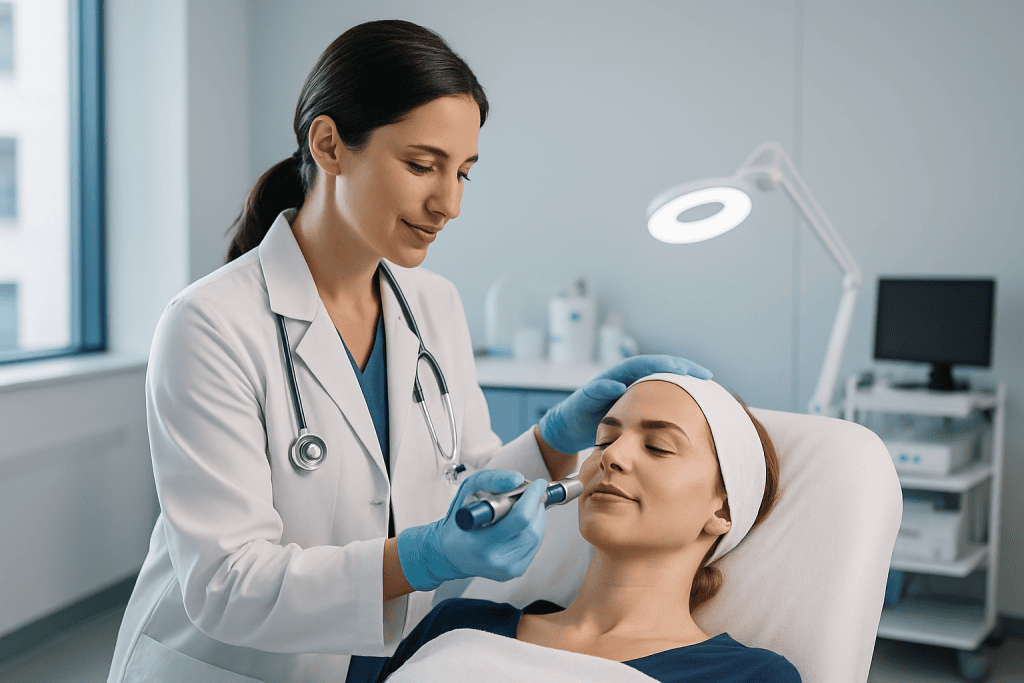
Microneedling is a minimally invasive skin treatment in which fine needles create tiny controlled punctures to stimulate the skin's natural collagen production. It is commonly used for acne scars, fine lines, uneven texture, and stretch marks. Sessions are outpatient, typically take 30 to 60 minutes, and recovery usually involves a few days of redness.
What is microneedling?
Microneedling is a minimally invasive skin treatment that uses a device covered in very fine, short needles to create many tiny, controlled punctures in the top layers of the skin. It is also called collagen induction therapy. Collagen is a structural protein that gives skin its firmness and support. The small injuries made during microneedling are designed to trigger the skin’s natural healing response, which in turn may encourage the production of new collagen and elastin (the protein that lets skin stretch and return to shape).
Microneedling is a cosmetic and dermatologic procedure, meaning it is usually carried out by a dermatologist (a doctor who specializes in skin, hair, and nails) or by a trained professional working under medical supervision. Conditions it is commonly used for include:
- Acne scars, especially shallow, rolling, or boxcar-type scars
- Fine lines and mild wrinkles
- Uneven skin texture and enlarged-looking pores
- Stretch marks (striae), which are lines that form when skin stretches quickly
- Some surgical or traumatic scars
- Uneven pigmentation in selected cases, including some forms of melasma (brownish patches often related to hormones and sun exposure)
- Hair thinning on the scalp, usually combined with other treatments, although evidence here is still developing
Microneedling can be performed with a handheld roller, a motorized pen-style device, or a device that combines needles with radiofrequency energy (radiofrequency microneedling), which delivers gentle heat deeper in the skin. Which type is suitable depends on the condition being treated, the skin type, and the judgment of the treating doctor.
Who is a candidate: who needs microneedling?
People often ask who needs microneedling. It is never medically essential, so the more accurate question is who may benefit from it. In many cases, adults in good general health who are bothered by mild to moderate acne scarring, early signs of skin aging, uneven texture, or stretch marks are considered reasonable candidates. Because the treatment works through the skin’s own repair process rather than through heat or chemical peeling, it is often considered for a wide range of skin tones, including darker skin, where some laser treatments carry a higher risk of pigment changes.
Microneedling is usually not recommended, or is postponed, in the following situations:
- Active acne, cold sores, or any skin infection in the area to be treated
- Open wounds, eczema, psoriasis, or rosacea flares in the treatment area
- A history of keloids or hypertrophic scars (thick, raised scars that grow beyond the original wound)
- Use of isotretinoin (an oral acne medicine) within roughly the past six months, because it can affect wound healing; your doctor will advise on timing
- Bleeding disorders or use of blood-thinning medicines, which may need to be reviewed first
- Pregnancy or breastfeeding, mainly because safety data are limited and some topical products used alongside treatment are not recommended
- Skin cancer or suspicious lesions in the area, which must be assessed first
- Recent radiation therapy to the skin
- Poorly controlled diabetes or other conditions that slow healing
A consultation with a specialist in dermatology is the usual first step, so that the skin can be examined, realistic goals discussed, and alternatives such as chemical peels, lasers, or prescription creams considered.
How the microneedling procedure works
The microneedling procedure is typically performed in a clinic or hospital outpatient setting. It does not require a hospital stay. The steps below describe what many patients can expect, although details vary between clinics and devices.
Before the session
- Your medical history, medicines, allergies, and previous skin treatments are reviewed.
- The treatment area is cleansed to remove makeup, oils, and any skin-care products.
- A topical numbing cream (a local anesthetic applied to the skin surface) is usually applied and left in place for a period of time, often around 20 to 45 minutes, to reduce discomfort.
- Photographs may be taken so that changes can be compared later.
During the session
- The numbing cream is removed and the skin is cleaned again with an antiseptic.
- The device is moved across the skin in a systematic pattern. Needle depth is adjusted according to the area and the problem being treated; thinner skin such as around the eyes is treated more superficially than thicker skin on the cheeks.
- Most people describe the sensation as a light scratching, vibrating, or prickling feeling. Pinpoint bleeding is expected and is one of the signs that the intended depth has been reached.
- Some clinics apply a serum, such as hyaluronic acid (a moisture-binding substance naturally found in skin), during or immediately after treatment. Platelet-rich plasma, prepared from your own blood, is sometimes used as well. Only products intended for use on broken skin should be applied.
- A single session of the face typically takes about 30 to 60 minutes, including numbing time.
After the session
- A soothing, fragrance-free moisturizer or a protective ointment is usually applied.
- You receive written aftercare instructions and are able to go home the same day. Most people can drive themselves unless a sedative was given, which is uncommon.
A course of treatment usually involves several sessions spaced roughly four to six weeks apart, because collagen remodeling is a gradual process and the skin needs time to recover between visits.
Preparation for microneedling
Careful preparation helps reduce the chance of complications and supports healing. Your doctor may give you specific instructions, but common recommendations include:
- Sun protection: Avoid sunburn and tanning for at least one to two weeks beforehand. Treating sun-damaged, inflamed skin raises the risk of pigment changes.
- Pause certain skin products: Retinoids (vitamin A creams such as tretinoin), exfoliating acids, and other potentially irritating products are often stopped a few days before treatment.
- Medicines: Tell your doctor about all medicines and supplements, including aspirin, ibuprofen, fish oil, and vitamin E, which may increase bruising. Do not stop any prescribed medicine without medical advice.
- Cold sore history: If you tend to get cold sores, your doctor may prescribe an antiviral medicine to take around the time of treatment, because microneedling can trigger an outbreak.
- Skin condition on the day: Arrive with clean skin and no makeup. If you have a new breakout, rash, or infection, let the clinic know; the session may need to be rescheduled.
- Other procedures: Avoid waxing, laser treatments, chemical peels, or injectable treatments in the same area in the weeks before, as advised.
- Hydration and general health: Well-hydrated skin and good general health support recovery. Smoking slows healing and may reduce results.
Recovery and aftercare: microneedling recovery time
Microneedling recovery time is generally short compared with more aggressive resurfacing treatments, but it is not zero. Knowing what to expect makes the days afterward easier to manage.
First 24 hours: The treated skin typically looks red and feels warm and tight, similar to a moderate sunburn. Mild swelling, especially around the eyes, and small pinpoint scabs can occur. Avoid touching the area with unwashed hands, and skip makeup for at least the first day, or longer if your doctor advises.
Days 2 to 3: Redness usually fades to pink. Many patients notice dryness, flaking, or a rough texture as the surface layer renews itself. This is expected and should not be picked or scrubbed.
Days 4 to 7: In many cases the skin looks close to normal, and most people have returned to work and usual social activities well before this point, often within one to three days. Deeper treatments and radiofrequency microneedling may take somewhat longer to settle.
Practical aftercare that is commonly recommended:
- Cleanse gently with lukewarm water and a mild, fragrance-free cleanser.
- Apply a simple moisturizer regularly; avoid active ingredients such as retinoids, vitamin C in high strength, exfoliating acids, and fragranced products until the skin has healed, often for about five to seven days.
- Use a broad-spectrum sunscreen daily and avoid direct sun exposure for at least a week or two. New skin is more vulnerable to burning and to dark marks.
- Avoid swimming pools, saunas, hot baths, and heavy sweating for the first few days to lower infection risk.
- Do not pick at flaking skin or scabs, as this can lead to scarring or pigment changes.
- Sleep on a clean pillowcase and avoid sharing towels during the first few days.
Skin improvements from collagen remodeling develop slowly. Some people see a fresher appearance within a week or two once redness settles, but the changes in texture and scarring that people are usually hoping for tend to appear over several weeks to months, and after a series of sessions rather than a single visit.
Microneedling risks and benefits: side effects to know
When weighing microneedling risks and benefits, it helps to separate expected short-term effects from genuine complications.
Expected and usually temporary:
- Redness, warmth, and tightness for one to three days
- Mild swelling
- Pinpoint bleeding during treatment and small spots of dried blood afterward
- Dryness, flaking, and sensitivity for several days
- Minor bruising, more likely in people taking blood-thinning medicines or supplements
Less common complications:
- Infection: Bacterial infection can occur if devices are not properly sterilized or aftercare is not followed. Reactivation of the cold sore virus is possible around the mouth.
- Post-inflammatory hyperpigmentation: Dark patches may develop, particularly in deeper skin tones or after sun exposure during healing. Careful sun protection reduces this risk.
- Allergic or irritant reactions: Products applied to freshly needled skin penetrate more deeply than usual. Reactions have been reported when non-sterile or cosmetic-grade products were used during treatment, which is why product choice matters.
- Scarring or tram-track marks: Excessive depth, pressure, or poor technique can occasionally leave lines or small scars, more often with roller devices.
- Acne flare: Some people experience a temporary breakout.
- Granulomas: Rarely, small lumps have formed under the skin when unsuitable substances were driven into the skin.
Home microneedling devices, which typically have shorter needles, carry additional risks because of inconsistent sterilization, improper depth, and lack of medical assessment. Professional treatment in a regulated setting with single-use needle cartridges lowers these risks but does not eliminate them.
Results and outlook
Published clinical studies and dermatology guidance generally support microneedling as a reasonable option for improving the appearance of atrophic (indented) acne scars, mild wrinkles, and skin texture, with a favorable safety profile when performed correctly. Improvement is typically described as moderate rather than dramatic: scars become shallower and less noticeable, and skin looks smoother, but scars are rarely erased completely. Deep ice-pick acne scars usually respond less well than shallower scar types.
Evidence for stretch marks and melasma is more limited and results are more variable. For hair loss, microneedling is usually studied as an add-on to other treatments, and it is not regarded as a stand-alone solution. Radiofrequency microneedling may offer additional benefit for skin laxity in selected patients, though it is generally associated with a slightly longer recovery.
How long results last depends on the reason for treatment. Improvement in scars tends to be long-lasting because the scar structure itself has been remodeled. Improvements related to aging, on the other hand, occur against a background of ongoing natural aging and sun exposure, so periodic maintenance sessions are often suggested. Consistent sun protection is one of the most important factors in preserving whatever benefit is gained.
Individual response varies widely. Age, genetics, smoking, skin care habits, and the skill and settings used by the practitioner all influence the outcome, and no specific degree of improvement can be promised in advance.
Cost considerations
Microneedling is almost always classed as a cosmetic procedure, so it is usually paid for privately and not covered by health insurance, although coverage for certain scar treatments may occasionally be considered on a case-by-case basis. Because there is no hospital stay, the main factors that drive the overall cost are:
- Number of sessions: A course of several treatments is usually needed, so the total cost is higher than the price of one visit.
- Type of device: Radiofrequency microneedling and other combined-energy devices generally cost more per session than standard pen or roller treatments.
- Size of the treatment area: Treating the full face, neck, or body areas takes longer than a small scar.
- Add-on products: Platelet-rich plasma or specialized serums increase the cost.
- Who performs the treatment: Treatment by a dermatologist in a hospital setting is often priced differently from treatment in a beauty clinic, reflecting medical assessment, sterile single-use consumables, and access to a doctor if complications arise.
- Follow-up care and maintenance: Review visits, prescribed creams, and periodic maintenance sessions add to the long-term cost.
At Acibadem hospitals, microneedling is managed within the dermatology department, and a consultation is typically used to determine whether the treatment is appropriate before any course is planned.
Frequently asked questions
Does the microneedling procedure hurt?
Most people find the procedure tolerable when a topical numbing cream is used beforehand. The usual description is a scratching or vibrating sensation with occasional sharper moments over bony areas such as the forehead or jawline. Deeper settings and radiofrequency devices can feel more intense. Afterward the skin typically feels sunburned for a day or so rather than painful.
How long is microneedling recovery time before I can wear makeup or go to work?
Many patients return to work the next day or within two to three days, once the redness has faded to a pink tone that is easy to cover. Most clinics advise waiting at least 24 hours, and often longer, before applying makeup so that the tiny channels in the skin have closed. Mineral-based products are frequently suggested for the first few days because they are less likely to irritate.
How many microneedling sessions are usually needed?
For acne scars, a series of several sessions spaced about four to six weeks apart is commonly recommended, and the exact number depends on the depth of the scars and how the skin responds. For general texture and fine lines, fewer sessions may be enough, with maintenance visits later. Your doctor will usually reassess after the first few treatments rather than committing to a fixed number in advance.
Who needs microneedling rather than a laser or chemical peel?
There is no single right answer, because each treatment has strengths. Microneedling is often chosen when the main problem is scar texture or when the person has a darker skin tone, since it carries a lower risk of pigment changes than some lasers. Lasers and peels may be preferred for certain pigment problems or when more surface resurfacing is wanted. A dermatologist can compare the options for your skin type and goals.
Can microneedling make acne scars worse?
When performed correctly on suitable skin, microneedling is not expected to worsen scars. Problems can occur if the treatment is done over active acne, if needle depth or pressure is excessive, or if the skin is picked or exposed to sun during healing. People prone to keloid scarring are usually advised against the treatment for this reason.
Is at-home microneedling safe?
Home rollers with very short needles are widely sold, but they carry risks of infection, uneven results, and irritation, especially when reused, cleaned inadequately, or combined with skin-care products that are not meant for broken skin. They also cannot reach the depths used for scar treatment. Medical bodies generally advise professional assessment before any needle-based treatment.
What are the main microneedling risks and benefits in one sentence each?
The main benefits are modest but meaningful improvements in scar appearance, texture, and fine lines with relatively short downtime, while the main risks are temporary redness and swelling, and less commonly infection, pigment changes, or scarring when technique or aftercare falls short.
When to see a doctor
Consider being assessed by a dermatologist rather than a non-medical provider if you are thinking about microneedling and any of the following apply: you have a history of keloids or abnormal scarring, you have taken isotretinoin in the past year, you have a bleeding disorder or take blood thinners, you have an ongoing skin condition such as eczema, rosacea, or psoriasis, you have very dark or previously hyperpigmented skin, or you have a mole or skin lesion in the area that has changed in size, shape, or color. Any new or changing skin growth should be examined before cosmetic treatment is planned.
After a microneedling session, contact the treating clinic or seek medical care promptly if you notice:
- Increasing redness, swelling, warmth, or pain after the first two to three days instead of improvement
- Pus, yellow crusting, or spreading blisters, which may indicate a bacterial or viral infection
- Fever or feeling generally unwell
- Severe swelling, hives, or difficulty breathing, which could indicate an allergic reaction and requires urgent emergency care
- New dark patches developing over the treated area
- Raised, thickened, or line-shaped marks that persist beyond the expected healing period
Most of these problems are uncommon and, when caught early, can usually be managed with appropriate treatment. Delayed care raises the chance of lasting marks, so it is better to be checked than to wait.
Preparation
- Avoid sun exposure and tanning for one to two weeks before treatment, and stop retinoids and exfoliating acids a few days beforehand as advised. Tell your doctor about all medicines and supplements, including blood thinners, and mention any history of cold sores, keloids, or isotretinoin use. Arrive with clean skin and no makeup, and reschedule if you have an active breakout or infection.
Aftercare
- Expect redness and tightness like a sunburn for one to three days, followed by dryness and flaking. Cleanse gently, moisturize with a simple fragrance-free product, and avoid active ingredients, makeup, swimming, saunas, and heavy sweating for the first few days. Apply broad-spectrum sunscreen daily and avoid direct sun for at least one to two weeks; do not pick at flaking skin.
Medically reviewed by the Acıbadem International Medical Board September 13, 2026
See our medical review board →
Update history
- PublishedSeptember 13, 2026
- Medical review approvedSeptember 13, 2026
- Last content updateSeptember 13, 2026
References3
From the Acibadem Blog
How to Prepare for Microneedling: Sun, Retinoids and the Two Weeks Before Your Session
Preparing for microneedling usually means keeping the skin out of strong sun and free of sunburn or tan for the two weeks beforehand, pausing…
Does Microneedling Hurt? Numbing Options and What the Sensation Is Really Like
Microneedling is usually described as mildly to moderately uncomfortable rather than truly painful: a scratchy, vibrating pressure that feels sharper over bony areas such…