

How to Prepare for Microneedling: Sun, Retinoids and the Two Weeks Before Your Session
Key Takeaways
- Microneedling needles typically reach 0.5–3 mm into the skin, and the treatment works by triggering the same repair response as a tiny cut, which is why calm, un-inflamed skin heals most predictably.
- Sunburn symptoms peak within 12–24 hours of exposure, but the pigment response continues for longer, so practitioners commonly ask for strict sun protection for roughly two weeks beforehand.
- Topical retinoids speed up cell turnover and increase sun sensitivity, so they are routinely paused before a session; if the retinoid is prescribed, the prescriber sets the pause.
- Oral isotretinoin within the past six months has traditionally been listed as a reason to postpone microneedling, and the decision rests with the treating dermatologist.
- An active cold sore usually means waiting until it has healed, typically 7–10 days, because needling can spread a reactivation across treated skin.
- Sessions are commonly spaced 3–8 weeks apart because collagen remodeling is slow, so judging preparation by the next-morning mirror misses the point.
Preparing for microneedling usually means keeping the skin out of strong sun and free of sunburn or tan for the two weeks beforehand, pausing topical retinoids and exfoliating acids for the window your practitioner sets, arriving with clean, product-free skin, and telling the care team about medicines, cold sores, active acne or recent procedures. Exact timings vary by device and skin type, so follow your treating team's written instructions.
The appointment is booked for a Thursday. On the Saturday before, there is a wedding, outdoors, with no shade and a cousin who has already promised a long afternoon by the pool. On the bathroom shelf sits a tube of tretinoin that has taken eight months to stop stinging. Somewhere in between those two facts is the real question most people type into a search bar late at night: how to prepare for microneedling without wasting the session or wrecking the skin.
The answer is less dramatic than the forums suggest. Microneedling is a controlled injury. The whole point is that skin repairs it well, and skin repairs best when it arrives calm, hydrated and undistracted by other stresses. Sun, retinoids and a handful of habits are the things that make the difference.
What follows is a practical, evidence-graded walk through the fortnight before a session, with a clear note on which instructions come from mainstream evidence and which are simply sensible practice conventions your care team will tailor to you.
How to prepare for microneedling starts with understanding what actually happens
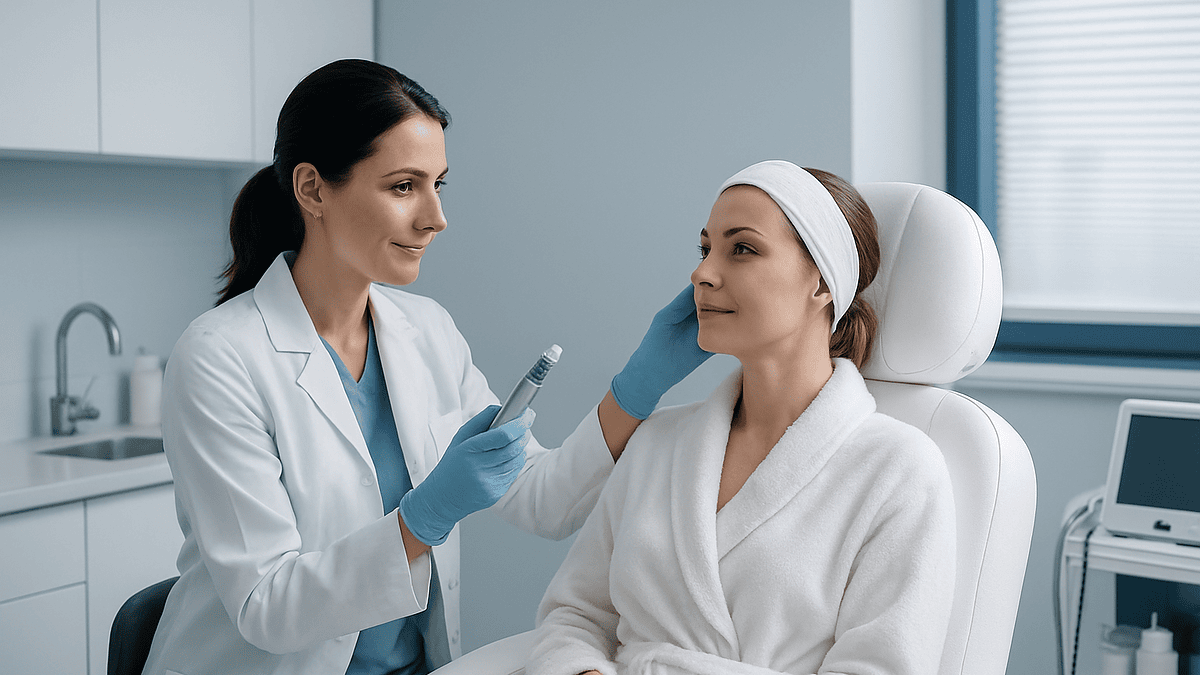
Microneedling, also called collagen induction therapy, uses very fine needles to make thousands of tiny, shallow punctures in the skin. Collagen is the structural protein that gives skin its firmness; induction simply means the treatment prompts the skin to make more of it. Devices range from hand-held rollers to motorized pens, and the needles typically reach between 0.5 and 3 mm into the skin depending on the area and the goal (NIH PMC review).
Each puncture is a micro-wound. The body responds the way it responds to any small cut: platelets arrive, growth factors are released, and over the following weeks fibroblasts (the cells that build collagen) lay down new tissue. Because the surface between punctures stays intact, the skin barrier closes quickly, which is why downtime is short compared with resurfacing lasers.
A typical session in a clinical setting runs roughly like this. The skin is cleansed. A topical numbing cream is often applied and left for around 30 to 45 minutes (Cleveland Clinic). The device is passed over the treatment area in a set pattern. Pinpoint bleeding is normal and expected. A soothing serum or plain moisturizer may be applied afterward, and the whole visit usually lasts well under an hour.
Understanding this sequence explains every preparation rule. Anything that thins, inflames or sensitizes the skin beforehand makes the controlled injury less controlled. Anything that increases bleeding makes the pattern harder to place evenly. Anything that raises the background risk of infection or pigment change turns a minor procedure into a more complicated one. Preparation is not ritual; it is stacking the odds toward a clean, uneventful heal.
Who microneedling is usually for, and who is usually asked to wait
Most people who ask about microneedling are hoping to soften acne scars, fine lines, enlarged pores, mild laxity or uneven texture. Reviews describe it as generally suitable across a wide range of skin tones because it does not rely on heat or light, which is one reason it is often considered when laser resurfacing carries a higher pigment risk (NIH PMC review). Suitable does not mean risk-free, and the assessment still belongs to the practitioner.
Certain situations commonly lead a care team to postpone or decline treatment. The same review lists active acne, active cold sores or other skin infection, a tendency to form keloids (raised scars that grow beyond the original wound), uncontrolled diabetes, bleeding disorders or blood-thinning treatment, and oral isotretinoin within the past six months among the recognized cautions. Pregnancy is usually treated as a reason to wait, largely because the evidence base excludes pregnant participants rather than because harm has been shown.
Skin that is sunburned, tanned or peeling from a recent chemical peel is normally asked to recover first. So is skin with open wounds, eczema flares, psoriasis plaques or rosacea in an inflamed phase.
None of this is a verdict on whether someone can ever have microneedling. It is a question of timing. A cold sore heals; an isotretinoin course ends; a sunburn fades. What good practitioners are really assessing is whether the skin on the day is in a position to repair a deliberate injury without complication. If the honest answer is not yet, waiting is the treatment.
Why sun exposure before microneedling matters more than people expect
Ultraviolet light does two things that matter here. It damages the DNA of skin cells, triggering inflammation, and it stimulates melanocytes, the pigment-producing cells, to make more melanin. A tan is not a sign of healthy skin; it is the visible marker of that repair response already being switched on.
Sunburn makes the problem obvious. Redness, swelling and tenderness typically peak within 12 to 24 hours of exposure, and the skin may keep peeling for days afterward (Mayo Clinic). Needling skin in that state adds injury to injury, increases discomfort and raises the chance of uneven healing.
The quieter issue is post-inflammatory hyperpigmentation: dark patches that appear where inflamed skin has settled. Melanocytes that are already stimulated by recent sun are primed to overreact to the additional inflammation of needling. This is why practitioners across skin types, and particularly for people with medium to deep skin tones, ask patients to avoid tanning, sunbeds and unprotected midday sun in the run-up.
How long is enough? There is no national guideline stating a precise window; the commonly used two-week convention comes from clinical practice rather than trial data, and it makes physiological sense because visible sun damage takes days to settle and pigment activity longer. What the evidence firmly supports is the general approach: a broad-spectrum sunscreen of at least SPF 30, reapplied regularly, plus shade, a hat and sensible timing (NHS).
Back to that outdoor wedding. It is not a reason to cancel the appointment. It is a reason to sit under the marquee, wear the hat, and treat sunscreen as something to reapply rather than apply once.
Should you stop retinol before microneedling? What retinoids do to skin
Retinoids are a family of vitamin A-derived compounds. Over-the-counter retinol, prescription tretinoin and adapalene all work by binding to receptors in skin cells and speeding up cell turnover. Faster turnover is why they help with acne and fine lines, and also why they make skin more sensitive to sun and more prone to dryness, redness and peeling, especially in the first weeks of use (MedlinePlus, tretinoin topical).
That same effect is the reason retinoids and needling do not mix well on the day. Skin that is turning over quickly has a thinner, more fragile outer layer. Needling it tends to produce more irritation, more prolonged redness and, in some people, a burning sensation when products are later applied. Practitioners therefore routinely ask patients to pause topical retinoids before a session and to hold off restarting until the skin has fully calmed.
Two honest caveats. First, the length of the pause is a practice convention rather than a figure from a clinical guideline; different practitioners set different windows based on the strength of the product and how the individual’s skin behaves. Second, if a retinoid has been prescribed for acne or another condition, the decision to pause it is not one to make alone. The prescribing clinician or the practitioner performing the procedure should confirm the plan, and they may want to coordinate.
What people can do without anyone’s permission is stop guessing. Bring the tube, or a photo of the label, to the consultation. Say how long the product has been in use and whether the skin still flakes. That information lets the team set a window that fits the skin rather than a generic one copied from a leaflet.
Microneedling pre treatment checklist: the two-week countdown
Sequence matters more than any single rule. The table below lays out the typical order in which practitioners ask patients to adjust habits. Treat it as a framework to confirm with your own care team, not a schedule to follow without their input, because device depth, skin type and medical history all shift the details.
| Timing | Commonly requested | Basis |
|---|---|---|
| About two weeks before | Strict sun protection; no tanning or sunbeds; no chemical peels, laser or waxing on the area | Practice convention grounded in healing and pigment physiology |
| One week before | Discuss pausing exfoliating acids and topical retinoids with the team; confirm cold-sore history | Practice convention; MedlinePlus notes retinoid sensitivity |
| Several days before | Avoid new skincare products; keep routine simple and moisturizing | Reduces the chance of an unrecognized reaction being mistaken for a complication |
| Day before | Hydrate well; avoid alcohol; plan a product-free morning | Alcohol and dehydration are linked to increased bruising and flushing in practice |
| Day of | Clean skin, no makeup; bring medicine list; wear something easy to keep off the treated area | Standard clinical preparation |
Notice what is missing: any instruction to stop a prescribed medicine on your own. Aspirin, anticoagulants, acne medicines and hormonal treatments belong in a conversation with the prescriber, which is why the checklist says discuss rather than stop.
Notice too the emphasis on simplicity. The fortnight before microneedling is the wrong time to trial a new vitamin C serum or a viral exfoliant. A boring routine is the goal, because boring skin heals predictably, and a predictable heal is what you are paying attention for.
What to avoid before microneedling beyond sun and retinoids
Retinoids get the headlines, but they are not the only ingredients that thin or sensitize the surface. Alpha hydroxy acids such as glycolic and lactic acid, beta hydroxy acid (salicylic acid) and physical scrubs all remove dead surface cells. Layering that exfoliation on top of needling produces a rawer wound and, in people prone to it, a stronger pigment response. Most practitioners ask for these to be paused in the days before a session and reintroduced only once the skin has settled afterward.
Other procedures on the same area deserve a gap. A chemical peel, laser resurfacing or intense pulsed light treatment leaves skin in a healing phase of its own, and stacking a second injury shortens the margin for error. Waxing, threading or depilatory creams strip the outer layer and can leave micro-abrasions that are not visible but are very real to a needle. Facial hair removal should be done well in advance or left until after recovery, and shaving on the morning of a session is usually discouraged for the same reason.
Injectables are a separate conversation. Botulinum toxin and dermal fillers are placed at different depths from microneedling, and practitioners generally prefer a defined interval between them so that one treatment does not disturb the other. There is no single evidence-based figure; the team will set it.
Fragrance-heavy products, self-tanner and heavy occlusive makeup are less about injury and more about contamination. Self-tanner in particular stains the outer skin cells and can obscure how the skin is responding on the day. Arriving with skin that is clean, un-tanned and free of anything the practitioner did not put there is the simplest gift you can give the person holding the device.
Medicines and supplements that affect bleeding and healing
Pinpoint bleeding is part of microneedling; heavier bleeding is not. Anything that reduces the blood’s ability to clot makes the treatment messier and can lead to more bruising. Aspirin and other non-steroidal anti-inflammatory drugs interfere with platelet function. Prescription anticoagulants such as warfarin or the newer direct oral anticoagulants act on clotting factors further along the pathway. Some supplements, including fish oil, vitamin E, ginkgo and high-dose garlic, are also associated with increased bleeding tendency, though the evidence for supplements is weaker and mostly observational (NIH Office of Dietary Supplements).
Here the rule is absolute: no one should stop a prescribed blood thinner for a cosmetic procedure without the prescriber’s explicit agreement. These medicines are usually protecting against clots in the heart, brain or legs, and the risk of pausing them can far outweigh the benefit of a tidier session. Many practitioners will simply decline to treat someone on full anticoagulation, or will proceed with adjustments to depth and technique after speaking to the prescriber. That is a clinical judgment, not a checkbox.
Isotretinoin deserves its own paragraph. This oral retinoid, used for severe acne, changes the way skin heals and thins the outer layer for the duration of treatment (MedlinePlus, isotretinoin). Reviews have traditionally listed isotretinoin use within the past six months as a reason to postpone microneedling (NIH PMC review). More recent dermatology literature has questioned whether that gap is necessary for superficial procedures, but the evidence is still evolving and the decision rests with the treating dermatologist.
The practical step is disarmingly simple. Write down every medicine, patch, injection and supplement, including the ones that feel irrelevant, and hand the list over before the consent form is signed.
Cold sores, acne and infections: why active skin changes the plan
Herpes simplex, the virus behind cold sores, lives permanently in nerve tissue after the first infection and reactivates when the skin is stressed. Needling the lip area, or even the cheeks near a habitual cold-sore site, is exactly that kind of stress. A reactivation after treatment can spread across freshly needled skin instead of staying in one spot, which is why a history of cold sores is one of the first questions a good practitioner asks.
Someone with an active cold sore will normally be asked to wait until it has healed completely, which typically takes 7 to 10 days from the first tingle (NHS). For people with frequent recurrences, a prescriber may consider a short course of an oral antiviral around the procedure. That is a prescribing decision; the role of the patient is to mention the history, not to ask for a particular medicine.
Active acne is a different problem with the same logic. Inflamed pustules contain bacteria, and a needle passing through one can seed that bacteria into neighboring skin. Practitioners typically work around isolated spots or postpone when a breakout is widespread. Scarring from past acne is a common reason to have microneedling; current acne is a common reason to wait.
Bacterial or fungal infections anywhere on the treatment area, including impetigo, folliculitis or an infected cut, also mean postponement. So does a fever or feeling generally unwell on the day, because whole-body illness slows wound healing.
The thread running through all of this is that microneedling asks the immune system to do focused, local repair work. If that system is already busy fighting something, the sensible move is to let it finish first.
The day before and the morning of your microneedling session
The last 24 hours are about arriving as a blank canvas. That sounds simpler than it is, because most morning routines involve six products and a habit of touching the face.
The evening before, a gentle cleanser and a plain moisturizer are enough. Skip the acids, the retinoid (if the team has asked for a pause), the scrub and anything new. Alcohol is worth avoiding; it dilates blood vessels and is associated in practice with more flushing and bruising, and it also dehydrates, which leaves skin less plump on the day. Drink water. Sleep if the wedding allows.
On the morning itself, wash the face with the same gentle cleanser and apply nothing else: no moisturizer, no sunscreen, no makeup, no fragrance. Many practitioners cleanse again in the treatment room, but arriving product-free means the numbing cream can go straight onto clean skin rather than being blocked by a layer of yesterday’s serum. If the appointment is later in the day and sun exposure is unavoidable on the way, a mineral sunscreen that the team can remove is a reasonable compromise; ask them.
Eat something. Numbing cream and lying still for an hour are easier on a stable blood sugar, and lightheadedness during a procedure is far more often about an empty stomach than about the procedure itself.
Bring the medicine list, a soft headband or hair tie, and a clean pair of sunglasses for the walk out, because treated skin is sensitive to light for the rest of the day. Wear a top that opens at the front if the neck or chest is being treated. Small logistics, but they are the difference between a session that feels controlled and one that feels rushed.
Microneedling aftercare timeline: what the following days usually look like
Preparation and aftercare are two halves of the same job, and knowing what is normal afterward makes the preparation make sense.
Immediately after a session, skin is typically red and warm, similar in appearance to a moderate sunburn. That redness usually settles substantially within 24 hours and may persist as a lighter pinkness for a few days, depending on the depth used and the individual (Cleveland Clinic). Mild swelling, tightness and a sandpaper texture as the micro-channels close are common in the first two or three days.
Skincare during this window is deliberately minimal. Practitioners generally advise a gentle cleanser, a bland moisturizer and strict sun protection, with retinoids, acids, scrubs and active serums held back until the skin has fully calmed. Makeup is usually kept off for at least the first day. Sweaty exercise, saunas and swimming pools are typically discouraged for a day or two because heat and chlorinated water irritate open channels.
Collagen remodeling is slow. Any visible change from a single session tends to emerge over weeks rather than days as new tissue matures, which is why reviews describe microneedling as a course rather than a one-off, with sessions commonly spaced 3 to 8 weeks apart (NIH PMC review). How many sessions, and whether the results meet expectations, varies enormously and cannot be promised in advance.
The connection back to preparation is direct. Skin that arrived sun-protected, un-exfoliated and free of active infection generally moves through this timeline with fewer surprises. Skin that arrived tanned or peeling is the skin most likely to linger in the red, blotchy phase.
What people often get wrong about preparing for microneedling
Myth: the more prepared the skin is with actives, the better it will respond. The opposite is closer to the truth. Skin primed with strong retinoids and acids up to the day before is more fragile, not more receptive. Calm skin is the goal.
Myth: a light tan is fine because it is not a burn. A tan is evidence that melanocytes are already active. Needling on top of that activity is one of the more common routes to post-inflammatory dark patches, especially in medium and deep skin tones.
Myth: numbing cream means preparation does not matter. Numbing addresses sensation during the session. It does nothing about bleeding tendency, infection risk or pigment response, which are the things preparation actually targets.
Myth: stopping aspirin or a blood thinner for a couple of days is harmless. For someone prescribed these medicines, the clot risk of pausing can be serious. The prescriber decides, always.
Myth: at-home rollers need no preparation. Consumer devices use shorter needles but still break the skin, and the same principles of clean skin, no active infection and sun avoidance apply. Reviews note that home rollers are also easier to contaminate and harder to sterilize than clinic devices (NIH PMC review).
Myth: if the skin looks fine, it is fine. Cold-sore history, a keloid tendency and recent isotretinoin are invisible on the day and matter more than anything the practitioner can see.
Myth: one session will show the result. Collagen remodeling takes weeks and most protocols involve a series. Judging preparation by the mirror the next morning misses the point.
Underlying every one of these is a single misunderstanding: that microneedling is something done to skin. It is something skin does in response, and preparation is about giving it the best possible starting position.
Risks, side effects and alternatives in plain language
Any honest explainer has to be as clear about what can go wrong as about what to do beforehand. The common effects have already appeared: redness, swelling, tightness, pinpoint bleeding and mild bruising in the first days. These are expected and usually resolve without intervention.
Less common but recognized complications include infection at the treated site, reactivation of cold sores, post-inflammatory hyperpigmentation, and, in a small number of people, prolonged redness or a rash. Allergic or irritant reactions are more likely when active ingredients are applied to freshly needled skin, because the channels allow products to penetrate deeper than intended; this is one reason practitioners are cautious about what goes on immediately afterward (NIH PMC review). Scarring is rare with appropriate depth and technique but is more likely in people with a keloid tendency, which is why that history is asked about.
Preparation lowers several of these risks directly: sun avoidance for pigment, treating or postponing around cold sores, honest medicine disclosure for bleeding, and clean skin for infection. It cannot eliminate them.
Alternatives depend on the goal. For acne scarring, options practitioners discuss include chemical peels, fractional laser resurfacing, subcision (releasing tethered scars with a needle) and fillers. For fine lines and texture, topical retinoids alone, peels and laser are common comparators. Some of these carry higher pigment risk in darker skin; some carry longer downtime; some have a stronger evidence base than microneedling for specific problems. Doing nothing is also an alternative, and a legitimate one.
Which option fits a particular face, budget of time and tolerance for downtime is a conversation for the consultation. The evidence supports microneedling as a reasonable option for several indications; it does not support treating it as the default for everyone.
Can you have microneedling with darker skin, during pregnancy or while breastfeeding?
Three groups ask preparation questions with particular urgency, and each deserves a straight answer rather than a shrug.
People with medium to deep skin tones are often steered toward microneedling precisely because it avoids the heat and light that make some lasers riskier for pigment. Reviews describe it as usable across skin phototypes (NIH PMC review). That said, post-inflammatory hyperpigmentation remains the main complication to plan around, so the sun-avoidance and calm-skin advice carries extra weight, and practitioners may start at a conservative depth or space sessions further apart. A small test area is sometimes offered. None of this is a reason to avoid treatment; it is a reason to prepare more carefully.
Pregnancy is usually treated as a reason to wait. The issue is not proven harm but absence of data: clinical studies exclude pregnant participants, numbing creams and post-procedure products have not been tested in this group, and pregnancy itself alters pigment behavior (melasma, the patchy darkening common in pregnancy, is a live example). Most practitioners simply defer until after delivery.
Breastfeeding sits in a grayer zone. Microneedling itself involves no systemic drug, but topical anesthetics and any serums used afterward are absorbed in small amounts, and the evidence on transfer into breast milk is limited. Some practitioners proceed with plain, minimal products; others prefer to wait. The person to ask is the one performing the procedure, ideally with input from the obstetric or family-medicine team.
In all three cases, honesty at the consultation matters more than anything on the shelf. Skin tone, pregnancy status and breastfeeding change the plan, and a plan that fits is safer than a generic one.
Questions to ask your care team before you book
A good consultation should leave no preparation question unanswered. These are the ones worth writing down beforehand, because they are the ones people most often remember on the drive home.
- Which device and needle depth do you plan to use for my skin and my goal, and why?
- Exactly how long before the session should I pause my retinoid, my exfoliating acids and any other actives, and when can I restart them?
- I take these medicines and supplements (hand over the list). Do any of them change the plan, and will you speak to my prescriber if needed?
- I have a history of cold sores, keloid scars or acne breakouts. How does that affect timing or what you recommend beforehand?
- How many sessions are usually involved for someone like me, how far apart, and how will we judge whether to continue?
- What sun protection do you want me to use before and after, and for how long?
- What will my skin realistically look like on day one, day three and day seven?
- Which products should I have at home for aftercare, and which should I avoid?
- What are the signs that something is going wrong, and how do I reach you if they appear?
- How is the device sterilized or disposed of between patients?
The last question is not rude. Single-use needle cartridges and proper sterilization are basic infection control, and a practitioner who is comfortable being asked is a reassuring sign.
Listen for how the answers are framed. Ranges and honest uncertainty are good signs. Promises about how the skin will look afterward, or pressure to book a package on the spot, are not. The decision to proceed, to wait or to choose something else belongs to you and the treating team together, and a consultation that respects that is worth more than any preparation product.
When to call your doctor: red-flag signs after microneedling
Most people move through the days after a session with nothing more than redness and tightness. A small number develop problems that need prompt assessment, and knowing the difference is part of being prepared.
Contact the practitioner or a doctor promptly if any of the following appear:
- Redness, warmth or swelling that is getting worse rather than better after the first two days, or that spreads beyond the treated area.
- Pus, yellow crusting, or an area that becomes increasingly painful and firm, which can indicate bacterial infection.
- Clusters of small blisters, particularly around the lips or nose, or a tingling that precedes them, which may signal a cold-sore reactivation spreading across treated skin (NHS).
- Fever, chills or feeling generally unwell in the days after treatment.
- A raised, itchy or hive-like rash across the treated area, or swelling of the lips, eyes or face, which may indicate an allergic reaction to a product applied to the skin.
- Bleeding that does not stop with gentle pressure, or extensive bruising that keeps expanding.
- New dark patches appearing over the following weeks, which are worth showing to the team early because pigment changes are easier to manage when they are addressed promptly.
Seek emergency care immediately for difficulty breathing, swelling of the throat or tongue, or a rapidly spreading rash with faintness, which can indicate a severe allergic reaction.
A less urgent but still important category: redness or sensitivity that lingers well beyond what the practitioner described, or skin that feels persistently raw. These are reasons to ask for a review rather than to reach for a new product.
Every one of these situations is assessed and managed by the treating team. Self-treatment with leftover antibiotics, strong steroid creams or home remedies can make things harder to diagnose and is best avoided.
Frequently asked questions
How long should I stop retinol before microneedling?
The pause length is set by your practitioner rather than by any national guideline, and it varies with the product’s strength and how your skin reacts. Retinoids increase cell turnover and skin sensitivity, so most teams ask for a break of several days before treatment and until the skin has fully calmed afterward. If the retinoid is prescribed, confirm the plan with the prescriber before pausing.
What should I avoid before microneedling besides sun?
Exfoliating acids, scrubs, waxing, threading and depilatory creams on the treatment area, self-tanner, new skincare products and alcohol the day before are the usual items on the avoid list. Other procedures such as peels, laser and injectables generally need a defined gap set by the team. Prescribed medicines should never be stopped without the prescriber’s agreement.
Is there a microneedling pre treatment checklist I can follow?
A typical sequence is two weeks of sun protection and no other skin procedures, a discussion about pausing retinoids and acids around a week before, a simple routine in the final days, water and no alcohol the day before, and clean, product-free skin on the morning. Bring a full medicine and supplement list. Confirm every step with your own care team, because depth and skin type change the details.
What does the microneedling aftercare timeline usually look like?
Redness similar to a moderate sunburn is typical immediately afterward and usually settles substantially within 24 hours, with lighter pinkness and a sandpaper texture for a few days. Skincare stays minimal: gentle cleanser, bland moisturizer and strict sun protection, with actives held back until the skin calms. Visible change, if it comes, emerges over weeks as collagen remodels.
Can I have microneedling if I have a tan?
Most practitioners prefer to wait until a tan has faded. A tan indicates melanocytes are already active, and needling on top of that raises the risk of post-inflammatory hyperpigmentation, particularly in medium and deep skin tones. Fresh sunburn is a firm reason to postpone. Your practitioner assesses the skin on the day and makes the final call.
Do I need to stop aspirin or blood thinners before microneedling?
Not on your own. Aspirin, anti-inflammatories and anticoagulants increase bleeding and bruising during needling, but stopping a prescribed blood thinner can carry a serious clot risk. Tell the practitioner exactly what you take; they may adjust technique, contact your prescriber or decide the procedure is not appropriate at this time. The decision belongs to the prescribing clinician.
Can I have microneedling after isotretinoin?
Reviews have traditionally listed isotretinoin use within the past six months as a reason to postpone, because the medicine alters skin healing and thins the outer layer during treatment. More recent dermatology literature questions whether that full gap is needed for superficial procedures, but the evidence is still evolving. Your treating dermatologist decides the timing.
What if I get cold sores? Can I still have microneedling?
Yes, usually, but not while a cold sore is active. Practitioners typically wait until the sore has healed, which takes around 7 to 10 days, because needling can trigger a reactivation and spread it across treated skin. For frequent recurrences, a prescriber may consider a preventive antiviral around the procedure; mention your history and let them decide.
Should I wear makeup or sunscreen to my microneedling appointment?
Arrive with clean skin and nothing on it if possible: no makeup, moisturizer, fragrance or sunscreen. Product-free skin lets numbing cream work directly and reduces the chance of contaminants entering the micro-channels. If sun exposure on the way is unavoidable, ask the team whether a mineral sunscreen they can remove is acceptable.
Does an at-home derma roller need the same preparation?
The same principles apply even though consumer devices use shorter needles. Clean skin, no active infection or cold sore, no fresh tan, and a pause from retinoids and acids all still matter. Reviews note home rollers are easier to contaminate and harder to sterilize than clinic devices, so hygiene is a bigger issue, and a practitioner’s assessment is still worth having.
References
- Cleveland Clinic: Microneedling
- NIH PMC: Microneedling: Advances and widening horizons
- MedlinePlus: Tretinoin Topical
- MedlinePlus: Isotretinoin
This article is for general information only and is not a substitute for professional medical advice. Please consult a qualified doctor about your individual situation.

More from the Blog
IPL Photorejuvenation Results: Why Spots Darken Before They Fade and How Sessions Build
IPL photorejuvenation results usually appear gradually. Treated brown spots often turn darker and coffee-ground-like for several days before flaking away over one to two…

Surface Reconstruction Recovery: Early Supervised Walking, Physical Therapy and Milestones
Surface reconstruction recovery after ocular surface surgery usually unfolds in stages: the corneal surface layer re-covers over days, comfort and light sensitivity settle over…

Before Aesthetic Filling: Blood Thinners, Alcohol and Supplements Your Doctor Will Review
Before dermal fillers, clinicians typically review anything that increases bruising or bleeding: prescribed anticoagulants and antiplatelet drugs, over-the-counter anti-inflammatory painkillers, supplements such as fish…

Reconstruction After Cancer or Infection: How Grafts, Flaps and Staged Surgery Are Planned
Reconstructive surgery after cancer or infection rebuilds tissue removed by a tumor operation or destroyed by infection, using skin grafts, flaps of tissue moved…

Why Hands Show Age Early: Volume Loss, Visible Veins and Sun Spots and How Each Is Treated
Hands show age early because their skin is thin, has very little fat beneath it, and spends decades in sunlight without protection. Over time…

Hand Rejuvenation Recovery: Swelling, Bruising and Why Heavy Hand Use Waits a Few Days
After hand filler, mild swelling, tenderness and some bruising across the back of the hand are common and typically ease over several days to…