

Microneedling vs Chemical Peels for Texture and Scars: Which Approach Fits Which Skin
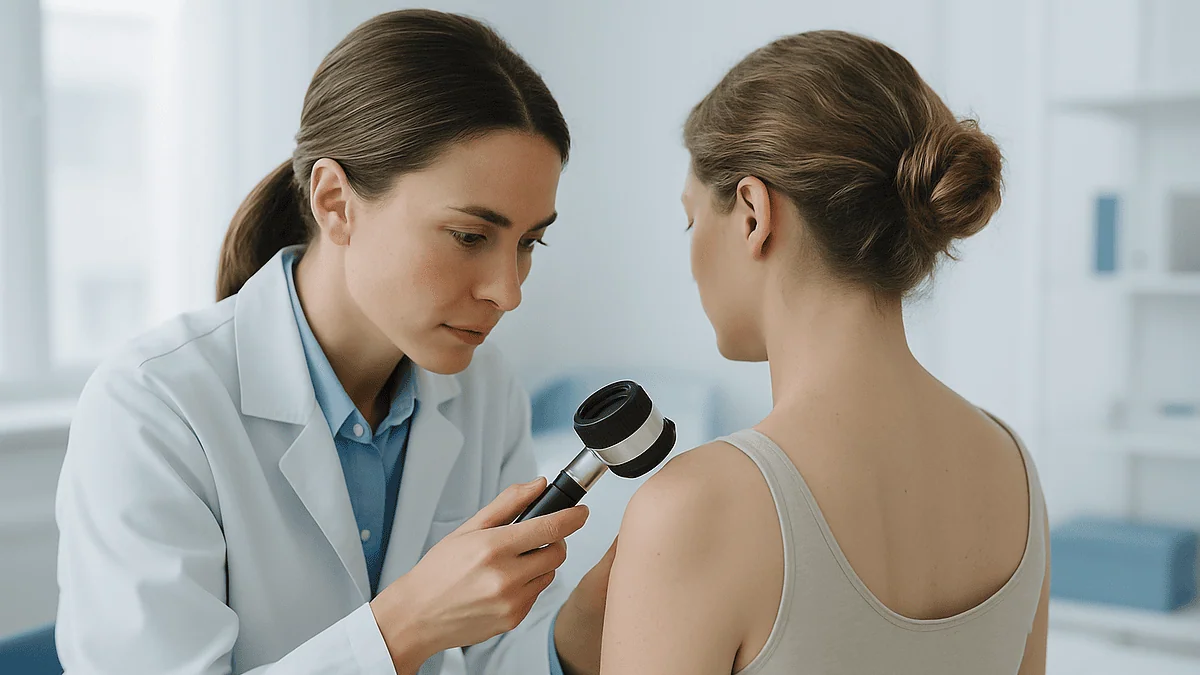
Key Takeaways
- Microneedling stimulates collagen in the dermis without removing the surface, which is why it is often chosen for indented scars and is generally used across all skin tones.
- Chemical peels clear damaged outer layers to improve tone and surface roughness, with Mayo Clinic describing light peels healing in 1 to 7 days and medium peels in 7 to 14 days.
- Deep phenol peels are generally avoided in darker skin tones because of the risk of permanent lightening, according to Mayo Clinic.
- A Cochrane review of 24 trials and 789 participants rated the evidence for acne-scar treatments as low certainty and could not name a single best option.
- Ice-pick scars respond poorly to both approaches, while rolling and shallow boxcar scars are the types most likely to improve.
- Skin often looks drier and more lined for about a week after microneedling because the surface is flaking and new collagen has not yet formed; judge results months later with standardized photographs.
Microneedling and chemical peels both improve skin texture and shallow scarring, but through different routes. Microneedling creates controlled micro-injuries that prompt new collagen and is often preferred for indented acne scars and deeper skin tones. Chemical peels dissolve the outer layers to smooth surface roughness, fine lines and uneven pigment. The better fit depends on scar type, skin tone, downtime and your clinician's assessment.
She tilts the bathroom mirror toward the window, the way she has every morning for years. In that raking light, the small pits along her cheeks cast shadows that foundation only seems to fill halfway. Her phone has two tabs open. One promises a needle-studded device that “resurfaces from within.” The other shows a woman with a glowing, faintly pink face after a peel. The question is the one dermatology nurses hear weekly: microneedling vs chemical peel, which one actually helps?
It is a fair question, and most answers online are thinner than the problem deserves. Texture and scarring are not one condition. A shallow, sandpapery roughness and a deep ice-pick scar sit in different layers of the skin, and no single tool reaches both equally well.
This explainer walks through what each procedure physically does, who tends to benefit, who is asked to wait, what the following weeks usually look like, and where the evidence is honestly thin. The decision, at the end, belongs to you and a clinician who has examined your skin in daylight.
How microneedling vs chemical peel actually work on the skin
Picture skin as two main layers stacked on a foundation. The top layer, the epidermis, is a thin sheet of cells that renews itself roughly every month. Beneath it sits the dermis, a thicker layer of collagen and elastin fibers that gives skin its bounce. Collagen is the protein scaffold that keeps skin firm; elastin lets it snap back. Scars and coarse texture usually live in the dermis, while dullness, sun spots and fine roughness tend to live in the epidermis.
Microneedling uses a pen or roller fitted with very fine sterile needles that puncture the skin thousands of times in a controlled pattern. Each puncture is a tiny wound. The body responds the way it responds to any wound: fibroblasts, the cells that manufacture collagen, migrate in and lay down fresh fibers. Cleveland Clinic describes this as stimulating the skin’s natural repair process rather than removing tissue. The surface is largely left intact, which is why swelling and redness usually settle within days.
A chemical peel works from the outside in. A clinician applies an acid, most often a fruit-derived alpha hydroxy acid such as glycolic acid, a beta hydroxy acid such as salicylic acid, or trichloroacetic acid (TCA), a stronger agent used for medium peels. The solution loosens the bonds between dead and damaged cells so they shed over the following days. Mayo Clinic groups peels into light, medium and deep by how far the acid penetrates. Light peels touch only the epidermis. Medium peels reach the upper dermis. Deep peels, usually phenol-based, go further still and are performed rarely and with medical monitoring.
So the mechanisms differ in direction. One builds from below; the other clears from above. That single distinction explains most of the rest of this article.
Texture and scars are not the same problem
People use “texture” to mean everything from a slightly bumpy forehead to craters left by cystic acne. Clinicians split these apart because treatment depends on depth.
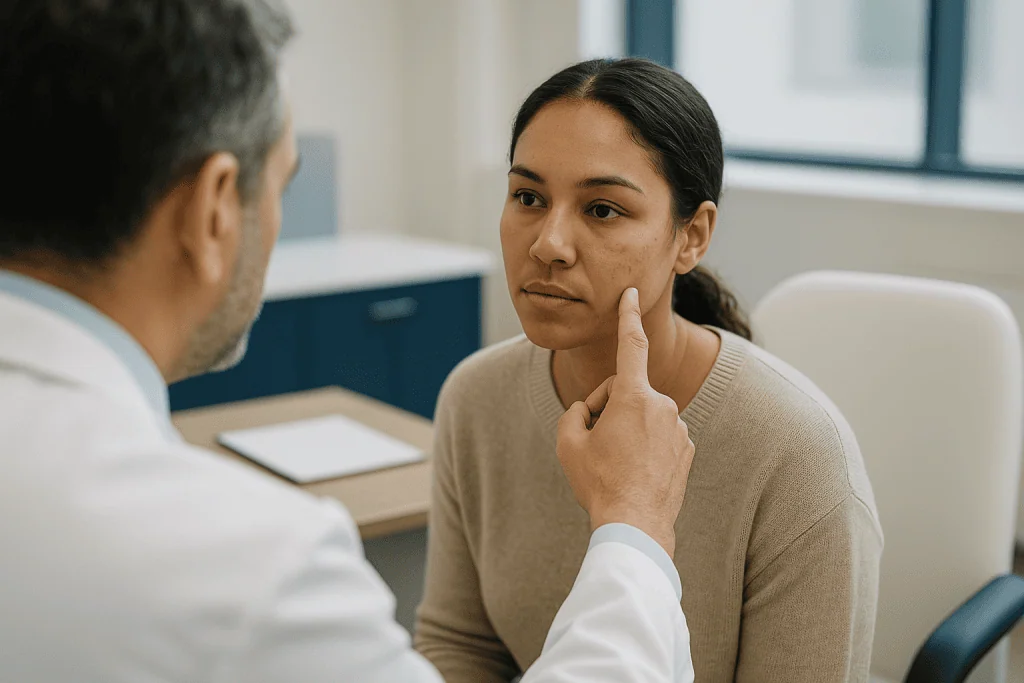
Surface texture includes enlarged-looking pores, rough or flaky patches, fine lines, sun-induced discoloration and the tiny bumps of clogged follicles. These sit in or just below the epidermis. Because a chemical peel removes those upper layers and speeds cell turnover, it is well matched to this group. Mayo Clinic lists fine wrinkling, uneven tone and mild sun damage among the usual reasons a light or medium peel is offered.
Atrophic scars are indented scars where the dermis lost volume during healing. Dermatologists describe three shapes:
- Ice-pick scars are narrow, deep pits, like a puncture from a pointed tool.
- Boxcar scars are wider depressions with sharp, defined edges.
- Rolling scars are shallow, wave-like dips with soft edges that create a rumpled look in side lighting.
Rolling and shallow boxcar scars respond to treatments that rebuild collagen beneath them, which is where microneedling sits. Ice-pick scars are notoriously stubborn for both approaches; clinicians often treat them with focused techniques such as spot application of high-strength acid or minor surgical release, and a peel or needling session is layered afterward. Raised scars, including hypertrophic scars and keloids, are a separate category. A keloid is scar tissue that grows beyond the original wound, and any procedure that injures skin can provoke one in people prone to them.
The practical upshot: before comparing devices, ask what kind of texture you have. A magnifying examination under angled light, sometimes with a photograph, tells a clinician more than any brochure.
Who is usually a good candidate, and who is asked to wait
Neither procedure is appropriate for everyone, and the waiting list is as informative as the go-ahead list.
Microneedling is generally offered to adults with mild to moderate atrophic acne scarring, uneven texture, fine lines or stretch marks, and to people with medium and deep skin tones for whom heat-based treatments carry a higher pigment risk. Cleveland Clinic notes it can be used across skin tones because it does not rely on heat or light.
Chemical peels are usually offered for surface concerns: uneven pigmentation, sun damage, fine lines, rough patches and mild scarring. Light peels suit the widest group. Medium peels require more downtime and more careful patient selection.
Clinicians commonly ask people to postpone or avoid either procedure when:
- There is active acne with open lesions, cold sores, eczema or psoriasis in the treatment area; procedures can spread infection or trigger a flare.
- They are taking or recently stopped an oral retinoid, a class of vitamin A-derived medicine such as isotretinoin, because these slow healing. The waiting period is set by the prescribing clinician; never adjust the medicine to fit an appointment.
- They have a history of keloids or abnormal scarring.
- They are pregnant or breastfeeding; safety data are limited, and most clinics defer treatment.
- They have a bleeding disorder or take medicines that affect clotting, which matters more for needling.
- They have had recent sunburn, or cannot avoid strong sun for several weeks afterward.
- They have unrealistic expectations, which is a legitimate clinical reason to pause and talk.
Mayo Clinic adds that a deep peel is not typically suitable for people with darker skin tones because of a higher risk of permanent lightening. None of these is a permanent no; most are a “not yet, and here is why.”
Is microneedling safe for dark skin, and what about peels?
Skin tone shapes this decision more than almost any other factor, and most comparison articles skip it entirely.
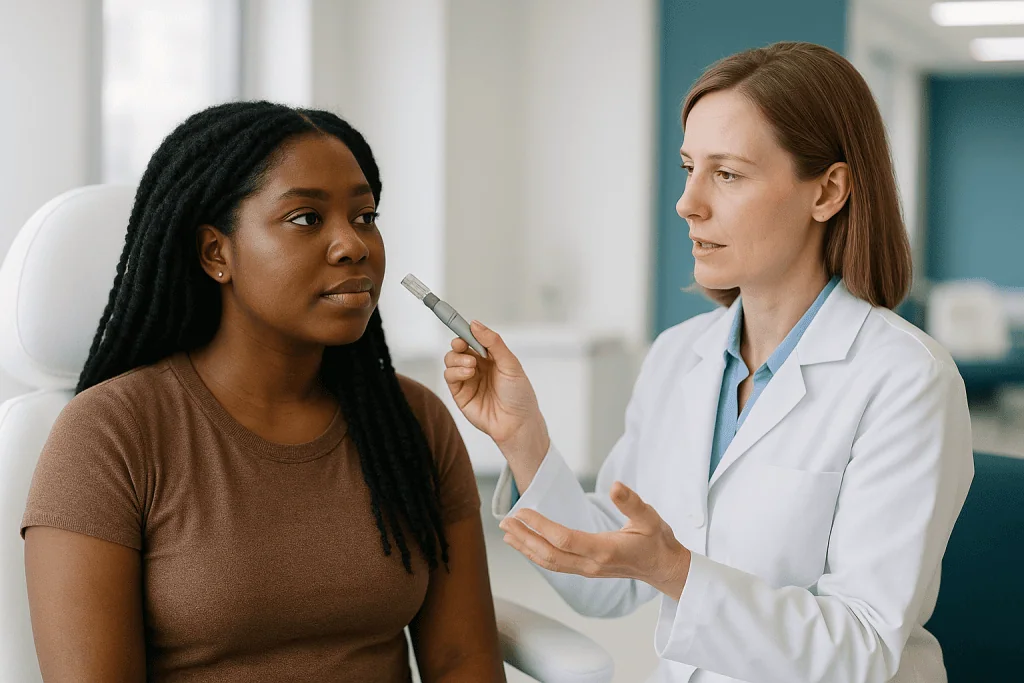
Dermatologists often describe skin using the Fitzpatrick scale, a six-step classification of how skin responds to sun, from type I (always burns, never tans) to type VI (deeply pigmented, rarely burns). The higher the type, the more active the melanocytes, the cells that produce pigment. Active melanocytes are a strength against sun damage but a liability after injury: any inflammation can trigger post-inflammatory hyperpigmentation, dark patches that appear as the skin heals and may take months to fade. The opposite problem, hypopigmentation or lightening, can be permanent and is the reason deep peels are avoided in darker skin, as Mayo Clinic notes.
Microneedling has a reputation as tone-friendly because the needles create mechanical injury without heat and leave the epidermis largely intact. Cleveland Clinic states it is generally considered safe for darker skin tones for that reason. Safe does not mean risk-free. Aggressive needle depth, too-frequent sessions, or sun exposure during healing can still darken the skin. Technique and aftercare matter as much as the device.
Chemical peels can be used safely in deeper skin tones, but the choice narrows to superficial agents and lower strengths, sometimes with a preparatory skincare routine to calm pigment activity beforehand. Medium-depth peels are approached cautiously, often with a test patch behind the ear or along the jawline first.
Whatever the tone, strict daily sunscreen for weeks afterward is not optional. Healing skin has lost some of its natural defenses, and ultraviolet light is the most predictable trigger of unwanted pigment. If a provider does not raise your skin tone during consultation, that silence is itself information.
Microneedling vs chemical peel: a side-by-side comparison
Laid out together, the two approaches look less like rivals and more like tools for different jobs. The ranges below are typical descriptions from Mayo Clinic and Cleveland Clinic, not guarantees, and individual clinicians may work differently.
| Factor | Microneedling | Chemical peel (light to medium) |
|---|---|---|
| Main mechanism | Controlled puncture stimulates collagen in the dermis | Acid removes damaged outer layers, speeding turnover |
| Best-matched concerns | Rolling and shallow boxcar scars, fine lines, stretch marks, overall firmness | Uneven tone, sun spots, rough surface, fine lines, very shallow scars |
| Skin tone range | Generally used across all tones (Cleveland Clinic) | Light peels across tones; medium with caution; deep avoided in darker skin (Mayo Clinic) |
| Typical visible healing | Redness and mild swelling for a few days (Cleveland Clinic) | Light: 1 to 7 days; medium: 7 to 14 days (Mayo Clinic) |
| Sessions | Usually a series spaced weeks apart | Light peels repeatable every 2 to 5 weeks; medium repeated only after months (Mayo Clinic) |
| Discomfort | Pressure and scratching sensation; numbing cream often applied | Stinging or burning during application; cooled afterward |
| Key risks | Infection, bleeding, pigment change, scarring, tracking of products into skin | Pigment change, prolonged redness, infection, scarring, cold sore reactivation |
Two patterns stand out. Microneedling asks for patience, because collagen forms slowly and the result is cumulative. Peels give a faster, more visible surface change but a shorter reach into the dermis. Many dermatology practices combine them over a treatment plan, alternating or spacing them, so the comparison is often “which first” rather than “which one.”
Should I do microneedling or a chemical peel first?
This question comes up constantly, and the honest answer is that sequencing is a clinical judgment, not a rule. Still, there is a logic most clinicians follow.
When the dominant complaint is surface: dull tone, sun spots, rough feel, clogged pores. A light peel usually goes first. Clearing the epidermis gives a quick, motivating change and makes the true scar pattern easier to see once the surface noise is gone. Some practices also use a series of light peels to calm pigment activity in deeper skin tones before any deeper work.
When the dominant complaint is indented scarring or laxity, microneedling tends to lead, because the collagen response takes time and the sooner it begins, the sooner the cumulative benefit accrues. A peel can be layered later to refine tone.
What clinicians consistently avoid is stacking both on the same day at meaningful strength, or crowding them into the same week. Both create inflammation. Adding a second insult before the first has settled raises the odds of prolonged redness, pigment shifts and, in the worst case, scarring. Cleveland Clinic and Mayo Clinic both emphasize letting skin heal fully before repeating any procedure.
A useful mental model: a peel is like sanding and refinishing a tabletop; microneedling is like reinforcing the frame underneath. You would not do both on the same afternoon, but a well-built table eventually needs both.
One more consideration. If you have never had either procedure, starting with the gentler option in your clinician’s plan, often a light peel or a conservative needling depth, lets everyone observe how your skin heals and pigments before escalating. Your response to the first session is data that shapes the second.
Is 40 too old for microneedling?
No age cutoff exists for either procedure, and 40 is well within the range most clinics treat. The question usually hides a different worry: does older skin still respond?
Skin changes with age in predictable ways. MedlinePlus describes thinning of the epidermis, loss of fat beneath the skin, reduced elasticity and slower repair. Collagen production declines gradually from the third decade onward, and sun exposure accelerates the process. That sounds discouraging until you remember what microneedling does: it deliberately provokes the repair response that age has dampened. Fibroblasts in a 40- or 60-year-old still manufacture collagen; they simply need a stronger, more sustained cue and heal a little more slowly.
What shifts with age is not eligibility but expectation and pacing. Older skin may show redness for longer after a session. Bruising is more common because vessel walls and the surrounding tissue are thinner. Clinicians may space sessions further apart to allow full recovery. Sun damage accumulated over decades also means more pigment irregularity to manage, which is where peels often enter the plan.
Chemical peels follow the same logic. Fine lines and sun spots that peels address tend to be more prominent after 40, which is one reason Mayo Clinic lists these among the common indications. Deep wrinkles, sagging jowls or significant volume loss are beyond the reach of either procedure; a clinician may mention other options, including surgical ones, and it is worth hearing that assessment without feeling steered.
The more relevant screening questions at any age concern medical history: blood thinners, diabetes, autoimmune conditions, or medicines that slow healing. These, not a birthday, determine whether a clinician says yes, wait, or consider something else.
What the days and weeks afterward usually look like
Downtime is where the two procedures diverge most visibly, and where planning around work or events matters.
After microneedling, skin typically looks and feels sunburned. Cleveland Clinic describes redness and mild swelling in the first few days, sometimes with pinpoint bleeding immediately after and slight flaking as the surface renews. Most people return to ordinary activities within a day or two, with makeup usually held off until the surface has sealed. The skin can feel tight and dry for about a week. The real change is invisible at this stage: collagen remodeling continues beneath the surface for weeks to months, which is why clinicians ask people to judge results well after the redness fades.
After a light chemical peel, Mayo Clinic describes healing over 1 to 7 days. Skin may look slightly pink, feel tight, and shed fine flakes like a mild sunburn. Many people have these on a lunch break and return to work the same day.
After a medium peel, the timeline lengthens to 7 to 14 days according to Mayo Clinic. Expect swelling that peaks around the second day, followed by darkening, crusting and peeling in sheets. Redness can persist for weeks. This is not a procedure to schedule before a wedding.
Aftercare overlaps for both: gentle cleanser, bland moisturizer, no picking at flakes or crusts, no active ingredients such as retinoids or acids until your clinician clears them, and diligent broad-spectrum sunscreen. Cold sores can flare after any facial procedure in people who carry the virus, so tell your clinician if you have a history; they may discuss preventive options.
A simple rule: if the skin is still healing, protect it. If it stops improving or starts worsening, call.
How many sessions, and how long do results last?
Anyone who promises a number in the first consultation without examining your skin is guessing. Ranges exist, though, and they help set expectations.
Microneedling is almost always planned as a series because each session adds a modest increment of new collagen. Cleveland Clinic describes most people needing several treatments spaced weeks apart, with visible improvement building over the course of the series rather than appearing after one appointment. Depth of scarring, needle depth, skin tone and how quickly your skin recovers all influence the spacing. Maintenance sessions are sometimes suggested later, though the evidence for how often is thin.
Light chemical peels are also repeated. Mayo Clinic states they can be performed every 2 to 5 weeks until the desired effect is reached. Medium peels are spaced much further apart; Mayo Clinic describes repeating them after several months if needed. A deep peel is typically done once in a lifetime for a given area.
How long results last depends on what caused the texture in the first place. Collagen rebuilt around a scar tends to persist, but the ordinary aging process continues and sun exposure erodes gains. Pigment cleared by a peel returns if the skin is not protected, because the melanocytes that produced it are still there. Neither procedure alters the underlying tendency toward acne, so new breakouts can create new scars.
Photographs taken under the same lighting before the first session and after the last are the only honest yardstick. Memory flatters and mirrors lie by the hour. Ask your clinician to take standardized images; a practice that declines has removed your ability to judge your own outcome.
Chemical peel vs microneedling for acne scars: what the evidence shows
The evidence deserves plain speech. A Cochrane systematic review of interventions for acne scars, indexed in PubMed, pooled 24 randomized trials involving 789 participants and covered chemical peels, microneedling, lasers, fillers and combinations. The authors rated the certainty of evidence as low or very low for most comparisons. Trials were small, used inconsistent scar-scoring methods, rarely followed people beyond a few months, and often lacked blinding. Their conclusion was that no single treatment could be confidently recommended over another based on the trials available.
That is not the same as saying nothing works. Both microneedling and peels showed improvements in participant-rated and clinician-rated scar scores within individual studies. The problem is comparing across them. When two procedures are each tested against a different comparator, in different populations, with different outcome scales, the question of which is better remains open.
Several patterns do recur across the literature and clinical guidance:
- Rolling and shallow boxcar scars respond better than ice-pick scars to both approaches.
- Combination protocols, such as microneedling alternated with superficial peels, are common in practice and appear in some trials, but head-to-head data are limited.
- Darker skin tones show more pigment complications after peels than after needling in the studies that report skin type, consistent with the mechanistic reasoning above.
- Follow-up beyond six months is rare, so durability claims rest largely on clinical experience.
Where does that leave a reader with scars? With a reasonable, evidence-supported expectation of partial improvement from either procedure, a lower expectation for ice-pick scars, and a healthy skepticism toward any figure presented as a guaranteed percentage. Clinicians who acknowledge this uncertainty are not hedging; they are reading the same studies.
Why does my skin look older after microneedling?
Search this phrase and you will find alarmed forum posts, usually written in the first two weeks after a session. The explanation is almost always the healing process itself, not damage.
Immediately after needling, the skin is inflamed and slightly swollen. Swelling can temporarily blur fine lines, so people often look better on day one. Then the swelling subsides and the skin enters a dry, flaky phase as the surface cells renew. Dehydrated skin exaggerates every line and shadow; it looks crepey the way a plum looks like a prune when it dries. Cleveland Clinic notes that dryness and flaking are expected during recovery. This phase passes as the barrier repairs, typically over a week or so.
Collagen, meanwhile, has not arrived yet. Fibroblasts take weeks to lay down new fibers and months to remodel them into organized, load-bearing bundles. Judging a result at day ten is like judging a renovation the week the drywall goes up.
Less common causes deserve mention. Overly aggressive needle depth, sessions crowded too close together, or needling over active inflammation can produce prolonged redness, textural roughness or a grid-like pattern of marks called tracking. Pushing skincare products into the skin during the procedure, a practice some clinics offer, can cause granulomas, small inflammatory lumps, if the product is not intended for that use. These are reasons to return to the treating clinician for assessment rather than to wait it out.
Persistent worsening beyond a few weeks, new pigment patches, or texture that was not there before are not normal healing and belong in the “call your doctor” category. A single photo series taken under consistent lighting will settle most of the anxiety either way.
What people often get wrong
Some misconceptions recur so often they deserve direct correction.
“Deeper is better.” Needle depth and peel strength are matched to skin thickness and concern, not to ambition. The forehead and nose tolerate more than the eyelids and neck. Excess depth raises complication rates without proportionate benefit, which is why experienced clinicians often work conservatively and build over sessions.
“A home derma roller does the same thing.” Consumer rollers usually have very short needles that barely pass the epidermis, and rollers are difficult to sterilize once used. Cleveland Clinic advises having microneedling performed by a trained professional using sterile, single-use cartridges. Rolling over active acne can spread bacteria across the face.
“DIY acid peels save a step.” High-strength acids sold online lack the neutralization, timing and depth judgment that a clinician provides. The NHS warns that chemical peels should be carried out by a trained, appropriately qualified practitioner and that stronger peels carry a real risk of scarring and permanent pigment change.
“Peeling means it’s working.” Visible peeling is a side effect, not the goal. Light peels often produce little or no flaking yet still speed turnover. Chasing dramatic peeling is chasing injury.
“Microneedling can shrink pores permanently.” Pores do not have muscles to tighten. Collagen support around them can make them look smaller, and clearing debris helps, but a permanent structural change is not something the evidence supports.
“One session will fix scars.” The Cochrane review and mainstream clinical guidance agree that improvement is partial and cumulative. Anyone promising a single-session transformation is selling, not explaining.
“If it stings, it’s damaging.” Some stinging during a peel and pressure during needling are expected. Severe pain, however, is a signal to stop, not to push through.
Questions to ask your care team
A good consultation feels like a conversation rather than a pitch. These questions tend to surface the information that matters.
- Looking at my skin under magnification, what kind of texture or scars do I actually have, and which layer do they sit in?
- Given my skin tone and history of pigmentation, which approach carries the lower risk of dark or light patches for me specifically?
- Are there reasons I should wait, such as active breakouts, a recent course of oral retinoids, cold sores or upcoming sun exposure?
- How do you decide needle depth or peel strength, and will you start conservatively?
- How many sessions do you anticipate, how far apart, and what would make you change that plan?
- What will I look like on day two, day seven and day fourteen, and when can I wear makeup or exercise?
- Which products should I stop before and after, and for how long?
- Will you take standardized photographs so we can judge progress objectively?
- What complications have you seen with this procedure, and how do you manage them?
- Who do I contact after hours if something looks wrong, and how quickly will someone respond?
- Do you use sterile, single-use needle cartridges, and how is equipment cleaned between patients?
- What are the alternatives, including doing nothing for now, and how do they compare for my particular concern?
Notice what is missing from that list: nothing about how quickly you can book or what package is available. Those conversations belong later, once the clinical questions are settled. A provider who answers the medical questions patiently and welcomes the photography request is usually one worth trusting with your face. One who redirects every question toward scheduling has told you something too.
When to call your doctor
Most recoveries are uneventful. Redness fades, flakes fall, and the skin looks a little fresher. Knowing what is not normal lets you act early, when problems are easiest to manage.
Contact the treating clinician promptly, or seek urgent care if you cannot reach them, for any of the following:
- Increasing pain, warmth, swelling or redness after the first two to three days, rather than steady improvement, which can signal infection.
- Yellow or green discharge, spreading crusts, or a foul smell from the treated area.
- Clusters of small fluid-filled blisters, especially around the mouth or nose, which may indicate a cold sore outbreak spreading across freshly treated skin; Mayo Clinic notes peels can reactivate the herpes virus.
- Fever, chills or feeling generally unwell.
- Patches of skin turning white, gray or unusually dark that were not present before, or blistering after a peel that extends beyond the expected mild flaking.
- Bleeding that does not stop with gentle pressure.
- Hives, facial swelling beyond the treated area, wheezing or difficulty breathing, which suggest an allergic reaction and require emergency care.
- Sudden vision changes or eye pain if any solution came near the eyes.
- Any raised, firm or itchy thickening of a treated area in the weeks afterward, which may be early hypertrophic or keloid scarring.
Less urgent but still worth a call: redness or pigmentation that has not improved several weeks beyond the expected window, new texture that was not there before, or simple worry. Clinicians would rather hear from you early than see a preventable complication late. Keep the practice’s after-hours number where you can find it before the procedure, not after.
Frequently asked questions
Should I do microneedling or a chemical peel first?
Most clinicians start with whichever addresses your dominant concern: a light peel for surface tone and roughness, microneedling for indented scars. They are not performed at full strength on the same day because stacking inflammation raises the risk of pigment change and prolonged redness. Your response to the first session guides the second, so a conservative start is common.
Is microneedling good for texture, or only for scars?
Microneedling is used for both, but it shines on texture that comes from lost dermal support, such as rolling scars, fine lines and mild laxity. Surface roughness from dead cells, clogged pores or sun spots usually responds faster to a chemical peel, because the peel directly removes those outer layers rather than waiting for collagen to build underneath.
Is microneedling safe for dark skin?
Cleveland Clinic describes microneedling as generally safe across skin tones because it creates mechanical injury without heat, which is the main trigger of pigment problems after light-based treatments. Risk is not zero: overly deep or frequent sessions and sun exposure during healing can still cause dark patches. Conservative depth and strict sunscreen are the standard safeguards.
Is 40 too old for microneedling?
No. There is no upper age limit for microneedling or chemical peels. Skin repairs more slowly with age, as MedlinePlus describes, so redness and bruising may last a little longer and sessions may be spaced further apart. Eligibility depends on medical history, medicines and skin condition rather than age, and a clinician assesses those at consultation.
Why does my skin look older after microneedling?
Usually because you are looking during the dry, flaky phase of healing, when dehydrated surface cells exaggerate lines and shadows. Collagen takes weeks to form and months to mature, so early appearance does not predict the result. If worsening continues beyond a few weeks or new pigment or texture appears, return to the treating clinician for assessment.
Which is better for acne scars, a chemical peel or microneedling?
The evidence does not crown a winner. A Cochrane review of 24 trials found low-certainty evidence and could not recommend one treatment over another. In practice, microneedling is often favored for rolling and shallow boxcar scars and for deeper skin tones, while peels help surface irregularity and pigment. Ice-pick scars respond poorly to both.
How long is the downtime for a chemical peel compared with microneedling?
Mayo Clinic describes light peels healing in 1 to 7 days and medium peels in 7 to 14 days, with redness sometimes persisting longer after medium peels. Cleveland Clinic describes redness and mild swelling for a few days after microneedling, with most people resuming normal activities within a day or two. Individual healing varies.
Can I combine microneedling and chemical peels in one treatment plan?
Yes, combination plans are common, typically alternating or spacing the two procedures so skin fully heals between them. Clinicians avoid performing both at meaningful strength on the same day. Head-to-head trial data on combinations are limited, so the sequence and spacing rest on your clinician’s judgment of your scar type, skin tone and healing response.
Do at-home derma rollers or peel kits work as well as professional treatment?
No. Consumer rollers have very short needles, are hard to sterilize and can spread bacteria across the face, while high-strength acids sold online lack the timing and neutralization a trained practitioner provides. Cleveland Clinic and the NHS both advise having these procedures performed by qualified professionals because of the risk of infection, scarring and permanent pigment change.
What should I stop using before a peel or microneedling session?
Clinicians typically ask people to pause topical retinoids, exfoliating acids and other irritating actives for a period before and after treatment, and to avoid sunburn and hair removal in the area. Anyone taking an oral retinoid or a medicine that affects clotting should tell the clinician, who decides timing with the prescribing doctor. Never change a prescription on your own.
References
- Cleveland Clinic: Microneedling
- Cleveland Clinic: Chemical Peels
- NHS: Chemical peels
- MedlinePlus: Aging changes in skin
This article is for general information only and is not a substitute for professional medical advice. Please consult a qualified doctor about your individual situation.

More from the Blog
Who Is a Candidate for Laser Resurfacing? Skin Tone, Recent Tanning and Healing History
Typical laser resurfacing candidates have skin concerns such as fine lines, sun damage, uneven texture or certain scars, no active tan, no recent isotretinoin…
Which Collagen Treatment Fits Your Skin Concern? How Dermatologists Match Method to Goal
The right collagen treatment depends on the specific concern, not on the popularity of the method. Fine lines and texture usually point toward topical…
Cryotherapy Healing: Blistering, Crusting and How Long Treated Skin Takes to Settle
After skin cryotherapy, the treated spot typically reddens and swells within hours, may blister within a day, then forms a crust that separates over…
Chemical Peels for Sensitive or Darker Skin: Why Gentle Enzymatic Options Are Often Chosen
Chemical peels for sensitive or darker skin are usually kept superficial, because deeper peels raise the risk of post-inflammatory hyperpigmentation, the dark patches that…

Subcision and Acoustic Wave Therapy for Cellulite: What Happens During Each Session
Subcision treats cellulite by using a small needle or blade to cut the fibrous bands that pull skin downward and create dimples, allowing the…
What Happens in a Mesotherapy Session: Microinjections, Timing and How It Feels
A mesotherapy session is a short cosmetic procedure in which a practitioner places many tiny, shallow injections of a liquid mixture, often containing hyaluronic…