

Before Acne Scar Treatment: Sun, Exfoliants and the Products Your Dermatologist Pauses
Key Takeaways
- Mayo Clinic advises avoiding unprotected sun for up to two months before laser resurfacing, because sun-primed pigment cells are the main cause of lasting dark or light patches afterward.
- Retinoid instructions genuinely vary: some dermatologists pause them before a peel while others ask patients to use them beforehand, so the written plan from your team overrides any online rule.
- Scrubs, masks, waxing, depilatory creams and electrolysis are typically stopped in the week before a chemical peel to keep the skin barrier even and intact.
- Active acne is the most common reason scar treatment is postponed, and a history of cold sores, smoking or isotretinoin use within the past year each changes the plan.
- Flat red or brown acne marks are not scars; they fade over months with sun protection, while pitted or raised scars need texture-changing procedures that improve rather than erase them.
- Visible recovery ranges from roughly 1–7 days after a light peel to about 1–2 weeks of raw skin plus months of redness after ablative laser or dermabrasion, according to Mayo Clinic.
Preparing for acne scar treatment usually means getting active acne under control first, protecting the skin from sun for several weeks beforehand, and pausing exfoliating acids, scrubs and some topical retinoids on a schedule your dermatologist sets. You should also disclose past isotretinoin use, cold sore history, smoking and any medicines that affect bleeding. Exact timing varies by procedure and skin tone, so follow your treating team's written instructions.
The appointment is booked, the deposit-free confirmation email has arrived, and now a different kind of worry sets in. Not about the laser or the peel itself, but about the bathroom shelf. The glycolic toner you finally got used to. The prescription cream you have applied every night for two years. The beach weekend that is already planned. Which of these quietly undoes the work you are about to pay for with your time and your patience?
Preparing for acne scar treatment is mostly about one idea: the procedure deliberately injures the skin so that it heals in a better pattern, and injured skin heals predictably only when it starts out calm, untanned and unprovoked. That is why dermatologists spend so much of the first visit talking about what to stop rather than what to start.
This explainer walks through the sun rules, the exfoliants, the products most often paused, and the honest limits of what any scar treatment can do.
What preparing for acne scar treatment actually involves
Most acne scar procedures share a single mechanism. A chemical peel dissolves a controlled thickness of the outer skin. A laser vaporizes or heats tissue in a grid of tiny columns. Microneedling, which means rolling or stamping fine sterile needles across the skin, creates thousands of micro-channels. Dermabrasion sands the surface with a rotating instrument. In each case the body responds to the injury by laying down new collagen, the structural protein that gives skin its firmness, and by resurfacing the top layer. Scars soften because the healing pattern is nudged toward smoother tissue.
That makes preparation less about cosmetics and more about wound biology. Skin that is inflamed, sun-stimulated, freshly waxed or thinned by acids will heal less evenly. Pigment cells that are already switched on by ultraviolet light are far more likely to overproduce color when injured, which is the basis of post-inflammatory hyperpigmentation: a flat brown or gray patch that appears after the skin has been irritated. Mayo Clinic notes that sun exposure in the weeks before laser resurfacing can cause lasting irregular pigmentation in treated areas.
A typical first visit therefore has a shape. Your dermatologist identifies the scar types you have, because the NHS describes three main patterns (ice pick, boxcar and rolling scars) that respond to different tools. They look at whether acne is still active. They ask about medicines, supplements, cold sores, smoking and previous procedures. Then they hand you a written list of what to pause and for how long. That list is specific to the procedure and to you; a superficial peel and an ablative laser do not carry the same instructions, and neither does a person with olive skin compared with a person who burns after ten minutes outdoors.
Who is usually a candidate, and who is usually asked to wait
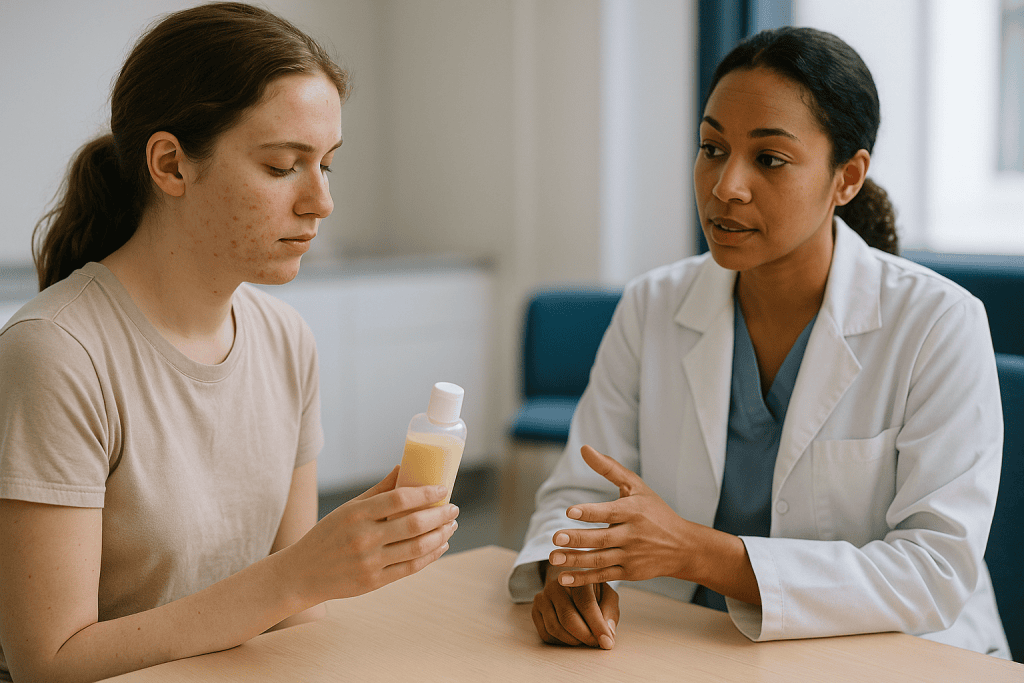
The single most common reason a dermatologist delays scar work is that acne is still active. Cleveland Clinic and the NHS both describe scar treatment as something that follows acne control rather than running alongside it. The logic is simple: treating a scar while new lesions are forming is like repaving a road that is still being dug up, and inflamed skin also heals less predictably after a peel or laser.
Other groups are commonly asked to wait or to choose a different approach:
- People who have recently taken oral isotretinoin, a vitamin A derived medicine for severe acne. Mayo Clinic lists use within the past year as a caution before dermabrasion and laser resurfacing because of concerns about delayed healing. More recent reviews have questioned whether such a long gap is needed for every procedure, but the evidence is still evolving, and the decision belongs with your treating team.
- Anyone with an active cold sore, because resurfacing can spread the herpes simplex virus across the treated area.
- People with a recent tan or planned heavy sun exposure, for the pigment reasons above.
- Those with a personal or family history of keloids, which are raised scars that grow beyond the original wound, since aggressive procedures can trigger new ones.
- People who are pregnant or breastfeeding, for whom many teams defer elective procedures and certain topical medicines.
Being asked to wait is not a rejection. It is usually a sign that your dermatologist is protecting you from a result that would be harder to fix than the scars themselves. Expectations matter too: someone hoping for completely smooth skin in one session is often steered toward a frank conversation before any device is switched on.
Sunscreen before acne scar laser or peel: why weeks matter more than days
Ask a dermatologist what they wish patients did differently before scar treatment, and sun protection usually tops the list. It sounds too basic to matter. It matters more than any serum you own.
Here is the mechanism. Ultraviolet light activates melanocytes, the cells that make pigment. Once activated, they stay primed for weeks. When a laser, peel or needle then injures the skin, those primed cells respond to the inflammation by dumping extra pigment into the healing tissue. The result is post-inflammatory hyperpigmentation that can outlast the original scar. With lasers there is a second problem: melanin in a tan absorbs laser energy, so a tanned face takes up more heat than the settings assume, raising the risk of burns and blotchy light patches.
Mayo Clinic advises avoiding unprotected sun exposure for up to two months before laser resurfacing, and lists sun avoidance among the standard preparations for chemical peels and dermabrasion as well. Two months is not a marketing number; it reflects how long pigment cells stay switched on.
Practical sun habits in that window follow the same guidance the CDC gives for skin cancer prevention: a broad-spectrum sunscreen of SPF 15 or higher applied to all exposed skin, reapplied after swimming or sweating, plus shade during the middle of the day and a wide-brimmed hat. Many dermatologists prefer a higher SPF for the face before procedures, and yours will tell you what they want you to use. Tanning beds are off the table entirely, and so is the idea of getting “a little color” beforehand so redness shows less. Preparing for acne scar treatment with a base tan is the opposite of preparation.
Do you stop retinol before laser, peels or microneedling?
Retinoids are the products people ask about most, and the honest answer is that instructions genuinely differ. A retinoid is any vitamin A derivative applied to the skin; over-the-counter retinol is the gentlest, while tretinoin and adapalene are prescription strengths. All of them speed up cell turnover and thin the outermost layer, which is exactly why they help acne and exactly why they complicate a procedure.

Thinner, faster-turning skin absorbs peel solutions more deeply and unevenly, stings more under a laser, and bleeds and reddens more with microneedling. So many teams ask patients to stop retinoids for a period before treatment. Yet Mayo Clinic’s chemical peel guidance also describes the opposite instruction: some dermatologists have patients use a retinoid cream in the weeks before a peel, because a primed, evenly turning surface can help the peel penetrate uniformly and speed recovery afterward. Both approaches are legitimate. Which one you receive depends on the depth of the procedure, your skin’s history with the product and your dermatologist’s protocol.
Three points hold regardless of the plan:
- If the retinoid is a prescription for your acne, do not stop it on your own. Ask the prescriber whether a pause is wanted and how long it should be.
- Do not “make up” for a pause by using more before or after. Retinoid irritation is cumulative.
- Restarting is a decision for your team, usually once the skin has fully re-epithelialized, meaning the new surface layer is intact, without rawness or peeling.
If you have read online that everyone must stop retinol a fixed number of days before every treatment, treat that as a rule of thumb, not a rule. The written sheet from your dermatologist overrides it.
Exfoliants, acids and scrubs: what to put away the week before
An exfoliant is anything that removes dead surface cells faster than the skin sheds them on its own. Chemical exfoliants include alpha hydroxy acids such as glycolic and lactic acid, and beta hydroxy acid, which is salicylic acid. Physical exfoliants are scrubs, cleansing brushes and abrasive pads. All of them weaken the skin’s barrier, the lipid-rich outer layer that keeps water in and irritants out.
Before a peel or laser, a compromised barrier is a problem for two reasons. First, uneven exfoliation creates a patchwork of thinner and thicker areas, so a peel that should penetrate to one depth ends up deeper in some spots. Second, an already irritated barrier reacts to the procedure with more inflammation, which feeds pigment problems. Mayo Clinic’s chemical peel preparation guidance specifically lists facial scrubs and masks among the things to avoid in the week before treatment, alongside hair removal methods such as waxing, depilatory creams and electrolysis, and hair dyes or permanent-wave treatments near the face.
Benzoyl peroxide deserves a mention. It is an antibacterial acne product rather than an exfoliant, but it dries and irritates the surface and can bleach fabric and hair. Many teams pause it along with acids. Leave-on vitamin C serums, which are acidic, and strong fragranced products also tend to go on the shelf.
What replaces them is deliberately dull: a gentle non-foaming cleanser, a plain moisturizer without acids or fragrance, and sunscreen. Dermatologists sometimes call this a “bland routine,” and it is the closest thing to a universal instruction in preparing for acne scar treatment. Resist the urge to do one last deep exfoliation the night before so the skin “looks fresh.” Fresh is not the goal; intact is.
Prescription medicines and supplements your dermatologist may pause, and the ones they will not
This is where preparation stops being about skincare and becomes a conversation between clinicians. Bring a full list of everything you take, including supplements and herbal products, because several affect either bleeding or healing.
Oral isotretinoin has already come up. It reduces oil gland activity and, historically, was linked to slow wound healing and abnormal scarring after resurfacing, which is why Mayo Clinic flags use within the past year before dermabrasion and laser. Your dermatologist weighs your specific history against the newer, more reassuring but still incomplete evidence.
Oral antibiotics used for acne, particularly the tetracycline class, can make skin more sensitive to sunlight. That interacts directly with the sun rules above, and your prescriber decides whether the course should continue through the procedure.
Products that thin the blood matter most for microneedling, subcision (a technique that releases tethered scars with a needle beneath the surface), dermal fillers and deeper lasers, because they increase bruising and oozing. Mayo Clinic notes that some teams ask patients to avoid nonprescription products that affect clotting, such as aspirin, ibuprofen and vitamin E, for around 10 days before laser resurfacing. Fish oil and ginkgo often appear on the same lists. Prescribed anticoagulants, including for heart conditions or clot prevention, are a different matter entirely: never pause these on your own, and expect your dermatologist to consult the prescribing doctor before any change.
If you have a history of cold sores, Mayo Clinic describes preventive antiviral medicine before and after resurfacing. Antivirals work by blocking the enzyme the herpes virus needs to copy itself; the choice, timing and duration are set by your prescriber. Immunosuppressants, steroids and diabetes medicines do not usually stop, but your team needs to know about them because they influence infection risk and healing speed.
How to prepare for microneedling, peels, lasers and dermabrasion: a side-by-side
Different tools carry different preparation priorities. The table draws recovery timelines from Mayo Clinic’s procedure guides where those exist; where a range is not published by an allowed source, it is left descriptive rather than invented.
| Treatment | How it works | Preparation emphasis | Typical visible recovery |
|---|---|---|---|
| Superficial or medium chemical peel | Acid solution removes controlled layers of skin | Sun avoidance; no scrubs, masks or hair removal in the week before; retinoid use as directed | Light peels roughly 1–7 days; medium peels roughly 7–14 days (Mayo Clinic) |
| Ablative laser resurfacing | Laser vaporizes the outer layer and heats tissue beneath | Strict sun avoidance up to two months; smoking cessation; antiviral if cold sore history; clotting-related products reviewed | Raw, swollen skin with new surface in about 1–2 weeks; redness can persist for months (Mayo Clinic) |
| Non-ablative laser | Heats deeper tissue without removing the surface | Sun avoidance; pause of actives as directed | Redness and swelling from hours to a few days (Mayo Clinic) |
| Microneedling | Fine needles create micro-channels to trigger collagen | Pause acids and retinoids as directed; review of bruising-related products; no active acne at treatment sites | Redness resembling sunburn for a short period; timing varies by needle depth |
| Dermabrasion | Rotating instrument removes the surface mechanically | Isotretinoin history reviewed; sun avoidance; antiviral if indicated | New skin in about 1–2 weeks; pinkness for up to roughly three months (Mayo Clinic) |
| Subcision or dermal filler | Releases or lifts depressed scars from beneath | Bruising-related products reviewed; cold sore history disclosed | Bruising and swelling that settles over days |
Notice what the table does not say: none of the preparation steps is unique to one country, brand or device. The same biology applies whether the treatment is described in a glossy brochure or a hospital leaflet. Cleveland Clinic lists many of these options as things a dermatologist may combine, which is why your instructions may borrow from more than one row.
Cold sores, smoking and the things people forget to mention
Consultation forms are long, and it is tempting to skim. Three items are worth slowing down for.
Cold sores first. Resurfacing removes the barrier that normally keeps the herpes simplex virus confined to a lip corner. Reactivation after a peel or laser can spread across the whole treated field, leaving pitted scars where there were none. That is why Mayo Clinic’s laser resurfacing guidance describes preventive antiviral medicine for people with a history of outbreaks. Even one cold sore years ago counts. Tell your team.
Smoking second. Nicotine constricts small blood vessels, and carbon monoxide reduces the oxygen those vessels carry. Healing skin depends on both. Mayo Clinic advises stopping for two weeks before and after laser resurfacing, and the same logic applies to any procedure that relies on collagen remodeling. Vaping delivers nicotine too, so it is not a loophole.
Third, the medical history that seems unrelated to your face:
- Diabetes, autoimmune conditions or any medicine that suppresses the immune system, all of which slow healing.
- Previous radiation to the face or neck.
- A tendency to form keloids or thick scars after cuts, piercings or surgery.
- Recent injectable treatments, threads or other cosmetic procedures in the same area.
- Allergies, including to local anesthetics or antibiotic ointments.
- Pregnancy, plans for pregnancy or breastfeeding.
None of these automatically rules out treatment. Each changes something: the device chosen, the depth, the aftercare, or the timing. A dermatologist who knows about your gluten-triggered skin rash or your grandmother’s keloids can plan around them; one who learns afterward can only manage the consequences. Disclosure is part of preparing for acne scar treatment, not a formality attached to it.
Why skin tone changes the preparation plan
Dermatologists often describe skin using the Fitzpatrick scale, a six-point classification of how skin responds to sun, from type I (always burns, never tans) to type VI (deeply pigmented, rarely burns). It is a blunt tool, but it captures something that matters for scar treatment: the more melanin the skin carries, the more its pigment cells react to injury.
Mayo Clinic notes that people with brown or Black skin are at higher risk of darker or lighter patches after laser resurfacing, and the same holds for medium and deep peels. Two effects are in play. Hyperpigmentation, the excess-color response described earlier, is more common and can last longer. Hypopigmentation, the loss of color, is rarer but harder to reverse, and it tends to follow procedures that destroy pigment cells outright.
Preparation therefore shifts in several ways:
- Longer and stricter sun avoidance before and after, since primed melanocytes are the main driver of uneven color.
- A preference for procedures that spare the surface, such as microneedling or non-ablative lasers, or for lighter peels done in a series rather than one deep treatment.
- Pre-treatment “priming” with topical agents that quiet pigment production, prescribed and timed by the dermatologist rather than chosen from a shelf.
- A test patch behind the ear or along the jawline before committing the whole face, so the skin’s reaction can be seen first.
None of this means darker skin cannot be treated well. It means the plan looks different, and a dermatologist experienced with a range of skin tones will build in these steps without being asked. If your consultation for a deep procedure includes no discussion of pigment risk and you have skin that tans easily, it is reasonable to raise the question yourself.
Acne scar treatment aftercare: what the following days and weeks usually look like
The preparation and the recovery are mirror images. Everything you paused beforehand stays paused until the skin has closed, and the sun rules carry forward for months rather than days.
After a light peel, expect tightness, mild redness and flaking that Mayo Clinic describes as lasting roughly 1–7 days. Medium peels bring more swelling, crusting and peeling over roughly 7–14 days. After ablative laser or dermabrasion, the treated skin is raw, swollen and may weep for the first several days; Mayo Clinic describes a new surface forming within about 1–2 weeks, followed by pinkness or redness that can persist for months. Non-ablative lasers and microneedling sit at the gentle end, with redness and swelling settling within hours to a few days.
Care during that window is deliberately plain:
- Cleanse gently with the product your team names, usually a few times a day, and pat rather than rub.
- Apply the ointment or moisturizer they specify to keep the surface from drying and cracking; a moist wound heals faster and scars less.
- Do not pick, peel or pull at flaking skin. Sheets that lift early take new tissue with them.
- Avoid heat, heavy sweating, swimming pools and saunas until cleared.
- Sleep slightly elevated for the first nights if swelling is significant.
Sunscreen resumes as soon as the skin has re-epithelialized, and it becomes non-negotiable for the pink phase, because new skin has almost no defense against ultraviolet light and pigments easily. Retinoids, acids and scrubs return only when your dermatologist says so, typically after redness has faded rather than as soon as peeling stops.
Collagen remodeling continues well beyond the visible recovery. Most teams schedule a review some months out to judge the result and decide whether another session is worthwhile.
Can you fade acne marks in 7 days, and can you 100% get rid of acne scars?
These two questions dominate search results, and both rest on a confusion worth untangling: the difference between a mark and a scar.
A mark is a change in color without a change in texture. Red or purple marks are dilated capillaries left behind after inflammation; brown or gray marks are excess pigment. Run a finger across them and the skin feels flat. Marks are not scars, and they behave differently. Many fade on their own over months with consistent sun protection, because the pigment is gradually cleared and the vessels shrink back. Nothing legitimately speeds that to seven days. Products promising a week-long fix are describing either mild concealment or an irritation-driven exfoliation that can deepen the very pigment it claims to lift.
A scar is a change in texture: a pit, a depression, a raised bump or a rope-like band. The NHS describes ice pick, boxcar and rolling scars as the main depressed forms and notes that treatments can improve their appearance, but are unlikely to remove them completely. Cleveland Clinic frames scar treatment the same way, as improvement rather than erasure. Collagen that has been destroyed and replaced by disorganized fibrous tissue can be remodeled toward smoother skin; it cannot be returned to skin that was never injured.
So the honest answers are these. Marks fade with time and sun protection, and a dermatologist can sometimes hasten that with targeted treatment once acne is controlled. Scars can be softened, often meaningfully, usually over a series of treatments spread across months. “Fast” and “100%” belong to advertising, not to dermatology. Knowing that before you start is part of preparing well, because it shapes which treatments are worth your recovery time.
What people often get wrong before acne scar treatment
Some of these mistakes come from good intentions, some from the internet. All of them are correctable.
“I’ll exfoliate hard beforehand so the treatment goes deeper.” Deeper is not better; even is better. Pre-exfoliated skin takes a peel unpredictably and burns more easily under a laser. Mayo Clinic’s advice to stop scrubs and masks in the week before a peel exists for this reason.
“A light tan will hide the redness.” A tan means activated pigment cells, which is the main setup for blotchy dark patches afterward. Mayo Clinic ties sun exposure in the two months before laser to lasting pigment irregularity.
“I’ll stop my acne prescription so my skin is ‘clean’ for the procedure.” Stopping a prescribed retinoid or antibiotic without asking can bring acne back, and active acne is the commonest reason treatment is postponed. The pause, if any, is the prescriber’s call.
“Home microneedling rollers do the same thing.” Consumer rollers cannot be sterilized reliably, and reused needles introduce bacteria into freshly opened skin. Infection scars worse than acne does.
“People in one country have a secret method.” Routines popularized by any region tend to emphasize gentle cleansing, layered hydration and daily sunscreen. Those habits genuinely help marks fade and support healing, and they are available to anyone. They do not fill a boxcar scar, and no skincare tradition anywhere replaces a procedure for textured scarring.
“Lemon juice, toothpaste or baking soda will lighten marks.” All three are irritants. Lemon juice also contains compounds that react with sunlight to cause burns and dark patches.
“One session should do it.” Cleveland Clinic describes scar treatment as often requiring multiple sessions, sometimes combining methods. Planning your calendar around a single appointment is a setup for disappointment.
Questions to ask your care team before you start
A good consultation should leave you able to describe, in your own words, what will be done and why. If it does not, these questions help. Write the answers down; the pre-procedure sheet often arrives as a photocopy, and details get lost.
- Which types of scar do I have, and which of them is this treatment designed to address?
- Is my acne controlled enough to proceed, or should we wait?
- Exactly which of my current products should I stop, and on what day? Which should I keep using, and is there anything you want me to start beforehand?
- I take these prescriptions and supplements. Do any need to change, and who will speak to the prescribing doctor if so?
- How long before the procedure do you want me out of the sun, and what sunscreen do you want me to use afterward?
- I have had cold sores in the past. How will that be managed?
- Given my skin tone, what is my risk of dark or light patches, and what are you doing to reduce it? Would a test patch make sense?
- What will the first week look like day by day, and when can I wear makeup, exercise and return to work?
- How many sessions do you anticipate, and how far apart?
- What results are realistic for my scars, and what would you consider a good outcome at the review visit?
- What are the specific warning signs I should call about, and how do I reach someone out of hours?
- If this treatment does not suit me, what alternatives exist, including simply waiting?
Notice that most of these questions are about you rather than about the device. Manufacturers’ names and marketing claims matter far less than whether the plan accounts for your skin, your history and your daily life. A team that welcomes these questions is a team that has thought about them already.
When to call your doctor
Most recovery is uncomfortable rather than dangerous: tightness, redness, swelling and flaking follow a predictable arc and then fade. Complications announce themselves by breaking that arc. Call your treating team promptly if you notice any of the following, and go to urgent or emergency care if you cannot reach them and symptoms are severe.
- Redness that spreads beyond the treated area, becomes hot to the touch or develops streaks, especially with fever or chills; these suggest a bacterial skin infection.
- Thick yellow or green discharge, honey-colored crusts or a foul smell from the healing surface.
- Pain that increases after the first two or three days rather than easing, or pain out of proportion to what you were told to expect.
- Clusters of small blisters, tingling or burning that feels different from the general soreness, which can signal a herpes simplex outbreak across the treated skin.
- Areas that turn white, gray or unusually dark and are not improving, since early pigment changes and skin loss respond better when addressed quickly.
- Swelling that closes an eye, affects your vision or interferes with breathing or swallowing, or hives and wheezing after any medicine or ointment, which may indicate an allergic reaction.
- Bleeding that does not stop with gentle pressure after a needle-based procedure.
Photograph the area in good light before you call; it helps your team judge change over time. Do not apply new products, home remedies or leftover antibiotic creams while you wait for advice, and do not start or stop any prescribed medicine on your own. The dermatologist or nurse who treated you knows exactly what was done and how deep, which makes them the right first call for anything that worries you in the weeks after treatment.
Frequently asked questions
What helps acne scars go away fast?
Nothing legitimately removes true acne scars quickly, because they involve altered collagen that remodels over months. Flat marks fade fastest with strict daily sun protection and a gentle routine. For pitted or raised scars, a dermatologist may combine peels, lasers, microneedling or subcision across several sessions. Cleveland Clinic and the NHS both describe these as improving appearance rather than eliminating scars, so speed claims deserve skepticism.
What do Koreans do for acne scars?
Skincare routines popularized in Korea and elsewhere in East Asia generally emphasize gentle cleansing, layered hydration, avoiding harsh scrubbing and wearing sunscreen every day. Those habits support skin barrier health and help pigment marks fade, and anyone can adopt them. They do not fill depressed scars; textured scarring is addressed the same way everywhere, through in-office procedures planned by a dermatologist.
Can you 100% get rid of acne scars?
Complete removal is not a realistic goal. The NHS notes that treatments can improve the appearance of acne scars but are unlikely to remove them entirely, and Cleveland Clinic frames treatment as improvement, often over multiple sessions. Scar tissue can be remodeled toward smoother skin, not turned back into skin that was never injured. Discussing what a good result looks like before starting prevents disappointment.
How to fade acne marks in 7 days?
Marks cannot reliably fade in a week. Red marks are dilated small vessels and brown marks are excess pigment; both clear gradually over weeks to months as inflammation settles. Daily broad-spectrum sunscreen prevents them from darkening, and a dermatologist can suggest evidence-based options once acne is controlled. Quick-fix products often rely on irritation, which can deepen pigment rather than lift it.
Do I really need sunscreen before acne scar laser treatment?
Yes. Mayo Clinic advises avoiding unprotected sun exposure for up to two months before laser resurfacing because sun-activated pigment cells overproduce color when the skin is injured, causing lasting irregular patches. A tan also absorbs more laser energy, raising burn risk. The CDC recommends broad-spectrum sunscreen of SPF 15 or higher, shade and a hat; your dermatologist may specify a higher SPF for the face.
Should I stop retinol before laser or microneedling?
Often, but not always, and the timing is set by your dermatologist. Retinoids thin the outer skin layer and speed cell turnover, which increases stinging, redness and uneven penetration during procedures. Some teams pause them beforehand; Mayo Clinic notes others ask patients to use a retinoid before a peel to aid even healing. If the retinoid is prescribed for acne, ask the prescriber before changing anything.
How do I prepare for microneedling for acne scars?
Preparation usually includes pausing exfoliating acids, scrubs and retinoids on your dermatologist’s schedule, protecting the skin from sun, and reviewing any products that increase bruising, such as aspirin, other anti-inflammatory painkillers, vitamin E or fish oil. Active acne at the treatment site is a reason to wait. Prescribed blood thinners must never be stopped without the prescribing doctor’s involvement.
What does acne scar treatment aftercare involve?
Aftercare mirrors preparation: gentle cleansing, the moisturizer or ointment your team specifies, no picking at flaking skin, and no acids, scrubs or retinoids until cleared. Sunscreen resumes as soon as the new surface has closed and stays essential during the pink phase, which Mayo Clinic notes can last months after ablative laser or dermabrasion. Heat, sweating and swimming are usually avoided in the early days.
Can I have acne scar treatment if I recently took isotretinoin?
Possibly, but your dermatologist will weigh the timing carefully. Mayo Clinic lists isotretinoin use within the past year as a caution before dermabrasion and laser resurfacing because of historical concerns about delayed healing and abnormal scarring. More recent reviews have questioned how long a gap is needed, but the evidence is still developing, so the decision rests with your treating team.
What should I tell my dermatologist before acne scar treatment?
Everything that affects healing or pigment: a history of cold sores, smoking or vaping, diabetes, autoimmune disease, keloid scars, previous facial procedures, pregnancy or breastfeeding, allergies, and a full list of prescriptions and supplements. Mayo Clinic describes preventive antiviral medicine for people with cold sore history and advises stopping smoking for two weeks before and after laser resurfacing. Disclosure shapes the plan rather than blocking it.
References
- NHS: Acne, complications (including scarring types and treatment)
- Cleveland Clinic: Acne scars
- CDC: Sun safety
This article is for general information only and is not a substitute for professional medical advice. Please consult a qualified doctor about your individual situation.

More from the Blog
Supporting Someone After a Skin Graft: Protecting the Site, Positioning and the First Weeks
Caring for someone after a skin graft means keeping the first dressing dry and undisturbed until the care team removes it, keeping the grafted…
Who Suits a Suture Suspension Lift? Mild Sagging, Skin Quality and Realistic Goals
Thread lift candidates are usually adults with mild to moderate sagging of the cheeks, jawline or brow, reasonably good skin thickness and elasticity, and…
How Many Microneedling Sessions Does Skin Usually Need and How They Are Spaced
Most people are offered a course rather than a single microneedling treatment. Published dermatology reviews describe courses of roughly three to six sessions, spaced…

How Tissue Expansion Works: Expander Placement, Gradual Saline Fills and the Second Surgery
A tissue expander is a deflatable silicone balloon placed under skin or muscle during a first operation, then slowly filled with saline through a…

Laser Treatments for the Eye: Refractive, Retinal and Glaucoma Procedures Explained
Laser treatment for eye conditions is not one procedure but three families. Refractive lasers reshape the cornea to reduce dependence on glasses; retinal lasers…

Questions to Ask Your Reconstructive Surgeon Before Agreeing to a Staged Plan
Before agreeing to a staged reconstructive plan, ask your surgeon why staging is needed, how many stages are expected, what each one aims to…