

Supporting Someone After a Skin Graft: Protecting the Site, Positioning and the First Weeks
Key Takeaways
- A skin graft has no blood supply of its own; new vessels begin growing into it from the wound bed within roughly 36 hours, which is why the first days of stillness matter most.
- A flap is moved with its own blood vessels attached and does not depend on the wound bed in the same way, which changes both the surgery and the aftercare.
- The bolster dressing presses the graft evenly onto the bed and is removed at a scheduled clinic visit, usually within about a week; it should not be lifted or wetted at home.
- A split-thickness donor site typically resurfaces in one to two weeks, is often more painful than the graft, and needs its own dressing plan.
- Stretching, impact and heavy exertion at the site are commonly limited for about three to four weeks, well after the graft first appears to have taken.
- Once the surface is sealed, a bland fragrance-free moisturizer and daily high-factor sunscreen for at least the first year protect color and texture better than any specialized scar product.
Caring for someone after a skin graft means keeping the first dressing dry and undisturbed until the care team removes it, keeping the grafted area still and raised, and watching the donor site as closely as the graft. Steady pressure helps new blood vessels grow into the graft during the first days; rubbing, swelling and bending the site can lift it off. Follow the written instructions and call the team about bleeding, fever or a foul smell.
The discharge nurse hands over a paper bag with spare gauze, a leaflet and a follow-up slip, and then you are in the car park with a parent whose nose is covered by a tied-down pad of foam. They are not supposed to bend, laugh too hard or sleep on that side. Nobody told you how to get them up the stairs.
That gap, between the surgical plan and the kitchen table, is where most of the work of caring for someone after skin graft happens. The graft itself is a thin sheet of living skin that has been cut from one place and laid on another; it has no blood supply of its own until the body builds one. For a few days it is held alive by little more than contact and patience.
This explainer walks through what is actually happening under the dressing, what you can do about positioning and protection, how the donor site behaves, and which signs should prompt a phone call rather than a wait-and-see.
How a skin graft actually takes in the first days
A skin graft is a piece of skin removed completely from one part of the body (the donor site) and placed over a wound elsewhere (the recipient site). Unlike a transplanted organ, it arrives with no artery or vein attached. Its survival depends on a quiet biological handover that the care team calls ‘take’.
In the first day or so the graft is fed only by fluid seeping up from the wound bed, a process sometimes described as plasmatic imbibition, which simply means the tissue drinks nutrients from the surface beneath it. Then, according to MedlinePlus, new blood vessels begin to grow from the wound bed into the graft within roughly 36 hours. Over the following days those vessels link up with the graft’s own tiny channels and a proper circulation is restored.
Three things interrupt that handover. A pocket of blood (a hematoma) or clear fluid (a seroma) under the graft lifts it away from the bed, so vessels cannot bridge the gap. Movement that slides the graft sideways, which surgeons call shear, snaps the fragile new connections. And infection breaks down the surface the graft is trying to bond to.
This is why the early rules sound so strict and so simple at the same time: keep it still, keep it in contact, keep it clean. Pressure dressings, elevation and activity limits are not caution for its own sake; each one targets one of those three failure routes. When you understand that the graft is essentially being glued on by the body’s own repair system, the instruction ‘do not peek under the dressing’ stops feeling arbitrary and starts feeling obvious.
What is the difference between a flap and a skin graft?
People searching ‘flap vs skin graft’ usually want to know why the surgeon chose one over the other, and why the aftercare differs. The short version: a graft is moved without its blood supply, a flap is moved with it.
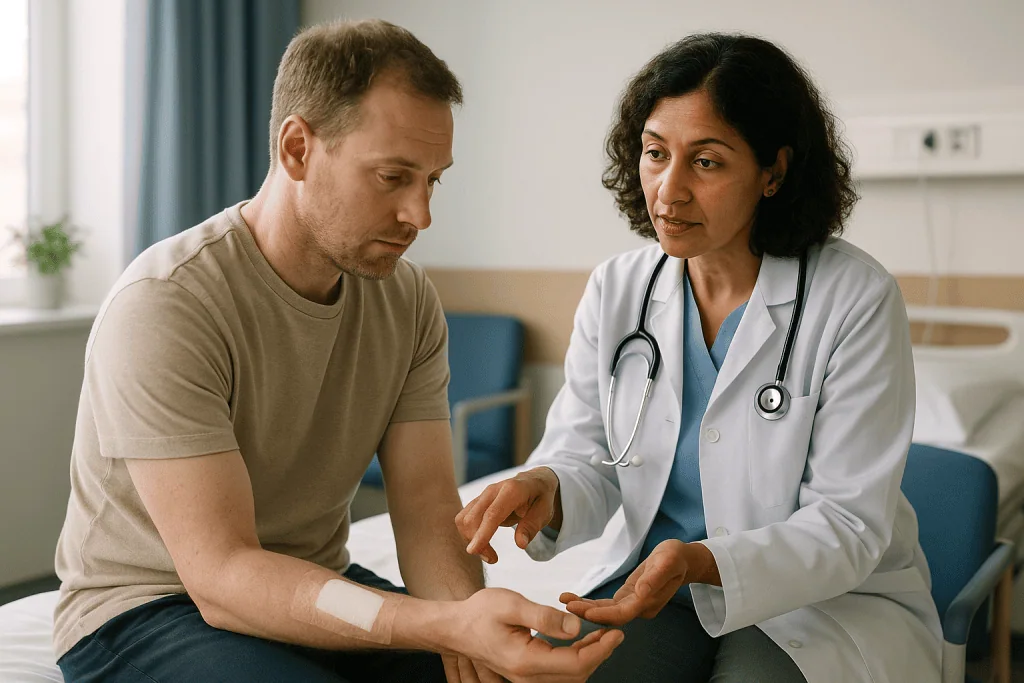
A flap is a block of skin, often with fat and sometimes muscle underneath, that stays attached to its original blood vessels while being rotated, slid or tunnelled into the wound. The NHS describes skin flaps as a technique used when the wound area lacks a good blood supply, because the flap brings its own circulation with it. A free flap goes further still: the vessels are cut and then reconnected under a microscope at the new site.
Grafts, by contrast, need a healthy, well-vascularized wound bed to survive. They are thinner, leave a second wound at the donor site, and are more sensitive to shear and fluid collection in the first week. Flaps tend to carry a lower early risk of the tissue simply dying from lack of blood, but they involve more surgery, more swelling and, on the face, more visible contour in the early weeks.
For the caregiver the practical differences are these:
- Graft care centers on immobility and pressure; flap care centers on protecting the blood supply, which can mean avoiding tight collars, pressure on the pedicle (the stalk carrying the vessels) and anything that constricts circulation.
- A graft has a donor site that needs separate care; a local flap often does not, because the donor area is closed directly.
- Color changes mean different things. A graft may look pale or mottled before it takes; a flap turning dusky or very pale is a reason to call the team promptly.
Neither is ‘better’ in the abstract. The choice depends on where the wound is, how deep it goes and what the surrounding tissue can offer, and that judgment sits with the surgical team.
Who is usually offered a skin graft, and who is asked to wait
On the face, the most common reason for a graft is a wound left after skin cancer removal, particularly after Mohs surgery, a technique in which thin layers of tissue are removed and examined under a microscope until no cancer cells remain. Mayo Clinic lists skin grafts among the ways a Mohs wound may be repaired when it is too large to close by simply stitching the edges together. Grafts are also used for burns, chronic ulcers, wounds after trauma and some reconstructive procedures.
Candidacy depends on the wound bed. Cleveland Clinic explains that a graft needs a clean base with a good blood supply, which is why bone, tendon or cartilage without a covering of soft tissue usually calls for a flap instead. Surgeons also weigh the thickness required: a split-thickness graft takes only the top layers of skin and is used for larger areas, while a full-thickness graft takes the entire depth and tends to give a better color and texture match on the face.
Some people are asked to wait, or offered a different repair, for reasons that are about healing rather than the wound itself:
- Active infection in or near the wound, which must be controlled first.
- Poorly controlled diabetes or circulation problems that reduce blood flow to the wound bed.
- Smoking or nicotine use, which constricts the very small vessels a graft depends on.
- Medicines that affect clotting or suppress immunity; the prescribing clinician decides whether and how these are adjusted, never the patient alone.
- A wound bed that is not yet ready, in which case a temporary dressing is used and the graft is delayed by days or weeks.
Age by itself is rarely a barrier. The team is looking at the quality of the tissue, the person’s overall health and the practical question of whether the graft can be kept still and protected afterward. That last point is where a well-briefed caregiver genuinely changes the plan.
Caring for someone after skin graft: protecting the site in week one
The single most useful thing you can do in the first week is help the person leave the graft alone. That sounds passive. In practice it is a dozen small interventions a day.
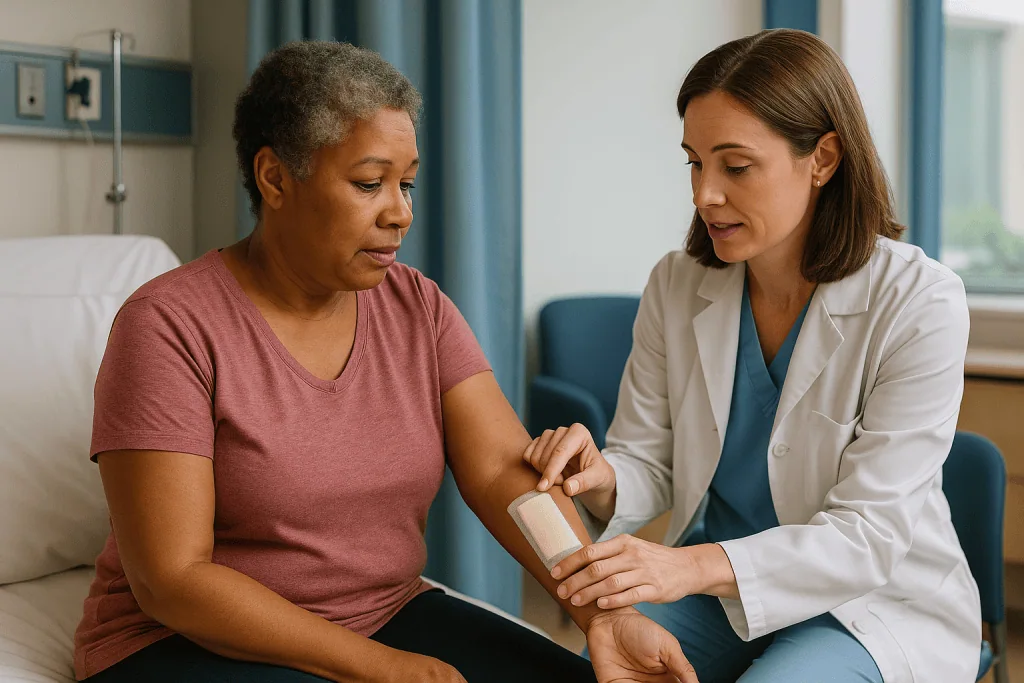
Most grafts are covered by a bolster, a firm pad of foam, cotton or gauze tied or stapled over the graft so that it presses the new skin evenly against the wound bed. MedlinePlus notes that the dressing is usually left in place for several days to about a week and removed by the care team at a scheduled visit; the exact day is set by the surgeon and written on the discharge sheet. Until then, the bolster should stay dry, intact and untouched.
Practical protection looks like this:
- Keep water off it. Washing is usually done around the dressing with a damp cloth rather than in the shower; the team will say when full washing is allowed.
- Guard against knocks. Reading glasses, hat brims, a toddler’s elbow and a dog’s enthusiastic greeting are common hazards for a facial graft.
- Choose clothing that does not drag over the site. Front-opening shirts avoid pulling a top over the head.
- Discourage inspection. If the dressing looks slightly stained with old blood, that is often expected; fresh, spreading bleeding is not and should prompt a call.
- Watch for swelling under the dressing that makes it feel tight or throbbing, which can signal fluid collecting beneath the graft.
Pain in the graft itself is usually modest; the donor site often hurts more. Itching under the dressing is common and should be met with distraction and cool air, never a fingernail or a cotton bud slid underneath. If the bolster loosens or comes off before the planned visit, do not try to re-tie it. Cover the area lightly with clean, non-stick gauze if you have it and contact the team the same day for instructions.
Positioning, elevation and sleep: small adjustments that protect the graft
Gravity is either an ally or a threat to a graft, depending on which way the site is facing. Swelling collects in the lowest part of any wound, and swelling under a graft is exactly what lifts it off. Positioning is how you tip the odds.
For facial grafts, keeping the head above the heart is the standard advice: sleeping propped on two or three pillows, or in a reclining chair for the first few nights, reduces the overnight puffiness that peaks in the morning. Lying flat on the grafted side presses and slides the site against the pillow, so the person should sleep on the back or the opposite side. A travel pillow or a rolled towel on either side of the head can stop an unconscious roll.
For grafts on a leg or foot, MedlinePlus advises keeping the limb raised, and the team will usually say how long walking is limited and when it can resume with the leg dependent. Elevation means the foot higher than the hip, not simply resting on a footstool at knee height. For an arm or hand, a sling or a pillow on the lap keeps it above the elbow.
Everyday movements matter as much as sleeping posture:
- Bending forward to tie shoes or pick things up sends blood rushing to a facial graft; encourage squatting or asking for help instead.
- Chewing tough food works the cheeks and jaw; softer meals for a few days reduce movement near a graft on the lower face.
- Straining, heavy lifting and vigorous exercise raise pressure in the tissues and are typically limited for the first weeks; MedlinePlus cites a general window of about three to four weeks of avoiding activity that could stretch or injure the graft, and the team adjusts that to the site.
- Facial expressions cannot be banned, but big yawns, sneezes and laughter can be cushioned by resting a clean hand gently on the dressing.
None of this requires special equipment. It requires someone in the house who remembers the rule when the patient forgets.
What are the different types of skin graft dressings?
Dressings are chosen to do three jobs: hold the graft in contact with the bed, keep the surface moist but not soggy, and protect against bacteria and friction. The choices below are described in general terms; the team’s selection is based on the site, the graft type and the person’s skin.
| Dressing layer | What it is | What it does | What the caregiver needs to know |
|---|---|---|---|
| Non-adherent contact layer | A fine mesh or silicone sheet placed directly on the graft | Stops gauze sticking to and tearing the new skin on removal | Never pulled off at home in the first week; later changes follow team instructions |
| Bolster (tie-over) dressing | Foam, cotton or gauze pressed over the graft and secured with sutures or staples | Applies even pressure, prevents shear and fluid collection | Stays dry and untouched until removed in clinic |
| Absorbent gauze and padding | Layers over the contact layer | Soaks up ooze, cushions knocks | Small amounts of dried blood are expected; fresh spreading bleeding is not |
| Negative-pressure dressing | A sealed foam sponge connected to a small pump | Gentle suction holds the graft down and removes fluid on larger or irregular sites | Alarm or loss of seal should be reported to the team the same day |
| Donor-site dressing | Often a semi-permeable film, foam or petrolatum-impregnated gauze | Keeps the raw area moist so new skin can spread across it | Frequently more painful and leakier than the graft dressing; left to dry and lift on its own in some protocols |
The Cleveland Clinic and MedlinePlus both describe the graft being held in place by stitches, staples or a pressure dressing during the take phase. After the first removal, the regime usually simplifies to a light non-stick dressing and a thin layer of a bland ointment, changed on a schedule the team sets. If you are asked to do those changes, ask for a demonstration before leaving the hospital and write down the sequence; it is easier to copy than to remember.
Skin graft donor site care: the second wound people forget
Ask anyone who has had a split-thickness graft which part hurt, and most will point to the thigh, buttock or upper arm where the skin was shaved, not the place it went. The donor site is a raw, weeping area the size of the graft, and it is often where carers find themselves busiest.
A split-thickness donor site heals by itself because the deeper layer of skin, with its hair follicles and sweat glands, is left behind and grows a new surface, a process called epithelialization. MedlinePlus gives a typical window of about one to two weeks for this to happen. A full-thickness donor site has no such reserve, so the surgeon closes it with stitches, and it behaves like any other surgical incision.
What to expect in the first week:
- Leakage. Donor sites ooze a clear or straw-colored fluid that can soak through padding. Reinforcing on top with extra gauze is usually preferable to removing the base dressing; check what the team wants.
- Pain that is sharp when the dressing dries and lifts. The team may advise leaving the inner dressing to separate on its own as the skin regrows beneath it, rather than peeling it.
- Itching as the new skin forms, which is a healing sign rather than a warning.
- Pinkness or a slightly shiny look once the dressing is off, fading over months.
Signs that the donor site is not behaving include a smell that is sour or foul, fluid that turns thick and green or yellow, spreading redness beyond the dressing edge, or pain that gets worse after day three rather than better. Those belong on the call list in the final section.
Once healed, the donor site benefits from the same bland moisturizer and strict sun protection as the graft. It may be a little paler or darker than the surrounding skin permanently, which the surgeon will have mentioned beforehand but which can still surprise people when the dressing comes off.
Skin graft aftercare instructions: washing, dressing changes and activity
Written post-operative care instructions vary by surgeon and site, and the sheet you were given overrides anything general. That said, the structure is remarkably consistent, and knowing the logic helps you follow it accurately.
Phase one runs from surgery to the first dressing removal. The graft dressing stays dry and sealed; washing is done around it. The donor site is reinforced, not changed, unless instructed. Activity is minimal, the site is elevated, and the person is on the pain plan the prescribing clinician set. MedlinePlus guidance on surgical wound care emphasizes hand washing before and after any contact with a wound, which applies even if all you are doing is adjusting an outer bandage.
Phase two begins once the team has removed the bolster and confirmed the graft has taken. Typical instructions in this phase include:
- Gentle washing with lukewarm water and a mild, fragrance-free cleanser, patting dry rather than rubbing.
- A thin film of a bland petrolatum-based ointment to keep the surface from cracking, with a non-stick dressing on top if the site is exposed to clothing or friction.
- Dressing changes on a set schedule, often daily or every other day, using clean hands and clean materials each time.
- No soaking: baths, pools and hot tubs are usually off the list until the surface is fully closed.
- A gradual return to activity, with the MedlinePlus window of about three to four weeks before stretching or impact at the site as a common reference point.
Phase three is maturation, when the graft is sealed but still pink, firm and fragile. The job shifts from wound care to scar care: moisturizing, massage if the team recommends it, and sun protection.
A practical tip for caregivers: tape the instruction sheet to the inside of a kitchen cupboard, and keep a small notebook of the date of each dressing change, what the wound looked like and anything unusual. Clinic visits go faster, and if something changes you will have a record of when.
How long does a skin graft take to heal? What the first weeks usually look like
Healing happens on two clocks. The fast one is take, which is largely decided within the first week or two. The slow one is maturation, which runs for months. People tend to judge by the slow clock and worry unnecessarily, or judge by the fast clock and stop protecting the site too soon.
Days 1 to 3. The graft is nourished by fluid from the bed and new vessels begin to grow in, with MedlinePlus citing roughly 36 hours for vessel ingrowth to begin. Swelling peaks. The donor site is the main source of pain and ooze. The caregiver’s focus is stillness, elevation and dressing protection.
Days 4 to 7. Circulation is establishing. The bolster is usually removed at a clinic visit within this window or shortly after. A taking graft looks pink to purplish and may have small dark patches; the team will say whether any area has not taken and what will happen next, which can range from simple dressings to a small revision.
Weeks 2 to 3. A split-thickness donor site is typically resurfaced in the one-to-two-week range noted by MedlinePlus. The graft surface may peel or look shiny. Light daily activity resumes, but stretching, impact and heavy exertion remain limited.
Weeks 3 to 6. The graft is more robust. Sensation may begin to return in patches, often first as tingling or oversensitivity. Moisturizing and sun protection become the daily routine.
Months 2 to 12 and beyond. Color, thickness and texture continue to change. The NHS notes that the appearance of grafted and flapped areas keeps settling over a long period, and facial grafts in particular often look their best a year or more after surgery rather than a month after. The Cleveland Clinic describes the possibility of color mismatch, contour differences and altered sensation as part of informed consent rather than as failures.
None of these ranges is a promise. Site, graft thickness, overall health and how well the early rules are kept all shift the timeline, and the team’s assessment at each visit is the real measure.
What is the best lotion to use on a skin graft? Moisturizing and sun care
There is no single best product, and anyone who tells you otherwise is usually selling one. The evidence-based principle is simpler: once the surface has sealed, a bland, fragrance-free emollient applied thinly and often keeps the new skin supple, and nothing should go on the graft before the team says it is closed.
Why does moisturizing matter at all? Grafted skin has lost the oil glands that normally keep the surface flexible; a split-thickness graft in particular arrives without them. Dry grafted skin cracks, cracks itch, and scratching damages tissue that has only a thin anchorage. Keeping the surface moisturized is the practical answer to all three problems. MedlinePlus and Cleveland Clinic both describe keeping the healed graft and donor site moisturized as part of routine aftercare.
What the clinic will usually suggest:
- Plain petrolatum or a simple petrolatum-based ointment while the surface is still fragile; it forms a barrier and rarely stings.
- A fragrance-free, dye-free cream or lotion once the skin is fully closed, applied with clean fingertips in a thin layer so it is absorbed rather than left sitting.
- Avoiding products with perfume, alcohol, essential oils, retinoids or acids on the graft until cleared, because new skin reacts to ingredients that older skin tolerates.
- Patch-testing any new product on a small area of normal skin first, since sensitivities can develop after surgery.
Sun protection is the other half of the answer and arguably the more important half on the face. New skin has little working pigment and burns quickly; it also tends to darken permanently if it is exposed early. A wide-brimmed hat and physical shade are the first line for the first weeks. Once the team confirms the surface is sealed, a broad-spectrum, high-factor mineral sunscreen applied daily is the standard advice, continued for at least the first year while the graft matures.
Massage, gentle circular pressure over a moisturized graft, is sometimes recommended to soften firm areas. It should start only when the team says the graft is secure, because pressure on an unstable graft does more harm than good.
Pain, smoking and nutrition: what quietly helps or slows healing
The things that most affect take are rarely dramatic. They are habits, and a caregiver often has more influence over them than the surgeon.
Pain and medicines. Discomfort after a graft is usually managed with a plan set by the prescribing clinician, typically simple analgesics in the first days with stronger options reserved for the donor site if needed. The caregiver’s job is to help keep to the schedule written on the discharge sheet, not to adjust it. Some medicines that affect clotting may have been paused before surgery; whether and when they restart is a decision for the clinician who prescribes them, and the question should be asked at discharge if it has not been answered. Never stop or restart a prescribed medicine on your own judgment.
Smoking and nicotine. Nicotine narrows small blood vessels, and a graft lives or dies on small blood vessels. Carbon monoxide from smoke reduces the oxygen that blood can carry. Surgical teams across guideline bodies ask people to stop smoking before and after grafting for this reason, and that includes vaping and nicotine replacement products unless the team specifically allows them. If the person smokes, the most useful thing a caregiver can do is make the first few weeks as smoke-free as the household can manage, and ask the team about support.
Nutrition and hydration. Building new skin requires protein, calories, vitamin C, zinc and fluid. Someone who is eating poorly because the graft is near the mouth, or because they feel unwell, is healing on reduced rations. Soft, protein-rich meals, small and frequent, are a sensible default; a dietitian can be asked to advise if intake stays low. Supplements beyond a normal diet have not been shown to speed graft take in healthy people, and high-dose products should not be added without checking, because some interact with medicines.
Blood sugar. For anyone with diabetes, keeping glucose within the range their clinician has set is directly relevant to wound healing. This is a good week to be strict about monitoring.
Sleep. Rest is not a luxury here; tissue repair is at its most active during sleep. Propped-up positions are uncomfortable, so plan for naps.
What people often get wrong when caring for someone after skin graft
Most problems in the first weeks come from good intentions applied to the wrong wound. These are the misunderstandings that come up again and again.
‘Let it breathe.’ Exposing a graft to air dries the surface and risks friction. Grafts and donor sites heal faster under a moist, protected dressing, and the team’s instructions about when to leave a site uncovered are specific for a reason.
‘A little peek won’t hurt.’ Lifting the bolster, even at the edge, can shear the graft at the exact moment vessels are forming. The dressing is removed at a set visit so that someone trained can assess take and reapply pressure correctly.
‘Clean it properly with antiseptic.’ Strong antiseptics, hydrogen peroxide and alcohol damage the fragile new cells. MedlinePlus advises mild soap and water for surgical wounds once washing is permitted, and only what the team recommends on the wound surface itself.
‘Dark means dead.’ A graft often looks purplish or patchy during take, and small dark spots can be surface blistering rather than loss. Only the team can judge; a photo at each dressing change helps them do so.
‘It has taken, so the rules are over.’ A graft that has taken at one week is still anchored by immature tissue. The three-to-four-week caution about stretching and injury that MedlinePlus describes exists because the second week is when people go back to gardening and pull the site apart.
‘The donor site is the minor wound.’ It is the larger raw area, the more painful one, and the one more likely to leak and to get infected if dressings are left saturated.
‘Sun is good for healing.’ Ultraviolet light darkens new skin permanently and thickens scars. Shade and sunscreen, once cleared, are part of treatment.
‘Scar creams will fix the color.’ No topical product has strong evidence for changing graft color. Time, moisturizer, sun avoidance and, if needed, later procedures discussed with the surgeon are the realistic options.
Questions to ask your care team
The discharge conversation is short and the questions arrive later. Having a list ready, ideally written by the caregiver rather than the patient, turns a rushed handover into a plan you can actually follow. These are the ones that most often matter in the first weeks.
- Which type of graft was used, split-thickness or full-thickness, and what does that mean for how the site and the donor area will look and behave?
- On what date is the first dressing removal, and who do we call if the bolster loosens, gets wet or comes off before then?
- Can the person shower, and if so from which day and how should the dressings be protected?
- Exactly how should the donor site be managed: reinforce on top, change, or leave to lift on its own?
- What position should they sleep in, how high should the site be raised, and for how many nights?
- What activity is allowed this week, and what is the expected timeline for walking, driving, work, exercise and bending?
- Which prescribed medicines were paused for surgery, and who decides when they restart?
- What does a normal graft look like at the first visit, and what would concern you?
- When can moisturizer go on, which type do you suggest, and when should sunscreen start?
- If part of the graft does not take, what are the usual options and how soon would that be decided?
- Is there anything specific about the site, for instance near the eye, nose or ear, that changes the standard advice?
- Who is the right contact for out-of-hours worries, and what number do we use?
Write the answers down. Memory after a day in hospital is unreliable, and the person most able to recall instructions is often not the one lying under the dressing.
When to call your doctor
Most skin grafts settle without drama, and a lot of what you will see in the first week, mild swelling, dried blood on the dressing, itching, patchy color, is expected. The following are not, and deserve a call to the surgical team or the number on the discharge sheet, rather than waiting for the next appointment. If the person is seriously unwell, use emergency services.
- Bleeding that soaks through the dressing or keeps coming after ten minutes of gentle, steady pressure with a clean pad.
- The graft dressing or bolster coming loose, falling off or becoming soaked before the planned removal.
- Swelling that makes the dressing feel tight, with new throbbing pain under the graft.
- Pain that gets steadily worse after the third day instead of better, at either the graft or the donor site.
- Spreading redness, warmth or streaking in the skin around either wound.
- Thick, cloudy, green or yellow discharge, or a foul or sour smell from a dressing.
- A temperature above the threshold the team gave you, chills or feeling generally unwell.
- A flap, if one was used, that turns pale, white, blue or dusky, or feels cold compared with surrounding skin.
- A graft that looks black, leathery or dry over a large area after the dressing is removed.
- Signs of a reaction to a dressing or product, such as blistering or an itchy rash spreading beyond the wound edge.
- Sudden calf pain, chest pain or breathlessness in someone who has been resting with a leg raised, which needs urgent assessment.
These are the red flags listed across MedlinePlus, Cleveland Clinic and surgical wound guidance generally. A phone call that turns out to be unnecessary costs five minutes. A missed hematoma or infection can cost the graft. When in doubt, the treating team would rather hear from you, and every decision about what happens next, from a simple dressing change to a revision, sits with them.
Frequently asked questions
What is the best lotion to use on a skin graft?
A bland, fragrance-free emollient, often plain petrolatum early on and a simple cream once the surface is fully closed, is what clinicians usually recommend. Nothing should be applied to the graft until the team confirms the skin has sealed. Avoid products containing perfume, alcohol, essential oils or acids on new skin, patch-test anything unfamiliar, and apply thinly with clean hands so the layer is absorbed rather than trapped under a dressing.
What is the difference between a flap and a skin graft?
A skin graft is skin removed completely from a donor site and laid on a wound, where it must grow a new blood supply. A flap is tissue moved while still attached to its own blood vessels, or reconnected under a microscope as a free flap. Grafts need a well-vascularized wound bed and leave a donor wound; flaps bring circulation with them and are used where bone, tendon or poor blood supply is exposed.
What are the post-operative care instructions for a skin graft?
Instructions vary by surgeon and site, but the pattern is consistent: keep the first dressing dry and untouched until clinic removal, raise the site, limit movement, reinforce rather than change the donor dressing unless told otherwise, and wash hands before any contact. After removal, gentle washing, a thin layer of bland ointment, non-stick dressings and a gradual return to activity follow, with sun protection once the skin is sealed. The written sheet overrides general advice.
What are the different types of skin graft dressings?
Most grafts are covered by a non-adherent contact layer, absorbent padding and a bolster, a firm pad tied or stapled over the site to apply even pressure. Larger or irregular wounds may use a negative-pressure dressing with a small pump. Donor sites commonly get a film, foam or petrolatum-impregnated gauze that keeps the raw surface moist. After the first removal, a simple non-stick dressing with bland ointment usually replaces the bolster.
How long does a skin graft take to heal?
Take, the stage when the graft gains a blood supply, is largely decided within the first one to two weeks, with vessels starting to grow in from around 36 hours according to MedlinePlus. A split-thickness donor site typically resurfaces in one to two weeks. Full maturation of color, thickness and texture continues for months, and facial grafts often look their most settled a year or more after surgery. These are typical ranges, not guarantees.
How should someone sleep after a facial skin graft?
Propped up on two or three pillows or in a reclining chair, on the back or the side away from the graft, for the first several nights. Keeping the head above the heart reduces overnight swelling, and avoiding pressure on the grafted side prevents the sliding force that can lift the graft. A rolled towel on either side of the head helps stop rolling during sleep. The team will say how many nights this is needed.
What does skin graft donor site care involve?
The donor site is a raw area that oozes clear fluid and is often more painful than the graft. Typical advice is to reinforce leaking dressings on top rather than remove the base layer, leave the inner dressing to lift on its own as new skin forms beneath it, and keep the area clean and dry. Once healed, usually in one to two weeks for split-thickness sites, it needs moisturizer and sun protection like the graft.
Can a person shower with a skin graft?
Not over the graft dressing in the first phase. Washing is done around it with a damp cloth, and the surgical team sets the day when the site can be exposed to running water, usually after the bolster is removed and the graft is confirmed to have taken. Soaking in baths, pools or hot tubs is generally off the list until the surface is fully closed, because softened tissue and standing water raise the risk of infection.
What does a skin graft look like when it is not taking?
A graft that is failing to take may look pale, white or grey in the first days, or dark, leathery and dry later, sometimes with a blister or fluid collection lifting it from the bed. Purplish, mottled or patchy color on its own can be normal during take, so only the team can judge. Any bolster that loosens, new throbbing pain or swelling, or a foul-smelling discharge should prompt a call rather than a wait.
When can normal activity resume after a skin graft?
Light daily movement usually resumes once the first dressing is removed and the team confirms take, but stretching, impact, heavy lifting and vigorous exercise at the site are commonly limited for about three to four weeks, a window MedlinePlus cites as typical. Grafts on the leg have separate rules about standing and walking with the limb down. The surgical team adjusts the timeline to the site, the graft type and how healing is progressing.
References
- MedlinePlus: Skin graft
- MedlinePlus: Surgical wound care – open
- Cleveland Clinic: Skin Graft
- NHS: Plastic surgery – What happens (skin grafts and flaps)
This article is for general information only and is not a substitute for professional medical advice. Please consult a qualified doctor about your individual situation.

More from the Blog
Who Suits a Suture Suspension Lift? Mild Sagging, Skin Quality and Realistic Goals
Thread lift candidates are usually adults with mild to moderate sagging of the cheeks, jawline or brow, reasonably good skin thickness and elasticity, and…
How Many Microneedling Sessions Does Skin Usually Need and How They Are Spaced
Most people are offered a course rather than a single microneedling treatment. Published dermatology reviews describe courses of roughly three to six sessions, spaced…
How Tissue Expansion Works: Expander Placement, Gradual Saline Fills and the Second Surgery
A tissue expander is a deflatable silicone balloon placed under skin or muscle during a first operation, then slowly filled with saline through a…
Laser Treatments for the Eye: Refractive, Retinal and Glaucoma Procedures Explained
Laser treatment for eye conditions is not one procedure but three families. Refractive lasers reshape the cornea to reduce dependence on glasses; retinal lasers…
Questions to Ask Your Reconstructive Surgeon Before Agreeing to a Staged Plan
Before agreeing to a staged reconstructive plan, ask your surgeon why staging is needed, how many stages are expected, what each one aims to…
Cryotherapy Results: How Treated Skin Looks Once Healed and Why Repeat Sessions Happen
Cryotherapy results depend on what was frozen. For warts, sun-damaged patches and other skin growths, the treated area blisters, crusts and sheds within roughly…