

Rosemary Oil for Hair Growth: What the Evidence Actually Shows
Key Takeaways
- In the only randomized human trial to date, rosemary oil matched a standard over-the-counter topical for hair-count gains in hereditary hair loss, but only at six months, with zero measurable change at three.
- The 'DHT blocker' claim comes from mouse and test-tube research on carnosic acid, a rosemary compound; it has never been confirmed in human scalps.
- Shedding 50 to 100 hairs a day is normal, and hair loss noticed after starting rosemary oil is usually coincidence, collected loose hairs, or scalp irritation: there is no documented rosemary 'purge phase.'
- Rosemary water and rinse-off shampoos deliver far less concentration and contact time than the diluted essential-oil scalp massage used in research, so results shouldn't be expected to match.
- Essential oils applied undiluted are a common cause of contact dermatitis; blend rosemary oil into a carrier and patch-test the inside of your forearm for 24 to 48 hours first.
- Scalp hair grows about half an inch per month, so judge any regimen with monthly same-light photos over six months, and see a clinician promptly for sudden, patchy, or painful hair loss.
Rosemary oil may modestly support hair growth in hereditary (pattern) hair loss. One six-month trial of 100 adults found it increased hair counts about as well as a common over-the-counter topical treatment, but the evidence remains thin: a single small study, not yet replicated. It cannot revive long-dead follicles, and any results take three to six months of consistent, diluted use.
Somewhere between the toothpaste and the retinol, a small amber bottle has claimed a spot on millions of bathroom shelves. Rosemary oil has become the internet’s favorite answer to thinning hair: the videos rack up billions of views, the before-and-after photos look miraculous, and the herb itself costs less than a fancy coffee.
Here’s what those videos rarely mention: the entire scientific case rests largely on one study from 2015, a handful of mouse experiments, and a lot of hopeful extrapolation. That doesn’t make rosemary oil useless. It makes it interesting, and worth examining with the same rigor we’d apply to anything else you put on your body for six months straight.
So let’s do exactly that: what researchers actually measured, why some people shed more after starting it, and when thinning hair deserves a medical workup instead of a kitchen herb.
Can rosemary oil regrow hair?
The honest answer is: possibly, modestly, and only for one specific kind of hair loss. The best human evidence comes from a single randomized trial in people with androgenetic alopeciathe hereditary, hormone-driven thinning that affects roughly half of men and a substantial share of women by midlife. In that study, rosemary oil applied to the scalp for six months increased hair counts about as much as a widely used over-the-counter topical treatment did.
That’s a genuinely encouraging result. It is also one study, with about 100 participants, published in a small dermatology journal and never replicated at scale. Careful clinicians read it as a promising signal, not settled science.
Two boundaries matter here. First, no topical anything, herbal or pharmaceutical, can regrow hair where follicles have been gone for years; a shiny, long-bald scalp typically means the follicles have miniaturized past the point of rescue or disappeared entirely. Second, the evidence applies to pattern hair loss specifically. If your shedding comes from thyroid disease, iron deficiency, an autoimmune condition, tight hairstyles, or a stressful event three months ago, rosemary oil isn’t addressing the actual cause, and the research says nothing about whether it helps. Getting the diagnosis right comes first; the oil, if you want it, comes second.
The one study everyone cites, and what it really found
Nearly every rosemary oil claim traces back to a 2015 randomized trial published in SKINmed. Researchers enrolled about 100 adults with androgenetic alopecia and split them into two groups: one massaged a rosemary oil preparation into the scalp daily, the other used a standard over-the-counter topical hair-regrowth medication. Dermatologists then counted hairs in a defined scalp area using photographs at three and six months.
The results tell a more nuanced story than the headlines. At the three-month check, neither group showed a significant change, nothing, in either arm. By six months, both groups had a statistically significant increase in hair count, and the difference between the two groups was not significant. In plain terms: rosemary oil kept pace with an established treatment, but only after half a year. One small bonus for the herb: participants in the comparison group reported scalp itching more often.
Now the caveats, because they’re substantial. There was no placebo arm, so we can’t fully separate the oil’s effect from the daily scalp massage or natural fluctuation. The sample was small. The formulation isn’t something you can pull off a store shelf. And in the decade since, no larger trial has confirmed the finding. A single positive study is how promising science begins: it’s not how proof ends.
How might rosemary oil actually work on the scalp?
Researchers have three working hypotheses, each with laboratory support and none confirmed in human scalps.
The most discussed involves hormones. Pattern hair loss is driven partly by dihydrotestosterone (DHT), a testosterone byproduct that gradually shrinks susceptible follicles until they produce wispy, then invisible, hairs. A 2013 study in mice found that rosemary leaf extract improved hair regrowth in animals with testosterone-induced hair loss, and companion lab work suggested a compound called carnosic acid may interfere with DHT’s ability to bind its receptor at the follicle. That’s the origin of every “natural DHT blocker” claim you’ve seen: a mouse study and a test tube, extrapolated generously.
The second hypothesis is circulatory. Rosemary oil is mildly rubefacient, meaning it warms the skin and dilates small blood vessels where it’s applied. Better microcirculation could, in theory, deliver more oxygen and nutrients to hard-working follicles. Plausible, unproven.
The third is the least glamorous and maybe the most defensible: rosemary has documented anti-inflammatory and antimicrobial properties. A calmer, less flaky scalp environment is genuinely friendlier to hair growth, since chronic scalp inflammation is associated with shedding. Add the daily massage itself, which some small studies suggest may benefit hair thickness on its own, and you have several modest mechanisms that could stack. Whether they stack high enough to matter is exactly what larger trials would need to answer.
What the evidence doesn't show
Being clear about the gaps matters as much as celebrating the one good study.
There is no meaningful human evidence that rosemary oil helps alopecia areata (the autoimmune, patchy kind), telogen effluvium (the diffuse shedding that follows illness, childbirth, surgery, or major stress), traction alopecia from tight styles, or any scarring form of hair loss. Scarring alopecias in particular destroy follicles permanently, delaying diagnosis while experimenting with oils can cost hair that treatment might have saved.
Nobody has established an effective concentration, frequency, or duration; the viral routines circulating online are improvisation, not protocol. No study has tested whether rosemary oil prevents future thinning in people who haven’t started losing hair. And the products sold on the strength of the hype, shampoos, sprays, mists, pre-mixed serums, vary enormously in how much rosemary they actually contain, from research-adjacent amounts down to a whisper of fragrance.
The before-and-after photos deserve skepticism too, and not because people are lying. Lighting, hair positioning, camera angle, and time itself all flatter the “after” shot. Many stress-related shedding episodes resolve on their own within six to nine months, precisely the window in which someone credits whatever they happened to be using. That’s not evidence; that’s coincidence wearing evidence’s clothes.
How do you use rosemary oil for hair growth?
If you’d like to try it, the method used in research, and recommended by dermatologists who are open to it, is a diluted scalp application, not a hair treatment. The target is the skin where follicles live; coating your lengths just makes them greasy.
- Dilute it. Rosemary essential oil is highly concentrated and should never go on skin neat. Blend a small amount into a bland carrier oil, jojoba, argan, grapeseed, or fractionated coconut, keeping the essential oil a small fraction of the mix, or buy a pre-diluted scalp product and follow its label.
- Patch-test first. Apply a dab of the diluted blend to your inner forearm and wait 24 to 48 hours. Redness, itching, or bumps mean this experiment ends before it starts.
- Massage it into the scalp along your parts and thinning areas for a few minutes. The massage may be doing some of the work, so don’t rush it.
- Leave it on for a whilemany people do 30 minutes to a few hours, then shampoo out. Overnight is common but raises the odds of irritation and pillowcase casualties.
- Repeat several times a week, for months. The trial saw no change at three months and results at six. Consistency beats intensity.
One practical note: photograph your part line and hairline monthly, same lighting, same angle. Memory is a terrible instrument for measuring hair.
What will happen if I put rosemary oil in my hair every day?
For most people with a tolerant scalp, daily use of a properly diluted blend is unlikely to cause harm, but it’s also unlikely to be necessary. The six-month trial used daily application, yet nothing in the research suggests that daily beats every-other-day, because nobody has compared frequencies. What clearly matters is duration: months of consistent use, not heroic daily saturation.
Daily use does raise a few practical realities. Oil accumulates. A scalp that’s perpetually coated can feel greasy, attract lint and dust, and become harder to cleanse thoroughly, which some people find worsens flaking. If you shampoo daily to compensate, frequent washing plus frequent oiling can leave lengths paradoxically dry and prone to breakage, and broken hairs at the crown look remarkably like new hair loss.
The bigger risk is cumulative irritation. Essential oils are common triggers of irritant and allergic contact dermatitis, and sensitization can develop over time even if the first weeks went fine. An itchy, red, or stinging scalp is not “the oil working”; it’s your skin objecting, and inflammation is the opposite of what a struggling follicle needs.
A reasonable rhythm for most people: two to four applications a week, washed out properly, with a break at the first sign of irritation. If daily use fits your routine and your scalp stays calm, there’s no evidence against it, just none demanding it, either.
Why is my hair falling out after using rosemary oil?
This question fills forums, and it deserves a careful answer, because several very different things can be happening.
- You’re noticing normal shedding. Losing 50 to 100 hairs a day is typical. Massaging oil through your scalp and then shampooing it out gathers a day or two of loose telogen hairs into one alarming clump in the drain. The oil didn’t cause those hairs to fall; it collected them.
- It’s coincidence with delayed timing. Telogen effluvium, shedding triggered by illness, fever, surgery, childbirth, crash dieting, or intense stress, shows up two to three months after the trigger. People often start rosemary oil precisely because they’ve noticed early thinning, then blame the oil when the underlying shed peaks.
- Your scalp is irritated. Contact dermatitis from an essential oil that’s too concentrated, used too often, or simply not tolerated can inflame the scalp and genuinely increase shedding. Itching, burning, redness, or flaking alongside hair loss points here. Stop using it.
- Breakage, not loss. Vigorous massage, tight overnight wraps, and extra washing can snap fragile strands. Broken hairs have blunt or tapered ends and no white bulb.
One myth worth retiring: there is no documented “purge” or shedding phase from rosemary oil. The pharmaceutical it’s often compared with does have a well-known temporary shed early in treatment; rosemary has no equivalent in the literature. If shedding continues beyond a few weeks after stopping, or comes with scalp symptoms or patches, see a clinician rather than another bottle.
Essential oil, infused oil, rosemary water: are they the same thing?
They are not, and the differences explain a lot of the disappointment in comment sections. The research signal comes from concentrated rosemary preparations applied to the scalp with real contact time. Much of what’s sold, and much of what goes viral, is considerably weaker.
| Form | What it is | Evidence & practical notes |
|---|---|---|
| Rosemary essential oil (diluted) | Steam-distilled concentrate, blended into a carrier oil | Closest to what research examined; must be diluted and patch-tested; strongest scent, highest irritation potential |
| Rosemary-infused oil | Herb steeped in a carrier oil for weeks | Far gentler and far less concentrated; no direct studies; a reasonable option for sensitive scalps, tempered expectations |
| Rosemary water | Herb boiled or steeped in water, used as a spray or rinse | The viral favorite, but rosemary’s key compounds are largely oil-soluble; minimal actives, minimal evidence |
| Rosemary shampoos & conditioners | Wash-off products with rosemary among many ingredients | Contact time of seconds and unknown concentrations; pleasant, but unlikely to move the needle on growth |
None of this means the gentler forms are worthless: a soothing rinse that motivates you to care for your scalp has its place. But if you’re judging whether “rosemary works,” be sure the version you tried resembles the version that was studied. Spritzing rosemary water twice and declaring the science bunk is like testing whether exercise works by walking to the mailbox.
Who might benefit, and who probably won't
The best-case candidate looks like this: an adult in the early stages of hereditary pattern thinning, a widening part, a softening hairline, more scalp visible under bright light, whose follicles are shrinking but still alive. Miniaturized follicles can plausibly be nudged toward producing thicker hairs; that’s the population the 2015 trial studied and the only group with supporting data.
Several groups probably won’t benefit, and some shouldn’t wait to find out. Areas that have been smooth and bald for years lack rescuable follicles, and no topical product changes that. Sudden, diffuse shedding usually signals telogen effluvium, which resolves by addressing the trigger and giving it time: the oil is a bystander. Round, completely smooth patches suggest alopecia areata, an autoimmune condition with its own treatments. Shedding accompanied by scalp pain, burning, scaling, or pustules raises the possibility of a scarring alopecia, where every month of delay risks permanent loss. And thinning alongside fatigue, feeling cold, heavy periods, or major dietary restriction points toward thyroid or iron issues that a blood test can find and a bottle of oil cannot.
A useful rule: rosemary oil is, at best, a gentle adjunct for one diagnosis. If you don’t know your diagnosis yet, that, not the oil aisle, is the first stop.
How long does rosemary oil take to work?
Longer than the internet implies, for reasons written into hair biology itself. Scalp hair grows roughly one centimeter, about half an inch, per month. A follicle that shifts from resting into its growth phase needs weeks before a new hair even clears the skin, and months more before that hair is long enough to change how your part or crown looks in a mirror.
The trial data match this math precisely. At three months, researchers found no significant change in either the rosemary group or the comparison group, none. The measurable gains appeared at six months. Anyone promising visible results in two weeks is describing better-conditioned, shinier existing hair, not new growth.
This timeline has two practical consequences. First, judge the experiment on a six-month horizon with monthly photographs, same lighting, same angle, same wet-or-dry state, because day-to-day mirror checks will convince you of both miracles and disasters that aren’t happening. Second, factor the timeline into your decision about what to try. If your thinning is progressing quickly, six months spent on a maybe is six months of follicle miniaturization that established treatments, chosen with a clinician, might have slowed. For slow, mild, early thinning, the leisurely timeline costs little. For a fast fade, time is the resource you can’t get back.
Is rosemary oil safe? Side effects worth knowing
Used sensibly, diluted rosemary oil is low-risk for most adults, which is a genuine point in its favor. But low-risk isn’t no-risk, and essential oils earn more respect than their farmhouse branding suggests.
The most common problem is contact dermatitis: itching, redness, stinging, or flaking where the oil touched skin. It can be simple irritation from too strong a blend, or true allergic sensitization that develops after weeks of trouble-free use. The patch test, 24 to 48 hours on the inner forearm, catches many reactions before they involve your entire scalp, and any reaction during regular use means stop, not push through.
A few other cautions belong on the label in your head. Keep it well away from eyes; rinse thoroughly with water if contact happens. Never swallow rosemary essential oil, ingested essential oils can be genuinely toxic, and “natural” offers no protection here. Store it out of children’s reach for the same reason. If you’re pregnant or breastfeeding, evidence on concentrated topical rosemary is limited, so run it past your obstetric clinician first: a two-minute conversation, cheap insurance. People with asthma or strong fragrance sensitivity may find the scent itself triggering, and anyone with an existing scalp condition such as psoriasis or seborrheic dermatitis should ask their dermatologist before adding oils to inflamed skin.
How does rosemary oil compare with proven hair-loss treatments?
Here’s the comparison that matters, stripped of both hype and snobbery. Established treatments for pattern hair loss, over-the-counter topicals and prescription options a clinician can discuss with you, are backed by decades of research, thousands of trial participants, and regulatory review of their manufacturing consistency. Rosemary oil is backed by one six-month trial of about 100 people, some elegant mouse work, and products whose actual rosemary content is anyone’s guess.
That asymmetry doesn’t make the herb worthless. In its single head-to-head test, it held its own, and it caused less scalp itching than the comparator. For someone with mild early thinning who wants a gentle, inexpensive first step, or who can’t tolerate conventional topicals: a properly diluted rosemary routine is a defensible experiment. Some dermatologists suggest it as a complement alongside standard care rather than a replacement, and that framing fits the evidence well.
Where the comparison turns serious is opportunity cost. Pattern hair loss is progressive: follicles that miniaturize are far easier to preserve than to restore. Choosing the unproven option exclusively, for years, while thinning advances, is a bet placed with hair you may not get back. The evidence-first move is a proper evaluation, a conversation about the well-studied options, and then, if you like, rosemary oil as the supporting act rather than the headliner.
When should you see a doctor about hair loss?
Most gradual, symmetric thinning that runs in your family can be discussed at a routine visit. But some patterns of hair loss are the body flagging something else, and those deserve an appointment sooner rather than later.
- Sudden or heavy sheddinghandfuls in the shower, a hairbrush that fills daily, especially within a few months of illness, surgery, childbirth, rapid weight loss, or a major stressor.
- Patchy lossround, smooth bald spots on the scalp, beard, or eyebrows, which can signal alopecia areata.
- Scalp symptoms with the sheddingpain, burning, intense itching, scaling, pustules, or redness. These can indicate infection or a scarring alopecia, where early treatment protects follicles permanently at stake.
- Hair loss plus systemic signsfatigue, feeling cold, unexplained weight change, brittle nails, or heavy or irregular periods, which point toward thyroid, iron, or hormonal causes that blood tests can identify.
- Loss in children or teens, which always warrants evaluation.
- Broken hairs and tenderness along tension lines from braids, buns, or extensions, traction alopecia is reversible early and permanent late.
Timing matters more than people realize. A clinician can often distinguish shedding from breakage, pattern loss from inflammatory loss, in a single exam, sometimes with a painless pull test and a look through a dermatoscope. The earlier the diagnosis, the more hair there is left to protect. No home remedy, rosemary included, should postpone that conversation when any of the signs above are present.
The bottom line: a reasonable experiment, not a miracle
After weighing all of it, one decent trial, suggestive lab work, oceans of anecdote, here’s where the evidence honestly lands. Rosemary oil is a plausible, low-cost, low-risk adjunct for mild hereditary thinning in people willing to dilute it properly, use it consistently, and wait six months before rendering judgment. That is a real, if modest, endorsement, and it’s more than most viral hair remedies can claim.
What it is not: a cure, a proven equal to established medicine, a treatment for autoimmune or stress-related shedding, or a substitute for finding out why your hair is falling out in the first place. The single most valuable thing you can do about hair loss remains unglamorous, get the diagnosis right, early, while your follicles still have options.
If you enjoy the ritual, the scent, and the scalp massage, there’s science-adjacent reason to keep the little amber bottle on the shelf. Just keep it in its proper place in the lineup: a promising understudy with one good review, standing next to performers who’ve been vetted for decades. Use it with clear eyes, photograph your progress, protect your scalp from irritation, and let a clinician, not an algorithm, tell you what your hair actually needs.
Frequently asked questions
Can rosemary oil regrow hair?
It may modestly help in hereditary pattern hair loss, based on one six-month randomized trial of about 100 adults in which rosemary oil increased hair counts comparably to a standard over-the-counter topical. The evidence is limited to that single small study plus animal research, and it applies only to follicles that are shrinking, not gone. Long-bald, smooth areas won’t respond to any topical product, herbal or otherwise.
How do you use rosemary oil for hair growth?
Dilute rosemary essential oil in a carrier such as jojoba or grapeseed, or use a pre-diluted scalp product per its label, then massage it into the scalp, not the lengths, for a few minutes. Leave it on for thirty minutes to a few hours and shampoo out. Patch-test on your inner forearm for 24 to 48 hours first, apply several times weekly, and commit to at least six months before judging results.
Why is my hair falling out after using rosemary oil?
The most likely explanations are normal shedding gathered into one visible clump by massaging and washing, a stress- or illness-related shed that began two to three months before you started the oil, scalp irritation from a too-strong blend, or breakage from extra handling. Rosemary oil has no documented ‘purge phase.’ Stop if your scalp is itchy or red, and see a clinician if heavy shedding lasts beyond a few weeks.
What will happen if I put rosemary oil in my hair every day?
If it’s well diluted and your scalp tolerates it, daily use is unlikely to cause harm, but no research shows daily beats a few times weekly. Downsides of everyday oiling include greasy buildup, more frequent washing that can dry and break strands, and a higher chance of irritant or allergic contact dermatitis developing over time. Consistency over months matters far more than frequency per week.
Does rosemary water work as well as rosemary oil?
Probably not. Rosemary’s most studied compounds, including carnosic acid, are largely oil-soluble, so a water steep captures relatively little of them, and no clinical studies have tested rosemary water for hair growth. The human trial evidence involves concentrated oil preparations massaged into the scalp with real contact time. Rosemary water is a pleasant, gentle rinse, just don’t judge the entire remedy by its weakest form.
How long does rosemary oil take to work on hair?
Plan on six months. In the key clinical trial, neither the rosemary group nor the comparison group showed any significant change at three months; measurable hair-count increases appeared only at six. That fits hair biology, since scalp hair grows roughly half an inch monthly and new growth needs time to become visible. Track progress with monthly photos in identical lighting rather than daily mirror checks.
Can I leave rosemary oil in my hair overnight?
Many people do, and it’s generally acceptable if the blend is properly diluted and your scalp has already tolerated shorter sessions. Overnight wear does increase the chance of irritation, clogged-feeling roots, and staining on pillowcases, and there’s no evidence that eight hours outperforms one or two. If you notice itching, redness, or flaking after overnight use, shorten the contact time or stop altogether.
Is rosemary oil safe to use during pregnancy?
Culinary amounts of rosemary in food are considered fine, but safety data on concentrated rosemary essential oil applied to the skin during pregnancy are limited. Because absorption through the scalp is possible and evidence is sparse, the cautious course is to ask your obstetric clinician before using it while pregnant or breastfeeding. Never ingest rosemary essential oil at any time, swallowed essential oils can be toxic.
Does rosemary oil block DHT?
That claim outruns the evidence. Laboratory and mouse studies suggest carnosic acid, a compound in rosemary, may interfere with dihydrotestosterone binding at the follicle’s androgen receptor, but this mechanism has not been demonstrated in human scalps. It remains a plausible hypothesis that could help explain the 2015 trial’s results, not an established fact. Treat ‘natural DHT blocker’ marketing as speculation until human data exist.
Should I use rosemary oil instead of proven hair-loss treatments?
Instead of, no; alongside, possibly. Established options carry decades of large-trial evidence, while rosemary oil has one small six-month study. Because pattern hair loss is progressive and miniaturizing follicles are easier to protect than restore, relying solely on an unproven remedy for years carries real opportunity cost. A sensible sequence is diagnosis first, a clinician-guided plan second, and rosemary oil, if you enjoy it, as a gentle complement.
References
This article is for general information only and is not a substitute for professional medical advice. Please consult a qualified doctor about your individual situation.

More from the Blog
Grey Hair: Why It Happens, Whether Stress Causes It and What the Reversal Studies Found
Grey hair appears when pigment-making cells in the hair follicle, called melanocytes, run down and their stem cell reserve is depleted, mostly because of…
Rice Water, Hair Oiling and Castor Oil: The Viral Hair Growth Rituals, Fact-Checked
Rice water for hair has no randomized trial evidence that it makes hair grow faster or thicker. Small laboratory work suggests its starch and…

Ketoconazole Shampoo: Dandruff, Fungus and the Hair-Loss Claim Examined
Ketoconazole shampoo is an antifungal medicated shampoo used to treat dandruff, seborrheic dermatitis of the scalp and some fungal skin infections, where randomized trials…
Red Light Therapy for Hair Loss: Devices, Evidence and Honest Expectations
Red light therapy, also called low-level laser therapy, has modest but genuine evidence for pattern hair loss. In sham-controlled trials, FDA-cleared devices emitting 630–680…
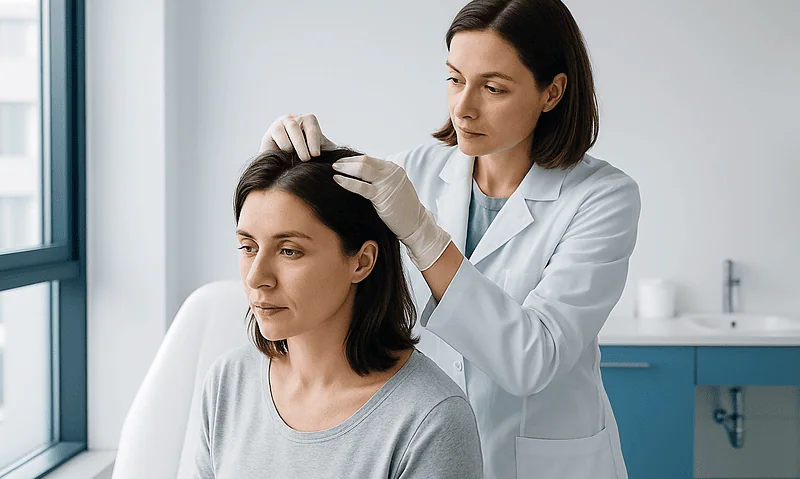
Hair Loss Concealers and Fibres: What They Do Well, and What They Cannot
Hair loss concealers, keratin fibers, tinted powders, sprays, and cream sticks, genuinely improve the appearance of thinning hair by reducing the color contrast between…
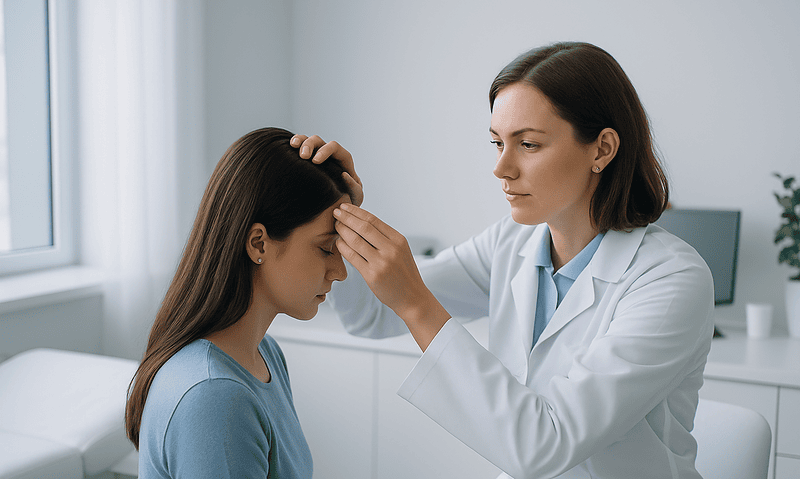
Traction Alopecia: How Tight Hairstyles Cause Hair Loss and Whether It Grows Back
Traction alopecia is hair loss caused by repeated pulling on the hair roots from tight braids, buns, ponytails, extensions, weaves or locs. It usually…