

Soy and Estrogen: The Myth, the Evidence and Why Tofu Is Not a Hormone Problem
Key Takeaways
- Soy isoflavones bind estrogen receptors roughly a thousand times more weakly than human estradiol and prefer the beta receptor, the opposite of the hormone's own pattern.
- Pooled randomized trials in men, first in 2010 and expanded through 2021, found no effect of soy on testosterone, free testosterone or estrogen at intakes above typical Western levels.
- The one published case of enlarged male breast tissue (gynecomastia) linked to soy involved about three quarts of soy milk daily, roughly twelve servings.
- East Asian cohorts eating one to two soy servings a day from childhood show neutral to lower breast cancer incidence, and survivor cohorts show no increased recurrence with soy foods.
- Soybeans are the only common legume that is a complete protein, with about 30 g per cooked cup and a quality score comparable to egg and dairy protein.
- A cup of cooked lentils supplies roughly 15 g of fiber and more than 350 micrograms of folate with only trace isoflavones, making it the obvious partner to soy in a varied legume rotation.
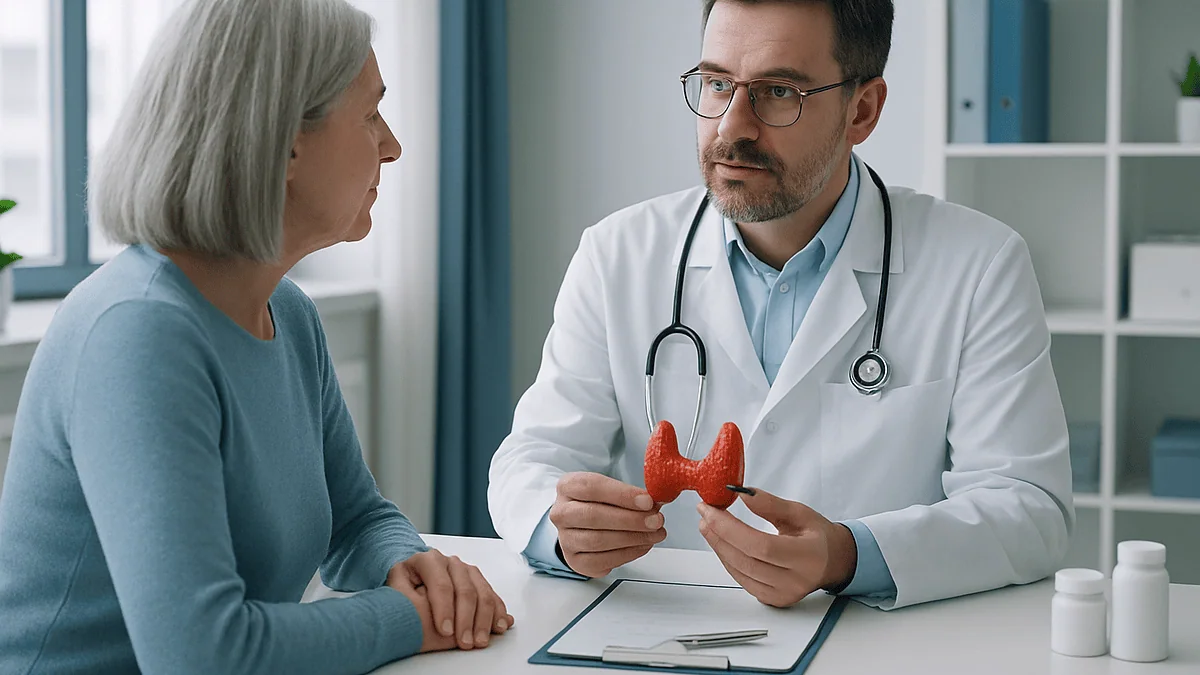
Soy contains isoflavones, plant compounds that are structurally similar to estrogen but hundreds to thousands of times weaker and that act differently in the body. Randomized trials show that normal soy intake, around one to two servings a day, does not raise estrogen in men, lower testosterone or disrupt hormone levels in women. Tofu, edamame and soy milk are considered safe for most adults; anyone with a hormone-sensitive condition should discuss intake with their clinician.
A father messaged our wellness desk a few weeks ago with a screenshot. His teenage son had stopped eating the tofu stir-fry the family cooks on Thursdays because a short video with several million views warned that soy would “turn him into a girl.” The video had no citations, a confident voice and a very good lighting setup. As of mid-2025, versions of that clip, and its mirror image aimed at women worried about breast health, are pushing the question of soy and estrogen back to the top of search trends, right as plant protein sales climb and more households swap a weekly meat meal for beans.
The anxiety is understandable. Soy really does contain compounds that resemble estrogen, and “resembles a hormone” sounds alarming in a 30-second clip. The full story takes a little longer, and it turns out to be reassuring, specific and genuinely interesting.
So let us set the videos aside and look at what decades of trials, cohort studies and laboratory work actually show about a bean that humans have been eating for roughly 3,000 years.
What is soy, and are soybeans a complete protein?
Soy is the seed of Glycine max, a legume in the same botanical family as lentils, chickpeas and peanuts. Harvested green and boiled in the pod it is edamame; dried, soaked and ground with water it becomes soy milk; curdle that milk with a mineral salt and press it, and you have tofu. Fermentation gives tempeh, miso and natto. The processed end of the spectrum includes soy protein isolate, textured vegetable protein and the soybean oil that shows up in a large share of packaged foods, although the oil contains almost none of the compounds this article is about.
The complete-protein question has a clear answer: yes. A complete protein supplies all nine essential amino acids, the building blocks the body cannot manufacture on its own, in proportions that meet human needs. Most plant foods fall short in one or two, which is why rice pairs so well with beans. Soy is the notable exception. On the protein-quality scoring systems used by nutrition scientists, soy protein ranks alongside egg and dairy protein and above every other legume. A cup of cooked soybeans delivers about 30 g of protein, roughly the amount in a palm-sized chicken breast, along with fiber, iron, potassium and polyunsaturated fat.
What makes soy distinctive, and what fuels the argument, is its unusually high concentration of isoflavones. Other legumes contain traces; soy contains enough that a single serving provides 20–30 mg. That is the hinge on which every soy and estrogen worry turns, so it deserves its own careful explanation.
What are phytoestrogens, and how do isoflavones work?
A phytoestrogen is a compound made by a plant that can attach to the same receptors in human cells that estrogen uses. The word combines the Greek phyton (plant) with estrogen, and that is exactly all it means: plant-derived, receptor-compatible. It does not mean the plant makes human estrogen, any more than a key that fits a lock is the same as the original key.
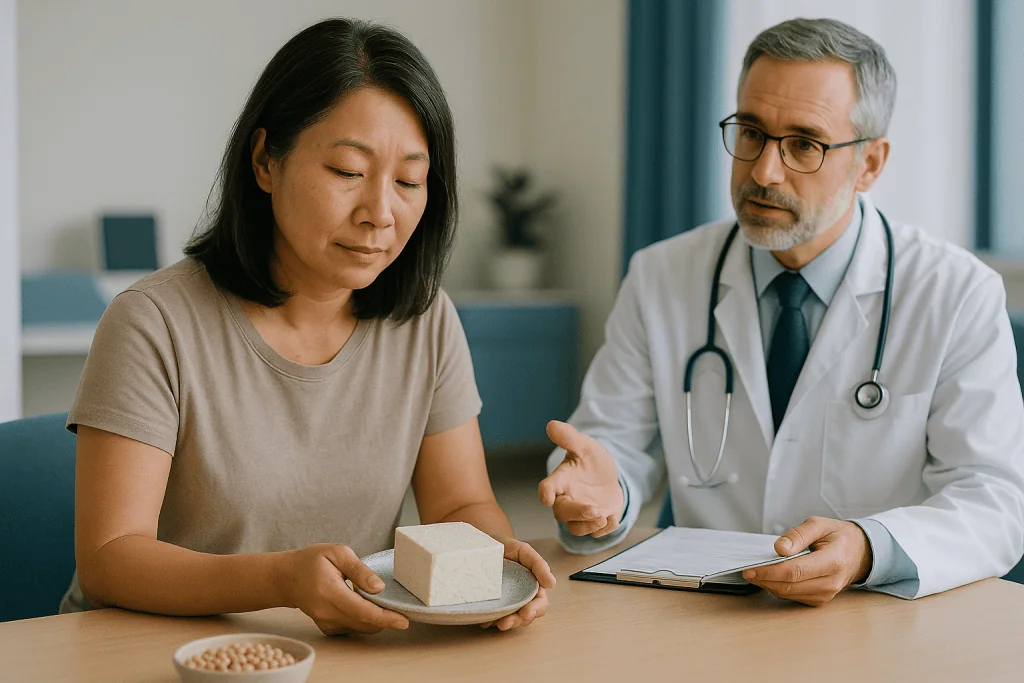
Soy’s phytoestrogens are isoflavones, chiefly genistein and daidzein. In the gut, bacteria convert some daidzein into a related compound called equol, and only about 30 to 50 percent of people in Western countries carry the bacteria to do so, compared with a higher share in East Asian populations. This is one reason trial results vary from person to person.
Estrogen receptors come in two main types, alpha and beta, and the difference matters. Alpha receptors drive the classic estrogen effects on breast and uterine tissue. Beta receptors are concentrated in bone, blood vessels, the brain and the prostate, and in many tissues they counterbalance alpha signaling. Genistein binds beta receptors far more readily than alpha, which is close to the opposite of what human estradiol does. Pharmacologists describe this pattern as selective estrogen receptor modulation: a compound that behaves like a weak estrogen in some tissues and like an estrogen blocker in others, depending on which receptor dominates and how much natural estrogen is already present.
Isoflavones are also cleared quickly, with a half-life of around 6 to 8 hours, so they do not accumulate the way a steroid hormone stored in fat tissue can. Weak binding, beta preference and rapid clearance together explain why the laboratory signal rarely translates into a hormonal effect in people eating ordinary amounts.
Soy and estrogen: how different are isoflavones from the real hormone?
Picture two keys cut for the same lock. One is the master key the body makes, estradiol, the most potent human estrogen. The other is genistein, cut just similarly enough to slide into the keyway but with a wobbly fit. In receptor-binding studies, genistein’s affinity for the alpha receptor is on the order of a thousand times lower than estradiol’s. At the beta receptor the gap narrows but remains large. Daidzein is weaker still.
Potency is only part of the story. Estradiol circulates in picomolar concentrations, a few parts per trillion, and each molecule triggers a strong, sustained signal. Isoflavones after a soy meal circulate at roughly a thousand times higher concentration, which sounds alarming until you remember they are a thousand or more times weaker. The two effects roughly cancel, which is why a tofu dinner does not produce the hormonal signature of a hormone dose.
There is a further twist. When a weak, partial key occupies a lock, it can prevent the strong key from turning it. In a premenopausal woman with abundant estradiol, isoflavones competing for receptors may slightly dampen estrogen signaling in breast tissue. After menopause, when estradiol falls by about 90 percent, the same isoflavones may provide a faint estrogen-like nudge in tissues such as bone or blood vessels. This context-dependent behavior is well documented in cell and animal models and is the leading explanation for why soy neither “adds estrogen” nor “blocks estrogen” in any simple sense.
In short, the resemblance between soy isoflavones and estrogen is real, chemically modest and biologically tamed. The honest headline on soy and estrogen is not “soy is a hormone” but “soy contains a weak, selective receptor modulator that the body handles easily at food doses.”
What changed recently in the soy conversation
The underlying science has been stable for more than a decade; what has shifted is who is talking and how loudly. A few dated markers help separate signal from noise.

In 2010 a meta-analysis of 15 placebo-controlled trials in men, published in Fertility and Sterility, found no effect of soy protein or isoflavone supplements on total testosterone, free testosterone or sex-hormone-binding globulin. It remains the reference point for male hormone questions, and updates through 2021 that expanded the pool to more than 40 studies reached the same conclusion.
In 2021 the American Heart Association published its dietary guidance scientific statement, which explicitly recommends plant protein sources such as legumes and soy as part of a heart-healthy pattern. The statement reflects a quiet consensus: major bodies now treat soy as an ordinary healthy legume rather than a special case requiring warnings.
Mayo Clinic, Cleveland Clinic and the NIH’s National Center for Complementary and Integrative Health have all refreshed their consumer pages within the past few years to state that moderate soy intake does not raise breast cancer risk and does not feminize men. The language on these pages has moved from cautious hedging toward plain reassurance as the observational data from large Asian cohorts matured.
What has not changed is the uncertainty around concentrated isoflavone supplements, which deliver amounts far beyond any plausible diet. Research pages still flag that high-dose supplements have not been proven safe over the long term for people with a history of hormone-sensitive cancers, and that question remains open. The trending videos, in other words, are recycling a 1990s debate that the evidence largely settled, while missing the one area where caution is still warranted.
What the evidence actually says, graded by strength
Not all evidence weighs the same, so here is how the main claims stack up when sorted by study design.
Men’s hormones: strong. This rests on randomized controlled trials, the design in which participants are assigned by chance to soy or placebo so that other differences cancel out. Dozens of such trials, pooled in repeated meta-analyses, show no change in testosterone, estrogen or sperm parameters at intakes up to several servings a day. The remaining gaps involve very long durations and extreme doses, not everyday eating.
Women’s hormone levels and cycles: moderate to strong. Randomized trials show either no change or a small lengthening of the menstrual cycle by about one day, with slight reductions in circulating estrogen in some premenopausal participants. These are tiny effects, inconsistent across trials, and not associated with fertility problems.
Menopausal hot flashes: moderate but mixed. Pooled trials suggest a modest reduction in hot flash frequency compared with placebo, roughly on the order of one fewer episode a day, with large variation between studies and a sizable placebo response. Expert bodies describe the evidence as inconsistent rather than conclusive.
Breast cancer risk: moderate, observational. Here the evidence comes from cohort studies, which follow large groups over time without assigning diets. East Asian cohorts consistently link higher lifelong soy intake with somewhat lower breast cancer incidence; Western cohorts, where intake is low, show neutral results. Observational data cannot prove cause, but the direction is reassuring and no cohort shows harm.
Soy for survivors: moderate, observational. Several cohorts of women after breast cancer treatment found no increased recurrence with soy food intake. Decisions here belong to the treating oncology team.
Thyroid, cognition, infant formula: moderate, mostly reassuring, with specific caveats covered below.
Does soy lower testosterone or cause enlarged male breast tissue in men?
This is the claim driving most of the current traffic, so it deserves a direct answer: no, not at any realistic intake, and the data are unusually clear.
The randomized trials behind the 2010 and later meta-analyses enrolled men who consumed soy protein, isoflavone extracts or both for weeks to months, in amounts that in several studies exceeded what a typical Japanese adult eats. Across these trials, total testosterone, free testosterone, estradiol and the carrier protein that regulates them did not move in any consistent direction. Semen quality studies tell the same story; one well-publicized observational report linking soy to lower sperm concentration involved men with concentrations still within the normal range and has not been reproduced in controlled settings.
So where does the fear come from? Largely from a single published case report in which a man developed enlarged male breast tissue (gynecomastia) and elevated estrogen after drinking roughly three quarts of soy milk every day for months, about twelve servings, while eating little else. His symptoms resolved after he stopped. A second report involved a man taking high-dose isoflavone supplements. These are the nutritional equivalent of a case report about water intoxication: they tell you what happens at extremes, not what happens at dinner.
Gynecomastia itself is common and usually unrelated to diet. It occurs transiently in up to two-thirds of adolescent boys because of normal puberty hormone shifts, and in older men it is more often tied to weight, certain medicines, alcohol, liver or kidney conditions or declining testosterone. Any man noticing new breast swelling, especially one-sided or tender, should have it checked by a clinician rather than blaming the tofu.
The practical bottom line for men: edamame at the sushi bar, soy milk in coffee and tofu in the stir-fry sit well inside the range the trials studied.
Soy and estrogen in women: cycles, fertility and menopause
For women the question splits by life stage, because the body’s own estrogen level determines how isoflavones behave.
Before menopause, randomized trials have measured everything from cycle length to ovulation hormones in women eating soy foods or isoflavone extracts. The most consistent finding is a slight lengthening of the menstrual cycle, around one day on average, which falls well within normal month-to-month variation. Some trials record small dips in estradiol or the hormones that trigger ovulation; others record nothing. Fertility studies are reassuring: in one cohort of women undergoing assisted reproduction, higher soy intake was associated with better, not worse, outcomes, although this is observational and modest. There is no credible evidence that dietary soy impairs fertility or causes hormonal disorders.
After menopause, interest shifts to symptom relief. A hot flash is a sudden wave of heat and sweating caused by the brain’s temperature thermostat becoming more sensitive as estrogen falls. Pooled randomized trials of soy isoflavones show a modest reduction in hot flash frequency and severity compared with placebo, with the clearest benefit in women whose gut bacteria produce equol. The effect is smaller and slower than prescription options and inconsistent enough that the NIH describes the evidence as mixed. A woman considering soy for symptoms should treat it as a food choice with a possible small upside, not as a substitute for a conversation with her clinician about proven treatments.
Two further points matter. Soy foods have not been shown to thicken the endometrium, the lining of the uterus, in postmenopausal women, a key safety marker that distinguishes them from unopposed estrogen. And bone studies show at best a small benefit for bone density, far from a reason to rely on soy alone for skeletal health.
Is soy good or bad for the breast?
This is the question behind the second wave of viral content, and it is where the evidence has shifted most clearly toward reassurance over the past 20 years.
The worry began sensibly enough. In the 1990s, laboratory studies showed that genistein could stimulate the growth of estrogen-receptor-positive breast cancer cells in a dish and in rodents engineered without ovaries. Those experiments used isolated genistein at concentrations far above anything a meal produces, in models lacking the normal hormonal context. Early guidance understandably urged caution.
Human data then accumulated and pointed the other way. Large cohort studies in Japan, China and Singapore, where women typically eat one to two servings of soy foods daily from childhood, consistently found lower breast cancer incidence among higher consumers, with the strongest associations when intake began in adolescence, a window when breast tissue is developing. Western cohorts, where average intake is a fraction of a serving, show neutral results. No major cohort has found that soy foods increase risk.
For women already treated for breast cancer, pooled analyses of several thousand survivors found that moderate soy food intake was associated with no increase in recurrence or mortality, and in some analyses with a lower rate. Mayo Clinic’s consumer guidance now states plainly that soy foods appear safe for survivors, while noting that concentrated isoflavone supplements have not been studied enough to earn the same reassurance.
A few boundaries keep this honest. These are observational findings, so they establish safety and association, not a protective treatment effect. Breast cancer screening recommendations, generally beginning with mammography discussions in a woman’s 40s and tailored by personal and family history, do not change based on diet. And any woman with a current or past hormone-sensitive cancer should route questions about soy, and especially about supplements, through her oncology team.
Soy, the thyroid and children: the two caveats worth knowing
Most soy worries dissolve under scrutiny, but two deserve a measured look because they contain a kernel of real physiology.
The first is thyroid function. Isoflavones can inhibit an enzyme the thyroid uses to attach iodine to hormone precursors, which qualifies soy as a mild goitrogen, a substance that can interfere with thyroid hormone production. In people with adequate iodine intake, clinical trials show no meaningful change in thyroid hormone levels from eating soy foods. The combination that matters is high soy intake plus low iodine, a scenario seen in some historical infant-formula cases before formulas were iodine-fortified. Adults with hypothyroidism, an underactive thyroid, should know that soy foods and other high-fiber or high-protein foods can reduce the absorption of thyroid hormone replacement medicine if eaten at the same time. This is an absorption-timing issue, not a reason to avoid soy, and the right approach is to ask the prescribing clinician how to space meals and the medicine rather than to adjust anything independently.
The second is children. Soy-based infant formula has been used for decades, and the American Academy of Pediatrics regards it as an acceptable option in specific situations. A long-term study that followed adults who had been fed soy formula as infants found no significant differences in reproductive or developmental outcomes compared with adults fed cow’s-milk formula. Research continues, and the NIH describes the overall picture as reassuring but still being studied. For older children and teenagers, soy foods are a normal part of diets across East Asia, and there is no evidence that edamame or tofu alters puberty timing or hormone development.
Neither caveat changes the advice for the general population; both simply reinforce that supplements and special circumstances differ from food.
Tofu benefits: what a block of tofu actually delivers
Strip away the hormone debate and tofu is an unusually efficient food. A 100 g serving of firm tofu, about the size of a deck of cards, provides roughly 8–10 g of complete protein, around 100 calories, and if it was set with calcium sulfate, as most commercial tofu is, as much as 350 mg of calcium, close to a glass of milk. It is naturally low in saturated fat, contains no cholesterol and offers a useful share of iron, magnesium and manganese.
The heart-health case is the best studied of the tofu benefits. Randomized trials pooled over the past two decades show that replacing animal protein with about 25 g a day of soy protein lowers LDL cholesterol by roughly 3 to 4 percent. That is a small effect on its own, smaller than regulators once hoped, but it adds to the larger benefit of displacing red and processed meat, which the American Heart Association’s 2021 dietary guidance identifies as a core strategy. Large cohort studies associate regular tofu intake with a modestly lower risk of coronary heart disease, particularly in women.
There are everyday practical advantages too. Tofu absorbs flavors readily, cooks in minutes and keeps for days refrigerated in water. Pressing it for 20 minutes before cooking removes water and improves browning. Firm and extra-firm varieties hold shape in stir-fries; silken tofu blends into soups, dressings and desserts as a cream substitute.
What tofu does not do is also worth stating. It is not a weight-loss food in itself, not a treatment for menopause symptoms and not a reason to skip calcium from other sources unless the label confirms calcium setting. It is simply one of the more nutrient-dense, affordable proteins available, and a reasonable Thursday dinner.
Lentils benefits: how soy compares with other legumes
If soy is the legume with the hormone reputation, lentils are the one with no reputation at all, which is a shame given what they offer. Setting the two side by side shows why dietitians tend to recommend variety rather than a single favorite.
Lentils supply about 18 g of protein per cooked cup, nearly matching soybeans, but the protein is low in the amino acid methionine, so pairing lentils with grains over the course of a day rounds it out. Where lentils pull ahead is fiber, with roughly 15 g per cup, and folate, a B vitamin needed for cell division, at more than 350 micrograms, close to the full daily requirement for most adults. Lentils also cook in 20 minutes without soaking, a practical edge over dried soybeans. Their isoflavone content is negligible, so anyone who, for personal reasons, prefers to limit phytoestrogens can lean on lentils without giving up legume nutrition.
The table below summarizes approximate values per standard serving, drawn from national nutrient databases and NHS guidance on beans and pulses.
| Food (one serving) | Protein | Fiber | Isoflavones | Notable extras |
|---|---|---|---|---|
| Firm tofu, 100 g | 8–10 g | 1–2 g | 20–30 mg | Calcium if calcium-set |
| Edamame, 1 cup shelled | 17–18 g | 8 g | 25–35 mg | Folate, vitamin K |
| Soy milk, 1 cup unsweetened | 7 g | 1–2 g | 20–25 mg | Often fortified with calcium, vitamin D, B12 |
| Lentils, 1 cup cooked | 18 g | 15 g | Trace | Folate, iron, potassium |
| Chickpeas, 1 cup cooked | 15 g | 12 g | Trace | Manganese, folate |
The pattern is the point: all five foods count toward the NHS and AHA recommendation to make legumes a regular protein source, and none of them carries a hormonal cost at these serving sizes.
How much soy is a reasonable amount to eat?
The most useful benchmark is not a laboratory number but a population that has eaten soy for centuries. Adults in Japan typically consume one to two servings of soy foods a day, delivering roughly 25–50 mg of isoflavones, and have done so across generations without the hormonal disruption that online claims predict. By contrast, average intake in the United States and Europe is under 3 mg a day, less than a tenth of a serving, which is why Western cohort studies often cannot detect any soy effect at all.
Guidance from academic and clinical nutrition sources converges on a comfortable range: up to two or three servings of whole or minimally processed soy foods daily fits within a healthy diet for most adults, and the trials that reassured researchers about hormones used intakes at or above this level. One serving means about 100 g of tofu, a cup of soy milk, half a cup of cooked soybeans or edamame, or a 100 g piece of tempeh.
Form matters more than quantity. Whole soy foods arrive with fiber, minerals and unsaturated fat. Soy protein isolate in bars and shakes is not harmful but strips away most of that package. Isoflavone supplements are a separate category altogether: they can deliver several days’ worth of isoflavones in one capsule, they lack long-term safety data in people with hormone-sensitive conditions, and they are the only form of soy that mainstream clinical sources specifically caution about. Anyone considering a supplement, rather than a food, should raise it with a clinician first.
The father from our opening could reasonably tell his son that Thursday tofu puts him in the company of about a billion people eating the same thing, with the same unremarkable hormone results.
Common myths about soy and estrogen, corrected
The viral claims tend to repeat a handful of ideas. Each has a short, evidence-based correction.
“Soy contains estrogen.” It contains isoflavones, plant compounds that bind estrogen receptors weakly and selectively. No plant produces human estrogen. The potency gap is on the order of a thousandfold, and the receptor preference runs opposite to estradiol’s.
“Soy lowers testosterone.” Repeated meta-analyses of randomized controlled trials show no effect on testosterone, free testosterone or estrogen in men at intakes well above typical Western consumption.
“Soy causes enlarged male breast tissue (gynecomastia).” The supporting evidence is a single case report involving about twelve servings of soy milk a day. Gynecomastia is common for unrelated reasons, from puberty to medicines to weight, and warrants medical evaluation rather than dietary blame.
“Soy causes breast cancer.” Human cohort studies, including in populations eating soy daily from childhood, show neutral to lower risk, and survivor cohorts show no increased recurrence with soy foods. The scary data came from isolated genistein in cell cultures and rodents.
“Soy is a natural hormone replacement.” The hot-flash evidence is modest and inconsistent, and soy foods do not reproduce the broader effects of prescribed hormone therapy, for better or worse. They are food, not treatment.
“Fermented soy is safe but tofu is not.” Fermentation changes isoflavone form and digestibility but does not separate “safe” from “unsafe” soy. Tofu, soy milk, tempeh and miso all appear in the reassuring human data.
“Soy wrecks the thyroid.” In people with adequate iodine, soy foods do not alter thyroid hormone levels. The real, manageable issue is meal timing for people on thyroid medicine, a question for their prescriber.
A fair reading of soy and estrogen leaves one legitimate caution standing: concentrated isoflavone supplements lack long-term safety data in people with hormone-sensitive conditions. Everything else on the list has been tested and found wanting.
When to see a doctor
Soy foods do not cause hormonal illness, which is exactly why new hormonal symptoms should prompt a medical visit rather than a dietary purge. Changing what you eat first can delay finding the real explanation.
Men should see a clinician for new breast swelling or tenderness, particularly on one side or with a firm lump, nipple discharge, loss of libido, erectile difficulty, shrinking testicles, unexplained fatigue or loss of body hair. These can signal hormone imbalances, medication effects, liver or kidney problems or, rarely, tumors, and all are evaluated with simple blood tests and examination.
Women should seek care for menstrual bleeding that becomes unusually heavy, prolonged or absent for three months outside pregnancy, any bleeding after menopause, a new breast lump or skin change, nipple discharge, or hot flashes severe enough to disrupt sleep and daily life. Postmenopausal bleeding in particular always warrants prompt assessment.
Anyone with a current or past hormone-sensitive cancer, including breast, uterine, ovarian or prostate cancer, should discuss soy intake, and especially any isoflavone supplement, with their oncology team before making changes. People with a thyroid condition who take thyroid hormone replacement should ask their prescriber about how to time meals and medicine; they should never alter their medicine on their own because of something they ate or read. Parents with questions about soy formula should raise them with their pediatrician.
Finally, see a doctor urgently for a hard, fixed lump anywhere in the breast, bleeding that soaks through protection hourly, or sudden severe pelvic pain. None of these are soy problems; all of them are reasons to put down the search bar and pick up the phone. Every treatment or testing decision belongs with the clinician who knows your history.
Frequently asked questions
Does soy increase estrogen in men?
No. Meta-analyses of randomized controlled trials show that soy protein and isoflavones do not raise estradiol or lower testosterone in men, even at several servings a day. Isoflavones bind estrogen receptors weakly and are cleared within hours. The only reports of feminizing effects involved extreme intakes, such as three quarts of soy milk daily, far outside normal eating.
What are phytoestrogens, in plain language?
Phytoestrogens are plant compounds shaped similarly enough to estrogen to attach to estrogen receptors in human cells, but far more weakly. Soy’s phytoestrogens are isoflavones, mainly genistein and daidzein. They act as selective modulators, behaving like a faint estrogen in some tissues and a mild blocker in others, which is why they do not simply add to the body’s hormone load.
Are soybeans a complete protein?
Yes. Soybeans contain all nine essential amino acids in proportions that meet human needs, earning protein-quality scores comparable to egg and dairy. That makes soy unique among common legumes; lentils, chickpeas and beans are lower in methionine and pair best with grains. A cooked cup of soybeans provides about 30 g of protein.
What are the benefits of soy for women's breast health?
Large cohort studies in East Asia associate lifelong soy food intake, especially starting in adolescence, with modestly lower breast cancer incidence, and studies of survivors show no increased recurrence. This is observational evidence, so it establishes safety and association rather than proven protection. Screening recommendations do not change with diet, and women with a cancer history should consult their oncology team about soy and supplements.
Is tofu bad for men?
No. Tofu has been eaten daily by men across East Asia for centuries, and controlled trials show no change in testosterone, estrogen or sperm parameters with soy intake. A 100 g serving delivers 8–10 g of complete protein and, if calcium-set, as much calcium as a glass of milk. Men with new breast swelling should see a clinician, since diet is rarely the cause.
What are the main tofu benefits for heart health?
Replacing animal protein with about 25 g of soy protein a day lowers LDL cholesterol by roughly 3 to 4 percent in pooled trials, and cohort studies link regular tofu intake with a modestly lower risk of coronary heart disease. Tofu is low in saturated fat and cholesterol-free. The larger benefit comes from displacing red and processed meat within an overall plant-forward pattern.
What are the lentils benefits compared with soy?
Lentils nearly match soy on protein, about 18 g per cooked cup, and exceed it on fiber at roughly 15 g and on folate at more than 350 micrograms. They contain only trace isoflavones, cook in 20 minutes without soaking and cost little. Their protein is lower in methionine, so pairing with grains across the day completes it.
Can soy help with hot flashes during menopause?
Possibly, modestly. Pooled randomized trials show a small reduction in hot flash frequency and severity with soy isoflavones compared with placebo, most evident in women whose gut bacteria produce equol. The effect is inconsistent across studies and smaller than prescription treatments, and the NIH describes the evidence as mixed. Discuss persistent or severe symptoms with your clinician.
Does soy affect the thyroid?
In people with adequate iodine, soy foods do not change thyroid hormone levels in clinical trials. Soy can reduce absorption of thyroid hormone replacement medicine when eaten at the same time, which is a meal-timing question for the prescribing clinician, not a reason to stop or adjust medicine or to avoid soy. Historical thyroid concerns arose mainly with iodine-poor diets.
Are soy isoflavone supplements as safe as soy foods?
Not necessarily. Supplements can deliver several days’ worth of isoflavones in one capsule and lack long-term safety data, particularly in people with a history of hormone-sensitive cancers. Mainstream clinical sources reserve their caution for this concentrated form while reassuring about whole soy foods. Anyone considering a supplement should discuss it with a clinician first.
This article is for general information only and is not a substitute for professional medical advice. Please consult a qualified doctor about your individual situation.

More from the Blog
Egg Whites vs Whole Eggs: What the Yolk Adds and When It Matters
Egg whites supply most of an egg's protein with almost no fat, cholesterol or calories, but the yolk carries nearly all of its vitamins…

Spearmint Tea: The Hormone-Curious Cup, Explained
Spearmint tea is a caffeine-free herbal infusion with modest evidence behind its hormone reputation: two small clinical trials found that drinking it twice daily…

Oolong Tea: Between Green and Black: With Its Own Evidence
Oolong tea is a partially oxidized tea whose polyphenols and moderate caffeine may support heart health, alertness, and healthy blood sugar, based mostly on…

Walnuts: The Brain-Shaped Nut With Brain-Adjacent Data
Walnuts are the only common nut rich in ALA, a plant omega-3, and the strongest evidence supports heart health: eating about one ounce daily…

Is Oatmeal Good for You? The Beta-Glucan Story
Yes, for most people, oatmeal is a genuinely healthy food. Oats supply beta-glucan, a soluble fiber shown in clinical trials to modestly lower LDL…
Does Coffee Dehydrate You? The Diuretic Myth, Measured
No, for most people, moderate coffee drinking does not dehydrate you. Caffeine has a mild, short-lived diuretic effect, but the water in each cup…