

Sucralose, Stevia and Monk Fruit: What the Studies Show About Gut, Blood Sugar and Cravings

Key Takeaways
- About 85 percent of swallowed sucralose passes through the gut unabsorbed, which is why it can interact with colonic bacteria despite contributing no calories.
- In a 2022 trial of 120 healthy adults, two weeks of sucralose at everyday amounts shifted gut bacteria and worsened glucose tolerance in some volunteers but not others.
- The 2025 brain-imaging study linking sucralose to increased hypothalamic activity and hunger did not measure whether people actually ate more afterward.
- The WHO's 2023 advice against using sweeteners for weight control was a conditional recommendation, its label for guidance built on low-certainty, mostly observational evidence.
- Stevia and monk fruit have fewer warning signals than sucralose largely because they have been studied in far fewer people for far less time.
- Many stevia and monk fruit products are bulked with erythritol, the sugar alcohol tied in 2023 and 2024 observational studies to platelet activity and cardiovascular events.
Sucralose, stevia and monk fruit are all judged safe by US and European regulators at typical intakes, and none raises blood sugar directly. Small short-term trials suggest sucralose may shift gut bacteria and blunt glucose handling in some people, and a 2025 brain-imaging study linked it to stronger hunger signals, but the evidence is early and mixed. Stevia and monk fruit have far fewer human studies. Water remains the best-supported default.
The comment thread under the video had 40,000 replies by breakfast. A woman filmed herself pouring a diet cola down the sink, captioned with a single word: “hungrier.” She was reacting to a 2025 brain-imaging trial in which sucralose, the sweetener in most yellow-packet products and thousands of “zero” drinks, lit up the hypothalamus, the appetite-control center at the base of the brain, more than plain sugar did.
As of September 2025, that study has become the latest chapter in a story that has been building since May 2023, when the World Health Organization advised against relying on non-sugar sweeteners for weight control. Add a 2023 cancer-agency ruling on aspartame, a 2022 trial showing sucralose reshaped gut bacteria in healthy volunteers, and a steady drumbeat of headlines about erythritol and the heart, and it is no wonder search interest has spiked.
The honest answer is more textured than a sink-side confession. Some of the worry is grounded. Some of it collapses the moment you ask how many people were studied, for how long, and compared with what.
What changed recently in the sucralose debate
Four dated events explain why this topic is everywhere right now, and each carries a different weight of evidence.
On May 15, 2023, the WHO released a guideline advising that non-sugar sweeteners not be used as a tool for controlling body weight or reducing the risk of long-term disease. A non-sugar sweetener is any low- or no-calorie substitute for sugar, whether synthetic like sucralose or plant-derived like stevia. The recommendation was explicitly labeled “conditional,” the WHO’s term for guidance built on low-certainty evidence, most of it from observational studies that follow people over time rather than trials that assign them to a sweetener.
Two months later, in July 2023, the WHO’s cancer research arm classified aspartame as “possibly carcinogenic to humans,” its second-lowest category. Sucralose, stevia and monk fruit were not part of that review, yet the headline pulled every sweetener into the same suspicion.
Underneath those announcements sits the 2022 trial that started much of the scientific conversation. Researchers gave 120 healthy adults who normally avoided sweeteners two weeks of sucralose, saccharin, aspartame or stevia at amounts below regulatory limits. Sucralose and saccharin measurably changed the gut microbiome, the community of trillions of bacteria living in the intestine, and in some volunteers those changes tracked with worse glucose tolerance.
The freshest piece is the 2025 imaging study of roughly 75 adults that found a sucralose drink increased blood flow to the hypothalamus and raised self-reported hunger compared with an equally sweet sugar drink. It is one experiment, in one sitting, but it is the reason “sucralose” and “cravings” now appear in the same search bar.
What is sucralose, and how does it differ from stevia and monk fruit?
Start with the chemistry, because it shapes everything that follows.
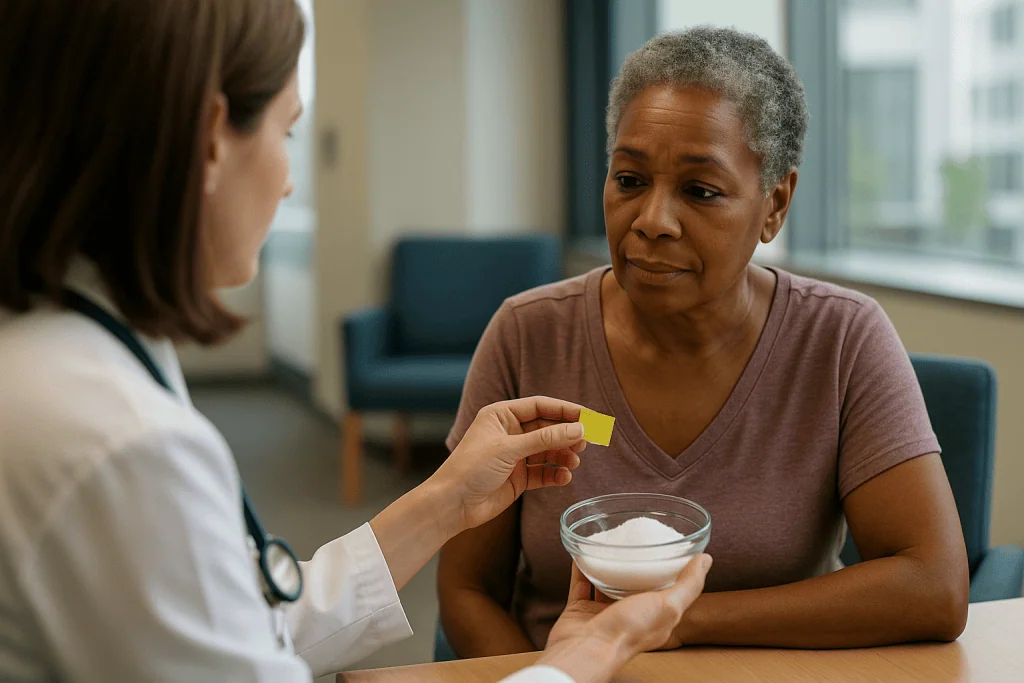
Sucralose is table sugar with three of its hydroxyl groups swapped for chlorine atoms. That small edit makes the molecule roughly 600 times sweeter than sugar and, crucially, unrecognizable to the enzymes that digest sucrose. About 85 percent of what you swallow passes through the gut unabsorbed and leaves in stool; most of the remainder is absorbed and excreted in urine largely unchanged. It carries essentially no calories. The US Food and Drug Administration approved it in 1998, and it is now the most widely used artificial sweetener in the American food supply.
Stevia, in the form sold on shelves, is not a crushed leaf. It is a purified extract of steviol glycosides, the sweet-tasting compounds inside the Stevia rebaudiana plant, typically rebaudioside A. These glycosides are 200 to 400 times sweeter than sugar. Gut bacteria in the colon strip off the sugar portions and release steviol, which the liver processes and the body excretes. The FDA treats high-purity steviol glycosides as GRAS, a designation meaning “generally recognized as safe” based on expert consensus; whole-leaf and crude extracts have not received that status as sweeteners.
Monk fruit, or luo han guo, is a small melon grown in southern China. Its sweetness comes from mogrosides, antioxidant compounds that are 100 to 250 times sweeter than sugar and are not absorbed as calories. Monk fruit extract earned GRAS status in 2010, making it the newest of the three and, not coincidentally, the least studied.
Three molecules, three metabolic paths. Lumping them together as “artificial sweeteners” is where most misunderstandings begin.
What the evidence actually says, graded by strength
Nutrition research comes in tiers, and the sweetener story reads very differently depending on which tier you are looking at.
The strongest tier is the randomized controlled trial, in which participants are assigned by chance to one option or another so that differences can be attributed to the sweetener itself. For sucralose, dozens of such trials exist, most lasting a few hours to a few months. Their consistent finding: swallowing sucralose alone does not raise blood glucose or insulin in the way sugar does, and swapping sugar-sweetened drinks for sweetened ones produces modest short-term weight loss, on the order of a few pounds over several months. Trials on gut bacteria and appetite are fewer, smaller and more mixed.
The middle tier is observational: large cohorts followed for years, correlating sweetener intake with later disease. Here sucralose and its cousins are associated with higher rates of type 2 diabetes, cardiovascular events and mortality. The catch is reverse causation. People often switch to diet drinks because they are already gaining weight or have been told their glucose is creeping up, so the sweetener can look guilty for a problem that predates it. Statistical adjustment softens but cannot erase that bias.
The lowest tier is mechanistic work in cells, mice and test tubes. Chlorinated by-products of heated sucralose, DNA changes in cultured cells, altered gut hormones in rodents fed enormous amounts: all genuinely interesting, none proof of harm in a person drinking a can with lunch.
Our reading of the whole pyramid: acute safety is well established; long-term metabolic neutrality is plausible but unproven; the gut and appetite signals are real enough to take seriously and too preliminary to treat as settled.
Does sucralose affect gut bacteria?
It can, in some people, for at least a couple of weeks. Beyond that, the honest answer is that nobody knows yet.

Because most sucralose travels the length of the intestine without being absorbed, it spends hours in direct contact with colonic bacteria. Early rodent studies, going back to 2008, showed reductions in total gut bacteria and shifts toward less favorable species after sucralose exposure, though the doses were often far above anything a human would consume.
The human picture sharpened with the 2022 trial mentioned earlier. Two weeks of sucralose at everyday amounts altered the composition and metabolic activity of both the oral and gut microbiome in healthy volunteers. When researchers transplanted stool from the human participants into germ-free mice, the mice receiving stool from the most-affected sucralose users developed the same impaired glucose response. That transfer experiment is what turned a correlation into a plausible causal chain.
Balance that against two smaller randomized crossover trials, published in 2019 and 2020, in which healthy adults consumed sucralose at typical levels for one to two weeks and showed no meaningful change in gut bacteria or glucose handling. Sample sizes were under 40 in each, so neither could detect subtle effects, but they are a reminder that the signal is not universal.
The pattern that emerges is personalization. Responses varied widely from one volunteer to the next, apparently depending on the bacteria they started with. Whether the changes persist, reverse, or matter for health over years has not been tested. Stevia showed minimal microbiome effects in the same 2022 trial, and monk fruit has essentially no human gut data at all.
Sucralose and blood sugar: what the trials show
If you drink a sucralose-sweetened beverage on an empty stomach and check your glucose an hour later, you will almost certainly see nothing. That is the finding of the majority of controlled trials, and it is why sucralose is a permitted ingredient in foods marketed to people with diabetes.
The nuance sits in two places. First, context. A widely cited 2013 trial gave 17 adults with obesity who did not normally use sweeteners either sucralose or water before a glucose drink. After sucralose, peak glucose was about 14 percent higher and insulin release about 20 percent greater than after water. A follow-up in habitual sweetener users found no such effect, suggesting the body may adapt, or that the people most likely to react are those least accustomed to the taste.
Second, timescale. Acute trials tell you about one meal. Longer trials, running 12 weeks to a year, generally show no worsening of fasting glucose, insulin sensitivity or HbA1c, the three-month average of blood sugar measured on a lab test. Those trials are typically funded by a mix of industry and public sources, and their participants are usually healthy, which limits how far the reassurance stretches.
Stevia has a small body of trials pointing the other way: postprandial glucose, the rise in blood sugar after eating, was slightly lower when a stevia preload replaced sugar, likely because the calories were removed rather than because stevia does anything active. Monk fruit reduced glucose in a handful of rodent studies; human trials are almost nonexistent.
For anyone managing diabetes, the practical point is that sweeteners are not sugar, but they are also not a treatment, and the food they arrive in matters more than the packet.
Does sucralose make you hungrier? The craving question
This is the claim behind the viral videos, and it deserves a careful look rather than a verdict.
The 2025 imaging trial recruited roughly 75 adults across a range of body weights. On separate mornings each person drank water, a sucrose drink, or a sucralose drink matched for sweetness, then had brain scans and answered hunger questions. Sucralose increased blood flow to the hypothalamus, the region that integrates signals about energy balance, more than sugar did, and participants reported feeling hungrier afterward than they did after sugar. The effect was most pronounced in those with obesity. Sugar also raised circulating glucose and insulin, hormones that normally tell the hypothalamus the body has been fed; sucralose provided sweetness without that follow-up message.
That mismatch is the mechanistic theory: a sweet taste primes the brain to expect calories, and when none arrive, appetite may rebound. It is elegant, and it is compatible with older rodent work.
Here is what the trial did not measure: how much anyone ate later that day. Trials that do measure subsequent food intake, over 30 of them across decades, mostly find that people who consume sweetened drinks do not compensate by eating more, and often eat slightly less than after a sugary drink. A 2022 randomized trial comparing sweetened beverages with water over a year found similar weight results in both groups.
So the fair summary is that sucralose may nudge appetite signaling in a single sitting, especially in people with obesity, but whether that translates into extra calories on the plate remains unproven. Stevia and monk fruit have not been tested this way, so no one can claim they behave differently.
Is stevia better than sucralose?
“Natural” sells, and stevia’s marketing leans on it hard. Whether the label reflects a health advantage is a separate question.
On the plus side, stevia’s safety file is reassuring. Steviol glycosides have been evaluated by the FDA, the European Food Safety Authority and the joint WHO/FAO expert committee on food additives, all of which concluded they pose no safety concern at normal intakes. Because colonic bacteria break down the glycosides completely before absorption, the compound that circulates in the body is steviol glucuronide, which the kidneys clear efficiently. In the 2022 microbiome trial, stevia produced the smallest shifts in gut bacteria of the four sweeteners tested, though the study was not designed to rank them.
A small set of trials in people with type 2 diabetes reported lower post-meal glucose with stevia preloads, and a few reported slight reductions in blood pressure at high intakes, an effect not seen at ordinary consumption and not considered clinically meaningful.
The minuses are less about danger than about gaps. Stevia has been mainstream for only about 15 years, so long-term cohort data barely exist. Many packaged “stevia” products are blends dominated by erythritol, a sugar alcohol, which brings its own unresolved questions about platelet activity raised by 2023 and 2024 observational studies. And stevia’s licorice-like aftertaste leads some manufacturers to combine it with sucralose, which quietly defeats the purpose of choosing it.
Our view: stevia is a reasonable choice if you prefer it, and it currently has fewer warning signals than sucralose. But “fewer signals” partly reflects fewer studies. That is a different thing from proven superiority.
Is monk fruit sweetener healthy?
Monk fruit occupies an odd position: the most enthusiastically promoted of the three and the least investigated.
The compounds responsible for its sweetness, mogrosides, are triterpene glycosides with antioxidant properties demonstrated in laboratory conditions. In cell and animal studies they have reduced markers of inflammation and improved glucose handling in diabetic mice. Those results circulate widely in wellness content, often stripped of the words “in mice.”
Human evidence is thin. A 2017 randomized crossover trial gave 30 healthy adults a preload sweetened with monk fruit, stevia, aspartame or sugar and measured glucose, insulin and later food intake. Monk fruit did not raise glucose or insulin and did not increase subsequent eating compared with sugar. That is essentially the entire controlled human literature, and it tells us monk fruit behaves like the other non-sugar sweeteners in the short term, no more.
The FDA granted GRAS status in 2010 after reviewing manufacturers’ data, and no adverse reports of significance have followed. Because mogrosides are poorly absorbed and the fruit has been used in traditional Chinese cooking and remedies for centuries, most toxicologists consider the safety concern low. Unlike sucralose and stevia, monk fruit extract has not been assigned an acceptable daily intake by regulators, a reflection of low concern rather than of any special virtue.
Two practical cautions. Pure monk fruit extract is expensive to produce, so shelf products are frequently bulked out with erythritol or dextrose, sometimes to the point where monk fruit is a minor ingredient. And the absence of long-term data cuts both ways: no evidence of harm, but also no evidence about what years of daily use do to the gut, the appetite, or anything else.
Sucralose vs stevia vs monk fruit at a glance
Numbers and origins side by side clarify how much these three actually share. What they have in common is intense sweetness and negligible calories. Almost everything else differs.
| Feature | Sucralose | Stevia (steviol glycosides) | Monk fruit (mogrosides) |
|---|---|---|---|
| Origin | Chemically modified sugar | Purified plant leaf extract | Purified fruit extract |
| Sweetness vs sugar | About 600 times | 200 to 400 times | 100 to 250 times |
| US regulatory status | FDA-approved additive, 1998 | GRAS for high-purity extracts, 2008 | GRAS, 2010 |
| Absorbed by the body | About 15 percent, excreted unchanged | Broken down by gut bacteria, then absorbed and cleared | Poorly absorbed |
| Direct effect on blood glucose | None in most trials; blunted tolerance in some | None; slightly lower post-meal glucose in small trials | None in one small trial |
| Human gut microbiome data | Several trials, mixed | Limited, minimal effect | Essentially none |
| Heat stability | Stable for most baking; degradation at very high heat under study | Stable | Stable |
| Long-term cohort data | Yes, observational associations with disease | Very limited | None |
Read the table for what it reveals about evidence rather than about risk. Sucralose has the longest row of warning flags because it has been consumed by hundreds of millions of people for a quarter century and studied accordingly. Stevia and monk fruit look cleaner partly because fewer scientists have looked. That asymmetry does not mean the newer sweeteners are worse; it means confidence in either direction should be proportionate to the data.
Do artificial sweeteners help with weight loss?
This is where the WHO’s 2023 guidance and the trial evidence appear to collide, and understanding why they do not actually conflict is the key to the whole subject.
Randomized trials, pooled in several meta-analyses, show that replacing sugar-sweetened drinks with sweetened alternatives produces small reductions in body weight, roughly one to two pounds over a few months, with similar results to replacing them with water. In people who are already heavy consumers of sugary drinks, that swap removes hundreds of calories a day, and the scale reflects it.
Observational cohorts tell the opposite story: people who drink the most diet beverages tend to gain more weight and develop more diabetes over the years. The WHO weighed both bodies of evidence, judged the trial benefits small and short-term, judged the cohort harms uncertain because of reverse causation, and landed on a conditional recommendation: do not count on sweeteners as a weight strategy, and prefer reducing overall sweetness in the diet.
The two findings coexist because they answer different questions. Trials ask what happens when a motivated person deliberately swaps sugar for a sweetener for a defined period. Cohorts ask what happens to the kind of person who ends up drinking a lot of diet soda over decades, along with everything else about that person’s life.
What matters most, in our reading, is what the sweetener replaces. A can of diet cola in place of regular cola is a defensible step down. A can of diet cola in place of water, or as permission for a larger dessert, is not. Sweeteners are a bridge, not a destination, and the WHO’s point is that too many people have been living on the bridge.
Are artificial sweeteners safe for the heart, and do they cause cancer?
Two separate questions, two separate answers, and neither is as alarming as the headlines.
On the heart, the concern comes from a 2022 French cohort of more than 100,000 adults in which those with the highest intake of artificial sweeteners had about a 9 percent higher rate of cardiovascular events over nine years than non-consumers, with sucralose among the sweeteners implicated. The absolute difference was small, the intake was self-reported, and the usual reverse-causation problem applies. A more specific signal emerged in 2023 and 2024 for erythritol and xylitol, sugar alcohols often blended with stevia and monk fruit: higher blood levels were associated with more heart attacks and strokes, and a small experiment showed increased platelet clumping after a large erythritol dose. This is observational plus mechanistic evidence, not trial evidence, and it concerns the bulking agents rather than the sweeteners themselves.
On cancer, the story is cleaner. The July 2023 classification of aspartame as “possibly carcinogenic” was based on limited evidence for liver cancer in three cohort studies and reflects how much is known, not how strong the risk is; the same category includes aloe vera extract and pickled vegetables. A companion expert committee reaffirmed aspartame’s acceptable daily intake unchanged. Sucralose has not been classified as a carcinogen by any major agency. A 2023 laboratory report that sucralose-6-acetate, an impurity and metabolite, damaged DNA in cultured cells generated headlines, but no human or animal study has linked sucralose to cancer at realistic intakes.
Neither the American Heart Association nor the NHS advises the general public to avoid these sweeteners; both suggest treating them as a step toward less sweetness overall rather than a permanent fixture.
Common myths about sucralose, corrected
Some of the most-shared claims about sucralose contain a grain of truth wrapped in a great deal of extrapolation. Here is how the evidence sorts them.
“Sucralose is a chlorinated pesticide.” Sucralose does contain chlorine atoms, as does table salt, and its discovery in 1976 did involve a chemist mishearing “test” as “taste.” The molecule bears no chemical relationship to organochlorine pesticides, is not toxic to insects, and was never developed as one.
“It stays in your body for years.” Most of a dose leaves in stool within a day or two; the absorbed fraction clears through urine within about five days. Trace retention in fat has been reported in rodents fed large amounts, not in humans at dietary levels.
“Sucralose spikes insulin just like sugar.” Most trials show no insulin response at all. One trial in sweetener-naive adults with obesity found a modest increase after a glucose challenge, roughly a fifth larger than with water. That is a real finding, and it is nothing like the response to actual sugar.
“Baking with sucralose creates toxic compounds.” Laboratory heating experiments at very high temperatures have produced chlorinated by-products. Sucralose is stable at typical oven temperatures, and no study has shown harm from baked goods in people. Reasonable caution, not a proven danger.
“It wipes out your gut bacteria.” Human trials show shifts, not destruction, in some but not all people, over two weeks. Mice given the equivalent of dozens of packets daily lost bacterial diversity; that experiment does not describe your afternoon coffee.
“Natural sweeteners are proven safer.” Stevia and monk fruit have fewer warning signals largely because they have fewer studies. Less evidence of harm is not the same as evidence of less harm.
Who should be more careful, and how much is too much?
Regulators set an acceptable daily intake, or ADI, for each approved sweetener: the amount a person could consume every day for life without appreciable risk, usually set 100-fold below the highest level found harmless in animal studies. The FDA’s own illustration puts the sucralose ADI at roughly 28 tabletop packets a day for an adult of average weight, and the stevia ADI at about nine packets. A single diet soda contains a small fraction of either. Monk fruit has no ADI because the reviewed data did not suggest one was needed. Almost no one approaches these limits; the question for most people is not toxicity but habit.
A few groups warrant extra thought. Children are the first. The American Heart Association’s 2018 advisory noted that prolonged sweetener use in children has not been studied well enough to be considered risk-free, and suggested water as the default drink, with sweetened beverages reserved as an occasional swap for sugar in children who already have obesity or diabetes, under a clinician’s guidance.
Pregnancy is the second. Sucralose and steviol glycosides are permitted during pregnancy, and the NHS advises that they are safe within normal amounts. Cohort data linking prenatal diet-drink intake to childhood weight are observational and inconclusive.
People living with diabetes are the third. Sweeteners do not raise glucose, but the products carrying them, from “sugar-free” cookies to protein bars, often carry plenty of carbohydrate. Anyone adjusting food choices around glucose readings should discuss the plan with their care team rather than assume a label settles it.
Finally, anyone with irritable bowel syndrome or a sensitive gut may notice bloating or looser stools from sweetener blends. The likely culprit is usually the erythritol, sorbitol or inulin in the mix, not sucralose, stevia or monk fruit themselves.
When to see a doctor
Sweeteners rarely cause a medical emergency, and none of the research discussed here justifies stopping a prescribed medicine, changing a diabetes plan, or abandoning a diet drink in a panic. Even so, there are moments when the sensible move is an appointment rather than another search.
Book a visit if a new digestive pattern persists for more than a few weeks after you have changed what you eat or drink: ongoing diarrhea, bloating that does not settle, unexplained abdominal pain, or blood in the stool. Blood in the stool, black or tarry stools, unintended weight loss, or a persistent change in bowel habit should never be attributed to a sweetener without a clinician ruling out other causes.
Anyone with diabetes who notices glucose readings drifting upward or downward after swapping sugar for sweetened products should share the log with the prescribing clinician before adjusting insulin or oral medication. The same applies if you have started a new appetite pattern, such as marked hunger soon after eating, alongside dizziness, sweating or shakiness, which can signal low blood sugar and needs assessment.
Seek urgent care for signs of an allergic reaction after a new product: hives, swelling of the lips or face, wheezing, or difficulty breathing. True allergy to sucralose, stevia or monk fruit is rare, but products often contain other ingredients, and a reaction is a reaction regardless of the cause.
Parents who are weighing sweetened drinks for a child with obesity or diabetes should raise it with the pediatric team, who can place it in the context of the child’s whole diet. And if you are pregnant, breastfeeding, or managing kidney disease, any substantial dietary shift is worth a brief conversation with your care team. Every decision about medicine or medical nutrition belongs with the clinician who knows your history.
Frequently asked questions
Is sucralose bad for you?
At typical intakes, sucralose is considered safe by the FDA, the European Food Safety Authority and the WHO’s food additive committee. Short-term trials suggest it may alter gut bacteria and blunt glucose tolerance in some people, and observational studies link heavy use to metabolic disease, but those studies cannot prove cause. The strongest evidence supports safety; the newest evidence supports caution about relying on it daily.
Does sucralose raise blood sugar?
Not directly. Most controlled trials show no rise in glucose or insulin after sucralose alone. One trial in adults with obesity who did not normally use sweeteners found a modestly larger glucose and insulin response to a later sugar challenge, roughly a fifth higher than after water. People managing diabetes should watch the carbohydrate in sucralose-sweetened foods rather than the sucralose itself.
Is stevia safer than sucralose?
Stevia currently has fewer warning signals: minimal gut microbiome changes in the one trial that compared them, and no observational links to disease. That partly reflects a shorter history and fewer studies. Both are regulated as safe. Check the label, because many stevia products are blended with erythritol or even sucralose, which changes the picture.
What are the side effects of sucralose?
Reported side effects in trials are uncommon and mild. Some people notice bloating or loose stools, though that is more often caused by sugar alcohols blended into products. Two-week trials found gut microbiome shifts in some participants without symptoms. Headaches and rashes appear in case reports but have not been confirmed in controlled studies. Persistent symptoms deserve a clinician’s assessment.
Does sucralose cause cravings or make you hungrier?
A 2025 imaging study found sucralose increased hypothalamic blood flow and self-rated hunger compared with sugar, especially in people with obesity. Older trials that tracked actual eating mostly found no increase in food intake after sweetened drinks. The appetite signal is plausible in a single sitting; whether it changes what people eat over days is unproven.
Is monk fruit sweetener safe for people with diabetes?
Monk fruit extract does not raise blood glucose or insulin in the one small human trial available, and it holds GRAS status in the US. Human data are sparse, so its long-term effects are unknown rather than reassuring. People with diabetes should check whether the product contains added dextrose or maltodextrin and discuss significant dietary changes with their care team.
Do artificial sweeteners affect gut health long term?
No one knows. Human trials last two weeks to a few months and show variable, person-specific shifts in gut bacteria with sucralose and saccharin, minimal change with stevia, and no data for monk fruit. Whether those shifts persist, reverse, or influence health over years has not been studied. Observational links to disease are confounded by other habits.
Can I bake with sucralose?
Sucralose is stable at ordinary oven temperatures, and manufacturers market granulated blends for baking. Laboratory experiments at very high heat have produced chlorinated by-products, which is why some researchers advise caution, but no study has shown harm from home-baked goods. Stevia and monk fruit are also heat-stable, though they lack sugar’s browning and bulk.
Are artificial sweeteners safe during pregnancy?
The NHS and US regulators consider sucralose and high-purity steviol glycosides safe in pregnancy within normal intakes. Observational studies linking prenatal diet-drink consumption to childhood weight are inconclusive and cannot separate the sweetener from the rest of the diet. Anyone pregnant with diabetes or gestational diabetes should follow the nutrition plan agreed with their clinician.
Which is the healthiest sugar substitute?
The evidence does not crown a winner. Sucralose has the most data and the most caveats; stevia and monk fruit have fewer caveats and far fewer studies. The WHO’s 2023 guidance points toward reducing overall sweetness rather than choosing among sweeteners. Water is the best-supported default, with sweeteners as a step down from sugar rather than a permanent fixture.
References
- WHO advises not to use non-sugar sweeteners for weight control in newly released guideline
- NHS: Are sweeteners safe?
- MedlinePlus: Sweeteners – sugar substitutes
This article is for general information only and is not a substitute for professional medical advice. Please consult a qualified doctor about your individual situation.

More from the Blog
Energy Drinks: What Is Actually in the Can
Most energy drinks combine caffeine (roughly 80 to 300 milligrams per can), sugar (sometimes 50 grams or more), and additives such as taurine, guarana,…
The MIND Diet: The Eating Pattern Studied for Brain Aging
The MIND diet is a hybrid of the Mediterranean and DASH eating patterns that favors leafy greens, berries, nuts, beans, whole grains, fish, poultry…

Macros and TDEE: How to Calculate What You Need Without Obsessing
TDEE, or total daily energy expenditure, is the number of calories your body uses in a day, including resting metabolism, digestion, daily movement and…
What Are Probiotics? A Plain-Language Guide to Live Cultures
Probiotics are live microorganisms, mostly bacteria, plus a few yeasts, that may offer a health benefit when consumed in adequate amounts. They occur naturally…

How to Boost Metabolism: What Works, What Is Myth and Why Muscle Matters
You can nudge your metabolism, but not transform it. The strongest evidence supports resistance training to build and keep muscle, enough protein at each…

Grass-Fed Beef and Organ Meats: Nutrition Facts vs the Hype
Grass-fed beef is modestly leaner than grain-finished beef and contains somewhat more omega-3 fats, conjugated linoleic acid and vitamin E, but the absolute differences…