

Swollen Lip: Injury, Allergy and Infection Causes, What Helps It Settle and When It Is Urgent
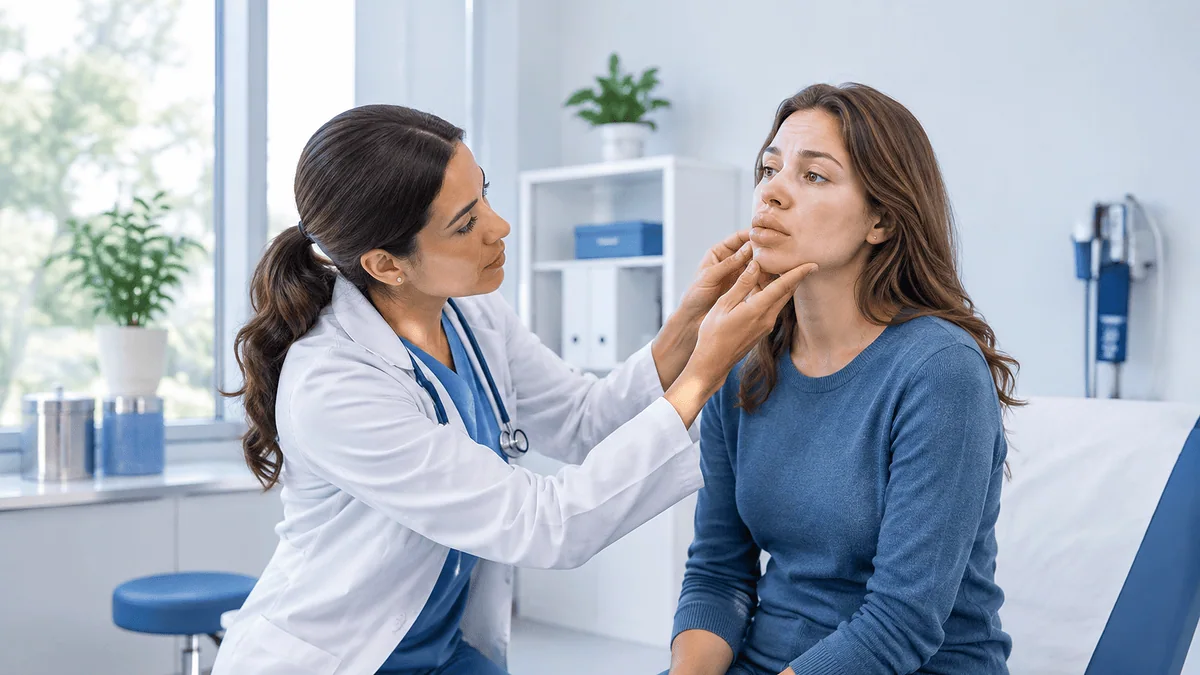
Key Takeaways
- Food and sting allergic reactions almost always begin within two hours of exposure, so swelling that starts the next day is rarely a food allergy.
- Angioedema caused by ACE inhibitor blood pressure medicines does not itch, comes without hives, and can first appear months or years after the medicine was started.
- A cold sore typically runs about ten days from the first tingle to healed skin, and the lip puffiness eases once blisters crust.
- Swelling confined to one spot points to injury, a sting, a cold sore or a blocked salivary gland, while whole-lip or both-lip swelling points to angioedema.
- Hot, red, spreading swelling with fever suggests cellulitis, which needs same-day antibiotics rather than a wait-and-see approach.
- A lip sore, lump or ulcer that has not healed within three weeks should be examined in person regardless of how it started.
A swollen lip most often follows a bump, a bite, a cold sore or an allergic reaction, and it usually settles within hours to a few days. Call emergency services at once if swelling comes with breathing or swallowing difficulty, a hoarse voice, faintness or widespread hives. Swelling that keeps returning, spreads with fever, or appears while taking certain blood pressure medicines needs a clinician's review.
It is usually the mirror that breaks the news. You brush your teeth half awake, glance up, and your upper lip has doubled overnight: tight, shiny, slightly numb, and oddly painless. Nothing hurts. Nothing happened. Yet there it is, and the first instinct is to type the words into a phone before the kettle has boiled.
A swollen lip is one of the most searched skin symptoms for a simple reason: lips are rich in blood vessels, covered by thin skin, and sit exactly where the world can reach them. Hot coffee, a stray tooth, a new lip balm, a peanut hidden in a sauce, a cold sore waking up, a medicine taken for years without trouble. Each leaves a slightly different fingerprint, and clinicians read those fingerprints far more than they rely on tests.
What follows is the honest version: the usual suspects, the ones that need a check, what genuinely helps, and the handful of signs that turn a minor annoyance into a reason to call for help.
What a swollen lip usually means, and the signs that make it an emergency
Most swollen lips are the body doing exactly what it is designed to do. Tiny blood vessels in the lip widen and leak fluid into the surrounding tissue, which is how the body delivers immune cells and repair material to an injury, an irritant or an infection. Because the lip has very little firm tissue to hold that fluid in, even a small amount of leakage looks dramatic. The same injury on a kneecap would barely show.
The three everyday drivers, in rough order of how often clinicians see them, are mechanical injury (a bite, a knock, dental work, a hot drink), an allergic or irritant reaction (foods, insect stings, cosmetics, toothpaste), and infection (most often a cold sore). Each tends to settle on its own, and the NHS notes that allergic swelling of the deeper skin layers, called angioedema, usually eases within a few days, sometimes within hours.
A small group of causes deserve prompt attention because the swelling can move inward. Treat the situation as an emergency and call your local emergency number if lip swelling arrives with any of the following:
- Difficulty breathing, wheeze, or a feeling of the throat closing
- Trouble swallowing, drooling, or a hoarse or muffled voice
- Swelling of the tongue or the inside of the mouth
- Light-headedness, collapse, or a fast, weak pulse
- Widespread hives or flushing spreading over the body
Those signs describe anaphylaxis, a severe whole-body allergic reaction, or airway angioedema. Both respond best when treated early, which is why the advice is to call first and explain later.
Why is my lip suddenly swollen? Start with the everyday causes
When swelling appears over minutes to a couple of hours, the cause is nearly always something that touched the lip or something you ate. The lip has a short memory, so the clue is usually in the previous few hours.
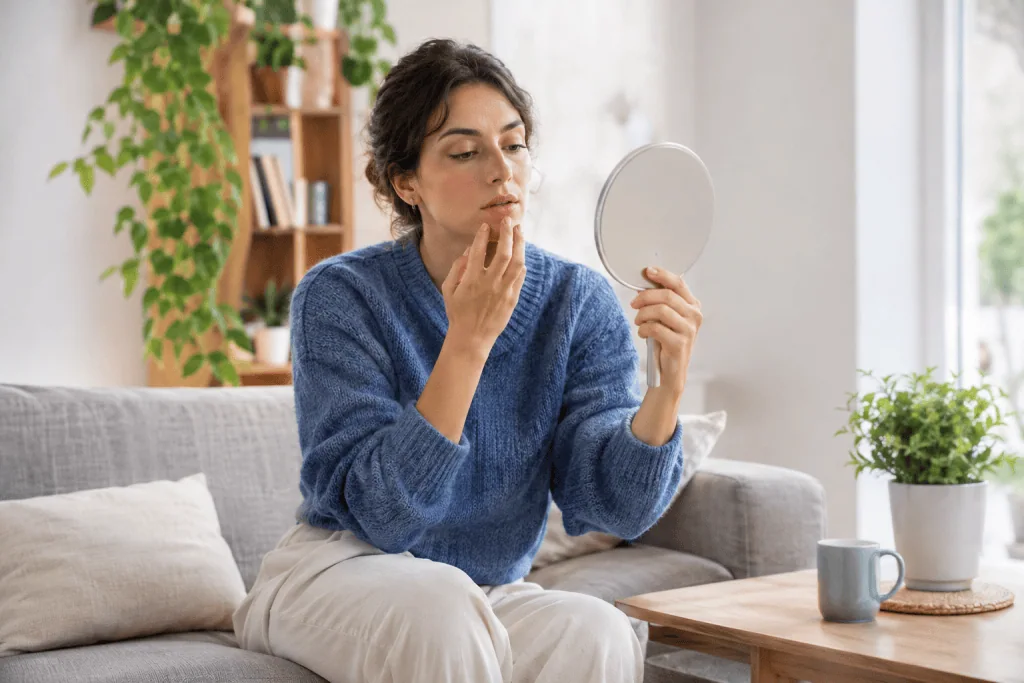
Injury is the quiet champion. People bite their lip during a meal, catch it on a tooth while sleeping, or have it stretched and prodded during dental treatment, then wake to a lump they cannot explain. Hot food and drink scald the thin lip skin more easily than the tongue. Strong sun does the same; a sunburned lower lip can blister and swell a day later, because the lower lip faces the sky.
Contact reactions come next. Lip balms, lipsticks, toothpastes with strong flavorings, mouthwashes and even the peel of citrus fruit can irritate or trigger an allergic reaction on the lip surface. Clinicians call this cheilitis, which simply means inflammation of the lip. It tends to look dry, cracked and slightly puffy rather than smooth and balloon-like, and it often sits exactly where the product was applied.
Insect stings and bites on or near the mouth cause rapid, warm, itchy swelling. A wasp drawn to a sweet drink is a classic summer story in emergency departments.
Then there is the cold sore, caused by herpes simplex virus. The NHS describes a tingling, itching or burning feeling at the lip edge one or two days before anything is visible, and that early stage can include puffiness before the small blisters appear. Many people mistake it for an allergy until the blister shows.
Swollen lip allergic reaction: hives, angioedema and when it tips into anaphylaxis
An allergic reaction happens when the immune system treats a harmless substance as a threat and releases histamine, a chemical that opens blood vessels and makes them leak. In the skin surface this produces hives (urticaria), the raised, itchy welts that come and go. In the deeper layers it produces angioedema: smooth, firm, often painless swelling that favors loose tissue such as lips, eyelids, genitals and the tongue.
The two can appear together or separately. MedlinePlus lists foods (especially nuts, shellfish, eggs and milk), insect stings, latex and medicines among the common triggers. A less familiar pattern is pollen-food allergy, sometimes called oral allergy syndrome, in which people with hay fever notice lip and mouth tingling or mild swelling after raw apple, peach, carrot or melon, because proteins in the fruit resemble pollen proteins. Cooking the fruit usually prevents it.
Timing is the clinician’s first question. Food and sting reactions tend to start within minutes and almost always within two hours of exposure, according to NHS anaphylaxis guidance. Swelling that begins the next day is rarely a food allergy.
Most allergic lip swelling stays local and fades. The danger line is crossed when the reaction becomes systemic. The NHS lists breathing difficulty, wheeze, swallowing trouble, a swollen tongue or throat, feeling faint, confusion and skin that turns pale, grey or blue as signs of anaphylaxis, which needs an emergency call and, for people who carry one, an adrenaline (epinephrine) auto-injector used as their allergy team instructed. Antihistamines, which block histamine, help the itch and surface swelling but do not treat anaphylaxis on their own.
Lip swelling that is not an allergy: medicines, hereditary angioedema and the unexplained kind
Here is the part the first page of search results often skips. A meaningful share of angioedema has nothing to do with histamine, and that changes both the clues and the treatment.
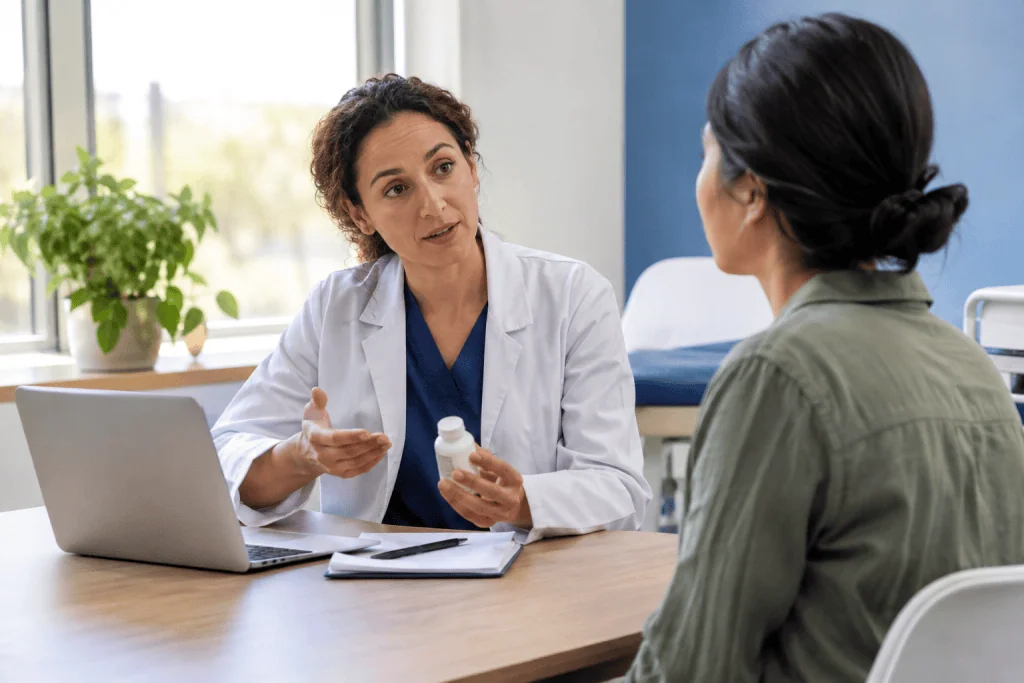
The best-known example involves ACE inhibitors, a class of blood pressure and heart medicines whose generic names end in -pril. They slow the breakdown of bradykinin, a natural molecule that makes blood vessels leak. In a small minority of people this produces lip, tongue or facial swelling that does not itch, comes without hives and responds poorly to antihistamines. The NHS notes that this reaction can begin months or even years after the medicine was started, which is why people rarely connect the two. If you suspect it, tell the prescribing clinician promptly; the decision to change a heart or blood pressure medicine is theirs to make with you, not something to do alone.
Hereditary angioedema is rarer still. It is an inherited shortage or malfunction of a protein called C1 inhibitor, which normally keeps bradykinin in check. Attacks build over hours rather than minutes, often involve the hands, feet, gut (causing severe abdominal pain) or airway, and can be set off by dental work, minor injury, infection or stress. Hives are absent. The Icatibant Outcome Survey, an international registry of people with this condition established in 2009, has helped describe how attacks behave and how they are managed, and it underlines that standard allergy treatments do not work for this form.
Finally, idiopathic angioedema means no trigger is found despite proper assessment. It is common, frustrating and usually not dangerous, but it earns a specialist review when attacks keep returning.
Infections that make a lip swell: cold sores, cellulitis and dental abscess
Infection adds two features that allergy and injury usually lack: pain that builds rather than fades, and warmth that spreads.
Cold sores are by far the most common. The herpes simplex virus lives in nerve cells and reactivates when the immune system is distracted by a cold, sunlight, tiredness or menstruation. The NHS describes the sequence as tingling, then small fluid-filled blisters, then a crust, with most cold sores clearing within about ten days without treatment. The surrounding lip can be puffy and tender during the blister stage. Cold sores spread by direct contact, so avoiding kissing and shared cups while blisters are present is sensible, with particular care around newborn babies, whom the NHS flags as vulnerable.
Cellulitis is a bacterial infection of the skin and the tissue beneath it, usually entering through a crack, a bite or a picked cold sore. The NHS lists the signs as skin that is red, hot, swollen and painful, sometimes with fever or chills, with the redness creeping outward over hours. Facial cellulitis is taken seriously because of how close it sits to the eye and brain, and it is treated with antibiotics prescribed by a clinician rather than waited out.
A dental abscess can push swelling into the lip or cheek above the affected tooth. The giveaway is a throbbing tooth or gum, pain on biting, a bad taste, or a tender lump on the gum. That is a dental emergency rather than a skin problem, and the dentist is the right first call.
Impetigo, a superficial bacterial infection with honey-colored crusts, also likes the area around the mouth, particularly in children.
Swollen lip on one side only: what the pattern tells a clinician
Where the swelling sits is one of the most useful clues a clinician has, and it costs nothing. Swelling confined to one spot points to something that happened at that spot: a bite, a sting, a cold sore, a blocked salivary gland or an abscess. Swelling that involves a whole lip, or both lips, with the eyelids or tongue joining in, points to angioedema, whether allergic, medicine-related or hereditary.
One lump worth naming is the mucocele, a small, soft, bluish or clear bubble on the inside of the lower lip. It forms when a tiny salivary gland is damaged, often by lip biting, and saliva pools under the lining. Mucoceles are harmless, painless and common in children and young adults; many drain on their own, and a dentist or oral surgeon can remove those that keep refilling.
| Cause | Typical features | Usual next step |
|---|---|---|
| Bite, knock, dental work | One area, tender, maybe a bruise, settles in days | Cool compress, soft foods, watch |
| Contact irritant or allergy (balm, toothpaste) | Dry, cracked, puffy where product applied | Stop the product; pharmacist or GP if persistent |
| Food or sting allergy | Minutes to 2 hours after exposure, itchy, often hives | Antihistamine advice; emergency call if breathing affected |
| ACE inhibitor angioedema | Smooth, non-itchy, no hives, may involve tongue | Urgent review with prescriber; emergency if airway |
| Hereditary angioedema | Recurrent, builds over hours, gut pain, family history | Specialist blood tests and care plan |
| Cold sore | Tingle, then blisters at lip edge, about 10 days | Self-care; avoid contact with newborns |
| Cellulitis or abscess | Hot, red, spreading, painful, fever possible | Same-day clinician or dentist for antibiotics |
No single feature settles the question, but two or three together usually do.
How to reduce lip swelling at home: what actually helps
For a swollen lip without any red-flag signs, home care is mostly about cooling, resting and removing the cause. None of it is glamorous, and that is the point.
A cool compress is the single most useful measure. Wrap ice or a bag of frozen peas in a clean cloth and hold it against the lip in short spells, with breaks in between, so the skin never gets painfully cold. Cold narrows the leaking vessels and numbs the ache. Never press bare ice directly onto lip skin; the tissue is thin and freezes easily.
Keep your head raised when lying down. Fluid drains downhill, and a swollen lip often looks worse after a night flat on the pillow.
Remove the suspect. If a new lipstick, balm, toothpaste or mouthwash was introduced in the past few days, stop it and see whether the lip calms. Rinse the mouth with cool water after food that stung. Switch to soft, cool, unsalted foods while the lip is tender; crisps and citrus will remind you why.
For itchy swelling with hives, antihistamines are the class of medicine widely used; a pharmacist can advise whether one is appropriate for you and point you toward a non-drowsy option. For an ordinary bruise-type swelling, simple over-the-counter pain relief may ease discomfort, again with pharmacist guidance if you take other medicines.
Leave blisters alone. Picking a cold sore or a burn blister invites bacteria into exactly the kind of crack cellulitis loves. A plain petroleum-based balm keeps cracked lips from splitting further.
How long will lip swelling last?
The honest answer depends on the cause, but the ranges are reassuring for most people, and the exceptions are easy to spot.
Injury swelling peaks over the first day and then recedes as the leaked fluid is reabsorbed, usually fading over a few days alongside any bruising. Insect stings behave similarly; the NHS notes that bites and stings generally improve within hours to days.
Allergic angioedema is faster than people expect. The NHS states that the swelling usually goes down within a few days and sometimes within hours, particularly once the trigger has gone and histamine has cleared. Hives may keep flickering for longer than the lip swelling itself.
Cold sores run a fairly fixed course. The NHS puts the typical duration at about ten days from first tingle to healed skin, and the puffiness usually eases once the blisters crust, well before the crust falls off.
Medicine-related and hereditary angioedema last longer. Attacks tend to build over hours and then persist for a few days before resolving, and they do not respond to antihistamines in the way allergic swelling does, which is itself a diagnostic clue.
Cellulitis should start to improve within a few days of beginning antibiotics; the NHS advises contacting a clinician if it is not settling or is getting worse on treatment.
The point at which lasting longer needs a review is simple: any lip swelling that has not clearly improved after a week, any swelling that keeps coming back, and any swelling that changes character, for example a painless lump that becomes painful or a lip that develops a persistent ulcer. A sore or lump on the lip that does not heal within three weeks should always be examined.
What happens at the appointment: examination and tests
Most of the work is conversation. A clinician will want to know how fast the swelling came on, whether it itches, whether there were hives, what you ate or applied in the previous few hours, whether you were stung or bitten, which medicines you take and when each was started, whether this has happened before, and whether anyone in the family has unexplained swelling episodes.
The examination follows the clues. They will look at both lips, the inside of the mouth and the tongue, check the throat and voice for any sign of airway involvement, feel for enlarged lymph nodes under the jaw, look for hives elsewhere on the skin, and inspect the teeth and gums if an abscess is possible. Warmth and spreading redness are checked by touch and sometimes by drawing a pen line around the edge so change can be measured.
Tests are often unnecessary. When they are used, they match the suspicion:
- Allergy testing (skin prick tests or blood tests for specific IgE antibodies, the immune proteins behind allergic reactions) when a food, sting or latex trigger is suspected and the result would change what you avoid.
- Blood tests measuring complement C4 and C1 inhibitor level and function when hereditary angioedema is a possibility, typically arranged by an immunology or allergy service.
- A swab from a weeping or crusted area to identify bacteria or herpes virus if the diagnosis is unclear.
- A dental X-ray when a tooth root infection could be feeding the swelling.
Recurrent swelling without an obvious cause usually earns a referral to an allergy or immunology clinic, where a diary of attacks, photographs and timing do much of the diagnostic heavy lifting.
Children and pregnancy: what changes and what does not
Children get swollen lips for the same reasons adults do, with a tilt toward injury, insect stings, impetigo and first-time food reactions. A toddler who falls against a table edge, a child who tastes a new nut butter at a party, a school-age child with a honey-crusted patch at the corner of the mouth: each is a familiar pattern.
The warning signs are identical to those in adults, and the threshold for calling emergency services should be lower, not higher, because small airways narrow faster. Noisy or labored breathing, drooling or refusal to swallow, a hoarse cry, unusual sleepiness or floppiness, and widespread hives after a new food all need an immediate call. A first allergic reaction in a child, even a mild one, should be discussed with a clinician afterward so that testing and a written action plan can be considered. Any medicine for a child is chosen and measured by a pharmacist or clinician, never guessed from an adult packet.
Pregnancy brings two specific notes. Lips and gums are more prone to swelling and bleeding because of hormonal changes in the small blood vessels, so a slightly puffy lip alongside tender gums is common and usually harmless. Cold sores, meanwhile, matter more at the end of pregnancy and after birth because the NHS warns that herpes simplex can be dangerous for newborn babies; anyone with an active cold sore should avoid kissing the baby and wash hands carefully. Facial swelling in pregnancy that comes with headache, visual disturbance or swelling of the hands and face together is a different matter and needs same-day maternity assessment.
What people often get wrong about a swollen lip
The first mistake is assuming every swollen lip is an allergy. Allergy is common, but non-itchy, hive-free swelling in someone taking an ACE inhibitor, or recurrent swelling with gut pain and a family history, is a different mechanism entirely, and treating it as hay fever delays the right care.
The second is believing an antihistamine proves or disproves the cause. Histamine-driven swelling improves with antihistamines; bradykinin-driven swelling does not. A lip that ignores an antihistamine is giving information, not failing a test.
Third: “it went down, so it cannot have been serious.” Early anaphylaxis sometimes starts with lip swelling that eases while the reaction continues elsewhere. The NHS is clear that anyone who has had a severe reaction needs assessment even if symptoms have passed, and some people experience a second wave hours later.
Fourth, the ice myth. Cold helps, but bare ice held against thin lip skin causes cold injury and more swelling. Cloth between skin and ice, short spells, breaks in between.
Fifth, stopping a prescribed heart or blood pressure medicine on a hunch. Suspicion is a reason to contact the prescriber the same day, not to alter treatment without advice.
Sixth, cosmetic lip fillers. Swelling in the first days after injection is expected, but delayed swelling weeks or months later, sometimes triggered by an infection or vaccination, is a recognized reaction and should be reviewed by the practitioner who treated you or a clinician, not managed with warm compresses from a forum.
And finally, picking. Blisters and crusts are the lip’s bandage. Removing them is how a cold sore becomes cellulitis.
When to see a doctor: the red flags that matter
Call your local emergency number immediately, without waiting to see whether things improve, if a swollen lip comes with:
- Difficulty breathing, wheezing, noisy breathing or a feeling of throat tightness
- Swelling of the tongue, the floor of the mouth or the throat
- Trouble swallowing, drooling, or a hoarse, muffled or changed voice
- Faintness, collapse, confusion, or skin turning pale, blue or grey
- Widespread hives, flushing or vomiting within minutes to two hours of a food, sting or medicine
- A known severe allergy, in which case use your adrenaline auto-injector as your allergy team instructed and still call
Seek same-day care from a clinician or urgent care service if swelling is hot, red and spreading, especially with fever or chills; if it follows a tooth or gum pain; if you take an ACE inhibitor or another medicine you suspect; if the lip or face swelling appears in pregnancy with headache or visual changes; or if a child has had a first allergic-type reaction to a food.
Book a routine appointment if swelling keeps returning without an obvious trigger, has not clearly improved after about a week, is linked to a product you cannot identify, or if any lip sore, lump or ulcer has not healed within three weeks. Persistent, unexplained lip changes are reviewed in person because examination, not a search engine, is how they are sorted out.
Most swollen lips never reach any of these thresholds. Knowing where the thresholds sit is what lets you treat the ordinary ones calmly and the rare ones quickly.
Frequently asked questions
Why is my lip suddenly swollen?
Sudden lip swelling is most often a bite or knock you did not notice, an insect sting, a reaction to a food or a lip product, or the early stage of a cold sore. The clue is usually in the previous few hours. Swelling with itching and hives suggests allergy; a smooth, painless, non-itchy lip in someone taking an ACE inhibitor suggests a medicine reaction and needs prompt review.
How can I make a swollen lip go down?
Hold a cloth-wrapped cold pack against the lip in short spells, keep your head raised when lying down, stop any new lip product or suspected food, and choose soft, cool foods while it is tender. For itchy allergic swelling, a pharmacist can advise on antihistamines. Leave blisters alone. Swelling with breathing or swallowing difficulty needs an emergency call, not home measures.
What does it mean if one lip is swollen?
Swelling in only one lip, or one part of a lip, usually means something happened there: a bite, a sting, a cold sore, a dental abscess beneath it, or a mucocele, a harmless saliva-filled bubble on the inside of the lower lip. Swelling of both lips together, especially with eyelid or tongue swelling, is more typical of angioedema and is assessed differently.
How long will lip swelling last?
Injury and sting swelling usually fades over a few days. The NHS notes allergic angioedema typically settles within a few days and sometimes within hours. Cold sores take about ten days to heal fully. Medicine-related or hereditary angioedema can persist for a few days per attack. Swelling that has not clearly improved after a week, or keeps returning, should be reviewed.
Is a swollen lip always an allergic reaction?
No. Allergy is a common cause, but injury, cold sores, bacterial infection, blocked salivary glands, sun damage and certain medicines all swell lips without any allergy. Non-allergic angioedema driven by bradykinin, seen with ACE inhibitors and in hereditary angioedema, does not itch, does not cause hives and does not respond to antihistamines, which is one way clinicians tell the two apart.
Can a cold sore make my lip swell?
Yes. The NHS describes tingling or burning at the lip edge one to two days before blisters appear, and the surrounding lip is often puffy and tender during the blister stage. The swelling settles as the blisters crust, usually well before the ten-day course ends. Avoid kissing and shared cups while blisters are present, and keep away from newborn babies.
Why does my lip keep swelling for no reason?
Recurrent swelling without an obvious trigger is called idiopathic angioedema once allergy, medicines and hereditary causes have been considered. It is common and usually not dangerous, but it deserves a referral to an allergy or immunology service, where a diary of attacks, photographs and specific blood tests help separate it from hereditary angioedema, which needs a different care plan.
Can blood pressure medicine cause a swollen lip?
ACE inhibitors, a class whose generic names end in -pril, can cause lip, tongue or facial swelling in a small minority of people by raising levels of bradykinin, a natural vessel-leaking molecule. The NHS notes it can start months or years after the medicine began. Contact the prescribing clinician the same day rather than stopping the medicine yourself; any tongue or throat swelling is an emergency.
Should I put ice on a swollen lip?
Cold helps, but never bare ice. Lip skin is thin and freezes easily, which adds a cold injury on top of the swelling. Wrap ice or a frozen bag in a clean cloth, apply it for short spells with breaks in between, and stop if the skin becomes painfully cold or numb. This eases both the swelling and the ache for injury, stings and mild allergic reactions.
When is a swollen lip an emergency?
Call emergency services at once if lip swelling comes with breathing difficulty, wheeze, throat tightness, tongue or mouth swelling, trouble swallowing, a hoarse voice, faintness, collapse, or widespread hives after a food, sting or medicine. These signs describe anaphylaxis or airway angioedema. People with a known severe allergy should use their adrenaline auto-injector as instructed and still make the call.
References
This article is for general information only and is not a substitute for professional medical advice. Please consult a qualified doctor about your individual situation.
Add us as a Preferred Source to see more of our trusted health content across Google Search, AI Overviews and Discover.

More from the Blog
Itchy Skin at Night or After a Shower: Why It Flares Then and What Soothes It
Itching usually feels worse at night because the body's natural anti-inflammatory hormone, cortisol, dips after dark, skin warms and loses more moisture, and there…
How Patch Testing Finds the Cause of Contact Dermatitis: What the Days of Testing Involve
Patch testing for contact dermatitis places small amounts of suspected allergens on the skin of the back under adhesive patches, usually for about 48…

How Long Does a Pimple Take to Go Away? The Usual Healing Timeline and What Slows It Down
Most ordinary pimples go away on their own within about a week, and even a sore red spot usually settles in one to two…

White Spots on Nails: What Causes Leukonychia, Common Myths and When to Have Nails Checked
White spots on nails, known as leukonychia, are most often the result of a minor knock to the nail base several weeks earlier, and…

Shingles and the Risk of Serious Complications: Can It Be Fatal and Who Is Most Vulnerable
Shingles is rarely fatal, but it can be in a small number of cases, almost always when the virus spreads to the brain, lungs…
How Rosacea Treatment Is Matched to Your Pattern: Flushing, Redness, Bumps and Thickened Skin
Rosacea treatment is matched to the features a person actually has rather than to the diagnosis alone. Flushing and persistent redness are managed with…