

Tongkat Ali: What Human Trials Show About Testosterone, Energy and Safety

Key Takeaways
- Tongkat ali is the root extract of Eurycoma longifolia, a Southeast Asian tree, and its active compounds are bitter quassinoids such as eurycomanone.
- A 2022 meta-analysis of small controlled trials found a statistically significant rise in total testosterone, clearest in men whose levels were low to begin with.
- In a 2013 four-week trial of 63 stressed adults, salivary cortisol fell about 16 percent and salivary testosterone rose about 37 percent compared with placebo.
- The longest human trial ran six months in 45 men, and the biggest gains in erectile function came from pairing the extract with supervised exercise.
- Trial side effects were mild, mainly restlessness and poor sleep, but contamination with heavy metals and undeclared drugs has been documented in some products.
- New erectile difficulty can precede cardiovascular disease by several years, which makes it a reason to see a clinician rather than to buy a supplement.
Tongkat ali is a root extract from the Southeast Asian tree Eurycoma longifolia. Small randomized trials lasting four weeks to six months suggest it can modestly raise testosterone, mainly in men who start with low levels, and may improve stress scores and sexual function. The studies are short and small, so the evidence is preliminary. Side effects are usually mild, and anyone considering it should discuss it with their clinician.
The clip runs eleven seconds. A man in a gym mirror holds up a brown bottle and announces that a rainforest root “doubled” his testosterone in a month. The caption promises energy, drive and muscle. Millions of views later, pharmacists are fielding the same question at the counter, and search interest in the herb has climbed to levels not seen before. As of September 2026, tongkat ali sits among the most-searched men’s health supplements in the United States.
The timing is not random. A 2022 meta-analysis pooled the human trials and reported a measurable rise in total testosterone, and a six-month randomized trial in older men with low testosterone symptoms had just appeared before it. Those two papers now get quoted, clipped and stretched far beyond what their authors wrote.
So what do the human studies actually show? Fewer than a dozen controlled trials exist, most with under 100 participants. That is enough to be interesting and nowhere near enough to be settled. This article walks through them one by one.
What is tongkat ali, and why is everyone suddenly searching for it?
Tongkat ali is the Malay name for Eurycoma longifolia, a slender understory tree that grows in the rainforests of Malaysia, Indonesia and parts of Thailand and Vietnam. You may also see it sold as longjack or pasak bumi. Traditional healers have brewed the bitter root for generations as a tonic for fatigue, fever and, famously, male vitality. The modern supplement is almost always a water extract of that root, dried into a powder and put into a capsule.
Chemists have identified the main active compounds as quassinoids, a family of intensely bitter plant molecules. One of them, eurycomanone, is the marker most manufacturers use to “standardize” an extract, which simply means they test each batch so it contains a consistent amount of that compound. Standardization matters because the raw root varies enormously depending on soil, age and processing.
Why the surge now? Three currents converged. Interest in testosterone, the main male sex hormone produced in the testicles, has grown as more men ask about low energy and libido in midlife. Short-video platforms reward dramatic before-and-after claims. And, for once, there is a sliver of real human research to point at, which lends the viral claims an air of authority they would not otherwise have.
The honest framing is this: tongkat ali is one of the few herbal supplements for men that has been tested in randomized, placebo-controlled trials. That places it ahead of most of its shelf neighbors. It does not place it anywhere near a prescription medicine in terms of evidence, and the gap between “studied” and “proven” is exactly where the misunderstanding lives.
What changed recently: the trials behind the trend
The research base is small enough to date precisely. The first widely cited placebo-controlled study appeared in 2013 in the Journal of the International Society of Sports Nutrition. Sixty-three moderately stressed adults took a standardized root extract or placebo for four weeks. The extract group showed a 16 percent fall in salivary cortisol, the body’s main stress hormone, and a 37 percent rise in salivary testosterone, along with better scores for tension, anger and confusion on a mood questionnaire.
Nothing much happened for several years. Then, in 2014, a five-week pilot in 25 physically active adults aged 57 to 72 reported higher total and free testosterone and a small gain in grip strength. In 2021 the journal Maturitas published the longest trial to date: 45 men with symptoms of age-related androgen deficiency were randomized to placebo, extract alone, exercise training alone, or extract plus training for six months. The combined group saw the largest improvements in testosterone and erectile function scores.
The paper that truly lit the fuse arrived in July 2022. A systematic review and meta-analysis in the journal Medicina pooled the available controlled trials and found a statistically significant increase in total testosterone with the extract compared with placebo. A meta-analysis is a study that combines results from several trials to estimate an overall effect. The authors flagged small sample sizes, short durations and variable extract quality, and they noted the effect looked clearer in men who started with low testosterone.
Since then, no large or long-term trial has been published. The viral attention is new. The evidence it rests on is not.
Does tongkat ali increase testosterone? What the hormone data show
The short answer is: probably, modestly, and mostly in men whose testosterone is low to begin with. The longer answer requires a few definitions. Total testosterone is the overall amount of the hormone in the blood. Much of it is bound to a carrier protein called sex hormone-binding globulin, or SHBG, and is not available to tissues. Free testosterone is the small unbound fraction that actually acts on cells.
Across the trials, total testosterone rose by amounts that ranged from a few percent to roughly a third, depending on the population. The largest percentage gains showed up in older men and in men classified as hypogonadal, meaning their testosterone was below the normal laboratory range. In healthy young men with normal levels, the changes were smaller and sometimes did not reach statistical significance.
How might a root extract do this? Laboratory work points to two plausible mechanisms. Quassinoids appear to reduce the activity of aromatase, the enzyme that converts testosterone into estrogen, and they may loosen testosterone from SHBG, nudging more into the free, active pool. Both ideas come mainly from cell and animal studies, which means they are hypotheses, not confirmed human pharmacology.
A number that matters more than any percentage: the 2022 meta-analysis drew on a few hundred participants in total. By comparison, the major trials of prescription testosterone therapy enrolled thousands. A real but small signal in a few hundred people is a reason to study something further. It is not a reason to expect a dramatic personal result, and it says nothing yet about whether a higher lab value translates into feeling different.
What the evidence actually says: grading the strength of the trials
Medical evidence comes in tiers. At the top sit large randomized controlled trials, in which participants are assigned by chance to a treatment or an inactive placebo so that neither hope nor expectation can skew the result. Below those sit small randomized trials, then observational studies that watch people without assigning treatment, and at the bottom, expert opinion and tradition.

Tongkat ali occupies the second tier. Its best studies are randomized and placebo-controlled, which is genuinely to its credit. They are also small, between 25 and about 100 participants each, and short, from four weeks to six months. Several were funded or supplied by extract manufacturers, a common arrangement in supplement research that does not invalidate findings but does call for independent replication.
Here is how a cautious reviewer would grade each claim:
- Raises total testosterone: moderate-low certainty. Consistent direction across small trials and one meta-analysis; magnitude uncertain and population-dependent.
- Lowers cortisol and improves stress or mood scores: low certainty. One well-designed four-week trial, not yet independently replicated.
- Improves erectile function or libido: low certainty. Positive signals in a handful of trials, mostly in older men, with self-reported questionnaires as the outcome.
- Builds muscle or strength: very low certainty. Tiny studies with mixed results.
- Improves fertility: very low certainty. Early open-label work only.
What is missing is just as telling: no trial has run longer than six months, none has measured hard outcomes such as fractures or cardiovascular events, and none has been large enough to detect uncommon side effects. The evidence supports the word “promising.” It does not yet support the word “effective.”
Tongkat ali benefits beyond testosterone: energy, stress and mood
Ask people why they bought the bottle and testosterone is rarely the first word. They say “energy.” They say “I feel flat.” The 2013 stress trial is the closest the research comes to addressing that, and it deserves a careful read rather than a headline.
Participants were described as moderately stressed adults, both men and women, not patients with a diagnosed condition. After four weeks, the extract group reported less tension, less anger, less confusion and lower fatigue on a standardized mood inventory, alongside the cortisol and testosterone changes already mentioned. The placebo group improved too, just less. That pattern, a real but smaller placebo response, is typical of mood research and is one reason single trials should be interpreted gently.
Cortisol deserves a sentence of context. It is released by the adrenal glands in a daily rhythm and in response to stress. A 16 percent dip in a saliva measurement is a biological signal, but cortisol swings far more than that between morning and evening in a healthy person. The study does not show that the herb corrects a stress disorder; it shows a shift in a biomarker over one month in people who were not ill.
Does any of this mean more “energy”? Fatigue is one of the most nonspecific symptoms in medicine. It can trace back to sleep debt, iron deficiency, thyroid problems, depression, sleep apnea, medication effects or low testosterone, among many other causes. A supplement that modestly moves two hormones in a four-week study is not a diagnostic shortcut. Persistent, unexplained fatigue is a reason for a conversation and a blood test, not a cart checkout. That said, the mood findings are the kind of early result that justifies a larger, longer trial, and it would be good to see one.
Can tongkat ali help with libido and erectile function?
Sexual function is where the traditional reputation and the modern research overlap most. Several trials have used the International Index of Erectile Function, a validated questionnaire, as an outcome. In the six-month Maturitas study, men who combined the extract with a supervised exercise program recorded the largest gains in erectile function scores, while the extract alone produced a smaller improvement and placebo produced little. Earlier, shorter studies in middle-aged and older men reported better libido scores and, in one case, improved sexual well-being questionnaires.
Two features of these findings should temper expectations. First, the improvements were measured by self-report, and sexual function is highly responsive to expectation. Second, the men who improved most were those with documented low testosterone or age-related symptoms. In younger men with normal hormone levels, there is essentially no trial evidence that the herb changes anything about sexual performance.
Erectile dysfunction, meaning persistent difficulty getting or keeping an erection firm enough for sex, is also a clinical signal in its own right. It shares risk factors with cardiovascular disease, including high blood pressure, diabetes, smoking and high cholesterol, and it can precede a heart problem by several years. Reaching for a supplement without an evaluation can delay a conversation that matters for the heart as much as for the bedroom.
The fair summary: a handful of small trials suggest tongkat ali may help some older men with sexual symptoms, particularly alongside exercise. The effect is modest, the certainty is low, and new or worsening erectile difficulty belongs in a clinician’s office first. Prescription treatments for erectile dysfunction have a far deeper evidence base, and a clinician can also check for the underlying causes that no supplement addresses.
Does tongkat ali build muscle or improve athletic performance?
The gym-mirror video implied muscle. The research barely whispers it. The 2014 pilot in physically active older adults found a small increase in handgrip strength over five weeks. A few other small studies in trained men have measured body composition and strength with mixed and mostly null results. No trial has shown that the herb adds lean mass in a way that would be visible in a mirror.
The logic behind the claim is understandable. Testosterone does promote muscle protein synthesis, and prescription testosterone therapy in men with clinically low levels does increase lean mass in randomized trials. The leap is in assuming that a modest, supplement-driven rise within the normal range produces the same effect. It does not follow. Muscle responds to the training stimulus, adequate protein and recovery far more than to a small hormonal nudge, and the one trial that paired the extract with structured exercise attributed most of the physical gains to the exercise itself.
Athletes face a separate issue. Herbal supplements are a recognized source of inadvertent anti-doping violations because products can be contaminated with, or deliberately spiked by, prohibited substances. Independent testing programs exist precisely because label accuracy cannot be assumed. An athlete subject to drug testing should treat any “testosterone booster” marketing as a red flag for contamination risk, regardless of the botanical on the label.
For the recreational lifter, the evidence-based path to strength is unglamorous: progressive resistance training several times a week, enough protein spread through the day, seven to nine hours of sleep, and patience measured in months. Tongkat ali has not been shown to shortcut any of it.
The human trials at a glance: a summary table
Numbers tell this story more honestly than adjectives. The table below summarizes the controlled human studies most often cited in the current trend, with a plain-language grade for how much weight each result can bear. Extract amounts are deliberately omitted; this is an explainer, not a dosing guide, and the trials used manufacturer-specific standardized products that do not map onto retail capsules.
| Study (year) | Who took part | Length | Main finding | Evidence grade |
|---|---|---|---|---|
| Stress and hormones trial (2013) | 63 moderately stressed adults, men and women | 4 weeks | Cortisol down about 16%, salivary testosterone up about 37%, better mood scores | Low: single small RCT |
| Active seniors pilot (2014) | 25 adults aged 57–72 | 5 weeks | Higher total and free testosterone, small grip-strength gain | Very low: tiny pilot |
| Androgen deficiency trial (2021) | 45 men with age-related low testosterone symptoms | 6 months | Best gains in testosterone and erectile scores with extract plus exercise | Low: small RCT, longest to date |
| Meta-analysis (2022) | Pooled controlled trials, a few hundred participants | Up to 6 months | Significant rise in total testosterone, clearer in hypogonadal men | Moderate-low: consistent but small, heterogeneous trials |
Read across the right-hand column and a pattern emerges. Every grade carries the word “low” or “small.” That is not a dismissal. It is an accurate description of a field in its early stages, and it is exactly what a clinician means when they say the evidence is “preliminary.” A single trial with several hundred participants followed for a year or more would change these grades. Until it exists, the table is the evidence.
Tongkat ali vs ashwagandha: are they the same thing?
They are not, though the confusion is understandable because the two herbs are marketed to the same anxieties and often sold side by side. Ashwagandha is Withania somnifera, a shrub native to India and parts of Africa and the Middle East, used in Ayurvedic tradition. Its active compounds are withanolides, a different chemical family from the quassinoids in tongkat ali. The plants are unrelated botanically, grow on different continents and have separate research histories.
Their evidence profiles differ too. Ashwagandha has been studied more often for sleep, anxiety and perceived stress, with several small randomized trials reporting lower cortisol and better anxiety scores. A few trials have measured testosterone in men and found modest increases, but hormones were rarely the primary outcome. Tongkat ali, by contrast, has been studied with testosterone and sexual function as the central question, and stress as a secondary one.
Safety considerations also diverge. Ashwagandha has been linked in case reports to liver injury and to thyroid hormone changes, and it is generally advised against in pregnancy. Tongkat ali’s safety record in trials is short and mostly uneventful, with isolated reports of restlessness and insomnia, though product contamination has been a documented problem in some markets.
Some products combine both herbs in one capsule, sometimes with a dozen other ingredients. From an evidence standpoint, this is a problem: no trial has tested such mixtures, so the published studies cannot be used to support them. Interactions between botanicals are poorly mapped. If a reader is drawn to either herb, the clearer choice is a single-ingredient, independently tested product, discussed with a clinician who knows their medication list, rather than a proprietary blend that borrows credibility from studies it never ran.
Tongkat ali side effects: what the trials recorded
Within the trials, the extract was generally well tolerated. The adverse events recorded were mild and similar in frequency to placebo: occasional restlessness or difficulty sleeping, mild stomach upset, headache and, in a few participants, a feeling of being wired or irritable. No trial reported a serious adverse event attributed to the extract. That is reassuring as far as it goes, and it does not go far. A few hundred people followed for a few months cannot detect an effect that occurs in one person in a thousand.
Outside the trials, the safety picture has more texture. Case reports in the medical literature and in national safety bulletins have described liver injury in people taking products labeled as tongkat ali, sometimes in combination with other supplements. Causality in such reports is hard to establish, because the products involved were not always analyzed and other ingredients were often present. The possibility, however, is enough that anyone with existing liver disease should avoid the herb unless a clinician says otherwise.
Contamination is the more clearly documented hazard. Analyses of products sold in Southeast Asia have found heavy metals, including mercury, above acceptable limits in a proportion of samples, and some “herbal” sexual-enhancement products worldwide have turned out to contain undeclared prescription drugs. The botanical itself was not the problem in those cases. The supply chain was.
Finally, the hormonal effect itself is a consideration. A rise in testosterone is not neutral in every body. Men with prostate cancer or a history of it, men with untreated sleep apnea, and anyone with a hormone-sensitive condition have good reason to steer clear. Sleep disturbance, palpitations, new acne or mood changes after starting the herb are signals to stop and talk to a clinician.
Who should not take tongkat ali? Interactions and cautions
Supplements are not screened for interactions the way prescription medicines are, so the list below leans on pharmacology and caution rather than on completed trials. That is the honest state of knowledge, and it argues for a conversation with a prescribing clinician before adding the herb to any medication list.
- Blood pressure and heart medicines: one small human study found the extract reduced absorption of propranolol, a beta-blocker. Whether this extends to other heart medicines is unknown, and the possibility of a changed drug level is reason enough for caution.
- Diabetes medicines: animal studies suggest the extract may lower blood glucose. Combined with insulin or other glucose-lowering drugs, that could in theory increase the risk of low blood sugar.
- Blood thinners and immune-suppressing drugs: no direct data exist, which is itself the concern. Laboratory work suggests quassinoids may affect immune signaling, and unstudied botanicals are generally avoided with anticoagulants.
- Hormone-sensitive conditions: prostate cancer, breast cancer, and conditions treated with hormone therapy. Raising testosterone, even modestly, is contrary to the goal of treatment.
- Pregnancy, breastfeeding and anyone under 18: no safety data at all. These groups should not use it.
- Liver or kidney disease: the organs that process and clear plant compounds are already working harder; case reports of liver injury add weight.
- Insomnia or anxiety disorders: the most common trial side effects were restlessness and poor sleep.
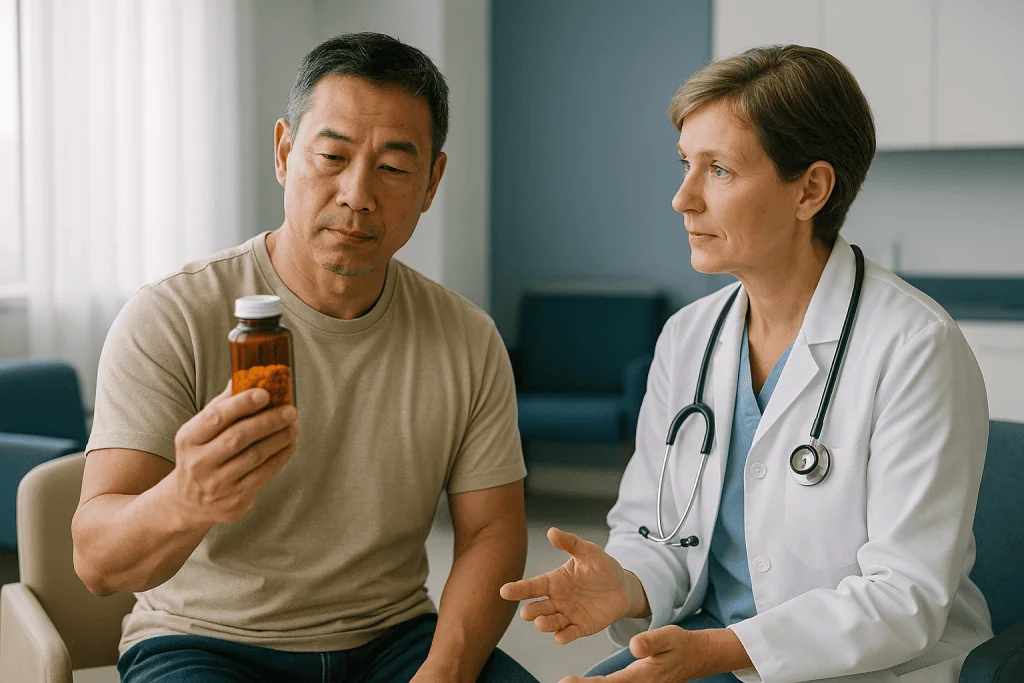
One more group deserves mention: men already prescribed testosterone or fertility treatment. Adding an herb that moves the same hormones muddies the clinician’s picture and can prompt unnecessary changes to a carefully adjusted regimen. The rule that protects patients is simple. Bring the bottle, or a photo of its label, to every appointment, and never adjust or stop a prescribed medicine because a supplement seems to be working.
Why there is no "best brand": reading a supplement label like a clinician
“What is the best brand for tongkat ali?” is among the most typed questions on the topic, and it has no evidence-based answer. Dietary supplements in the United States do not require premarket approval, so no regulator has verified that one bottle outperforms another. What a reader can do is apply the same skepticism a clinician applies to any label.
Start with the plant. The label should name Eurycoma longifolia and specify the root, since that is the part studied. Products listing only “longjack blend” or a proprietary mix tell you nothing about the amount of actual extract. Standardization to eurycomanone or total quassinoids suggests a manufacturer at least tested the batch, though it is no guarantee of quality.
Next, independent verification. Several nonprofit testing organizations certify that a product contains what it claims and is free of listed contaminants, including heavy metals and undeclared drugs. A certification seal from one of them is the single most meaningful mark on a supplement label. Its absence does not prove a product is bad; its presence is the only external check available.
Then, the claims. Phrases such as “clinically proven,” “doubles testosterone” or “natural alternative to prescription therapy” are not supported by the trials described in this article, and their presence is a signal that marketing has outrun evidence. Lawful supplement labels carry a statement that the product is not intended to diagnose, treat or prevent disease. A product that behaves as though that statement does not apply should be viewed accordingly.
Finally, the ingredient list. Fewer ingredients mean fewer unknowns. The published studies tested single-ingredient standardized extracts; a twelve-herb “male formula” cannot borrow their results. The best bottle, if one must choose, is the one that looks most like what was actually studied and least like what the video promised.
Common myths about tongkat ali, corrected
Viral claims travel faster than methods sections. Here are the most frequent ones, set beside what the research supports.
“It doubles your testosterone.” No trial has shown that. The largest percentage changes, around a third in salivary testosterone in one four-week study, were measured in people who were stressed or hormonally low. Men with normal levels saw smaller shifts or none. Saliva and blood measurements also differ, and a percentage change from a low baseline can sound larger than it is.
“It is a natural replacement for testosterone therapy.” Prescription testosterone is a hormone given at controlled amounts and monitored by blood tests. The herb is a plant extract with a modest, variable effect studied for months, not years. Men with diagnosed hypogonadism have a treatment pathway with decades of evidence; swapping it for a supplement is a decision only their clinician should weigh in on, and the trial data do not support the swap.
“Natural means safe.” Hemlock is natural. The herb’s trial safety record is short and mild, but contamination with heavy metals and undeclared drugs has been documented, and liver injury case reports exist.
“More is better.” There is no evidence that higher amounts produce greater benefit, and the side effects recorded, mainly sleeplessness and restlessness, are the kind that tend to grow with the amount taken.
“It melts fat.” No human trial has shown meaningful fat loss. The one study pairing it with exercise attributed body-composition changes to the exercise.
“It is the same as ashwagandha.” Different plant, different continent, different compounds, different evidence.
The thread running through every myth is the same: a real but small finding, inflated to a promise. Correcting that is not pessimism. It is what the evidence allows.
When to see a doctor about low energy, libido or testosterone
Every supplement decision in this article ends in the same place: with the clinician who knows your history and your medication list. That is not a disclaimer. The symptoms that send men toward tongkat ali, fatigue, low mood, reduced libido and erectile difficulty, overlap with conditions that need proper evaluation, and a capsule can delay that evaluation by months.
Make an appointment, rather than a purchase, if any of the following apply:
- Persistent fatigue lasting more than a few weeks that is not explained by sleep, workload or a recent illness.
- New or worsening erectile difficulty, especially alongside high blood pressure, diabetes, high cholesterol or smoking, since it can be an early marker of cardiovascular disease.
- Loss of libido combined with low mood, poor concentration or disrupted sleep, which may point to depression, sleep apnea or a hormonal cause.
- Breast tenderness or enlarged male breast tissue (gynecomastia), reduced body hair, shrinking testicles or hot flashes, all of which are signs of a hormonal imbalance that warrants blood testing.
- Difficulty conceiving after a year of trying, as male factors contribute in roughly half of couples.
Seek care promptly, and stop the supplement, if you develop any red-flag signs after starting it: yellowing of the skin or eyes, dark urine, pale stools or pain under the right ribs, which can indicate liver injury; chest pain, a racing or irregular heartbeat, or fainting; a severe allergic reaction with swelling or breathing difficulty; or sudden, intense mood changes.
A clinician assessing low testosterone will typically order a morning blood test, repeat it if it is low, and look for causes before discussing treatment. If testosterone is genuinely low, the options, their benefits and their risks are well mapped and belong to that conversation. If it is normal, the search for the real cause of your symptoms can begin. Either way, the answer will be more useful than anything printed on a bottle.
Frequently asked questions
Does tongkat ali increase testosterone in healthy young men?
Probably only slightly, if at all. The clearest increases in total testosterone were seen in older men and in men with low baseline levels. In healthy young men with normal hormone levels, trial results were smaller and often did not reach statistical significance. The 2022 meta-analysis noted that the effect depended heavily on the starting population, so a normal result on a blood test suggests little room for the herb to work.
Is tongkat ali the same as ashwagandha?
No. Tongkat ali is Eurycoma longifolia, a Malaysian and Indonesian tree whose root contains quassinoids. Ashwagandha is Withania somnifera, an Indian shrub containing withanolides. They are unrelated botanically. Ashwagandha has more research on sleep and anxiety; tongkat ali has more on testosterone and sexual function. Their safety profiles also differ, and combination products containing both have not been tested in any clinical trial.
What are the potential tongkat ali benefits according to human trials?
Small randomized trials suggest modest increases in total testosterone, lower cortisol with better stress and mood scores over four weeks, and improved erectile function and libido scores in older men, especially when combined with exercise. Evidence for muscle gain, fat loss or fertility is very weak. All findings come from short studies with fewer than 100 participants each, so they are preliminary rather than established.
How much tongkat ali should I take?
There is no established or recommended amount, and this article deliberately gives no figures. The trials used manufacturer-specific standardized extracts that do not correspond to retail capsules, and no study has compared different amounts for safety or benefit. Anyone considering the herb should discuss it with a clinician or pharmacist who knows their medications and health history, rather than following a label or a video.
What is the best brand for tongkat ali?
No brand has been shown to be superior, because supplements are not independently evaluated for effectiveness before sale. What you can check is that the label names Eurycoma longifolia root, states standardization to eurycomanone or quassinoids, carries an independent third-party testing seal for purity and contaminants, and avoids disease claims. Single-ingredient products resemble what was studied; multi-herb blends do not.
What are the most common tongkat ali side effects?
In trials, the most common complaints were restlessness, difficulty sleeping, mild stomach upset and headache, at rates similar to placebo. Outside trials, isolated case reports describe liver injury, and some products have been contaminated with heavy metals or undeclared drugs. Stop taking it and seek care for yellowing skin or eyes, dark urine, chest pain, palpitations or a severe allergic reaction.
How long does tongkat ali take to work?
The shortest trial that reported hormone and mood changes lasted four weeks, and the longest ran six months. Nobody has studied whether effects persist beyond that or what happens after stopping. If a person notices nothing after a trial period agreed with their clinician, continuing is unlikely to change that, and the symptoms that prompted the purchase deserve a proper medical evaluation.
Can tongkat ali replace prescription testosterone therapy?
The evidence does not support that. Prescription testosterone is given in controlled amounts and monitored with blood tests, and it has decades of trial data in men with diagnosed hypogonadism. Tongkat ali produced modest, variable hormone changes in small studies lasting months. Any question about changing, adding to or stopping a prescribed treatment belongs with the prescribing clinician, not with a supplement label.
Is tongkat ali safe for women?
The stress trial included women and reported similar mild tolerability over four weeks, but no study has examined long-term use in women. Because the herb may raise testosterone, women with hormone-sensitive conditions, polycystic ovary syndrome or a history of breast cancer should avoid it unless a clinician advises otherwise. There are no safety data in pregnancy or breastfeeding, so it should not be used in either.
Does tongkat ali interact with medications?
Possibly. One small human study found it reduced absorption of propranolol, a blood pressure medicine, and animal data suggest it may lower blood glucose, which matters for people on diabetes medicines. There is no safety data alongside blood thinners, immunosuppressants or hormone therapies. Bring the product label to your clinician or pharmacist before combining it with any prescription, and never adjust a medicine on your own.
This article is for general information only and is not a substitute for professional medical advice. Please consult a qualified doctor about your individual situation.

More from the Blog

How to Fully Empty Your Bladder: Techniques That Help and When Retention Needs a Doctor
To empty the bladder more completely, sit fully on the toilet with feet supported, lean slightly forward, relax the pelvic floor rather than pushing,…

The Bladder: Where It Is and How Much Urine It Holds
A healthy adult bladder comfortably holds about 300 to 400 milliliters of urine, roughly one and a half to two cups, and can stretch…

Ejaculation and Sex After a Vasectomy: What Changes and What Does Not
Yes. Men still ejaculate after a vasectomy, and the semen looks, feels and measures about the same, because sperm make up only a small…

Can an Enlarged Prostate Cause Erectile Dysfunction, and Is ED Permanent?
An enlarged prostate does not directly cause erectile dysfunction; the gland is not part of the machinery that produces an erection. The two problems…

Can a Vasectomy Be Reversed? How Reversal Works and What Decides the Outcome
Yes, a vasectomy can often be reversed, but success is never guaranteed. A surgeon uses a microscope to rejoin the vas deferens (vasovasostomy) or…

Do Women Have a Prostate? The Skene’s Gland Answer
Women do not have a prostate in the anatomical sense, but they have a close counterpart: the Skene's glands, two small paraurethral glands that…