

Vinegar Before Meals and Food Order: Two Blood-Sugar Hacks Under the Evidence Lens
Key Takeaways
- In a 2015 randomized crossover pilot, eating vegetables and protein before bread and juice lowered the one-hour glucose peak by roughly a third in people with type 2 diabetes.
- Vinegar's active ingredient is acetic acid, present in every vinegar; the cloudy "mother" in unfiltered apple cider vinegar has no demonstrated effect on blood sugar.
- The glucose effect of vinegar was largest in insulin-resistant adults and smallest in healthy controls in the 2004 trial that started the trend.
- No trial has tested whether either habit prevents diabetes, heart disease or complications; the evidence stops at short-term glucose curves and small HbA1c changes.
- A rise to about 140 mg/dL after a meal is normal in people without diabetes, so a visible hill on a glucose monitor is not a diagnosis.
- Daily undiluted vinegar can erode tooth enamel and irritate the esophagus, and it can add to the glucose-lowering effect of insulin or sulfonylureas.
Eating vegetables and protein before the carbohydrate portion of a meal (food order) and taking a small amount of diluted vinegar before eating both lower the after-meal rise in blood sugar in small randomized trials, typically by a modest margin. The evidence is short-term and limited, neither replaces prescribed diabetes care, and anyone taking glucose-lowering medicine should discuss these habits with their clinician first.
The video is always the same. A plate of pasta, a continuous glucose monitor strapped to an arm, and a graph that climbs like a cliff face. Then the second take: salad first, chicken second, pasta last, and the line turns into a gentle hill. As of mid-2025, clips like this have pushed two kitchen-table habits, food order and vinegar before meals, into the top tier of health searches, often with promises that run far ahead of the data.
The surge has a few roots. A small 2024 trial on apple cider vinegar and weight went viral before its publisher attached an expression of concern. Glucose monitors, once reserved for people on insulin, became an over-the-counter wellness gadget. And the oldest trials on meal sequencing, some a decade old, were rediscovered by a new generation of creators.
So what do these habits actually do inside the body, how much do they do it, and who should care? That is the job of this piece.
What changed recently: the trials and viral posts behind the trend
Neither hack is new. The vinegar study most often quoted dates to 2004, when researchers at a state university in Arizona gave 29 adults a vinegar drink before a bagel-and-juice breakfast and found a smaller blood-sugar rise, with the largest effect in people who were insulin resistant (NIH, PubMed). Insulin resistance means the body’s cells respond sluggishly to insulin, the hormone that moves sugar out of the blood.
The food order pilot that fuels today’s videos was published in 2015 in a diabetes journal. Eleven adults with type 2 diabetes ate the same meal twice, once with the bread and orange juice first and once with the vegetables and chicken first, carbohydrate last. The carbohydrate-last version produced a glucose curve roughly a third lower at the one-hour mark (NIH, PubMed).
What is new is the audience. Three things converged in 2024 and 2025:
- Continuous glucose monitors became available without a prescription in the United States, so people without diabetes began watching their own meal curves and sharing them.
- A small 2024 apple cider vinegar and weight loss trial went viral, then drew an editorial expression of concern over its data, a cautionary tale that mainstream reviewers such as Harvard Health had already anticipated by calling the weight evidence “not convincing.”
- Short-form video rewards a dramatic before-and-after graph, and few topics deliver one as neatly as a plate of pasta eaten in two different sequences.
The underlying science, in other words, has not shifted much. Our attention has. That matters, because the trials behind both habits are small, short and mostly conducted in laboratory breakfasts rather than ordinary lives, and that is exactly where the honest conversation should begin.
What does "food order" actually mean at the dinner table?
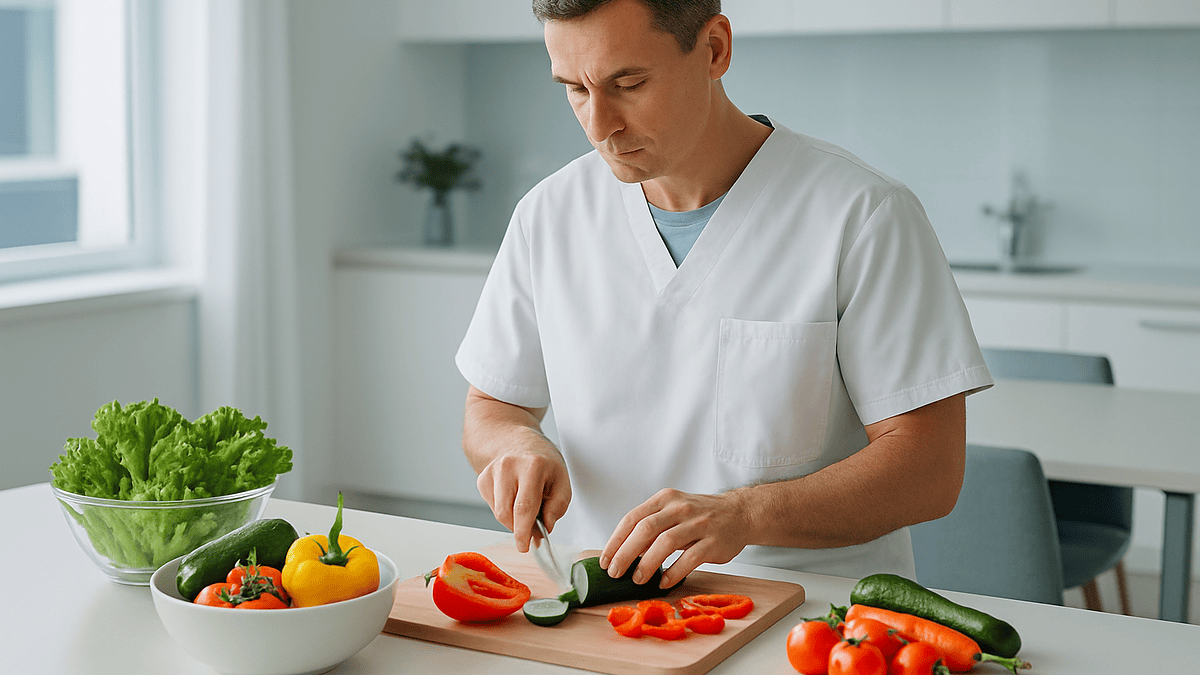
Food order, sometimes called meal sequencing, is simply the sequence in which you eat the components already on your plate. The version studied in trials is specific: fiber-rich vegetables first, then protein and fat, then starches and sugars last. Nothing is removed. The same rice, the same bread, the same fruit; only the timing within the meal changes.
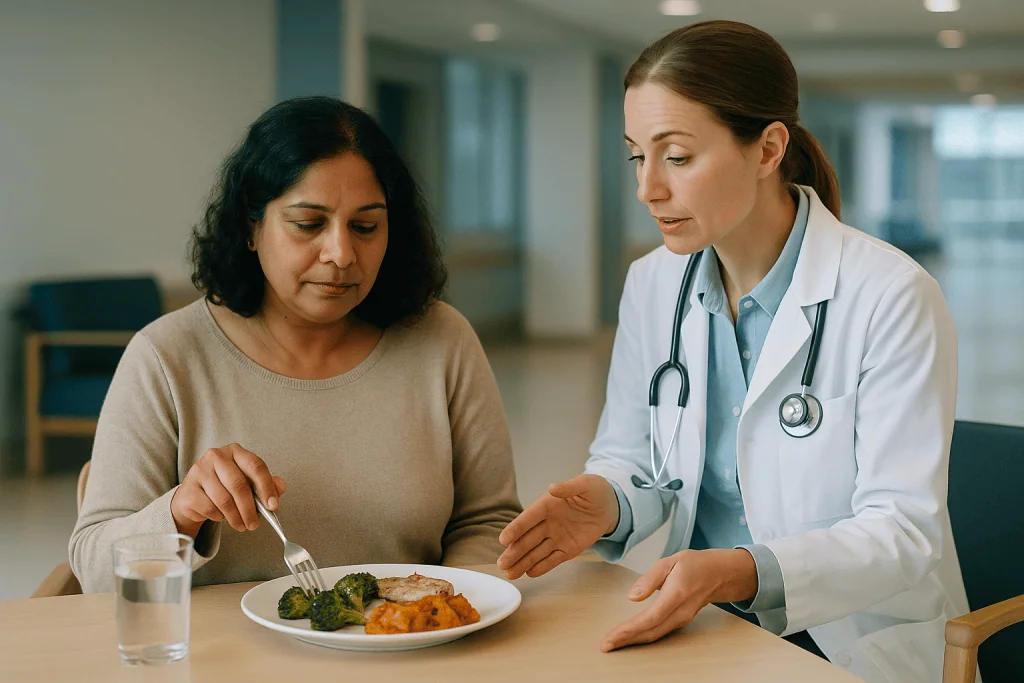
In the 2015 pilot, the gap between courses was about ten minutes. Participants finished a plate of broccoli and lettuce with dressing and a piece of grilled chicken, waited, then ate ciabatta bread and drank orange juice. That pause is part of the protocol, and it is one reason the effect is easier to reproduce at a sit-down meal than with a sandwich eaten over a keyboard.
Why would sequence matter when the total is identical? The short answer is that the stomach is not a blender that empties all at once. What arrives first shapes how fast the rest leaves, and how the gut hormones respond. Carbohydrate landing in an empty stomach is digested and absorbed quickly, which sends glucose into the bloodstream in a rush. The same carbohydrate arriving on top of fiber, protein and fat is released more gradually.
It helps to picture a lit match dropped onto dry newspaper versus one dropped onto a damp pile of leaves. The fuel is the same; the burn rate is not. That image also explains the limits of the trick. It smooths the curve. It does not shrink the total amount of fuel, and anyone hoping it will cancel out a very large portion of refined carbohydrate will be disappointed by their own glucose monitor.
How eating vegetables and protein first blunts a glucose spike
Three mechanisms do most of the work, and each is reasonably well established in human physiology even if the trials of the habit itself are small.
The first is gastric emptying, the rate at which the stomach releases food into the small intestine. Fat and protein slow it. Soluble fiber, the gel-forming kind found in vegetables, beans and oats, thickens the stomach contents and slows it further. Carbohydrate that follows this mixture reaches the absorbing surface of the intestine in a trickle instead of a wave.
The second is the incretin response. Incretins are gut hormones released when nutrients, especially protein and fat, touch the lining of the intestine. One of them, GLP-1 (glucagon-like peptide-1), tells the pancreas to prepare insulin and further slows stomach emptying. Eating protein before carbohydrate appears to prime this signal so that insulin is ready when the sugar arrives. In the 2015 pilot, insulin levels at one and two hours were lower in the carbohydrate-last meal, which suggests the body needed less of it to handle the same sugar load, not that it produced more.
The third is mechanical and behavioral. Vegetables eaten first take chewing time, add bulk, and lengthen the meal. By the time the starch arrives, the stomach already has volume, early fullness signals are under way, and many people eat the carbohydrate portion more slowly.
None of these effects requires a supplement, a particular food brand or a special plate. They are features of digestion that a salad-first meal simply uses to its advantage. The question is how big that advantage is outside a laboratory, which brings us to the second hack and then to the numbers.
Vinegar before meals: what acetic acid does in the gut and muscle
Vinegar is roughly five percent acetic acid in water, whether it comes from apples, grapes, rice or grain. The apple cider version dominates search results, but the proposed glucose effect belongs to the acid, not the fruit, and plain white or wine vinegar contains the same active ingredient (Cleveland Clinic).

Two mechanisms are supported by human and laboratory data. Acetic acid slows gastric emptying, so carbohydrate eaten with or just after vinegar enters the bloodstream more gradually, the same principle at work in food order. Acetic acid also appears to interfere with enzymes that break starch into glucose in the small intestine, which means some starch is digested further along the gut or not at all during the measurement window.
A third, more speculative mechanism comes from muscle studies: acetate may increase glucose uptake into skeletal muscle, which would improve insulin sensitivity for a few hours. This is the finding behind the often-quoted figure from the 2004 trial, in which insulin sensitivity after the test meal improved by about a third in the insulin-resistant group. That trial had 29 participants and measured a single meal, so the figure is a signal, not a settled fact.
Two practical details follow directly from the mechanism. First, the effect is tied to starchy meals; vinegar before a plate of eggs and spinach has nothing to slow down. Second, timing matters, with trials typically giving vinegar diluted in water immediately before or with the start of eating rather than hours earlier.
Gummies, pills and “detox” tonics marketed on the back of these studies are a different matter. Their acetic acid content is often low or unstated, and reviewers at Harvard Health and Cleveland Clinic note that the trials used ordinary liquid vinegar, not supplements.
What the evidence actually says, graded by strength
Grading evidence means asking how a study was designed, how many people it included, how long it lasted and whether its results have been repeated. By that standard, here is where the two hacks stand.
Food order for after-meal glucose: moderate, short-term evidence from small randomized crossover trials. A crossover design means each participant eats both meal sequences on different days and serves as their own control, which strengthens a small study. The 2015 pilot with eleven participants and follow-up studies from the same group and from Japanese researchers point consistently in the same direction: lower glucose and insulin peaks when carbohydrate comes last. What is missing is scale and duration. No large trial has tested whether years of carbohydrate-last eating changes HbA1c, the three-month average of blood sugar, or lowers the risk of diabetes complications.
Vinegar before meals for after-meal glucose: low to moderate evidence. Multiple small randomized trials since 2004 show a reduced glucose rise after starchy meals, and pooled analyses of these trials suggest small improvements in fasting glucose and HbA1c over several weeks. The trials are heterogeneous, often unblinded (vinegar is hard to disguise), and rarely longer than three months. Mayo Clinic summarizes the position plainly: a few small studies show a modest glucose effect, and the evidence is too limited to recommend it as a treatment.
Vinegar for weight loss: weak evidence. Harvard Health reviewed the question and concluded that the weight data are not convincing. The widely shared 2024 adolescent trial was later flagged with an expression of concern.
Either hack for preventing diabetes, heart disease or long-term complications: no direct evidence. The plausible chain of logic exists, but no trial has tested it. That is the gap that viral posts most often paper over.
Food order vs vinegar before meals: a side-by-side comparison
Readers often ask which hack is “better.” The honest answer is that they work through overlapping mechanisms, carry very different safety profiles, and fit different meals. The table summarizes what the trials show and where each one falls short.
| Question | Food order (carbohydrate last) | Vinegar before meals |
|---|---|---|
| Main mechanism | Slower stomach emptying; primed gut hormone and insulin response | Slower stomach emptying; reduced starch breakdown; possible muscle glucose uptake |
| Typical glucose effect in trials | Roughly 20–40 percent lower peak at 30–60 minutes in small crossover studies | Roughly 10–30 percent lower rise after a starchy meal in small trials |
| Strongest evidence | Small randomized crossover trials, mostly in type 2 diabetes and prediabetes | Small randomized trials since 2004; pooled analyses suggest small HbA1c change |
| Long-term outcome data | None | None |
| Works best with | Mixed meals with vegetables, protein and starch | Starchy, high-carbohydrate meals |
| Known risks | Essentially none for healthy adults | Tooth enamel erosion, throat and stomach irritation, low potassium with heavy use, interaction with glucose-lowering medicines |
| Caution groups | People with delayed stomach emptying (gastroparesis); anyone on insulin whose dose timing assumes a predictable curve | Same, plus people with reflux, ulcers, kidney disease or on diuretics |
Two things stand out. Food order has almost no downside, which is why many dietitians treat it as a free upgrade rather than a hack. Vinegar has a real, if modest, evidence base and a real, if modest, list of harms, and the balance between them depends on who is drinking it and how often.
Neither column contains a long-term outcome, and that empty row should temper every claim you see online.
How big is the effect, really? Putting the numbers in context
A 30 percent lower glucose peak sounds enormous. In context, it is useful but not transformative. Consider what the number describes: the height of a curve measured over two hours after one meal in a laboratory, in a handful of people. It says nothing about the next meal, the next day or the next decade.
Compare it with interventions that have long-term evidence. In the large diabetes prevention trials, losing about seven percent of body weight and walking roughly 150 minutes a week reduced progression from prediabetes to type 2 diabetes by close to 60 percent over three years (CDC). That is an outcome, not a curve. Prescribed glucose-lowering medicines are judged on HbA1c and on complications such as kidney and eye disease, again outcomes rather than single-meal graphs.
The after-meal spike does matter. Repeated large swings are associated in observational data with blood vessel stress, and after-meal glucose is one of the components that make up HbA1c. Smoothing those swings is a reasonable goal. But a person whose meal is 80 percent refined starch will still see a substantial rise even with perfect sequencing and a splash of vinegar; the hacks shave the top off the wave, they do not drain the pool.
A fairer framing: food order and vinegar are among the smaller tools in a kit whose larger tools are portion size, fiber intake, body weight, physical activity, sleep and, where prescribed, medicine. Used alongside the larger tools, they add a measurable margin. Used instead of them, they are a distraction with a good graph.
That is also why the next question, who actually benefits, matters more than the headline percentage.
Who is most likely to benefit, and who probably won't notice?
The trials give a consistent clue. The vinegar effect in 2004 was largest in people who were insulin resistant and smallest in healthy controls. The food order pilots were run in people with type 2 diabetes or prediabetes, where the glucose curve is already high and has room to fall.
That pattern makes physiological sense. A healthy pancreas responds briskly, so even a fast-arriving carbohydrate load is handled within an hour or two. Slowing the arrival helps a little. In someone whose insulin response is delayed or blunted, slowing the arrival buys the body time it genuinely needs, and the difference shows up clearly on a monitor.
Groups most likely to see a meaningful difference:
- People with prediabetes, defined as an HbA1c between 5.7 and 6.4 percent or a fasting glucose between 100 and 125 mg/dL (CDC).
- People with type 2 diabetes managed by lifestyle or by medicines that do not themselves cause low blood sugar, working with their care team.
- People with gestational diabetes, under the close monitoring that condition already requires, since food order carries no risk to the pregnancy and vinegar should be discussed with the obstetric team.
Groups unlikely to notice much, or who should be cautious:
- Metabolically healthy adults watching a wellness monitor, whose spikes are usually within the normal range and whose sense of alarm often outruns their physiology.
- People with type 1 diabetes, whose insulin doses are timed to an expected absorption curve; changing that curve without adjusting the plan can cause unexpected highs or lows, and any change belongs in a conversation with the diabetes team.
- People with gastroparesis, a condition of delayed stomach emptying common in long-standing diabetes, for whom further slowing is unwelcome.
The benefit, in short, scales with the problem. The people most tempted by the trend are often the ones with the least to gain.
Common myths about these blood-sugar hacks, corrected
Viral health content thrives on compression, and compression breeds myths. Here are the ones clinicians hear most, with the evidence that corrects them.
Myth: eating vegetables first makes carbohydrates “not count.” The total glucose entering the blood over several hours is similar; the curve is flatter and later. Calories are unchanged. In the 2015 pilot, glucose at two hours was still measurably lower, but the carbohydrate had not vanished.
Myth: apple cider vinegar is special. The active component is acetic acid, present in every vinegar. The “mother,” the cloudy strands of bacteria and cellulose in unfiltered vinegar, has no demonstrated effect on blood sugar (Cleveland Clinic).
Myth: vinegar melts fat. Harvard Health’s review found the weight evidence unconvincing, and the one recent trial that seemed to show large losses drew an expression of concern from its publisher. Any small weight change in older trials is plausibly explained by eating less when a meal starts with something sour.
Myth: a glucose monitor spike in a healthy person means prediabetes. A rise to 140 mg/dL after a meal is normal physiology. Diagnosis rests on fasting glucose, HbA1c or an oral glucose tolerance test interpreted by a clinician, not on a smartphone graph.
Myth: these hacks can replace diabetes medicine. No trial has tested that, and stopping or reducing a prescribed medicine because a graph looked better is a decision with real risk. Mayo Clinic is explicit that vinegar is not a substitute for treatment.
Myth: more vinegar is better. Beyond the amounts used in trials, the glucose effect does not clearly grow, while the risks to teeth, throat and potassium levels do. Case reports describe low potassium and bone loss in a person who drank large quantities daily for years.
Is vinegar before meals safe? Teeth, stomach, potassium and medicines
Vinegar is a food, and in culinary amounts it is safe for almost everyone. The trend, however, encourages drinking it on an empty stomach every day, and that is where a short safety list becomes worth reading.
Tooth enamel is the most predictable casualty. Acetic acid at vinegar strength is acidic enough to soften enamel on contact, and daily sipping, especially undiluted or swished around the mouth, has produced documented erosion. Dental advice is consistent: dilute it well in water, drink it rather than sip it over time, rinse with plain water afterward, and wait before brushing so the softened enamel can recover (Cleveland Clinic).
The throat and stomach come next. Undiluted vinegar can irritate the esophagus, and people with reflux, gastritis or ulcers often find that it worsens symptoms. Tablets and gummies have caused esophageal injury when they lodged on the way down, which is one more reason the liquid, diluted form used in trials is the only form with any supporting data.
Potassium and bone health are a concern only with heavy, prolonged use. A published case described a woman who drank large daily amounts for six years and developed low potassium and osteoporosis, likely through increased acid load. Culinary amounts do not do this; habitual high intake might.
Medicines deserve a specific word. Because vinegar lowers after-meal glucose, it can add to the effect of insulin or sulfonylureas and tip blood sugar too low. It may also deepen potassium loss in people taking certain diuretics or the heart medicine digoxin. None of this means a person on these medicines cannot have vinaigrette; it means that a daily pre-meal vinegar routine should be mentioned to the prescriber, who can decide whether monitoring or adjustment is needed. Food order carries none of these concerns, which is a point in its favor for anyone weighing the two.
Does food order help with weight loss or hunger, not just glucose?
Here the evidence thins out, but the mechanism offers a reasonable hypothesis. Vegetables eaten first add volume and chewing time; protein eaten before starch stimulates GLP-1 and other satiety hormones; a flatter glucose curve avoids the sharp dip two to three hours after a meal that some people experience as sudden hunger. Each of those steps has support in nutrition science. The combination, measured as weight on a scale over months, has not been tested in a trial large enough to be convincing.
What trials do show is suggestive. Studies of meal sequencing in people with type 2 diabetes report lower insulin levels after the carbohydrate-last version. Insulin promotes fat storage and blocks fat release, so a day of lower insulin exposure is theoretically favorable, though whether the difference is large enough to change body weight remains unknown. Japanese studies of the “vegetables first” habit followed for a couple of years reported better HbA1c but were not designed to isolate weight.
A practical observation from clinic rather than the laboratory: people who commit to eating vegetables first often eat more vegetables, because a plate that starts with salad tends to be built around salad. That shift increases fiber intake, which has strong long-term evidence for weight stability, heart health and glucose control (NHS). The hack may work on weight mostly by changing what ends up on the plate in the first place.
The responsible summary is that food order is unlikely to harm a weight goal and may help a little, mainly by improving fullness and plate composition. Anyone who finds that vegetables first makes a meal more satisfying has a good reason to continue. Anyone expecting it to replace the harder work of portion size and activity will be let down.
How to try food order at a real dinner without turning it into a diet
The trial protocol is simple to copy and does not require measuring anything. At a mixed meal, start with the vegetables, move to the protein, and finish with the bread, rice, potatoes, pasta or fruit. A brief pause between the first and last parts, a few minutes of conversation or a glass of water, mirrors the study conditions more closely than eating everything in one unbroken sequence.
Some settings make this easier than others:
- Restaurant meals already arrive in a helpful order: salad or vegetable starter, then the main course. Ordering the bread with the main rather than before it keeps the sequence intact.
- Bowl-style meals and stir-fries blend everything together. Eating around the edges, vegetables and protein first, is possible but fiddly; it is fine to accept that not every meal suits the method.
- Breakfast is the hardest. Cereal, toast and juice are carbohydrate from start to finish. Adding eggs, yogurt or nuts before the toast is the breakfast version of the hack and also makes the meal more filling.
A few caveats keep the habit healthy rather than obsessive. Children should not be taught to police their eating order; family meals should stay relaxed. People with a history of disordered eating may find that rules about sequence become another source of anxiety, and for them the kinder approach is a balanced plate eaten in whatever order feels natural. Anyone on insulin should talk to their diabetes team before changing a routine, since a slower glucose curve can shift when a mealtime dose peaks relative to the food.
Finally, resist the urge to grade every meal. Food order is a nudge, not a test. Doing it at most dinners and skipping it at a birthday party is exactly the level of effort the evidence supports.
Glucose monitors and the hack economy: why spikes aren't the whole story
The engine behind this trend is the continuous glucose monitor, or CGM, a small sensor worn on the arm that reads glucose in the fluid under the skin every few minutes and sends it to a phone. For people on insulin it is a life-changing tool. For healthy adults it is, so far, an experiment without an instruction manual.
Several facts get lost in the graphs. Normal after-meal glucose in a person without diabetes can rise to about 140 mg/dL and return to baseline within two hours; a visible hill is not a disease. Sensor readings lag blood glucose by several minutes and can be off by a meaningful margin, particularly when glucose is changing fast, which is precisely when people take screenshots. Stress, poor sleep, a hard workout the evening before and even the position you sleep on the sensor can move the line.
There is also a selection effect in what goes viral. A clip in which food order flattened a curve gets shared; a clip in which it made no visible difference does not get filmed. The trials, small as they are, remain a better guide to the average effect than any individual’s feed.
None of this means monitors are useless outside diabetes. Watching how a meal, a walk or a short night affects glucose can be a powerful teaching tool, and some clinicians use short-term monitoring in prediabetes for exactly that reason. The caution is about interpretation. A monitor measures one variable, after-meal glucose. Heart health, kidney health, weight, blood pressure and cholesterol are not on the screen, and the interventions with the best evidence for those outcomes, regular activity, fiber-rich food, not smoking and prescribed treatment where needed, rarely produce a satisfying before-and-after graph.
When to see a doctor
Food order and vinegar are low-stakes habits for most healthy adults, but they sit on top of a topic, blood sugar, that is not low-stakes at all. A few situations call for a clinician rather than a video.
Make an appointment, without urgency, if any of the following apply:
- You have started tracking glucose and are seeing fasting readings above 100 mg/dL or after-meal readings that stay above 140 mg/dL for two hours or more; diagnosis requires proper laboratory testing (CDC).
- You have increased thirst, frequent urination, unexplained weight loss, blurred vision or slow-healing cuts. These are classic signs of high blood sugar and deserve a blood test, not a dietary hack (MedlinePlus).
- You have type 2 diabetes, prediabetes or gestational diabetes and want to add a daily vinegar routine or change your eating pattern; your care team can tell you whether it interacts with your medicines or monitoring plan.
- You take insulin, a sulfonylurea or another medicine that can lower glucose and have noticed more frequent shakiness, sweating, hunger or confusion after starting either habit.
- You have kidney disease, take a diuretic or digoxin, or have a history of reflux, ulcers or eating disorders and are considering regular vinegar.
Seek urgent care or call emergency services if someone with diabetes has symptoms of severe low blood sugar, such as confusion, difficulty speaking, seizure or loss of consciousness, or symptoms of very high blood sugar, such as vomiting, rapid breathing, fruity-smelling breath or severe drowsiness (MedlinePlus).
One rule overrides everything in this article: never stop, skip or reduce a prescribed glucose-lowering medicine because a meal hack improved a reading. Dose decisions belong to the prescriber, who can weigh a short-term graph against the long-term picture. The hacks are an addition to that conversation, never a substitute for it.
Frequently asked questions
Does food order really lower blood sugar?
Yes, in small randomized trials eating vegetables and protein before carbohydrate lowered the after-meal glucose peak, typically by 20 to 40 percent at the one-hour mark in people with type 2 diabetes or prediabetes. The effect is short-term and measured over single meals. Whether years of this habit change HbA1c or reduce complications has not been tested in a large trial, so treat it as a useful nudge rather than a treatment.
What should I eat first in a meal to avoid a glucose spike?
Start with fiber-rich vegetables, then protein and fat, and finish with starches, bread, rice, pasta or fruit. A few minutes between the first and last parts mirrors the trial protocol. The sequence slows stomach emptying and primes insulin so the carbohydrate is absorbed more gradually. It does not remove the carbohydrate, so portion size still matters more than order.
Is vinegar before meals good for blood sugar?
Several small randomized trials show that diluted vinegar taken just before a starchy meal reduces the glucose rise afterward, with the clearest effect in insulin-resistant adults. Pooled analyses suggest small improvements in fasting glucose and HbA1c over a few weeks. The studies are small, often unblinded and short, and Mayo Clinic describes the evidence as too limited to recommend vinegar as a treatment. Anyone on glucose-lowering medicine should ask their clinician first.
Does apple cider vinegar work better than other vinegars?
No convincing evidence suggests it does. The glucose effect comes from acetic acid, which all vinegars contain at roughly similar strength, and the “mother” in unfiltered apple cider vinegar has not been shown to affect blood sugar. Apple cider vinegar dominates search results for marketing reasons rather than scientific ones. Gummies and tablets are a step further removed, since their acid content is often low or unstated.
Can food order or vinegar replace my diabetes medicine?
No. Neither habit has been tested as a replacement for prescribed treatment, and no trial has measured their effect on complications such as kidney, eye or heart disease. Stopping or reducing a medicine because a glucose reading improved can cause dangerous highs. If you want to try either habit, mention it to your prescriber, who can decide whether any monitoring or adjustment is needed.
Is vinegar safe to drink every day?
In small, well-diluted amounts most adults tolerate it, but daily use carries real risks. Acetic acid softens tooth enamel, so dental advice is to dilute, drink rather than sip, rinse with water and delay brushing. Undiluted vinegar can irritate the throat and stomach and worsen reflux. Very heavy long-term use has been linked in case reports to low potassium and bone loss. People with kidney disease or on diuretics should ask a doctor first.
Does meal sequencing help with weight loss?
Possibly a little, but the evidence is indirect. Eating vegetables and protein first increases fullness, lowers after-meal insulin and tends to increase total vegetable and fiber intake, all of which favor weight stability. No large trial has measured weight change from food order alone. For vinegar, Harvard Health concluded the weight-loss evidence is not convincing, and a viral 2024 trial later drew an expression of concern.
I don't have diabetes. Should I worry about glucose spikes after meals?
Usually not. In people without diabetes, glucose commonly rises to about 140 mg/dL after a meal and returns to baseline within two hours; that is normal physiology, not a warning sign. Diagnosis of prediabetes or diabetes relies on fasting glucose, HbA1c or a glucose tolerance test interpreted by a clinician. If a monitor shows readings that stay high or fasting values above 100 mg/dL, ask for proper testing.
Does "food order" have anything to do with ordering food online?
No. Search results mix the two because the phrase is shared. In nutrition, food order means the sequence in which you eat the components of a meal, vegetables first and carbohydrate last. It has nothing to do with delivery apps or restaurant ordering, though the principle applies to any meal regardless of where it comes from: eat the salad before the bread, whoever cooked it.
Who should avoid these hacks or check with a doctor first?
People with type 1 diabetes or anyone on insulin or sulfonylureas, because a slower or lower glucose curve can shift the timing and risk of low blood sugar. People with gastroparesis, a condition of delayed stomach emptying, since both habits slow emptying further. For vinegar specifically, anyone with reflux, ulcers, kidney disease, or on diuretics or digoxin. People with a history of disordered eating may find rules about sequence unhelpful.
References
This article is for general information only and is not a substitute for professional medical advice. Please consult a qualified doctor about your individual situation.

More from the Blog

Blood Sugar Spikes: What They Do to Energy, Hunger and Arteries, and How to Blunt Them
Blood sugar spikes are sharp rises in glucose after eating, usually peaking within an hour and settling within two to three hours in healthy…

What the Robot Does in Robotic Heart Surgery: Arms, a 3D Camera and Small Chest Incisions
In robotic heart surgery, the robot does not operate on its own. A cardiac surgeon sits at a console a few feet from the…

Life After a Heart Transplant: Rejection Checks, Infection Prevention and Medication Routine
Life after a heart transplant is organized around three routines: scheduled rejection checks (clinic visits, blood tests, echocardiograms and, especially in the first year,…

When Does Angina Need More Than Medication? How Cardiologists Decide on Stents or Bypass
Angina usually needs more than medication when symptoms keep limiting daily life despite well-adjusted medicines, when tests show a large area of heart muscle…

After Arrhythmia Treatment: Which Sensations Are Normal and When to Call Your Cardiologist
After arrhythmia treatment, mild palpitations, a faster resting pulse, fatigue, a bruised access site and skin soreness after cardioversion are common and usually settle…

TAVI Recovery Timeline: Early Walking, the Cardiac Unit Stay and the First Two Weeks Home
After TAVI, most people are helped to sit up and take their first steps within hours of the procedure, spend roughly one to three…