

What International Patients Ask Before Leukemia or Lymphoma Treatment Abroad

Key Takeaways
- Leukemia and lymphoma are families of distinct diseases, and the exact subtype with its genetic markers determines whether treatment starts within days or is deferred for years.
- Neutrophil counts typically reach their lowest point about 7 to 12 days after a chemotherapy dose, which is the window when travel and infection risk matter most.
- Induction chemotherapy for acute leukemia usually means several weeks as an inpatient, and stem cell transplant recovery can extend to a year or more, according to the NHS.
- Early chronic lymphocytic leukemia and indolent lymphomas are often managed by active monitoring, because treating before symptoms has not been shown to extend life.
- No guideline body ranks hospitals for leukemia, and any single success percentage attached to a place describes a narrow group or nothing at all.
- Long-distance travel over about 4 hours raises clot risk, which cancer already increases, so mobility, hydration and a written treatment summary are the basics for any journey your team agrees to.
Before leukemia or lymphoma treatment abroad, patients usually want to know which exact subtype they have, how urgently treatment must start, how long the intensive phase and recovery typically take, whether travel is safe during chemotherapy, and how follow-up will continue at home. The answers depend on the diagnosis and on the treating team; no single hospital, country or percentage can settle them.
A father sits at his kitchen table at 2 a.m. with a folder of blood results he cannot fully read, a laptop open, and a search bar that already says leukemia treatment abroad what to expect. His daughter’s hematologist used the word acute that afternoon. He has a week, maybe two, to understand a disease he had only ever heard of in films.
Scenes like this repeat in living rooms on every continent. The paperwork differs, the language differs, but the questions are almost identical: how fast, how long, how far from home, and what happens if something goes wrong on the way.
This explainer works through those questions the way a careful clinician would, one step at a time. It does not point you toward any place or program. It explains what blood cancer treatment actually involves, where the timelines come from, what travel does and does not change, and which decisions can only be made by the team reading your own results.
Leukemia treatment abroad: what to expect before anything is decided
The first surprise for many families is how much happens before a single treatment is chosen. Leukemia is a cancer of the blood-forming cells in the bone marrow, the spongy tissue inside bones where blood is made. Lymphoma is a cancer of lymphocytes, the white blood cells that live in lymph nodes and the immune system. Both are groups of diseases, not single conditions, and the subtype drives everything that follows.
Diagnosis rests on three pillars. A blood count shows how many red cells, white cells and platelets you have. A bone marrow biopsy, in which a thin needle takes a small core of marrow, usually from the back of the pelvis, lets pathologists look at the cells directly. Genetic tests on those cells look for specific mutations and chromosome changes. According to Mayo Clinic, these results together determine the type of leukemia, how aggressive it is likely to be, and which approaches make sense.
So what should someone weighing treatment far from home expect at this stage? Expect requests for the original pathology slides or digital images, not just the written report. Expect that a receiving team may repeat some tests rather than rely on another laboratory’s interpretation. Expect that the timeline is set by the biology of the disease, not by flight schedules.
One opinion, grounded in evidence, deserves to be stated plainly: the quality of the diagnostic workup matters more than the address of the building. A precise subtype with complete genetic information can be treated well in many settings. A vague diagnosis cannot be treated well anywhere. Whatever else a family decides, securing a complete, well-documented diagnosis is the step that protects every later choice.
How is leukemia or lymphoma actually treated?
Strip away the jargon and most blood cancer treatment does one of four things: it kills fast-dividing cells, it blocks a specific molecular switch the cancer depends on, it directs the immune system at the cancer, or it replaces the bone marrow altogether.
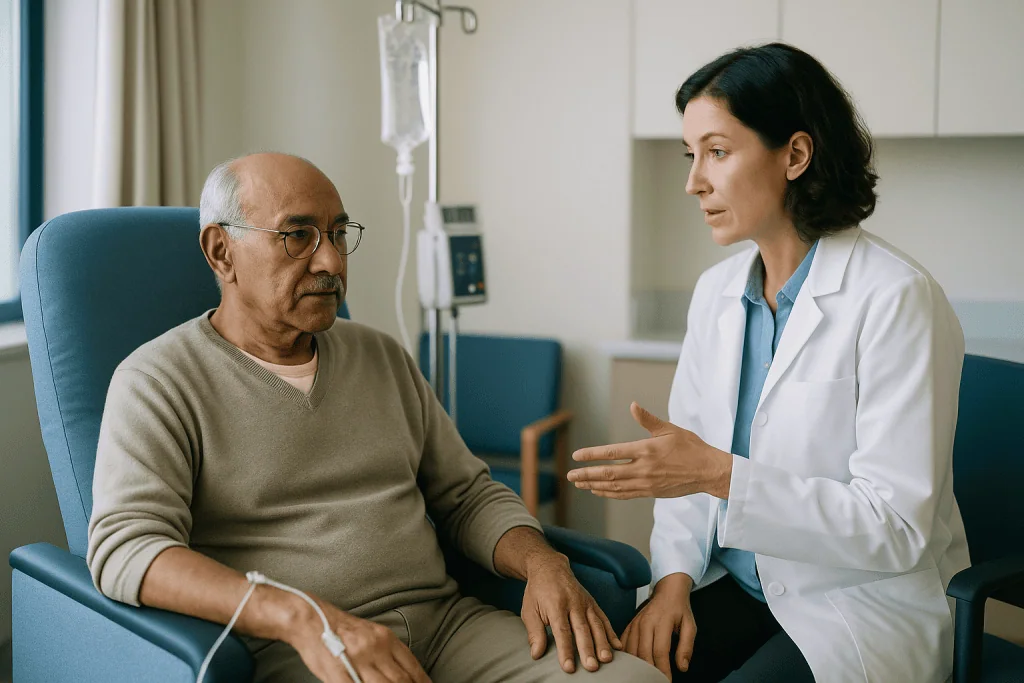
Chemotherapy is the oldest of these. It uses medicines that damage cells while they divide, which harms cancer cells preferentially because they divide so often. The same mechanism explains the familiar side effects: hair follicles, the gut lining and healthy marrow also divide quickly. For acute leukemia, the NHS describes an intensive first phase called induction, aimed at clearing visible leukemia from the marrow, followed by consolidation to remove remaining cells.
Targeted therapy works differently. In chronic myeloid leukemia, for example, the disease is driven by an abnormal protein that keeps cells dividing; a class of medicines called tyrosine kinase inhibitors blocks that protein directly. Because the target is specific, these are often taken for years rather than in short bursts.
Immunotherapy covers several approaches. Monoclonal antibodies are laboratory-made proteins that attach to markers on cancer cells and flag them for destruction. CAR T-cell therapy takes a patient’s own immune cells, engineers them to recognize the cancer, and returns them by infusion.
A stem cell transplant, sometimes called a bone marrow transplant, uses high-dose chemotherapy to wipe out the diseased marrow and then infuses healthy blood-forming stem cells, from the patient or a donor, to rebuild it. The NHS describes this as an intensive treatment reserved for situations where the potential benefit justifies serious risks.
Radiotherapy, high-energy beams aimed at a specific area, plays a role mainly in lymphoma or in preparing for transplant. Which of these a person receives, and in what order, is a decision the treating hematologist makes from the subtype, the genetics, age and general health.
Why the first question is which type, not which hospital
Ask a search engine which hospital is best for leukemia and you will get confident lists. Ask a hematologist and you will get a question back: which leukemia?
The four common adult forms behave so differently that they might as well be separate diseases. Acute myeloid leukemia and acute lymphoblastic leukemia develop over days to weeks, crowd out normal blood production, and, according to Mayo Clinic, usually need treatment to begin promptly. Chronic lymphocytic leukemia can progress so slowly that some people are monitored for years without treatment. Chronic myeloid leukemia has a well-understood molecular driver and is often managed long term with oral targeted medicines.
Lymphoma splits along a similar line. Hodgkin lymphoma is identified by a particular abnormal cell under the microscope and tends to follow predictable patterns of spread. Non-Hodgkin lymphoma is a family of dozens of subtypes, some aggressive and some indolent, meaning slow growing. MedlinePlus notes that treatment depends on the type, stage and how fast it is growing.
This is why lists of top centers are less useful than they look. A program with deep experience in transplant may be the wrong fit for someone whose disease calls for watchful waiting. A center known for pediatric leukemia is not automatically suited to an older adult with a chronic form.
The practical consequence for anyone considering treatment away from home is straightforward. Before comparing places, get the subtype in writing, with the genetic markers. Then the question becomes concrete: does this team routinely treat this specific disease in people like me? That question has an answer. The abstract one does not, and no responsible source claims a single hospital, city or country is best for every blood cancer.
Who is usually offered treatment right away, and who is asked to wait
Urgency in blood cancer is not a matter of anxiety; it is a matter of cell counts.
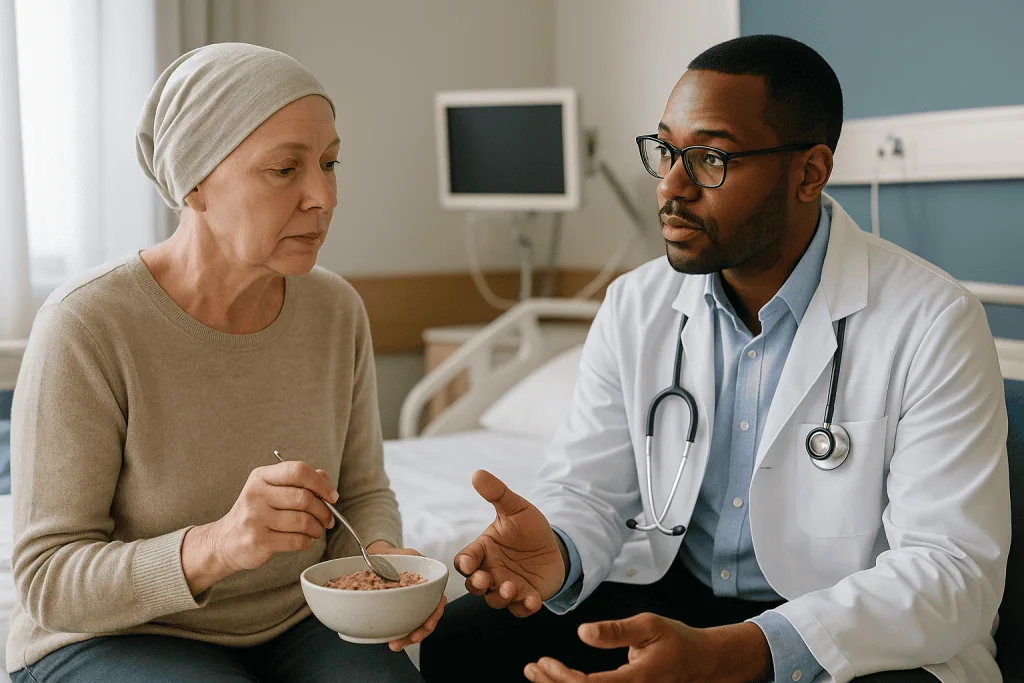
People with acute leukemia are generally treated as soon as the diagnosis is confirmed. The marrow is producing immature cells, called blasts, so quickly that normal red cells, platelets and infection-fighting white cells are pushed out. Mayo Clinic describes acute leukemia as requiring aggressive, timely treatment. The same applies to aggressive lymphomas and to any blood cancer causing dangerous complications such as bleeding, severe infection or organ compression.
Chronic forms often follow a different path. In early chronic lymphocytic leukemia and in some slow-growing lymphomas, clinicians may recommend active monitoring, sometimes called watch and wait. Blood tests and examinations happen at regular intervals, and treatment starts only when the disease begins to cause problems. According to Mayo Clinic, starting treatment earlier in these cases has not been shown to help people live longer, while it does expose them to side effects sooner.
Waiting can also be a medical instruction rather than a disease feature. Someone with an active infection may need it controlled before chemotherapy begins. Someone with heart or kidney concerns may need those assessed to choose a safe regimen. Fitness for intensive treatment is judged formally, often using a performance status score that rates how independently a person manages daily activities.
Where does travel fit? For acute disease, the treating team usually advises that the first treatment should not be delayed by logistics. For chronic disease under monitoring, there may be no immediate treatment to travel for at all. Only the hematologist who has seen the marrow results can say which situation applies, and that judgment should come before any itinerary.
What a leukemia treatment timeline usually looks like
Families planning to be away from home want a calendar. Medicine offers ranges, and the ranges are wide for good reasons.
Take acute myeloid leukemia as the most studied example. The NHS describes induction chemotherapy as an inpatient phase in which people usually stay in the hospital for several weeks, because blood counts fall to levels that require transfusions and close watch for infection. Consolidation follows once the marrow recovers and may involve further cycles, each with its own recovery period. Whether a transplant is added depends on genetic risk and response.
Acute lymphoblastic leukemia runs longer. After induction and consolidation, the NHS describes a maintenance phase of lower-intensity treatment that can continue for a prolonged period, often measured in years rather than months.
Chronic myeloid leukemia has a different rhythm: an oral targeted medicine taken daily, with blood tests at intervals to track the molecular response, often continuing indefinitely under specialist supervision.
Stem cell transplant compresses the risk and stretches the recovery. The NHS notes that people usually stay in the hospital for at least a few weeks after the infusion while new cells take hold, a process called engraftment, and that full recovery can take a year or more.
Every one of these figures is a typical range from guideline-level sources, not a forecast for any individual. Delays for infection, slow count recovery or a change in plan are common and expected. The honest way to plan is to ask the treating team for their best estimate of the intensive phase, then add margin, and to assume follow-up will continue for years wherever you live.
Common treatment approaches at a glance
The table below summarizes what each broad approach does, where it is commonly used, and what the recovery period tends to involve. It is descriptive, not a menu; the treating team decides which, if any, applies.
| Approach | How it works | Commonly used in | What recovery usually involves |
|---|---|---|---|
| Intensive chemotherapy | Damages rapidly dividing cells | Acute leukemias, aggressive lymphomas | Inpatient weeks, low blood counts, transfusion support |
| Targeted oral therapy | Blocks a specific protein driving the cancer | Chronic myeloid leukemia, some lymphomas and chronic lymphocytic leukemia | Outpatient, long-term monitoring, ongoing side-effect management |
| Monoclonal antibodies | Flag cancer cells for immune destruction | Many lymphomas, some leukemias | Infusion visits, reactions monitored during and after |
| CAR T-cell therapy | Engineered immune cells attack the cancer | Selected relapsed leukemias and lymphomas | Inpatient monitoring for immune reactions, weeks of close follow-up |
| Stem cell transplant | Replaces diseased marrow after high-dose treatment | Higher-risk or relapsed disease | Weeks in hospital, months of infection precautions, a year or more to full recovery |
| Active monitoring | Regular tests, treatment deferred | Early chronic lymphocytic leukemia, indolent lymphomas | No recovery period; scheduled reviews |
Two patterns stand out. First, the more intensive the approach, the longer the person needs to remain near the treating center, because the dangerous period is the recovery, not the infusion itself. Second, several approaches are designed to continue for years, which makes the question of who supervises treatment at home as important as who starts it.
The recovery descriptions draw on NHS and Cleveland Clinic guidance on chemotherapy, neutropenia and transplant. They describe what commonly happens, not what will happen to any one person.
Is it okay to take a vacation or travel during chemotherapy?
This is one of the most searched questions in blood cancer, and it deserves a more honest answer than a flat yes or no.
The central issue is neutropenia, a shortage of neutrophils, the white blood cells that fight bacterial infection. According to Cleveland Clinic, neutrophil counts typically fall to their lowest point roughly 7 to 12 days after a chemotherapy dose, then recover before the next cycle. During that trough, an ordinary infection can become an emergency within hours.
Traveling during chemotherapy therefore hinges on timing and access. Being several time zones from your treating team on day ten of a cycle is a very different proposition from being there on day twenty-five, when counts have usually recovered. Many teams will discuss which window, if any, is reasonable for a specific regimen. For oral targeted therapies with milder effects on counts, the calculation is often different again.
There are practical layers beyond blood counts. Some chemotherapy increases sensitivity to sunlight. Nausea, fatigue and changes in taste make long journeys harder. Travel insurance frequently excludes or restricts cover for active cancer, so people need to check policies in writing. Medicines must stay in original labeled containers with a copy of the prescription and a letter from the treating clinician describing the diagnosis and treatment.
The people best placed to say whether a trip is wise are the ones who know your counts, your regimen and your risk of complications. Ask them directly, well before booking, and ask what to do if you become unwell while away. If the answer is that this is not a good time, that answer protects you, and there will be other times.
Flying, blood clots and infection: medical-travel safety basics
Long flights combine three risks that matter more when you have a blood cancer: immobility, dehydration and a crowded, enclosed space.
Start with clots. Cancer itself raises the risk of deep vein thrombosis, a clot in a deep leg vein that can travel to the lungs. The NHS lists long-distance travel of more than 4 hours among the factors that increase that risk. The basics are unglamorous but evidence-based: walk the aisle every hour or so, flex your calves while seated, drink water rather than alcohol, and avoid sedating yourself into eight hours of stillness. Some people are advised to wear compression stockings or, in specific situations, to use a clot-preventing medicine; that is a decision for the treating team based on individual risk, never a general recommendation.
Infection is the second concern. If your counts are low, a mask, hand hygiene and avoiding close contact with people who are visibly unwell are sensible. A fever during or after travel is not something to watch overnight; it is a reason to seek care the same day, as the red-flag section below explains.
The third risk is separation from your records. Carry a printed and electronic summary: diagnosis with subtype, treatment received with dates, current medicines by generic name, allergies, recent blood counts and the direct contact details of your treating team. If you have had a stem cell transplant, note the date and donor type. Emergency clinicians anywhere in the world can act faster with this in hand.
None of this recommends flying for treatment. It describes how to reduce avoidable harm if travel is already part of a plan your team has agreed to.
What international patient cancer care coordination involves
Behind the phrase international patient cancer care sits a long chain of hand-offs, and the weakest link is rarely the medicine. It is the paperwork.
Continuity begins with records. Receiving teams need the pathology report, the marrow biopsy images or slides, the flow cytometry results, which classify cells by their surface markers, and the genetic panel. Imaging should travel as full digital files, not printed summaries. Discrepancies between laboratories are common, and many teams repeat key tests; that is careful practice, not distrust.
Second opinions deserve a specific note. A second hematologist reviewing the same material can confirm the subtype and the proposed approach, or flag something missed. This can often be done remotely with the records above, and it does not require travel at all. It is one of the few steps in this process that reliably adds safety without adding risk.
Then comes the return. Intensive treatment is only the first chapter; monitoring for relapse, managing late effects and, for many, continuing oral or maintenance therapy stretches over years. Before treatment starts anywhere, it should be clear in writing which clinician at home will take over, how results will be shared, and who to call at 3 a.m. Language matters here: a discharge summary in a language your home team cannot read is a hazard.
Family logistics are part of care too. Intensive phases often need a caregiver present for weeks, accommodation near the hospital, and a plan for the person’s other responsibilities. Teams that ask about these things early are doing so because they affect outcomes, not out of curiosity. The decision to proceed, and where, remains with the patient and the treating clinicians who have the full picture.
Lymphoma treatment overseas: how planning differs from leukemia
People searching for lymphoma treatment overseas often assume the process mirrors leukemia. It overlaps, but the planning has its own shape.
Staging comes first. Because lymphoma lives in lymph nodes and organs rather than circulating freely, doctors need to know where it is. That usually means a PET-CT scan, which combines a picture of body structure with a map of metabolically active tissue, plus blood tests and sometimes a marrow biopsy. MedlinePlus explains that stage, alongside subtype and growth rate, drives treatment choice.
Treatment is often given in cycles as an outpatient, particularly for many non-Hodgkin lymphomas and Hodgkin lymphoma, with a combination of chemotherapy and a monoclonal antibody. This changes the travel calculation. Rather than one long inpatient stay, a person may need to be near the treating center repeatedly over several months, with recovery weeks in between when they might otherwise be home. Some people receive treatment where they live and travel only for a specific step, such as transplant or CAR T-cell therapy, if their team recommends it.
Indolent lymphomas add the same watch-and-wait consideration seen in chronic leukemia. Traveling far for a disease that may not need treatment for years is a conversation worth having before, not after, the flight.
Radiotherapy, when used, requires daily sessions over a period of weeks at one location, so it too anchors a person geographically.
The through-line is that lymphoma care is less often a single sprint and more often a series of appointments spread across time. The question to put to a treating team is not only where treatment happens, but how many separate visits it requires and which parts, if any, could safely be delivered closer to home.
What people often get wrong
Myths gather around frightening diagnoses, and blood cancer attracts more than its share. A few corrections, each grounded in mainstream evidence.
Leukemia is one disease. It is not. As Johns Hopkins and Mayo Clinic both describe, it is a group of distinct conditions whose treatments range from years of monitoring to intensive transplant. Advice that applies to one form may be irrelevant or harmful for another.
Faster is always better. For acute disease, prompt treatment matters. For early chronic lymphocytic leukemia and indolent lymphomas, Mayo Clinic notes that treating before symptoms appear has not been shown to extend life. Urgency should come from the diagnosis, not from fear.
The best hospital in the world exists. No guideline body ranks hospitals for leukemia, and no single center is best for every subtype, age and circumstance. Experience with your specific disease, and a plan for follow-up where you live, are measurable; a global ranking is not.
Chemotherapy is the only real treatment. Targeted therapies, antibodies, cellular therapies and transplant are all established, guideline-endorsed approaches used in specific situations.
Diet or supplements can replace treatment. There is no evidence that any diet, herb or supplement treats leukemia or lymphoma. Some supplements interfere with chemotherapy or increase bleeding risk, which is why NIH advises telling your team about everything you take.
A transplant is a one-time event. The infusion takes about an hour; the NHS describes the recovery as extending to a year or more, with infection precautions and follow-up throughout.
Once counts recover, the risk is over. Late effects on the heart, fertility, bones and second cancers are monitored for years, which is why long-term follow-up is part of the plan, not an optional extra.
What is the success rate of treating leukemia? Why honest answers come without one number
It is the question families most want answered and the one clinicians most struggle to answer in a sentence. The struggle is not evasion. A single figure would be misleading.
Outcome statistics in blood cancer are calculated for specific groups: a particular subtype, a particular genetic risk category, a particular age band, treated with a particular approach, followed for a set number of years. Change any one of those variables and the number changes substantially. Childhood acute lymphoblastic leukemia and acute myeloid leukemia in an older adult with high-risk genetics are both called leukemia, yet they occupy different worlds statistically. Mayo Clinic frames prognosis as depending on type, age, general health and how the disease responds, which is why guideline bodies publish risk-stratified information rather than a headline rate.
Published survival figures also describe people diagnosed years ago, because follow-up takes time. Treatments approved recently are not yet reflected in them.
There is a more useful question to ask a treating team: for my subtype, my genetic profile and my fitness, what does the evidence say about the chance this approach achieves remission, and what are the main risks? Remission means no detectable disease on standard tests; it is not the same as the disease being gone forever. Good clinicians will answer with ranges, explain the uncertainty, and say when the evidence is thin.
Be wary of any source that quotes a single glowing percentage for leukemia treatment, particularly one attached to a place. It is either describing a narrow group or describing nothing. The honest number is the one your own hematologist derives from your own results, and it belongs in a conversation, not an advertisement.
What the following days and weeks usually look like after intensive treatment
The infusion is often the easy part. What follows is the stretch that dictates how long a person needs to stay near their treating center.
After induction chemotherapy for acute leukemia, the NHS describes a period of very low blood counts. Red cells drop, causing fatigue and breathlessness, so transfusions are common. Platelets, the fragments that help blood clot, fall, so bruising and nosebleeds appear and platelet transfusions may be needed. Neutrophils reach their lowest point in the second week, according to Cleveland Clinic, and any fever in that window is treated as a potential emergency with intravenous antibiotics started rapidly. Counts then climb over the following days to weeks as the marrow recovers, and a repeat biopsy checks whether the leukemia has cleared.
After a stem cell transplant, the same low-count phase is deeper and longer. Engraftment, when the new cells begin producing blood, typically takes a few weeks, and the NHS notes that people usually remain in the hospital until it occurs. Donor transplants add the risk of graft-versus-host disease, in which the new immune cells attack the recipient’s tissues, most often skin, gut or liver; it is monitored closely and treated when it appears.
Outpatient phases carry their own patterns. Mouth soreness, altered taste, hair loss and nausea are common and usually managed with supportive medicines chosen by the team. Fatigue frequently lasts well beyond the last cycle.
Emotionally, the weeks after intensive treatment are often described as harder than the treatment itself, when the structure of daily hospital visits falls away. Asking early about psychological support, and about who to contact between appointments, is not weakness; it is part of the plan. All of these timelines are typical ranges from the cited sources, not predictions for any individual.
Questions to ask your care team before agreeing to anything
Good questions do more than gather information. They signal to a team that you expect to be a partner in decisions, and they surface gaps before they become problems. The following are worth asking wherever treatment is proposed.
- What is my exact subtype, and which genetic or molecular findings shaped this recommendation?
- How urgent is it to start, in days or weeks, and what happens if we delay?
- Is active monitoring a reasonable option for me, and if not, why not?
- What is the goal of this treatment: long-term remission, disease control, or symptom relief?
- How many people with my specific subtype does this team treat in a typical year?
- How long is the intensive phase, how long must I stay nearby afterward, and what would extend that?
- What are the most serious risks of this approach, and how are they monitored?
- What alternatives exist, including approaches used elsewhere, and how do they compare in the guidelines?
- Who will supervise my follow-up at home, and how will records be transferred in a language they can read?
- If I develop a fever or bleeding after returning home, who do I call, and what should the local emergency team be told?
- Are there clinical trials relevant to my situation, and how would I access information about them?
- What effects on fertility, heart, bone or long-term health should I understand before starting?
Write the answers down or ask permission to record them. If a team is unwilling to answer the question about volume and experience, or about follow-up arrangements, that reluctance is itself information.
These questions do not point toward any answer. They are designed to make sure the decision, when it comes, is made with the treating team and with the full picture in view.
When to call your doctor
During and after treatment for leukemia or lymphoma, some symptoms cannot wait for a scheduled appointment. If you are far from your treating team, call them and go to the nearest emergency department; both, not one or the other.
Seek urgent care the same day for a temperature at or above the threshold your team gave you, or shaking chills even without a measured fever. With low neutrophils, according to Cleveland Clinic, fever can be the only sign of a serious infection, and treatment is time-critical.
Seek urgent care for bleeding that does not stop with pressure after ten minutes, blood in urine or stool, vomiting blood, a sudden severe headache, or new widespread bruising or pinpoint red spots on the skin; these can signal dangerously low platelets.
Seek urgent care for breathlessness at rest, chest pain, a racing heart, or a swollen, painful calf, which may indicate a blood clot or infection in the lungs; the NHS advises treating these as emergencies.
Seek urgent care for confusion, drowsiness, a stiff neck, seizure, or new weakness on one side of the body.
Seek urgent care for a rash spreading rapidly, severe abdominal pain, persistent vomiting or diarrhea that prevents you keeping fluids down, or signs of dehydration such as passing very little urine.
Call your team within a day for a new sore throat, mouth ulcers that stop you eating, redness or discharge around a central line, or any symptom that worries you and is getting worse.
Carry your treatment summary so that any clinician can act quickly. Never stop, skip or adjust a prescribed medicine on your own; ask the prescribing team first. The safest rule is simple: with low blood counts, when in doubt, be seen.
Frequently asked questions
Is it okay to go on vacation while on chemotherapy?
Sometimes, but only with your treating team’s agreement and careful timing. Blood counts usually fall lowest about 7 to 12 days after a dose, making infection a serious risk, so trips are generally safer in the recovery window before the next cycle. Insurance, medicine storage and a written plan for becoming unwell abroad all need sorting first. Your hematologist knows your regimen and risk; ask before booking.
Which hospital is considered the best for treating leukemia in the world?
No guideline body or public health agency ranks hospitals for leukemia, and no single center is best for every subtype, age and situation. What can be assessed is whether a team regularly treats your specific disease, has complete diagnostic facilities, and offers a clear plan for follow-up where you live. Those questions have answers; a global ranking does not.
What is the success rate of treating leukemia?
There is no single figure, because outcomes are calculated for specific subtypes, genetic risk groups, ages and treatments, and change substantially with each variable. Published statistics also describe people diagnosed years ago. The meaningful number is the one your hematologist derives from your own results, discussed with its uncertainty. Be cautious of any source quoting one percentage for leukemia as a whole.
What country is the best at treating cancer?
No country is best at treating blood cancer overall. Guideline-based leukemia and lymphoma care is delivered in many health systems, and quality depends on the team, the completeness of diagnosis and the continuity of follow-up rather than on borders. Mainstream sources do not endorse traveling to any destination for care. The treating clinicians who have your results are the ones to advise.
What does a typical leukemia treatment timeline look like?
It depends entirely on type. Acute leukemias usually start treatment promptly with an inpatient induction phase lasting several weeks, followed by further cycles over months and sometimes transplant. Acute lymphoblastic leukemia often includes a maintenance phase lasting years. Chronic myeloid leukemia is usually managed with a daily oral medicine long term, and early chronic lymphocytic leukemia may be monitored without treatment for years.
Is lymphoma treatment overseas planned differently from leukemia?
Often, yes. Lymphoma requires staging scans to map where the disease is, and much treatment is given in outpatient cycles over months rather than one long inpatient stay. That can mean repeated visits rather than a single trip, and some steps may be deliverable closer to home. Indolent lymphomas may not need treatment at all initially. The treating team decides the sequence.
What records does a receiving team need for international patient cancer care?
The original pathology report with slides or digital images, bone marrow biopsy results, flow cytometry, the genetic and molecular panel, full imaging files, recent blood counts, and a list of current medicines by generic name. Teams frequently repeat key tests; that is careful practice. Also arrange in advance who supervises follow-up at home and how discharge summaries will be shared in a readable language.
How long after a stem cell transplant can someone fly home?
There is no fixed rule; the treating team decides based on engraftment, infection risk and complications. The NHS describes an inpatient stay of at least a few weeks after infusion, with recovery continuing for a year or more and infection precautions throughout. Many teams ask people to remain nearby for a period of close outpatient monitoring before any long journey is considered.
What is the biggest risk of traveling during chemotherapy?
Infection during the low-count window is the most time-critical danger, because a fever with low neutrophils can become life-threatening within hours and needs same-day treatment. Blood clots on long journeys are the second concern, since cancer already raises clot risk. Being separated from your records and your team compounds both. Discuss timing, precautions and an emergency plan before any trip.
Can diet or supplements treat leukemia or lymphoma?
No. There is no evidence that any diet, herb or supplement treats blood cancer, and some supplements interact with chemotherapy or increase bleeding risk. Good nutrition supports recovery and is worth discussing with a dietitian on the team, but it does not replace treatment. Tell your clinicians about everything you take, including vitamins and herbal products, before and during treatment.
References
- NHS: Acute myeloid leukaemia, treatment
- NHS: Stem cell and bone marrow transplants
- Cleveland Clinic: Neutropenia
- NHS: Deep vein thrombosis (DVT)
This article is for general information only and is not a substitute for professional medical advice. Please consult a qualified doctor about your individual situation.
Add us as a Preferred Source to see more of our trusted health content across Google Search, AI Overviews and Discover.

More from the Blog
What a Liver Tumor Board Weighs When Cirrhosis and Cancer Are Present Together
A liver cancer tumor board is a scheduled meeting where surgeons, liver specialists, oncologists, radiologists and pathologists review one patient's case together. When cirrhosis…

Kidney-Sparing Endoscopy or Nephroureterectomy for a Ureteral Tumor: How Surgeons Choose
Surgeons choose between kidney-sparing endoscopy and nephroureterectomy for a ureteral tumor mainly by risk. Small, single, low-grade tumors with no sign of invasion on…

Why Thyroid Cancer Plans Pass Through Endocrinology, Surgery and Oncology Together
Thyroid cancer plans pass through endocrinology, surgery and oncology together because no single specialty can answer every question a case raises. The surgeon judges…
Head and Neck Cancer Surgery: What the Operation Removes and How Reconstruction Is Planned
Head and neck cancer surgery removes the tumor with a rim of healthy tissue around it, and often the lymph nodes in the neck…

Dry Mouth, Fatigue and Blood Counts After Lutetium-177 PSMA Therapy: What the Team Watches
The most common lutetium PSMA therapy side effects are dry mouth, fatigue, nausea and lower blood counts, because the radioactive drug binds not only…

Caring for Someone With Acute Lymphocytic Leukemia: Hospital Stays, Hygiene and Support
Caring for someone with acute leukemia means helping them through weeks-long hospital stays for intensive chemotherapy, protecting them from infection while their white cell…