

What Remission Really Means in Crohn’s Disease and How Follow-Up Keeps It on Track

Key Takeaways
- Remission in Crohn's disease is described in layers: symptoms settling, blood and stool markers normalizing, and the gut lining healing, and the STRIDE-II consensus treats all three as sequential treatment targets.
- Symptoms often improve within weeks of starting treatment, while healing of the lining is typically assessed at roughly six to nine months, which is why an early scope can look worse than you feel.
- Fecal calprotectin, a protein shed by white blood cells into stool, often rises before symptoms return and is the main tool for catching a flare early between visits.
- The Mayo Clinic identifies smoking as the most important controllable risk factor in Crohn's, and the NHS notes smokers tend to have more severe disease and more surgery.
- Ongoing diarrhea with normal inflammation markers often reflects bile acid malabsorption, an irritable-bowel pattern or lactose intolerance rather than active Crohn's, and each is treatable.
- People with long-standing colonic Crohn's are advised by the Mayo Clinic to begin colorectal cancer surveillance about eight years after diagnosis, repeating roughly every one to two years depending on findings.
In Crohn's disease, remission means the inflammation has quieted enough that symptoms settle and, ideally, blood tests, stool markers and the gut lining itself look calm. It is a controlled state, not a finished one: many people stay well for years on maintenance treatment, but flares can return, so regular follow-up with blood, stool and sometimes endoscopic checks is how a care team keeps remission on track.
The appointment lasts twelve minutes. A gastroenterologist scrolls through a stool result, nods, and says the word almost casually: remission. The person in the chair has spent two years planning outings around bathrooms and cancelling dinners at the last minute. Now they are supposed to feel relieved. Instead, on the drive home, they feel oddly untethered. Does this mean it is over? Can the medicine stop? Why is the stomach still grumbling?
That evening they type the phrase that thousands of others type: Crohn’s disease remission, what to expect. The results are a mix of forum threads, drug timelines and quizzes, and none of them quite answer the real question, which is what remission actually looks like from the inside and how you keep it.
This article is an attempt to answer that honestly, using the evidence rather than the folklore. Remission in Crohn’s is real, it is worth protecting, and it is more layered than a single word suggests.
Crohn's disease remission: what to expect when the word finally comes up
Crohn’s disease is a long-term condition in which the immune system drives inflammation in the digestive tract, most often the end of the small intestine and the start of the colon, sometimes in patches along its whole length. The National Institute of Diabetes and Digestive and Kidney Diseases estimates that more than half a million people in the United States live with it. For almost all of them, the goal of treatment is not a single event but a state: remission.
The first thing to expect is that remission arrives in layers rather than all at once. Cramping and urgency usually ease first. Energy comes back more slowly, partly because iron stores and sleep have to recover. The healing of the gut lining itself, which your team may check with a camera or a stool test, tends to lag furthest behind, a point we will return to because it explains most of the confusion people feel.
The second thing to expect is that the word comes with conditions attached. Clinicians increasingly describe Crohn’s as a disease to be controlled rather than finished, which is why the treatment that produced remission is usually continued to hold it. Stopping because you feel well is one of the most common ways remission ends.
The third thing to expect is a rhythm of follow-up. Even in a quiet year you will likely have blood drawn, provide stool samples, and talk through what has changed. That rhythm is not bureaucracy. It is the early-warning system, and it is the reason a small rise in inflammation can be caught before it becomes a hospital admission.
What does remission actually mean? The four layers your care team looks at
Ask three people with Crohn’s what remission means and you will get three answers, because the word is used for several different things. Gastroenterologists tend to separate them, and it helps to know the vocabulary before your next appointment.

| Type of remission | What it means in plain language | How it is usually checked |
|---|---|---|
| Clinical (symptomatic) | You feel well: bowel habit, pain and energy are close to your normal | Symptom history, sometimes a short scoring questionnaire |
| Biochemical | Inflammation markers in blood and stool have settled | C-reactive protein in blood; calprotectin in stool |
| Endoscopic (mucosal healing) | The gut lining looks healed when viewed directly | Colonoscopy or capsule endoscopy; sometimes MRI or ultrasound for the small bowel |
| Deep remission | All of the above together, sustained over time | Combination of the checks above, repeated |
Two terms need defining. C-reactive protein, or CRP, is a protein the liver releases when there is inflammation anywhere in the body. Fecal calprotectin is a protein shed by white blood cells into the stool; higher levels suggest active inflammation in the gut lining specifically, which makes it a more targeted signal than CRP.
The international STRIDE-II consensus, published in Gastroenterology, set out these layers as a sequence of treatment targets: first symptom relief, then normal inflammatory markers, then healing of the lining. The logic is simple. Feeling better is the target that matters most to the person living with the disease, but the healed lining is the target most closely linked to fewer flares, fewer hospital stays and fewer operations over time.
When your clinician says you are in remission, it is worth asking which layer they mean. The answer shapes what follow-up comes next.
How the gut lining heals, and why it lags behind how you feel
Picture the inside of the intestine as a single sheet of cells, one cell thick, folded into millions of tiny fingers. In Crohn’s, immune cells flood into that sheet and the tissue beneath it, releasing chemical messengers that keep the inflammation going. The sheet ulcerates. Fluid leaks in, the muscle wall spasms, and you get the diarrhea, cramps and urgency that define a flare.
Treatment works by interrupting that loop. Corticosteroids blunt the whole immune response quickly, which is why they can ease symptoms within days, though the NHS notes they are not suited to long-term use because of side effects. Immunomodulators, such as thiopurines, dampen the production of the immune cells involved; the NHS describes them as taking a few months to reach their full effect. Biologic medicines, which are antibodies designed to block one specific messenger such as tumor necrosis factor, tend to act somewhere between the two. Your prescribing clinician chooses among these based on where the disease sits, how severe it is and your history; nothing here is a recommendation for any one of them.
Symptoms fade once the chemical signaling quiets, even while the lining is still pitted with healing ulcers. Rebuilding that sheet, closing ulcers and restoring the finger-like folds is slow biological construction work. STRIDE-II reflects this with staggered expectations: clinical response is typically judged over the first weeks to a few months, symptomatic remission over roughly three to six months, and healing of the lining over roughly six to nine months on a given treatment, with the exact interval depending on the medicine.
This gap is why a scope done too early can look discouraging even when things are on track, and why a team may want to wait before declaring deep remission.
How long can you stay in remission with Crohn's?
Honest answer first: there is no fixed number. The Mayo Clinic describes the natural course as periods of active disease alternating with periods of remission that can last weeks or years. Some people have one flare in a decade. Others cycle more often. No test at diagnosis reliably predicts which pattern an individual will follow.
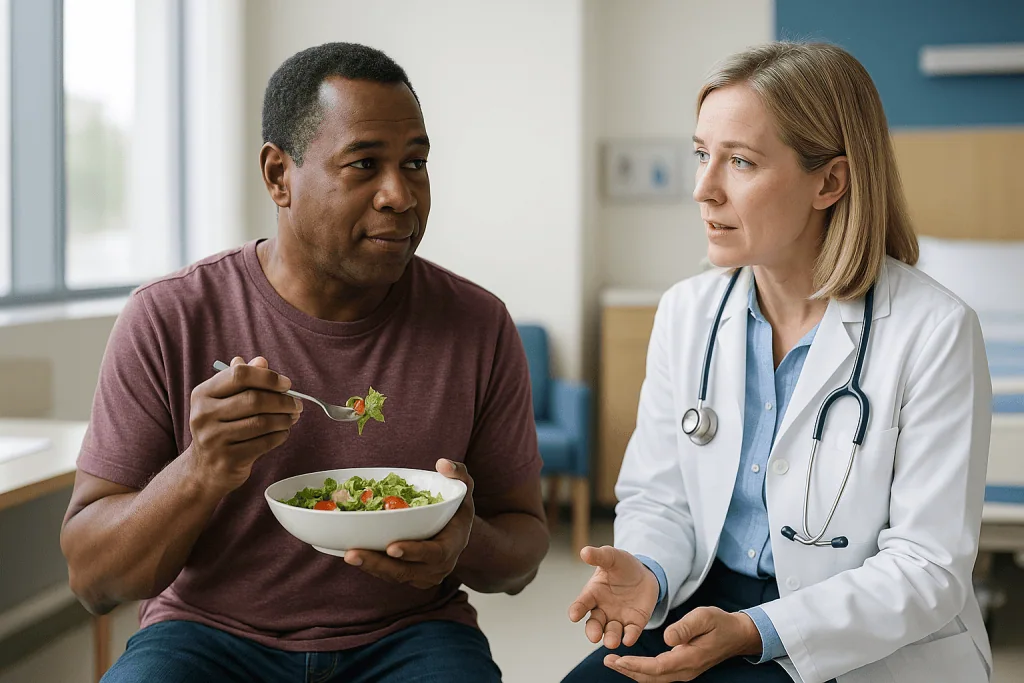
What the evidence does show is that certain factors shift the odds, and several are within reach.
- Continuing maintenance treatment as prescribed. The NHS and Mayo Clinic both describe the aim of maintenance therapy as preventing flares once symptoms have settled, and unplanned stopping is a common route back to active disease.
- Not smoking. The Mayo Clinic identifies smoking as the most important controllable risk factor for developing Crohn’s, and the NHS notes that people who smoke tend to have more severe symptoms and are more likely to need surgery.
- Being cautious with nonsteroidal anti-inflammatory pain relievers, which the Mayo Clinic lists as a possible trigger for worsening bowel inflammation. Any change to pain relief belongs in a conversation with your clinician.
- Keeping follow-up appointments so that rising markers are seen before symptoms return.
Deeper remission also appears to be more durable remission. The STRIDE-II authors reviewed evidence that people whose gut lining has healed, not just whose symptoms have settled, have fewer subsequent flares, hospital admissions and operations. That is the practical case for chasing the harder target even when you already feel fine.
Surgery changes the arithmetic but does not end the disease. The Mayo Clinic notes that nearly half of people with Crohn’s will need at least one operation and that inflammation often returns near the reconnected tissue, which is why medical treatment usually continues afterward and why the first post-operative check matters.
What the first weeks and months on treatment usually look like
Timelines are the most-searched and least-answered part of this topic, so here is a realistic shape, drawn from the STRIDE-II framework and the NHS treatment overview. Treat every interval as a typical range for a population, never a promise for one person.
In the first days to two weeks, if a corticosteroid course is part of the plan, most people notice cramping and stool frequency start to ease. Sleep often improves before appetite does. If a biologic has been started instead or alongside, the early weeks may feel flat, and that is not failure; STRIDE-II places the first assessment of clinical response at several weeks in, adjusted to the specific medicine.
Between roughly six and twelve weeks, your team is looking for a clear clinical response: fewer bowel movements, less pain, steadier energy. Blood may be drawn to see whether CRP is falling. If nothing has shifted, this is often the point at which the plan is reconsidered rather than waited out.
Around three to six months, the goal moves to symptomatic remission and normalizing stool calprotectin. If an immunomodulator was started, the NHS notes this is roughly when its full effect is expected, which is why steroids are sometimes tapered off across this window under supervision.
From about six to nine months onward, a repeat look at the lining, by scope, MRI or bowel ultrasound depending on where the disease sits, tells the team whether the target of healing has been reached. If it has, the visit rhythm usually stretches out. If not, the conversation turns to adjusting treatment, and that decision sits with the prescribing clinician who knows your history.
Who is usually kept on maintenance, and who is asked to wait before changing anything
Once remission is confirmed, the natural question is whether treatment can be lightened. Guidelines from the NHS and the Mayo Clinic frame maintenance therapy as the default, and most people are advised to continue it. There are, though, recognizable situations in which teams behave differently.
People usually kept on current maintenance without change include those whose remission is recent, those with disease that has previously involved fistulas (abnormal tunnels between the bowel and another organ or the skin) or strictures (narrowed segments), those who have had surgery, and those whose stool or blood markers are settled but whose last scope still showed active ulcers. In these groups the risk of relapse on stopping is judged high, and the downside of a relapse is severe.
People sometimes asked to wait before any de-escalation are those in early remission who would like to reduce medicines. Teams often want to see sustained deep remission, confirmed on more than one occasion, before discussing a step down. The waiting is not obstruction; it reflects the evidence, summarized in STRIDE-II, that healed lining predicts a calmer course.
Surgery follows a similar logic. The Mayo Clinic describes operations as reserved for complications such as strictures, fistulas or abscesses, or for disease that has not responded to medicines, and notes that surgery removes a damaged segment but does not remove the disease. Someone in medical remission with a fixed scarred narrowing may be asked to wait and monitor rather than operate early, while someone with an obstruction cannot wait at all.
Every one of these judgments is individual. The right question to bring to your team is not “can I stop” but “what would you need to see before we could consider changing anything.”
Why do I still have diarrhea in remission?
This is one of the most common and most demoralizing experiences: the calprotectin is normal, the scope was clean, and yet the bathroom trips continue. It has real explanations, and none of them mean you were misled.
The first is that a healed gut is not always a fully functional one. The intestine that has been inflamed for years can develop an irritable-bowel-type pattern, with normal tissue but oversensitive nerves and motility. The Mayo Clinic notes that people with inflammatory bowel disease can experience these functional symptoms even when inflammation is controlled.
The second involves bile acids. Bile is made in the liver, released into the small intestine to help digest fat, and normally reabsorbed near the end of the small bowel, exactly the region Crohn’s most often affects or that surgery may have removed. When bile is not reabsorbed, it reaches the colon and pulls in water, causing loose, urgent stools. Clinicians can test for and treat this, but it is a separate problem from active Crohn’s.
The third is diet and medicines. Lactose intolerance, high-fat meals, sugar alcohols in sugar-free products, and some supplements loosen stools in anyone. Certain medicines used in Crohn’s can also affect bowel habit.
The fourth is that the remission may be incomplete in a segment that is hard to see. The small bowel beyond a colonoscope’s reach is a common blind spot, which is why MRI, capsule endoscopy or bowel ultrasound are sometimes added.
The point of naming these is practical. Persistent diarrhea in remission deserves a workup, not a shrug. Bring a simple record of frequency and timing to your appointment and ask which of these explanations your team wants to rule out first.
Crohn's follow-up tests: what your care team checks between flares
Follow-up in remission can feel repetitive. Knowing what each test is for turns it into something you can participate in rather than endure.
Blood tests do several jobs at once. CRP tracks inflammation. A full blood count watches for anemia, which the NHS lists among the common complications of Crohn’s, and for effects of medicines on white cells. Liver and kidney tests monitor the safety of treatment. Vitamin B12, folate, iron studies and vitamin D are checked because the inflamed or resected small bowel absorbs them poorly.
Stool calprotectin is the workhorse of remission monitoring. Because it rises before symptoms in many people, a climbing result can prompt a closer look weeks or months before a flare would have announced itself. STRIDE-II proposes it as a formal treatment target precisely because it is cheap, painless and repeatable.
Imaging comes in when the small bowel is involved. MRI enterography and intestinal ultrasound show wall thickness, narrowing and fistulas without radiation, and they reach segments a scope cannot.
Endoscopy remains the reference standard for confirming healing and for surveillance. The Mayo Clinic advises that people whose colon has been involved begin colon cancer screening about eight years after diagnosis and repeat it roughly every one to two years, with the interval set by the findings, because long-standing inflammation raises the risk of colorectal cancer.
Finally, the conversation itself is a test. Weight, energy, mood, sleep, and how the disease is affecting work and relationships are part of the picture. A team that only reads numbers misses half of what remission is for.
Why maintenance medicines continue when you feel well
There is a quiet logic to taking a medicine for a disease you cannot currently feel, and it is worth spelling out, because the alternative logic, “I’m fine, so I’ll stop,” is intuitive and often costly.
Crohn’s does not switch off. The immune drive that caused the first flare is still present; treatment is holding it below the threshold at which it damages tissue. The NHS describes the purpose of maintenance treatment as preventing symptoms from returning, and the Mayo Clinic frames long-term therapy as the standard approach for most people with moderate to severe disease.
Each class holds inflammation down by a different mechanism. Immunomodulators reduce the pool of activated immune cells over months. Biologics neutralize a specific inflammatory messenger, and some also prevent immune cells from entering the gut wall in the first place. Small-molecule inhibitors block signaling inside the cell. Because the effect depends on continued presence of the medicine, remission on a biologic is generally remission with the biologic, not despite it.
There is a second reason for consistency that is specific to biologics. When these antibody medicines are stopped and restarted, the body can develop antibodies against them, which may make the medicine less effective if it is needed again. This is one of the arguments clinicians raise against unplanned breaks, and one of the reasons any pause should be planned with them.
Side effects are real and deserve equal honesty. Increased susceptibility to infections, effects on blood counts or liver tests, and skin reactions are all monitored for, which is part of why the blood tests described earlier continue. The NHS advises keeping vaccinations up to date and discussing live vaccines with your team, since some are not suitable while on immune-suppressing treatment.
None of this is an instruction to take or continue any particular medicine. It is the reasoning your prescriber is likely to share so that the decision is a shared one.
Why can't you eat salad with Crohn's? Diet in remission versus a flare
The salad question comes up constantly, and the honest answer is that there is no rule against salad in Crohn’s disease. The belief comes from a real experience: during a flare, or when the bowel has a narrowed segment, raw, fibrous vegetables can be hard to break down and may worsen cramping, bloating or, in the case of strictures, risk a partial blockage. The Mayo Clinic notes that limiting high-fiber foods can help some people during active disease, and the NHS gives similar advice for flares.
Remission is different. The NHS is clear that there is no special diet proven to prevent flares and that most people in remission can eat a normal, varied diet. Many people who avoided raw vegetables for years find they tolerate them well once the lining has healed. Others discover a particular food still bothers them; that is individual, not a law.
A few principles hold up across sources.
- Avoiding whole food groups long term risks the deficiencies Crohn’s already predisposes to, including iron, B12, folate, calcium and vitamin D.
- Keeping a brief food and symptom diary for a few weeks is more informative than any list from the internet.
- A registered dietitian experienced in inflammatory bowel disease is the person to help reintroduce foods safely, especially after surgery or with a known stricture.
- Very restrictive diets promoted online as treatments have not been shown in mainstream evidence to induce or maintain remission on their own, and some carry nutritional risk.
If you have been told you have a narrowing, keep asking about fiber specifically. If you have not, and you are in remission, the salad is usually yours to try.
How to handle a Crohn's flare-up without losing ground
A flare during remission is not a personal failure and it is rarely a mystery to your team, who have seen the pattern many times. What matters is how quickly the signal reaches them.
Contact the clinic early. Most inflammatory bowel disease services have a nurse line or messaging route for exactly this. A rising number of loose stools over several days, returning abdominal pain, blood in the stool, or unexplained fatigue are worth reporting before they become a crisis. The Mayo Clinic notes that early treatment of a flare tends to be simpler than treatment of an established one.
Expect a check rather than an immediate prescription. Your team will often want a stool calprotectin and blood tests, and sometimes a stool culture, because infections such as Clostridioides difficile can mimic a flare and need different treatment. Adjusting medicines without that check risks treating the wrong thing.
Do not stop or change your maintenance medicine on your own. It may feel as if it has failed, but the assessment of whether it has is the prescriber’s to make, with the results in front of them.
Be gentle with the gut while you wait. Smaller, more frequent meals, adequate fluids with some salt and sugar to replace what diarrhea removes, and a temporary step back from high-fiber and high-fat foods are all consistent with NHS and Mayo Clinic advice for active disease. Rest genuinely helps; the body is doing immune work.
Keep a simple log of stools, pain, temperature and any bleeding. It makes the phone call shorter and the decision clearer. And note what preceded the flare, whether an infection, a course of another medicine, a missed dose or a period of exceptional stress, so that the pattern can be discussed once the acute phase settles.
Home remedies for Crohn's disease: what the evidence actually shows
People searching for home remedies usually want one of two things: to feel more in control, or to reduce reliance on medicines. Both are understandable, and the evidence is worth stating plainly.
No home remedy has been shown in mainstream medical evidence to induce or maintain remission in Crohn’s disease on its own. That includes turmeric, aloe, probiotics, apple cider vinegar and the many elimination diets that circulate online. The Mayo Clinic describes evidence for probiotics and herbal supplements in Crohn’s as limited, and the NHS does not recommend any complementary therapy as a substitute for prescribed treatment. Some supplements interact with immune-suppressing medicines or affect liver tests, which is a reason to mention anything you take to your team.
That said, several everyday measures have genuine supporting evidence, not as replacements but as foundations.
- Not smoking: the strongest modifiable factor for disease severity and surgery risk, according to both the NHS and the Mayo Clinic.
- Sleep and stress management: stress does not cause Crohn’s, but the Mayo Clinic notes it can worsen symptoms, and regular sleep supports immune regulation.
- Regular physical activity: helps with fatigue, bone density and mood, all of which Crohn’s and its treatments can affect.
- Correcting deficiencies under supervision: iron, B12, vitamin D and calcium are commonly low and are replaced on the basis of blood tests, not guesswork.
- Staying up to date with vaccinations, discussed with your team because some are not suitable on certain treatments.
The most useful reframing is this: the medicines control the inflammation, and the habits above help the rest of you recover from the years the inflammation took. Both are part of remission. Neither replaces the other.
What people often get wrong about Crohn's remission
Myths about remission are not harmless; several of them lead directly back to a flare. Here are the ones clinicians correct most often.
“Remission means the disease is gone.” It means the disease is controlled. The Mayo Clinic and NHS both describe Crohn’s as a lifelong condition with periods of activity and quiet. Treatment and follow-up continue because the underlying immune tendency does.
“If I feel fine, my gut must be fine.” Symptoms and lining heal on different clocks. STRIDE-II exists partly because people can feel well while ulcers are still present, and those people flare more often than those whose lining has healed.
“A flare means my medicine has stopped working.” Sometimes. But infections, other medicines, missed doses and disease in a new segment can all produce a flare while the maintenance treatment is still doing its job. That is why a check comes before a change.
“Diet caused my Crohn’s, so diet can end it.” No diet has been shown to cause or resolve the disease. Food can influence symptoms, especially during flares, which is a different claim.
“Diarrhea in remission means I am not really in remission.” Often it reflects bile acid malabsorption, an irritable-bowel pattern or lactose intolerance, all treatable and none of them active Crohn’s.
“Surgery is a last resort that means treatment failed.” The Mayo Clinic notes nearly half of people with Crohn’s have an operation at some point. It is a tool, sometimes a very good one, and it is usually followed by continued medical treatment.
“Once in remission, I can skip the scopes.” Surveillance for colorectal cancer in long-standing colonic disease is one of the few areas where guidance is quite specific about intervals, and it applies whether or not you have symptoms.
Questions to ask your care team
A good remission appointment is a conversation, and the questions you bring shape it as much as the results on the screen. These are the ones that tend to unlock the most useful answers.
- Which kind of remission am I in right now: symptoms, blood and stool markers, or the lining itself? What would move me to the next layer?
- What is my most recent calprotectin and CRP, and what level would prompt you to look more closely?
- Where in my bowel is my disease, and which imaging or scope is best suited to watching that segment?
- How often do you want to see me, and which tests will repeat at each visit?
- What would you need to see, and for how long, before we could discuss changing or reducing my maintenance treatment?
- What side effects should I watch for on my current medicines, and which vaccinations should I keep current?
- I still have loose stools some days. Which explanations would you want to rule out?
- Do I have any narrowing that should change how I approach fiber, and could I be referred to a dietitian experienced in inflammatory bowel disease?
- When am I due for colorectal cancer surveillance, and what determines the interval?
- If I think I am flaring, whom do I contact, how quickly, and what should I record before I call?
- Are there any medicines, including over-the-counter pain relievers, I should check with you before taking?
Write the answers down or ask for them in your record. Remission tends to stretch the gaps between visits, and the details you remember clearly at twelve minutes past the appointment are hazy by the following spring.
When to call your doctor
Most bumps in remission are minor, and most can wait for a routine message to the clinic. Some cannot. Contact your care team promptly, or seek urgent care, if you notice any of the following.
- Severe or steadily worsening abdominal pain, especially with a swollen, hard or very tender abdomen.
- Persistent vomiting, or an inability to keep fluids down, which can signal a blockage in a narrowed segment.
- Significant bleeding from the bowel, or black, tarry stools.
- A fever, chills or shaking, particularly while taking immune-suppressing medicines, since infection can be masked and can escalate quickly.
- Signs of dehydration: dizziness on standing, very dark urine, a racing heart, passing little urine.
- New or worsening pain, swelling or discharge around the anus, which can indicate an abscess or fistula.
- Rapid, unintended weight loss or a sharp drop in energy over days to weeks.
- Eye pain or redness, painful swollen joints, or new skin ulcers, which can be inflammation outside the gut linked to a flare.
For anything less dramatic, a rising number of loose stools over several days, a return of familiar cramping, or a stool or blood result that arrived higher than usual, use your clinic’s nurse line or messaging route rather than waiting for the next scheduled visit. The Mayo Clinic’s advice on flares applies here: earlier contact generally means a simpler course.
Every decision about testing, medicines and procedures belongs to you and the team that knows your disease. This article can explain what remission means and what follow-up is for; only they can tell you what it means for you.
Frequently asked questions
How long does Crohn's remission last?
There is no fixed duration; the Mayo Clinic describes remission periods that can last weeks or years, and no test predicts an individual’s pattern. Remission tends to last longer when the gut lining has healed rather than only symptoms settling, when maintenance treatment continues as prescribed, when the person does not smoke, and when follow-up catches rising markers early. Flares can still occur, which is why monitoring continues even in quiet years.
What are Crohn's remission symptoms supposed to feel like?
Remission usually means bowel habit, pain and energy are close to what is normal for you, though not necessarily perfect. Occasional loose stools, mild bloating or fatigue can persist for reasons unrelated to inflammation, such as bile acid malabsorption or an irritable-bowel pattern. Your team confirms remission with blood and stool markers and, when appropriate, a look at the lining, rather than relying on how you feel alone.
Can I stop my Crohn's medicine once I am in remission?
That decision belongs with your prescribing clinician, and most people are advised to continue maintenance treatment because it is holding the inflammation down rather than having removed it. Unplanned stopping is a common route back to a flare, and interrupting some biologics can make them less effective if restarted. If you want to discuss reducing treatment, ask what your team would need to see, and for how long, before considering it.
Why can't you eat salad with Crohn's?
You can, in most cases. Raw, fibrous vegetables can worsen cramping during a flare or risk partial blockage if you have a narrowed segment, which is where the belief comes from. In remission the NHS notes there is no special diet required and most people eat a normal varied diet. If you have a known stricture, ask your team about fiber specifically; otherwise, reintroducing salad gradually and noting your response is reasonable.
How do I handle a Crohn's flare-up in remission?
Contact your clinic early, ideally through its nurse line or messaging route, and keep a simple record of stools, pain, temperature and bleeding. Expect stool and blood tests before any change, because infections can mimic a flare. Do not stop or alter your maintenance medicine on your own. Smaller meals, fluids with some salt and sugar, and temporarily lower fiber and fat are consistent with NHS and Mayo Clinic advice for active disease.
Are there home remedies for Crohn's disease that actually work?
No home remedy has been shown in mainstream evidence to induce or maintain remission on its own; the Mayo Clinic describes evidence for probiotics and herbal supplements as limited. Measures with real supporting evidence are not smoking, regular sleep and stress management, physical activity, correcting nutritional deficiencies on the basis of blood tests, and keeping vaccinations current. These support recovery alongside prescribed treatment rather than replacing it, and any supplement should be mentioned to your team.
What is fecal calprotectin and why does my team keep asking for it?
Fecal calprotectin is a protein released by white blood cells into the stool; higher levels indicate inflammation in the gut lining. It is painless, repeatable and more specific to the bowel than blood CRP, and it often rises before symptoms return. STRIDE-II includes normalizing it as a formal treatment target. A rising result during remission usually prompts a closer look, such as imaging or endoscopy, before a flare fully develops.
Why do I still have diarrhea when my Crohn's is in remission?
Common causes include bile acid malabsorption, where bile is not reabsorbed at the end of the small bowel and draws water into the colon; an irritable-bowel pattern in a healed but oversensitive gut; lactose intolerance; dietary sugar alcohols; and side effects of medicines. Less often, inflammation persists in a segment a colonoscope cannot reach. Each has a different treatment, so persistent diarrhea deserves a workup rather than reassurance alone.
Which Crohn's follow-up tests should I expect in remission?
Typically blood tests for CRP, blood count, liver and kidney function, and nutrients such as iron, B12, folate and vitamin D; stool calprotectin at intervals set by your team; imaging such as MRI enterography or intestinal ultrasound if the small bowel is involved; and endoscopy to confirm healing or for colorectal cancer surveillance, which the Mayo Clinic advises starting about eight years after diagnosis in colonic disease.
Does surgery mean my Crohn's treatment has failed?
No. The Mayo Clinic notes that nearly half of people with Crohn’s need at least one operation, usually for complications such as strictures, fistulas or abscesses, or for disease that has not responded to medicines. Surgery removes a damaged segment but does not remove the disease, which often returns near the reconnected tissue, so medical treatment and follow-up generally continue afterward. It is one tool among several, not a verdict.
References
- NHS: Crohn's disease, treatment
- NIH NIDDK: Crohn's disease
- PubMed: STRIDE-II, an update on Selecting Therapeutic Targets in Inflammatory Bowel Disease (Gastroenterology)
- MedlinePlus: Crohn's disease
This article is for general information only and is not a substitute for professional medical advice. Please consult a qualified doctor about your individual situation.

More from the Blog

When Is Anti-Reflux Surgery Considered for GERD? The Treatment Ladder Explained
Anti-reflux surgery is usually considered only after GERD has been confirmed with testing and has not been controlled by lifestyle changes and an adequate…
What Changes After Gallbladder Removal? How Digestion Adjusts Over the Long Term
After gallbladder removal, bile flows from the liver into the small intestine in a steady trickle instead of being stored and released with meals.…

Acid Disorders: How Meal Timing, Weight and Sleep Position Work With Medication
For acid disorders such as gastroesophageal reflux disease, lifestyle changes and medication work on different parts of the same problem. Finishing meals three to…

Eating After Hiatal Hernia Surgery: Liquids, Soft Foods and the Return to Normal Meals
After hiatal hernia surgery, eating usually moves through stages: clear liquids in the first day or two, then thicker liquids and puréed or very…

How IBS Is Treated Today: Diet, Stress Management and Medicines Matched to Your Pattern
IBS is treated in layers rather than with a single fix. Guidelines start with regular meals, fiber adjustments and a food-and-symptom diary, then a…

What to Eat After Food Poisoning: Bland Foods, Fluids and Pacing Your Return to Normal
After food poisoning, start with fluids, not food: small, frequent sips of water or an oral rehydration solution once vomiting settles. When appetite returns,…