

When Is It Time to See a Neurologist for Migraine? How Frequency and Disability Guide It

Key Takeaways
- The NHS advises seeing a doctor when migraine occurs on more than five days a month, even if attacks respond to treatment, because preventive therapy may be worth discussing.
- Chronic migraine is defined as headache on 15 or more days a month for over three months, with migraine features on at least 8 of them, and it usually warrants specialist input.
- Taking simple pain relievers on more than 15 days a month, or migraine-specific medicines on more than 10, risks medication overuse headache that can turn episodic migraine chronic.
- A single untreated migraine attack can last 4 to 72 hours, so counting lost days rather than attacks gives a truer picture of disability.
- Migraine is diagnosed from history and examination; a scan is reserved for atypical patterns or abnormal findings, not used as a routine confirmation.
- Preventive treatments can take several weeks to begin working, and specialists typically judge them over two to three months of diary data before changing course.
Consider seeing a neurologist for migraine when attacks occur on about five or more days a month, when they regularly stop you from working or caring for others, when treatments started by your primary care clinician are not helping or cause side effects, when you take pain relievers on more than ten days a month, or when the pattern changes. A sudden, severe headache or new neurological symptoms need emergency care instead.
She keeps the count on her phone calendar, little red dots where the days went dark. Six in March. Eight in April. Two of those were weekdays spent in a quiet bedroom with the blinds down, a laptop open and untouched on the floor. The pain relievers still work, mostly, which is exactly why she has not called anyone. It is manageable, she tells herself, right up until she types the question into a search bar at midnight: when to see a neurologist for migraine.
That hesitation is common, and it is understandable. Migraine rarely arrives as an emergency. It arrives as erosion, a slow trade of weekends, projects and patience. Most people with migraine never see a specialist, and many never need to. Primary care clinicians diagnose and treat the majority of cases well.
The question, then, is not whether migraine is serious enough. It is whether your particular pattern has crossed thresholds that evidence says a specialist can move. Two numbers do most of the work: how many days a month, and how many of those days you lose.
When to see a neurologist for migraine: frequency, disability and the short answer
Headache specialists tend to think in days, not attacks. A migraine that lasts three days counts as three days, and the untreated range runs from 4 to 72 hours according to Mayo Clinic, so a single attack can swallow most of a working week. That is why the first thing most neurologists will ask is simple: how many days a month, and how many of those are lost?
The National Health Service advises seeing a doctor when migraine occurs on more than five days a month, even if the attacks respond to treatment, because preventive treatment may be worth discussing (NHS). That is a primary care threshold, not a specialist one, but it is the point at which the conversation about referral usually begins.
| Your pattern | What it usually signals | Typical next step |
|---|---|---|
| Fewer than 4 migraine days a month, attacks respond to treatment | Episodic migraine, well controlled | Primary care, diary, trigger review |
| 5 or more migraine days a month | Preventive treatment may help | Primary care review; referral if preventives fail |
| 15 or more headache days a month for over 3 months | Possible chronic migraine | Specialist input commonly sought |
| Pain relievers used on more than 10 to 15 days a month | Medication overuse risk | Structured plan with clinician; often specialist |
| Aura with weakness, speech difficulty, or new neurological signs | Diagnosis needs confirming | Prompt specialist assessment |
| Sudden worst-ever headache, fever with stiff neck, after injury | Possible secondary cause | Emergency care, not a referral |
The rest of this article walks through each row: what the numbers mean, what a neurologist actually does, and which situations should skip the referral queue entirely.
Migraine vs tension headache: why the distinction changes everything
People often arrive at a specialist describing “bad headaches” and leave with a diagnosis of migraine they had not suspected. The two conditions overlap enough to confuse, but the mechanics are different, and so are the treatments.
Migraine is a neurological condition, not simply a pain in the head. An attack can move through four phases: a prodrome of subtle changes such as mood shifts, yawning or food cravings; an aura in roughly one in four people, usually visual, that builds over minutes and typically lasts under an hour; the headache itself; and a postdrome, a drained, foggy day that follows (Mayo Clinic). The pain is often one-sided and throbbing, worsens with routine movement, and comes with nausea or sensitivity to light and sound.
Tension-type headache behaves differently. It presses rather than pulses, usually on both sides, like a band tightening. Nausea is uncommon, and most people can carry on with the day, if grudgingly (MedlinePlus).
Why does this matter for referral? Because the drugs and devices that reduce migraine frequency act on migraine-specific pathways in the brain and trigeminal nerve system. They do little for tension-type headache. A neurologist’s first job is to confirm which condition is in front of them, and the pattern of an attack, more than its intensity, is the main clue.
One practical note: a headache does not need to be excruciating to be migraine. Many people with migraine have attacks of moderate pain but with nausea, light sensitivity and that unmistakable need to lie down. Those features, not the pain score, are what a clinician listens for.
Do neurologists treat migraines, or only diagnose them?
Both, and the diagnostic half is often the more valuable. Migraine is diagnosed clinically. There is no blood test, and a brain scan does not show migraine. A neurologist confirms the diagnosis by matching your history against established criteria: how long attacks last, what the pain feels like, whether nausea or light sensitivity accompany it, and what happens before and after (NIH NINDS).

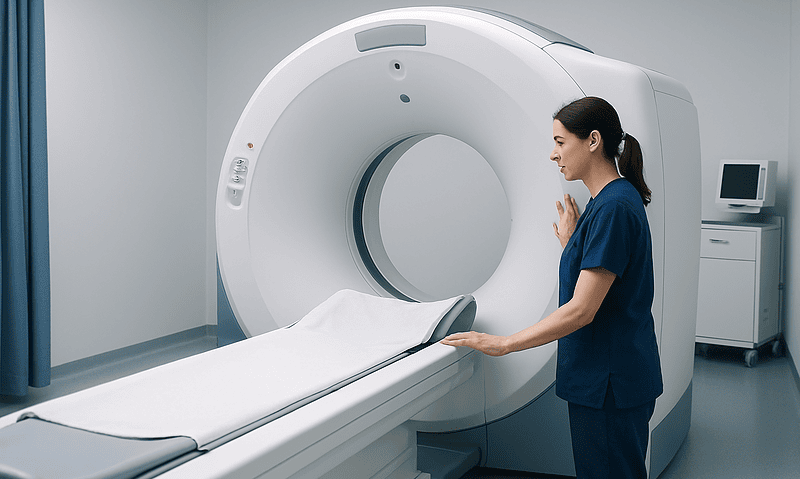
Imaging is reserved for situations where the story does not fit. A new headache pattern after age 50, aura that includes weakness, headaches that wake someone from sleep, or an abnormal neurological examination are the kinds of findings that prompt a scan (Mayo Clinic). For a typical migraine history with a normal examination, most guidelines do not recommend imaging, and a neurologist will usually explain why.
The treatment half spans several layers. Acute treatment aims to stop an attack once it begins. Preventive treatment aims to reduce how many attacks happen at all. Alongside both sit lifestyle factors, sleep regularity, hydration, meal timing, and the careful management of pain reliever use, which can itself cause headache when overused.
Neurologists also decide what is appropriate for the individual. Someone with migraine and high blood pressure may be steered toward preventives that address both. Someone planning a pregnancy needs a different conversation. A patient whose main burden is the postdrome rather than the pain may benefit most from preventive rather than acute strategies.
Within neurology, some clinicians focus specifically on headache medicine. For complex or treatment-resistant cases, your neurologist may refer onward to that subspecialty. The referral pathway, like every other decision here, rests with the treating team.
The chronic migraine definition that changes the plan
Episodic and chronic migraine are not two intensities of the same thing. They are categorised by frequency, and the cut-off is specific: headache on 15 or more days a month for more than three months, with migraine features on at least 8 of those days (Mayo Clinic). Below that line, migraine is called episodic.
Crossing it matters for three reasons. First, some preventive treatments are studied and approved specifically for chronic migraine; a neurologist will know which apply. Second, chronic migraine is more likely to be entangled with medication overuse, sleep disturbance, mood disorders and neck pain, each of which needs its own attention. Third, the longer someone sits in the chronic range, the harder the pattern tends to be to reverse, which is a strong argument for not waiting.
The transition from episodic to chronic rarely announces itself. More often, attack-free days quietly shrink. The headache between attacks becomes a dull background that people stop counting because it is not “a migraine.” That is precisely why a diary is so useful: it catches the drift before the person does.
A diary need not be elaborate. For each day, note whether headache was present, whether it had migraine features, whether you took anything for it, and what the day cost you. Smartphone apps work, as does a paper calendar. Bring three months of it to any appointment. Specialists routinely say that a completed diary is the most useful object a patient can carry into the room.
If your diary already shows headache on roughly half of days, the definition has been met, and that fact alone typically warrants a conversation about specialist care.
Why disability matters more than the pain score
Ask someone with migraine to rate the pain and you get one number. Ask what the attacks cost them last month and you get the real picture: the cancelled school pick-up, the presentation given through a fog, the Saturday spent in a dark room while the family went out.

The World Health Organization identifies migraine as one of the leading causes of disability worldwide, particularly among people in their most productive working years (WHO). Disability, in this context, has a specific meaning: days on which usual activities were missed entirely, plus days on which productivity dropped by half or more.
Clinicians use structured questionnaires to measure this. The commonly used tools count lost or reduced days across work, housework and social life over a recent three-month window, then sort the result into bands from little or no disability to severe. Your doctor may ask you to complete one before a referral, and a neurologist will often repeat it to judge whether treatment is working.
The point of measuring disability is that it reframes the decision. A person with three attacks a month, each of which wipes out two full days and a foggy third, carries more burden than someone with eight brief attacks that respond to a single tablet taken early. Frequency alone would rank them the wrong way round.
Disability also captures the postdrome, which pain scores miss entirely. Many people describe the day after an attack as their least functional, even though the pain has gone. Counting that day honestly is part of understanding your own migraine, and it is information a neurologist will want.
What actually happens at a neurologist appointment for migraine
The first visit is mostly conversation. Expect to spend much of it describing attacks in detail: when they started in life, what an average one looks like from first warning to recovery, what makes them worse, what has helped, and what the pattern has done over the past year. A neurologist is building a timeline and checking it against diagnostic criteria at the same time.
Bring your diary and a list of everything you have taken for headache, including over-the-counter products and supplements, with roughly how often. Bring any prior imaging reports. Note family history, since migraine runs strongly in families (NIH NINDS).
A neurological examination follows. It is brief and painless: checking eye movements, visual fields, facial symmetry, limb strength, reflexes, coordination and walking. The purpose is to confirm that nothing points toward another cause. A normal examination alongside a typical history is reassuring and usually means imaging is not needed.
From there, the neurologist will usually explain the diagnosis, including whether it is episodic or chronic migraine, with or without aura, and whether medication overuse is contributing. Then comes a plan, which generally has three strands: an acute strategy for stopping attacks, a decision about whether preventive treatment is appropriate, and the non-drug foundations of sleep, meals, hydration and exercise.
You may leave with a follow-up appointment scheduled several weeks out, because preventive treatments take time to show effect and the diary has to run long enough to judge them. Ask how to reach the team if something changes before then.
Who is usually referred first, and who is usually asked to wait
Referral is not a reward for suffering. It is a tool, and it is most useful for specific situations. People who tend to be seen promptly include those with chronic migraine by definition, those whose aura involves weakness, speech difficulty or symptoms lasting more than an hour, those who have tried two or more preventive treatments in primary care without benefit or with intolerable side effects, those with suspected medication overuse headache, and anyone whose diagnosis is unclear (NHS).
People living with other conditions that complicate treatment also move up the list: cardiovascular disease, pregnancy or planned pregnancy, mood disorders, epilepsy, or a history of stroke. In each case, the choice of medicine is narrower and the stakes of getting it right are higher.
Who is usually asked to wait? Someone with fewer than four or five migraine days a month whose attacks respond to acute treatment taken early. Someone who has not yet tried a first-line preventive in primary care, when one is clearly indicated. Someone who has not kept a diary long enough for anyone to see the pattern. In these cases, “wait” rarely means “do nothing”; it means give the primary care plan a fair trial, typically a few months, and come back with data.
Waiting can feel like dismissal. It is not. Specialists depend on primary care doing this groundwork, and the person who arrives with three months of diary and a documented trial of one preventive will get far more out of the appointment than the person who arrives with a vague sense that things are bad.
Whatever your situation, the decision to refer sits with your treating clinician, who can weigh factors this article cannot see.
Should you see a neurologist for headaches that are not migraine?
Sometimes, yes. Migraine is the headache condition most likely to need specialist input, but it is not the only one, and a neurologist for headaches of any kind is appropriate when the pattern is unusual, severe or unresponsive.
Cluster headache is the clearest example. It causes attacks of intense one-sided pain around the eye, lasting from a quarter of an hour to three hours, often with a watering eye or blocked nostril on the same side, and typically arriving in bouts at the same time each day. It is frequently misdiagnosed as migraine or sinus trouble for years. Because the treatments differ substantially from those for migraine, an accurate diagnosis changes everything (Cleveland Clinic).
Frequent tension-type headache that has become near-daily, headache triggered reliably by coughing, straining or exertion, headache that is always worse lying down or that wakes someone from sleep, and any headache in someone with a weakened immune system or a history of cancer also warrant specialist review. None of these is automatically sinister, but each sits outside the typical migraine pattern and deserves a closer look.
Medication overuse headache, discussed in its own section below, often masquerades as migraine or tension-type headache that is “just getting worse.” It is one of the commonest reasons for referral.
Conversely, an occasional tension-type headache that responds to rest, hydration and a simple pain reliever does not need a neurologist. Nor does a headache clearly tied to a cold, a hangover or a missed meal. The principle is the same as for migraine: frequency, disability, red flags and treatment failure are the signals that justify a specialist’s time.
How neurologists treat migraine: what the medicines actually do
Treatment divides into stopping attacks and preventing them. What follows describes mechanisms and typical timelines only; which option fits you, and whether to start, change or stop anything, is a decision for your prescribing clinician.
Acute treatments act during an attack. Simple anti-inflammatory pain relievers reduce the inflammatory signalling around blood vessels in the covering of the brain. Triptans, a migraine-specific class, act on serotonin receptors to calm overactive pain pathways in the trigeminal nerve and narrow dilated vessels; they work best taken early and are generally avoided in people with cardiovascular disease (Mayo Clinic). A newer class blocks a nerve-signalling protein called calcitonin gene-related peptide, or CGRP, which rises sharply during attacks. Anti-nausea medicines are often paired with any of these.
Preventive treatments are taken regularly to lower attack frequency. Several were developed for other conditions, including certain blood pressure medicines, anti-seizure medicines and antidepressants, and were later found to reduce migraine days. Monoclonal antibodies against CGRP or its receptor were designed specifically for migraine prevention. For chronic migraine, injections of botulinum toxin into scalp and neck muscles are an established option. Guidance from the NHS notes that preventive medicines may take several weeks before they begin to work (NHS), and specialists commonly judge a preventive over two to three months before deciding.
Non-drug approaches sit alongside. Neuromodulation devices stimulate nerves through the skin to interrupt attack pathways. Cognitive behavioural therapy, relaxation training and regular aerobic exercise have supporting evidence for reducing frequency. None of these replaces the basics of regular sleep and meals.
Every option carries side effects and trade-offs, and the honest expectation is fewer and milder attacks rather than none at all.
What the first weeks and months after referral usually look like
The pace surprises some people. Migraine care is slow by design, because judging a preventive requires months of diary data, and rushing between treatments produces noise rather than answers.
In the first week or two after a specialist visit, the usual tasks are practical: starting the diary properly if it was not already running, picking up any newly prescribed treatment and learning when to take it, and adjusting how often existing pain relievers are used if overuse was identified. Side effects from a new preventive, when they occur, often appear in this window and frequently settle; your clinician will tell you which ones warrant a call.
Weeks three to eight are the quiet stretch. Attacks may not change much yet. The NHS notes that preventive medicines can take several weeks to begin working (NHS), and a diary that still looks grim at week four is not a verdict. What matters is the trend across the full trial.
Around the two- to three-month mark comes the first meaningful review. The neurologist compares your current monthly headache days and disability score with the baseline. A reduction of about half in migraine days is a common benchmark that specialists use to call a preventive worthwhile, though the definition of success is personal: some people value fewer attacks, others value shorter or milder ones, and the plan is adjusted accordingly.
If the first preventive has not helped, the next step is usually another trial, not another referral. Several months may pass before the right combination emerges. That timeline can be dispiriting, which is why keeping the diary, noting small gains and staying in contact with the team between appointments make a measurable difference to how the process feels.
Medication overuse headache: the trap that sends many people to a neurologist
There is a cruel irony in migraine treatment. The pain relievers that stop an attack can, if used too often, cause more headache. Specialists call this medication overuse headache, and it is one of the most common reasons an episodic migraine becomes chronic.
The mechanism is not fully understood, but the pattern is consistent. Frequent exposure to acute pain medicines appears to sensitise the brain’s pain-processing networks, lowering the threshold for the next headache. The person takes more medicine, the headache becomes more frequent, and the cycle tightens. The headache is typically a dull, daily or near-daily background with migraine flares on top.
Thresholds are specific. Mayo Clinic describes the risk as using simple pain relievers on more than 15 days a month, or migraine-specific medicines and combination products on more than 10 days a month, for more than three months (Mayo Clinic). The count is days, not tablets, and it includes over-the-counter products that many people do not think of as medicine at all.
Recognising the pattern is where a neurologist earns their keep, because the treatment is counterintuitive: reducing or stopping the overused medicine, under supervision, while a preventive is introduced. Headaches often worsen before they improve, and the early weeks can be hard. People need to know this in advance, and they need a plan for the bad days that does not simply reach for the same drawer.
Never make this change on your own. Some medicines must be reduced gradually, and the choice of what to use instead depends on your overall health. Your clinician will design the taper and the support around it. What you can do today is count honestly. If the number of medicine days in your diary is creeping past ten a month, that is worth a conversation, with or without a referral.
What people often get wrong about when to see a neurologist for migraine
“I need a scan to be sure it is migraine.” Migraine is diagnosed from the history and examination. A normal scan does not confirm migraine, and an abnormal one would point to something else. Neurologists order imaging when the pattern is atypical or the examination is abnormal, not as a routine step (NIH NINDS).
“Neurologists are only for strange symptoms.” Frequency and disability are referral reasons in their own right. A person with entirely typical migraine on twelve days a month is a stronger candidate for specialist care than someone with a single unusual attack that resolved.
“If pain relievers still work, I am fine.” Acute treatment working is good news, but it says nothing about frequency, and taking it often enough can create the overuse cycle described above. The NHS threshold for discussing prevention, more than five migraine days a month, applies even when attacks are controllable (NHS).
“Migraine is just a bad headache.” It is a neurological condition with a prodrome, often an aura, and a postdrome, affecting sensory processing, digestion and cognition. Treating it as a headache alone misses most of what makes it disabling.
“A specialist will make it go away for good.” Migraine is a long-term condition in most people. The realistic goal is fewer, shorter and milder attacks, and many people achieve that. Promises of permanent resolution are not supported by evidence.
“I should wait until it is unbearable.” Evidence on chronic migraine suggests the opposite: the earlier the frequency drift is caught, the easier it tends to be to reverse. Waiting for a crisis makes treatment harder, not more justified.
“Only women get migraine.” Migraine is more common in women, but it affects men and children too, and it is often underdiagnosed in both groups.
Questions to ask your care team
A specialist appointment goes faster than anyone expects. Writing questions down beforehand turns a nervous half hour into a useful one. These are the ones headache clinicians most often wish patients had asked.
- Which type of migraine do I have, and is it episodic or chronic by your count?
- Does my pattern suggest medication overuse? If so, what is the plan for reducing it, and what should I expect in the first weeks?
- What is the goal of the preventive you are suggesting, and how will we judge whether it has worked?
- How long should I give it before we decide, and when is our follow-up?
- What side effects should prompt a call, and what can I safely wait and watch?
- Are there interactions with my other medicines or conditions that I should know about?
- What is my acute plan: what should I take, how early, and what is the maximum number of days per month before I am in overuse territory?
- Do you recommend any non-drug approaches, such as neuromodulation, behavioural therapy or an exercise plan, alongside the medicine?
- Is imaging needed in my case, and if not, why not?
- If I am planning a pregnancy, how does that change the plan?
- How do I contact the team between appointments if the pattern changes?
- Which symptoms, if they appeared, would mean I should go to an emergency department rather than wait for you?
Ask also what the team expects of you. Most will want a continued diary, honest reporting of medicine days, and patience with the trial-and-review rhythm. Knowing those expectations up front prevents the sense, common in long-term conditions, that nothing is happening between visits.
Finally, if anything in the plan does not make sense, say so in the room. Clinicians would rather clarify than have a treatment abandoned silently at home.
When to call your doctor: red-flag signs
Everything above concerns routine referral: a planned appointment weeks away. Some headaches cannot wait for that. The following signs point to a possible cause other than migraine and need urgent assessment, usually in an emergency department (Mayo Clinic; NHS).
Call emergency services or go to an emergency department if you have:
- A sudden, severe headache that reaches its peak within seconds to a minute, often described as the worst headache of your life
- Headache with fever, a stiff neck, a rash, confusion, seizures, double vision or difficulty staying awake
- Headache following a blow to the head, especially with vomiting or drowsiness
- Headache with weakness or numbness on one side of the body, drooping of the face, slurred speech or trouble understanding words, even if these pass within minutes
- Sudden loss of vision, or an aura that lasts more than an hour
Contact your doctor promptly, within days, if you notice:
- A new type of headache after age 50, or a marked change in your usual migraine pattern
- Headache that is steadily worsening over days or weeks despite treatment
- Headache that wakes you from sleep, or that is reliably worse when lying down, coughing or straining
- A first-ever aura, or aura symptoms that differ from your usual ones
- Headache during pregnancy or shortly after childbirth, particularly with swelling or high blood pressure
- Headache alongside a weakened immune system, a history of cancer or unexplained weight loss
None of these signs means something serious is certain. Many turn out to be migraine after all. The point is that a clinician, not a search engine, needs to make that call, and quickly. When in doubt, err on the side of being seen.
Frequently asked questions
What symptoms should you see a neurologist for?
For migraine, the strongest reasons are frequency and disability rather than any single symptom: attacks on five or more days a month, regular lost days, failure of treatments started in primary care, or pain reliever use on more than ten days a month. Aura involving weakness or speech difficulty, aura lasting over an hour, or a change in your usual pattern also warrant specialist review, while sudden severe headache needs emergency care.
Do neurologists diagnose migraines?
Yes. Neurologists diagnose migraine clinically by matching your attack history against established criteria and performing a neurological examination. There is no blood test or scan that shows migraine; imaging is ordered only when the pattern is atypical or the examination is abnormal. Many cases are diagnosed in primary care, and a neurologist confirms or refines the diagnosis when the picture is unclear or the condition is proving hard to treat.
What is the difference between a headache and a migraine?
Migraine is a neurological condition with phases, not just a pain. Attacks last 4 to 72 hours untreated, are often one-sided and throbbing, worsen with movement, and bring nausea or sensitivity to light and sound. Tension-type headache presses rather than pulses, usually on both sides, without nausea, and most people can carry on with their day. The pattern, not the pain intensity, is what distinguishes them.
Can migraine go away permanently?
For most people migraine is a long-term condition that can be managed rather than removed. Frequency often changes across life, sometimes easing with age or after menopause, but no treatment reliably ends it for good. The realistic and well-evidenced goal is fewer, shorter and milder attacks, which many people achieve with the right combination of preventive treatment, acute plan and lifestyle foundations agreed with their clinician.
How many migraines a month is too many?
The NHS suggests seeing a doctor when migraine occurs on more than five days a month, even if the attacks are controllable, because preventive treatment may help. Headache on 15 or more days a month for over three months meets the definition of chronic migraine and usually calls for specialist input. Counting lost days alongside headache days gives the most useful picture.
What does a neurologist do for migraine at the first visit?
The first visit is mostly a detailed history: when attacks began, what a typical one looks like from warning to recovery, what has helped, and how often you take medicine. A brief neurological examination follows to rule out other causes. You usually leave with a confirmed diagnosis, a plan covering acute and preventive treatment, and a follow-up several weeks out so the plan can be judged against your diary.
Will a neurologist order an MRI for migraine?
Usually not, if your history is typical and your examination is normal, because imaging cannot confirm migraine and rarely changes management in that situation. A scan is considered when the pattern is unusual: new headache after age 50, aura with weakness, headache that wakes you from sleep, worsening despite treatment, or any abnormal finding on examination. Your neurologist will explain the reasoning either way.
How long do migraine preventive medicines take to work?
The NHS notes that preventive medicines may take several weeks to begin working, and specialists commonly assess a preventive over two to three months of diary data before deciding whether it is helping. A diary that still looks poor at one month is not a verdict. If the first preventive does not help, the usual next step is a trial of another, guided by your prescribing clinician.
What is medication overuse headache and how do I know if I have it?
Medication overuse headache is a near-daily headache caused by taking acute pain medicines too often, which sensitises the brain’s pain pathways. The risk threshold is simple pain relievers on more than 15 days a month, or migraine-specific and combination products on more than 10, for over three months. If your diary shows medicine days creeping toward those numbers, raise it with your doctor rather than changing anything on your own.
Can I see a neurologist for headaches that are not migraine?
Yes, when the pattern is unusual, severe or not responding. Cluster headache, with intense one-sided attacks around the eye in daily bouts, is frequently mistaken for migraine and treated differently. Near-daily tension-type headache, headache triggered by coughing or exertion, headache worse lying down, and headache in someone with a weakened immune system or cancer history also justify specialist review.
References
- Migraine (NHS)
- Migraine (NIH National Institute of Neurological Disorders and Stroke)
- Headache disorders fact sheet (WHO)
- Migraine (MedlinePlus)
This article is for general information only and is not a substitute for professional medical advice. Please consult a qualified doctor about your individual situation.

More from the Blog
What Does the Screening Injection Before Baclofen Pump Implantation Show?
A baclofen pump screening trial shows whether a person's spasticity loosens when a small test dose of baclofen is placed directly into the spinal…

Mealtime Support for Someone With Dysphagia: Positioning, Pacing and Swallowing Safety
Mealtime support for dysphagia means helping someone eat and drink in the way their swallowing assessment recommends: sitting fully upright with the head slightly…

What Families Can Do Between Therapy Sessions to Support a Child With Cerebral Palsy
Between therapy sessions, families support a child with cerebral palsy mainly by folding the therapist's goals into daily routines: planned positioning, regular stretching, supported…

Can Cognitive Stimulation and Nutrition Help in Alzheimer’s Disease? What Care Plans Include
Cognitive stimulation, usually delivered as structured group sessions, produces small but measurable gains in thinking and quality of life for people with mild to…

Who Is a Candidate for Deep Brain Stimulation in Parkinson’s Disease? How Teams Decide
A person is usually considered a candidate for deep brain stimulation in Parkinson's disease when the diagnosis is confirmed, symptoms still respond well to…

How Can Family Help During and After a Seizure? A Caregiver’s Guide to Epilepsy Care
Helping someone during a seizure means keeping them safe, not stopping the seizure. Ease them to the floor, cushion the head, move hard objects…