

Zinc, Boron and Vitamin D for Testosterone: Which Deficiencies Matter and Which Claims Do Not

Key Takeaways
- The 1996 zinc study behind most testosterone claims showed recovery in deficient men, not a rise in men with normal zinc levels.
- The viral boron testosterone figure comes from an uncontrolled one-week study of eight men, and boron is not an established essential nutrient.
- Randomized trials show vitamin D supplementation does not raise testosterone in men who already have adequate levels.
- A large NIH-funded randomized trial found folic acid plus zinc did not improve semen quality or live births in men seeking fertility care.
- Oysters contain more zinc per serving than any other common food, and zinc from animal foods is absorbed about twice as efficiently as zinc from grains and beans.
- Chronic high zinc intake depletes copper and can cause anemia and nerve damage, so every one of these nutrients has an NIH upper intake level.
Zinc, boron and vitamin D support testosterone only when a man is genuinely deficient in them. Small randomized trials suggest that correcting a true zinc or vitamin D deficiency can modestly restore levels, while men with normal levels see no meaningful rise. Boron evidence rests on a handful of tiny, short studies. None of the three replaces a medical evaluation for low testosterone.
The video is forty seconds long. A man in a gym parking lot holds up three bottles, one at a time, and promises that together they will lift testosterone by a third in a week. As of spring 2026, that clip and hundreds like it have pushed the phrase “zinc for men” back toward the top of men’s health searches, with boron and vitamin D riding alongside as a self-styled “testosterone stack”.
The timing is not random. A 2024 Endocrine Society vitamin D guideline, a 2024 systematic review on zinc and colds, and fresh updates to the NIH nutrient fact sheets all gave creators something to quote, usually out of context. Meanwhile, the real question men are asking is quieter: is any of this true for me?
The honest answer has two halves. Deficiency matters, and it is more common than many men assume. Supplementing past sufficiency, however, does almost nothing for hormones. This piece separates the two.
What changed recently to put zinc, boron and vitamin D back in the spotlight
Three developments collided. In June 2024, the Endocrine Society published a clinical guideline on vitamin D that recommended against routine blood testing in healthy adults and against supplementing beyond standard recommended intakes for most people under 75. Coverage from Harvard Health framed it plainly: the decade-long hope that vitamin D would improve almost everything had not survived large randomized trials. Randomized trials are studies that assign people to a supplement or placebo by chance, which is the strongest way to prove cause and effect.
Also in 2024, a Cochrane systematic review of zinc for the common cold concluded that zinc might shorten a cold by roughly two days, but graded that evidence as low certainty and noted frequent side effects such as nausea and a metallic taste. Creators clipped the first half of that sentence.
The third shift came from the NIH Office of Dietary Supplements, which refreshed its professional fact sheets on zinc (2022), boron (2022) and vitamin D (2024). The boron sheet is notable for what it does not say: it lists testosterone among areas where “more research is needed” and does not treat boron as an essential nutrient at all.
What has not changed is the underlying science. No new randomized trial in healthy men has shown that any of these three nutrients raises testosterone above a man’s own baseline. The viral claims recycle studies from 1996 and 2011, some involving fewer than ten participants. Knowing the dates matters, because a confident caption can make a 30-year-old pilot study sound like last week’s breakthrough.
What testosterone actually responds to, and why nutrients are a small lever
Testosterone is the main male sex hormone, made mostly in the testes under instruction from the brain. The hypothalamus signals the pituitary gland, which releases luteinizing hormone; that hormone tells the testes to produce testosterone. When testosterone falls below the laboratory reference range on two separate morning blood tests, together with symptoms, clinicians call it hypogonadism, which simply means the testes are underperforming.

Levels drift with age, roughly 1 percent a year after a man’s thirties according to Cleveland Clinic, but the steeper drops usually come from elsewhere. Obesity lowers testosterone because fat tissue converts it into estrogen through an enzyme called aromatase. Short sleep does the same within days. Heavy alcohol use, uncontrolled diabetes, chronic illness, opioid pain medicines and long-term steroid tablets all suppress the hormone far more reliably than any mineral shortfall. If you take a medicine you suspect is involved, the right move is a conversation with the prescribing clinician, never a change on your own.
Where do nutrients fit? Zinc is a cofactor for enzymes involved in testosterone synthesis, vitamin D receptors sit on testicular cells, and boron may influence how the body handles both. Those are plausible mechanisms. A mechanism tells you something could happen; it does not tell you how much.
Think of the hormone system as a thermostat. A severe deficiency is like a cracked window: fix it and the room warms back to the setting. Adding more insulation to an already sealed house does not push the thermostat higher. That distinction, deficiency versus surplus, runs through every claim in the rest of this article.
What does zinc do for men? The benefits that hold up
Zinc is a trace mineral the body cannot make or store in any quantity, so it needs a steady supply from food. It supports hundreds of enzymes, which the NIH Office of Dietary Supplements describes as essential for immune function, protein and DNA synthesis, wound healing, cell division and the senses of taste and smell. Those roles are not controversial; they are textbook biochemistry confirmed in people with documented deficiency.
For men specifically, the prostate and semen contain some of the highest zinc concentrations in the body. Sperm need zinc to mature and to keep their DNA stable, and men with severe deficiency can develop low sperm counts and delayed sexual development if the shortfall begins in adolescence. That is observational and clinical evidence, meaning it comes from watching patterns in patients rather than from controlled experiments.
The leap from “zinc is needed” to “extra zinc improves fertility” is where the data turn. A large NIH-funded randomized trial published in 2020 gave men from couples seeking fertility care a daily folic acid plus zinc supplement or a placebo for six months. Semen quality did not improve, and live birth rates were identical. That trial involved more than 2,000 men, which makes it far more trustworthy than the small observational studies that top-ranking articles lean on.
So the real benefits of zinc for men come down to this: adequate intake keeps immune defenses, wound repair, taste and sperm production working normally. Men who are deficient and restore their intake can expect those functions to recover. Men who are already replete should expect their zinc status to stay normal, which is the whole point, and nothing more.
Does zinc for men raise testosterone? What the trials show
The claim traces to a 1996 study that is quoted far more often than it is read. Researchers placed a small group of young men on a diet deliberately low in zinc for roughly five months and watched testosterone fall substantially. In the same report, older men with mild zinc deficiency took a supplement for six months and saw their testosterone roughly double from a low starting point. Fewer than 50 men took part across both arms.
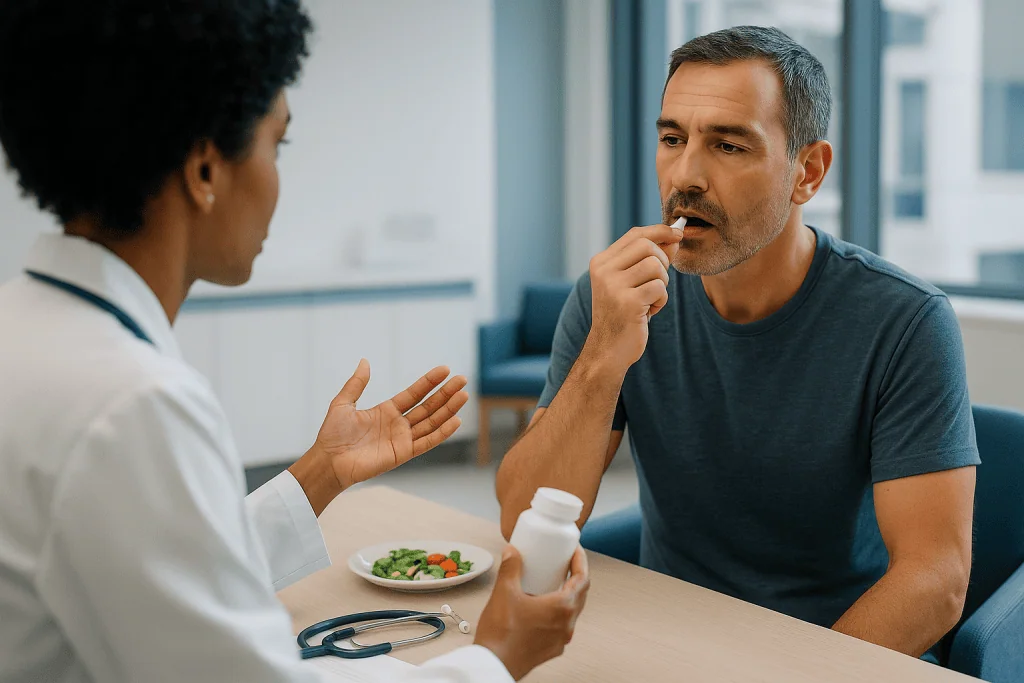
Read carefully, the study says deficiency lowers testosterone and correcting deficiency restores it. It does not say that zinc raises testosterone in men who already have enough, because no such group was tested. A 2006 study in wrestlers during an intense training block is often added as backup, but it was small, short and did not measure zinc status at the start.
Since then, trials in men with normal zinc levels have been inconsistent at best, and systematic reviews published in the early 2020s describe the overall evidence as low quality with high risk of bias. The NIH zinc fact sheet does not list testosterone among the uses with meaningful support.
Grading this honestly: there is low-certainty randomized evidence that correcting a genuine zinc deficiency helps testosterone recover toward normal, and there is no reliable evidence that supplementing replete men raises it. A reasonable analogy is a car low on oil. Topping it up restores performance; overfilling does nothing useful and can cause problems.
If a man wonders whether he is in the deficient group, the next sections explain who actually is. For most men eating a mixed diet in the United States, the answer is no.
Boron testosterone claims: how an eight-man study became a trend
Boron is a trace element found in fruit, nuts, legumes and coffee. The NIH Office of Dietary Supplements does not classify it as an essential nutrient for humans, which means there is no established daily requirement and no defined deficiency state. That alone should make a reader pause when a video calls boron “the missing mineral”.
The headline figure in those videos comes from a 2011 study of eight healthy men who took a boron supplement for one week. Free testosterone, the small fraction of the hormone not bound to carrier proteins, rose; estradiol, the main form of estrogen in men, fell; and a few inflammation markers dropped. The study had no placebo group and lasted seven days. Eight men without a comparison group is a case series, not a trial, and case series sit near the bottom of the evidence hierarchy.
A proposed mechanism exists. Boron appears to influence sex hormone-binding globulin, the protein that ties up testosterone in the bloodstream, and may slow the breakdown of vitamin D. Research in postmenopausal women in the late 1980s also found shifts in estrogen and testosterone with boron supplementation. Interesting, yes. Conclusive, no.
No randomized, placebo-controlled trial of adequate size has tested whether boron raises total testosterone in men or improves any outcome a man would notice: energy, muscle, libido or fertility. The NIH fact sheet lists hormone effects under areas needing more research and notes that most people already get boron from an ordinary diet.
Evidence grade: very low. The boron testosterone story is a hypothesis with a compelling anecdote attached. It deserves a real trial, not a bottle on the counter.
Vitamin D testosterone link: correlation is not causation
Vitamin D is both a nutrient and a hormone precursor. Skin makes it from sunlight, the liver converts it to 25-hydroxyvitamin D (the form measured in blood tests), and the kidneys activate it. Receptors for the active form sit on cells in the testes, which is why the question of a vitamin D testosterone link is biologically fair.
Observational studies, which track groups of people over time without assigning any treatment, consistently find that men with lower vitamin D also tend to have lower testosterone. A 2010 European study of about 2,000 men showed both hormones rising and falling together across the seasons. The problem is confounding: men who spend time outdoors are also more active and leaner, and body fat lowers both vitamin D and testosterone independently. Correlation here is expected even if vitamin D does nothing to the testes.
Randomized trials tell a more useful story. A small 2011 trial in overweight men who were vitamin D deficient found a modest rise in testosterone after a year of supplementation. Larger trials that followed, in men with normal or only mildly low vitamin D, found no change at all. Meta-analyses, which pool results from multiple trials, conclude that vitamin D supplementation does not raise testosterone in men who are already sufficient.
That pattern mirrors zinc exactly. Deficiency may suppress the hormone a little; repletion may restore it a little; surplus does nothing. The 2024 Endocrine Society guideline adds a practical layer by advising against routine vitamin D testing in healthy adults, which means a man’s decision to test or supplement belongs in a conversation with his clinician, not in a comment section.
What the evidence actually says, graded nutrient by nutrient
Medical evidence comes in tiers. At the top sit large randomized controlled trials and the meta-analyses that combine them. Below those are smaller randomized trials, then observational cohort studies, then case series and mechanistic laboratory work, with expert opinion at the base. A claim’s strength depends on where its best study lands, not on how often it is repeated.
Applying that hierarchy to the testosterone question gives a clear picture.
Zinc: low-certainty randomized evidence that correcting true deficiency restores testosterone; no reliable evidence of benefit in replete men; strong evidence from a large randomized trial that supplementation does not improve semen quality or live births in men seeking fertility care.
Boron: very-low-certainty evidence from a single uncontrolled one-week study in eight men, plus older small studies in women; no adequately powered randomized trial in men; not an established essential nutrient.
Vitamin D: moderate-certainty randomized evidence of no effect on testosterone in men with normal levels; low-certainty evidence of a modest rise in men who were deficient and overweight; consistent observational correlation that is likely confounded by body fat and outdoor activity.
A fourth category deserves mention: the “stack” itself. No study has tested zinc, boron and vitamin D together against placebo for testosterone. Any claim about the combination is extrapolation, not evidence.
What this means in practice is almost reassuring. The nutrients are safe at dietary levels, they matter for health in ways unrelated to hormones, and fixing a real deficiency is sensible. The error is not in caring about them; it is in expecting a hormonal result that the trials have repeatedly failed to deliver. When a reader sees a percentage in a headline, the first question should be: how many men, for how long, compared with what?
Zinc vs boron vs vitamin D for testosterone: a side-by-side summary
Readers often want the three nutrients lined up against each other, so here they are, with the kind of evidence that supports each claim and who could plausibly benefit. The grades follow the hierarchy described above: randomized trials outrank observational data, which outrank mechanism and opinion.
| Nutrient | Essential for humans? | Best evidence on testosterone | Who might see a change | Evidence grade | Main risk of excess |
|---|---|---|---|---|---|
| Zinc | Yes, trace mineral | Small 1996 randomized study; recovery in deficient men only | Men with documented deficiency (malabsorption, restricted diets, heavy alcohol use) | Low | Nausea, copper deficiency, reduced immune function with chronic high intake |
| Boron | Not established | Uncontrolled one-week study in eight men | Unknown; no deficiency state defined | Very low | Nausea, digestive upset, skin irritation at high intakes |
| Vitamin D | Yes, nutrient and hormone precursor | Multiple randomized trials; no effect in replete men, possible small rise in deficient men | Men with confirmed deficiency, especially with obesity or little sun exposure | Moderate (for no effect when replete) | Hypercalcemia from supplements, kidney stones |
Two things stand out. First, the strongest evidence in the table is negative: vitamin D trials are good enough to say with reasonable confidence that replete men gain nothing hormonally. Second, every “positive” entry depends on deficiency. The table is, in effect, an argument for finding out whether a deficiency exists rather than assuming one.
Also notice the far-right column. Each nutrient has a tolerable upper intake level set by the NIH, and the risks listed there arise from supplements, not from food or sunlight. A man can eat oysters every week without approaching those limits; the same cannot be said of stacking several products.
Which deficiencies actually matter, and which men are at risk
Severe zinc deficiency is uncommon in the United States, but mild shortfalls cluster in predictable groups. The NIH Office of Dietary Supplements lists people with digestive conditions that impair absorption, such as Crohn’s disease, ulcerative colitis and celiac disease, along with men who have had bariatric surgery. Vegetarians and vegans absorb less zinc because plant foods contain phytates, compounds that bind minerals in the gut. Heavy alcohol use increases urinary zinc losses and reduces absorption. Sickle cell disease, chronic kidney disease and older age round out the list.
Vitamin D inadequacy is far more widespread. Roughly one in four American adults has blood levels below the range considered adequate for bone health, according to national survey data summarized by the NIH. Risk rises with darker skin at northern latitudes, indoor work, obesity (vitamin D is stored in fat and becomes less available), older age, malabsorption and liver or kidney disease. The NHS advises that everyone in the UK consider a supplement during autumn and winter, when sunlight is too weak to make vitamin D; that is a public health position for a cloudy island, and men elsewhere should ask their own clinician what applies.
Boron has no recognized deficiency state, so the question of who is “at risk” cannot be answered.
Testing complicates matters. A blood zinc level is a poor measure of body stores and only drops once deficiency is significant, so clinicians often judge zinc status from diet history, risk factors and symptoms rather than a number. Vitamin D testing is reliable, yet the 2024 guideline discourages routine screening of healthy adults because treating by test result has not improved outcomes in trials. Either way, whether to test is a decision for the man and his doctor, who can weigh risk factors against the cost of chasing numbers.
What food is highest in zinc, and where boron and vitamin D come from
Oysters sit alone at the top. A single serving delivers more zinc than any other common food, by a wide margin, which is why they appear in every NIH and Mayo Clinic food table. Red meat follows, then crab and lobster, pork, dark-meat poultry, and fortified breakfast cereals. Among plant foods, pumpkin seeds, cashews, chickpeas, lentils and oatmeal contribute meaningfully, though less of their zinc is absorbed because of phytates. Soaking, sprouting and fermenting grains and legumes lower phytate content and improve absorption, a useful detail for men who eat little meat.
Bioavailability, meaning the share of a nutrient the body actually absorbs, explains why diet matters more than totals. Zinc from animal foods is absorbed roughly twice as efficiently as zinc from grains and beans. A man eating a mixed Western diet typically meets his needs without trying; a man on a strict plant-based diet needs more total zinc to land in the same place, which is why dietitians, not video creators, are the right people to assess his intake.
Vitamin D is scarce in food. Fatty fish such as salmon, mackerel and sardines lead, followed by egg yolks, some mushrooms exposed to ultraviolet light, and fortified milk, plant milks and cereals. For most men, skin exposed to midday sun remains the largest natural source, with the usual caution about skin cancer risk.
Boron, meanwhile, is almost entirely a plant story: prunes, raisins, avocados, peanuts, almonds, beans and coffee. Men who eat fruit and nuts regularly already consume more boron than the participants in the famous eight-man study were given from food alone.
The pattern across all three is familiar: a varied diet with seafood, legumes, nuts and some sunlight covers them without a single capsule.
Does zinc help with immune function and colds? The honest version
Yes, in a specific sense. Zinc is required for the development and activity of T cells, the white blood cells that coordinate immune responses, and for the barrier function of skin and gut lining. People with documented deficiency have measurably weaker immune responses and more infections, and restoring zinc intake reverses that. The World Health Organization recommends zinc as part of treatment for childhood diarrhea in low-income settings for exactly this reason, backed by randomized trials showing shorter illness duration.
Colds are a different question. The 2024 Cochrane review pooled trials of zinc lozenges or syrups started early in a cold and found they may shorten symptoms by about two days, but rated the evidence low certainty because trials were small, inconsistent and often poorly blinded. Side effects were common: nausea, stomach upset and an unpleasant metallic taste. Zinc did not prevent colds. The NIH notes that intranasal zinc products have caused permanent loss of smell, and they were pulled from the US market in 2009 after an FDA warning. The NIH COVID-19 treatment guidelines found insufficient evidence to recommend zinc for preventing or treating COVID-19.
So the fair summary for a healthy man reads like this: adequate zinc keeps immunity working as designed; taking extra when you are not deficient does not build a stronger immune system; and lozenges at the first sign of a cold are a reasonable thing to discuss with a pharmacist or doctor, with the understanding that the benefit is modest and uncertain.
The immune story and the testosterone story share a shape. Deficiency hurts, repletion helps, surplus adds nothing. That is not a disappointing conclusion; it is how essential nutrients work.
Common myths about the zinc, boron and vitamin D testosterone stack
Myth: the stack raises testosterone by about a third in a week. That number comes from the eight-man boron study, which measured free testosterone, had no placebo group and lasted seven days. No study has tested the three nutrients together.
Myth: most men are zinc deficient. Severe deficiency is rare in high-income countries. Mild shortfalls do occur in the risk groups described earlier, but a typical mixed diet supplies enough, and blood tests cannot reliably detect the mild end.
Myth: vitamin D is a hormone, so it must boost other hormones. Vitamin D’s active form behaves like a hormone in bone and calcium metabolism. That does not translate into raising testosterone, and multiple randomized trials in replete men found no change.
Myth: if a little helps, more helps more. Every one of these nutrients has an NIH tolerable upper intake level. Chronic high zinc intake depletes copper and can weaken immunity, the opposite of the intended effect.
Myth: a “normal” lab result is not “optimal”, so push levels higher. Laboratory ranges reflect healthy populations. There is no trial evidence that moving a normal testosterone or vitamin D value toward the top of the range improves energy, muscle or mood.
Myth: zinc improves sexual performance. Deficiency can lower libido through its effect on testosterone, but there is no reliable evidence that zinc treats erectile dysfunction in men with normal levels. Erectile difficulties more often signal vascular, metabolic or psychological issues that deserve a proper evaluation.
Myth: supplements replace testing. If symptoms suggest low testosterone, two morning blood tests ordered by a clinician answer the question. A supplement regimen that improves nothing can delay a diagnosis that matters.
Can too much zinc, boron or vitamin D cause harm?
At dietary levels, all three are safe. The problems appear with supplements, and they are well documented.
Zinc in excess causes nausea, vomiting, stomach cramps and diarrhea in the short term. Over weeks to months, high intake blocks copper absorption, and copper deficiency can lead to anemia, low white blood cell counts and nerve damage that may not fully reverse. Chronic surplus also lowers HDL cholesterol and, paradoxically, impairs immune function. Zinc interferes with the absorption of certain antibiotics, including quinolones and tetracyclines, and with some medicines used for rheumatoid arthritis. A man taking any prescription medicine should check with his pharmacist before adding zinc.
Boron toxicity is rare from food but has occurred from supplements and from boric acid exposure. Symptoms include nausea, vomiting, diarrhea, skin flushing and, at very high intakes, kidney effects. The NIH has set an upper intake level despite boron not being essential, precisely because excess is harmful.
Vitamin D excess from supplements leads to hypercalcemia, which means too much calcium in the blood. Early signs are nausea, poor appetite, constipation, excessive thirst and frequent urination; later, confusion, kidney stones and heart rhythm problems can follow. Sunlight cannot cause this because the skin self-regulates production, so the risk sits squarely with high-strength products, often taken for years on the strength of a single blood test.
Men on medicines for heart rhythm, blood pressure or kidney conditions, and anyone with a history of kidney stones, should treat supplement decisions as medical decisions. Side effects that persist, especially new nausea, unusual fatigue, tingling in the hands or feet, or changes in urination, warrant a call to a clinician rather than a change in dose on your own.
When to see a doctor about low testosterone or a suspected deficiency
Supplements are a poor substitute for a conversation, and some symptoms should prompt one soon. Cleveland Clinic and Mayo Clinic list the features of low testosterone as reduced sex drive, fewer or weaker erections including loss of morning erections, difficulty conceiving, persistent fatigue, low mood or irritability, loss of muscle mass, reduced body or facial hair, hot flashes and enlarged male breast tissue (gynecomastia). Shrinking testicles, unexplained anemia or a fracture from a minor fall also belong on the list, because bone and blood both depend on testosterone.
A few signs need prompt attention rather than a routine appointment: a new testicular lump or pain, a severe headache with vision changes (which can signal a pituitary problem), chest pain, or sudden swelling of one leg. Those are not nutrition questions.
For a suspected deficiency, see a doctor if you fall into a risk group, such as inflammatory bowel disease, bariatric surgery, a strict plant-based diet, heavy alcohol use or very limited sun exposure, and you have symptoms like frequent infections, slow wound healing, loss of taste or smell, hair loss, bone pain or muscle weakness. Diagnosis is clinical for zinc and lab-based for vitamin D; your clinician decides which tests make sense.
If testosterone is confirmed low on two morning tests, treatment options exist, including prescription testosterone therapy, and the decision about whether, when and how to treat belongs entirely to the treating clinician after weighing fertility plans, prostate and heart history, and the likely cause. Testosterone should never be obtained outside a prescription, and no supplement should be started, stopped or changed in place of that evaluation. The goal is not a higher number; it is an accurate answer.
Frequently asked questions
What are the benefits of zinc for men?
Adequate zinc keeps immune defenses, wound healing, taste, smell and sperm production working normally, and the prostate and semen hold some of the body’s highest zinc concentrations. Men who are genuinely deficient regain those functions when intake is restored. Men who already get enough from food should not expect added benefits from supplements, and the evidence does not support zinc for raising testosterone or improving sexual performance in replete men.
Does zinc increase testosterone?
Only in men who are deficient. A small 1996 randomized study showed testosterone fell when young men were deprived of zinc and recovered when deficient older men were supplemented. Trials in men with normal zinc levels have not shown a meaningful rise, and systematic reviews rate the evidence as low quality. Zinc supports the enzymes involved in testosterone production, but more zinc does not mean more hormone once needs are met.
Is the boron testosterone claim real?
It rests on very weak evidence. The widely shared result comes from a 2011 study of eight men who took boron for one week without a placebo comparison; free testosterone rose and estradiol fell. No adequately sized randomized trial has tested boron for testosterone in men, and the NIH lists the topic under areas needing more research. A hypothesis exists; proof does not.
Does vitamin D raise testosterone?
Not in men with normal vitamin D levels. Observational studies show the two hormones track together, but that largely reflects body fat and outdoor activity. Randomized trials in replete men found no change in testosterone, and meta-analyses agree. One small trial in overweight men who were deficient found a modest rise, so the vitamin D testosterone link may hold only when a real deficiency is corrected.
What food is highest in zinc?
Oysters, by a wide margin. Red meat, crab, lobster, pork and dark-meat poultry follow, along with fortified breakfast cereals. Plant sources include pumpkin seeds, cashews, chickpeas, lentils and oatmeal, though their zinc is absorbed less efficiently because of phytates. Soaking, sprouting or fermenting legumes and grains improves absorption, which matters most for men on plant-based diets.
Does zinc help with immune function?
Zinc is essential for T cells and barrier tissues, so deficiency weakens immunity and correcting it helps. For colds, a 2024 systematic review found lozenges started early may shorten symptoms by about two days, but graded that evidence low certainty with frequent side effects like nausea and metallic taste. Zinc does not prevent colds, and extra zinc does not strengthen a normally functioning immune system.
What are some good daily supplements for men?
For most men eating a varied diet, the honest answer is none in particular; food covers zinc, boron and usually vitamin D. Exceptions include men with malabsorption, strict plant-based diets, heavy alcohol use or very little sun exposure, who may benefit from targeted supplementation. Those decisions should follow an assessment by a clinician or dietitian, since more is not better and interactions with prescription medicines are real.
Should I get my testosterone tested before taking supplements?
If you have symptoms such as low libido, erectile changes, fatigue or infertility, yes, through a clinician. Low testosterone is diagnosed with two separate morning blood tests plus symptoms, and the cause matters as much as the number. Starting a supplement regimen instead can delay a diagnosis. Whether to test, what to test and what to do next are decisions for the treating doctor.
Can zinc improve sperm quality and fertility?
Only if a man is deficient. Severe zinc deficiency lowers sperm counts, and restoring intake helps. In men with normal status, a large NIH-funded randomized trial of folic acid plus zinc found no improvement in semen quality or live birth rates after six months. Men concerned about fertility should ask for a semen analysis and medical evaluation rather than relying on a mineral.
How long does it take for zinc to work?
In documented deficiency, immune and taste changes can begin to improve within weeks, while testosterone recovery in the 1996 study took several months. In men who are not deficient, there is no effect to wait for. Because high intake over weeks can deplete copper, any zinc supplement should be time-limited and reviewed with a clinician rather than continued indefinitely.
References
This article is for general information only and is not a substitute for professional medical advice. Please consult a qualified doctor about your individual situation.

More from the Blog

Testosterone Gel Side Effects: Transfer Risk, Skin Reactions and Monitoring
Testosterone gel side effects fall into three groups: effects on the person using it, such as acne, oily skin, fluid retention, breast tenderness, a…

Testosterone and Hair Loss: DHT, Genetics and Why High Testosterone Is Not the Cause
Testosterone itself does not cause hair loss, and men who bald do not typically have higher testosterone than men who keep their hair. Male…

Do Testosterone Boosters Work? What Trials Found, and the Side Effects Nobody Advertises
Most over-the-counter testosterone boosters do not raise testosterone in a meaningful or lasting way. In randomized trials, popular ingredients such as tribulus and D-aspartic…

Minoxidil for Beard Growth: Does It Work and What Are the Risks?
Minoxidil, a scalp hair-loss medicine, is not approved for the face, but one small randomized trial and many anecdotal reports suggest it can thicken…

Prolapsed Bladder: The Non-Surgical Options
A prolapsed bladder (cystocele) cannot be reversed without surgery, but many people manage it well non-surgically. Evidence-based options include supervised pelvic floor muscle training,…

Male Fertility Supplements: CoQ10, Zinc, Folate and What the Evidence Actually Supports
Male fertility supplements have mixed evidence. Small randomized trials suggest coenzyme Q10 and some antioxidant blends can modestly improve sperm concentration and motility, but…