Quick answer
Periodontitis is a serious gum infection that damages the tissues and bone supporting the teeth and, if untreated, can lead to tooth loosening and loss. In Turkey, Acibadem approaches periodontitis with specialist evaluation and treatment based on disease severity, which may include professional deep cleaning, infection control, gum therapy, and when needed, surgical periodontal procedures to protect oral health.
What is periodontitis?
Periodontitis is a serious gum infection that damages the soft tissue around the teeth and, over time, destroys the bone that supports them. The word comes from “periodontal,” which refers to the structures surrounding a tooth: the gums (gingiva), the ligament that anchors the tooth in its socket, and the jawbone itself. When people ask what is periodontitis, the simplest answer is that it is an advanced stage of gum disease in which the body’s response to bacterial plaque begins to break down these supporting tissues. If left untreated, periodontitis can loosen teeth and eventually lead to tooth loss.
Periodontitis usually develops from gingivitis, a milder and reversible form of gum inflammation. Gingivitis affects only the gum tissue, while periodontitis involves deeper damage to bone and ligament that does not fully repair on its own. Not everyone with gingivitis goes on to develop periodontitis, but almost all cases of periodontitis begin with untreated gum inflammation.
The condition is common worldwide, particularly among adults over the age of 30, and the risk increases with age. However, aggressive forms can appear in younger people, sometimes even in adolescents. People who smoke, people with diabetes, and people with certain genetic or immune conditions are affected more often and more severely. In medical coding systems, chronic periodontitis is classified under ICD-10 code K05.30.
Beyond the mouth, ongoing research suggests that the chronic inflammation caused by periodontitis may be associated with other health conditions, including cardiovascular disease and poorly controlled diabetes. While these links are still being studied and do not prove that gum disease directly causes other illnesses, they are one more reason clinicians take periodontitis seriously.
Symptoms of periodontitis
Periodontitis symptoms often develop slowly and can be easy to overlook, especially in the early stages. Healthy gums are firm, pale pink, and fit snugly around the teeth. When periodontitis is present, you may notice one or more of the following changes:
- Swollen, puffy, or tender gums that may look bright red, dark red, or purplish
- Gums that bleed easily when you brush, floss, or eat firm foods
- Persistent bad breath (halitosis) or a bad taste in the mouth that does not go away
- Receding gums, which make teeth look longer than before
- New spaces or gaps forming between teeth
- Pus between the teeth and gums
- Loose or shifting teeth, or a change in the way your teeth fit together when you bite
- Pain when chewing or general discomfort in the gums
- Tooth sensitivity, especially where roots have become exposed
Symptoms often vary by stage. In early periodontitis, bleeding gums and mild swelling may be the only signs, and many people feel no pain at all. In moderate disease, gum recession, bad breath, and sensitivity become more noticeable as the gums pull away from the teeth and form deepened spaces called periodontal pockets. In advanced periodontitis, teeth may loosen, drift out of position, or become painful, and abscesses (pockets of infection filled with pus) can develop.
There are also different patterns of disease. Chronic periodontitis, the most common form, tends to progress slowly over years. A more aggressive form, sometimes seen in younger patients, can cause rapid bone loss over a relatively short period, occasionally with fewer obvious warning signs such as bleeding. Because the disease can advance quietly, regular dental checkups matter even when your mouth feels fine.
Causes and risk factors
The primary cause of periodontitis is bacterial plaque: a sticky, colorless film of bacteria that constantly forms on the teeth. When plaque is not removed by daily brushing and flossing, it can harden into tartar (also called calculus), a rough deposit that cannot be cleaned away at home and that shelters more bacteria along and beneath the gumline.
The bacteria themselves are only part of the story. The body’s immune system responds to the infection with inflammation, and in periodontitis this inflammatory response itself contributes to the breakdown of gum tissue, ligament, and bone. In other words, periodontitis causes damage through a combination of bacterial attack and the body’s own defensive reaction.
Several factors increase the risk of developing periodontitis or make it progress faster:
- Poor oral hygieneinadequate brushing and flossing allows plaque and tartar to build up.
- Smoking and tobacco useone of the strongest risk factors; smoking also reduces the success of treatment and can mask bleeding, hiding early warning signs.
- Diabetesespecially when blood sugar is poorly controlled; the relationship works in both directions, as gum infection can also make blood sugar harder to manage.
- Geneticssome people are more susceptible because of inherited differences in their immune response.
- Hormonal changespregnancy, puberty, and menopause can make gums more sensitive and prone to inflammation.
- Certain medicationssome drugs reduce saliva flow or cause gum overgrowth, which makes plaque harder to control.
- Conditions that weaken the immune systemsuch as HIV infection or treatments like chemotherapy.
- Nutritionpoor nutrition, including low vitamin C intake, may impair gum health.
- Stresschronic stress may weaken the body’s ability to fight infection.
- Untreated gingivitisbecause gingivitis is the usual starting point, leaving it untreated is a key step on the path to periodontitis.
It is worth stressing that periodontitis is not simply the result of “bad hygiene.” Two people with similar oral care habits can have very different outcomes because of genetics, smoking, or underlying health conditions. This is why individualized assessment by a dental professional is important.
Diagnosis of periodontitis
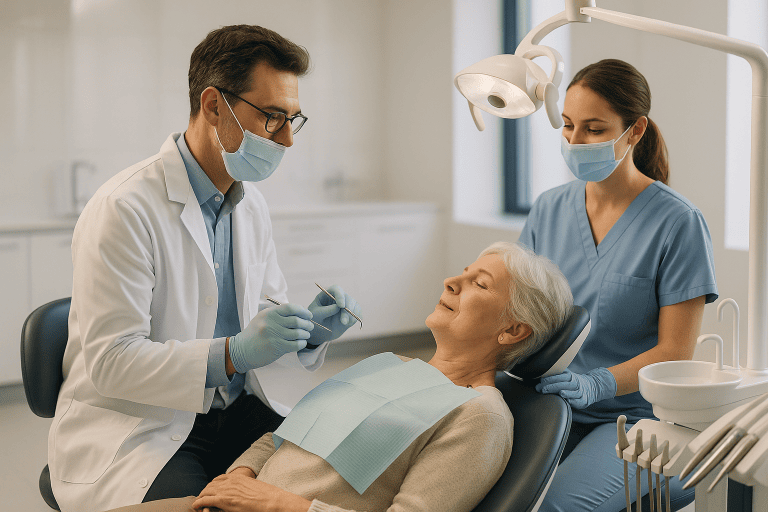
A periodontitis diagnosis is made by a dentist or a periodontist, a dental specialist trained in gum disease and the structures that support the teeth. The evaluation typically involves several steps:
Medical and dental history. Your dentist will ask about your symptoms, oral care habits, smoking, medications, and health conditions such as diabetes that can influence gum disease.
Visual examination. The dentist inspects the gums for redness, swelling, bleeding, recession, and plaque or tartar buildup, and checks whether any teeth are loose or have shifted.
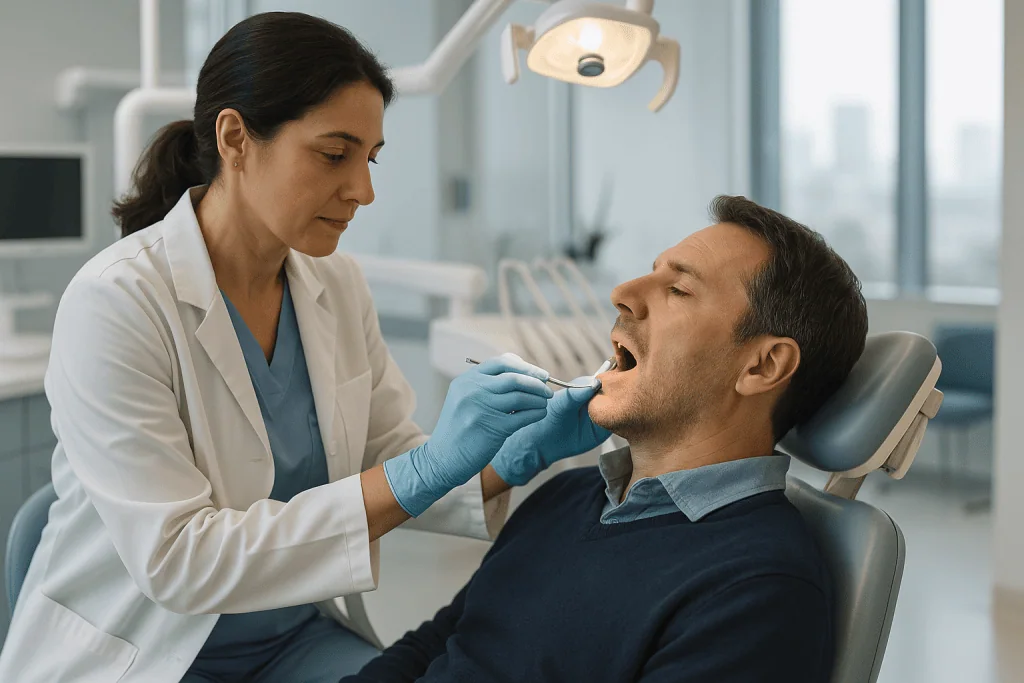
Periodontal probing. This is the central diagnostic test. Using a thin, calibrated instrument called a periodontal probe, the clinician gently measures the depth of the pocket between the gum and each tooth at several points. In a healthy mouth, these pockets are usually shallow, typically around one to three millimeters. Deeper measurements, especially when combined with bleeding on probing, suggest periodontitis. Deeper pockets generally indicate more advanced disease.
Dental X-rays. Radiographs allow the dentist to see the level of bone around the teeth. Bone loss visible on X-rays is a hallmark of periodontitis and helps distinguish it from gingivitis, in which the bone is still intact. X-rays also help track whether the disease is stable or progressing over time.
Staging and grading. Based on pocket depths, bone loss, tooth loss related to gum disease, and other findings, clinicians classify periodontitis by stage (how severe and extensive the damage is) and grade (how quickly it appears to be progressing and what risk factors are present). This classification guides treatment planning.
In some cases, additional assessments may be used, such as evaluating tooth mobility, checking the involvement of the areas where the roots of multi-rooted teeth divide (furcation involvement), or reviewing blood sugar control in patients with diabetes. There is no single blood test that diagnoses periodontitis; the diagnosis rests on the clinical examination and imaging.
Treatment options for periodontitis
The goal of periodontitis treatment is to control the infection, stop or slow the destruction of bone and gum tissue, and help you keep your natural teeth for as long as possible. Treatment cannot fully regrow bone that has already been lost in most cases, which is why early intervention matters. The right approach depends on the stage of the disease, your overall health, and how well earlier treatments have worked. Comprehensive care for gum disease is typically provided within a hospital’s Dental & Oral Health department, where dentists and periodontists work together.
Nonsurgical treatment
For most patients, treatment begins with nonsurgical measures:
- Scaling and root planing. This deep-cleaning procedure removes plaque and tartar from above and below the gumline (scaling) and smooths the root surfaces (root planing) so the gums can reattach and bacteria have fewer places to hide. It is often done under local anesthesia and may require more than one visit.
- Antibiotics and antimicrobials. Your dentist may recommend antiseptic mouth rinses, antibiotic gels placed directly into gum pockets, or, in selected cases, oral antibiotics to help control bacterial infection. These are usually used alongside cleaning, not instead of it.
- Improved daily oral hygiene. Treatment success depends heavily on how well plaque is controlled at home. Your dental team will show you brushing and interdental cleaning techniques suited to your mouth.
- Risk factor management. Quitting smoking and improving blood sugar control in diabetes can meaningfully improve the response to treatment.
In very mild cases, and after early gingivitis is treated, careful monitoring with professional cleanings and reassessment may be all that is needed. True “watchful waiting” without any cleaning, however, is generally not appropriate once bone loss has begun, because periodontitis tends to progress if the underlying infection is not addressed.
Surgical treatment
When pockets remain deep or damage is advanced despite nonsurgical care, a periodontist may recommend surgery:
- Flap surgery (pocket reduction surgery). The gum tissue is gently lifted back so the roots can be cleaned thoroughly, and the gum is then repositioned to reduce pocket depth, making the area easier to keep clean.
- Bone grafting. Where bone has been destroyed, graft material may be placed to help stabilize the tooth and, in some cases, encourage new bone formation.
- Soft tissue (gum) grafts. Tissue, often taken from the roof of the mouth or from donor material, can cover exposed roots and reinforce thin, receded gums.
- Guided tissue regeneration. A special membrane is placed between the bone and gum to encourage the body to regrow supporting bone and ligament in selected defects.
- Other regenerative approaches. Protein-based gels and similar materials are sometimes applied to root surfaces to stimulate tissue growth; their suitability depends on the specific defect.
If a tooth cannot be saved, extraction may be advised, followed by discussion of replacement options. No single treatment works for everyone, and your dentist may combine several approaches over time.
Ongoing maintenance
Periodontitis is a chronic condition, meaning it can flare up again if bacteria are allowed to rebuild. After active treatment, patients typically enter a maintenance phase with professional cleanings and gum checks at intervals set by their dentist, often every three to four months rather than the usual six. This maintenance phase is considered an essential part of treatment, not an optional extra.
Living with periodontitis and outlook
The outlook for periodontitis depends largely on how early it is caught and how consistently it is managed. When the disease is diagnosed at an early stage and treated properly, many people keep their natural teeth for life. Even in more advanced cases, treatment can often stop or greatly slow further bone loss, although tissue that has already been destroyed usually does not grow back completely.
Living well with periodontitis generally involves:
- Meticulous daily oral carebrushing twice a day, cleaning between teeth daily with floss or interdental brushes, and using any rinses your dentist recommends
- Keeping every maintenance appointment, since supervised follow-up is one of the strongest predictors of long-term success
- Not smoking, or getting support to quit, because continued smoking substantially reduces the chances of stable results
- Managing related health conditions, especially diabetes, in cooperation with your physician
- Watching for changes such as renewed bleeding, swelling, or loosening teeth, and reporting them promptly
It is honest to say that periodontitis is controlled rather than cured. The bacteria that drive it are always present in the mouth, so the disease can return if maintenance lapses. On the other hand, patients who follow their treatment and maintenance plans often achieve stable, comfortable, functional teeth for many years. Multidisciplinary dental teams, such as those in the Dental & Oral Health unit at Acibadem, typically coordinate long-term periodontal maintenance together with the patient’s general medical care when other conditions are involved.
Frequently asked questions
What is the difference between gingivitis and periodontitis?
Gingivitis is inflammation limited to the gum tissue, usually caused by plaque, and it is generally reversible with professional cleaning and good home care. Periodontitis is a more advanced disease in which the infection and inflammation have damaged the bone and ligament that hold the teeth in place. Gingivitis can progress to periodontitis if untreated, but once bone loss has occurred, the condition is managed rather than fully reversed.
Can periodontitis heal on its own?
No, periodontitis does not heal on its own. Because tartar below the gumline cannot be removed by brushing alone, professional treatment is needed to control the infection. Without treatment, the disease usually continues to destroy supporting bone. Improving home care helps, but it is not a substitute for scaling and root planing or other treatments your dentist may recommend.
How serious is periodontitis?
Periodontitis is a serious condition because it is a leading cause of tooth loss in adults and involves chronic infection and inflammation. Research also suggests possible associations between periodontitis and other health problems, such as heart disease and difficulty controlling diabetes, although these links are still being studied. With timely diagnosis and consistent treatment, the disease can usually be brought under control.
Is periodontitis treatment painful?
Most periodontitis treatment is performed with local anesthesia, so the procedures themselves are usually not painful. After deep cleaning or gum surgery, it is common to have some soreness, sensitivity, or mild swelling for a few days, which can typically be managed with pain relievers and gentle care as advised by your dental team. Your dentist can explain what to expect for your specific treatment plan.
Can teeth loosened by periodontitis become firm again?
In some cases, mildly loose teeth can tighten somewhat once the infection is controlled and the gums heal, and procedures such as splinting or bone grafting may add stability. However, when bone loss is severe, some looseness may remain, and a tooth that cannot be stabilized may eventually need to be removed. Outcomes vary from person to person, so an individual assessment is essential.
How long does recovery from periodontitis treatment take?
Recovery depends on the treatment. Gums often feel tender for a few days after scaling and root planing, while healing after gum surgery may take one to a few weeks, with the deeper tissues continuing to mature for longer. Your dentist will schedule follow-up visits to check healing and re-measure gum pockets, usually several weeks after active treatment.
Is periodontitis contagious?
The bacteria involved in gum disease can be passed through saliva, for example between partners or from parents to children, but exposure to these bacteria alone does not mean a person will develop periodontitis. Whether disease develops depends on many factors, including oral hygiene, smoking, genetics, and overall health. Good daily oral care remains the most important protective step.
When to see a doctor
Schedule a dental appointment promptly if you notice any signs of gum disease, even if they seem minor. Early treatment gives the best chance of preventing permanent damage. In particular, seek professional evaluation if you experience:
- Gums that bleed regularly when brushing, flossing, or eating
- Red, swollen, or tender gums that do not improve within a week or two of careful cleaning
- Persistent bad breath or a bad taste that does not go away
- Gums pulling away from the teeth or teeth that look longer than before
- Loose, shifting, or newly gapped teeth, or a change in your bite
- Pus, an abscess, or a painful swelling on the gum
Seek urgent dental or medical care if you have severe gum or tooth pain, a rapidly growing swelling of the gum, face, or jaw, difficulty swallowing or opening your mouth, or a fever together with mouth swelling. These can indicate a spreading infection that needs prompt treatment. Even without symptoms, regular dental checkups are important, because periodontitis can progress silently and is easiest to manage when found early.
Medically reviewed by the Acıbadem International Medical Board September 3, 2026
See our medical review board →
Update history
- PublishedJune 14, 2026
- Medical review approvedSeptember 3, 2026
- Last content updateSeptember 2, 2026