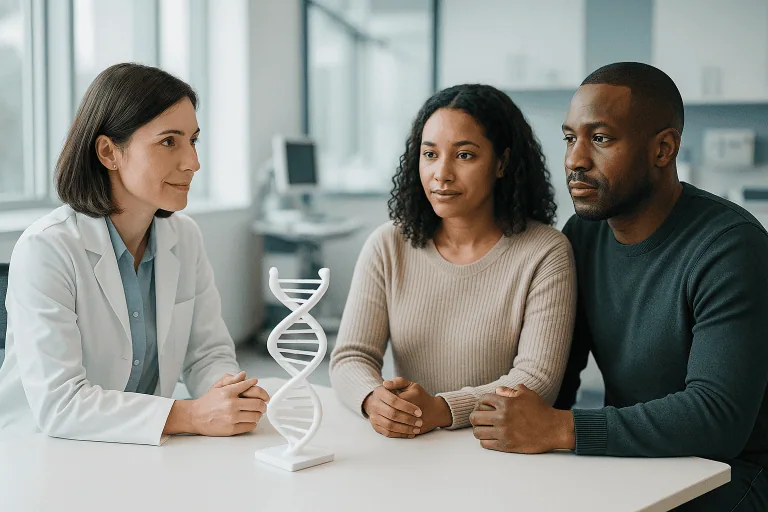
Turner Syndrome
Learn about Turner syndrome: common symptoms, its genetic causes, how doctors confirm the diagnosis, treatment options, and what living with the condition involves.
Quick answer
Turner syndrome is a genetic condition in females in which one X chromosome is missing or partly missing. It commonly causes short stature, delayed puberty, and infertility, and may affect the heart, kidneys, hearing, and learning. Diagnosis is confirmed by a karyotype blood test, and treatment includes growth hormone, estrogen therapy, and monitoring.
What is Turner syndrome?
Turner syndrome is a genetic condition that affects females. It happens when one of the two X chromosomes (the structures inside cells that carry genetic information) is missing, partly missing, or altered. Because the X chromosome carries genes that influence growth, ovarian function, and the development of several organs, the change can affect many parts of the body.
Turner syndrome is present from conception, so a person is born with it. It is not caused by anything a parent did or did not do during pregnancy. The condition is considered uncommon, but it is one of the more frequently recognized chromosome conditions in girls and women.
The features of Turner syndrome vary a great deal. Some girls have obvious signs at birth, while others are not diagnosed until puberty or even adulthood. Nearly all people with the condition are shorter than average and most have reduced ovarian function, but heart, kidney, hearing, and learning differences occur in only some people. Because it involves the chromosomes, Turner syndrome is often evaluated and followed by a medical genetics team alongside pediatricians, endocrinologists (hormone specialists), and cardiologists (heart specialists).
Turner syndrome symptoms
Turner syndrome symptoms depend on the person’s age, on which cells carry the chromosome change, and on how much of the X chromosome is affected. No single person has all of the features described here, and the severity ranges from very mild to significant.
Signs that may be noticed before birth or in infancy
- Swelling (lymphedema) of the hands and feet in a newborn
- A wide or web-like neck caused by extra folds of skin
- A low hairline at the back of the neck
- Low-set ears and a small lower jaw
- A broad chest with widely spaced nipples
- Certain heart defects found on prenatal ultrasound or after birth
- Feeding difficulties and slow weight gain
Signs that may become clearer in childhood
- Slower growth than other children of the same age
- Short stature that becomes more noticeable over time
- Frequent middle ear infections
- Arms that turn outward slightly at the elbows
- Short fourth fingers or toes and fingernails that turn upward
- Many small brown moles on the skin
- Difficulty with spatial tasks, mathematics, or coordination, while verbal skills are often typical
Signs that may appear around puberty and in adulthood
- Puberty that starts late, stalls, or does not begin without medical support
- Absent or irregular menstrual periods
- Underdeveloped breasts if estrogen (the main female sex hormone) is low
- Infertility, because the ovaries usually stop working early
- Hearing loss that may progress with age
- High blood pressure, thyroid problems, or type 2 diabetes in some adults
Doctors sometimes describe Turner syndrome by its chromosome pattern. In classic Turner syndrome, every cell is missing one complete X chromosome, and features tend to be more noticeable. In mosaic Turner syndrome, only some cells are missing an X chromosome while others are normal, so features are often milder and may go unnoticed for years. In other forms, part of the X chromosome is missing or rearranged. The pattern helps explain why one person may have several visible signs while another has only short stature and delayed puberty.
Causes and risk factors
Turner syndrome causes are entirely genetic. Most females have two X chromosomes in each cell, one inherited from each parent. In Turner syndrome, one X chromosome is completely or partly missing. The error usually occurs by chance, either when the egg or sperm is forming or during the early cell divisions after fertilization. In most cases it is a random event that is not inherited from a parent and is not likely to happen again in a future pregnancy.
The main chromosome changes are:
- Monosomy X: every cell in the body has only one X chromosome instead of two.
- Mosaicism: some cells have one X chromosome and others have two, or some cells have another unusual pattern. This usually arises from an error in cell division early in development.
- Structural changes: both X chromosomes are present, but one is missing a segment or is rearranged so that part of its genetic material is lost.
- Y chromosome material: in a small number of people, some cells contain pieces of a Y chromosome. This does not change the diagnosis but is important to identify because it raises the risk of a rare tumor in the gonads (the tissue that would normally form the ovaries).
Because the chromosome change is present in the first cells of the embryo, it cannot be caused by infections, medications, diet, or events during pregnancy. There are no lifestyle risk factors for a parent that are known to increase the chance of having a child with Turner syndrome, and, unlike some other chromosome conditions, it is not clearly linked to the mother’s age. Having one child with Turner syndrome does not usually increase the chance for later pregnancies, though genetic counseling can help a family understand their individual situation.
Turner syndrome diagnosis
Turner syndrome diagnosis is confirmed with a chromosome test. Doctors may suspect the condition at several points in life:
- Before birth, when an ultrasound shows features such as fluid collections behind the fetal neck, heart abnormalities, or kidney differences, or when screening blood tests give an unexpected result.
- At birth, when a newborn has swelling of the hands and feet, a webbed neck, or a heart defect.
- In childhood, when a girl is growing much more slowly than expected.
- In adolescence or adulthood, when puberty is delayed, periods do not start, or a woman has difficulty becoming pregnant.
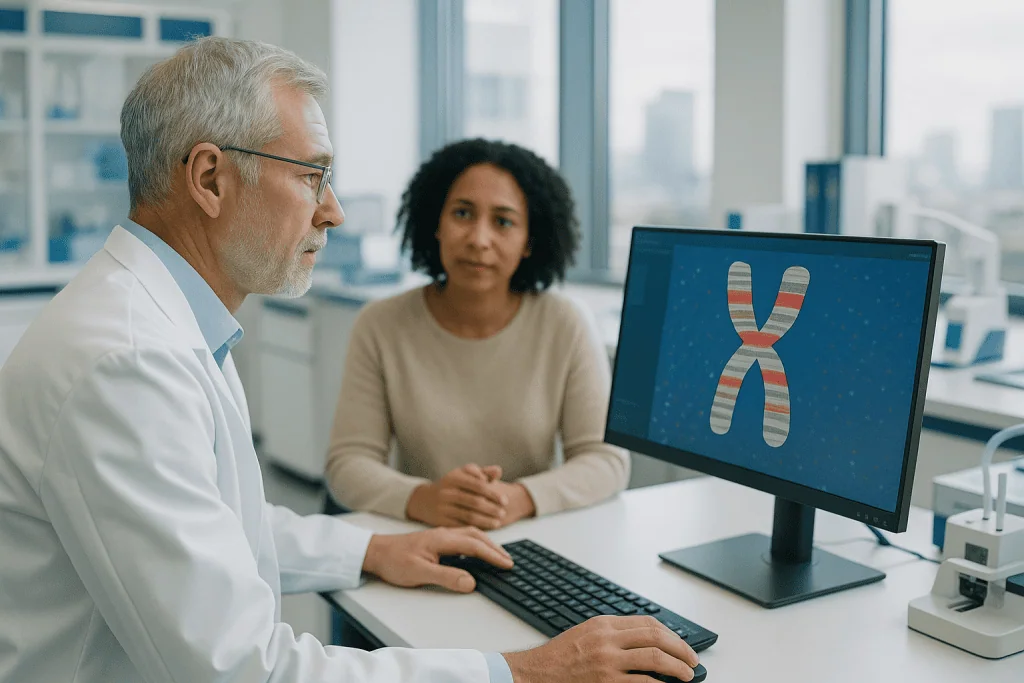
The main confirming test is a karyotype, a laboratory analysis that photographs and counts the chromosomes in a sample of blood cells. It shows whether an X chromosome is missing in all cells or only in some, and whether part of a chromosome is absent. If mosaicism is suspected but the first result is unclear, the laboratory may examine more cells or use additional techniques such as FISH (fluorescence in situ hybridization, a test that lights up specific chromosome regions) or chromosomal microarray (a detailed scan for missing or extra segments of genetic material). Testing for hidden Y chromosome material is often part of the workup because it affects later monitoring.
During pregnancy, a chromosome change may be suggested by cell-free DNA screening from the mother’s blood, but this is a screening test, not a diagnosis. Confirmation requires a sample of placental tissue (chorionic villus sampling) or amniotic fluid (amniocentesis), or a blood test after the baby is born.
Once Turner syndrome is confirmed, doctors usually arrange a set of baseline assessments to look for associated problems. These commonly include:
- An echocardiogram (ultrasound of the heart) and sometimes cardiac MRI to check the heart and aorta (the main artery leaving the heart)
- A kidney ultrasound to look for structural differences
- A hearing test
- Blood tests for thyroid function, blood sugar, liver function, and celiac disease (an immune reaction to gluten)
- Measurement of growth, blood pressure, and, at the appropriate age, hormone levels related to puberty and ovarian function
- An eye examination and, in older children and adults, a bone density scan
At Acibadem, chromosome testing and genetic counseling for this condition are provided through the Medical Genetics Department, working with pediatric and adult endocrinology and cardiology teams.
Turner syndrome treatment options
There is no way to replace the missing chromosome, so Turner syndrome treatment focuses on managing growth, hormones, and the specific health issues that each person has. Care is usually lifelong and coordinated by several specialists. The main approaches are described below.
Monitoring and observation
Regular follow-up is a core part of care even when a person feels well. Doctors track growth in childhood, blood pressure, hearing, thyroid function, blood sugar, and heart and kidney health over time. The aorta is checked periodically with imaging because it can widen slowly without symptoms. Many problems linked to Turner syndrome are far easier to manage when found early.
Growth hormone therapy
Growth hormone given by daily injection is a standard treatment to improve growth in girls with Turner syndrome. It is generally started in early childhood, once slowed growth is recognized, and continued until growth is nearly complete. The response varies from child to child, and your doctor will monitor growth, bone maturity, and side effects during treatment. Growth hormone does not treat other features of the condition.
Estrogen and progestin therapy
Because the ovaries in most people with Turner syndrome do not produce enough estrogen, hormone therapy is usually needed to start and complete puberty. Estrogen is typically begun in low doses at about the age puberty would normally start and increased gradually, with progestin (a hormone that protects the lining of the uterus) added later to allow regular periods. Adults generally continue hormone therapy until the usual age of menopause to protect bone strength, heart health, and overall well-being. The timing, dose, and form (tablets, patches, or gels) are individualized.
Treatment of associated conditions
- Heart: some heart defects, such as a narrowed aorta or an abnormal aortic valve, may need surgery or a catheter-based procedure. High blood pressure is treated with medication and lifestyle measures.
- Hearing: ear infections are treated promptly, and hearing aids may be recommended if hearing loss develops.
- Thyroid, diabetes, and celiac disease: these are managed with standard medications or dietary changes when they occur.
- Bone health: adequate calcium, vitamin D, weight-bearing activity, and consistent estrogen therapy help protect bones.
- Gonadal tissue: if Y chromosome material is detected, doctors often recommend surgical removal of the non-functioning gonadal tissue to prevent a rare tumor.
- Lymphedema: swelling is usually managed with compression garments and physical therapy when needed.
Fertility and reproductive options
Most women with Turner syndrome cannot become pregnant without medical assistance, although a small number, particularly those with mosaicism, have natural pregnancies. Options that may be discussed include preserving eggs or ovarian tissue in adolescence if ovarian function is still present, or using donated eggs with in vitro fertilization later. Pregnancy in Turner syndrome carries added heart and blood pressure risks, so a detailed heart evaluation is advised before attempting to conceive, and care should be provided by a team experienced in high-risk pregnancy.
Learning, psychological, and social support
Some girls benefit from educational support for mathematics, visual-spatial skills, or attention. Psychological support and peer support groups can help with self-esteem, body image, and the emotional aspects of infertility. Rehabilitation therapies such as occupational or physical therapy may help with coordination when needed.
Living with Turner syndrome and outlook
Most people with Turner syndrome live full, independent lives. They attend school, work, form relationships, and many raise families through adoption or assisted reproduction. Intelligence is usually within the normal range, though specific learning differences are common and can be supported.
The long-term outlook depends largely on whether heart, kidney, or metabolic problems are present and how well they are managed. Cardiovascular disease, including problems with the aorta, is the main serious health concern, which is why lifelong heart monitoring and control of blood pressure, weight, cholesterol, and blood sugar matter so much. Life expectancy may be somewhat reduced compared with the general population, but consistent medical follow-up appears to lower many of the risks.
Practical points that many people with Turner syndrome and their families find helpful include:
- Keeping a written summary of the diagnosis, chromosome results, and heart imaging to share with new doctors
- Transitioning from pediatric to adult care in a planned way so that hormone therapy and heart checks continue without gaps
- Maintaining regular physical activity and a balanced diet to protect heart and bone health
- Attending hearing checks, since hearing loss can progress quietly
- Discussing fertility options early, ideally in adolescence, so that choices are not lost
- Seeking mental health support when needed; anxiety and low mood are not unusual and can be treated
Frequently asked questions
What are the first turner syndrome symptoms parents usually notice?
The earliest signs vary. In newborns, puffy hands and feet, a webbed neck, or a heart murmur may prompt testing. In many girls, however, the first noticeable sign is simply slow growth compared with classmates, sometimes accompanied by frequent ear infections. Some girls have no obvious features until puberty fails to start on time. If you are concerned about your child’s growth, a pediatrician can measure and compare it against standard growth charts.
Is turner syndrome inherited from the parents?
In the great majority of cases, no. Turner syndrome causes are random errors in the formation of an egg or sperm or in early cell division, and they are not passed down through families. Parents of a child with Turner syndrome generally have normal chromosomes, and the chance of a second child having the condition is usually not increased. A genetic counselor can explain the specific result and what it means for your family.
How is turner syndrome diagnosis confirmed?
Diagnosis is confirmed by a karyotype, a blood test that examines the number and structure of the chromosomes. It shows whether an X chromosome is missing entirely or only in some cells, and whether part of the chromosome is absent. Physical features and growth patterns may raise suspicion, but they cannot confirm the condition on their own. Additional genetic tests may be used when results are unclear or when mosaicism is suspected.
Can turner syndrome be cured?
There is currently no cure, because the change is in the chromosomes of the body’s cells. However, Turner syndrome treatment can address many of its effects. Growth hormone can improve height, estrogen therapy can bring about puberty and protect long-term health, and associated heart, thyroid, hearing, and kidney problems can be treated when they arise. With regular care, most people manage the condition well.
Can women with turner syndrome have children?
Natural pregnancy is uncommon because the ovaries usually stop working early, though it does occur in some women, especially those with mosaic Turner syndrome. Many women become mothers through egg donation with in vitro fertilization or through adoption. Pregnancy carries higher heart risks in Turner syndrome, so a thorough cardiac evaluation and care from a high-risk pregnancy team are recommended before and during any pregnancy.
Does turner syndrome affect intelligence or learning?
Most people with Turner syndrome have intelligence in the normal range. Some experience specific difficulties with mathematics, spatial reasoning, attention, or motor coordination, while reading and verbal skills are often strengths. Early educational assessment and targeted support can make a meaningful difference, and many people with the condition complete higher education and pursue professional careers.
What ongoing checks are needed in adulthood?
Adults with Turner syndrome usually need regular monitoring of blood pressure, heart and aorta imaging at intervals set by a cardiologist, thyroid function, blood sugar, cholesterol, liver tests, hearing, and bone density. Hormone therapy is typically reviewed each year. The exact schedule depends on individual findings, so your care team may adjust it over time.
When to see a doctor
Routine follow-up is part of living with Turner syndrome, but some symptoms need prompt attention. Seek urgent medical care if you or your child has:
- Sudden, severe chest, back, or abdominal pain, especially pain described as tearing or ripping, which can signal a problem with the aorta
- Fainting, severe shortness of breath, or a racing or irregular heartbeat
- Sudden weakness, numbness, difficulty speaking, or facial drooping
- Very high blood pressure readings with headache, vision changes, or confusion
- Signs of a serious infection such as high fever with stiff neck, persistent vomiting, or unusual drowsiness
- Sudden loss of hearing or severe ear pain with discharge
You should also arrange a non-urgent appointment if you notice slowed growth in a child, delayed or stalled puberty, absent periods, new swelling of the limbs, gradual hearing loss, persistent tiredness, increased thirst or urination, or symptoms of low mood or anxiety. Anyone with Turner syndrome who is planning a pregnancy should speak with a cardiologist and an obstetrician experienced in high-risk pregnancy beforehand.
Medically reviewed by the Acıbadem International Medical Board September 13, 2026
See our medical review board →
Update history
- PublishedSeptember 13, 2026
- Medical review approvedSeptember 13, 2026
- Last content updateSeptember 13, 2026