Acupuncture Needles — Explained by Medical Evidence, Not Myths

Acupuncture needles are typically hair-thin, solid, sterile, and intended for single use. Most people feel little to no pain during insertion, though sensations such as tingling, heaviness, warmth, or mild aching can occur.
Key Takeaways
- Acupuncture needles are typically hair-thin, solid, sterile, and intended for single use.
- Most people feel little to no pain during insertion, though sensations such as tingling, heaviness, warmth, or mild aching can occur.
- Research supports acupuncture for some symptoms and pain conditions, but it is not a cure-all and should not replace needed medical evaluation.
- Safety depends heavily on proper training, clean technique, and screening for bleeding risk, infection, pregnancy, or implanted devices when electroacupuncture is considered.
- People should seek medical care promptly for severe pain, neurological symptoms, fever, chest pain, or other warning signs rather than relying on acupuncture alone.
Acupuncture needles are very thin, sterile needles placed at specific points on the body as part of a trained practitioner’s treatment plan. Evidence suggests they may help some people, especially for certain pain conditions, but results vary and they should be used as part of informed medical care rather than myth-based claims.
Overview: what acupuncture needles are and what they do
Acupuncture needles are very thin, solid needles used to stimulate carefully selected points on the body. In modern medical practice, they are usually sterile, single-use, and much finer than needles used for injections or blood tests. For many patients, the key question is simple: do acupuncture needles work, and are they safe? The evidence-based answer is that they appear to help some people with certain conditions, especially some types of pain, while safety is generally good when treatment is performed by a properly trained professional.
Acupuncture began within traditional East Asian medicine, but today it is also studied in mainstream clinical research. Medical explanations focus less on ancient theories alone and more on how needle stimulation may influence nerves, local blood flow, connective tissue, and pain-processing pathways in the brain and spinal cord. This does not mean every claimed use is proven. Instead, it means acupuncture is best understood as a procedure with specific possible benefits, limitations, and safety rules.
One of the most common myths is that acupuncture needles are large or very painful. In reality, they are usually extremely fine. Another myth is that they can diagnose or cure any disease. A more balanced, evidence-based view is that acupuncture may be used as a supportive treatment for selected symptoms and conditions, often alongside exercise, rehabilitation, medication, or other doctor-recommended care.
What acupuncture needles feel like during treatment
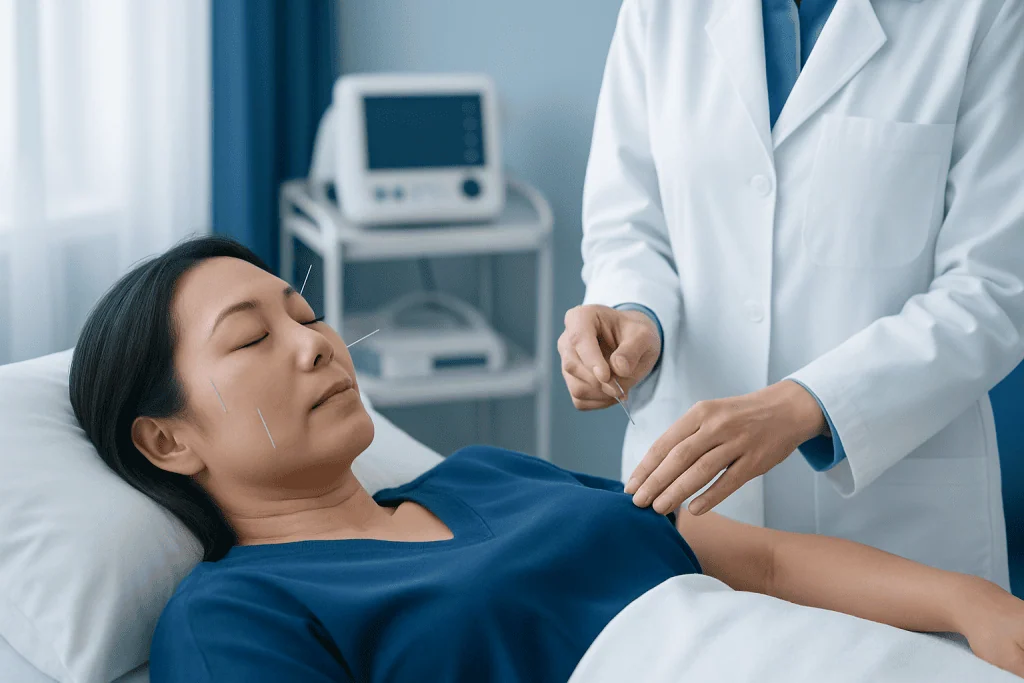
Many people are surprised by how small acupuncture needles are. Because they are so thin, insertion often causes only a brief prick or no noticeable pain at all. After placement, a person may feel heaviness, warmth, tingling, pressure, or a dull ache around the point. These sensations are commonly short-lived and are not usually a sign of harm.
A typical session starts with a health review so the practitioner can understand symptoms, medical history, medications, and any safety concerns. The person usually lies or sits comfortably while selected points are cleaned and the needles are inserted. In some cases, the practitioner may gently move the needles by hand, warm them indirectly, or connect them to a very mild electrical current in a method called electroacupuncture.
Needles are usually left in place for a limited period while the patient rests. Some people feel relaxed or sleepy during the session. Mild temporary soreness, pinpoint bleeding, or bruising can happen afterward, but severe pain is not expected. If strong pain, dizziness, faintness, or significant discomfort occurs, the practitioner should be told immediately.
What medical evidence says acupuncture needles may help

Medical evidence does not support the idea that acupuncture needles treat everything, but research does suggest benefit for some people with selected problems. The strongest and most consistent evidence is in certain pain-related conditions, where acupuncture may help reduce symptoms or improve function. Examples often discussed in clinical guidelines include chronic low back pain, neck pain, some types of osteoarthritis-related pain, and some forms of headache, including migraine.
Acupuncture may also be considered for symptom relief in some other situations, such as nausea or recovery-related discomfort, depending on the clinical context and local guideline recommendations. Even when there is evidence of benefit, the effect is not identical for every patient. Some people notice meaningful relief, while others notice little change. This is why realistic expectations matter.
Importantly, acupuncture should not delay diagnosis of a serious problem. For example, ongoing back pain may need structured assessment and sometimes physical therapy and rehabilitation, while persistent headache may require specialist review. The most evidence-based use of acupuncture needles is usually as part of a broader plan rather than as a stand-alone answer for unexplained or severe symptoms.
How acupuncture needles may work
Researchers have proposed several mechanisms that may explain why acupuncture needles can affect symptoms. One leading explanation is neuromodulation: needle stimulation may activate sensory nerves in the skin and muscles, changing how pain signals are sent and processed. This may influence the spinal cord, brainstem, and higher brain centers involved in pain perception.
Acupuncture may also trigger the release of the body’s own pain-modulating chemicals, including endorphin-related pathways, and may alter local circulation and muscle tension. In some patients, this may help reduce tenderness or improve movement. These biological effects are plausible and supported to varying degrees by research, but they do not prove that every acupuncture claim is medically valid.
Another factor is context. A calm treatment setting, careful listening, touch, and expectation can influence symptom experience in many forms of care. This does not mean benefits are “just psychological.” Rather, it highlights that symptoms such as pain are shaped by both biological and psychosocial factors. Good medical care recognizes both, while still insisting on proper diagnosis and evidence-based decision-making.
Safety, side effects, and who should be cautious
When performed by a trained professional using sterile, single-use needles, acupuncture is generally considered low risk. The most common side effects are minor and short-term, such as small bruises, slight bleeding, temporary soreness, or lightheadedness. Serious complications are uncommon, but they can occur if technique is poor, hygiene is inadequate, or a patient’s health risks are not identified in advance.
People should tell the practitioner about all medical conditions and medicines before treatment. This is especially important for those who use blood thinners, have a bleeding disorder, are pregnant, have a weakened immune system, have a skin infection, or have an implanted electrical device such as a pacemaker if electroacupuncture is being considered. Needle placement matters as well, because certain body areas require extra care.
Patients should also be alert to signs that need urgent medical attention after any procedure, including rapidly increasing pain, major swelling, fainting, fever, shortness of breath, or persistent bleeding. Acupuncture should be provided by qualified practitioners who follow clean needle technique and know when not to treat. In an integrated setting, collaboration with specialists in pain management or other fields can be helpful for people with complex symptoms.
Choosing treatment wisely: questions to ask and what to expect
Because acupuncture needles are often discussed online in overly positive or overly skeptical ways, patients benefit from a practical approach. A useful starting point is to ask what symptom is being treated, what evidence supports acupuncture for that symptom, how success will be measured, and what alternatives exist. This keeps treatment focused on realistic goals such as reducing pain, improving function, or supporting recovery.
It is also reasonable to ask about practitioner qualifications, infection control, expected number of sessions, possible side effects, and when treatment should be stopped if there is no improvement. Acupuncture should fit into a wider care plan. For musculoskeletal pain, that may include exercise, posture advice, weight management, and rehabilitation. For chronic recurring headaches, medical assessment may guide whether options such as neurology care are needed alongside or instead of acupuncture.
Some people seek acupuncture because they want non-drug options. That preference is understandable, but “natural” does not automatically mean effective or safe for every situation. The best approach is informed choice: understanding what acupuncture needles can and cannot do, and making decisions with a qualified healthcare professional who can rule out more serious causes of symptoms.
Self-care and preparing for an acupuncture appointment
Practical preparation can help a session go smoothly. It is usually best not to arrive either very hungry or overly full. Comfortable clothing can make access to treatment areas easier. Patients should bring a list of medications, supplements, allergies, and major health conditions, especially any history of bleeding problems, heart rhythm devices, pregnancy, or recent surgery.
After treatment, gentle hydration and rest may be useful if a person feels temporarily tired or lightheaded. Mild soreness can happen, especially in areas that were already tense or painful, but it should settle. If symptoms worsen significantly, persist unexpectedly, or are accompanied by new concerning signs, medical advice should be sought rather than assuming the reaction is normal.
For long-term symptom control, acupuncture is usually only one part of self-care. Sleep, physical activity, stress management, and doctor-guided rehabilitation often matter just as much. When chronic pain or recurring symptoms affect daily life, a multidisciplinary team can help coordinate care. Near the end of a care pathway, some international patients may choose centers such as Acibadem International, where multidisciplinary specialists in JCI-accredited hospitals diagnose and treat related conditions in a coordinated way.
When to seek medical care
Acupuncture needles should not be used as a substitute for urgent medical evaluation. Immediate or prompt medical care is important for chest pain, difficulty breathing, sudden weakness, fainting, severe headache, fever, loss of bladder or bowel control, heavy bleeding, or signs of infection such as redness, warmth, swelling, and worsening pain. These symptoms may point to conditions that require timely diagnosis and treatment.
Medical review is also important when pain is new, severe, keeps returning, or is associated with weight loss, trauma, night sweats, numbness, or progressive weakness. For example, back pain with leg weakness or numbness may need assessment for a herniated disc or another spinal problem. Headaches that suddenly change in pattern or intensity should not be managed with acupuncture alone.
If a person is considering acupuncture for a chronic condition, discussing it first with a doctor is a sensible step. This is particularly important for children, older adults with complex illnesses, pregnant patients, and anyone with cancer, heart disease, or a bleeding risk. Used thoughtfully, acupuncture can sometimes play a supportive role, but safe care always begins with the right diagnosis.
Frequently asked questions
Are acupuncture needles painful?
Acupuncture needles are usually much thinner than injection needles, so many people feel little or no pain during insertion. Some may notice a brief prick followed by tingling, heaviness, warmth, or mild aching, which often passes quickly.
Are acupuncture needles safe?
They are generally safe when used by a properly trained practitioner who uses sterile, single-use needles and follows clean technique. Minor bruising or soreness can happen, while serious complications are uncommon but possible if care is not performed correctly.
Do acupuncture needles really work?
Research suggests they may help some people, especially for certain pain conditions and selected symptoms such as some forms of nausea. However, results vary, and acupuncture should not be presented as a cure-all or as a replacement for needed medical diagnosis.
How deep do acupuncture needles go?
Depth depends on the body area, the treatment goal, and the person’s build. Trained practitioners choose depth carefully to balance effectiveness and safety, and patients should always feel able to speak up if they have discomfort.
Who should avoid or be cautious with acupuncture?
People with bleeding disorders, those taking blood thinners, pregnant patients, people with active skin infections, and those with implanted electrical devices may need special precautions. A doctor or qualified practitioner should review medical history before treatment, especially if electroacupuncture is planned.
Can acupuncture needles spread infection?
The risk is low when sterile, disposable needles are used once and discarded properly. Infection risk rises if needles are reused, if skin is not cleaned appropriately, or if treatment is performed in an unsafe setting.
References
- World Health Organization
- National Center for Complementary and Integrative Health
- National Institute for Health and Care Excellence
- Centers for Disease Control and Prevention
- Cochrane
This article is for general information only and is not a substitute for professional medical advice. Please consult a qualified doctor about your individual situation.
Explore treatments in Turkey — costs, top hospitals & a free quote
JCI-accredited · board-certified surgeons · reply within 24h