Apnea Hypopnea Index: A Complete Medical Overview

The apnea hypopnea index, or AHI, counts breathing interruptions per hour of sleep. AHI helps diagnose and grade sleep apnea, but it is not the only factor doctors consider.
Key Takeaways
- The apnea hypopnea index, or AHI, counts breathing interruptions per hour of sleep.
- AHI helps diagnose and grade sleep apnea, but it is not the only factor doctors consider.
- Symptoms, oxygen levels, sleep quality, and underlying health conditions also matter.
- Treatment may include lifestyle changes, CPAP therapy, oral appliances, or selected procedures.
- Snoring, daytime sleepiness, witnessed breathing pauses, and morning headaches should be medically assessed.
The apnea hypopnea index is the number of apneas and hypopneas that occur per hour of sleep. It is a key part of sleep study results because it helps doctors diagnose sleep apnea, judge how severe it is, and choose the most suitable treatment.
Overview: what the apnea hypopnea index means
The apnea hypopnea index, often shortened to AHI, is a measurement used in sleep medicine to show how often breathing becomes reduced or stops during sleep. It is calculated as the total number of apneas and hypopneas divided by the total hours of sleep. In practical terms, it tells a doctor how many breathing disturbances happen in an average hour overnight.
An apnea is a pause in breathing, while a hypopnea is a partial reduction in airflow. Both can disrupt sleep and may lower oxygen levels. Because these events often happen repeatedly, a person may wake unrefreshed even if they do not remember waking up during the night.
AHI is most commonly used to evaluate sleep apnea, especially obstructive sleep apnea, but it is not a diagnosis by itself. Doctors interpret the number together with symptoms, oxygen changes, heart and lung health, age, and the findings of a sleep study. This more complete view helps avoid over-simplifying the meaning of a single number.
How AHI is measured and how to read the ranges
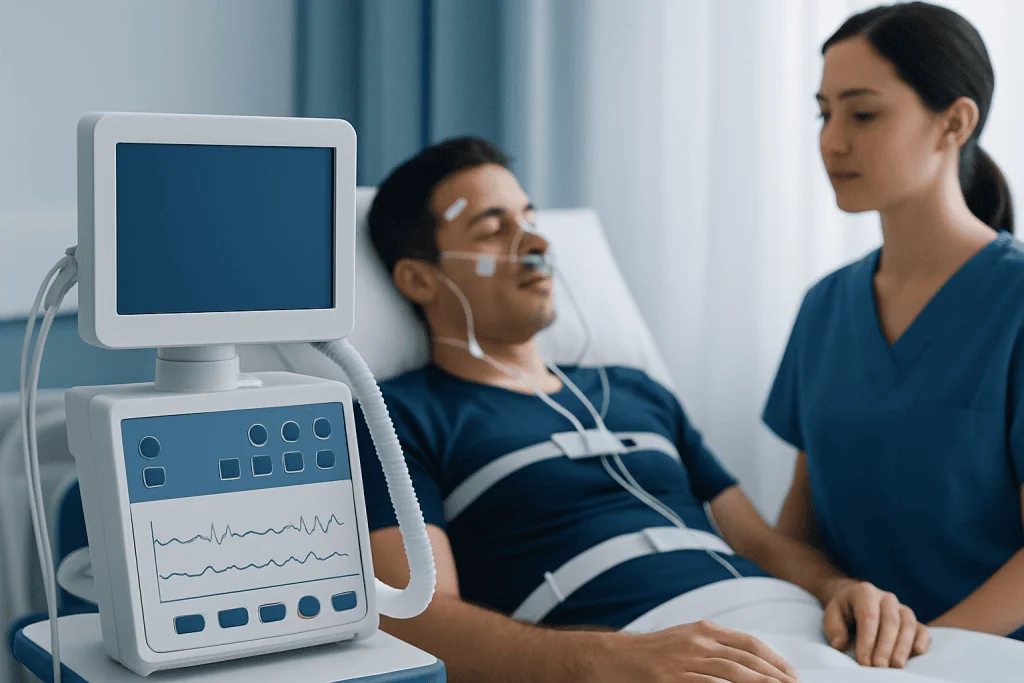
AHI is usually measured during a formal sleep study, called polysomnography, or in selected cases with a home sleep apnea test. These tests record breathing patterns, airflow, oxygen saturation, body position, and sometimes brain activity and sleep stages. The data are reviewed to count the total number of apnea and hypopnea events across the night.
In adults, AHI is commonly grouped into severity ranges. While exact interpretation can vary slightly by laboratory or clinical context, the usual categories are:
- Normal: fewer than 5 events per hour
- Mild sleep apnea: 5 to 14 events per hour
- Moderate sleep apnea: 15 to 29 events per hour
- Severe sleep apnea: 30 or more events per hour
These ranges are helpful, but they do not tell the whole story. For example, one person with a lower AHI may still have significant symptoms or oxygen drops, while another with a higher AHI may describe fewer daytime complaints. This is one reason sleep specialists look beyond the number itself when planning care.
AHI can also be affected by sleep position, alcohol use, nasal blockage, weight changes, and how much time a person spends in rapid eye movement sleep. As a result, results can vary somewhat from one night to another, especially with home testing or borderline cases.
Symptoms and health effects linked to an abnormal AHI

A high apnea hypopnea index often points to sleep-disordered breathing, but symptoms can vary widely. Common signs include loud snoring, choking or gasping during sleep, witnessed breathing pauses, restless sleep, dry mouth on waking, morning headaches, and excessive daytime sleepiness. Some people instead notice poor concentration, irritability, memory difficulties, or low energy rather than obvious sleepiness.
Repeated breathing interruptions can fragment sleep even when awakenings are brief. Over time, this may affect work performance, mood, driving safety, and overall quality of life. Children and older adults may present differently, so age and clinical context are important when symptoms are reviewed.
When sleep apnea is left untreated, it may contribute to broader health problems in some patients. These can include high blood pressure, heart rhythm issues, worsening heart disease, insulin resistance, and increased strain on the brain and cardiovascular system. This is why an elevated AHI deserves proper medical interpretation rather than self-diagnosis alone.
What causes a high AHI and who is at risk
The most common reason for an elevated apnea hypopnea index is obstructive sleep apnea, in which the upper airway narrows or collapses during sleep. Risk factors include excess body weight, large tonsils, a naturally narrow airway, nasal obstruction, and sleeping on the back. Alcohol, sedatives, and smoking may also worsen airway collapse in some people.
AHI may also rise in central sleep apnea, a different condition in which the brain temporarily fails to send consistent signals to the breathing muscles. This form is less common and may be linked to heart failure, neurologic disorders, opioid use, or certain medical conditions. Because treatment differs, identifying the type of sleep apnea matters.
Other factors that can increase risk include older age, male sex, family history, pregnancy, hormonal changes, and craniofacial anatomy. However, sleep apnea can affect people of any body size and gender. A normal body weight does not rule it out, and snoring alone does not confirm it.
In some cases, a high AHI is seen alongside related conditions such as sleep apnea or chronic nasal blockage that affects airflow during sleep. Understanding the full cause helps direct the next step, whether that is lifestyle support, device-based treatment, or further specialty assessment.
How doctors diagnose the problem behind the number
Diagnosis begins with a careful history rather than the AHI alone. A doctor asks about snoring, breathing pauses, daytime symptoms, work and driving safety, medications, alcohol use, and medical conditions such as heart or lung disease. A physical examination may include the nose, throat, jaw structure, neck size, blood pressure, and body weight.
If sleep apnea is suspected, the next step is usually a sleep study. An overnight laboratory study gives the most detailed information and can distinguish obstructive events from central events more reliably. Home sleep apnea testing can be suitable for some adults with a high suspicion of uncomplicated obstructive sleep apnea, but it may miss certain details and is not ideal for everyone.
Doctors may also review other measurements beyond AHI, such as the oxygen desaturation index, lowest oxygen level reached, time spent with low oxygen, sleep position effects, and arousal frequency. In selected patients, ear, nose, and throat evaluation or imaging may be useful if structural airway narrowing is suspected.
If symptoms or anatomy suggest an ENT cause, further assessment can clarify whether treatments used in ENT care may help improve nasal breathing or upper airway obstruction. This is especially relevant when nasal blockage, enlarged tonsils, or other airway issues contribute to poor sleep.
Treatment options based on AHI, symptoms, and overall health
Treatment decisions are based on more than whether the AHI falls into a mild, moderate, or severe range. Doctors also consider symptoms, oxygen changes, blood pressure, heart risk, occupation, and patient preference. Someone with mild AHI but significant daytime sleepiness may need active treatment, while another person may begin with conservative measures under medical guidance.
Common treatment options include weight management, avoiding alcohol close to bedtime, stopping smoking, treating nasal congestion, and positional therapy to reduce back sleeping. For many people with obstructive sleep apnea, continuous positive airway pressure is the main treatment because it keeps the airway open during sleep. Some patients may use oral appliances fitted by trained dental or sleep professionals.
Selected patients may benefit from procedures aimed at the airway when there is a clear structural cause and non-surgical options are not enough. Depending on the findings, a doctor may discuss approaches used in sleep apnea treatment or referral for snoring treatment when snoring and airway narrowing are major concerns.
If central sleep apnea is suspected, management focuses on the underlying cause and may differ significantly from obstructive sleep apnea treatment. Follow-up is important because AHI can change over time, and treatment effectiveness is often checked with symptom review and repeat sleep testing when needed.
Prevention, self-care, and improving sleep quality
Not all causes of an abnormal apnea hypopnea index can be prevented, but some daily habits may reduce risk or improve control. Maintaining a healthy weight, staying physically active, limiting alcohol in the evening, and following good sleep routines can all support better breathing during sleep. Side sleeping may help some people, especially if breathing problems are worse on the back.
Nasal care can also matter. If allergies, chronic congestion, or a deviated septum make nighttime breathing difficult, evaluation and treatment may improve comfort and reduce airway resistance. People should avoid using sedative medications unless they are prescribed and reviewed by a clinician who knows about the sleep concern.
Self-care is helpful, but it should not replace formal assessment when symptoms are ongoing. Smartwatches, phone apps, and snoring recordings may raise awareness, yet they cannot confirm AHI accurately in the same way as medical sleep testing. A proper diagnosis helps ensure that the right problem is being treated.
For international patients who need further assessment, Acibadem International’s multidisciplinary specialists and JCI-accredited hospitals diagnose and treat sleep-related breathing disorders with coordinated care when appropriate.
When to seek medical care
Medical review is advisable if a person snores loudly, stops breathing during sleep, wakes up choking, or feels unusually sleepy in the daytime. It is also important to seek advice for morning headaches, poor concentration, resistant high blood pressure, or persistent fatigue that is not explained by another cause.
Earlier evaluation is especially important for people with heart disease, stroke risk factors, atrial fibrillation, obesity, diabetes, or occupations where daytime sleepiness could be dangerous, such as driving or operating machinery. Children who snore regularly, breathe through the mouth, or have behavior and learning concerns should also be medically assessed rather than assumed to have simple snoring.
Urgent medical attention is needed if breathing pauses are associated with severe shortness of breath, chest pain, fainting, new confusion, or signs of a medical emergency. For non-urgent but persistent concerns, a qualified doctor or sleep specialist can explain what the apnea hypopnea index means in the context of the individual patient rather than as an isolated result.
Frequently asked questions
What is a normal apnea hypopnea index?
In adults, an AHI below 5 events per hour is generally considered normal. However, a doctor still interprets the result alongside symptoms, oxygen levels, and the rest of the sleep study.
Does a higher AHI always mean more severe symptoms?
Not always. Some people with a moderately elevated AHI feel very tired and have significant oxygen drops, while others with a higher number may notice fewer symptoms. That is why treatment decisions are based on the whole clinical picture, not just the score.
Can AHI change from night to night?
Yes, AHI can vary depending on sleep position, alcohol use, nasal congestion, sleep stage distribution, and overall sleep quality. Small variations are common, which is why doctors consider the test method and the person's symptoms when reviewing results.
Is snoring the same as having a high apnea hypopnea index?
No. Snoring can occur without sleep apnea, and some people with sleep apnea may not recognize their own snoring. AHI specifically measures breathing interruptions, so a sleep study is usually needed to determine whether sleep apnea is present.
Can mild AHI still need treatment?
Yes. Mild sleep apnea may still need treatment if it causes daytime sleepiness, poor concentration, blood pressure problems, or reduced quality of life. The best approach depends on symptoms, risk factors, and personal medical history.
How is AHI different in children?
Children are assessed differently from adults, and lower thresholds may be clinically important. Because symptoms and interpretation vary by age, a pediatric specialist or sleep physician should review results in children.
References
- American Academy of Sleep Medicine
- National Heart, Lung, and Blood Institute
- Centers for Disease Control and Prevention
- National Institute of Neurological Disorders and Stroke
This article is for general information only and is not a substitute for professional medical advice. Please consult a qualified doctor about your individual situation.
Explore treatments in Turkey — costs, top hospitals & a free quote
JCI-accredited · board-certified surgeons · reply within 24h
Check your numbers in seconds
BMI, calories, due date, blood pressure and 30+ more clinical calculators — free, instant, doctor-reviewed ranges.

More from the Health Library



Related Specialists

Dr. Feyza Arslan
Physical Medicine & Rehabilitation
Dr. Muhammed Akif Atlan
Pediatrics
Dr. Burak Orakçıoğlu
Inpatient Clinic Physicians
Prof. Dr. İsmet Tamer
Check Up & Wellness Center