Auditory Brainstem Implant: An Evidence-Based Patient Guide

An auditory brainstem implant bypasses the inner ear and hearing nerve to stimulate the brainstem hearing pathway. It is most often considered when both auditory nerves cannot transmit sound, including in some people with neurofibromatosis type 2.
Key Takeaways
- An auditory brainstem implant bypasses the inner ear and hearing nerve to stimulate the brainstem hearing pathway.
- It is most often considered when both auditory nerves cannot transmit sound, including in some people with neurofibromatosis type 2.
- Assessment requires imaging, hearing tests and evaluation by an experienced neurotology and neurosurgery team.
- Results vary; sound awareness and lip-reading support are common goals, while open-set speech understanding is less predictable.
- Surgery is followed by healing, device activation, careful programming and long-term auditory rehabilitation.
An auditory brainstem implant is a surgically placed hearing device for selected people who cannot benefit from cochlear implants because the auditory nerve is absent or severely damaged. It does not restore normal hearing, but it may provide awareness of environmental sounds and support communication when combined with rehabilitation.
Auditory brainstem implantation: an overview
An auditory brainstem implant (ABI) is an electronic hearing device designed for people whose auditory, or hearing, nerve cannot carry signals from the inner ear to the brain. The device bypasses the cochlea and auditory nerve. Instead, an electrode array is placed on a hearing relay area of the brainstem called the cochlear nucleus.
Like a cochlear implant, an ABI uses an external sound processor and microphone. The processor changes sound into coded signals, which are sent through the skin to the implanted receiver and electrode. However, rather than stimulating the hearing nerve, the ABI delivers stimulation directly to the brainstem pathway.
An ABI is a highly specialised option and is not a standard treatment for most types of hearing loss. Its main purpose is often to improve awareness of sounds, support speechreading and help a person notice alarms, traffic or voices. Some recipients develop useful speech understanding, but outcomes are more variable than with cochlear implants.
Who may be a candidate and how assessment works
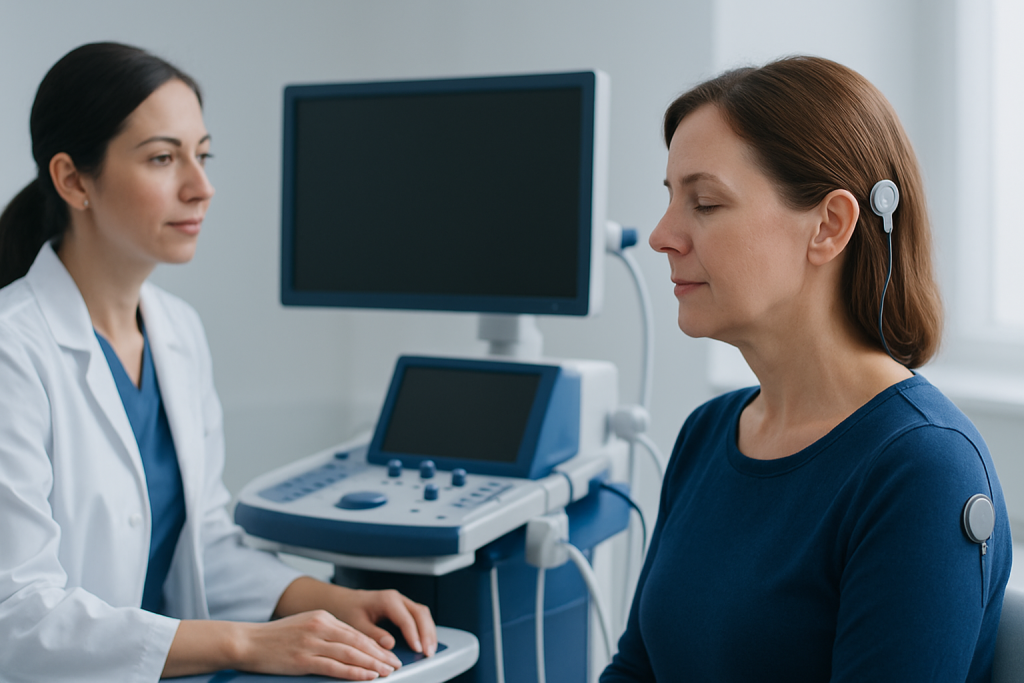
Auditory brainstem implants are most commonly considered for adults with neurofibromatosis type 2 (NF2) who have tumors affecting both hearing nerves, known as vestibular schwannomas. They may also be considered in selected children or adults born without an auditory nerve, or after severe injury, surgery or disease has damaged both auditory nerves.
Candidacy is determined individually at a specialist center. The team reviews hearing history, communication needs, previous hearing devices, general health and expectations. Hearing testing, speech assessment and counseling help clarify whether other options, including hearing aids or cochlear implantation, may be suitable.
Magnetic resonance imaging and an auditory brainstem implant CT assessment may be used to examine the cochlea, internal auditory canals, hearing nerves and skull anatomy. Imaging also helps surgeons plan a safe approach. CT uses X-rays, while MRI provides detailed soft-tissue information; the preferred test depends on the clinical question and prior treatments.
Evaluation generally involves neurotologists, neurosurgeons, audiologists, speech and language professionals, radiologists and rehabilitation specialists. This multidisciplinary approach is important because an ABI is only one part of a longer communication and rehabilitation plan.
How the procedure is performed
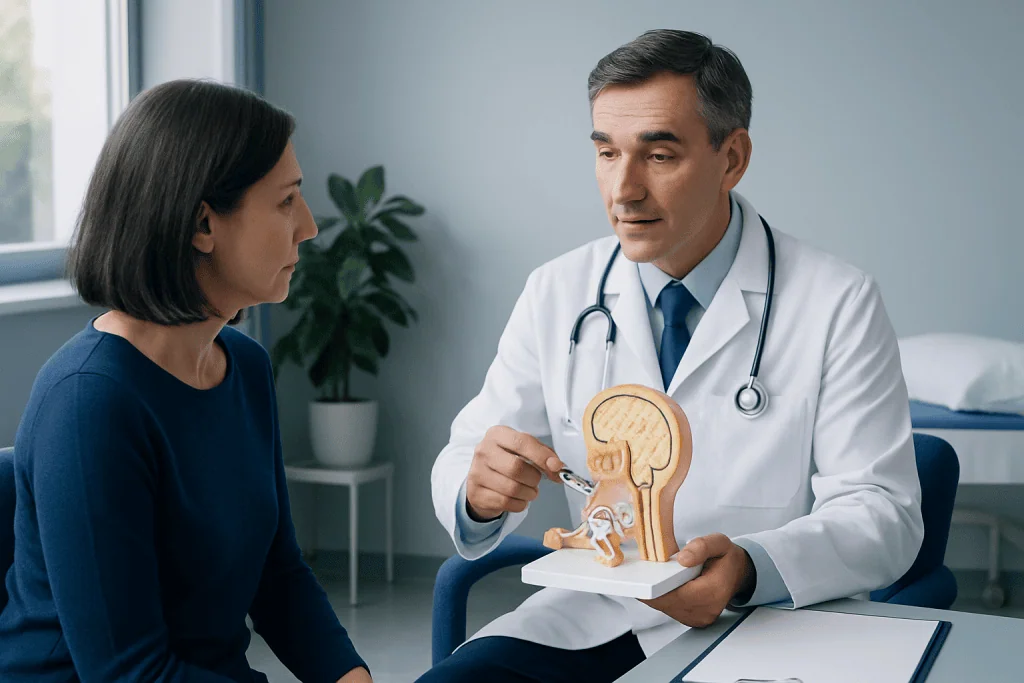
Auditory brainstem implant surgery is performed under general anesthesia by an experienced neurosurgical and otologic team. The operation is often coordinated with removal of a vestibular schwannoma when this is necessary, although it can also be performed as a separate procedure depending on the person’s condition.
The surgeon makes an incision behind the ear and reaches the brainstem through a carefully planned skull-base approach. The electrode paddle is placed on the surface of the cochlear nucleus. During surgery, specialists may use monitoring tests to help confirm that stimulation is producing responses from the auditory pathway and to identify electrodes that could create unwanted sensations.
The internal receiver is secured under the skin, and the incision is closed. The external sound processor is not normally fitted immediately because the surgical area needs time to heal. The exact operation length, hospital stay and surgical approach vary according to anatomy, whether tumor treatment is also needed and other individual factors.
The term auditory brainstem implant CPT code may appear in insurance or billing discussions, particularly in health systems that use Current Procedural Terminology coding. The relevant code can vary by the type of service, device, setting and local payer rules. A hospital billing team or insurer can explain how an individual case is coded and covered.
Recovery, activation and auditory brainstem implant programming
After surgery, patients are monitored in hospital for neurological recovery, wound healing, balance symptoms, pain control and any effects related to the surgical approach. Some people experience temporary tiredness, dizziness, headache or changes in balance. The clinical team provides instructions about wound care, activity, travel and medicines before discharge.
Initial healing commonly takes several weeks, although recovery can take longer when ABI placement is combined with tumor surgery or when a person has other health needs. The external processor is usually activated after the incision and surrounding tissues have healed. Activation is an important step, but it is not the final result of treatment.
Auditory brainstem implant programming is performed by an audiologist over a series of visits. Each electrode is tested and adjusted to create comfortable, useful sound perception while avoiding side effects such as tingling, dizziness, throat sensations or facial stimulation. Some electrodes may be turned off if they do not provide an appropriate response.
Auditory training and communication rehabilitation continue over months and may be needed long term. Progress is often gradual as the brain learns to interpret the new signals. Consistent use of the device, follow-up appointments, speechreading practice and support from family or communication professionals can all be helpful.
Benefits, limitations and possible risks
Auditory brainstem implant outcomes differ widely because the underlying condition, anatomy, prior hearing experience, rehabilitation and electrode responses vary from person to person. Many recipients gain better awareness of environmental sounds and improved ability to follow visual communication cues. For some, the device can assist recognition of speech patterns or provide limited speech understanding without lip-reading.
An ABI does not recreate natural hearing, and it cannot guarantee speech recognition. Background noise, music and telephone conversations can remain difficult. Before treatment, clinicians discuss realistic goals, which may include safety awareness, improved connection with the environment and support for face-to-face communication rather than complete restoration of hearing.
As with any brain or skull-base operation, risks can include infection, bleeding, cerebrospinal fluid leak, wound problems, anesthesia complications, balance difficulties and injury to nearby nerves or brainstem structures. Device-specific stimulation can occasionally cause non-auditory sensations. The surgical team explains the risks relevant to the individual anatomy and planned procedure.
Ongoing follow-up is essential. Changes in hearing needs, device function, skin comfort over the receiver, balance or neurological symptoms should be discussed promptly with the implant center. The care team can adjust the program and coordinate additional support when needed.
Related hearing implant questions
How bad does your hearing have to be to qualify for a cochlear implant? Cochlear implant candidacy is not based on one hearing threshold alone. It generally involves severe hearing loss and limited benefit from appropriately fitted hearing aids, especially for understanding speech. Testing standards vary by country and by age, so an implant audiologist assesses aided speech recognition, hearing levels, imaging and personal communication needs.
What is the 60/60 rule for cochlear implants? The 60/60 rule is a practical referral guideline, not a final eligibility decision. It suggests referral for a cochlear implant evaluation when a person has a pure-tone average hearing level of 60 decibels or poorer and word recognition of 60% or lower in one or both ears. People who struggle with communication despite hearing aids may still benefit from assessment even if they do not match this rule exactly.
What percentage of patients experience regret after getting a cochlear implant? There is no single reliable percentage that applies to every country, age group or study. Research generally finds high satisfaction among appropriately selected cochlear implant users, but individual experiences depend on benefit, expectations, rehabilitation, surgical recovery and support. A detailed pre-implant discussion helps a person make an informed decision and understand that adaptation takes time.
How long does it take to recover from Osia surgery? Osia is a bone-conduction hearing implant and is different from both cochlear implants and auditory brainstem implants. Initial wound healing after Osia surgery often takes a few weeks, and the sound processor is commonly fitted after the surgical site has healed. Individual recovery depends on the procedure, health status and the surgeon’s instructions, so patients should follow their own care plan.
When to seek medical care
People should arrange a medical assessment for new, sudden or rapidly worsening hearing loss, one-sided hearing loss, persistent ringing in one ear, severe dizziness, facial weakness or problems with balance. Sudden hearing loss may need urgent evaluation because timely treatment can matter.
Anyone with known NF2, vestibular schwannomas or a history of hearing nerve surgery should remain under regular specialist follow-up. New neurological symptoms, severe headache, fluid leaking from a surgical wound, fever, increasing redness around an incision or worsening weakness after surgery require prompt medical advice.
An ABI should only be considered through a specialist implant program. Acibadem International’s multidisciplinary specialists and JCI-accredited hospitals assess and treat complex hearing and skull-base conditions for international patients, with care coordinated across relevant specialties.
Frequently asked questions
Is an auditory brainstem implant the same as a cochlear implant?
No. A cochlear implant stimulates the auditory nerve inside the cochlea, while an auditory brainstem implant stimulates the cochlear nucleus on the brainstem. An ABI is generally considered when the auditory nerve is absent, severely damaged or cannot be used.
Can an auditory brainstem implant restore normal hearing?
No hearing implant restores natural hearing. An ABI may help a person detect environmental sounds, improve awareness and support communication, but the degree of speech understanding varies considerably. Rehabilitation and repeated programming are important parts of treatment.
Who is most likely to need an auditory brainstem implant?
ABIs are most often used for selected people with neurofibromatosis type 2 who have tumors involving both auditory nerves. They may also be considered when both auditory nerves are absent or have been damaged by another condition or prior treatment.
When is an auditory brainstem implant activated?
The device is usually activated after the surgical incision has healed, often several weeks after surgery. The implant team sets the timing according to wound healing, surgical recovery and the individual treatment plan.
Why are several programming visits needed after ABI surgery?
Programming identifies which electrodes provide useful and comfortable sound sensations. Settings are refined gradually as the recipient adapts and reports what they hear. Some electrodes may be adjusted or switched off to avoid non-auditory sensations.
Can children receive auditory brainstem implants?
In carefully selected circumstances, children with absent or nonfunctioning auditory nerves may be evaluated for an ABI at highly experienced specialist centers. Decisions require detailed imaging, developmental assessment, family counseling and long-term rehabilitation planning.
References
- World Health Organization
- National Institute on Deafness and Other Communication Disorders
- National Institute for Health and Care Excellence
- American Academy of Otolaryngology–Head and Neck Surgery
- Cochlear Implant International Community of Action
This article is for general information only and is not a substitute for professional medical advice. Please consult a qualified doctor about your individual situation.
Explore treatments in Turkey — costs, top hospitals & a free quote
JCI-accredited · board-certified surgeons · reply within 24h
Add us as a Preferred Source to see more of our trusted health content across Google Search, AI Overviews and Discover.