

Back Stimulation Implant: An Evidence-Based Patient Guide
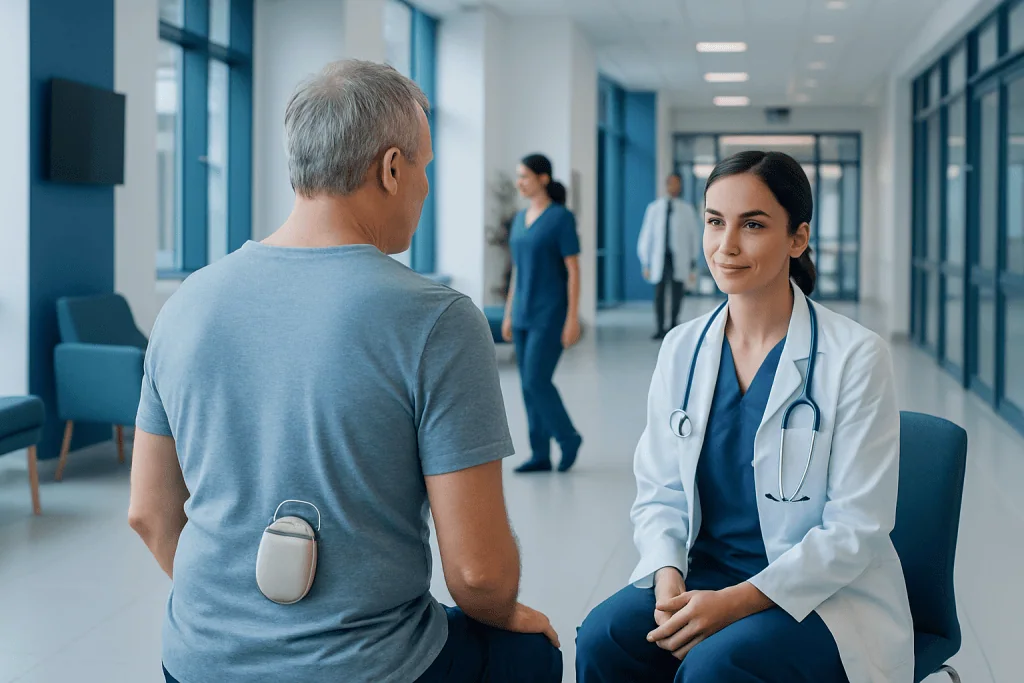
A back stimulation implant delivers small electrical pulses near the spinal cord to modify pain signalling; it does not repair the underlying spine condition. A temporary stimulation trial is usually used to assess whether the therapy provides meaningful pain relief and functional improvement before permanent implantation.
Key Takeaways
- A back stimulation implant delivers small electrical pulses near the spinal cord to modify pain signalling; it does not repair the underlying spine condition.
- A temporary stimulation trial is usually used to assess whether the therapy provides meaningful pain relief and functional improvement before permanent implantation.
- It may be suitable for selected people with persistent neuropathic pain, including pain after spine surgery, but it is not appropriate for everyone.
- Recovery commonly involves several weeks of activity restrictions while the incision and implanted leads settle.
- Benefits can include reduced pain and less reliance on pain medicines, while risks include infection, lead movement, device problems and incomplete pain relief.
- Medicare coverage may be available in the United States when medical necessity and programme-specific requirements are met.
A back stimulation implant, also called a spinal cord stimulator, is a device that may reduce certain types of long-lasting nerve pain when other treatments have not provided enough relief. It is usually considered only after a successful temporary trial and a detailed assessment by a pain and spine care team.
Overview: what is a back stimulation implant?
A back stimulation implant is an implanted pain-management system more commonly called a spinal cord stimulator (SCS). It is designed for selected people with chronic neuropathic pain, meaning pain linked to irritation or injury of nerves. The system sends carefully controlled electrical signals to nerves near the spinal cord, helping to change how pain signals are processed before they reach the brain.
The system typically includes thin insulated wires called leads and a small pulse generator, sometimes described as a back implant device. Leads are placed in the epidural space, the area outside the protective covering of the spinal cord. The generator is placed beneath the skin, often in the buttock, abdomen or upper buttock area. Modern systems may be rechargeable or non-rechargeable, and many are adjusted with an external controller.
A back implant for back pain is not a cure for every cause of back pain. It is generally most helpful for persistent nerve-related pain, such as burning, tingling, electric-shock sensations or pain travelling into the leg or arm. It is less likely to help pain caused mainly by a mechanical problem that needs a different treatment, such as significant spinal instability or compression of a nerve that can be corrected surgically.
How spinal cord stimulation works and who may benefit
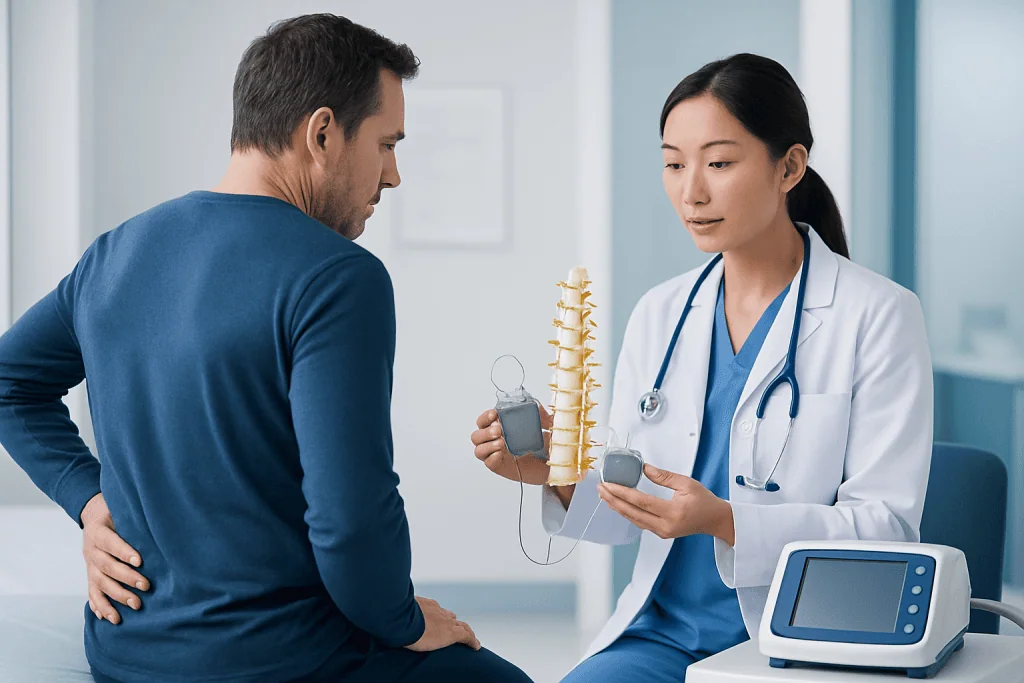
Spinal cord stimulation is a form of neuromodulation. Depending on the device and programme, stimulation may create a gentle tingling feeling, known as paresthesia, or may be delivered without a noticeable sensation. A pain specialist programmes the device based on the person’s pain pattern, daily activities and response to therapy. Settings can often be adjusted over time.
Clinicians may consider a back stimulator implant for people whose chronic pain has continued despite appropriate non-surgical treatments, such as medicines, physical rehabilitation, psychological pain support or targeted injections. It is often assessed for persistent pain after one or more spine operations, sometimes called failed back surgery syndrome or persistent spinal pain syndrome. Other potential uses include complex regional pain syndrome and certain forms of peripheral neuropathic pain.
Careful selection is essential. The assessment may involve pain medicine, neurosurgery or spine surgery, rehabilitation, psychology and the person’s usual doctor. The team reviews the pain diagnosis, previous treatments, imaging when needed, physical health, goals, ability to use the device and expectations. A useful outcome is not only lower pain intensity, but also better sleep, mobility, daily function and quality of life.
- Symptoms should be consistent with a condition that may respond to neuromodulation.
- Conservative and appropriate condition-specific care should have been explored.
- The person should be able to take part in follow-up, programming and rehabilitation.
- Realistic goals should focus on meaningful improvement, not a promise of complete pain removal.
Who should not have a spinal cord stimulator?
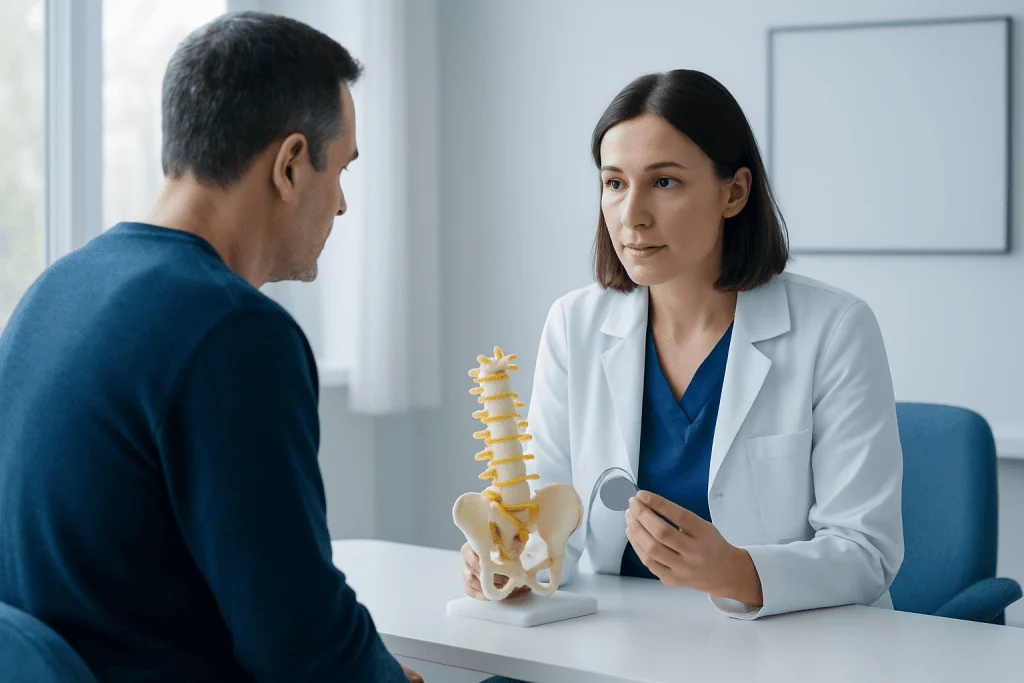
A spinal cord stimulator is not appropriate for every person with chronic back or limb pain. It may be unsuitable when there is an untreated infection, a bleeding disorder that cannot be safely managed around the procedure, or a medical condition that makes anaesthesia or surgery unacceptably risky. An active infection anywhere in the body usually needs treatment before an implanted device is considered.
It may also not be recommended when pain is not primarily neuropathic, when a correctable spinal condition requires another form of treatment first, or when the temporary trial does not produce meaningful benefit. People who cannot safely operate or recharge the device, or cannot attend follow-up appointments, may not be good candidates. Certain implanted heart devices and the need for specific MRI examinations require individual device-compatibility planning.
A psychological assessment is often part of standard preparation. This is not intended to suggest that pain is “all in the mind.” Chronic pain affects emotional wellbeing, sleep and coping, while untreated severe depression, active substance use disorder or unaddressed expectations can make an implant less likely to meet a person’s goals. Support for these factors can improve the overall pain-care plan.
Pregnancy, future imaging needs, anticoagulant medicines and other implanted medical devices should be discussed with the specialist team. Decisions should be individualized after a full review of benefits, limitations and alternatives.
Back stimulator implant surgery: the trial and permanent procedure
Most people have a temporary trial before permanent back stimulator implant surgery. During the trial, a clinician inserts one or more leads through a needle into the epidural space, usually with local anaesthesia and light sedation. The leads are connected to an external battery worn outside the body. Imaging guidance helps the clinician position the leads safely.
The trial commonly lasts several days, although timing varies by local practice and the device used. During this period, the person records pain levels, activity, sleep, medicine use and the ability to do meaningful daily tasks. If stimulation provides sufficient benefit and the person wishes to proceed, the care team discusses permanent implantation.
For permanent implantation, the leads are secured under the skin and connected to a pulse generator placed in a small pocket beneath the skin. The procedure may be performed with sedation or general anaesthesia, depending on the surgical approach and individual needs. The incisions are then closed, and the device is programmed after surgery or during follow-up.
People should ask their team about the specific device model, charging needs, controller use, travel considerations and MRI conditions. Not all systems have the same imaging compatibility. Treatment for chronic pain should remain individualized and may include rehabilitation and medication review alongside stimulation.
Benefits, limitations and long-term expectations
The main potential benefit of a back implant stimulator is meaningful reduction in chronic nerve pain, with improved ability to walk, sleep, work or take part in daily life. Some people also reduce their use of pain medicines, including opioids, under medical guidance. Response varies considerably, and the device is normally one component of a wider pain-management plan rather than a stand-alone solution.
What is the long-term success rate of a back stimulator implant? There is no single long-term success rate that applies to everyone. Research findings vary because outcomes depend on the pain condition, device technology, treatment history, definition of success and length of follow-up. In clinical practice, success is generally judged by sustained, meaningful pain relief together with improved function and satisfaction, rather than by one percentage alone.
Some people continue to benefit for years, while others experience reduced benefit over time. Pain can change, leads may shift, scar tissue can affect stimulation, or the underlying condition may progress. Reprogramming can sometimes restore useful relief. In other situations, a revision procedure, device replacement or removal may be considered.
A temporary trial is valuable because it gives the person and clinical team direct information about likely benefit. Even a successful trial cannot guarantee long-term results, so it is important to discuss both expected gains and uncertainties before deciding on a permanent implant.
How long is recovery from a spinal cord stimulator implant?
How long is recovery from a spinal cord stimulator implant? Initial recovery is often measured in days to a few weeks, while full settling of the surgical areas and return to unrestricted activity may take around six to eight weeks. Individual timing depends on the procedure, the location of the generator, other health conditions, job demands and the surgeon’s instructions.
After the procedure, soreness around the incision sites is common and is usually managed with the care plan provided by the surgical team. During the early healing period, people are commonly advised to avoid bending, twisting, stretching, lifting heavy objects and strenuous activity. These precautions help reduce the chance of lead movement before scar tissue stabilizes the leads.
Walking is often encouraged as tolerated, with activity increased gradually. Wound-care instructions should be followed closely. The team will schedule follow-up visits to check healing and adjust programming. Returning to desk-based work may be possible sooner than returning to work involving lifting, repeated bending or vibration, but this should be agreed with the clinician.
People should contact their team promptly for fever, worsening redness, warmth, drainage or increasing pain at an incision; new weakness or numbness; severe headache; or a sudden loss of stimulation benefit. These symptoms do not always mean a serious complication, but they need timely assessment.
Risks, self-care and when to seek medical care
As with any invasive procedure, spinal cord stimulation has risks. These include infection, bleeding, pain at the generator site, fluid leakage causing headache, lead movement or breakage, loss of pain relief, unwanted stimulation and device malfunction. Rarely, injury to nerves or the spinal cord can occur. The clinical team takes steps to reduce these risks, but no procedure is risk-free.
Helpful self-care includes protecting the incision sites, following lifting and movement restrictions, attending programming appointments and keeping a record of pain, function and device response. A person should carry device identification information and tell clinicians, dentists and imaging staff about the implant before procedures. The implanting team can explain safety considerations for MRI scans, security systems and other equipment.
When to seek medical care: Urgent medical advice is appropriate for fever, chills, wound drainage, rapidly spreading redness, severe or worsening back pain, new leg weakness, loss of bladder or bowel control, or severe persistent headache after the procedure. Emergency assessment is important for sudden neurological symptoms or signs of a severe allergic reaction. For less urgent concerns, such as changes in stimulation or difficulty charging the device, the implanting service can provide guidance.
Acibadem International’s multidisciplinary pain, spine and neurosurgical specialists in JCI-accredited hospitals assess and treat eligible international patients with chronic pain conditions, including options such as spinal cord stimulation. A consultation can help clarify whether this approach fits the individual diagnosis, goals and wider treatment plan.
Does Medicare cover spinal cord stimulator implants?
Does Medicare cover spinal cord stimulator implants? In the United States, Medicare may cover a spinal cord stimulator trial and permanent implant when the treatment is medically necessary and programme requirements are met. Coverage decisions can depend on the diagnosis, prior treatment history, clinical documentation, psychological evaluation when required, trial results, the facility and the local Medicare contractor’s policies.
Medicare Advantage plans must provide at least the services covered by Original Medicare, but they may have their own authorization rules, provider networks and cost-sharing arrangements. Medigap policies may help with some out-of-pocket costs for eligible people with Original Medicare, but coverage details differ by plan and location.
Before scheduling treatment, individuals should ask the implanting provider’s billing team for a benefits review and contact Medicare or their plan directly. Questions to ask include whether prior authorization is needed, whether the surgeon and facility are in network, what documentation is required and what personal costs may remain. Coverage information can change, so confirmation should be obtained for the planned care.
Frequently asked questions
Is a back stimulation implant the same as a spinal cord stimulator?
Yes. A back stimulation implant is a patient-friendly term often used for a spinal cord stimulator, or SCS. The device places leads near the spinal cord and uses electrical stimulation to help modify chronic pain signals.
Will a spinal cord stimulator cure back pain?
No. A spinal cord stimulator does not cure the underlying cause of back pain or repair damaged structures in the spine. Its purpose is to reduce selected chronic nerve pain symptoms and support better day-to-day function.
Can a spinal cord stimulator be removed?
In many cases, a spinal cord stimulator can be removed if it is no longer helpful, causes complications or is no longer wanted. The decision and procedure should be discussed with the implanting specialist, as the approach depends on the type of leads and the person’s medical circumstances.
Will an implanted spinal cord stimulator affect MRI scans?
Some modern systems are designed to allow certain MRI scans under specific conditions, while others may have important limitations. The exact device model, lead configuration and MRI protocol must be checked by the imaging team and implanting clinician before any scan.
What happens if the spinal cord stimulator trial does not help?
If the trial does not provide meaningful pain or functional improvement, permanent implantation is usually not recommended. The pain team can review the diagnosis and consider other treatment options, such as rehabilitation, medicine adjustments, psychological pain support or other targeted interventions.
Can a person drive with a spinal cord stimulator?
Driving advice depends on the device, symptoms and local rules. Many clinicians advise turning stimulation off while driving if it could cause distracting or unexpected sensations, and people should follow the specific instructions provided by their implanting team.
References
- National Institute for Health and Care Excellence
- U.S. Food and Drug Administration
- Centers for Medicare & Medicaid Services
- International Neuromodulation Society
- North American Neuromodulation Society
This article is for general information only and is not a substitute for professional medical advice. Please consult a qualified doctor about your individual situation.
Joint and spine care in Turkey — expert assessment & treatment
JCI-accredited · board-certified surgeons · reply within 24h

More from the Health Library


Related Specialists

Assoc. Prof. Dr. Gülfem Başol
Gynecology & Obstetrics
Dr. Tünkut Salim Doğanca
Urology
Prof. Dr. Koray Özduman
Neurosurgery
Dr. Habibe Seyisoğlu
Gynecology & Obstetrics