Arthritis in Hands Treatment: How It Works, Results and What to Expect

Hand arthritis can affect the thumb base, finger end joints, middle finger joints, knuckles or wrist, causing pain, stiffness and reduced grip. Treatment aims to relieve symptoms, protect joint function and support everyday activities; it does not always reverse existing joint changes.
Key Takeaways
- Hand arthritis can affect the thumb base, finger end joints, middle finger joints, knuckles or wrist, causing pain, stiffness and reduced grip.
- Treatment aims to relieve symptoms, protect joint function and support everyday activities; it does not always reverse existing joint changes.
- Splints, targeted hand exercises, topical medicines and activity modification are common first-line options for osteoarthritis of the hand.
- Inflammatory arthritis such as rheumatoid arthritis needs early medical assessment because disease-modifying medicines can help prevent joint damage.
- Hand surgery is usually considered only after non-surgical treatments have not provided enough relief or function is substantially affected.
Arthritis in hands treatment is tailored to the affected joints, the type of arthritis, symptom severity and the person’s daily activities. Most people begin with joint-protection strategies, hand therapy and pain relief; injections or surgery may be considered when symptoms remain limiting.
Overview: how arthritis in hands treatment works
Arthritis in hands treatment works by addressing pain, stiffness, inflammation and loss of function while helping a person continue important daily tasks. The best plan depends on whether the arthritis is osteoarthritis, an inflammatory condition such as rheumatoid arthritis, gout, previous injury or another cause. It also depends on which joints are affected, particularly the thumb base, finger joints, knuckles or wrist.
For many people, treatment begins without surgery. A clinician may recommend activity adjustments, heat or cold, hand exercises, supportive splints and medicines applied to the skin or taken by mouth when safe. If these measures do not provide adequate relief, options may include a corticosteroid injection into a selected joint or, in carefully chosen situations, reconstructive hand surgery.
Successful care is usually a process rather than a single procedure. Symptoms may fluctuate, and treatment can be adjusted over time according to pain, function, work demands and side effects. A hand specialist, rheumatologist, orthopedist, physiotherapist or occupational therapist may each have a role in care.
Symptoms, causes and who may benefit from treatment
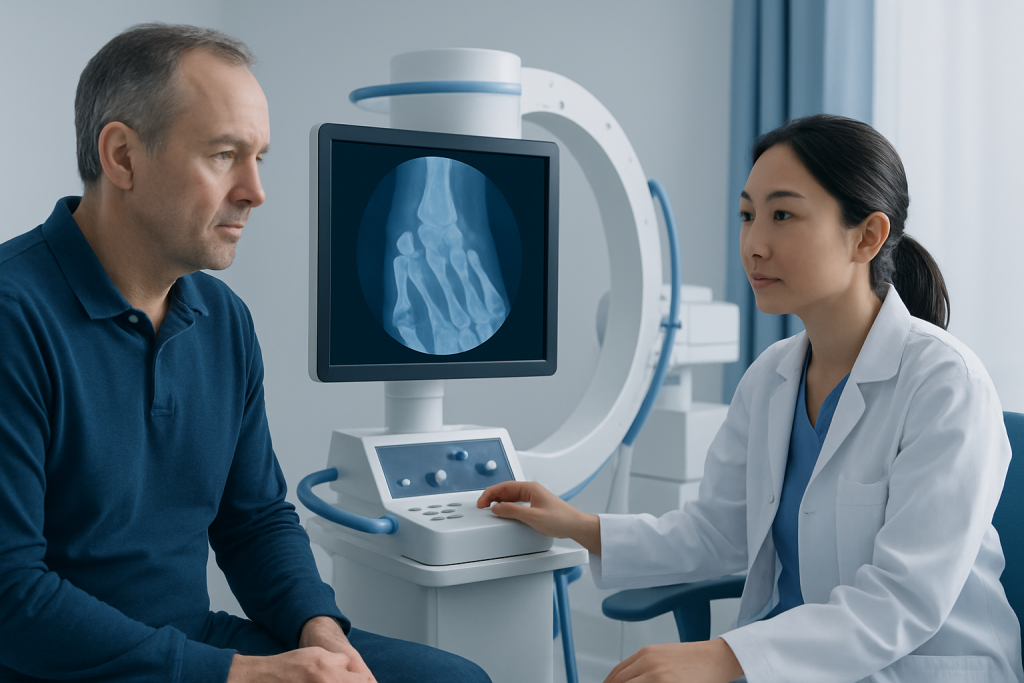
Hand arthritis commonly causes aching pain with use, stiffness after rest, swelling, tenderness and reduced grip or pinch strength. Some people notice bony enlargements at the end or middle finger joints, while thumb-base arthritis can make opening jars, turning keys or pinching difficult. Inflammatory arthritis may cause persistent swelling, warmth and prolonged morning stiffness, often affecting several joints.
Osteoarthritis is related to gradual changes in joint cartilage and surrounding structures. Age, family history, previous fracture or ligament injury, repetitive heavy hand use and joint alignment may contribute. Rheumatoid arthritis is an autoimmune disease in which the immune system attacks joint lining tissue, while gout is caused by urate crystal deposits. These conditions require different treatment approaches.
People are often candidates for treatment when pain limits sleep, work, hobbies or self-care; when stiffness reduces hand function; or when swelling is ongoing. Early evaluation is particularly important for new, persistent swelling in the knuckles or wrists, symptoms in both hands, fever, sudden severe redness, or marked morning stiffness. These features may suggest an inflammatory or crystal-related condition rather than routine osteoarthritis.
- Non-surgical care may suit mild to moderate pain and early functional difficulty.
- Injections may be discussed for a painful, clearly identified joint when other measures are insufficient.
- Surgery may be considered for severe pain, deformity, instability or major loss of function despite an appropriate trial of conservative treatment.
Can anything be done with arthritis in your hands?

Yes. Although arthritis-related changes in a joint cannot always be reversed, there are many ways to manage symptoms and preserve useful hand movement. A personalized plan often combines education, pacing activities, hand therapy, splints and medication. The goal is practical: less pain, improved ability to use the hand and greater confidence with everyday tasks.
Joint-protection techniques can reduce strain. Examples include using wider-handled tools, choosing lightweight kitchen equipment, carrying items with both hands, avoiding prolonged tight gripping and taking brief breaks during repetitive work. A therapist can recommend adaptive devices and teach ways to distribute force through stronger joints.
Exercise also has a role, but it should be gentle and individualized. Range-of-motion work can help limit stiffness, while carefully selected strengthening may support hand function. Exercises should not cause lasting worsening of pain or swelling. If symptoms increase significantly after activity, a clinician or hand therapist can help adjust the program.
Where inflammatory arthritis is diagnosed, early specialist care is especially valuable. Treatment may include medicines that control the underlying immune-driven disease, not simply pain medicine. Managing the underlying condition may protect joints and reduce the risk of progressive damage.
What is the best treatment for arthritis pain in the hands?
There is no single best treatment for everyone. For hand osteoarthritis, topical anti-inflammatory medicines are often considered before oral anti-inflammatory medicines because they may provide local relief with less whole-body exposure. However, suitability depends on medical history, including kidney disease, stomach ulcers, bleeding risk, heart disease, pregnancy and other medicines. A doctor or pharmacist can advise on safe choices.
Heat can ease stiffness before activity, while a cold pack may help short-term swelling or soreness after activity. A thumb or finger splint may reduce painful movement and improve stability, especially for thumb-base arthritis. Splints are typically used at selected times rather than continuously, since prolonged immobilization can contribute to stiffness or weakness.
If symptoms continue despite these approaches, a clinician may discuss an image-guided or landmark-guided corticosteroid injection for an individual painful joint. The injection aims to reduce inflammation and pain temporarily, making it easier to participate in daily activities and therapy. Benefit is variable, and repeat injections are not appropriate for every joint or every person.
People with rheumatoid arthritis or another inflammatory arthritis may need a rheumatology-led plan that includes disease-modifying treatment. This differs from osteoarthritis management because controlling inflammation is central to limiting joint injury. A correct diagnosis is therefore an important first step before deciding what treatment is best.
Diagnosis and the step-by-step treatment pathway
Diagnosis starts with a conversation about symptoms, activities, previous injuries, family history and medical conditions. During examination, the clinician checks the location of tenderness and swelling, joint movement, grip and pinch strength, alignment and signs of nerve compression. The pattern of involved joints can offer important clues about the type of arthritis.
Hand X-rays may show joint-space narrowing, bone spurs, alignment changes or damage from inflammatory arthritis. Blood tests may be useful when rheumatoid arthritis, gout or another systemic condition is suspected, but they are not routinely required for typical osteoarthritis. Ultrasound or other imaging is sometimes used when the diagnosis remains uncertain or to assess soft tissues.
A typical care pathway is step-by-step. First, the care team confirms the likely diagnosis and identifies the joints causing the greatest limitations. Next, they agree on realistic goals, such as opening containers more comfortably, returning to a hobby or sleeping without hand pain. Conservative measures are usually introduced and reviewed over several weeks to months.
If symptoms remain substantial, the next step may be injection treatment, referral to a hand surgeon or reassessment for an alternative diagnosis. Decisions should be shared, balancing expected benefit with health conditions, work needs, recovery time and personal preferences. Treatment is not a one-size-fits-all sequence, and some people need more than one approach.
How surgical treatment works, who it may suit and what recovery involves
Hand arthritis surgery may be an option when severe pain or impaired function persists despite well-planned non-surgical care. The operation is selected according to the affected joint. Common approaches include joint fusion, which stabilizes a painful joint but removes its movement; joint replacement, which may preserve some movement in selected joints; and thumb-base procedures that remove or reconstruct part of the arthritic joint.
Before surgery, the surgeon reviews X-rays, hand function, skin and soft-tissue health, previous treatments and general fitness for anesthesia. The person should understand the trade-offs: fusion can be durable and relieve pain but limits motion, while joint replacement may retain mobility but may not be suitable for heavy loading and can require later revision. Smoking cessation, good diabetes management and planning support at home can help prepare for recovery.
On the day of surgery, anesthesia may be local, regional or general depending on the procedure and individual circumstances. The surgeon makes an incision, repairs, removes, stabilizes or replaces the damaged joint structures as planned, and closes the wound. A dressing, splint or cast is often applied to protect the area during early healing.
Recovery varies substantially by operation and joint. Swelling and tenderness are expected early on, and elevation, wound care and prescribed pain control are important. Hand therapy commonly begins at a time chosen by the surgeon to restore safe movement, strength and practical use. Many people make gradual gains over several months, while scar maturation and final functional improvement can take longer.
Benefits, limitations and possible risks of treatment
The potential benefits of arthritis in hands treatment include reduced pain, better sleep, improved pinch or grip, less stiffness and easier participation in work, self-care and recreation. Conservative measures have the advantage of avoiding surgery and can be repeated or adjusted. Surgery may offer meaningful pain relief and improved stability for carefully selected people with advanced joint disease.
Every treatment has limitations. Exercises and splints may help symptoms but do not remove arthritis. Medicines can cause side effects or interact with other treatments. Injections may provide temporary rather than permanent benefit, and they can occasionally cause skin changes, a flare of pain after injection, elevated blood glucose or infection. A clinician should review individual risks before an injection.
Surgical risks include infection, bleeding, wound-healing problems, scarring, stiffness, nerve or blood-vessel injury, persistent pain, reduced movement, implant problems and the need for further surgery. Recovery also requires time, protection of the hand and participation in rehabilitation. The surgeon can explain risks relevant to the exact procedure and a person’s health profile.
At Acibadem International, multidisciplinary specialists and JCI-accredited hospitals can assess hand arthritis and coordinate orthopedic, rheumatology, imaging and rehabilitation care for international patients. A consultation can help clarify whether non-surgical management, injection treatment or surgery is appropriate.
How long does arthritis treatment take to work?
The timing depends on the treatment and the type of arthritis. Heat, activity modification, a well-fitted splint or topical pain relief may help within days, although finding the most useful routine can take several weeks. Hand exercises and therapy usually require regular practice over weeks to build mobility, confidence and strength.
Corticosteroid injections may begin helping within several days, though the timing and duration of relief vary. Some people experience little benefit, while others have meaningful temporary relief. A short-lived increase in discomfort can occur after an injection, so the treating clinician will provide aftercare guidance.
For inflammatory arthritis, disease-modifying medicines may take weeks to months to show their full effect, and monitoring is needed. After surgery, early wound healing occurs over the first weeks, but improvement in hand strength and function is commonly gradual over months. Follow-up appointments allow the team to monitor healing and adapt rehabilitation safely.
What is the best vitamin for arthritis in your hands?
No vitamin has been proven to cure hand arthritis or reliably replace established treatment. Vitamin D is important for bone health, and a clinician may recommend testing or supplementation when a deficiency is suspected or confirmed. Correcting a deficiency supports overall musculoskeletal health, but it is not a standalone treatment for arthritis pain.
Supplements marketed for joint health may have uncertain benefit, variable quality and potential interactions with medicines. High doses of vitamins can also be harmful. It is sensible to discuss supplements with a doctor or pharmacist, especially for people who take blood thinners, have kidney or liver disease, are pregnant, or are preparing for surgery.
A balanced eating pattern that includes protein, fruit, vegetables, whole grains and healthy fats supports general health and recovery. For people with excess body weight and arthritis in weight-bearing joints, weight management may reduce joint load, although it does not directly remove stress from hand joints. Good sleep, regular movement and avoiding smoking can also support pain management and overall health.
When to seek medical care
A person should arrange medical assessment for hand pain, stiffness or swelling that lasts more than a few weeks, interferes with normal activities or steadily worsens. Assessment is also important when there is loss of strength, numbness, finger locking, a visible change in joint alignment or symptoms after an injury. Early diagnosis can help guide appropriate treatment and identify inflammatory arthritis.
Urgent medical care is advisable for a suddenly red, hot, very swollen and severely painful joint, particularly if fever or feeling unwell is present. These symptoms can have several causes, including infection or a crystal-related arthritis flare, and should not be self-treated alone. New weakness, inability to move a finger after trauma, or signs of impaired circulation also need prompt assessment.
For ongoing symptoms, bringing a brief record of painful activities, stiffness duration, previous treatments and medicines can make the appointment more productive. A clinician can discuss whether referral to rheumatology, orthopedic hand surgery or hand therapy is appropriate and develop a plan that fits the person’s goals.
Frequently asked questions
Can arthritis in the hands be cured?
Most forms of hand arthritis cannot currently be cured, and joint changes from osteoarthritis are not usually reversible. However, treatment can often reduce pain, improve function and slow damage in some inflammatory forms of arthritis. The right approach depends on the diagnosis and the joints involved.
What kind of doctor treats arthritis in the hands?
A primary care clinician can assess initial symptoms and arrange tests or referrals. A rheumatologist is particularly important when inflammatory arthritis is suspected, while an orthopedic hand surgeon treats structural problems and considers surgery when needed. Hand therapists help with splints, exercises and practical adaptations.
Do hand exercises make arthritis worse?
Appropriate, gentle exercises generally aim to maintain movement and strength rather than worsen arthritis. They should be tailored to the painful joints and should not cause persistent increases in swelling or pain. A hand therapist can provide a safe program and adjust it if symptoms flare.
Are corticosteroid injections safe for hand arthritis?
Corticosteroid injections can be useful for selected painful joints, but they are not suitable for everyone and are not a permanent cure. Possible risks include temporary pain flare, skin changes, infection and short-term blood glucose elevation. A clinician should discuss the expected benefit and risks for the individual joint.
When is hand surgery considered for arthritis?
Surgery is usually considered when pain remains severe despite non-surgical care, function is significantly limited, or there is instability or deformity. The procedure depends on the joint and may involve fusion, replacement or reconstruction. Recovery requires protection of the hand and rehabilitation over time.
Can diet reduce arthritis pain in the hands?
A balanced diet supports overall health, but no specific food or diet has been proven to cure hand arthritis. Some people find that a generally anti-inflammatory eating pattern and maintaining a healthy lifestyle help them manage symptoms. Anyone considering supplements or major dietary changes should discuss them with a healthcare professional.
References
- American College of Rheumatology
- Arthritis Foundation
- National Institute of Arthritis and Musculoskeletal and Skin Diseases
- National Health Service
- American Society for Surgery of the Hand
This article is for general information only and is not a substitute for professional medical advice. Please consult a qualified doctor about your individual situation.
Arthritis in Turkey — costs, top hospitals & a free quote
JCI-accredited · board-certified surgeons · reply within 24h

Orthopedics & Spine
Care for bones, joints and the musculoskeletal system, including joint replacement, sports injuries and trauma.
125 specialists in this unit