Chemo Cream for Face: How It Works, Results and What to Expect

Chemo cream for face is most often fluorouracil, a prescription topical chemotherapy medicine. It is commonly used for actinic keratoses and may be appropriate for carefully selected superficial basal cell carcinomas.
Key Takeaways
- Chemo cream for face is most often fluorouracil, a prescription topical chemotherapy medicine.
- It is commonly used for actinic keratoses and may be appropriate for carefully selected superficial basal cell carcinomas.
- Inflammation during treatment can be expected, but severe pain, spreading swelling or signs of infection should be assessed promptly.
- The exact application schedule, treatment area and duration must be set by a dermatologist.
- Sun protection and follow-up skin examinations remain important after treatment because new lesions can develop.
Chemo cream for face usually refers to prescription fluorouracil cream, a topical medicine used to treat actinic keratoses and selected superficial skin cancers. It works gradually, often causing temporary redness, crusting and peeling as abnormal sun-damaged cells are targeted.
Overview: what is chemo cream for face?
Chemo cream for face is a common informal term for topical chemotherapy medicines applied directly to the skin. The medicine most often meant is fluorouracil (also called 5-FU), a prescription cream or solution that treats certain abnormal cells in the outer skin layer. It is widely used for actinic keratoses—rough, scaly spots caused by cumulative sun exposure—and, in selected cases, for superficial basal cell carcinoma.
Unlike intravenous chemotherapy, fluorouracil cream is intended to act mainly where it is applied. It does not replace a skin examination, biopsy, surgery or other treatment when these are needed. A dermatologist should first confirm the diagnosis and decide whether a topical approach is appropriate for the specific lesion, its location and its depth.
Facial skin is especially prone to sun damage because it receives frequent ultraviolet exposure. Treating a whole sun-damaged field, rather than only the most visible spots, can help address both obvious and early microscopic actinic keratoses within the prescribed area.
How chemo cream works and who may be a candidate
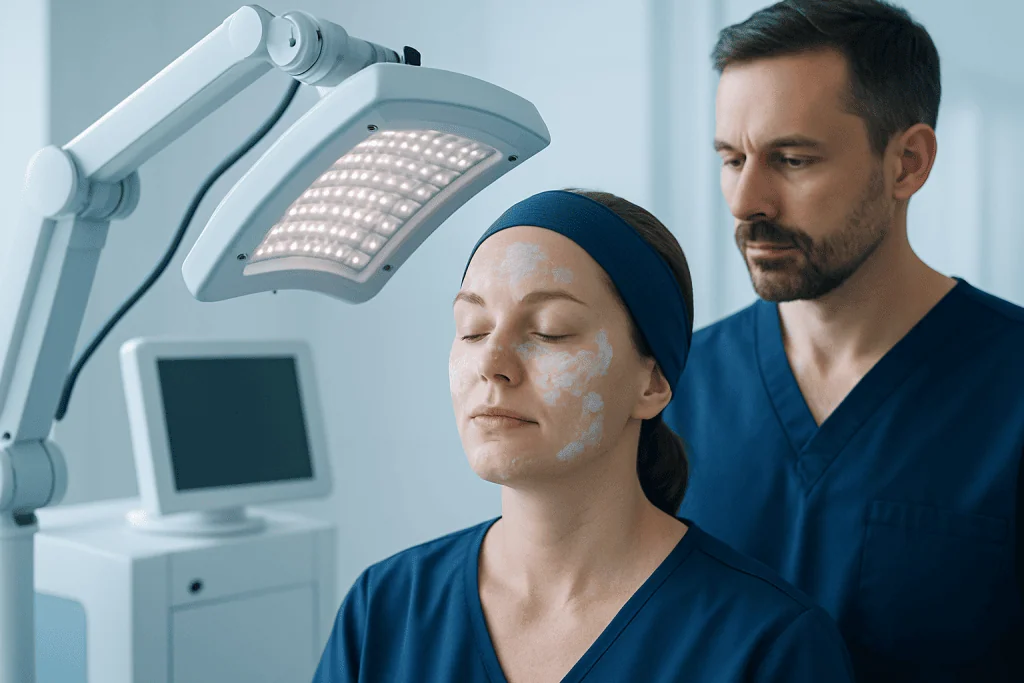
Fluorouracil interferes with the way rapidly dividing abnormal cells make DNA. Sun-damaged precancerous cells are often more susceptible than surrounding healthy skin, so treated areas may become noticeably inflamed. This reaction is part of how the medicine identifies and clears damaged skin, but its intensity varies between people and treatment plans.
Doctors may recommend fluorouracil for multiple actinic keratoses on the forehead, cheeks, nose, scalp or other sun-exposed areas. It can also be considered for superficial basal cell carcinoma when a specialist judges that topical treatment is suitable. It is not generally the preferred treatment for melanoma, invasive squamous cell carcinoma, deep or high-risk basal cell carcinoma, or lesions where the diagnosis is uncertain.
Before prescribing, the clinician reviews the lesion, prior skin cancer history, immune status, medicines, allergies and pregnancy or breastfeeding status. People with a known deficiency of the enzyme dihydropyrimidine dehydrogenase (DPD) should inform their clinician, as fluorouracil toxicity can be more likely. A diagnosis of actinic keratosis should be confirmed rather than assumed from a persistent rough patch.
What to expect when using chemo cream on face?

Before beginning, the prescribing clinician explains exactly where to apply the medicine, how much to use and when to stop. The face should usually be gently cleansed and dried first. A thin film is applied to the instructed area, avoiding the eyes, eyelids, lips, nostrils and inside of the mouth unless the clinician has specifically advised otherwise. Hands should be washed carefully after application.
During the first days, the skin may show little change. Redness, dryness and a stinging or burning sensation commonly develop as treatment continues. The area can then become more inflamed, with scaling, crusting, tenderness or superficial erosion. In general, areas with more sun damage may react more strongly than nearby skin.
The visible response can feel inconvenient, especially on the face, but it should be monitored rather than endured without support. Patients should contact their prescribing team if they are uncertain whether a reaction is expected. The clinician may adjust the schedule, recommend gentle supportive skin care or arrange a review when the inflammatory response is more pronounced than anticipated.
After the prescribed course ends, healing continues. New healthy surface skin gradually forms, and pinkness may persist for a period before fading. Follow-up allows the dermatologist to assess the response and identify any remaining lesion that needs another approach.
How quickly does fluorouracil cream work?
Fluorouracil cream begins acting on abnormal cells after applications start, but visible changes are usually gradual. Many people first notice redness or irritation within one to two weeks, although timing depends on the medicine strength, application schedule, skin location and degree of sun damage. The most active inflammatory stage may occur later in the planned course.
Treatment duration varies. For actinic keratoses, courses are commonly measured in weeks, while treatment plans for superficial basal cell carcinoma may differ and require particularly close medical supervision. Patients should not extend, shorten or restart treatment based only on how the area looks; the planned schedule should come from the prescriber.
Healing is not immediate once applications stop. Peeling and crusting can continue temporarily, followed by redness and sensitivity as the barrier recovers. A clinician can provide a more individual timeline after examining the treatment area and knowing the exact product and regimen used.
What to avoid when using fluorouracil cream?
While using fluorouracil cream, patients should avoid unprotected sunlight and artificial ultraviolet exposure, including tanning beds. Treated skin is sensitive, and sun exposure can worsen irritation. Broad-brimmed hats, shade and other physical protection are useful; the prescribing clinician can advise when and how to use sunscreen on inflamed or open areas.
Unless specifically approved by the prescriber, it is best to avoid applying cosmetics, fragranced products, exfoliants, retinoids, acids, scrubs or other potentially irritating products over the treatment site. Occlusive dressings should not be used unless directed. Fluorouracil should also be kept away from mucous membranes and should not be shared with another person.
Patients should not use the cream on a lesion that has not been assessed, especially one that is bleeding, rapidly growing, deeply ulcerated or changing in color. They should tell their clinician about all medicines and supplements, and seek advice before treatment if pregnant, trying to become pregnant or breastfeeding. Pets should not contact or lick the medicine because fluorouracil can be highly toxic to animals.
How effective is chemo cream on skin cancer?
Chemo cream can be effective for selected superficial skin cancers, particularly superficial basal cell carcinoma, when a dermatologist has confirmed the diagnosis and determined that topical treatment is appropriate. It may also clear actinic keratoses, which are precancerous lesions that can occasionally progress to squamous cell carcinoma if left untreated.
Its effectiveness depends on the condition being treated, the exact location and size of the lesion, whether the lesion has clear low-risk features, and whether the course is used as prescribed. Topical fluorouracil does not allow a clinician to confirm the margins of a cancer in the same way that some surgical treatments can. For this reason, surgery, curettage, cryotherapy, photodynamic therapy or other options may be recommended instead.
Any lesion that remains, returns or changes after treatment needs prompt reassessment. A clinician may recommend a biopsy to clarify the diagnosis. For confirmed cancers requiring removal, skin cancer treatment is individualized according to cancer type, site, stage and the person’s overall health.
Benefits, risks and recovery timeline
A key benefit of fluorouracil cream is that it can treat a broader field of sun-damaged skin, including lesions that are not yet easily visible. It is applied at home and avoids a procedure for some appropriate cases. For many people, this makes it a useful option within a larger plan for skin cancer prevention and surveillance.
The expected trade-off is local skin inflammation. Common effects include redness, dryness, itching, burning, tenderness, swelling, peeling and crusting. These effects are usually temporary, but they can be substantial and may affect work, social plans or daily comfort during the active phase. Skin color changes or prolonged redness can occur, particularly in more deeply pigmented skin.
Rarely, a person may develop a severe local reaction, infection, allergic reaction or more widespread symptoms. Recovery often includes an inflammatory treatment phase followed by several weeks of repair, though the time varies. Gentle cleansing, simple fragrance-free moisturization when approved, avoiding picking, and strict sun protection can support healing.
Acibadem International’s multidisciplinary specialists and JCI-accredited hospitals can assess suspicious lesions and provide coordinated care for international patients when topical therapy or another skin treatment is needed.
When to seek medical care
Patients should contact the prescribing clinician promptly if pain is severe, swelling is marked, redness extends well beyond the treatment area, or there is pus, fever or other possible signs of infection. Urgent medical help is appropriate for breathing difficulty, facial swelling, widespread rash, severe weakness, persistent vomiting or diarrhea, or other symptoms suggesting a serious reaction.
A new, changing, bleeding or non-healing spot should be examined by a dermatologist rather than treated with leftover cream. This is particularly important for dark or irregularly colored lesions, because not all skin cancers respond to topical fluorouracil and melanoma requires a different diagnostic and treatment pathway.
Even after a successful course, regular skin checks are important. People with previous actinic keratoses or skin cancer benefit from discussing a personalized surveillance schedule, daily sun protection and early review of any concerning new skin changes.
Frequently asked questions
Is chemo cream for face the same as chemotherapy?
Fluorouracil cream is a form of topical chemotherapy, meaning it is placed on the skin rather than given through a vein. Its effects are mainly local to the treated area, although it should still be used exactly as prescribed because it is a potent medicine.
Can fluorouracil cream be used around the eyes?
The eye area is delicate, and fluorouracil should not be applied on the eyelids, in the eyes or near mucous membranes unless a specialist has given specific instructions. Accidental eye exposure should be rinsed with plenty of water and medical advice should be sought if irritation persists.
Should fluorouracil cream be stopped when the skin becomes red and crusted?
Redness, scaling and crusting can be expected during treatment, but the right stopping point depends on the individual prescription. Patients should not change their schedule without contacting the prescriber, especially if discomfort is severe or the reaction seems more extensive than expected.
Does fluorouracil cream leave scars on the face?
Fluorouracil cream does not usually cause scarring when used as directed, although temporary redness, irritation and changes in skin color may occur. Scarring risk may be higher if there is infection, severe skin injury or picking at crusts, so follow-up is important.
Can chemo cream treat all types of skin cancer?
No. It may be used for selected superficial basal cell carcinomas and for actinic keratoses, but it is not suitable for every basal cell carcinoma, invasive squamous cell carcinoma or melanoma. A biopsy or specialist assessment may be needed before choosing treatment.
How can someone protect facial skin after fluorouracil treatment?
After treatment, gentle skin care and careful sun protection are important while the skin barrier recovers. A clinician can advise when to resume sunscreen on the treated area, while hats, shade and avoiding intentional tanning remain useful long-term.
References
- American Academy of Dermatology
- National Cancer Institute
- National Comprehensive Cancer Network
- DermNet New Zealand
- U.S. Food and Drug Administration
This article is for general information only and is not a substitute for professional medical advice. Please consult a qualified doctor about your individual situation.
Oncology care in Turkey — second opinion and treatment plan
JCI-accredited · board-certified surgeons · reply within 24h

More from the Health Library

Related Specialists

Fatma Yilmaz
Physical Medicine & Rehabilitation
Fzt. Gizem Sevimli
Physical Medicine and Rehabilitation
Dr. M. Mümtaz Özarar
Breast Clinic Clinical Service
Dr. Damla Akçora
Anesthesiology