Backpack That Helps Chemoterapy: How It Works, Results and What to Expect

A portable chemotherapy pump delivers medicine at a controlled rate through a catheter, often connected to a chest port or PICC line. It is used for selected chemotherapy regimens and is not suitable for every person or every cancer type.
Key Takeaways
- A portable chemotherapy pump delivers medicine at a controlled rate through a catheter, often connected to a chest port or PICC line.
- It is used for selected chemotherapy regimens and is not suitable for every person or every cancer type.
- Patients are taught how to protect the pump and tubing, recognize alarms or leaks, and contact their oncology team promptly if concerns arise.
- Side effects depend mainly on the chemotherapy drugs, dose, cancer type, and individual health rather than the pump itself.
- Many short-term effects improve after treatment, but some people need ongoing follow-up for persistent or late effects.
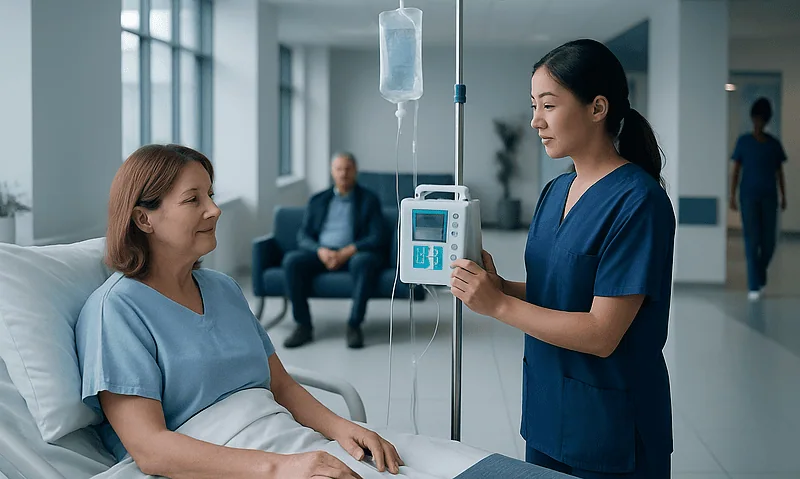
A “backpack that helps chemoterapy” usually refers to a small portable infusion pump carried in a pouch, belt bag, or backpack. It delivers prescribed chemotherapy continuously over hours or days, allowing treatment to continue outside the infusion unit while the oncology team monitors care.
Overview: What Is a Backpack That Helps Chemoterapy?
A backpack that helps chemoterapy is usually a wearable carrier for a portable chemotherapy infusion pump. Although the phrase is commonly used online, the device does not treat cancer by itself. It holds a pump and medication cassette that deliver chemotherapy at a carefully programmed rate through thin tubing into a vein.
This approach is also called ambulatory or continuous chemotherapy infusion. It may let a person leave the hospital or infusion center while treatment continues, often for one to several days. The chemotherapy regimen, infusion duration, and monitoring plan are individualized by the oncology team.
Portable pumps are used in some treatment plans for solid tumors and blood cancers, including regimens in which a steady medicine level is important. They may be part of chemotherapy treatment given before surgery, after surgery, with radiation therapy, or for advanced cancer care.
How a Portable Chemotherapy Pump Works
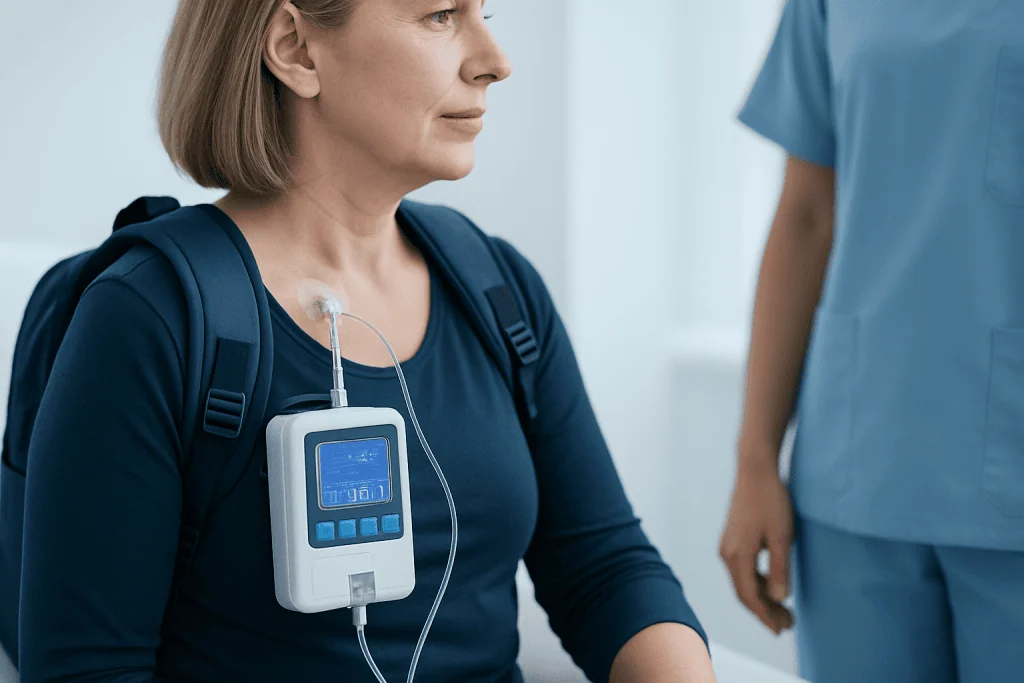
Before treatment starts, a nurse or pharmacist prepares the prescribed medicine in a sealed reservoir or cassette. The reservoir connects to a compact electronic pump or, in some cases, a balloon-like elastomeric pump that uses gentle pressure to push the medicine through the tubing. The device is programmed or selected to provide a specific flow rate.
The tubing connects to a central venous access device, commonly an implanted port in the chest or a peripherally inserted central catheter (PICC). These devices allow repeated intravenous treatment while helping avoid frequent needle placement in smaller arm veins. A nurse checks the line and dressing before the person leaves.
During the infusion, the pump should remain secured in its designated carrier and the tubing should not be kinked, pulled, or disconnected. Electronic pumps may alarm if there is an occlusion, low battery, or other issue. An alarm does not always mean an emergency, but the patient should follow the instructions provided and call the oncology service if the issue cannot be resolved safely.
Who May Be a Candidate?

Candidacy depends on the cancer diagnosis, treatment goals, chemotherapy drugs, vein access, overall health, and ability to manage the device safely at home. The oncology team considers whether continuous infusion offers a clinical advantage compared with treatment given entirely in the infusion center.
A person may be a suitable candidate when they have reliable access to the treatment center or emergency advice line, understand basic pump safety instructions, and have a clean, safe place to stay during infusion. Having a family member, friend, or caregiver available can be helpful, but it is not always required.
The team may recommend a different method if there is a high risk of line complications, major difficulties with self-care, or a need for closer observation. Decisions should account for practical issues such as transportation, mobility, work, sleep, and emotional support as well as medical needs.
- Ask how long the infusion will last and where the pump will be disconnected.
- Ask which symptoms require an immediate call to the treatment team.
- Tell the team about travel plans, water-based activities, or concerns about managing the pump at home.
What Happens During the Procedure and Infusion?
On treatment day, the patient checks in at the infusion unit and may have blood tests or a clinical review first. The oncology team confirms that treatment can proceed, checks vital signs when needed, and reviews symptoms from the previous cycle. Some people receive anti-nausea medicine, fluids, or other supportive medicines before chemotherapy begins.
A nurse accesses the port or PICC line using sterile technique. Some medicines are given in the clinic first, while the continuous-infusion medicine is connected to the portable pump before the patient leaves. The nurse confirms the pump settings, line connections, remaining volume, and expected return time.
At home, patients can usually perform gentle daily activities, eat according to their care plan, and sleep with the pump placed safely nearby. They should keep the device dry unless the team has provided specific waterproofing instructions, avoid contact sports or heavy strain on the catheter area, and never adjust settings or clamp tubing unless specifically instructed.
At the scheduled end of treatment, the person returns for disconnection or, in certain care systems, receives arranged home nursing support. The line is flushed, the access needle may be removed, and the team reviews side effects and plans for the next cycle.
Benefits, Limitations, and Possible Risks
The main potential benefit of a portable pump is that it can provide continuous chemotherapy without requiring a hospital stay throughout the infusion. This may offer more time at home and may support certain drug schedules that work best when delivered steadily. It does not mean treatment is less intensive, and regular communication with the oncology team remains essential.
Side effects are primarily related to the medication rather than the carrier itself. Depending on the regimen, these can include tiredness, nausea, vomiting, appetite changes, diarrhea or constipation, mouth soreness, skin changes, low blood counts, and a higher risk of infection. The care team may provide medicines and practical advice to reduce or manage these effects.
Device- and catheter-related risks include tubing blockage, pump malfunction, leakage, accidental disconnection, irritation at the insertion site, infection, or rarely medicine leaking into surrounding tissue. Fever, chills, redness, swelling, pain, drainage around the line, a damp dressing, a visible leak, or a pump alarm should be reported promptly. The patient should not attempt to reconnect or repair a dislodged line.
Portable infusion is only one part of comprehensive cancer care. Depending on the diagnosis, treatment planning may also involve surgery, radiotherapy, pathology, nutrition support, symptom control, and rehabilitation.
Recovery Timeline and Living Well Between Cycles
Recovery after a chemotherapy infusion varies widely. Some effects can occur during treatment or within the first few days, while fatigue, changes in appetite, bowel symptoms, or low blood counts may be more noticeable later in the cycle. The timing depends on the medicines used and the treatment schedule, so the oncology team’s instructions take priority over general timelines.
Many people find it useful to pace activities, rest when needed, drink fluids as advised, choose nourishing foods they can tolerate, and keep a record of symptoms. Good hand hygiene, avoiding close contact with people who are unwell, and following food-safety advice can be particularly important when immunity may be reduced.
Family members can support recovery by helping with meals, transport, household tasks, and communication with the care team. Emotional changes are also common during cancer treatment. A counselor, oncology social worker, support group, or psycho-oncology professional may help people and families cope with uncertainty and practical demands.
Acibadem International’s multidisciplinary specialists and JCI-accredited hospitals provide diagnosis and treatment planning for international patients receiving cancer care, including coordinated support around chemotherapy.
What Week of Chemo Is the Hardest?
There is no single hardest week of chemotherapy for everyone. Some people feel most unwell in the first few days after treatment, while others notice the greatest fatigue or low blood counts about one to two weeks later. Effects can also build over several cycles.
The “hardest” period depends on the specific medicines, dose, schedule, other treatments, and the person’s general health. Patients should tell their oncology team when symptoms occur, rather than waiting until the next appointment, because many symptoms can be assessed and managed.
Severe or rapidly worsening symptoms are not something a person should simply expect to endure. The care team can check for complications such as dehydration, infection, anemia, or medication-related toxicity and adjust supportive care where appropriate.
Do You Need Your Own Bathroom During Chemotherapy?
Most people do not need a separate bathroom during chemotherapy. However, some chemotherapy medicines and their breakdown products can be present in urine, stool, vomit, and other body fluids for a limited period after treatment. The oncology team will explain the precautions appropriate for the specific regimen.
Common advice may include closing the toilet lid before flushing, washing hands carefully, cleaning splashes promptly, and using gloves when another person must handle body fluids or contaminated laundry. A separate bathroom can be convenient, but it is generally not essential when household hygiene guidance is followed.
People should ask their chemotherapy nurse about precautions for children, pregnant household members, caregivers, and pets. Instructions may differ based on the medication and whether a portable pump is still connected.
What Organ Is Chemo Hard On?
Chemotherapy can affect different organs depending on the drugs used. The bone marrow, which makes blood cells, is commonly affected; this can lower white blood cells, red blood cells, or platelets. Other medicines may place stress on the kidneys, liver, heart, lungs, nerves, hearing, or reproductive organs.
These risks are one reason cancer teams perform blood tests and may monitor heart, kidney, liver, or lung function before and during treatment. Monitoring helps the team identify changes early and decide whether treatment, timing, or supportive care should be adjusted.
Not every person experiences organ-related side effects, and the risk differs substantially between regimens. Patients should share their full medical history and all medicines, supplements, and herbal products with the oncology team before treatment starts.
Does Your Body Ever Fully Recover From Chemotherapy?
Many people recover from the short-term effects of chemotherapy after treatment ends. Hair often regrows, blood counts usually recover, and fatigue, appetite changes, nausea, and bowel changes may gradually improve over weeks to months. The pace of recovery is individual and may be influenced by surgery, radiation, the cancer itself, and other health conditions.
Some effects can last longer or, less commonly, appear later. Examples may include nerve symptoms such as numbness or tingling, ongoing fatigue, changes in fertility, memory or concentration concerns, or effects on the heart and other organs. Follow-up appointments are important for monitoring recovery and addressing late effects.
People should not assume persistent symptoms are unavoidable. Reporting concerns allows the oncology team to evaluate possible causes and discuss rehabilitation, symptom management, referrals, or further tests when needed.
When to Seek Medical Care
Patients receiving chemotherapy should use the emergency contact instructions given by their oncology team. They should contact the team urgently for fever or chills, new shortness of breath, chest pain, confusion, fainting, uncontrolled vomiting or diarrhea, inability to drink fluids, unusual bleeding, severe pain, or a rapidly worsening symptom.
With a portable pump, urgent advice is also needed for a leak, disconnected tubing, a damaged pump, persistent alarm, swelling or burning near the catheter, redness or drainage at the line site, or a wet or loose dressing. If medicine appears to have leaked onto skin or clothing, the patient should follow the specific instructions supplied by the treatment center and contact the team.
For immediate, life-threatening symptoms, emergency medical services should be contacted. It is helpful to tell emergency clinicians that the person is receiving chemotherapy and has a central line or portable infusion pump.
Frequently asked questions
Can I sleep while wearing a chemotherapy pump?
Yes, many people sleep while a portable chemotherapy pump is connected. The pump should be placed securely as instructed, with tubing protected from pulling or kinking. The oncology nurse can demonstrate safe sleeping positions and where to keep the device overnight.
Can I shower with a portable chemotherapy pump?
Showering instructions depend on the pump type, catheter dressing, and treatment center policy. Many pumps and dressings should be kept dry, and bathing or swimming is often avoided while the device is connected. Patients should ask their nurse for specific waterproofing and hygiene guidance.
Can I exercise during a portable chemotherapy infusion?
Gentle movement, such as walking, may be appropriate for many people if they feel well. Heavy lifting, contact activities, and movements that pull on the catheter or tubing should generally be avoided. The oncology team can advise based on blood counts, symptoms, and the type of central line.
What should I do if my chemotherapy pump beeps?
Check the instructions provided by the treatment center and look for simple causes such as a kinked tube or low battery only if the team has taught the patient how to do so. Do not change pump settings or disconnect the line. If the alarm continues, the pump is damaged, or there is any leak, contact the oncology service promptly.
Is a portable chemotherapy pump painful?
The pump itself should not be painful. Some people may have mild discomfort when a port is accessed or if the catheter site is irritated. Pain, burning, swelling, or redness around the line should be reported promptly because it can indicate a complication that needs assessment.
Can chemotherapy be given at home with a pump?
Some chemotherapy regimens use a pump that continues delivering medicine while the person is at home. The pump is usually connected in an infusion unit, and disconnection may occur at the clinic or through planned home nursing services where available. The safety plan is determined by the oncology team and local care arrangements.
References
- National Cancer Institute
- American Cancer Society
- Cancer Research UK
- Centers for Disease Control and Prevention
- European Society for Medical Oncology
This article is for general information only and is not a substitute for professional medical advice. Please consult a qualified doctor about your individual situation.
Oncology care in Turkey — second opinion and treatment plan
JCI-accredited · board-certified surgeons · reply within 24h
Add us as a Preferred Source to see more of our trusted health content across Google Search, AI Overviews and Discover.