Benign Prostatic Hyperplasia: Urinary Symptoms and Treatment

Benign prostatic hyperplasia is enlargement of the prostate gland and is not the same as prostate cancer. Typical symptoms include frequent urination, urgency, a weak stream, night-time urination, and difficulty starting or emptying the bladder.
Key Takeaways
- Benign prostatic hyperplasia is enlargement of the prostate gland and is not the same as prostate cancer.
- Typical symptoms include frequent urination, urgency, a weak stream, night-time urination, and difficulty starting or emptying the bladder.
- Diagnosis usually involves a symptom review, physical examination, urine tests, and sometimes blood tests or imaging.
- Treatment depends on symptom severity, prostate size, general health, and patient preferences.
- Urgent medical care is needed if a man cannot pass urine, has fever with urinary symptoms, or sees significant blood in the urine.
Benign prostatic hyperplasia, often called BPH or enlarged prostate, is a common non-cancerous condition that can affect urination as men get older. Many treatment options are available, ranging from lifestyle changes and medications to minimally invasive procedures and surgery.
Overview
Benign prostatic hyperplasia, or BPH, is a non-cancerous enlargement of the prostate gland. The prostate is a small gland located below the bladder and around the urethra, the tube that carries urine out of the body. As the prostate enlarges, it can press on the urethra or affect the bladder muscle, leading to urinary symptoms.
BPH is very common with aging, but it does not affect every man in the same way. Some men have an enlarged prostate with few symptoms, while others have bothersome urinary problems even with only moderate enlargement. Symptoms may develop slowly over years, and many men adapt to them without realizing that help is available.
Importantly, BPH is not prostate cancer and does not mean a man has cancer. However, BPH and prostate cancer can occur in the same age group and may cause overlapping urinary symptoms. For this reason, a medical evaluation is recommended when urinary changes are persistent, worsening, or concerning.
Common Urinary Symptoms

BPH commonly causes lower urinary tract symptoms, often shortened to LUTS. These symptoms can affect urine storage, urine flow, or the feeling of emptying the bladder. They may be mild at first and become more noticeable over time, especially at night or during travel.
Typical symptoms may include:
- Frequent urination during the day
- Waking at night to urinate, called nocturia
- A sudden or urgent need to urinate
- Difficulty starting urination
- A weak or interrupted urine stream
- Dribbling after urination
- A feeling that the bladder has not fully emptied
Symptoms do not always match prostate size. A man with a larger prostate may have mild symptoms, while another with a smaller prostate may feel significant bother. Doctors therefore consider both test results and the patient’s daily experience when deciding whether treatment is needed.
Causes and Risk Factors
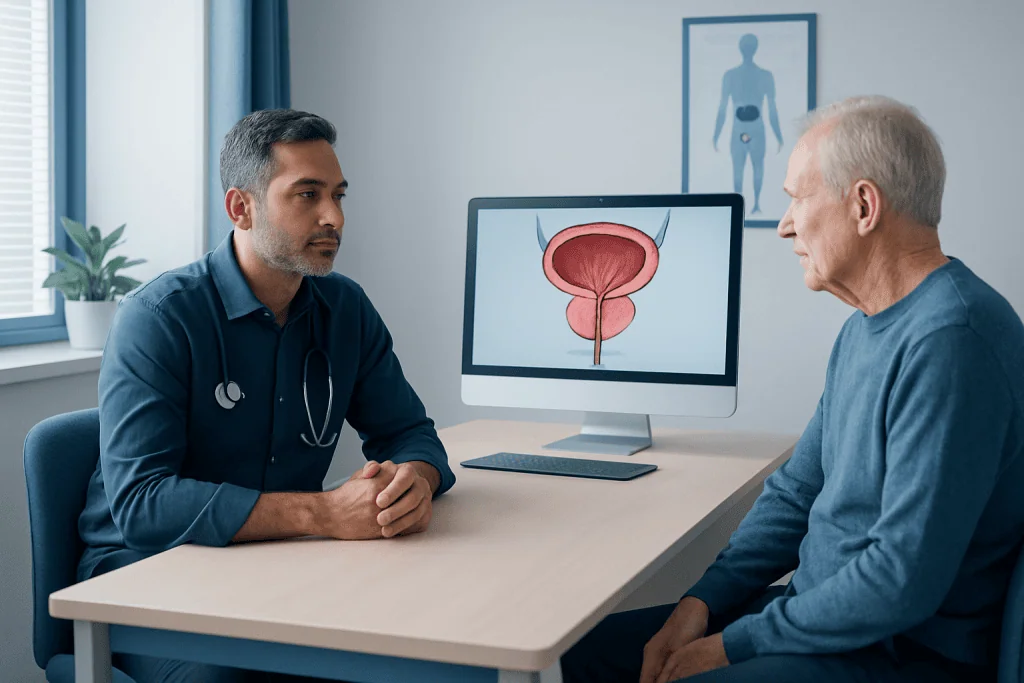
The exact cause of BPH is not fully understood, but age-related hormonal changes are believed to play an important role. The prostate often grows gradually throughout adult life. In some men, this growth narrows the urethra or increases pressure at the bladder outlet, making urination more difficult.
The main risk factor is getting older. Family history can also increase the likelihood of developing BPH, especially if close male relatives had prostate enlargement or needed treatment. Other factors linked with urinary symptoms include obesity, reduced physical activity, diabetes, heart disease, and some lifestyle patterns, although these do not mean that BPH is inevitable.
Certain medicines can worsen urinary symptoms in men with BPH. These may include some decongestants, antihistamines, and medications with effects on bladder muscle function. Men should not stop prescribed medication on their own, but they should tell their doctor about all medicines, supplements, and over-the-counter products they use.
Diagnosis and Tests
Diagnosis begins with a careful discussion of symptoms, medical history, current medicines, and how urinary problems affect daily life. A doctor may use a symptom questionnaire to measure severity and track changes over time. Questions may cover night-time urination, urgency, urine stream strength, and the sensation of incomplete emptying.
A physical examination may include a digital rectal examination to estimate prostate size and check for unusual firmness or nodules. Urine testing can help identify infection, blood, or other causes of urinary symptoms. Blood tests may be considered to assess kidney function or measure prostate-specific antigen, known as PSA, depending on age, risk factors, and clinical findings.
Additional tests are sometimes recommended. These may include uroflowmetry to measure urine flow, ultrasound to assess the bladder and kidneys, or measurement of residual urine left in the bladder after urination. In more complex cases, cystoscopy or urodynamic studies may be used to look inside the urinary tract or evaluate bladder function.
Treatment Options
Treatment for BPH is individualized. Men with mild symptoms may only need monitoring and lifestyle changes, while those with moderate or severe symptoms may benefit from medication or procedures. The best choice depends on symptom severity, prostate size, overall health, possible side effects, and personal priorities such as preserving sexual function.
Common medications include alpha-blockers, which relax muscle around the prostate and bladder neck to improve urine flow, and 5-alpha reductase inhibitors, which may gradually shrink the prostate in men with enlargement. Some men may receive combination therapy. Other medications may be used when urgency or bladder overactivity is a major symptom, but they require careful selection.
When symptoms are significant, complications occur, or medicines are not suitable, procedures may be considered. Options can include minimally invasive therapies that reduce prostate tissue or improve the urinary channel, as well as surgical approaches such as transurethral resection of the prostate. Each procedure has potential benefits and risks, including effects on bleeding, urination, ejaculation, or the need for retreatment, so shared decision-making is important.
Treatment is not only about improving urine flow; it is also about improving sleep, comfort, confidence, and quality of life. Follow-up visits help the doctor assess symptom improvement, side effects, and whether the treatment plan should be adjusted.
Prevention and Self-care
BPH cannot always be prevented, but healthy habits may help reduce urinary bother and support overall prostate and bladder health. Regular physical activity, balanced nutrition, weight management, and good control of diabetes or heart conditions may contribute to better urinary function. These steps also support general health as men age.
Practical self-care measures can be helpful. Men may reduce evening fluid intake if night-time urination is a problem, limit alcohol and caffeine if they worsen urgency, and avoid drinking large amounts at once. It can also help to urinate before long trips or meetings and to take enough time in the bathroom to empty the bladder comfortably.
Bladder training and timed voiding may help some men, especially when urgency is prominent. Pelvic floor exercises may also be useful when guided by a trained professional. Men should discuss any herbal or supplement products with a clinician, because evidence varies and some products may interact with medicines or affect test results.
When to See a Doctor
A man should see a qualified doctor if urinary symptoms are persistent, bothersome, or affecting sleep and daily activities. Medical evaluation is also important if symptoms are new or worsening, because urinary problems can have several causes, including infection, bladder conditions, medication effects, or prostate disease.
Prompt medical care is needed if a man cannot pass urine, has fever or chills with urinary symptoms, has pain in the lower abdomen or back, or notices significant blood in the urine. These symptoms may indicate urinary retention, infection, stones, or another condition requiring timely assessment.
Men who travel for care may benefit from coordinated evaluation by urology, radiology, laboratory medicine, and other relevant specialties. Acibadem International’s multidisciplinary specialists and JCI-accredited hospitals diagnose and treat BPH and related urinary conditions for international patients, with care plans tailored to individual medical needs.
Frequently asked questions
Is benign prostatic hyperplasia the same as prostate cancer?
No. Benign prostatic hyperplasia is non-cancerous enlargement of the prostate gland. It does not mean a man has prostate cancer, but both conditions can occur in older men, so persistent urinary symptoms should be assessed by a doctor.
What are the first signs of BPH?
Early signs often include needing to urinate more often, waking at night to urinate, a weaker stream, or difficulty starting urination. Some men also notice urgency or a feeling that the bladder is not completely empty.
Can BPH be treated without surgery?
Yes. Many men manage BPH with lifestyle changes, monitoring, or medication. Surgery or minimally invasive procedures are usually considered when symptoms are more severe, complications develop, or medications do not provide enough relief.
Do BPH medicines have side effects?
Like all medicines, BPH treatments can have side effects. These may include dizziness, changes in ejaculation, reduced libido, or other effects depending on the medication. A doctor can explain the likely benefits and risks for the individual patient.
Can lifestyle changes really improve urinary symptoms?
Lifestyle changes may not shrink the prostate, but they can reduce symptom burden for some men. Limiting evening fluids, reducing caffeine or alcohol, staying active, and managing constipation can help improve day-to-day comfort.
When is BPH considered urgent?
Urgent care is needed if a man cannot urinate, has fever with urinary symptoms, severe pain, or visible blood in the urine. These symptoms may indicate urinary retention, infection, or another condition that needs prompt medical attention.
References
- European Association of Urology
- American Urological Association
- National Institute of Diabetes and Digestive and Kidney Diseases
- Mayo Clinic
- National Health Service
This article is for general information only and is not a substitute for professional medical advice. Please consult a qualified doctor about your individual situation.
Prostatic Hyperplasia in Turkey — costs, top hospitals & a free quote
JCI-accredited · board-certified surgeons · reply within 24h