Bone Spurs on the Hand: A Complete Medical Overview

Bone spurs on the hand are commonly related to osteoarthritis and long-term joint stress. Some bone spurs cause no symptoms, while others lead to pain, stiffness, swelling, or limited finger movement.
Key Takeaways
- Bone spurs on the hand are commonly related to osteoarthritis and long-term joint stress.
- Some bone spurs cause no symptoms, while others lead to pain, stiffness, swelling, or limited finger movement.
- Diagnosis usually involves a physical examination and hand X-rays to confirm bony changes.
- Treatment depends on symptoms and may include activity changes, splints, hand therapy, pain relief, or surgery in selected cases.
- Medical review is important if hand pain persists, fingers lock, numbness develops, or function becomes limited.
Bone spurs on the hand are extra areas of bone that usually form around joints affected by wear, inflammation, or osteoarthritis. They may cause visible bumps, stiffness, pain, or reduced motion, but many can be managed with conservative care and medical guidance.
Overview: what bone spurs on the hand are
Bone spurs on the hand are small extra growths of bone, also called osteophytes, that develop most often near joints. They are usually the body’s response to ongoing joint stress, cartilage wear, or inflammation. In the hand, they commonly appear around the finger joints, the base of the thumb, or other areas affected by osteoarthritis.
These growths are not the same as a broken bone or a tumor. Instead, they are a structural change that can happen over time. Some people notice them as hard bumps near the knuckles, while others only learn they are present after an X-ray for hand pain or stiffness.
Bone spurs on the hand do not always cause symptoms. When symptoms do occur, they often relate less to the spur itself and more to the joint condition behind it, such as osteoarthritis. The spur can still contribute to discomfort by limiting movement, rubbing nearby tissues, or changing the way the joint moves.
How they can affect the hand
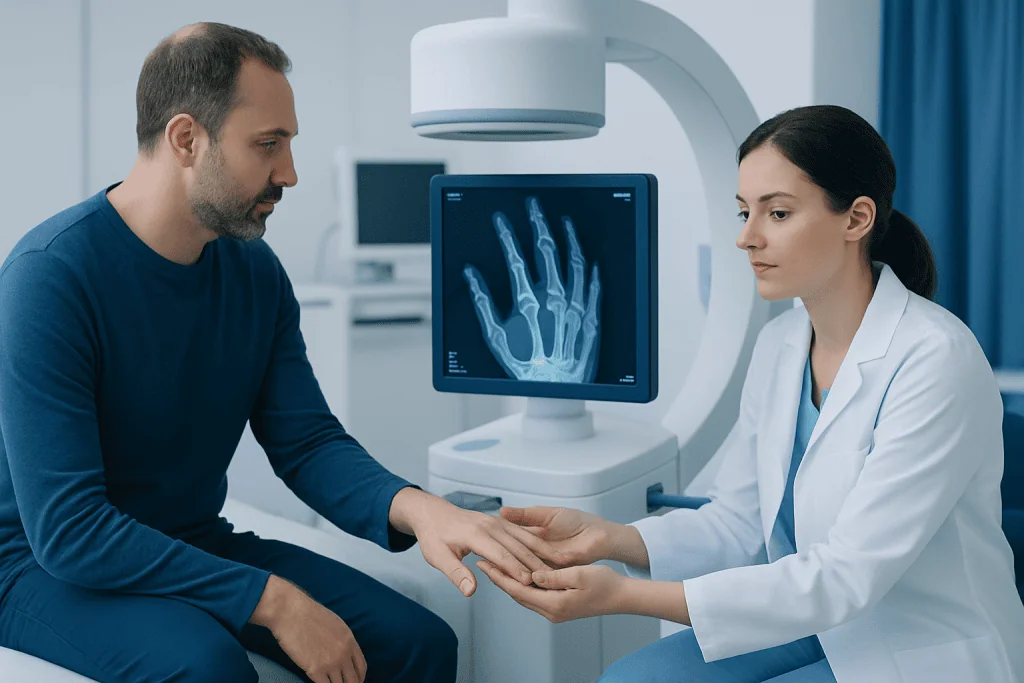
The hand contains many small joints that work together for grip, pinch, writing, and fine motor tasks. When a bone spur forms, even a small change in joint shape can affect comfort and function. This is one reason people may notice symptoms during tasks such as opening jars, typing, buttoning clothes, or turning keys.
Commonly affected joints include the end joints of the fingers, the middle finger joints, and the thumb base joint. Bone spurs in these locations may create a visible enlargement, tenderness, or a feeling that the joint is less flexible than before. Some people describe a catching or rubbing sensation when moving the finger.
At times, a spur may press on nearby soft tissues such as tendons, ligaments, or nerves. This can lead to symptoms beyond joint pain alone. For example, if swelling and structural changes narrow space around a nerve, symptoms such as tingling or numbness may occur and may overlap with conditions like carpal tunnel syndrome.
Symptoms and signs to look for

Symptoms vary widely. Many people have small bone spurs without any discomfort at all. Others develop gradually worsening symptoms, especially if there is underlying arthritis or repetitive use of the hand.
Possible symptoms include:
- Hard bumps near finger or thumb joints
- Joint pain during use or after activity
- Morning stiffness or stiffness after rest
- Reduced range of motion
- Swelling or tenderness around the joint
- A grinding, catching, or clicking feeling with movement
- Weak grip or difficulty with fine hand tasks
- Occasional numbness or tingling if nearby nerves are affected
Symptoms often develop slowly over months or years. Pain may flare after repetitive hand activity and ease with rest. If the joint becomes more enlarged over time, everyday tasks may become harder even when pain is mild.
It is also helpful to remember that hand pain does not always come from a bone spur. Tendon irritation, ligament problems, cysts, inflammatory arthritis, and nerve compression can produce similar symptoms. A proper examination helps identify the true cause.
Causes and risk factors
The most common cause of bone spurs on the hand is joint degeneration associated with aging and osteoarthritis. As the cartilage that cushions a joint becomes thinner, the body may respond by laying down extra bone at the joint edges. This is a common long-term change in weight-bearing joints, but it can also happen in the small joints of the hand.
Inflammation can also contribute. Repeated irritation within a joint may change the way bone remodels over time. Previous injury, fracture, dislocation, or chronic overuse may increase the chance of later spur formation by altering joint alignment or accelerating cartilage wear.
Risk factors may include:
- Older age
- Osteoarthritis or a family history of it
- Previous hand injury or surgery
- Repetitive hand use at work, sport, or hobbies
- Joint instability or abnormal joint mechanics
- Inflammatory joint disease in some cases
Not every person with these risk factors develops symptoms. In many cases, the bone spur is simply a sign that the joint has gone through long-term wear-and-repair changes. The degree of pain does not always match the size of the spur seen on imaging.
How bone spurs on the hand are diagnosed
Diagnosis starts with a medical history and physical examination. A doctor will ask when symptoms began, which activities make them worse, whether there is stiffness in the morning, and whether there has been prior trauma or repetitive strain. The hand is then examined for visible joint enlargement, tenderness, deformity, range of motion, grip strength, and any signs of nerve irritation.
X-rays are the most common imaging test and are often enough to confirm a bone spur. They can show narrowing of joint space, changes consistent with arthritis, and the location and size of bony overgrowth. Imaging also helps distinguish bone spurs from other causes of swelling or pain.
In selected cases, additional tests may be needed. Ultrasound or MRI can help evaluate tendons, ligaments, cartilage, or soft-tissue irritation if the diagnosis is less clear. If symptoms suggest nerve compression, doctors may assess for related conditions and recommend further testing.
Because hand symptoms can have more than one cause, diagnosis is not only about finding a spur. The more important question is whether the spur explains the person’s pain, stiffness, or loss of function. This helps guide whether treatment should focus on arthritis care, tendon protection, symptom relief, or surgical planning.
Treatment options
Treatment for bone spurs on the hand depends on symptoms, the affected joint, and how much daily function is limited. If the spur is found incidentally and causes no problems, active treatment may not be needed. When symptoms are present, doctors usually start with conservative approaches before considering surgery.
Non-surgical treatment may include resting painful activities, modifying repetitive hand movements, using supportive splints, and working with hand therapy exercises to maintain flexibility and strength. General pain-relief measures recommended by a doctor may also help. In some situations, evaluation by specialists in orthopedics and traumatology or physical therapy and rehabilitation can support a more structured treatment plan.
If there is significant underlying arthritis, treatment may also focus on the joint disease itself rather than the spur alone. For persistent symptoms that interfere with hand use, doctors may discuss procedures ranging from targeted spur removal to surgery on the affected joint. The exact operation depends on the joint involved, associated tendon or nerve problems, and overall hand function goals.
Surgery is generally considered when pain remains despite appropriate non-surgical care, movement is severely limited, fingers lock or catch because of mechanical irritation, or a spur compresses nearby structures. People considering surgery benefit from a discussion about expected recovery time, rehabilitation needs, and the possibility that symptoms may also reflect broader joint degeneration.
Self-care, prevention, and living with hand joint changes
Bone spurs cannot always be prevented, especially when they are linked to aging or established osteoarthritis. However, practical self-care can reduce strain on the hands and may help manage symptoms. The goal is usually to protect the joint, maintain movement, and support day-to-day function.
Helpful strategies may include:
- Taking regular breaks from repetitive hand tasks
- Using ergonomic tools or adaptive kitchen and office devices
- Keeping the fingers moving with gentle range-of-motion exercises advised by a clinician
- Using splints only as recommended, so joints stay supported without becoming overly stiff
- Protecting the hand from repeated impact or heavy gripping when possible
- Seeking review if pain is increasing rather than trying to work through it
People with arthritis elsewhere in the body may benefit from broader joint care, including weight management, regular physical activity, and treatment of inflammatory conditions when present. Although these measures may not remove existing bone spurs, they can support overall joint health and symptom control.
For international patients who need specialist assessment, Acibadem International’s multidisciplinary teams in JCI-accredited hospitals evaluate hand and joint conditions and plan treatment when conservative care is not enough. If surgery is needed, related services such as hand surgery may be considered in the context of the patient’s symptoms and imaging findings.
When to seek medical care
A medical review is appropriate if hand pain, stiffness, or swelling lasts more than a few weeks, keeps returning, or begins to interfere with daily tasks. A doctor should also assess a new hard lump on the hand if the cause is uncertain, even though many bony enlargements are benign.
More prompt evaluation is important if there is finger locking, rapidly worsening pain, significant loss of movement, weakness, numbness, tingling, or symptoms after an injury. These signs can suggest tendon involvement, nerve compression, fracture, or another condition that needs specific treatment.
People living with known arthritis should also seek advice when symptom patterns change. A joint that becomes suddenly hot, very swollen, or much more painful may need assessment for causes other than a simple bone spur. Early evaluation can help preserve comfort and hand function.
Frequently asked questions
Are bone spurs on the hand dangerous?
Bone spurs on the hand are usually not dangerous. They are most often a sign of joint wear or arthritis rather than a serious disease. However, they should be assessed if they cause pain, numbness, locking, or a noticeable loss of hand function.
Can a bone spur on the hand go away on its own?
A bone spur itself usually does not disappear on its own. If symptoms are mild, they may improve with rest, activity changes, splinting, and treatment of the underlying joint problem. When symptoms are severe or persistent, a doctor may discuss procedural or surgical options.
What does a bone spur on the hand feel like?
Some people feel a hard bump near a finger joint with little or no pain. Others notice aching, stiffness, tenderness, or a catching sensation when moving the finger or thumb. If nearby nerves are irritated, tingling or numbness may also occur.
Are bone spurs on the hand the same as arthritis?
No, but they are often related. A bone spur is a bony overgrowth, while arthritis is a joint condition that can involve cartilage loss, inflammation, pain, and stiffness. In many cases, hand bone spurs develop because arthritis has changed the joint over time.
How are bone spurs on the hand treated without surgery?
Non-surgical treatment commonly includes activity modification, splinting, hand therapy, and clinician-guided pain management. The aim is to reduce stress on the affected joint and preserve movement and function. Treatment is tailored to the exact joint involved and the severity of symptoms.
When is surgery needed for hand bone spurs?
Surgery may be considered when pain continues despite conservative treatment, movement becomes very limited, or the spur irritates tendons or compresses nearby nerves. The decision also depends on the joint involved and whether there is significant arthritis. A hand specialist can explain the likely benefits and recovery expectations.
References
- American Academy of Orthopaedic Surgeons
- National Institute of Arthritis and Musculoskeletal and Skin Diseases
- American Society for Surgery of the Hand
- Mayo Clinic
- NHS
This article is for general information only and is not a substitute for professional medical advice. Please consult a qualified doctor about your individual situation.
Joint and spine care in Turkey — expert assessment & treatment
JCI-accredited · board-certified surgeons · reply within 24h