Can a Colonoscopy Detect Prostate Cancer: Preparation, Procedure and Results

Colonoscopy is an important test for colorectal cancer screening, but it is not a prostate cancer screening test. A PSA blood test and digital rectal examination can help identify people who may need further prostate assessment.
Key Takeaways
- Colonoscopy is an important test for colorectal cancer screening, but it is not a prostate cancer screening test.
- A PSA blood test and digital rectal examination can help identify people who may need further prostate assessment.
- Early-stage prostate cancer often causes no symptoms, which is why informed screening discussions are important.
- If results suggest possible prostate cancer, multiparametric MRI and a prostate biopsy may be used to confirm or exclude the diagnosis.
- Rectal bleeding, ongoing bowel changes, urinary symptoms or unexplained weight loss should be assessed by a qualified clinician.
A colonoscopy cannot diagnose prostate cancer because it is designed to examine the lining of the rectum and colon. It may occasionally reveal pressure on the rectum from nearby structures, but prostate cancer assessment relies on medical history, prostate-specific antigen (PSA) testing, digital rectal examination, imaging and, when needed, biopsy.
Can a colonoscopy detect prostate cancer?
No, a colonoscopy cannot detect or rule out prostate cancer. During a colonoscopy, a flexible camera examines the inner lining of the rectum and large bowel for polyps, inflammation, bleeding and colorectal cancer. The prostate sits outside the bowel wall, in front of the rectum, so it is not directly visible through the colonoscope.
On rare occasions, an endoscopist may notice external pressure or an abnormal bulge in the rectum. This is not enough to diagnose a prostate condition and may have many explanations. If there is concern, the person should be referred for a urological assessment rather than relying on the colonoscopy finding.
Prostate cancer is evaluated with a combination of symptoms, medical and family history, a prostate-specific antigen (PSA) blood test, digital rectal examination, and sometimes prostate MRI and biopsy. Colonoscopy and prostate evaluation can both be appropriate for the same person, especially with increasing age, but they answer different clinical questions.
How colonoscopy works and who may need one
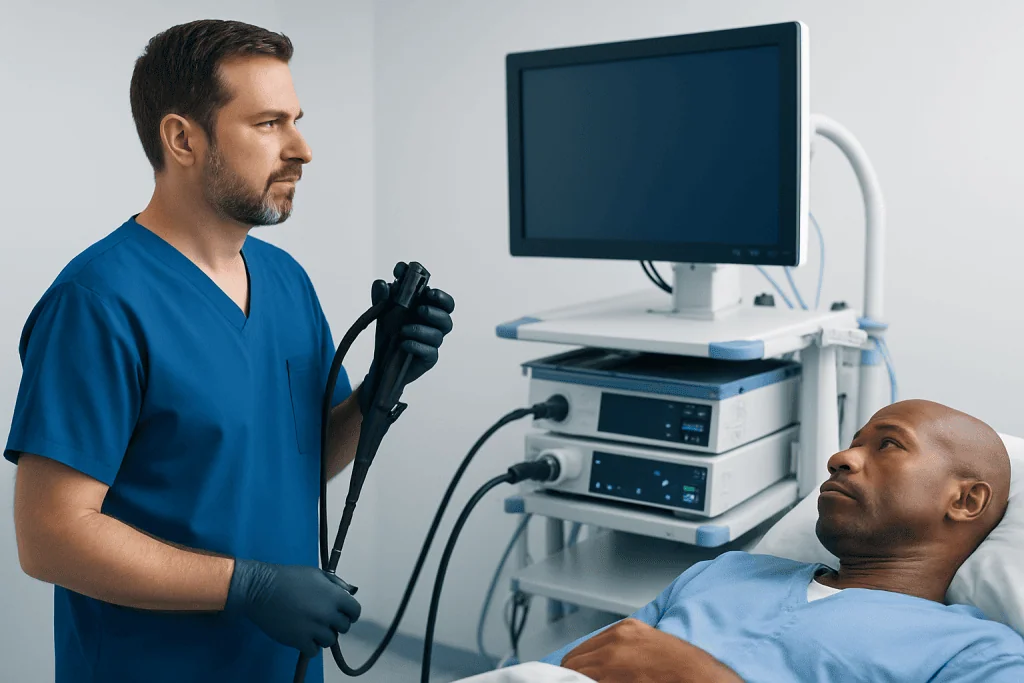
A colonoscopy is a procedure that enables a gastroenterologist to inspect the colon using a thin, flexible instrument with a light and camera. It is commonly performed to investigate rectal bleeding, persistent bowel-habit changes, iron-deficiency anaemia, abdominal symptoms, or a positive stool screening test. It is also used for colorectal cancer screening in people whose age, family history or personal risk makes screening appropriate.
During the procedure, small tissue samples can be taken and polyps can often be removed. These are important benefits because some colon polyps may develop into cancer over time. However, neither a normal nor an abnormal colonoscopy result provides a reliable answer about the presence of prostate cancer.
People should tell their clinical team about blood-thinning medicines, diabetes medicines, heart or lung conditions, allergies, pregnancy and previous difficulties with sedation. The team can explain whether colonoscopy is suitable and how to adjust medicines safely before the test.
Colonoscopy preparation, procedure and recovery

Good bowel preparation is essential because stool can hide polyps and other changes in the bowel lining. In the days before the procedure, the clinical team provides instructions about diet and a prescribed bowel-cleansing solution. Preparation plans vary, so patients should follow their own hospital’s instructions rather than using a plan intended for someone else.
On the day, a clinician reviews the medical history and obtains consent. Sedation or pain relief may be offered depending on the setting and the individual’s needs. The colonoscope is gently passed through the rectum and around the colon while the clinician examines the lining; air or carbon dioxide is used to expand the bowel for a clearer view. The examination commonly takes less than an hour, although timing varies if polyps are removed or biopsies are taken.
After sedation, temporary bloating, gas or mild cramping can occur. Most people return home the same day but need a responsible adult to accompany them and should avoid driving, alcohol, important decisions and operating machinery until the effects of sedation have fully passed. The care team will explain when normal eating, activity and medicines can resume, as well as when biopsy or polyp results will be available.
- Benefits: direct visual assessment of the colon, biopsy of unusual tissue and removal of many polyps during the same procedure.
- Risks: bleeding, particularly after polyp removal, a reaction to sedation, infection and a rare tear in the bowel wall. These risks are discussed before consent.
Do they check for prostate cancer when doing a colonoscopy?
Colonoscopy teams do not routinely check for prostate cancer during the procedure. Their clinical focus is the colon and rectum, and the test does not show prostate tissue in enough detail to assess cancer. A person should not assume that a recent normal colonoscopy means their prostate is healthy.
Sometimes a doctor may perform a digital rectal examination before a colonoscopy or as part of a separate assessment. This examination can provide limited information about the back surface of the prostate, such as whether it feels enlarged, firm or irregular. It cannot confirm cancer and may be normal even when cancer is present.
When prostate cancer is suspected, a urologist may recommend PSA testing, repeat assessment, multiparametric MRI and targeted or systematic biopsy. For people diagnosed with prostate cancer, prostate cancer information and care options can help explain the condition, staging and management pathway.
What are the symptoms of stage 1 prostate cancer?
Stage 1 prostate cancer is usually small, confined to the prostate and often slow-growing. Many people have no symptoms at all. This is because early prostate cancer commonly does not interfere with urine flow or cause pain, and it may first be identified after a PSA test or evaluation for another reason.
When urinary symptoms are present, they are more often caused by non-cancerous prostate enlargement, urinary infection or other conditions. Symptoms that deserve medical assessment include needing to urinate more often, especially at night; difficulty starting urination; a weak urine stream; urgency; or a feeling that the bladder does not empty fully. These symptoms do not by themselves indicate prostate cancer.
Blood in urine or semen, persistent bone pain, unintended weight loss or marked fatigue should also be assessed promptly, although these are not typical features of stage 1 disease. A clinician can evaluate the full situation without drawing conclusions from symptoms alone.
How many fingers do doctors use for a prostate exam?
A digital rectal examination, often called a DRE, is performed with one gloved, lubricated finger. The clinician gently inserts the finger into the rectum to feel the back surface of the prostate. The examination is usually brief and may feel uncomfortable or create a temporary urge to pass stool, but it should not be painful.
The clinician may assess the prostate’s size, shape, firmness and whether there are any hard areas or irregularities. A DRE has limitations: it reaches only part of the prostate and cannot determine whether a suspicious finding is cancer. Likewise, a normal DRE does not completely exclude cancer.
If the examination or PSA result raises concern, further testing is considered. This may include a repeat PSA test, assessment for factors that can temporarily raise PSA, MRI and a biopsy when appropriate. Decisions are individualized and should take account of age, overall health, values and risk factors.
How can prostate cancer be detected early?
Early detection starts with an informed discussion with a doctor or urologist about personal risk and the possible advantages and limitations of testing. PSA is a blood test that measures a protein produced by prostate cells. PSA can be raised by prostate cancer, but it can also increase with non-cancerous enlargement, inflammation, infection, recent ejaculation, cycling or some medical procedures.
Depending on the result and clinical context, the next step may be repeat testing, a DRE, prostate MRI or biopsy. Multiparametric MRI helps identify areas that may need closer assessment and can guide biopsy planning. A biopsy is the test that confirms whether cancer cells are present and provides information about their characteristics.
Screening recommendations differ between countries and organizations. Men should ask about screening earlier if they have a strong family history of prostate cancer or certain inherited cancer-related gene changes, or if they are of African or Caribbean ancestry, as these factors may increase risk. Prostate cancer treatment planning is based on confirmed diagnosis, cancer features, overall health and individual priorities; some low-risk cancers may be monitored with active surveillance rather than treated immediately.
When to seek medical care
A person should arrange a medical review for persistent or worsening urinary symptoms, blood in urine or semen, unexplained pelvic discomfort, recurrent urinary infections, or a new concern about prostate cancer risk. Symptoms can have many common and treatable causes, but assessment helps identify the right next step.
Urgent medical care is appropriate for inability to pass urine, heavy bleeding in urine, severe pain, fever with urinary symptoms, or feeling very unwell. These situations can require prompt treatment and should not wait for a routine screening appointment.
People with rectal bleeding, a sustained change in bowel habits, black stools, unexplained iron-deficiency anaemia or a positive bowel screening test should also discuss colon assessment with a clinician. Acibadem International’s multidisciplinary specialists and JCI-accredited hospitals support international patients needing coordinated digestive and urological evaluation and treatment.
Frequently asked questions
Can a colonoscopy see the prostate?
A colonoscopy views the inside lining of the rectum and colon, not the prostate itself. Because the prostate is outside the bowel wall, it cannot be properly examined or diagnosed through a colonoscopy. Occasionally, external pressure may be noticed, but this requires separate urological assessment.
Should a person have a colonoscopy if they have a high PSA?
A high PSA does not usually mean a colonoscopy is needed. PSA concerns are generally assessed by a doctor or urologist with repeat testing, examination, MRI and possibly biopsy. Colonoscopy may still be appropriate if the person has bowel symptoms or is due for colorectal screening.
Can a digital rectal examination diagnose prostate cancer?
No. A digital rectal examination may identify an enlarged, firm or irregular-feeling area of the prostate, but it cannot confirm cancer. Further tests are needed to determine the cause of an abnormal finding.
Does a normal PSA test rule out prostate cancer?
No test completely rules out prostate cancer. A PSA result is interpreted alongside age, symptoms, prostate examination findings, family history and changes over time. A clinician can advise whether monitoring or further assessment is appropriate.
Can prostate cancer cause bowel symptoms?
Early prostate cancer generally does not cause bowel symptoms. Constipation, rectal bleeding and altered bowel habits more often relate to digestive conditions and should be evaluated on their own merits. Advanced prostate disease can occasionally affect nearby structures, but this is not a typical early presentation.
What happens if a prostate MRI is abnormal?
An abnormal MRI does not automatically mean cancer is present. It helps clinicians estimate the likelihood of clinically significant cancer and identify areas that may need sampling. A targeted prostate biopsy may be recommended to make or exclude a diagnosis.
References
- American Cancer Society
- European Association of Urology
- National Cancer Institute
- National Institute of Diabetes and Digestive and Kidney Diseases
- U.S. Preventive Services Task Force
This article is for general information only and is not a substitute for professional medical advice. Please consult a qualified doctor about your individual situation.
Prostate Cancer in Turkey — costs, top hospitals & a free quote
JCI-accredited · board-certified surgeons · reply within 24h