

Cancer screening in Turkey: Hospitals, Safety & What to Expect

Appropriate cancer screening depends on personal risk, age, sex at birth, prior results and family history. A screening result is not a diagnosis; an abnormal finding usually requires confirmatory testing.
Key Takeaways
- Appropriate cancer screening depends on personal risk, age, sex at birth, prior results and family history.
- A screening result is not a diagnosis; an abnormal finding usually requires confirmatory testing.
- Hospital quality, specialist involvement, clear reporting and a plan for follow-up are important safety considerations.
- International visitors should arrange enough time for preparation, results review and any necessary additional tests.
- New or persistent symptoms should be assessed promptly, even if a recent screening test was normal.
Cancer screening in Turkey is available through hospital-based check-up and oncology services, with the safest approach being an individualised plan based on age, medical history, family history and symptoms. Screening is intended for people without warning signs; anyone with concerning symptoms should seek diagnostic medical assessment rather than rely on a routine screening package.
Overview: What Cancer Screening in Turkey Involves
Cancer screening in Turkey may be suitable for people seeking preventive health assessments while travelling, provided the tests are medically appropriate and the hospital can coordinate results and follow-up. A high-quality screening programme does not simply perform every available test. It begins by assessing the person’s age, sex, health history, family history, lifestyle factors and previous screening results, then recommends tests with a meaningful expected benefit.
Screening looks for selected cancers or early changes before symptoms develop. Common evidence-based examples include cervical screening, breast screening, colorectal screening and lung cancer screening for some people at high risk. The exact test and timing vary between national guidelines and individual circumstances. Cancer screening services should be planned with a qualified clinician rather than chosen solely from a standard package.
It is important to distinguish screening from diagnosis. If someone has unexplained bleeding, a new lump, persistent changes in bowel habits, ongoing cough, unexplained weight loss or other warning symptoms, they need a focused medical evaluation. In this setting, the doctor may order diagnostic imaging, laboratory tests or procedures targeted to the symptoms.
Who May Be a Candidate for Screening
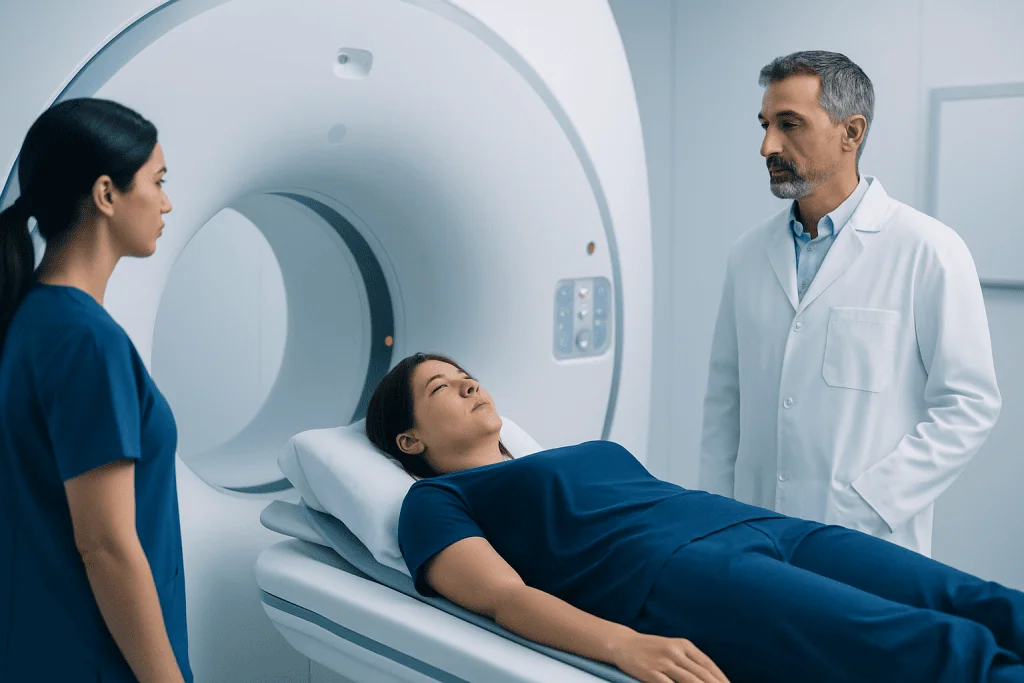
Most screening programmes are designed for adults who feel generally well and do not have symptoms suggestive of cancer. Eligibility differs by cancer type. For example, cervical screening is generally offered within a defined adult age range, breast screening is often based on age and individual breast cancer risk, and colorectal screening commonly starts in mid-adulthood for average-risk adults. People who smoke or formerly smoked heavily may qualify for lung screening under certain guideline-based criteria.
A person may need screening earlier, more often or with a different method if they have a strong family history of cancer, a known inherited cancer syndrome, prior abnormal screening results, inflammatory bowel disease, previous radiation therapy or certain chronic infections. A clinician may recommend genetic counselling when family patterns suggest an inherited risk. Screening plans should also account for pregnancy, current medications, allergies and medical conditions that could affect preparation or test safety.
Not every test is helpful for every person. Broad tumour-marker blood testing, whole-body scans and imaging without a clear indication can produce incidental findings or false-positive results. These may lead to worry and unnecessary additional investigations. The goal is not to test as much as possible, but to select validated tests that match the individual’s risk profile.
How the Screening Process Works

The process commonly starts before travel. The hospital or international patient team may request medical records, a list of medicines, previous imaging or pathology reports, details of allergies and family history. These documents help the clinical team avoid duplicate examinations and decide whether a targeted cancer screening plan is more appropriate than a general check-up.
On arrival, patients usually have a consultation with a physician. The clinician reviews health concerns, past illnesses, tobacco and alcohol exposure, reproductive history where relevant, family history and previous screening dates. The patient should mention any symptom, even if it seems minor. This may change the visit from routine screening to diagnostic assessment and can affect the tests recommended.
Depending on the agreed plan, the visit may include a physical examination, blood or stool tests, mammography, cervical sampling, ultrasound, low-dose CT for eligible lung-screening candidates, or colonoscopy-based assessment. Some tests require preparation, such as fasting or bowel cleansing. Others may need a separate appointment. The team should explain the reason for each test, what it involves, possible limitations and how results will be communicated.
- Before testing: medical review, consent and any necessary preparation instructions.
- During testing: examinations are performed by appropriately trained clinical staff using the relevant safety protocols.
- After testing: results are reviewed, explained and documented, with follow-up recommendations when needed.
Safety, Hospital Standards and Travel Planning
Safety in cancer screening depends on clinical governance, qualified professionals, appropriate technology and clear pathways for reviewing abnormal findings. International patients may wish to ask whether the hospital has recognised quality and safety accreditation, how imaging and laboratory results are checked, which specialists interpret the tests and how urgent concerns are escalated. JCI accreditation is one internationally recognised framework for hospital quality and patient safety processes, although it does not replace the need to assess whether a particular screening plan is appropriate.
Patients should also ask how results will be shared after they return home. A useful written report typically identifies the tests performed, the findings, any limitations, suggested next steps and relevant images or laboratory reports when available. If a biopsy or complex investigation could be needed, it is sensible to discuss whether the visit schedule allows adequate time and how care will be coordinated with the patient’s doctor at home.
Travel arrangements should allow for rest, fasting requirements and potential changes in schedule. Some procedures, particularly those involving sedation, may require an accompanying adult and a short period before air travel or driving. Accommodation close to the hospital can make early appointments and follow-up discussions easier. Patients should check visa, insurance, language-support and medical-record requirements in advance.
Benefits, Limitations and Possible Risks
The potential benefit of screening is finding certain cancers or pre-cancerous changes at an earlier stage, when treatment options may be simpler or more effective. Cervical screening can identify cell changes that may be treated before cancer develops, while colorectal screening can detect and allow removal of some polyps. However, screening does not prevent or detect every cancer, and a normal result cannot guarantee that cancer is absent.
Every screening test has limitations. A false-positive result suggests a possible problem when cancer is not present. It may lead to repeat imaging, biopsies or other investigations. A false-negative result occurs when a test misses a cancer or early abnormality. Imaging can also identify unrelated findings that require monitoring but may never cause harm. Clinicians balance these risks against likely benefits when recommending a test.
Physical risks are usually low but depend on the examination. Mammography uses a small dose of radiation; CT uses more radiation and is reserved for appropriately selected patients. Colonoscopy may cause temporary bloating or discomfort, and uncommon complications include bleeding or bowel perforation, particularly if a polyp is removed. Sedation can also carry risks for some patients. The care team should discuss meaningful risks before consent.
Results, Recovery and Follow-Up
Many screening tests do not require recovery time. After blood tests, cervical screening, mammography or most imaging, people can generally resume ordinary activities immediately. It is common to have brief discomfort after cervical sampling or mild bruising after a blood draw. Staff can advise about any individual restrictions based on the tests performed.
Colonoscopy or another procedure involving sedation requires more planning. Patients may need to rest for the remainder of the day, avoid driving, operating machinery, making important decisions or drinking alcohol, and follow the discharge instructions provided. A companion may be required to accompany the patient after sedation. Any severe pain, fever, persistent vomiting, heavy bleeding or feeling faint after an invasive procedure should be reported urgently.
A normal result usually means the next screening interval can be planned according to the person’s risk and the relevant guideline. An abnormal result does not necessarily mean cancer. It may mean that an image should be repeated, a specialist should review the finding or a biopsy is needed. If cancer is diagnosed, care should be guided by a multidisciplinary team; cancer evaluation and treatment planning typically combines pathology, imaging, surgery, medical oncology and radiation oncology expertise as needed.
When to Seek Medical Care
Screening should not delay medical care for symptoms. A person should arrange prompt assessment for a new breast or testicular lump, blood in urine or stool, unusual vaginal bleeding, a persistent cough or hoarseness, difficulty swallowing, a changing mole, unexplained weight loss, persistent abdominal swelling, or a bowel habit change that does not settle. These symptoms often have non-cancer causes, but they deserve clinical assessment.
Urgent medical attention is appropriate for severe bleeding, chest pain, severe shortness of breath, sudden weakness or numbness, fainting, severe abdominal pain or other acute symptoms. These are not situations for routine screening appointments or travel-based planning.
For international patients, Acibadem International’s multidisciplinary specialists and JCI-accredited hospitals can assess symptoms, organise appropriate screening where indicated and coordinate diagnostic care. Patients should bring prior medical records and ensure that follow-up arrangements with a doctor at home are in place before travelling.
Frequently asked questions
Is cancer screening in Turkey safe for international patients?
It can be safe when screening is provided by a reputable hospital with qualified clinicians, appropriate quality systems and a clear process for results and follow-up. Patients should confirm what tests are recommended, why they are needed, who will interpret them and how records will be shared after travel.
Which cancer screening tests might be included?
Tests should be selected individually rather than automatically bundled. Depending on age, sex and risk factors, they may include cervical screening, mammography, colorectal screening, or low-dose CT screening for eligible people at high risk of lung cancer.
Can a blood test detect all cancers?
No. There is no single routine blood test that can reliably detect all cancers in people without symptoms. Some blood tests have specific uses, but broad tumour-marker testing is not generally a substitute for guideline-based screening or diagnostic assessment.
How long should a patient stay in Turkey for cancer screening?
The required time depends on the tests, preparation and whether results need additional review. Simple assessments may be completed quickly, while colonoscopy, sedation, abnormal findings or further imaging can require extra time, so travel should allow some flexibility.
What happens if a screening result is abnormal?
An abnormal screening result means that further assessment may be needed; it does not by itself diagnose cancer. The next step may include repeat testing, specialist consultation, diagnostic imaging or a biopsy, depending on the finding.
Should someone with symptoms book a cancer screening package?
People with symptoms should seek a medical consultation for diagnostic evaluation rather than rely on a standard screening package. The doctor can select tests based on the symptom, urgency and the person’s medical history.
References
- World Health Organization
- International Agency for Research on Cancer
- American Cancer Society
- U.S. Preventive Services Task Force
- Joint Commission International
This article is for general information only and is not a substitute for professional medical advice. Please consult a qualified doctor about your individual situation.
Oncology care in Turkey — second opinion and treatment plan
JCI-accredited · board-certified surgeons · reply within 24h

More from the Health Library



Related Specialists

Dr. Akil Tepecik
Clinical Laboratory
Prof. Dr. M. Özcan Erdemli
Anesthesiology
Hamdi Kandemir
Physical Medicine & Rehabilitation
Assoc. Prof. Dr. Selim Aydin
Cardiovascular Surgery