Ceramic Braces: An Evidence-Based Guide for Patients

Ceramic braces use clear or tooth-colored brackets to move teeth in a similar way to metal braces. They are often chosen for appearance, especially by older teenagers and adults.
Key Takeaways
- Ceramic braces use clear or tooth-colored brackets to move teeth in a similar way to metal braces.
- They are often chosen for appearance, especially by older teenagers and adults.
- Good oral hygiene is essential because braces can trap plaque and food around brackets and wires.
- Ceramic brackets may be more fragile and can stain if elastics or cleaning habits are not managed well.
- An orthodontic evaluation helps determine whether ceramic braces, metal braces, or aligners are most suitable.
Ceramic braces are tooth-colored orthodontic braces designed to straighten teeth while being less noticeable than traditional metal braces. They can be an effective option for many teenagers and adults, but the best choice depends on bite problems, lifestyle, oral hygiene, and the orthodontist’s assessment.
Overview: what ceramic braces are and who they suit
Ceramic braces are fixed orthodontic appliances that straighten teeth using brackets bonded to the teeth and connected by a wire. The main difference from traditional braces is that the brackets are made from tooth-colored or clear ceramic materials, so they tend to blend in more naturally with the teeth. For many patients, ceramic braces offer a balance between effective tooth movement and a less visible appearance.
They work by applying gentle, controlled pressure over time to guide teeth into better alignment. Like metal braces, ceramic braces can help correct crowding, spacing, crooked teeth, and many bite problems. Because they are fixed in place, they do not rely on being removed and reinserted correctly, which can make them easier for some patients than removable devices.
Ceramic braces are often preferred by adults and older teenagers who want orthodontic treatment to be less noticeable in work, school, or social settings. However, they are not automatically the best option for everyone. The right treatment depends on the complexity of tooth movement needed, the condition of the gums and teeth, and how well the patient can care for the braces every day.
How ceramic braces compare with other orthodontic options
Compared with metal braces, ceramic braces are usually less visible but may require a little more care. Their tooth-colored brackets can make them more discreet, yet ceramic material can be more brittle than stainless steel. In practical terms, this means the orthodontist may recommend certain food and habit precautions to reduce the chance of bracket damage.
Compared with clear aligners, ceramic braces stay attached to the teeth throughout treatment. This can be helpful when precise tooth movement is needed or when a patient prefers not to remember to wear a removable appliance for most of the day. On the other hand, aligners may be easier for eating and cleaning, so the choice depends on clinical needs and personal preferences.
Orthodontists also consider bite function, jaw relationship, enamel health, and gum health before recommending treatment. Some people seeking braces have concerns related to tooth position, impacted teeth, or jaw growth patterns that may overlap with malocclusion. In some cases, a broader treatment plan may include orthodontic care alongside orthodontic treatment tailored to the patient’s bite and smile goals.
- Best-known advantage: less noticeable appearance
- Main trade-offs: possible staining of elastics and somewhat greater bracket fragility
- Common users: adults, professionals, and image-conscious teenagers
- Clinical decision: based on alignment needs, bite correction, and oral hygiene habits
Benefits, limitations, and possible side effects

The most common reason patients choose ceramic braces is cosmetic. Since the brackets are designed to blend with the natural tooth color, many people feel more comfortable smiling during treatment. This can improve confidence for patients who want a lower-profile option than metal braces but still need the control of fixed braces.
Another benefit is that ceramic braces can often treat many of the same orthodontic problems as conventional braces. They may be suitable for moderate to more complex alignment issues, depending on the exact system used and the orthodontist’s approach. Because they are fixed, they continue working around the clock without depending on patient wear time.
There are also limitations. Ceramic brackets can chip or break more easily than metal ones, especially if a person bites hard foods, chews ice, or has habits such as nail biting. In addition, the small elastic ties used with some systems may discolor from foods and drinks such as coffee, tea, curry, or tobacco exposure. Mild soreness, temporary rubbing against the lips or cheeks, and adjustment discomfort are common during the first days after placement or wire changes.
Braces of any kind can increase plaque retention, which raises the risk of gum irritation, tooth decay, and white spot lesions if cleaning is not careful. This is why the health of the teeth and gums matters as much as the appearance of the braces. Patients with pre-existing gum disease may need dental treatment first, and some may benefit from evaluation related to periodontal disease before starting orthodontic care.
Who may be a good candidate
A good candidate for ceramic braces is usually someone who wants a more discreet fixed appliance and is willing to maintain consistent oral hygiene and dietary precautions. Adults commonly choose them for cosmetic reasons, but teenagers may also be suitable if they can follow instructions and attend regular adjustment visits. The orthodontist will assess whether ceramic brackets can handle the planned tooth movements efficiently and safely.
Patients should ideally have healthy teeth and gums before treatment begins. Cavities, gum inflammation, or untreated dental infections should be addressed first. This helps create a safer environment for braces and lowers the risk of discomfort or complications during treatment.
Some cases are especially appropriate for fixed braces because precise control of tooth position is needed. If there is major crowding, bite irregularity, rotated teeth, or spacing that affects chewing, speech, or cleaning, the orthodontist may advise fixed treatment over removable options. In selected situations, related care such as teeth whitening is best postponed until after braces are removed so the tooth color can be evaluated more evenly.
Assessment and treatment planning
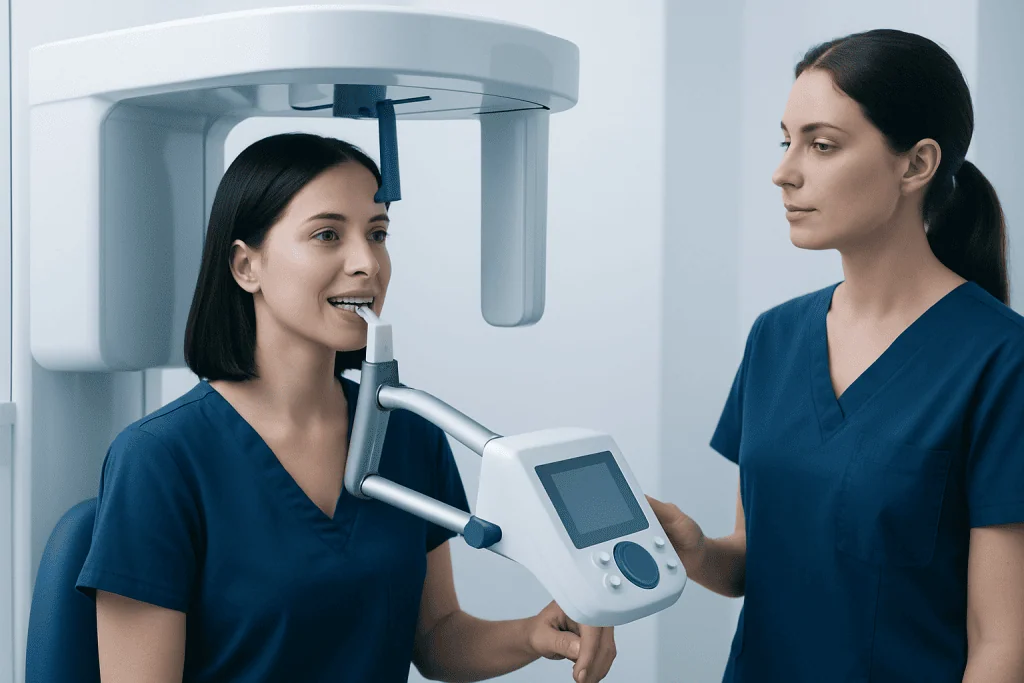
Before ceramic braces are placed, the orthodontist performs a full assessment. This usually includes a dental and medical history, an examination of the teeth and gums, photographs, and dental imaging. Impressions or digital scans may be used to create a detailed map of the teeth and bite.
The treatment plan is based on more than appearance alone. The orthodontist checks how the upper and lower teeth meet, whether there is crowding or spacing, and whether jaw growth or tooth eruption patterns may influence treatment. The goal is not only straighter teeth, but also a bite that functions well and can be maintained more easily over time.
At this stage, the patient can discuss alternatives such as metal braces, ceramic braces, or aligners. The orthodontist explains expected treatment length, likely appointments, hygiene routines, and the possibility of retainers after active treatment. A clear treatment plan helps patients understand the benefits and the everyday responsibilities that come with fixed braces.
What to expect during treatment and daily care
Placing ceramic braces usually does not require surgery or general anesthesia. The brackets are bonded to the front of the teeth, and a wire is threaded through them to begin gentle tooth movement. Patients may feel pressure or soreness for a few days after placement and after later adjustments, but this usually improves on its own.
Daily care is one of the most important parts of successful treatment. Teeth should be brushed carefully around each bracket and along the gumline, ideally after meals when possible. Interdental brushes, floss threaders, or water flossing devices may help clean areas that are harder to reach with standard brushing alone.
Food choices also matter. Hard, sticky, or chewy foods can damage brackets or wires and should be limited according to the orthodontist’s advice. Drinks and foods that stain can discolor elastics, even if the ceramic brackets themselves remain relatively unchanged. If a bracket becomes loose, a wire starts poking, or there is significant rubbing, the orthodontic team should be contacted for guidance rather than trying to fix it at home.
After treatment, retainers are usually needed to help keep teeth in their new positions. Teeth naturally tend to shift over time, so retention is an essential part of long-term results. For some patients, follow-up cosmetic dental procedures such as dental veneers may be discussed only after the bite is stable and orthodontic treatment is complete.
When to seek medical care
Routine discomfort after braces are fitted or adjusted is common, but certain situations should be assessed by a dental professional. Patients should seek care if they develop severe or persistent pain, significant swelling of the gums or face, bleeding that does not improve, fever, or difficulty opening the mouth. These symptoms are not typical adjustment effects and may signal infection, trauma, or another problem that needs attention.
It is also sensible to arrange a prompt orthodontic review if a bracket breaks repeatedly, a wire comes loose, or the appliance is interfering with eating or speaking more than expected. Ongoing sores, signs of tooth decay, or worsening gum inflammation should not be ignored. Early review can help prevent treatment delays and protect the health of the teeth and supporting tissues.
People with jaw pain, clicking, or headaches that seem related to the bite should mention this during treatment. While not all jaw symptoms are caused by braces, the orthodontist or dentist can decide whether further assessment is needed. If a patient is receiving care through Acibadem International, its multidisciplinary specialists and JCI-accredited hospitals can evaluate orthodontic concerns and related dental conditions for international patients.
Long-term outlook and how to make the best decision
For many patients, ceramic braces can provide effective alignment and bite improvement with a more discreet appearance than metal braces. The overall outcome depends less on the bracket color than on accurate diagnosis, well-planned treatment, regular follow-up, and consistent home care. In other words, the success of ceramic braces is closely tied to partnership between the patient and the orthodontic team.
Choosing between ceramic braces and other options is a personal decision informed by clinical findings. Some patients value the lower visibility enough to accept slightly higher maintenance, while others prefer the durability of metal braces or the removability of aligners. There is no one-size-fits-all answer, and the best option is the one that matches both oral health needs and daily life.
Patients considering braces may find it helpful to ask practical questions during consultation, such as how often visits will be needed, what foods should be avoided, how staining can be minimized, and what retention will involve afterward. With realistic expectations and proper care, ceramic braces can be a sound, evidence-based choice for achieving straighter teeth and a healthier bite.
Frequently asked questions
Do ceramic braces work as well as metal braces?
In many cases, yes. Ceramic braces use the same basic orthodontic principles as metal braces and can correct a wide range of alignment and bite problems. The best choice depends on the complexity of treatment and the orthodontist’s clinical judgment.
Are ceramic braces more painful than metal braces?
Ceramic braces are not generally considered more painful than metal braces. Patients commonly feel pressure, tightness, or mild soreness for a few days after placement or adjustments, regardless of the bracket material. The level of discomfort varies from person to person.
Do ceramic braces stain?
The ceramic brackets themselves are designed to resist obvious discoloration, but the elastic ties around them may stain over time. Foods and drinks such as coffee, tea, red sauces, and curry can make this more noticeable. Regular appointments allow these ties to be changed as needed.
Who is the best candidate for ceramic braces?
Ceramic braces are often a good fit for adults and older teenagers who want less visible fixed braces. They are especially suitable for people who can maintain careful oral hygiene and avoid habits that may damage brackets. An orthodontic assessment is needed to confirm whether they are appropriate for the specific bite problem.
How long do ceramic braces take to work?
Treatment length varies depending on how much tooth movement is needed, the bite pattern, and how well the appliance is maintained. Some patients finish sooner, while others need longer treatment for more complex corrections. The orthodontist can give a more individualized estimate after examination and imaging.
Can adults get ceramic braces?
Yes, many adults choose ceramic braces because they are less noticeable than metal braces. Adult orthodontic treatment is common and can improve tooth alignment, bite function, and cleanability. Healthy gums and teeth are important before treatment begins.
References
- American Association of Orthodontists
- American Dental Association
- National Institute of Dental and Craniofacial Research
- NHS
- Mayo Clinic
This article is for general information only and is not a substitute for professional medical advice. Please consult a qualified doctor about your individual situation.
Explore treatments in Turkey — costs, top hospitals & a free quote
JCI-accredited · board-certified surgeons · reply within 24h