Clear Skin After 30: Adult Acne Triggers, Testing, and Treatment Options

Adult acne can begin for the first time after age 30 or continue from the teenage years. Hormonal shifts, cosmetics, stress, medications, and genetics are common triggers.
Key Takeaways
- Adult acne can begin for the first time after age 30 or continue from the teenage years.
- Hormonal shifts, cosmetics, stress, medications, and genetics are common triggers.
- Persistent, severe, or sudden acne may need medical evaluation to look for contributing conditions.
- Treatment may include gentle skin care, topical medicines, oral medications, and lifestyle adjustments.
- Early treatment can help lower the risk of dark marks and permanent acne scars.
Adult acne after 30 is common, especially in women, and often relates to hormones, skin care habits, stress, or underlying medical factors. With the right evaluation and a personalized treatment plan, most people can improve breakouts, reduce scarring risk, and support clearer skin.
Overview of Adult Acne After 30
Adult acne after 30 refers to pimples, clogged pores, inflamed bumps, or deeper cyst-like lesions that continue or appear in adulthood. It can affect the face, jawline, neck, chest, shoulders, and back. Some people have ongoing acne from adolescence, while others develop it for the first time later in life.
In adults, acne often behaves differently than teenage acne. Breakouts may cluster around the lower face and jaw, flare around menstrual cycles, or occur together with skin sensitivity and dryness from cosmetics or anti-aging products. Because adult skin may be less oily than teenage skin, treatment usually needs a balanced approach that controls acne without over-irritating the skin.
Acne develops when hair follicles become blocked with oil, dead skin cells, and inflammation. Bacteria that normally live on the skin can also contribute to inflamed lesions. Although acne is not dangerous in most cases, it can affect confidence, leave dark spots, and sometimes cause permanent scarring if not treated appropriately.
Symptoms and How Adult Acne Can Look
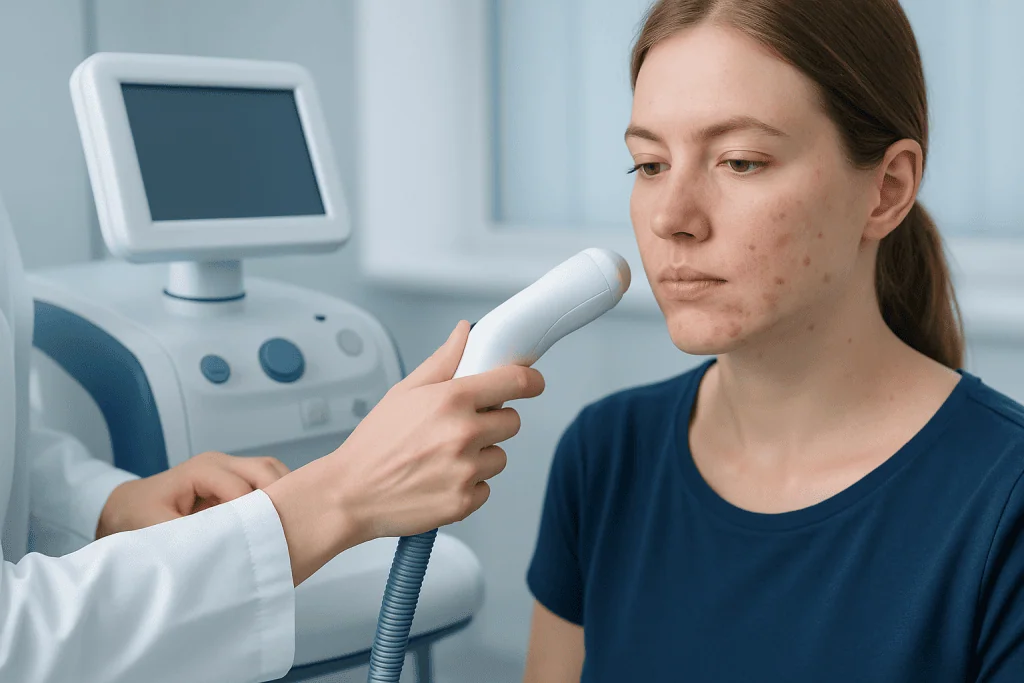
Adult acne can appear in several forms. Some people mainly notice blackheads and whiteheads, while others develop red bumps, pus-filled pimples, tender nodules, or deeper cysts. Breakouts may be occasional and mild or more persistent, with skin that rarely seems fully clear.
Common areas include the chin, jawline, around the mouth, and neck. In some cases, acne also affects the forehead, cheeks, chest, shoulders, or upper back. After the spots heal, they may leave post-inflammatory marks such as brown, red, or purple discoloration, especially in people with darker skin tones.
It is also important to distinguish acne from other skin conditions. Rosacea, folliculitis, perioral dermatitis, and certain rashes can look similar but require different care. A skin specialist may consider these possibilities if breakouts are unusual, painful, itchy, or not improving with standard acne treatment.
- Blackheads and whiteheads
- Red inflamed bumps or pustules
- Tender nodules or cyst-like lesions
- Breakouts focused on the jawline or lower face
- Dark marks or acne scars after healing
Common Triggers and Risk Factors
Hormonal changes are one of the most common reasons for adult acne. Fluctuations linked to menstrual cycles, pregnancy, perimenopause, or conditions that increase androgen activity can increase oil production and lead to clogged pores. This is why some adults notice predictable flares before a period or breakouts concentrated along the jaw and chin.
Skin care and cosmetic products can also play a role. Heavy or pore-clogging makeup, hair products, sunscreens, and moisturizers may worsen acne in some people. Excessive cleansing, harsh scrubs, or using too many active ingredients at once can irritate the skin barrier, which may make inflammation worse even if the products are intended to help.
Stress does not directly cause acne on its own, but it can contribute to flares through hormonal pathways and disrupted routines such as poor sleep or inconsistent skin care. Family history, smoking, sweating under tight clothing, and a high tendency toward oily skin may also increase risk. Certain medications, including some steroids, lithium, and other hormone-related treatments, may trigger or worsen acne in susceptible individuals.
Diet is still being studied, but some people find that high-glycemic foods or certain dairy products seem to aggravate breakouts. This does not mean everyone with acne needs strict dietary restriction. Instead, it can be helpful to notice personal patterns and discuss them with a doctor or dietitian if needed.
When Testing May Be Needed
Adult acne is often diagnosed through a clinical skin examination, and many people do not need extensive testing. A doctor usually asks about the timing of breakouts, menstrual history, pregnancy plans, medications, skin care products, family history, and whether there are symptoms such as irregular periods, hair thinning, or excess facial hair.
Testing may be considered when acne is severe, sudden in onset, resistant to treatment, or accompanied by signs that suggest an underlying hormonal or medical issue. For example, a clinician may consider laboratory evaluation if there are irregular menstrual cycles, unwanted hair growth, scalp hair loss, or weight changes that raise concern about androgen excess or conditions such as polycystic ovary syndrome.
Depending on the individual situation, tests may include hormone-related blood work or other investigations to rule out contributing problems. This is not necessary for everyone with acne, but it can be useful when the clinical picture suggests more than routine adult breakouts. In some cases, a dermatologist may also review whether another diagnosis, such as rosacea, better explains the symptoms.
Diagnosis and Treatment Options
Treatment depends on the type and severity of acne, the person’s skin sensitivity, and whether there is a risk of scarring. Mild acne may improve with topical treatments that help unclog pores, reduce bacteria, and calm inflammation. Common options include retinoid-based creams or gels, benzoyl peroxide, azelaic acid, or other prescription combinations chosen by a clinician.
For moderate or more inflamed acne, doctors may add oral treatment. This can include certain antibiotics for limited periods, hormonal therapy in suitable patients, or other prescription medicines for more persistent disease. People with deep nodules, cysts, or scarring may need specialist dermatology care. A structured acne treatment plan can be adjusted over time as the skin improves or as life stages change.
Acne treatment usually takes patience. Many therapies need several weeks before clear improvement becomes visible, and mild dryness or irritation can happen early on. A doctor may recommend introducing products gradually, using moisturizers, and choosing non-comedogenic sunscreen to support the skin barrier while treatment is working.
If acne has already left texture changes or marks, doctors may discuss options for acne scar treatment after active breakouts are under better control. In selected cases where scarring, pigmentation, or treatment-resistant lesions are a concern, procedural approaches such as laser treatment may form part of the longer-term plan.
Daily Skin Care, Prevention, and Self-Care
Good daily habits can support medical treatment and help reduce new breakouts. The goal is not to scrub the skin aggressively, but to keep it clean, protected, and less irritated. A gentle cleanser used once or twice daily is usually enough. Heavy exfoliation, rough cleansing brushes, and frequent product changes often do more harm than good.
Choosing non-comedogenic makeup, sunscreen, and moisturizers may lower the chance of clogged pores. It also helps to remove makeup before sleep, clean items that touch the face such as phone screens, and keep hair products away from the forehead and jawline when possible. People who exercise regularly may benefit from showering soon after heavy sweating and changing out of tight clothing.
Picking or squeezing acne lesions can increase inflammation, delay healing, and raise the risk of marks or scars. Stress management, regular sleep, and a balanced diet may also support skin health, even though they are not stand-alone cures. If a person notices clear food-related triggers, it is reasonable to discuss those patterns with a healthcare professional rather than making extreme diet changes alone.
- Wash gently and avoid over-cleansing
- Use non-comedogenic skin care and makeup
- Apply sunscreen daily, especially with acne medications
- Avoid picking or squeezing spots
- Follow treatment consistently for several weeks
When to See a Doctor
Medical advice is helpful when acne is persistent, painful, spreading, or leaving scars or dark marks. A doctor should also assess acne that starts suddenly in adulthood, becomes severe, or does not improve with over-the-counter care after a reasonable trial. These situations may call for prescription treatment or evaluation for contributing factors.
People should also seek care if breakouts occur together with irregular periods, excess facial or body hair, scalp hair thinning, or other changes that suggest a hormonal issue. Pregnant or breastfeeding individuals should check with a doctor before using acne treatments, because some common medications are not appropriate during these stages.
For international patients needing dermatology evaluation and coordinated care, Acibadem International’s multidisciplinary specialists and JCI-accredited hospitals diagnose and treat adult acne and related skin concerns. Timely assessment can help identify triggers, guide safe treatment, and reduce the chance of long-term scarring.
Frequently asked questions
Can acne really start after age 30?
Yes. Adult acne can begin for the first time after 30, even in people who had clear skin as teenagers. Hormonal changes, cosmetics, stress, medications, and family history can all contribute.
Is adult acne usually hormonal?
Hormones are a common factor, especially when breakouts affect the chin and jawline or flare before menstrual periods. However, not all adult acne is hormonal, and skin care products, irritation, and other triggers may also be involved.
What tests are done for adult acne?
Many people do not need tests, because acne is often diagnosed by skin examination and medical history. Blood tests may be recommended if acne is severe, sudden, difficult to treat, or accompanied by irregular periods, excess hair growth, or other signs of hormone imbalance.
How long does adult acne treatment take to work?
Most treatments need time, and improvement is often gradual rather than immediate. It commonly takes several weeks to notice clearer skin, so consistency is important unless a doctor advises stopping because of irritation or another concern.
Can diet cause adult acne?
Diet does not affect everyone in the same way, and acne is usually caused by several factors rather than one food alone. Some people notice worse breakouts with high-glycemic foods or certain dairy products, but changes should be personalized and discussed with a healthcare professional if needed.
Will adult acne leave scars?
It can, especially if the acne is deep, inflamed, or repeatedly picked or squeezed. Early treatment and avoiding manipulation of spots can help lower the risk of scarring and long-lasting marks.
References
- American Academy of Dermatology
- National Institute for Health and Care Excellence
- British Association of Dermatologists
- Mayo Clinic
- National Health Service
This article is for general information only and is not a substitute for professional medical advice. Please consult a qualified doctor about your individual situation.
Acne in Turkey — costs, top hospitals & a free quote
JCI-accredited · board-certified surgeons · reply within 24h
Add us as a Preferred Source to see more of our trusted health content across Google Search, AI Overviews and Discover.