Contusion Knee Treatment: How It Works, Results and What to Expect

A knee contusion is a bruise caused by damaged small blood vessels after a direct impact. Initial treatment commonly includes relative rest, cold packs, compression, elevation and appropriate pain relief.
Key Takeaways
- A knee contusion is a bruise caused by damaged small blood vessels after a direct impact.
- Initial treatment commonly includes relative rest, cold packs, compression, elevation and appropriate pain relief.
- Recovery time varies with the depth of the bruise and whether bone, cartilage, ligaments or the joint itself are affected.
- Gradual return to walking, exercise and sport is safer once pain, swelling and movement have improved.
- Urgent assessment is important after major trauma, severe swelling, deformity, numbness or inability to bear weight.
Contusion knee treatment helps relieve pain and swelling after a direct blow to the knee while protecting the joint as bruised soft tissues heal. Most uncomplicated knee contusions improve with conservative care, but persistent pain, inability to bear weight or joint instability should be assessed by a clinician.
Contusion Knee Treatment: How It Works
Contusion knee treatment is usually non-surgical. It focuses on limiting early swelling and discomfort, protecting injured tissues from further impact, and restoring normal movement and strength as the bruise settles. A contusion occurs when a direct hit, fall or collision damages small blood vessels in the skin, muscle or tissues around the knee, allowing blood to leak into surrounding tissue.
Some bruises are superficial and mainly cause tenderness and skin discoloration. Others involve deeper tissues, including the muscle, the tissue covering the bone, or the bone itself. A clinician’s role is to distinguish a straightforward bruise from injuries that can feel similar, such as a fracture, ligament sprain, meniscus tear, kneecap injury or bleeding into the joint.
The main goals of care are comfort, safe mobility and a gradual return to usual activities. Treatment is adjusted to the person’s symptoms, examination findings, activity demands and any imaging results rather than following a single fixed plan.
Symptoms, Severity and Different Grades
A knee contusion can cause pain when the area is touched or when weight is placed through the leg. Swelling, stiffness, bruising, a feeling of pressure and a reduced ability to bend or straighten the knee are also common. Skin color may change over several days as the body breaks down and reabsorbs blood within the tissues.
How serious is a knee contusion?
Many knee contusions are mild and heal without lasting problems. However, the severity depends on the force of the injury and the tissues involved. A deep bruise can be quite painful and may take longer to recover, while a large joint swelling, locking, giving way, marked loss of motion or inability to walk may indicate an associated injury that needs medical assessment.
Are there different grades of knee contusions?
There is no single universal grading system for knee contusions. Clinicians may describe them as mild, moderate or severe based on pain, swelling, bruising, loss of function and whether deeper structures are affected. A bone bruise, for example, is a deeper injury visible on MRI and can require a longer period of activity modification than a superficial skin or muscle bruise.
Who Benefits From Assessment and What Diagnosis Involves

People with a recent direct blow to the knee often benefit from an initial evaluation if symptoms are more than minor, if they participate in sport or physically demanding work, or if recovery is not progressing as expected. Older adults, people using blood-thinning medicines and people with bleeding disorders may need earlier advice because bruising or bleeding can be more extensive.
A clinician will ask how the injury happened, when pain and swelling started, and whether the knee has locked, buckled or made a popping sound. The examination may assess tenderness, bruising, swelling, kneecap position, stability, range of movement, circulation and sensation below the knee.
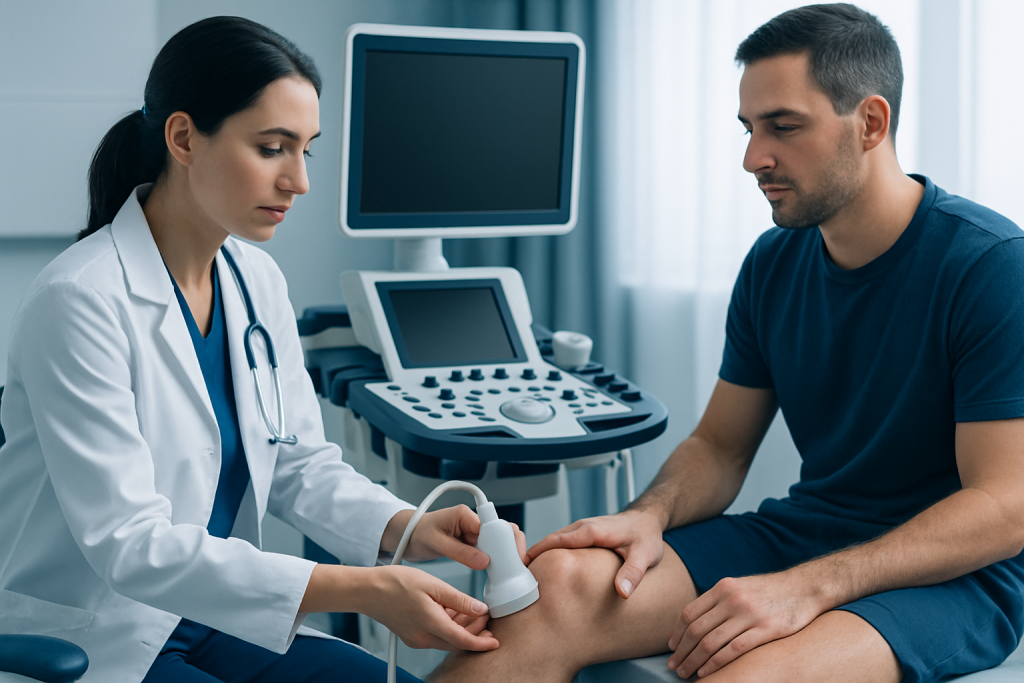
Imaging is not necessary for every bruise. An X-ray may be used when a fracture is possible, particularly after a significant fall or when weight bearing is difficult. Ultrasound can sometimes help evaluate fluid collections or superficial soft-tissue injury. MRI may be considered when symptoms suggest a bone bruise, cartilage injury, meniscus tear or ligament injury. Related conditions such as knee pain may require a broader evaluation when symptoms persist or recur.
Treatment Step by Step: From Early Protection to Rehabilitation
In the first day or two, treatment commonly begins with relative rest. This means avoiding running, jumping, kneeling, deep squats and activities that worsen pain, while keeping safely mobile where possible. Cold packs wrapped in a cloth may be applied for short intervals to help relieve pain and limit swelling. Compression with an elastic bandage or knee sleeve and elevating the leg can also be helpful when comfortable.
Over-the-counter pain medicines may be appropriate for some people, but the safest choice depends on medical history, allergies, kidney or stomach conditions and other medicines. A pharmacist or clinician can advise. Massage directly over a fresh, painful bruise and aggressive stretching should be avoided early, as these may increase discomfort or bleeding in the injured tissue.
As pain and swelling improve, the next step is gentle movement. Straightening and bending the knee within a comfortable range can reduce stiffness. Later, exercises to rebuild thigh, hip and calf strength, balance and walking tolerance may be recommended. A physiotherapist may tailor a rehabilitation plan, particularly after a significant injury or for a return to sport. Physical therapy and rehabilitation can support a gradual, function-based return to activity.
If the assessment identifies a fracture, ligament injury, cartilage injury or another condition, treatment may include bracing, crutches, targeted rehabilitation or referral to an orthopedic specialist. Surgery is not a usual treatment for an uncomplicated knee contusion, but it may be relevant for a separate associated injury.
How Long Does Knee Contusion Take to Get Better?
A mild knee contusion often begins to feel noticeably better within several days and may settle over one to a few weeks. Moderate or deep bruises can take several weeks, particularly when swelling, stiffness or pain with weight bearing remains. Bone bruises may take longer, sometimes months, because the injury is deeper within the bone.
Improvement should generally be gradual: pain should become less intense, swelling should reduce, and the knee should move and tolerate activity more comfortably over time. The visible skin bruise may fade at a different pace from deeper tissue healing, so color changes alone do not determine readiness for sport or strenuous work.
Returning too quickly to impact activity can prolong symptoms or increase the chance of another injury. A safer return is based on being able to walk without limping, bend and straighten the knee comfortably, and complete sport- or work-specific movements without pain, swelling or instability afterward.
How to Heal a Knee Contusion Fast and Safely
There is no guaranteed way to speed biological healing, but sensible early care can support recovery. Protecting the knee from repeat impact, using cold therapy for comfort, managing swelling, sleeping well and maintaining a balanced diet all help create good conditions for healing. It is also useful to stay active in ways that do not aggravate the knee, such as upper-body exercise or low-impact activity approved by a clinician.
The most important principle is progressive loading. Once acute pain and swelling have eased, gradually increasing walking and strengthening work can help restore confidence and function. Pain that increases during exercise or swelling that returns afterward is a sign that the activity may need to be reduced or modified.
A knee sleeve, supportive footwear or temporary use of crutches may be advised for selected patients, but these aids should not replace rehabilitation when strength and movement need attention. For ongoing symptoms, orthopedic assessment and orthopedics and traumatology care can help identify the cause and guide appropriate management.
Risks, Benefits and When to Seek Medical Care
The benefits of conservative contusion knee treatment are that it is usually simple, non-invasive and directed toward natural tissue healing. Most people regain normal daily function without procedures. Possible setbacks include stiffness from prolonged inactivity, recurrent swelling after doing too much too soon, and delayed recovery when an underlying injury has not been recognized.
Medical care should be sought promptly after a knee injury if there is severe pain, obvious deformity, rapid or marked swelling, inability to bear weight, a cold or pale foot, numbness, increasing redness or fever, or an open wound. Urgent assessment is also important if the knee is locked, repeatedly gives way, or symptoms follow a high-energy collision or fall.
Non-urgent medical advice is appropriate when bruising is unusually extensive, pain or swelling is not improving, movement remains limited, or there are repeated knee injuries. People taking anticoagulants or with known bleeding conditions should contact a clinician after a significant injury even if symptoms initially seem mild.
Acibadem International’s multidisciplinary specialists and JCI-accredited hospitals assess and treat knee injuries for international patients, including rehabilitation needs after trauma.
Frequently asked questions
What is a knee contusion?
A knee contusion is a bruise caused by a direct impact that damages small blood vessels in tissues around the knee. It may affect the skin, muscle, soft tissue over the bone or, in some cases, the bone itself. Pain, tenderness, swelling and discoloration are common.
How long does knee contusion take to get better?
A mild knee contusion may improve over days and resolve within one to a few weeks. Deeper bruises can take several weeks, and bone bruises may take months. Recovery is influenced by the force of injury, the tissue involved and whether another knee injury is present.
How serious is a knee contusion?
Most knee contusions are not serious and improve with conservative treatment. It can be more concerning when there is severe swelling, inability to bear weight, locking, instability, deformity or persistent symptoms. These signs may suggest an injury beyond a simple bruise.
How to heal a knee contusion fast?
Early relative rest, cold packs wrapped in cloth, comfortable compression and elevation may ease symptoms. As the knee improves, gentle movement and gradual strengthening can help restore function. Avoid returning to running, jumping or contact sport until walking and knee movement are comfortable and swelling has settled.
Are there different grades of knee contusions?
Healthcare professionals may describe contusions as mild, moderate or severe based on symptoms and functional limitation. There is not one universal grading system specifically for knee contusions. Deep soft-tissue bruises and bone bruises are generally more likely to need a longer recovery period.
Should a knee contusion be massaged?
Massage directly over a fresh, painful bruise is generally best avoided, especially during the first day or two. Pressure may worsen pain or irritate injured tissue. A clinician or physiotherapist can advise when soft-tissue techniques are appropriate during later recovery.
References
- American Academy of Orthopaedic Surgeons
- National Institute of Arthritis and Musculoskeletal and Skin Diseases
- NHS
- Mayo Clinic
This article is for general information only and is not a substitute for professional medical advice. Please consult a qualified doctor about your individual situation.
Joint and spine care in Turkey — expert assessment & treatment
JCI-accredited · board-certified surgeons · reply within 24h