Perthes Disease Treatment: How It Works, Results and What to Expect
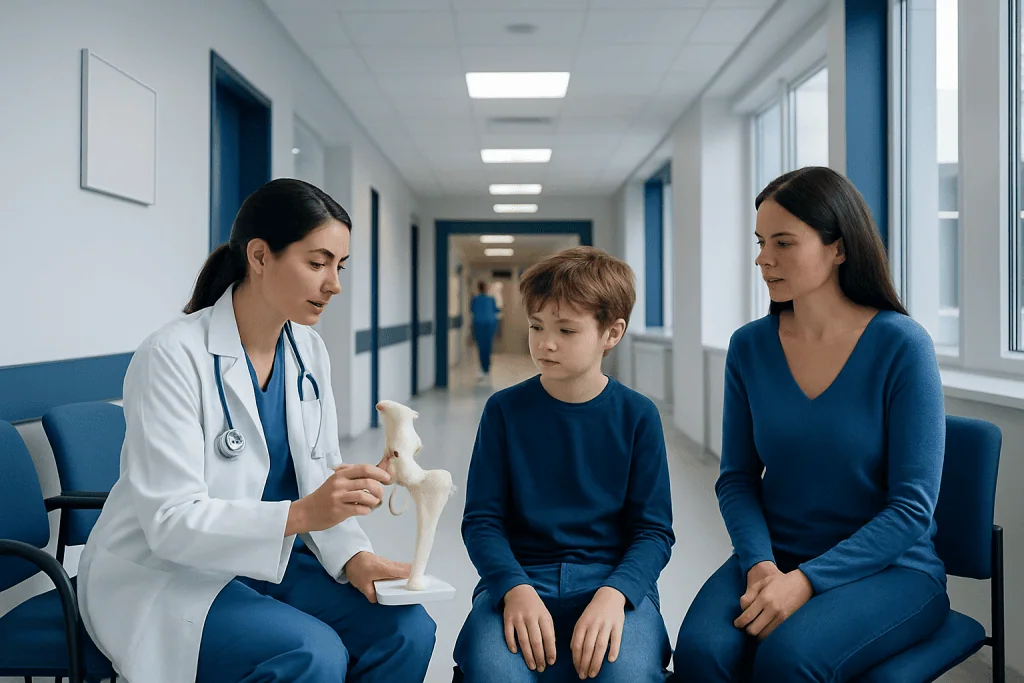
Perthes disease is a childhood hip condition in which temporary loss of blood supply affects the femoral head. Treatment focuses on maintaining hip movement, reducing pain, and helping the femoral head stay well covered by the hip socket.
Key Takeaways
- Perthes disease is a childhood hip condition in which temporary loss of blood supply affects the femoral head.
- Treatment focuses on maintaining hip movement, reducing pain, and helping the femoral head stay well covered by the hip socket.
- Younger children and children with less femoral-head involvement may often be managed without surgery.
- Surgery may be considered when the hip is not well contained in the socket, particularly in older children or more extensive disease.
- Recovery requires regular imaging, guided rehabilitation, and activity adjustments over months to years.
Perthes disease treatment aims to keep the ball of the hip joint as round and well-positioned as possible while it heals. Care is individualized according to the child’s age, hip shape, range of motion, symptoms, and the stage of the condition, and may range from observation and physiotherapy to orthopedic surgery.
Overview: How Perthes Disease Treatment Works
Perthes disease treatment works by protecting the hip while the femoral head, the rounded top of the thigh bone, goes through a gradual cycle of bone damage and repair. The condition is also called Legg-Calvé-Perthes disease. It occurs when blood flow to the femoral head is temporarily interrupted, causing the bone to weaken, reshape, and later heal over time.
The central goal is called containment: keeping the femoral head positioned deeply within the hip socket so the socket can help guide it toward a rounder shape during healing. Treatment also aims to preserve hip motion, especially the ability to move the leg outward, manage discomfort, and reduce the risk of early hip arthritis in later life.
There is no single treatment plan that suits every child. Pediatric orthopedic specialists consider the child’s age, symptoms, hip movement, X-ray or MRI findings, and how much of the femoral head is affected. Many children need careful follow-up and non-surgical care, while others benefit from an operation designed to improve hip alignment and containment.
Who May Need Non-Surgical Care or Surgery
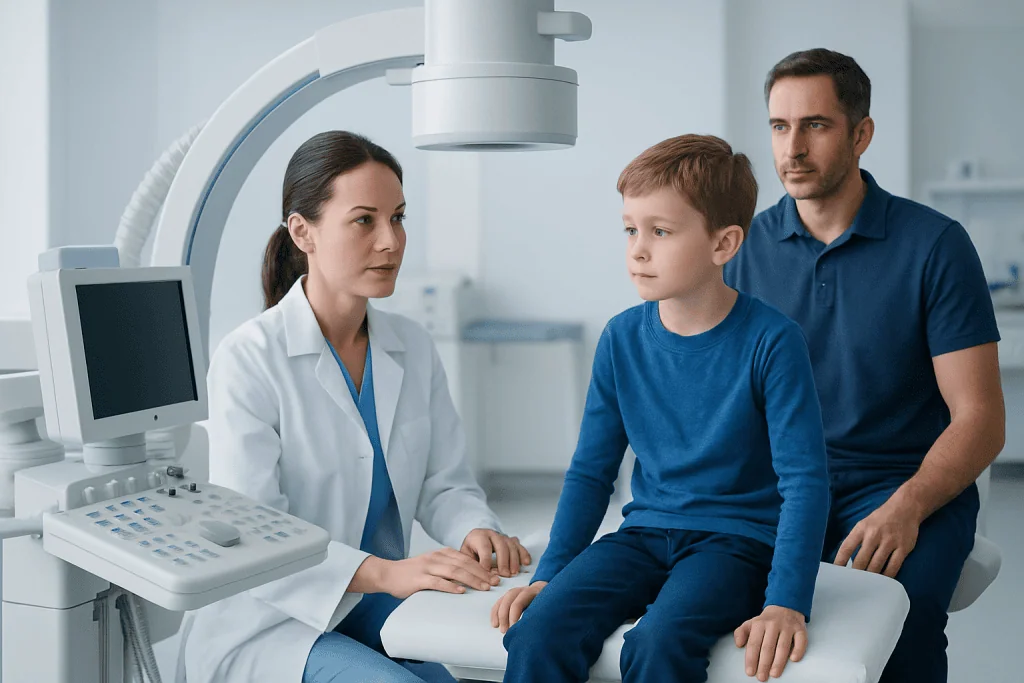
Children diagnosed at a younger age, often below 6 years, generally have greater potential for the femoral head to remodel as they grow. If the hip remains mobile and the femoral head is well covered by the socket, observation, pain management, physiotherapy, and activity modification may be appropriate. Follow-up imaging is important because the hip can change during the course of the disease.
Surgery is more likely to be discussed for children who are older at diagnosis, have a more severely affected femoral head, develop reduced hip movement, or show that the femoral head is moving partly out of the socket. These features can make it harder for the hip to heal in a favorable position. Surgery is not automatically necessary simply because a child has Perthes disease.
Decisions are made using a full clinical assessment rather than one X-ray result alone. The orthopedic team will also consider walking pattern, pain, limb-length difference, muscle tightness, family circumstances, and the child’s ability to participate in rehabilitation. Parents and caregivers should feel comfortable asking why a particular plan is recommended and what alternatives are reasonable.
Treatment Options Before Surgery
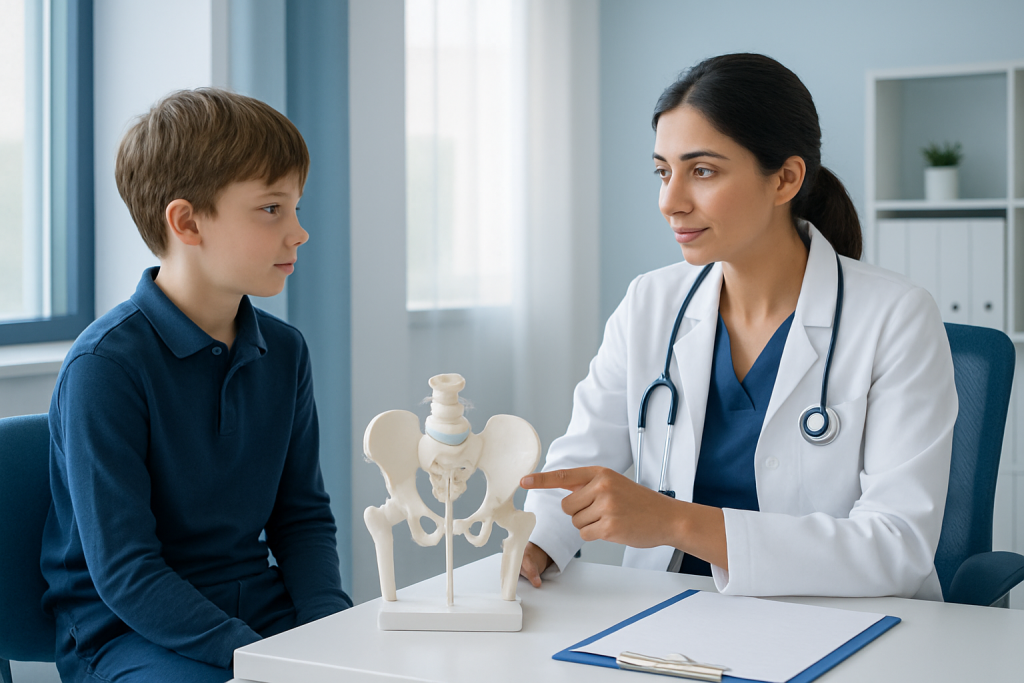
Non-surgical Perthes disease treatment usually combines regular monitoring with measures that support comfortable movement. A clinician may recommend temporarily avoiding high-impact activities such as running, jumping, contact sports, or trampoline use when the hip is painful or vulnerable. Low-impact activities, including swimming, may be suitable for some children, but the care team should provide individualized guidance.
Physiotherapy can help maintain hip range of motion and reduce muscle tightness around the hip and groin. Exercises are selected for the child’s stage of disease and symptoms. The objective is not to force painful movement, but to preserve useful mobility and support safe walking and everyday activities.
Anti-inflammatory or other pain-relieving medicines may be used when advised by a clinician. Some children may temporarily need crutches, a walker, or a wheelchair to reduce weight-bearing during painful periods. Bracing or casting is used less often than in the past, but may occasionally be considered to help position the hip in selected cases.
- Scheduled hip examinations and X-rays help track healing and alignment.
- Activity recommendations may change as symptoms and imaging findings evolve.
- School, sport, and family routines can usually be adapted with support from the healthcare team.
Perthes Disease Surgery: Step by Step
When surgery is recommended, its purpose is usually to improve containment of the femoral head within the socket. The most common operations are osteotomies, which involve carefully cutting and repositioning bone. A femoral osteotomy changes the angle of the upper thigh bone, while a pelvic osteotomy reshapes or reorients part of the hip socket. In some cases, the surgeon may recommend one approach or a combination based on the hip anatomy.
Before surgery, the child has imaging studies and preoperative assessment, including a review of general health and anesthesia needs. During the procedure, which is performed under general anesthesia, the surgeon repositions the bone to improve coverage and alignment. Plates and screws may be used to hold the bone securely while it heals. The exact approach, expected hospital stay, and postoperative restrictions depend on the procedure and the individual child.
After surgery, pain control, wound care, mobility planning, and follow-up imaging are arranged. The child may use crutches, a walker, or a wheelchair for a period, and may have specific limits on weight-bearing. Orthopedic surgery for childhood hip conditions should be planned with pediatric orthopedic expertise and a rehabilitation program that is appropriate for the child’s age and mobility needs.
Acibadem International’s multidisciplinary specialists and JCI-accredited hospitals evaluate and treat orthopedic conditions for international patients, coordinating orthopedic assessment, imaging, anesthesia, rehabilitation, and follow-up planning where needed.
Recovery Timeline and Expected Results
Recovery from Perthes disease is gradual because the condition itself develops and heals over several years. With non-surgical care, children usually attend periodic appointments throughout the active stages of the disease. Symptoms may improve and worsen over time, and the care plan can be adjusted as the hip changes on imaging.
After an osteotomy, early recovery focuses on comfort, safe transfers, wound healing, and following weight-bearing instructions. Physiotherapy commonly begins with gentle movement and progresses as healing permits. Return to unrestricted activity is individualized and depends on bone healing, hip motion, strength, walking pattern, and the surgeon’s assessment rather than a fixed date.
Results are often judged by hip function, pain level, range of motion, walking ability, and the shape and position of the healed femoral head. Many children remain active and function well, particularly when the hip heals with good congruence between the femoral head and socket. However, Perthes disease can increase the chance of hip stiffness, pain, or osteoarthritis in adulthood, so some people benefit from continued orthopedic review as they grow.
Benefits, Risks, and Long-Term Considerations
The potential benefit of treatment is a better-aligned, more mobile hip that may be more likely to function well over the long term. Non-surgical treatment avoids an operation and may be sufficient for many children. Surgical containment may offer an important advantage when the hip is at risk of healing with poor coverage or an irregular shape.
Every treatment option has limitations. Activity restrictions, use of mobility aids, and repeated appointments can affect school and family life. Physiotherapy may require ongoing participation, and it cannot always prevent changes in femoral-head shape when the disease is more extensive.
Surgical risks include infection, bleeding, blood clots, anesthesia-related complications, nerve or blood-vessel injury, delayed or non-healing bone, implant irritation, and the possible need for additional procedures. Even after technically successful surgery, the hip may not become perfectly round, and future arthritis cannot be completely prevented. The surgeon can explain the risks relevant to the proposed operation and the child’s individual health.
Daily Care and When to Seek Medical Care
At home, caregivers can support treatment by helping the child follow activity guidance, attend follow-up visits, and complete prescribed exercises without pushing through significant pain. A balanced diet, adequate sleep, and emotional support are also valuable. Children may feel frustrated by activity limits or differences from friends, so open conversations with family, school staff, and the healthcare team can make adaptations easier.
Medical care should be sought promptly if a child develops new or worsening hip, thigh, or knee pain; a persistent limp; reduced ability to move the hip; or difficulty bearing weight. These symptoms do not always mean Perthes disease, but they should be assessed, especially if they last more than a few days or interfere with normal activity.
Urgent assessment is appropriate if hip pain is accompanied by fever, a child appears unwell, there is severe pain after an injury, or the child cannot walk or bear weight. These symptoms may signal another condition that needs timely evaluation. Children already receiving Perthes disease treatment should contact their care team about unexpected pain, swelling, wound concerns after surgery, or changes in mobility.
Frequently asked questions
Can Perthes disease heal without surgery?
Yes. Many children, especially those diagnosed at a younger age with good hip movement and less extensive involvement, can be treated without surgery. Regular examinations and imaging are still needed to check that the hip remains in a favorable position as it heals.
What is the main goal of Perthes disease surgery?
The main goal is to improve containment of the femoral head within the hip socket. By improving alignment and coverage, surgery aims to support more favorable shaping of the hip during the healing process.
How long does Perthes disease treatment last?
The active disease process and bone remodeling may continue for several years. The frequency of appointments, imaging, activity restrictions, and physiotherapy depends on the child’s age, symptoms, hip shape, and whether surgery is needed.
Will a child with Perthes disease be able to play sports again?
Many children return to recreational activities and sports after recovery, but timing and suitable activities differ from one child to another. The orthopedic team will advise when impact activities can be restarted based on healing, strength, hip movement, and symptoms.
Is hip pain always felt in the hip with Perthes disease?
No. Pain may be felt in the groin, thigh, or knee, and some children first present with a limp rather than clear hip pain. Any persistent limp or unexplained leg pain in a child should be assessed by a qualified clinician.
Does Perthes disease cause arthritis later in life?
Perthes disease can raise the likelihood of hip osteoarthritis in adulthood, particularly if the femoral head heals with an irregular shape or poor fit in the socket. However, the long-term outlook varies widely, and good hip function is possible with appropriate follow-up and treatment.
References
- American Academy of Orthopaedic Surgeons
- OrthoInfo – American Academy of Orthopaedic Surgeons
- National Institute of Arthritis and Musculoskeletal and Skin Diseases
- International Perthes Study Group
This article is for general information only and is not a substitute for professional medical advice. Please consult a qualified doctor about your individual situation.
Joint and spine care in Turkey — expert assessment & treatment
JCI-accredited · board-certified surgeons · reply within 24h