Dark Spots on Skin: Common Causes, Diagnosis, and Treatment Options

Dark spots on skin usually result from excess melanin production. Common causes include sun damage, post-inflammatory changes, melasma, and aging.
Key Takeaways
- Dark spots on skin usually result from excess melanin production.
- Common causes include sun damage, post-inflammatory changes, melasma, and aging.
- A dermatologist can often diagnose the cause through a skin exam and medical history.
- Treatment may include sunscreen, topical medications, chemical peels, or laser-based procedures.
- Any spot that changes quickly, bleeds, or looks unusual should be checked promptly.
Dark spots on skin are a common form of hyperpigmentation that can develop after sun exposure, acne, irritation, hormonal changes, or aging. Most are harmless, but proper diagnosis helps identify the cause and guides the safest, most effective treatment plan.
Overview of dark spots on skin
Dark spots on skin are areas that appear brown, black, gray-brown, or slightly darker than the surrounding skin. In medical terms, this is often called hyperpigmentation. It happens when the skin produces extra melanin, the natural pigment that gives skin its color. These spots may be small and isolated or more widespread, depending on the underlying cause.
Many dark spots are harmless and develop gradually over time. Common examples include sun spots, marks left after acne or eczema, and patches linked to hormonal changes. Although they are usually a cosmetic concern rather than a medical emergency, they can affect confidence and quality of life, especially when they appear on visible areas such as the face, hands, chest, or shoulders.
It is important to remember that not every dark mark is the same. Some forms of pigmentation respond well to skin care and sun protection, while others need prescription treatment or in-office procedures. A less common but important point is that some pigmented lesions can resemble skin cancer, so an accurate diagnosis matters before starting treatment.
Common symptoms and how dark spots can look

The main symptom is a patch or spot of skin that is darker than the surrounding area. The color may range from light brown to deep brown, blue-gray, or black. Some spots are flat and round, while others appear in irregular patches. They are usually not painful, but the skin may have a history of irritation, acne, rash, or injury in the same area.
Dark spots may develop on any skin type and any body area, but they are often more noticeable on areas exposed to sunlight. On the face, they may appear on the cheeks, forehead, upper lip, or temples. On the body, the shoulders, chest, forearms, and backs of the hands are common locations. In some people, several causes can exist at the same time, such as sun damage along with acne marks.
Patterns can offer clues about the cause:
- Sun spots: small, well-defined brown spots on sun-exposed skin.
- Post-inflammatory hyperpigmentation: marks that appear after acne, eczema, cuts, burns, or other irritation.
- Melasma: larger, symmetrical patches often on the cheeks, forehead, or upper lip.
- Freckles: small spots that darken with sun exposure.
- Age-related pigmentation: spots that become more common over time, especially on the hands and face.
If a dark spot is new, rapidly changing, itchy, crusted, bleeding, or asymmetrical, it should not be assumed to be simple hyperpigmentation. In those situations, medical review is especially important.
Causes and risk factors
The most common cause of dark spots on skin is ultraviolet exposure from the sun. UV light stimulates melanin production, which can lead to sun spots and can also worsen existing pigmentation. Even brief daily exposure without protection can gradually deepen discoloration, especially on the face and hands.
Another frequent cause is post-inflammatory hyperpigmentation. This develops after the skin has been irritated or injured, including from acne, eczema, insect bites, rashes, burns, friction, or cosmetic procedures. Once the inflammation settles, extra pigment may remain behind for weeks or months. In some skin tones, these marks can last longer and be especially noticeable. A related condition page such as acne can be helpful when breakouts are the trigger.
Hormonal changes can also play a major role. Melasma is a common example, often linked with pregnancy, birth control hormones, or other hormonal influences. It tends to cause symmetrical patches, especially on the face, and is often worsened by sunlight and heat. Genetics may increase susceptibility, and family history is common.
Other contributing factors include aging, certain medications, skin picking, and underlying medical conditions. Risk tends to be higher in people with frequent sun exposure, a history of inflammatory skin conditions, darker skin tones that pigment more easily, or repeated irritation from hair removal or cosmetic products. Although many causes are benign, persistent or unusual pigmentation should be assessed by a qualified doctor to rule out other skin disorders.
How doctors diagnose the cause
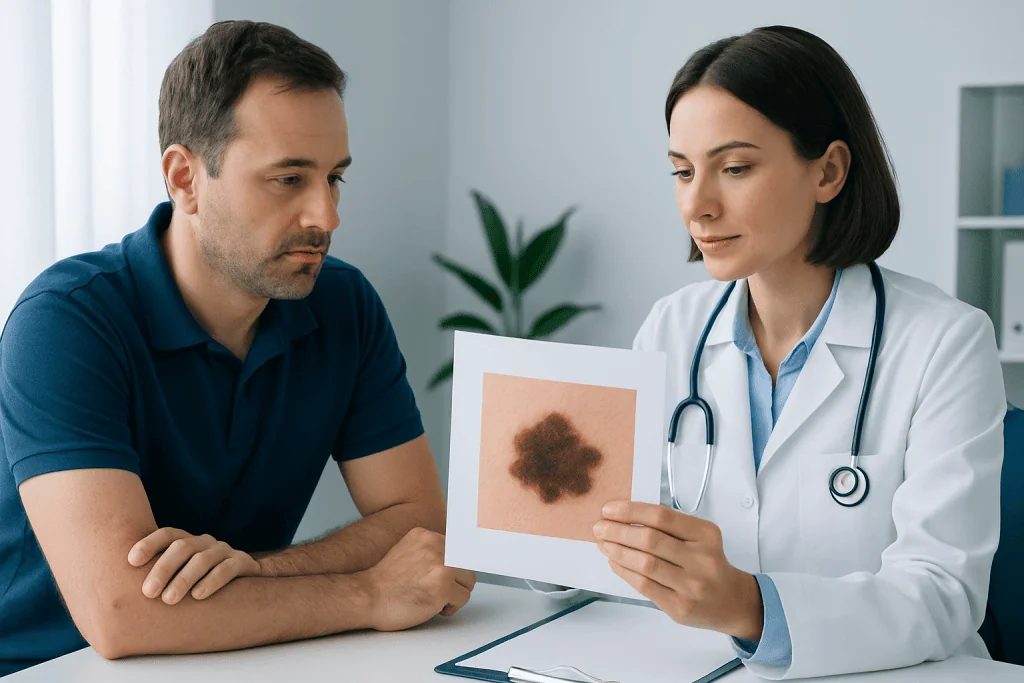
Diagnosis begins with a careful skin examination and a detailed medical history. A doctor will usually ask when the spots first appeared, whether they changed over time, what products or medications are being used, and whether there has been acne, rash, pregnancy, or intense sun exposure. These clues often help identify the type of hyperpigmentation.
A dermatologist may examine the skin closely with magnification and look at the color, borders, symmetry, and distribution of the spots. In some cases, special lighting or dermoscopy can help distinguish superficial pigment from deeper pigment and can identify lesions that need further attention. This is especially useful when dark spots are uneven, have mixed colors, or do not fit the pattern of common pigmentation.
Most dark spots can be diagnosed clinically, but a skin biopsy may sometimes be recommended if there is uncertainty or concern about skin cancer. Blood tests are not usually needed unless the medical history suggests a hormonal or systemic cause. Accurate diagnosis is important because treatment that helps one type of pigmentation may irritate or worsen another.
If the diagnosis points to a cosmetic concern rather than a dangerous lesion, the doctor can then discuss realistic treatment goals. Some pigmentation fades gradually, while some needs long-term management and strict sun protection to prevent recurrence.
Treatment options for dark spots on skin
Treatment depends on the cause, depth of pigment, skin type, and how long the spots have been present. For many people, the foundation of treatment is daily broad-spectrum sunscreen, because ongoing UV exposure can darken existing spots and reduce the benefit of any other therapy. Gentle skin care is also important, since irritation can trigger more pigment in sensitive skin.
Topical treatments are often the first step. Doctors may recommend ingredients that help lighten excess pigment or speed skin turnover, such as retinoids, azelaic acid, vitamin C, or other prescription depigmenting agents. These products usually work gradually over several weeks to months. They should be used as directed, since overuse or harsh combinations may cause redness and make pigmentation worse.
When topical care is not enough, in-office procedures may be considered. Depending on the diagnosis, these can include chemical peels, light-based treatment, or carefully selected laser treatment to target excess pigment. Some people may also benefit from a consultation in dermatology to tailor treatment to skin tone, sensitivity, and the exact type of discoloration. Procedures should be chosen cautiously, especially in darker skin tones, because the wrong approach can lead to irritation or rebound pigmentation.
Results vary. Some spots fade significantly, while others improve but do not disappear completely. Melasma, in particular, can be recurrent and often needs long-term maintenance. Treatment is usually most successful when it combines a clear diagnosis, sun protection, and a plan that avoids unnecessary irritation.
Prevention and self-care
The most effective way to help prevent dark spots is consistent sun protection. Daily use of a broad-spectrum sunscreen, along with shade, hats, and protective clothing, helps limit the UV exposure that triggers pigment production. This step is important not only for prevention but also for keeping existing spots from becoming darker.
Gentle skin care can also reduce the risk of post-inflammatory marks. Picking at acne, scratching rashes, or using harsh scrubs can all increase inflammation and lead to longer-lasting discoloration. Products should be introduced slowly, especially active ingredients such as exfoliating acids or retinoids, so the skin barrier stays healthy.
Helpful self-care habits include:
- Using non-irritating cleansers and moisturizers.
- Avoiding squeezing pimples or picking scabs.
- Treating acne, eczema, or other inflammatory skin problems early.
- Testing new cosmetic products carefully if the skin is sensitive.
- Following medical advice closely when using prescription lightening products.
Home remedies should be approached with caution. Ingredients such as lemon juice, abrasive scrubs, or unregulated bleaching products can irritate the skin and cause burns or uneven pigmentation. If dark spots are persistent or distressing, professional advice is safer than self-treating aggressively.
When to see a doctor
Dark spots on skin are often harmless, but some situations deserve medical evaluation. A person should see a doctor if a spot is new and unusual, grows quickly, changes in color or shape, has irregular borders, or starts to itch, crust, or bleed. These features do not always mean cancer, but they do need proper assessment.
Medical advice is also helpful when pigmentation appears suddenly, spreads widely, follows a medication change, or causes ongoing concern despite good skin care. A doctor can identify whether the issue is simple hyperpigmentation, melasma, a reaction pattern, or a lesion that needs closer monitoring. Early diagnosis helps avoid treatments that might irritate the skin unnecessarily.
For people seeking cosmetic improvement, specialist input can make treatment safer and more effective. In selected cases, Acibadem International’s multidisciplinary specialists and JCI-accredited hospitals support international patients with diagnosis and treatment planning for skin concerns, including persistent pigmentation.
Any treatment plan should be individualized. Because skin type, cause, and medical history all matter, it is best for patients to speak with a qualified dermatologist or healthcare professional before starting strong topical agents or procedural treatments.
Frequently asked questions
Are dark spots on skin always a sign of a serious problem?
No. Most dark spots are harmless and are related to sun exposure, acne, irritation, or hormonal changes. Still, any spot that changes quickly, bleeds, or looks unusual should be checked by a doctor.
Do dark spots go away on their own?
Some do fade gradually, especially marks left after inflammation. However, fading can take months, and some types such as sun spots or melasma may persist or come back without ongoing care and sun protection.
What is the difference between melasma and sun spots?
Melasma usually appears as larger, symmetrical patches, often on the cheeks, forehead, or upper lip, and is commonly linked to hormones and sun exposure. Sun spots are usually smaller, more defined, and develop mainly from cumulative ultraviolet damage.
Can acne leave dark spots on the skin?
Yes. After acne inflammation settles, the skin may produce extra pigment, leaving post-inflammatory hyperpigmentation. These marks are common and often improve with time, acne control, and appropriate skin care.
Is sunscreen necessary even when treating existing dark spots?
Yes. Sunscreen is one of the most important parts of treatment because ultraviolet exposure can darken existing spots and reduce the benefit of creams or procedures. Daily broad-spectrum protection helps prevent worsening and recurrence.
Are laser treatments safe for dark spots?
They can be safe and effective when the diagnosis is correct and the treatment is selected by an experienced specialist. Not every type of pigmentation responds the same way, and some skin types may have a higher risk of irritation or rebound pigmentation.
References
- American Academy of Dermatology
- National Health Service
- Mayo Clinic
- DermNet
- World Health Organization
This article is for general information only and is not a substitute for professional medical advice. Please consult a qualified doctor about your individual situation.
Explore treatments in Turkey — costs, top hospitals & a free quote
JCI-accredited · board-certified surgeons · reply within 24h
Add us as a Preferred Source to see more of our trusted health content across Google Search, AI Overviews and Discover.