

Deadlift: A Complete Medical Overview

The deadlift is a full-body resistance exercise that mainly uses the hip hinge pattern. Good deadlift form usually includes a neutral spine, controlled bracing, and gradual load progression.
Key Takeaways
- The deadlift is a full-body resistance exercise that mainly uses the hip hinge pattern.
- Good deadlift form usually includes a neutral spine, controlled bracing, and gradual load progression.
- Common problems linked to deadlifting include muscle strains, low back pain, and overuse injuries.
- Most discomfort improves with rest, technique correction, and a guided return to activity, but severe pain or nerve symptoms need medical assessment.
- Beginners, older adults, and people returning after injury may benefit from individualized coaching and medical advice.
A deadlift is a strength exercise that trains the hips, legs, back, and core by lifting weight from the floor to a standing position. It can be safe and effective for many people when technique, load, and recovery are well managed, but poor form or lifting beyond current capacity can lead to strain or injury.
Overview: what a deadlift is and why it matters
The deadlift is a resistance exercise in which a person lifts a weight from the floor to standing and then lowers it again with control. It is widely used in general fitness, athletic training, and rehabilitation because it challenges several large muscle groups at once, especially the gluteal muscles, hamstrings, back extensors, and trunk stabilizers.
From a medical and movement perspective, the deadlift is best understood as a hip-hinge exercise rather than simply a “back lift.” When it is performed with appropriate technique and a load that matches the person’s ability, it can improve strength, function, lifting mechanics in daily life, and confidence with movement. Problems usually arise not from the exercise name itself, but from errors in form, rapid increases in weight, fatigue, or returning too quickly after pain or injury.
Different variations exist, including the conventional deadlift, sumo deadlift, Romanian deadlift, trap-bar deadlift, and kettlebell deadlift. These options shift the demands on the hips, knees, spine, and grip slightly, which means one variation may suit a person’s body structure, training history, or symptoms better than another.
Potential health benefits of deadlift training
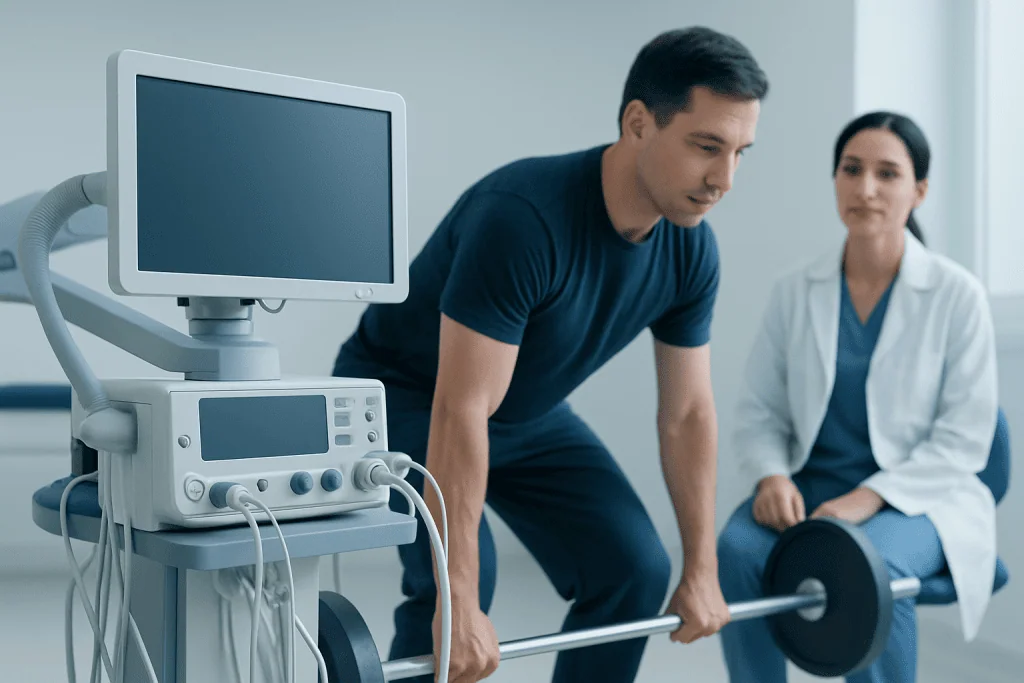
Deadlift training can support overall musculoskeletal health when it is part of a balanced exercise program. Because it uses multiple joints and muscle groups together, it helps develop coordinated strength for movements such as standing up, carrying, climbing stairs, and lifting objects from the ground. These qualities can be useful for athletes and non-athletes alike.
Regular resistance training may also support bone health, joint stability, posture control, and metabolic health. For some people, deadlifts can strengthen the posterior chain—the muscles on the back side of the body—which may help counter long periods of sitting and improve movement efficiency. In rehabilitation settings, carefully selected hinge exercises can be included in programs for certain back, hip, or lower-limb conditions under professional guidance.
Benefits are most likely when training is progressive, technically sound, and matched to the individual. More weight is not always better. For many people, the safest and most effective deadlift is the version they can perform consistently, without pain escalation, and with enough recovery between sessions.
- Builds hip and leg strength
- Trains the core and spinal stabilizers
- Improves everyday lifting mechanics
- Can support bone and joint health as part of resistance training
- May improve functional capacity and athletic performance
Deadlift form: the main points that protect the body

Safe deadlift technique usually begins with setup. The feet are placed in a stable stance, the bar or weight is kept close to the body, and the hips are pushed back to load the posterior chain. The spine is typically kept in a neutral, well-controlled position rather than rounded excessively, and the trunk is braced before the lift begins.
As the weight rises, the hips and knees extend together while the shoulders stay packed and the load remains close to the legs. The lift should look controlled rather than jerky. At the top, standing tall is enough; forceful leaning backward is usually unnecessary and may increase stress on the lower back. During the lowering phase, the movement reverses through the hips first, again with control.
Technique details can vary slightly based on body proportions and the type of deadlift being used. A trap-bar deadlift may allow a more upright torso, while a Romanian deadlift starts from standing and emphasizes the hip hinge through a shorter range of motion. For people with pain, limited mobility, or a history of injury, a clinician or trained coach may recommend modifications. If back symptoms persist, evaluation by a specialist in physical therapy and rehabilitation may help identify movement limitations, strength deficits, or recovery barriers.
Common deadlift-related problems and warning symptoms
The most common issues linked to deadlifting are muscle strains and movement-related pain rather than serious structural injury. Areas that may become painful include the lower back, hamstrings, gluteal region, hips, knees, forearms, and grip structures. Delayed-onset muscle soreness after a new or harder session is common and usually improves within a few days. This is different from sharp pain, sudden weakness, or pain that worsens with ordinary movement.
Low back pain during or after deadlifting may have several causes. These include lifting too much weight too soon, fatigue-related loss of technique, insufficient recovery, or an underlying condition that is irritated by loading. In some cases, pain may reflect a soft-tissue strain; in others, it may be related to an existing herniated disc or another spinal problem that needs assessment.
Other problems include hamstring strains, tendon irritation, and overuse symptoms from repeating the same training pattern without enough variation or rest. Less often, people may experience pain that radiates into the buttock or leg, numbness, tingling, or true weakness. These neurologic symptoms are more concerning because they can suggest nerve irritation or compression rather than simple post-exercise soreness.
- Sudden sharp pain during the lift
- Persistent low back pain beyond normal soreness
- Pain shooting into the leg or foot
- Numbness, tingling, or weakness
- Swelling, bruising, or inability to bear weight after injury
Causes and risk factors for deadlift injuries
Deadlift injuries are rarely caused by one factor alone. Most happen when tissue capacity and training demand do not match. This can occur with rushed progression, poor recovery, inadequate sleep, too much overall training volume, or returning to heavy lifting after a break. Technical errors, especially under fatigue, can add to the problem by shifting force to tissues that are not ready for it.
Individual risk factors also matter. A previous back or hamstring injury, reduced hip mobility, trunk weakness, deconditioning, and fear-driven guarding can all affect how a person lifts. Some people also have structural or degenerative conditions of the spine or hips that make certain lifting styles less comfortable. These do not automatically prevent deadlifting, but they may call for assessment and modification.
Program design is another major factor. Lifting heavy every session, neglecting warm-up sets, combining deadlifts with other high-load exercises without enough rest, or using pain as a signal to “push harder” can raise risk. People with persistent spinal pain may need evaluation for conditions such as scoliosis or disc-related problems, depending on their symptoms and examination findings.
Diagnosis: how clinicians assess pain linked to deadlifting
Medical evaluation starts with a careful history. The clinician asks when the pain began, whether there was a sudden event, what movement triggers symptoms, and whether there are any nerve-related signs such as tingling, numbness, or weakness. They also ask about previous injuries, training volume, recent changes in load, and any limitations in work, sleep, or daily function.
A physical examination usually includes posture, spinal movement, hip mobility, strength, tenderness, balance, and neurologic testing. In many cases of mild to moderate muscle strain or mechanical low back pain, imaging is not needed right away. The examination often provides enough information to guide early treatment and a safe return to activity.
Imaging may be considered if there is significant trauma, severe persistent pain, worsening neurologic symptoms, or concern for a more specific structural problem. Depending on the situation, a clinician may request X-rays, ultrasound, or MRI to evaluate soft tissues, discs, or other internal structures. If symptoms suggest a more serious spinal issue, referral to orthopedics and traumatology or another relevant specialist may be appropriate.
Treatment options and a safe return to lifting
Treatment depends on the cause, severity, and duration of symptoms. For many deadlift-related strains and mild back pain episodes, early care includes relative rest, avoiding aggravating loads, gentle movement, and a gradual return to usual activity. Complete bed rest is generally not advised for routine mechanical pain, because prolonged inactivity may delay recovery.
Rehabilitation often focuses on pain control, restoring hip and trunk function, improving movement confidence, and rebuilding capacity step by step. This may include mobility work, core stabilization, hamstring and gluteal strengthening, and retraining the hinge pattern. A temporary change in exercise selection is common; for example, a person may progress from bodyweight hinges to kettlebell lifts before returning to a barbell deadlift.
Some people need more targeted evaluation and treatment, especially if pain is recurrent, accompanied by neurologic symptoms, or linked to an underlying spinal condition. In such cases, specialist input can help determine whether further treatment, supervised rehabilitation, or activity modification is needed. Near the end of the care pathway, patients may also seek support from Acibadem International, where multidisciplinary specialists at JCI-accredited hospitals diagnose and treat musculoskeletal and spine-related conditions for international patients.
Prevention and self-care, plus when to seek medical care
Prevention starts with realistic training. The load should increase gradually, and technique should stay consistent across the set rather than only on the first few repetitions. Warm-up sets, recovery days, good sleep, and adequate nutrition all support tissue adaptation. It also helps to vary training over time instead of pushing maximal effort too often.
Self-care after a hard session includes normal walking and gentle movement, hydration, and allowing enough time before the next heavy lift. Soreness that peaks a day or two after training and then settles is usually expected. Pain that is sharp, escalating, or associated with loss of function deserves more caution. If needed, a coach can review mechanics, but persistent symptoms should be assessed by a qualified healthcare professional rather than self-diagnosed.
Medical care should be sought promptly if pain is severe, follows a distinct injury, or comes with symptoms such as numbness, tingling, leg weakness, fever, unexplained weight loss, bladder or bowel changes, or pain that does not improve with brief relative rest. These signs do not always mean a serious condition, but they do justify medical evaluation. Earlier assessment is also sensible for anyone with repeated episodes of back pain during deadlifting or difficulty returning to ordinary activities.
Frequently asked questions
Is the deadlift bad for the back?
Not necessarily. For many people, deadlifts can be performed safely and may help build strength when technique, load, and recovery are appropriate. Problems are more likely when lifting exceeds current capacity, form breaks down under fatigue, or an existing back condition is irritated.
What is the difference between normal soreness and an injury after deadlifting?
Normal post-exercise soreness usually feels like a dull, widespread ache in the muscles and improves over a few days. An injury is more likely if there is sudden sharp pain, swelling, bruising, pain radiating down the leg, numbness, weakness, or symptoms that worsen instead of easing.
Can someone with low back pain still deadlift?
Sometimes, yes, but it depends on the cause and severity of the pain. Some people can continue with modified lifting, lighter loads, or a different deadlift variation, while others need a temporary pause and medical assessment. Persistent or recurring symptoms should be discussed with a clinician or rehabilitation professional.
Which deadlift variation is usually easiest for beginners?
Many beginners start more comfortably with a kettlebell deadlift, a block pull, or a trap-bar deadlift because these options can be easier to learn and may place the body in a more manageable position. The best choice depends on body proportions, mobility, experience, and any pain history.
How often should a person deadlift?
There is no single schedule that suits everyone. Frequency depends on training age, overall program volume, recovery, goals, and previous injuries. A safe plan usually leaves enough time for technique practice and tissue recovery rather than emphasizing heavy lifting too often.
When should imaging be considered for deadlift-related pain?
Imaging is not routinely needed for mild strains or short-term mechanical back pain. It may be considered when symptoms are severe, persistent, associated with trauma, or accompanied by neurologic signs such as weakness or radiating pain. A doctor can decide whether tests such as MRI are appropriate.
References
- World Health Organization
- National Institute of Arthritis and Musculoskeletal and Skin Diseases
- American Academy of Orthopaedic Surgeons
- American College of Sports Medicine
- National Institute for Health and Care Excellence
This article is for general information only and is not a substitute for professional medical advice. Please consult a qualified doctor about your individual situation.
Explore treatments in Turkey — costs, top hospitals & a free quote
JCI-accredited · board-certified surgeons · reply within 24h

More from the Health Library



Related Specialists

Assoc. Prof. Dr. Esra Nur Ademoğlu Dilekçi
Endocrinology
Prof. Dr. Bülent Tıraş
Gynecology & Obstetrics
Assoc. Prof. Dr. Serdar Yalçın
Urology
Funda Özdemir
Physical Medicine & Rehabilitation