Does Rubbing Alcohol Kill Bed Bugs? Causes, Explanations, and Next Steps

Rubbing alcohol may kill individual bed bugs on direct contact, but it does not reach hidden bugs or eggs well enough to solve an infestation. Using rubbing alcohol around bedding, furniture, or electrical outlets can be unsafe because it is flammable.
Key Takeaways
- Rubbing alcohol may kill individual bed bugs on direct contact, but it does not reach hidden bugs or eggs well enough to solve an infestation.
- Using rubbing alcohol around bedding, furniture, or electrical outlets can be unsafe because it is flammable.
- Most bed bug bites improve with basic skin care and itch relief, but scratching can lead to skin infection.
- Doctors diagnose bed bug bites mainly by the appearance of the rash and the exposure history, while ruling out other causes.
- Effective bed bug control usually requires careful cleaning, heat-based measures, mattress encasements, and professional pest management.
Rubbing alcohol can kill some bed bugs if it directly hits them, but it does not reliably remove an infestation and may create safety risks, especially because it is flammable. Most bed bug bites are mild and self-limited, but certain skin reactions or signs of infection should be assessed by a doctor.
Overview: does rubbing alcohol kill bed bugs?
Yes, rubbing alcohol can kill some bed bugs when it is sprayed directly onto them. However, this effect is limited. It does not reliably eliminate bugs hiding in mattress seams, wall cracks, furniture joints, luggage, or other hard-to-reach places, and it may not destroy eggs effectively enough to stop the problem from returning.
For that reason, rubbing alcohol is not considered a dependable stand-alone solution for a bed bug infestation. It can also be hazardous when used heavily in the home because it is flammable. Safer and more effective approaches usually involve a combination of cleaning, heat, isolation of affected items, and professional pest control methods.
From a health perspective, bed bug bites are often harmless and improve on their own within days to a couple of weeks. The main medical concerns are itching, sleep disruption, skin irritation from scratching, and, less commonly, an allergic reaction or secondary infection. Knowing when symptoms are minor and when they need medical review can help people respond calmly and appropriately.
Why rubbing alcohol is not a reliable bed bug treatment

Bed bugs are difficult to remove because they hide well, feed briefly, and can survive in small cracks close to where people sleep or rest. A spray only works on the insects it touches. If even a small number remain hidden, the infestation can continue. Eggs are another challenge because they are attached to surfaces and may be less affected by contact sprays used at home.
Another limitation is that alcohol evaporates quickly. This means it has little residual effect after application. In contrast, successful bed bug control usually depends on repeated, structured measures that target live bugs, eggs, and hiding places over time.
Safety also matters. Rubbing alcohol is flammable, so spraying it on mattresses, upholstered furniture, carpets, or near electrical equipment can increase fire risk. It may also irritate the skin, eyes, or airways in some people. Because of these concerns, public health guidance generally favors nonflammable, evidence-based pest control strategies rather than widespread alcohol spraying indoors.
What bed bug bites look like and how they feel
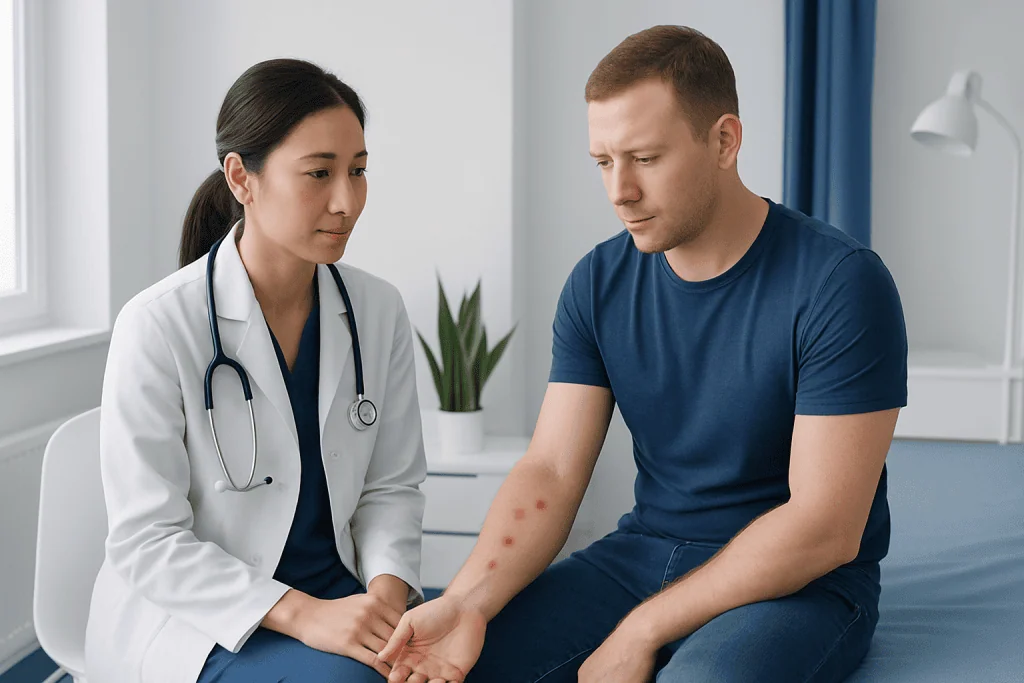
Bed bug bites usually appear as small, itchy red bumps on exposed areas of skin such as the arms, hands, neck, face, or legs. Some people notice bites in a line or clustered pattern, although this pattern is not specific enough to confirm the cause on its own. Others may have very mild marks or no visible reaction at all.
The skin changes often begin hours to days after exposure. Itching can be mild or intense, and repeated scratching may cause the area to become more inflamed. In many cases, the rash settles without treatment except for gentle skin care and measures to reduce itching.
Bed bug bites can resemble other conditions. These include mosquito bites, flea bites, hives, contact dermatitis, eczema flares, scabies, or bacterial skin irritation. If a rash is widespread, painful, blistering, or difficult to identify, a clinician may also consider related skin conditions such as dermatitis when deciding what is most likely.
- Common features: itching, small red bumps, grouped or linear marks
- Less common features: swelling, larger welts, trouble sleeping due to itching
- Warning features: pus, warmth, spreading redness, facial swelling, or breathing symptoms
Causes, spread, and why infestations persist
Bed bugs do not appear because a home is dirty. They are usually introduced by travel, secondhand furniture, luggage, clothing, or shared residential spaces. Once inside, they hide close to sleeping areas and come out mainly at night to feed.
Infestations persist because bed bugs are small, flat, and difficult to spot early. They can hide in mattress piping, bed frames, baseboards, behind wall hangings, inside upholstered furniture, and in luggage. A person may notice unexplained bites before they ever see an insect. Typical clues include tiny dark spots on bedding, shed skins, or live bugs in seams and crevices.
Although bed bug bites are unpleasant, bed bugs are not known to spread disease in the same way as many other pests. The bigger health effects are skin irritation, poor sleep, stress, and occasionally infection from scratching. People who already have sensitive skin may find the itch and inflammation more troublesome, and some may need care similar to management used for eczema or other itchy rashes.
How doctors evaluate bite reactions
Medical evaluation is usually straightforward and reassuring. A doctor will ask when the rash started, where it appears, whether other household members are affected, and whether there has been travel, a hotel stay, secondhand furniture exposure, or signs of insects in the home. In many cases, the history gives the strongest clue.
The doctor then examines the skin to assess the pattern of the bites, the degree of inflammation, and whether there are signs of scratching or infection. They may check for crusting, warmth, tenderness, drainage, or spreading redness. If the appearance is unusual, they may consider other explanations such as allergic reactions, scabies, or bacterial skin disease.
There is usually no specific laboratory test needed to diagnose bed bug bites. Tests are more likely if the clinician suspects another condition or a complication. When symptoms are significant, treatment may focus on symptom relief with anti-itch skin care, allergy management, or care for an infected area. In some cases, a clinician may recommend specialist input from dermatology if the diagnosis is unclear or the rash is persistent.
Treatment options for bites and for the home
For the skin, treatment is mainly supportive. Washing gently with soap and water, applying cool compresses, and avoiding scratching can help. Some people benefit from over-the-counter anti-itch creams or oral antihistamines, but the best choice depends on age, medical history, and the severity of the symptoms, so it is sensible to follow a pharmacist’s or doctor’s advice.
If scratching has broken the skin, keeping the area clean is important. A doctor may prescribe treatment if there are signs of bacterial infection or a stronger inflammatory reaction. When a severe rash, extensive swelling, or a possible allergic response occurs, prompt clinical review is appropriate.
For the home, the goal is complete eradication rather than temporary reduction. Effective steps may include:
- Washing bedding and clothing in hot water when appropriate for the fabric, then drying on a high-heat setting
- Vacuuming mattresses, bed frames, baseboards, and nearby furniture carefully
- Using mattress and box-spring encasements designed for bed bugs
- Reducing clutter so hiding places are easier to inspect and treat
- Consulting a qualified pest control professional for inspection and targeted treatment
If scratching or irritation leads to broken skin, some people may need wound-focused care such as wound care guidance. In rare cases of more extensive skin inflammation or infected lesions, review in a suitable outpatient setting such as dermatology and venereology may be helpful.
Prevention and practical self-care after exposure
Prevention often begins during travel. Checking mattress seams, headboards, and luggage racks in hotel rooms may help reduce exposure. Keeping suitcases off beds and floors, and washing travel clothes soon after returning home, can also be useful. If secondhand furniture is brought into the home, it should be inspected carefully before use.
At home, regular vacuuming and early attention to unexplained bite patterns may help catch a problem sooner. Bedding and clothing that may be infested should be handled carefully and laundered according to fabric instructions using heat when possible. Items that cannot be washed may sometimes be treated by controlled heat or sealed for a recommended period, depending on local pest control guidance.
Applying rubbing alcohol to the skin is not a treatment for bed bug bites and may worsen dryness or irritation. It is usually better to focus on gentle cleansing, avoiding scratching, and using medically appropriate anti-itch care. If symptoms are not improving, a clinician can advise whether the issue is a simple bite reaction or something else that needs treatment.
When to seek medical care
Most bed bug bites do not need urgent treatment. Medical review is appropriate if the rash is very painful, widespread, blistering, or unusually swollen, or if the itching is severe enough to disturb sleep and daily activities. It is also wise to seek care if a person is unsure whether the marks are from bed bugs at all.
Red flags include increasing warmth, tenderness, pus, crusting, or spreading redness, which may suggest a skin infection from scratching. Immediate medical attention is needed for symptoms of a serious allergic reaction such as trouble breathing, wheezing, dizziness, facial swelling, or swelling of the lips or tongue.
At the appointment, a doctor will usually review the exposure history, examine the skin closely, and decide whether the rash fits insect bites or another skin condition. If needed, they may recommend treatment to control inflammation, manage infection, or investigate alternative diagnoses. Near the end of the care pathway, some patients may value coordinated support; Acibadem International’s multidisciplinary specialists and JCI-accredited hospitals diagnose and treat skin reactions and related concerns for international patients.
Frequently asked questions
Does rubbing alcohol kill bed bugs instantly?
It can kill some bed bugs if the liquid directly contacts them. However, it does not reliably reach hidden insects or eggs, so it is not a dependable way to clear an infestation.
Is it safe to spray rubbing alcohol on a mattress?
This is generally not advised because rubbing alcohol is flammable and can create a fire risk, especially on fabrics and near electrical sources. It may also irritate the skin or airways and still may not solve the infestation.
Can bed bug bites make someone sick?
Most bites cause itching and mild skin irritation rather than serious illness. The more common complications are poor sleep, scratching-related skin damage, and occasional infection or allergic reaction.
How can a person tell if bites are from bed bugs and not something else?
Bed bug bites often appear as itchy red bumps on exposed skin, sometimes in clusters or lines, but this pattern is not unique. A doctor considers the appearance together with the history of travel, sleeping environment, and any signs of bugs in the home.
What is the best way to get rid of bed bugs?
The most effective approach usually combines careful inspection, hot laundering when appropriate, vacuuming, mattress encasements, reducing clutter, and professional pest control. A single home remedy rarely works on its own because hidden bugs and eggs can survive.
When should someone see a doctor for bed bug bites?
Medical advice is important if there is severe itching, extensive swelling, signs of infection, or uncertainty about the cause of the rash. Emergency care is needed for breathing difficulty, facial swelling, or other signs of a serious allergic reaction.
References
- Centers for Disease Control and Prevention
- United States Environmental Protection Agency
- American Academy of Dermatology
- World Health Organization
This article is for general information only and is not a substitute for professional medical advice. Please consult a qualified doctor about your individual situation.
Joint and spine care in Turkey — expert assessment & treatment
JCI-accredited · board-certified surgeons · reply within 24h

More from the Health Library



Related Specialists

Dr. Emine Çiğdem Kırçiçeği Çiçekdağ
Anesthesiology
Assoc. Prof. Dr. Onur Tunali
Orthopedic Surgery & Traumatology
Dt. Ekin Saydam
Oral & Dental Health
Dr. Kutluhan Demirarslan
Inpatient Clinic Physicians Clinical Service