Ear Candling: An Evidence-Based Guide for Patients
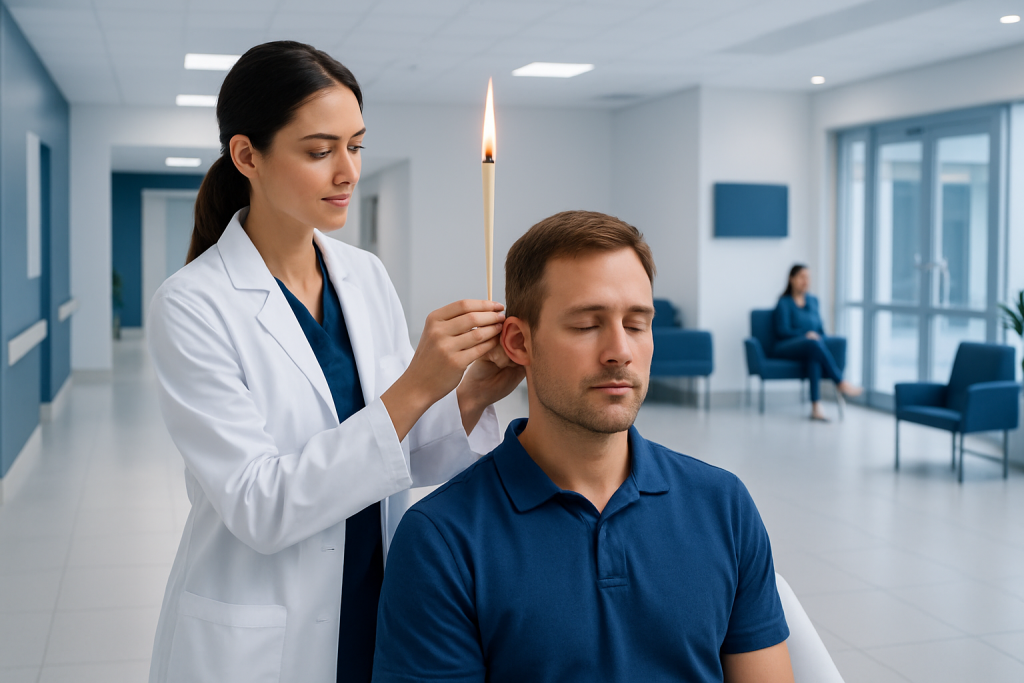
Ear candling has not been shown to safely or effectively remove earwax. It may lead to burns, ear canal blockage, irritation, or eardrum injury.
Key Takeaways
- Ear candling has not been shown to safely or effectively remove earwax.
- It may lead to burns, ear canal blockage, irritation, or eardrum injury.
- Earwax usually protects the ear and often clears naturally without treatment.
- Safer options for bothersome earwax include clinician-guided drops, irrigation when appropriate, or professional removal.
- Sudden pain, discharge, hearing loss, dizziness, or fever should prompt medical evaluation.
Ear candling is not an evidence-based way to remove earwax, and medical experts generally do not recommend it. Research shows it does not create meaningful suction in the ear and may cause burns, wax blockage, or injury to the ear canal and eardrum.
What ear candling is—and what patients should know first
Ear candling is a practice in which a hollow fabric cone coated with wax is placed at the outer ear while the other end is lit. Supporters may claim it draws out earwax, toxins, or impurities. However, current medical evidence does not support these claims, and ear specialists generally advise against the practice.
For most people, the shortest answer is this: ear candling is not a safe or proven method of earwax removal. Studies have found that it does not create enough suction to remove wax from inside the ear. Instead, it can leave candle material behind, irritate the skin, and in some cases cause burns or damage to the ear canal.
Ear symptoms such as fullness, muffled hearing, ringing, pain, or discharge can have many causes besides wax. These include infection, pressure changes, skin irritation, eardrum problems, or conditions such as tinnitus. Because treatment depends on the cause, self-treatment with heat or flame around the ear is not considered a reliable or appropriate first step.
How ear candling is supposed to work, and why the evidence does not support it

The theory behind ear candling is that the lit candle creates a gentle vacuum that pulls earwax upward and out of the ear. Some people believe the debris seen inside the used candle is extracted wax. In reality, when these candles are tested, the residue usually comes from the candle itself rather than from the ear.
Medical evaluations and laboratory testing have not shown ear candling to remove impacted wax. Researchers have also found no meaningful negative pressure that would be expected to pull wax from the ear canal. In other words, the proposed mechanism does not hold up when examined scientifically.
There is another practical concern: earwax is often not the true cause of symptoms. A person may feel blocked because of inflammation, infection, fluid behind the eardrum, or pressure dysfunction. Using ear candling may delay proper diagnosis and treatment while adding avoidable risk.
Patients often find it helpful to know that earwax itself is not “dirty” or harmful in most cases. It is a normal protective substance that traps dust, helps keep the ear canal lubricated, and creates a barrier against irritation. Because the ear is self-cleaning, wax frequently moves outward on its own.
Possible risks and side effects of ear candling

The main concern with ear candling is not simply that it may fail—it is that it may cause harm. The use of an open flame close to the face, scalp, and delicate ear structures creates a risk of thermal injury. Burns can affect the outer ear, ear canal, face, or hair.
Wax from the candle may drip into the ear canal and harden there, creating a blockage that can worsen hearing, pressure, or discomfort. In some cases, hot wax or mechanical trauma can injure the eardrum. This may lead to pain, drainage, hearing changes, or the need for specialist treatment.
Other possible problems include skin irritation, worsening inflammation, and delayed care for the real cause of symptoms. Children are at particular risk because they may move suddenly and because their ear symptoms often require proper examination rather than home procedures involving heat or flames.
- Burns to the ear, skin, or scalp
- Wax candle residue left inside the ear canal
- Blocked hearing from impacted debris
- Ear canal irritation or inflammation
- Eardrum perforation or injury
- Delayed diagnosis of infection or another ear condition
When earwax actually needs treatment
Not all earwax should be removed. In many people, earwax causes no symptoms and needs no treatment at all. Doctors usually consider treatment when wax is impacted, causes symptoms, or prevents examination of the ear.
Symptoms that may sometimes be related to impacted wax include a feeling of fullness, muffled hearing, itching, discomfort, ringing, or problems with hearing aids. Even then, it is important not to assume wax is the cause. Similar symptoms can occur with infection, middle ear fluid, eczema, or injury.
Certain people may be more likely to need medical assessment rather than self-care. This includes those who wear hearing aids or earbuds frequently, have narrow ear canals, produce a lot of wax, have a history of ear surgery, or are prone to skin conditions affecting the ear canal. People with diabetes or weakened immunity may also need more cautious evaluation because ear infections can become more serious.
If symptoms persist, a clinician may use an otoscope or microscope to see whether wax is present and whether the eardrum appears healthy. If there is heavy wax buildup, proper earwax removal can be performed with techniques selected according to the person’s age, anatomy, and medical history.
Safer, evidence-based alternatives to ear candling
If earwax is causing symptoms, safer options are available. These may include observation, ear drops designed to soften wax, irrigation in selected patients, or manual removal by a trained clinician. The best choice depends on whether the eardrum is intact, whether infection is suspected, and whether the person has had prior ear surgery or recurrent ear disease.
Professional removal may be done using suction, curettes, or other instruments under direct visualization. This approach is often preferred when wax is deep, hard, or close to the eardrum, or when a patient has pain, drainage, or a history that makes irrigation less suitable. An ear, nose, and throat specialist may evaluate persistent blockage, hearing change, or repeated wax impaction.
Home care should be simple and cautious. Putting cotton swabs, hairpins, or other objects into the ear can push wax deeper and injure the canal. People with ear tubes, known eardrum perforation, active infection, or significant ear pain should not try home irrigation unless a clinician specifically advises it.
When symptoms may reflect another ENT condition, broader assessment can be helpful. Depending on the findings, a doctor may evaluate for problems such as otitis media or recommend specialist ENT care to examine the ear more closely and choose the most appropriate treatment.
Prevention and self-care for healthy ears
The healthiest ear-care routine is often the least invasive one. The ear canal usually moves wax outward naturally with jaw motion and skin migration. Cleaning only the outer ear with a washcloth is enough for most people.
It may help to avoid habits that disturb the ear canal, such as frequent cotton-swab use or repeated insertion of objects. These practices can remove protective wax, irritate the skin, and push wax inward. If a person uses hearing aids, earbuds, or earplugs regularly, periodic cleaning of those devices according to manufacturer instructions may reduce irritation and wax buildup.
For people who repeatedly develop impacted wax, a doctor may suggest a preventive routine tailored to the ear’s condition. This might include occasional wax-softening drops or scheduled checkups rather than repeated self-treatment. Any self-care plan should stop if there is pain, drainage, dizziness, or worsening hearing.
General measures also matter. Protecting the ears from loud noise, treating allergies or upper respiratory infections when appropriate, and seeking evaluation for persistent hearing symptoms can help preserve ear health. If hearing seems reduced, formal hearing testing may clarify whether the issue is wax, nerve-related hearing loss, or another cause.
When to seek medical care
Medical assessment is advisable if ear symptoms are new, severe, or not clearly explained. A doctor should evaluate sudden hearing loss, significant ear pain, discharge, bleeding, fever, marked dizziness, or symptoms after an ear candling attempt. These signs may point to infection, injury, or another condition that needs prompt treatment.
It is also sensible to seek care if the ear feels blocked for more than a few days, if hearing remains muffled, or if symptoms keep returning. Children, older adults with communication difficulties, and people with previous ear surgery should be examined rather than relying on home remedies.
If an injury has already happened during ear candling, do not try to remove candle wax or debris with tools at home. Keeping the ear dry and arranging medical review is generally safer. A clinician can assess whether there is surface irritation, canal obstruction, or eardrum damage.
For patients needing specialist evaluation, Acibadem International’s multidisciplinary teams in JCI-accredited hospitals assess ear symptoms and provide treatment for international patients in a coordinated setting.
Frequently asked questions
Does ear candling remove earwax?
Current evidence does not show that ear candling effectively removes earwax. The material found in used candles is typically residue from the candle itself, not wax pulled from the ear.
Is ear candling safe?
No method involving an open flame near the ear can be considered low risk. Ear candling has been associated with burns, ear canal blockage from candle wax, and injury to the eardrum.
Why do my ears feel blocked if it is not wax?
A blocked sensation can happen for several reasons, including infection, pressure problems, inflammation, fluid behind the eardrum, or hearing changes unrelated to wax. That is why an examination is useful when symptoms continue.
What is the safest way to remove earwax?
The safest option depends on the person and the condition of the ear. In general, clinician-guided drops, selected irrigation, or professional removal under direct visualization are safer than ear candling or inserting objects into the ear.
Can cotton swabs help clean the ear?
Cotton swabs are usually not recommended inside the ear canal. They often push wax deeper, remove protective wax, and can irritate or injure the ear canal or eardrum.
When should someone see a doctor after ear candling?
Medical care is important if there is pain, burning, discharge, bleeding, dizziness, or reduced hearing afterward. A doctor should also assess anyone who suspects wax or debris has been left inside the ear.
References
- American Academy of Otolaryngology–Head and Neck Surgery
- U.S. Food and Drug Administration
- National Institute on Deafness and Other Communication Disorders
- American Academy of Pediatrics
- National Health Service
This article is for general information only and is not a substitute for professional medical advice. Please consult a qualified doctor about your individual situation.
Explore treatments in Turkey — costs, top hospitals & a free quote
JCI-accredited · board-certified surgeons · reply within 24h

More from the Health Library



Related Specialists

Dr. Güzi̇de Özdil
Radiology
Dr. Ergun Kuşku
Dermatology
Dr. Yalda Kargar
Inpatient Clinic Physicians Clinical Service
Prof. Dr. Canan Ayabakan
Pediatric Cardiology