Elf Ear Surgery: Procedure, Recovery and Results

Elf ear surgery reshapes the upper rim of the outer ear, usually by repositioning or removing a small amount of cartilage and skin. It is commonly performed as an outpatient procedure under local anaesthesia with sedation or general anaesthesia, depending on the individual case.
Key Takeaways
- Elf ear surgery reshapes the upper rim of the outer ear, usually by repositioning or removing a small amount of cartilage and skin.
- It is commonly performed as an outpatient procedure under local anaesthesia with sedation or general anaesthesia, depending on the individual case.
- Most people have swelling and tenderness initially, return to light activity within days, and need several weeks for early healing.
- Results are intended to be lasting, but final contour and scar maturation may take several months.
- Risks include bleeding, infection, asymmetry, altered sensation, visible scarring and the need for revision surgery in some cases.
Elf ear surgery is a reconstructive or cosmetic ear procedure that reduces an unusually pointed, folded or elongated upper ear tip and restores a smoother outer-ear contour. The technique, anaesthesia and recovery plan depend on whether the shape is present from birth, follows injury, or developed after previous ear surgery.
Overview: What Is Elf Ear Surgery?
Elf ear surgery is a form of ear reshaping surgery that corrects a pointed, narrow, folded or extended upper ear tip. The term “elf ear” is descriptive rather than a medical diagnosis. It may refer to a natural ear shape present from birth, an ear changed by trauma, or an upper-rim deformity after a previous procedure such as otoplasty.
The goal is usually to create a more rounded and balanced helix, which is the curved outer rim of the ear. A plastic surgeon or ear, nose and throat (ENT) surgeon with reconstructive experience assesses the ear cartilage, skin quality, symmetry and the person’s desired appearance before recommending a tailored approach.
Elf ear surgery affects the visible outer ear rather than hearing structures. However, a clinician should evaluate any hearing loss, repeated ear infections, drainage or a new change in ear shape separately, because these symptoms may point to an underlying ear condition rather than a cosmetic concern.
Who May Be a Candidate for Ear Reshaping?
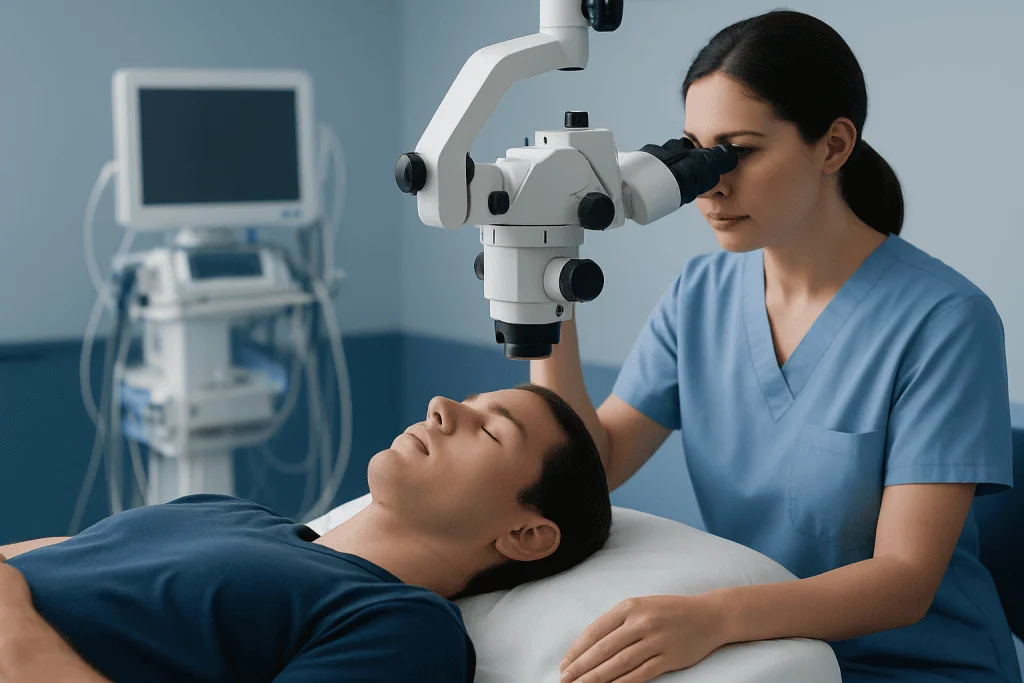
Adults who are bothered by a pointed upper ear contour may consider elf ear surgery when they are in good general health, do not smoke or are able to stop before and after surgery, and have realistic expectations about scarring and symmetry. Candidates should understand that ears naturally differ slightly from one another, and surgery aims for improvement rather than exact identical appearance.
Children and teenagers may also be assessed in selected cases, particularly when an ear-shape difference is congenital and causes distress. The best timing depends on ear growth, the nature of the deformity and the child’s ability to participate in aftercare. A specialist can discuss whether observation, non-surgical shaping in very young infants, or surgery is appropriate.
During consultation, the surgeon asks about previous ear operations, piercings, skin problems, allergies, medications, bleeding history and nicotine use. Photographs and careful measurements help guide planning. People who have active skin infection, uncontrolled medical conditions or unrealistic expectations may need treatment or further discussion before surgery.
How Elf Ear Surgery Works: Step by Step

The exact operation varies according to the cause and degree of the pointed appearance. In many cases, the surgeon makes a small incision along a natural crease or behind the ear, where scars may be less noticeable. They then access the cartilage that supports the upper ear rim.
Cartilage may be gently released, reshaped, folded or repositioned with permanent or dissolvable sutures. If there is extra skin or a sharply projecting segment, a small amount may be removed. In more complex reconstructive cases, the surgeon may use a cartilage graft from another part of the ear or, less commonly, another donor site to rebuild a smoother rim.
The skin is closed with fine sutures, and a dressing or protective head bandage is applied. The procedure is often performed as day surgery. Local anaesthesia with sedation may be suitable for some adults, while general anaesthesia may be preferred for children, longer reconstructions or people who would be uncomfortable during the procedure.
Related outer-ear contour concerns may be assessed as part of otoplasty and ear reshaping treatment. The surgeon should explain the planned incision, expected scar placement, type of anaesthesia and the possibility that each ear may require a slightly different technique.
Recovery Timeline and Expected Results
Immediately after elf ear surgery, the ears are usually protected with a padded dressing. Mild to moderate discomfort, pressure, swelling, bruising and temporary numbness are common in the first few days. Prescribed or recommended pain relief should be used exactly as directed, and patients should avoid taking medicines or supplements that increase bleeding unless their surgical team has approved them.
Dressings are often changed or removed at an early follow-up visit. Many people can return to desk-based work, school or quiet activities within about one week, depending on their comfort and the procedure performed. Strenuous exercise, contact sports, swimming and activities that could bend or strike the ears are usually postponed until the surgeon confirms healing is sufficient.
The initial new shape can be visible once swelling begins to settle, but the ears may remain firm, swollen or uneven-looking during early healing. It commonly takes several weeks for swelling to improve substantially and several months for scars and cartilage to settle. Follow-up visits are important because the surgeon can check blood flow, wound healing and ear symmetry.
Results are generally designed to be long-lasting. Still, cartilage has natural memory and healing varies between individuals, so minor asymmetry, contour irregularity or recurrent pointing can occasionally occur. Revision surgery is not routine, but it may be discussed if healing does not produce the planned contour.
How Painful Is Elf Ear Surgery?
Elf ear surgery is usually associated with manageable discomfort rather than severe pain. Anaesthesia prevents pain during the operation. Afterward, people more often describe tightness, aching, pressure or sensitivity around the ears, especially during the first few days.
The intensity depends on the extent of cartilage work, whether one or both ears are treated, and individual pain sensitivity. The surgical team may recommend appropriate pain medicine and practical measures such as resting with the head elevated. Pain should gradually improve, not worsen, after surgery.
Severe pain, rapidly increasing swelling, a very tight dressing, new dark discoloration of the skin, fever or pus-like drainage should be reported promptly. These signs do not always indicate a serious complication, but they require timely clinical assessment.
How Long Should You Rest After Ear Surgery?
Rest is most important during the first several days after ear surgery. Patients should plan for help getting home after anaesthesia and should avoid driving, alcohol, major decisions and strenuous activity for the period advised by their clinician. Sleeping with the head elevated can help reduce swelling and pressure.
Light walking around the home is generally encouraged once a person feels able, as it supports circulation. Many people resume non-physical work or school within approximately one week, but recovery is individual. Jobs involving lifting, dust exposure, helmets, frequent bending or a risk of knocks to the ears may require a longer break.
Contact sports and activities that place pressure on the ears should be avoided until specifically cleared by the surgeon. This is often several weeks, particularly when cartilage has been reshaped. Following the individual postoperative plan is more reliable than using a fixed timeline.
How to Care for Ears After Elf Ear Surgery
Aftercare instructions differ by technique, so the surgical team’s advice should always take priority. In general, dressings should be kept clean and dry until the clinician says they can be removed or changed. Patients should not pick at crusting, apply creams or ointments, or expose incisions to swimming pools, hot tubs or natural water without approval.
A soft headband may be recommended after the initial dressing comes off, particularly at night, to prevent accidental folding of the ears while sleeping. Patients should sleep on their back where possible and avoid tight hats, headphones, glasses pressure or hairstyles that pull on the incision area until healing progresses.
Follow-up appointments allow sutures to be removed when needed and help identify early concerns. Nicotine products can delay wound healing and increase complication risk, so avoiding them before and after surgery is important. Sun protection after the incision has healed can also help scars mature more evenly.
- Take medicines only as advised by the surgical team.
- Keep the surgical area dry and protected for the recommended period.
- Avoid bending, pressure and trauma to the ears.
- Attend all scheduled postoperative reviews.
Risks, Benefits and When to Seek Medical Care
The potential benefit of elf ear surgery is a smoother upper-ear contour that may feel more proportionate to the face and more aligned with the person’s aesthetic goals. For people with a deformity after trauma or previous surgery, reconstruction may also improve the ear’s structural support. A thorough consultation helps ensure that the likely benefit is balanced against the limitations of surgery.
Possible risks include bruising, bleeding or a collection of blood beneath the skin, infection, delayed healing, visible or thickened scars, altered sensation, cartilage irregularities, asymmetry, recurrence and dissatisfaction with the appearance. Anaesthesia also has risks, which are reviewed before surgery. Selecting an appropriately qualified surgeon and following aftercare advice can reduce, but not remove, these risks.
Medical care should be sought urgently for uncontrolled bleeding, breathing difficulty, severe or rapidly increasing pain, fever, spreading redness, foul-smelling or pus-like drainage, or a sudden change in skin color of the ear. A new ear deformity after injury, or ear-shape changes accompanied by hearing loss, ongoing discharge or dizziness, should also be evaluated by a doctor.
Acibadem International’s multidisciplinary specialists and JCI-accredited hospitals assess and treat ear concerns for international patients, including reconstructive and aesthetic ear surgery where clinically appropriate.
Frequently asked questions
How painful is cholesteatoma surgery?
Cholesteatoma surgery is different from elf ear surgery because it treats an abnormal skin growth in the middle ear or mastoid that can damage nearby structures. Pain after the operation is often mild to moderate and is usually managed with the pain-relief plan provided by the surgeon. Individual recovery varies according to the extent of disease and the type of ear surgery required.
Is elf ear surgery the same as otoplasty?
Elf ear surgery can be considered a type of otoplasty, which is a broad term for surgery that changes the shape, position or size of the outer ear. However, standard otoplasty often focuses on prominent ears, while elf ear correction specifically addresses a pointed or elongated upper ear rim. The techniques may overlap but are tailored to the individual anatomy.
Will elf ear surgery affect hearing?
Elf ear surgery is performed on the outer ear cartilage and skin and does not usually involve the eardrum, ear canal or middle-ear hearing structures. It is therefore not expected to change hearing. Any pre-existing hearing symptoms should be evaluated separately before surgery.
How long do scars take to fade after elf ear surgery?
Scars commonly look pink, firm or slightly raised during early healing. They usually improve gradually over several months, although scar maturation can continue for up to a year or longer. Scar visibility depends on incision placement, skin type, healing and aftercare.
Can an elf ear deformity return after surgery?
A carefully planned repair is intended to provide a lasting improvement, but cartilage can shift or partly return toward its previous shape during healing. Minor asymmetry or contour irregularity can also occur. The surgeon reviews this possibility during consultation and monitors healing at follow-up visits.
When can someone sleep on their side after elf ear surgery?
Pressure on the ears should usually be avoided during early healing because it can increase discomfort and affect the repaired cartilage. The surgeon may advise back sleeping with the head elevated for a defined period and may recommend a protective headband. The safe time to resume side sleeping depends on the procedure and should be confirmed at follow-up.
References
- American Society of Plastic Surgeons
- American Academy of Otolaryngology–Head and Neck Surgery
- National Health Service
- Mayo Clinic
This article is for general information only and is not a substitute for professional medical advice. Please consult a qualified doctor about your individual situation.
Explore treatments in Turkey — costs, top hospitals & a free quote
JCI-accredited · board-certified surgeons · reply within 24h