Uveitis Treatment: How It Works, Results and What to Expect

Uveitis is inflammation inside the eye and needs prompt assessment by an ophthalmologist. Treatment may include anti-inflammatory eye drops, dilating drops, tablets, injections, immune-targeting medicines or surgery.
Key Takeaways
- Uveitis is inflammation inside the eye and needs prompt assessment by an ophthalmologist.
- Treatment may include anti-inflammatory eye drops, dilating drops, tablets, injections, immune-targeting medicines or surgery.
- Many episodes improve within days to weeks, but recurrent or chronic uveitis can require longer-term monitoring and treatment.
- Treating an underlying infection or immune-mediated condition may be essential to controlling eye inflammation.
- Regular follow-up helps detect complications such as raised eye pressure, cataract and swelling at the retina early.
Uveitis treatment aims to control inflammation quickly, relieve discomfort and protect vision. The most suitable plan depends on which part of the eye is inflamed, the underlying cause and whether one or both eyes are affected.
Overview: how uveitis treatment works
Uveitis treatment works by reducing inflammation inside the eye, easing symptoms and preventing damage to delicate structures involved in vision. For many people, treatment begins promptly with prescription anti-inflammatory eye drops and drops that widen the pupil. However, the plan is always tailored: uveitis can affect the front, middle, back or all parts of the eye, and it may occur on its own or alongside an infection or an inflammatory condition elsewhere in the body.
Uveitis is not one single disease. Anterior uveitis affects the front of the eye and is often associated with redness, pain, light sensitivity and blurred vision. Intermediate, posterior and panuveitis involve deeper eye tissues and may cause floaters, reduced vision or visual distortion, sometimes with little redness or discomfort. The location and severity help determine which medicines can reach the inflammation effectively.
People often ask, “uveitis how to cure?” Some cases are isolated and do not return after appropriate treatment. Others are linked to ongoing immune conditions or can recur, so the focus is usually long-term control rather than a guaranteed permanent cure. Early specialist care offers the best opportunity to preserve sight and reduce complications.
Who may need treatment and specialist assessment
Anyone with suspected uveitis should be assessed by an ophthalmologist, ideally promptly. A person may be more likely to develop uveitis if they have an autoimmune or inflammatory condition, such as inflammatory arthritis, inflammatory bowel disease, psoriasis or sarcoidosis. Infections, eye injury and, less commonly, some medicines can also contribute. In many cases, no clear cause is found.
Treatment selection considers the type of uveitis, whether one or both eyes are involved, previous episodes, vision changes and any health conditions outside the eye. Children, pregnant people, people with weakened immunity and those with repeated inflammation may need particularly individualized assessment. A specialist may coordinate care with rheumatology, infectious diseases, dermatology or other relevant teams.
Not every red or painful eye is uveitis; dry eye, allergy, conjunctivitis, corneal problems and acute glaucoma can produce overlapping symptoms. For this reason, it is important not to self-treat persistent eye pain or light sensitivity with leftover prescription drops. Steroid eye drops are effective when appropriately prescribed but are not suitable for every cause of eye inflammation.
Diagnosis and planning the right treatment

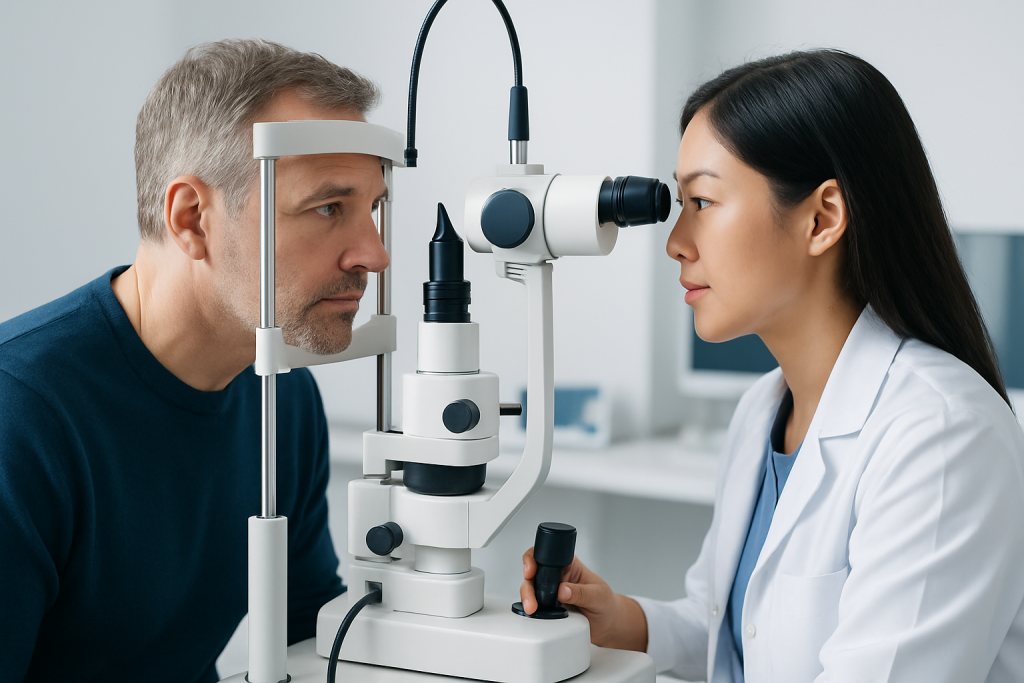
An ophthalmologist usually begins with a detailed discussion of symptoms, medical history, medicines, recent infections and family history. The eye examination commonly includes checking vision, measuring eye pressure and examining the front and back of the eye using a slit lamp and dilated pupil examination. Imaging such as optical coherence tomography may be used to look for fluid or swelling in the retina.
Further tests are guided by clinical findings rather than performed routinely for everyone. These may include blood tests, chest imaging or tests for infections when the history and eye examination suggest a possible cause. This focused approach helps avoid unnecessary testing while identifying conditions that need treatment beyond the eye.
Follow-up visits are a central part of uveitis treatment. They allow the ophthalmologist to confirm that inflammation is settling, adjust medication safely and check for complications. For example, steroid treatment can raise eye pressure in some people, while inflammation itself may affect the lens or retina. Monitoring is therefore as important as the initial prescription.
Treatment options: drops, medicines, injections and surgery
For anterior uveitis, corticosteroid eye drops are commonly used to suppress inflammation. Dilating or cycloplegic drops may also be prescribed to reduce pain from muscle spasm, prevent the iris from sticking to the lens and support comfort while the eye heals. These medicines should be used exactly as directed and should not be stopped suddenly without advice, particularly when drops have been used frequently.
When inflammation is deeper in the eye, severe, affects both eyes or does not respond adequately to drops, treatment may include tablets, infusions or injections around or into the eye. Systemic corticosteroids may be used for a limited period, while steroid-sparing immune-modifying medicines or biologic therapies may be considered for recurrent, chronic or immune-mediated uveitis. If infection is identified, antimicrobial treatment is needed, and immune-suppressing medicines may be unsuitable until infection has been addressed.
Some people develop complications requiring an eye procedure. These may include treatment for retinal swelling, surgery for a cataract once inflammation is controlled, or procedures to manage raised eye pressure. Vitrectomy surgery may occasionally be considered for persistent vitreous haze, retinal complications or diagnostic reasons. Treatment is individualized because the benefits and potential side effects differ between options.
- Local treatment: eye drops, ointments, injections or implants can target the eye directly.
- Systemic treatment: tablets, injections or infusions may be needed when both eyes or other organs are involved.
- Cause-directed treatment: managing an infection or inflammatory disease can help prevent further episodes.
What to expect: treatment steps and recovery timeline
At the first treatment visit, the ophthalmologist confirms the likely location and activity of inflammation, checks for urgent complications and starts the most appropriate therapy. The person receives instructions on administering drops, medication timing and symptoms that should prompt urgent contact. Follow-up may be scheduled within days or weeks depending on severity, since the treatment plan can change as the eye responds.
For the question “uveitis treatment how long,” there is no single answer. Mild anterior uveitis may improve over several days and settle over a few weeks with treatment. More severe inflammation, posterior uveitis or uveitis linked to a systemic condition may require treatment for months or longer. Medicines are often reduced gradually after inflammation has settled, rather than stopped abruptly.
“Uveitis how long does it take to recover?” also depends on whether the retina, optic nerve, lens or eye pressure has been affected. Symptoms such as pain and light sensitivity may improve before vision is fully clear. A person should attend all recommended reviews even if the eye feels better, because inflammation or pressure changes can sometimes continue without obvious symptoms.
During recovery, people should use medicines consistently, avoid rubbing the eye and ask their clinician before using over-the-counter drops or supplements. Driving may not be safe if vision is blurred or pupils are dilated. Contact lenses should only be worn if the ophthalmologist confirms that this is appropriate.
Benefits, risks and protecting long-term vision
The main benefit of timely uveitis treatment is reducing inflammation before it causes lasting injury to vision. Effective control can relieve pain and light sensitivity, improve clarity of sight and lower the chance of complications. For people with recurrent disease, a long-term plan can reduce the frequency or severity of flare-ups and support everyday activities.
All treatments have potential risks, which should be balanced against the risks of untreated inflammation. Corticosteroid drops, injections and tablets can increase eye pressure and contribute to cataract formation, especially with prolonged use. Systemic steroids can have effects elsewhere in the body, and immune-modifying medicines can increase susceptibility to infection or affect blood tests and organ function; careful specialist monitoring is used to reduce these risks.
Uveitis itself may lead to cataract, glaucoma, retinal swelling or scarring, depending on its type and duration. These complications are not inevitable, and regular eye examinations can identify them early. People should tell their eye team about new floaters, worsening blur, reduced side vision, medication side effects or symptoms of illness while using immune-suppressing treatment.
Self-care, prevention and ongoing follow-up
There is no reliable home remedy that replaces medical treatment for uveitis. Resting the eyes, wearing sunglasses for light sensitivity and using prescribed medicines correctly can support comfort, but they do not treat the underlying inflammation on their own. Smoking cessation, balanced nutrition and general management of chronic health conditions support overall wellbeing, although they cannot guarantee that uveitis will not recur.
Prevention depends on the cause. If uveitis is associated with an inflammatory disease, regular care with the relevant specialist and adherence to the agreed treatment plan may help maintain control. If an infection is involved, completing the prescribed antimicrobial course and attending follow-up are important. In cases without an identified cause, ongoing eye monitoring remains the best way to recognize recurrence early.
People with recurrent uveitis can find it useful to note the date of previous episodes, symptoms, treatments and any related joint, skin, bowel or respiratory symptoms. This information can help the care team identify patterns and coordinate investigations. Acibadem International’s multidisciplinary specialists and JCI-accredited hospitals provide assessment and treatment planning for international patients with uveitis.
When to seek medical care
Urgent medical assessment is recommended for a red eye with pain, sensitivity to light, sudden blurred vision, new floaters, flashing lights or a dark curtain-like shadow in vision. These symptoms can occur with uveitis but can also signal other eye conditions that require prompt treatment. A person should seek same-day advice from an eye specialist or urgent care service rather than waiting to see if symptoms settle.
People already receiving uveitis treatment should contact their eye team promptly if symptoms worsen, vision declines, significant medication side effects develop or they cannot use their medicine as prescribed. They should also seek advice before stopping steroid or immune-suppressing medicines. Regular planned follow-up remains important even when symptoms have improved.
With timely diagnosis, appropriate treatment and follow-up, many people with uveitis achieve good control of inflammation. Asking questions about the likely cause, treatment goals, expected recovery and monitoring schedule can help a person take an active role in protecting their eye health.
Frequently asked questions
How is uveitis treated?
Uveitis is treated according to the location, severity and cause of inflammation. Treatment may involve steroid and pupil-dilating eye drops, medicines by mouth, injections, immune-modifying treatment or procedures for complications. If an infection or systemic inflammatory condition is present, it also needs appropriate treatment.
How long does uveitis treatment take?
Mild anterior uveitis may improve within days and often settles over several weeks, although treatment is usually reduced gradually. Deeper, recurrent or chronic uveitis can require treatment and monitoring for months or longer. The ophthalmologist will adjust the duration based on inflammation and any side effects.
How long does it take for uveitis to heal?
Recovery varies considerably. Pain and light sensitivity may improve relatively quickly, but blurred vision can take longer to clear, especially if the retina is affected or swelling is present. Follow-up examinations are needed to confirm that inflammation has resolved.
Can uveitis be cured permanently?
Some isolated episodes resolve fully and never recur. When uveitis is linked to an ongoing immune condition or has a recurrent pattern, it may be controlled rather than permanently cured. Consistent treatment and follow-up can help protect vision and manage future flare-ups.
Can uveitis go away without treatment?
Symptoms may occasionally seem to lessen, but untreated uveitis can cause serious complications and should not be watched at home. An ophthalmologist should assess suspected uveitis promptly. Early treatment is important for reducing inflammation and protecting vision.
What should a person avoid during uveitis treatment?
A person should avoid stopping prescribed medicines suddenly, using someone else’s eye drops or relying on home remedies instead of medical care. Contact lens wear and driving may need to be paused if vision is affected or pupils are dilated. The eye team can give individualized advice based on the treatment plan.
References
- American Academy of Ophthalmology
- National Eye Institute
- National Health Service
- Uveitis Information Group
- Mayo Clinic
This article is for general information only and is not a substitute for professional medical advice. Please consult a qualified doctor about your individual situation.
Persistent digestive symptoms? Get evaluated in Turkey
JCI-accredited · board-certified surgeons · reply within 24h