Quick answer
Sarcoidosis is an inflammatory disease in which small clusters of immune cells, called granulomas, form in organs most often the lungs and lymph nodes, sometimes affecting the skin, eyes, heart, or nervous system. Treatment depends on the organs involved and symptom severity, and at Acibadem in Turkey evaluation may include imaging, lung function tests, and biopsy, with management ranging from…
What is sarcoidosis?
Sarcoidosis is an inflammatory disease in which the body’s immune system forms small clusters of inflammatory cells called granulomas. A granuloma is a tiny lump of immune cells that gathers in a tissue or organ, usually as part of the body’s attempt to wall off something it perceives as harmful. In sarcoidosis, these granulomas form without a clear trigger and can appear in almost any organ, although the lungs and the lymph nodes in the chest are affected most often. Lymph nodes are small, bean-shaped glands that filter fluid and help the body fight infection.
For many people asking “what is sarcoidosis,” the most important point is that it is not an infection and it is not cancer, even though its symptoms and scan findings can sometimes resemble both. In many cases, the granulomas cause few or no symptoms and go away on their own. In other cases, ongoing inflammation can affect how an organ works, and if it lasts a long time it may lead to scarring, known medically as fibrosis.
Sarcoidosis can affect people of any age, sex, or background, but it is most often diagnosed in adults between roughly 20 and 60 years of age. It appears to be somewhat more common in women than in men. The condition is seen worldwide, and its frequency and severity vary between populations; for example, it tends to be more common and sometimes more severe in people of African descent, and it is also relatively common in people of Northern European ancestry. Sarcoidosis is generally managed by lung specialists (pulmonologists) because the lungs are involved so frequently, often working together with other specialists depending on which organs are affected.
Symptoms of sarcoidosis
Sarcoidosis symptoms vary widely because the disease can involve so many different organs. Some people have no symptoms at all, and the condition is discovered by chance on a chest X-ray done for another reason. Others develop noticeable, sometimes troubling symptoms that develop gradually or, less often, appear suddenly.
Common general symptoms include:
- Fatiguepersistent tiredness that is not relieved by rest, one of the most frequent complaints.
- Feverusually low-grade and intermittent.
- Unintended weight loss and reduced appetite.
- Swollen lymph nodes, sometimes felt in the neck, armpits, or groin.
- Joint pain or swelling, particularly around the ankles.
- Night sweats in some people.
Because the lungs are involved in most people with sarcoidosis, lung-related symptoms are common:
- A persistent dry cough that does not clear up.
- Shortness of breath, especially during exertion.
- Chest discomfort or a feeling of tightness.
- Wheezing in some cases.
Sarcoidosis can also affect other organs, producing symptoms such as:
- Skin changestender red-purple bumps on the shins (a pattern called erythema nodosum), raised patches, or discolored areas; a firmer rash on the nose, cheeks, and ears called lupus pernio can occur in longstanding disease.
- Eye problemsredness, pain, blurred vision, or sensitivity to light, often caused by inflammation inside the eye (uveitis). Eye involvement can occur without any noticeable symptoms, which is why regular eye examinations are often recommended.
- Heart involvementpalpitations (an awareness of an irregular or racing heartbeat), fainting, or shortness of breath; cardiac sarcoidosis is less common but potentially serious.
- Nervous system involvementfacial weakness or drooping, headaches, numbness, or, rarely, seizures.
- High calcium levelsgranulomas can alter how the body handles vitamin D, which may raise blood calcium and cause thirst, frequent urination, or kidney stones.
Doctors often describe lung sarcoidosis in stages based on chest X-ray appearance, ranging from enlarged lymph nodes alone to lung tissue involvement and, in a minority of people, permanent scarring (fibrosis). These stages describe the X-ray picture rather than a fixed path the disease will follow; many people in the early stages improve without any treatment, while symptoms tend to be more persistent when scarring has developed. A distinctive sudden-onset form called Löfgren syndrome: a combination of fever, ankle joint pain, the tender shin bumps described above, and enlarged chest lymph nodes, often has a particularly good outlook and frequently resolves on its own.
Causes and risk factors
The exact cause of sarcoidosis is not known. The leading explanation is that, in people with a certain genetic makeup, the immune system overreacts to something inhaled or otherwise encountered in the environment, possibly certain microbes, dusts, or chemicals, and continues to form granulomas even after the original trigger is gone. Despite extensive research, no single trigger has been proven, and it is likely that different triggers act in different people. Understanding sarcoidosis causes remains an active area of research.
Several factors appear to influence the risk of developing sarcoidosis:
- Agemost people are diagnosed between about 20 and 60 years of age.
- Sexthe condition is somewhat more common in women.
- Family historyhaving a close relative with sarcoidosis modestly increases the risk, suggesting a genetic contribution, although most relatives of affected people never develop the disease.
- Ancestry and geographyfrequency and severity vary between populations, as noted above.
- Possible environmental or occupational exposuressome studies have suggested links with certain dusts, molds, or agricultural and industrial exposures, but none has been definitively proven as a cause.
It is important to know that sarcoidosis is not contagious. You cannot catch it from another person, and you cannot pass it on to others. It is also not caused by anything a person did wrong, and it cannot be prevented by any known lifestyle change.
Diagnosis
There is no single test that proves sarcoidosis on its own. Instead, sarcoidosis diagnosis rests on three pillars: a clinical picture that fits the disease, evidence of granulomas in affected tissue, and the careful exclusion of other conditions that can cause similar granulomas, such as tuberculosis, certain fungal infections, and some occupational lung diseases. Because of this, the diagnostic process may take some time and often involves several tests.
Your doctor may use some or all of the following:
- Medical history and physical examinationincluding questions about symptoms, occupational and environmental exposures, travel, and family history, plus examination of the lungs, skin, lymph nodes, and eyes.
- Chest X-rayoften the first imaging test; it can show enlarged lymph nodes in the chest or changes in the lung tissue and is used for the staging system described earlier.
- CT scan (computed tomography)a more detailed X-ray-based scan that gives a clearer picture of the lungs and lymph nodes.
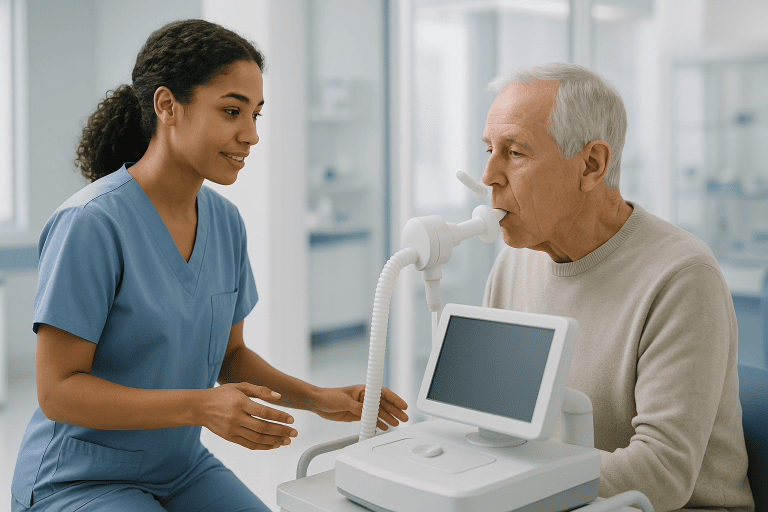
- Pulmonary function testsbreathing tests that measure how much air the lungs can hold and how well oxygen passes into the blood.
- Blood and urine teststo check calcium levels, kidney and liver function, and general markers of inflammation. Some doctors measure an enzyme called ACE (angiotensin-converting enzyme), which can be elevated in sarcoidosis, though this test alone can neither confirm nor rule out the disease.
- Biopsytaking a small sample of tissue to look for granulomas under a microscope. In lung sarcoidosis this is often done during a bronchoscopy, a procedure in which a thin, flexible tube with a camera is passed through the mouth or nose into the airways. A fine needle guided by ultrasound through the airway wall (a technique called EBUS, or endobronchial ultrasound) is commonly used to sample chest lymph nodes. If the skin or a superficial lymph node is involved, a simpler biopsy from those sites may be enough.
- Tests to exclude infectionsuch as tests for tuberculosis, because granulomas from infection must be ruled out before sarcoidosis can be diagnosed.
- Additional organ checksan electrocardiogram (a recording of the heart’s electrical activity) is commonly performed, and an eye examination is usually recommended. If heart or nervous system involvement is suspected, more specialized imaging such as MRI (magnetic resonance imaging) or PET (positron emission tomography) scans may be arranged.
In certain classic presentations, such as Löfgren syndrome, doctors may feel confident enough in the diagnosis that a biopsy is not required. Your medical team will explain which tests are appropriate in your specific situation.
Treatment options for sarcoidosis
Sarcoidosis treatment depends on which organs are involved, how severe the inflammation is, and whether the disease is affecting organ function or quality of life. A key fact for patients to understand is that not everyone with sarcoidosis needs treatment. In many people, especially those with mild disease found on a routine X-ray, the granulomas shrink and disappear on their own within months to a few years.
Watchful waiting (active monitoring). When symptoms are mild or absent and organ function is normal, doctors often recommend regular check-ups, breathing tests, and imaging rather than starting medication. This is not “doing nothing”: it is a deliberate strategy that avoids exposing people to medication side effects when the disease may resolve by itself. If monitoring shows the disease is worsening, treatment can be started at that point.
Corticosteroids. When treatment is needed, corticosteroids (steroid medicines such as prednisone, which calm the immune system and reduce inflammation) are usually the first choice. They are often effective at controlling symptoms and protecting organ function, but long-term use can cause side effects such as weight gain, mood changes, raised blood sugar, high blood pressure, and thinning of the bones. For this reason, doctors typically aim to use the lowest effective dose for the shortest necessary time, and they monitor patients closely. For limited disease, steroid creams for the skin or steroid eye drops for eye inflammation may be sufficient.
Other immune-modulating medicines. If steroids are not effective, cause troublesome side effects, or are needed for a long time, your doctor may add or switch to other medications that dampen the immune response. Commonly used options include methotrexate and azathioprine; hydroxychloroquine is sometimes used, particularly for skin involvement or high calcium levels. For disease that does not respond to these medicines, biologic drugs, laboratory-made antibodies that block specific inflammation signals, such as TNF inhibitors, may be considered. All of these medicines require regular blood-test monitoring.
Treating specific problems. Treatment is also tailored to individual complications: heart rhythm problems in cardiac sarcoidosis may require rhythm-controlling medicines or, in some cases, an implanted device; high calcium levels may need dietary advice and medication; and supplemental oxygen may help people whose lungs are significantly affected. Pulmonary rehabilitationa structured program of exercise and education, can help people with breathlessness improve their day-to-day capacity.
Procedures and surgery. Surgery is not a treatment for sarcoidosis itself. However, in the small minority of people who develop severe, irreversible organ damage, most notably advanced lung scarringorgan transplantation may be discussed as a last-resort option after all other measures have been considered.
Because the lungs are involved so often, care is usually coordinated through a pulmonology department, with input from cardiologists, ophthalmologists, dermatologists, or neurologists as needed. Further information about how the condition is evaluated and managed is available on the sarcoidosis treatment page. At Acibadem, sarcoidosis is managed within this multidisciplinary framework, with the treatment plan adjusted to each person’s organ involvement and response over time.
Living with sarcoidosis and outlook
The outlook for sarcoidosis is often reassuring, though it varies from person to person. In many cases, particularly when the disease is limited to enlarged chest lymph nodes or presents as Löfgren syndrome, sarcoidosis resolves on its own within a few years and does not return. In other people, the disease follows a chronic (long-lasting) course that requires ongoing monitoring and, sometimes, long-term medication. A smaller group develops permanent organ damage, most often lung scarring, and serious complications are uncommon but possible, especially when the heart is involved. No doctor can promise a specific outcome, which is why regular follow-up matters even when you feel well.
Practical points that often help people living with sarcoidosis include:
- Keep follow-up appointments, including breathing tests, imaging, and eye checks, even if symptoms have improved.
- Do not smoke, and avoid secondhand smoke and dusty or fume-heavy environments where possible, to protect your lungs.
- Discuss vitamin D and calcium supplements with your doctor before taking them, because sarcoidosis can alter calcium handling and supplements may raise calcium to unsafe levels in some people.
- Stay as physically active as your symptoms allow; gentle, regular exercise can help with fatigue and breathlessness.
- Pace yourself and prioritize sleep, since fatigue is common and can persist even when scans look better.
- Pay attention to mood; living with an unpredictable chronic condition can be stressful, and telling your care team about anxiety or low mood allows them to help.
- Tell any new doctor or dentist that you have sarcoidosis and list the medicines you take, especially steroids or immune-suppressing drugs.
Frequently asked questions
What is sarcoidosis in simple terms?
Sarcoidosis is a condition in which the immune system forms tiny clumps of inflammatory cells, called granulomas, in one or more organs, most often the lungs and the lymph nodes in the chest. It is not an infection and not cancer. In many people it causes mild symptoms or none at all and improves on its own, while in others it becomes a long-term condition that needs monitoring and sometimes medication.
Can sarcoidosis go away on its own?
Yes, in many cases it can. A substantial proportion of people, particularly those with early-stage lung involvement or the sudden-onset Löfgren syndrome, see the disease resolve without any treatment, often within a few years. However, this is not guaranteed for everyone, and some people develop a chronic form. Regular follow-up allows doctors to see which course the disease is taking and to start treatment if it becomes necessary.
How serious is sarcoidosis?
For most people, sarcoidosis is a manageable condition with a favorable outlook. Seriousness depends mainly on which organs are involved and how strongly. Lung scarring, heart involvement, and nervous system involvement are the forms most likely to cause lasting problems, but these affect a minority of patients. Because severity varies so much, only your own medical team, after appropriate testing, can give you a realistic picture of your individual situation.
Is sarcoidosis contagious or hereditary?
Sarcoidosis is not contagious: you cannot catch it from or give it to another person. It is not directly inherited in the way some genetic diseases are, but genes do play a role: having a close relative with sarcoidosis modestly raises your risk. Even so, most family members of people with sarcoidosis never develop the condition, and routine screening of relatives is not generally recommended.
What are the first symptoms of sarcoidosis?
Early sarcoidosis symptoms are often vague: persistent tiredness, a dry cough, mild breathlessness, low-grade fever, or joint aches. Some people notice tender red bumps on the shins or swollen lymph nodes, and others have eye redness or blurred vision. Importantly, some people have no symptoms at all, and the disease is found by chance on a chest X-ray. Because these symptoms overlap with many other conditions, medical evaluation is needed to identify the cause.
What is the best treatment for sarcoidosis?
There is no single “best” treatment, because sarcoidosis treatment is tailored to each person. When the disease is mild, careful monitoring without medication is often the most appropriate approach. When treatment is needed, corticosteroids are usually tried first, with other immune-modulating medicines added or substituted if steroids are insufficient or poorly tolerated. Specific complications, such as eye or heart involvement, are treated by the relevant specialists as part of a coordinated plan.
Can I live a normal life with sarcoidosis?
Many people with sarcoidosis continue to work, exercise, travel, and raise families with few limitations, especially when the disease is mild or resolves. Fatigue and breathlessness can require adjustments for some, and people on long-term medication need regular monitoring. Living well with sarcoidosis usually comes down to consistent follow-up, not smoking, staying active within your limits, and reporting new symptoms promptly rather than waiting for scheduled visits.
When to see a doctor
See a doctor for evaluation if you have a cough that lasts more than a few weeks, breathlessness that is new or worsening, unexplained fatigue or weight loss, persistent swollen glands, or unusual skin changes such as tender red bumps on the shins. If you have already been diagnosed with sarcoidosis, contact your care team if your symptoms change or your medicines cause side effects.
Seek urgent medical attention, without waiting for a routine appointment, if you experience any of the following red-flag warning signs:
- Severe or rapidly worsening shortness of breath, or breathlessness at rest.
- Chest pain, pressure, or tightness, especially with exertion.
- Palpitations, a very irregular heartbeat, dizziness, or fainting, which could indicate heart involvement.
- Sudden vision changes, significant eye pain, or marked light sensitivity, which may signal eye inflammation that can threaten sight if untreated.
- New facial drooping, weakness or numbness in a limb, severe headache, confusion, or a seizure, which may indicate nervous system involvement.
- Signs of very high calcium, such as extreme thirst, frequent urination, nausea, and confusion.
- Coughing up blood or a high fever that does not settle, particularly if you take immune-suppressing medication, since infections can be more serious in that setting.
These symptoms do not necessarily mean you have sarcoidosis or that your sarcoidosis is worsening, but they warrant prompt medical assessment so that serious causes can be identified and treated early.
Medically reviewed by the Acıbadem International Medical Board September 2, 2026
See our medical review board →
Update history
- PublishedJune 14, 2026
- Medical review approvedSeptember 2, 2026
- Last content updateSeptember 2, 2026