

Embolization Procedure: An Evidence-Based Patient Guide

Embolization uses a thin catheter to place materials that reduce or stop blood flow in a precisely selected vessel. The procedure is performed by an interventional radiologist or another specially trained specialist using live imaging guidance.
Key Takeaways
- Embolization uses a thin catheter to place materials that reduce or stop blood flow in a precisely selected vessel.
- The procedure is performed by an interventional radiologist or another specially trained specialist using live imaging guidance.
- Sedation, pain levels, recovery time and expected benefits depend on the area being treated and the underlying condition.
- Most people need a short period of observation after embolization, with activity restrictions that protect the catheter access site.
- Potential risks include bruising, bleeding, infection, unintended blockage of nearby vessels and reactions to contrast material.
An embolization procedure is a minimally invasive, image-guided treatment that intentionally blocks blood flow in selected blood vessels. It may help control bleeding, shrink or treat certain tumors, manage aneurysms or vascular abnormalities, and reduce symptoms from conditions such as fibroids, depending on the individual diagnosis.
What Is an Embolization Procedure?
An embolization procedure is a treatment that deliberately reduces or stops blood flow within a specific blood vessel. A specialist inserts a narrow tube called a catheter into an artery or vein, guides it with X-ray or other imaging, and releases an embolic material at the treatment site. The material may be tiny particles, coils, medical glue, foam, plugs or another device selected for the clinical situation.
Embolization in interventional radiology is often an alternative to, or a complement to, open surgery. It can be used urgently to control internal bleeding or planned to treat conditions in which reducing blood flow is beneficial. Examples include certain aneurysms and vascular malformations, bleeding after injury or childbirth, some tumors, enlarged prostate symptoms, and uterine fibroids.
The purpose is not simply to block a vessel. The care team aims to close the abnormal, bleeding or disease-feeding vessel while preserving circulation to healthy tissue. The most appropriate technique depends on the person’s anatomy, symptoms, imaging results and overall health.
How Embolization Works and Who May Be a Candidate
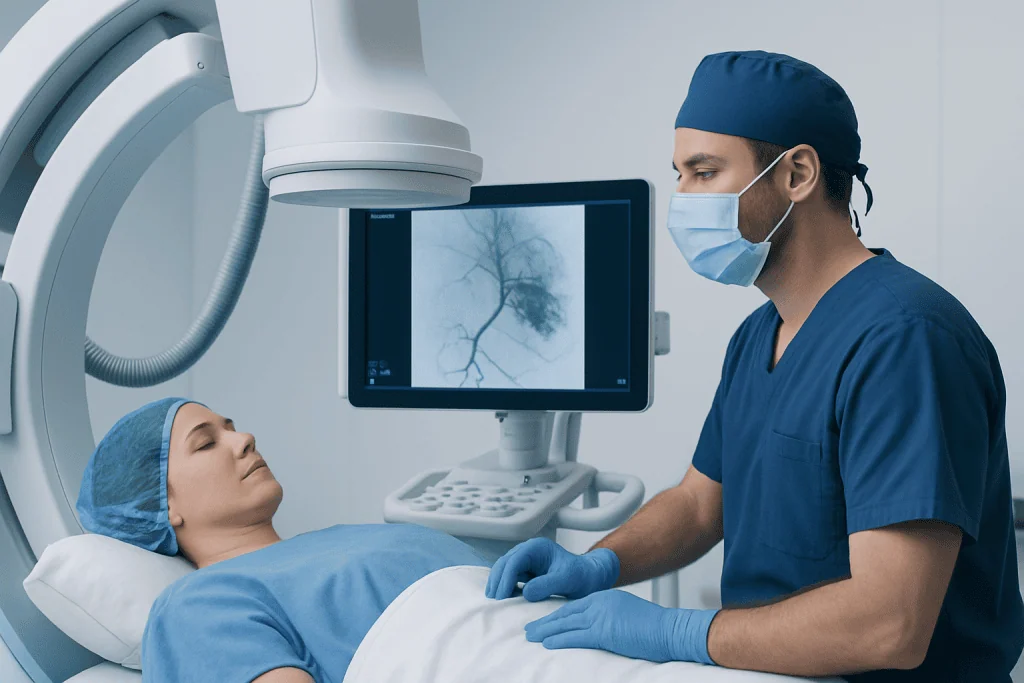
Before treatment, the team identifies the vessels involved using imaging such as ultrasound, CT, MRI or angiography. During angiography, contrast dye is injected through a catheter so blood vessels can be seen on live X-ray images. This provides evidence of embolization by showing reduced or absent blood flow in the intended vessel after the embolic material is placed.
People may be considered for embolization when a targeted blood vessel is causing bleeding, feeding a tumor, enlarging an aneurysm, supplying an abnormal vascular connection or contributing to troublesome symptoms. In some situations, embolization is used before surgery to reduce bleeding risk. In others, it may be a primary treatment or part of a longer treatment plan.
Candidacy is individualized. The clinician considers the diagnosis, location and pattern of blood vessels, kidney function, allergies to contrast material, blood-thinning medicines, infection risk, pregnancy status and prior procedures. For example, people with symptomatic fibroids may discuss uterine fibroid embolization with an appropriate specialist, while vascular conditions may require a different approach.
- Embolization may be planned or performed urgently for active bleeding.
- It can be used alone or alongside surgery, radiation treatment or other therapies.
- Not every condition is suitable for embolization, and alternatives should be discussed with the treating team.
Step by Step: What Happens During the Procedure

Preparation commonly includes a medical review, blood tests and imaging. The patient may be asked to avoid food and drink for a period before the procedure, depending on the type of anesthesia or sedation planned. The care team gives personalized instructions about regular medicines, particularly anticoagulants, antiplatelet medicines and diabetes medicines.
In the procedure room, monitoring devices track heart rate, blood pressure, oxygen level and comfort. The skin is cleaned and numbed at the access site, usually in the groin or wrist. Embolization and access planning is important: the specialist chooses the safest route based on the vessels that need to be reached.
A catheter is advanced through the blood vessel under imaging guidance. Contrast imaging maps the target vessels, then the selected embolic agent is delivered carefully. Additional images confirm the intended reduction in blood flow. The catheter is removed, and the access site is closed with manual pressure, a closure device or a compression band.
Procedure length varies widely. Straightforward cases may take less time than complex treatments involving several vessels or difficult anatomy. Afterward, the patient is monitored in a recovery area while the team checks the access site, circulation, pain and any early side effects.
Are You Sedated for Embolization?
Many embolization procedures are performed with local anesthetic at the catheter access site plus moderate sedation, sometimes called conscious sedation. This approach usually helps the patient feel relaxed and comfortable while remaining able to respond to the care team. Some people remember little of the procedure afterward.
General anesthesia may be recommended for selected procedures, children, patients who cannot comfortably remain still, or treatments expected to be longer or more complex. The choice is based on the type of embolization, the treatment area, medical history, anxiety level and safety considerations.
Before the procedure, the anesthesiology and interventional radiology teams explain what type of anesthesia or sedation is planned. People receiving sedating medicines generally need a responsible adult to accompany them home if discharge occurs the same day, and they should not drive or make important decisions until the effects have fully worn off.
How Painful Is Embolization?
Most people feel a brief sting or burning sensation when the local anesthetic is injected at the access site. During catheter placement, pain is usually limited because blood vessels do not have the same pain sensation as skin. Some patients notice warmth, pressure or a temporary flushing feeling when contrast material is injected.
Discomfort after embolization depends largely on the body area treated. When blood flow to a tumor, fibroid or inflamed tissue is intentionally reduced, cramping or aching may occur as the tissue responds to reduced circulation. This is often expected and is managed with a tailored plan that may include pain relief medicines, anti-nausea treatment, fluids and observation.
Severe or worsening pain should not be managed alone after discharge. The patient should follow the written aftercare plan and contact the clinical team promptly if pain is not controlled, changes suddenly, or occurs with concerning symptoms such as fainting, fever or significant bleeding.
How Risky Is Embolization?
Embolization is generally considered a minimally invasive procedure, but it has important risks that should be weighed against its expected benefit. The level of risk varies by the condition being treated, the vessels involved, the embolic material used, other health conditions and whether the procedure is planned or performed in an emergency.
Common short-term effects can include bruising, tenderness or a small lump at the access site, fatigue, nausea, low-grade fever, and temporary pain related to the treated tissue. Some people experience a post-embolization syndrome, which may include pain, tiredness, nausea and fever-like symptoms for a limited time. The team can explain whether this is expected for the planned treatment.
Less common but potentially serious embolization procedure risks include bleeding or damage at the access site, infection, blood clots, kidney problems related to contrast material, allergic reaction, injury to a blood vessel, and unintentional embolization of nearby healthy tissue. Depending on the treatment location, rare complications can affect organ function or require further treatment. Careful imaging, experienced specialists and follow-up reduce risk but cannot eliminate it.
The specialist should explain the expected benefits, alternatives and condition-specific risks before consent. Patients should share all medicines, allergies and medical conditions so that the treatment plan can be adapted safely.
Embolization Procedure Recovery and What Not to Do Afterward
Embolization procedure recovery ranges from same-day discharge to an overnight or longer hospital stay. This depends on the treatment site, the person’s symptoms, the need for pain control and whether the procedure was urgent. The access site is checked regularly, and the patient may need to lie flat for a period when the groin has been used for catheter access.
For the first day or two, people are often advised to rest, drink fluids if permitted, take prescribed medicines as directed and keep the access site clean and dry. Mild bruising and tenderness can be normal. Recovery from the effects on the treated organ or tissue may take days to weeks, so the clinical team will provide condition-specific expectations.
What not to do after embolization includes driving after sedation, strenuous exercise, heavy lifting and activities that strain the access site until the clinician says they are safe. Patients should also avoid stopping or restarting prescribed medicines, including blood thinners, without explicit medical guidance. Bathing, showering, travel and return-to-work advice should follow the individual discharge instructions.
Follow-up may include a clinic review, blood tests or repeat imaging. These checks help assess symptom improvement, healing and the technical success of treatment. Acibadem International’s multidisciplinary specialists and JCI-accredited hospitals provide assessment and treatment planning for international patients who may need image-guided vascular care.
When to Seek Medical Care
After embolization, the patient should contact the treating team promptly for increasing redness, swelling, drainage or persistent bleeding at the access site; pain that is severe or not controlled by the prescribed plan; fever that is high or persistent; or new nausea and vomiting that prevents fluid intake. These symptoms may need assessment even if they occur after leaving the hospital.
Emergency medical care is needed for chest pain, severe shortness of breath, fainting, sudden weakness or numbness, trouble speaking, a cold or pale limb, rapidly enlarging swelling at the access site, or heavy bleeding that does not stop with firm pressure. The person should follow local emergency guidance rather than attempt to travel to the hospital alone.
New symptoms should always be interpreted in the context of the condition treated. Patients should keep their discharge documents available and tell any urgent-care clinician that they recently had an embolization procedure, including the date and the access site if known.
Frequently asked questions
What is the purpose of an embolization procedure?
The purpose is to reduce or stop blood flow in a selected vessel. This can help control bleeding, treat abnormal blood vessels, reduce blood supply to certain tumors, or manage symptoms from specific conditions. The intended result depends on the diagnosis and treatment location.
How risky is embolization?
Risk varies with the condition, anatomy, treatment area and a person’s overall health. Most risks are manageable, but possible complications include bruising or bleeding at the access site, infection, contrast reactions and unintended blockage of nearby vessels. The specialist discusses condition-specific risks and alternatives before treatment.
Are you sedated for embolization?
Many patients receive local anesthetic plus moderate sedation, which helps with comfort while allowing them to respond to the team. Some procedures require general anesthesia. The anesthesia plan is chosen according to the procedure and individual safety needs.
How painful is embolization?
The access-site injection may briefly sting, while catheter movement is usually not painful. Pain or cramping can occur afterward because the treated tissue is receiving less blood flow. The team provides a plan to manage expected discomfort and advises when pain needs urgent assessment.
How long does recovery take after embolization?
Some people go home the same day, while others need overnight monitoring or more time in hospital. Access-site recovery is often relatively quick, but fatigue, pain and recovery in the treated area can last days to weeks. The exact timeline depends on the type of embolization.
What should a patient avoid after embolization?
Patients should avoid driving after sedation, heavy lifting, strenuous activity and straining the catheter access site until their clinician advises otherwise. They should follow medication, wound-care and hydration instructions carefully. Any concerning bleeding, worsening pain or new severe symptoms should be reported promptly.
References
- Society of Interventional Radiology
- Radiological Society of North America
- National Institute of Diabetes and Digestive and Kidney Diseases
- American College of Radiology
- National Health Service
This article is for general information only and is not a substitute for professional medical advice. Please consult a qualified doctor about your individual situation.
Explore treatments in Turkey — costs, top hospitals & a free quote
JCI-accredited · board-certified surgeons · reply within 24h
Check your numbers in seconds
BMI, calories, due date, blood pressure and 30+ more clinical calculators — free, instant, doctor-reviewed ranges.

More from the Health Library



Related Specialists

Prof. Dr. Kemal Özyurt
Dermatology
Assoc. Prof. Dr. Burak Elmas
Vitro Fertilization and Reproductive Medicine Center
Dr. Tayfun Agbulut
Cardiology
Prof. Dr. Tolga Tüzüner
Orthopedic Surgery & Traumatology