

Lip Cleft Ultrasound: Preparation, Procedure and Results

Ultrasound can often identify cleft lip before birth, particularly when the upper lip is clearly visible. An isolated cleft palate is more difficult to detect on routine prenatal ultrasound.
Key Takeaways
- Ultrasound can often identify cleft lip before birth, particularly when the upper lip is clearly visible.
- An isolated cleft palate is more difficult to detect on routine prenatal ultrasound.
- A suspected cleft usually leads to a detailed scan, counseling, and planning with a multidisciplinary cleft-care team.
- No special preparation is usually needed for a fetal facial ultrasound.
- An ultrasound finding is not a diagnosis on its own; follow-up imaging and clinical assessment help clarify the result.
A lip cleft ultrasound is a prenatal imaging examination that looks closely at the baby’s face for a possible cleft lip. It is painless and safe, but image quality and accuracy depend on the baby’s position, pregnancy stage, and whether the cleft affects the lip, palate, or both.
Overview: What Is a Lip Cleft Ultrasound?
A lip cleft ultrasound is a prenatal scan used to examine a developing baby’s upper lip and nearby facial structures. It may be performed during the routine mid-pregnancy anatomy scan or as a more detailed targeted examination when the facial views are incomplete or a cleft is suspected. Ultrasound uses sound waves rather than radiation and is routinely used in pregnancy.
A cleft lip occurs when tissues of the upper lip do not join completely during early fetal development. It may affect one side of the lip, both sides, or the center, and it may occur with a cleft palate. Identifying a possible cleft before birth can give parents time to understand the finding, arrange specialist support, and prepare for feeding and surgical care after delivery.
It is important to remember that prenatal imaging has limits. A scan may show a likely cleft lip but cannot always define its full extent, especially inside the mouth. Conversely, a normal-looking lip on ultrasound does not reliably exclude an isolated cleft palate.
How a Lip Cleft Ultrasound Works
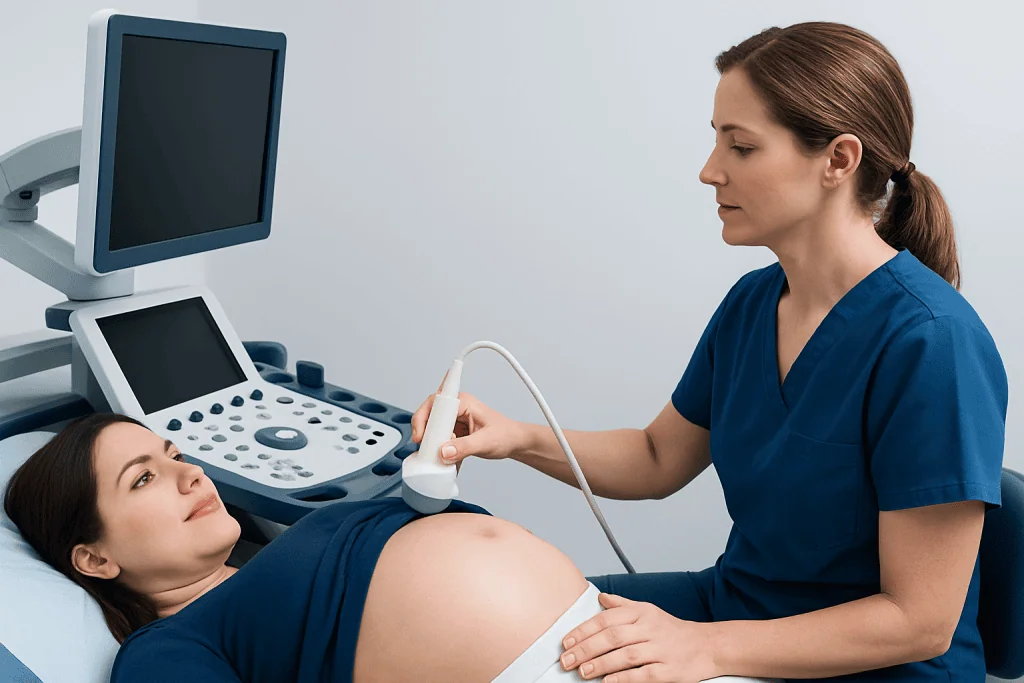
During ultrasound, a sonographer or fetal medicine specialist moves a small handheld probe over the pregnant person’s abdomen. The probe sends harmless high-frequency sound waves into the body and receives returning echoes, which are converted into images of the baby on a screen.
For facial assessment, the clinician obtains images from several angles. These commonly include a front-facing view of the face, views of the upper lip and nostrils, and side-profile views. Three-dimensional ultrasound may sometimes be used as an additional tool because it can provide a surface image of the face that some families find easier to understand.
Two-dimensional ultrasound remains central to medical assessment. Three-dimensional images can be affected by shadowing, movement, placenta position, and the amount of fluid around the face, so they do not replace careful standard imaging. If the views are unclear, the examination may be repeated at another appointment.
Candidacy, Preparation and Step-by-Step Procedure
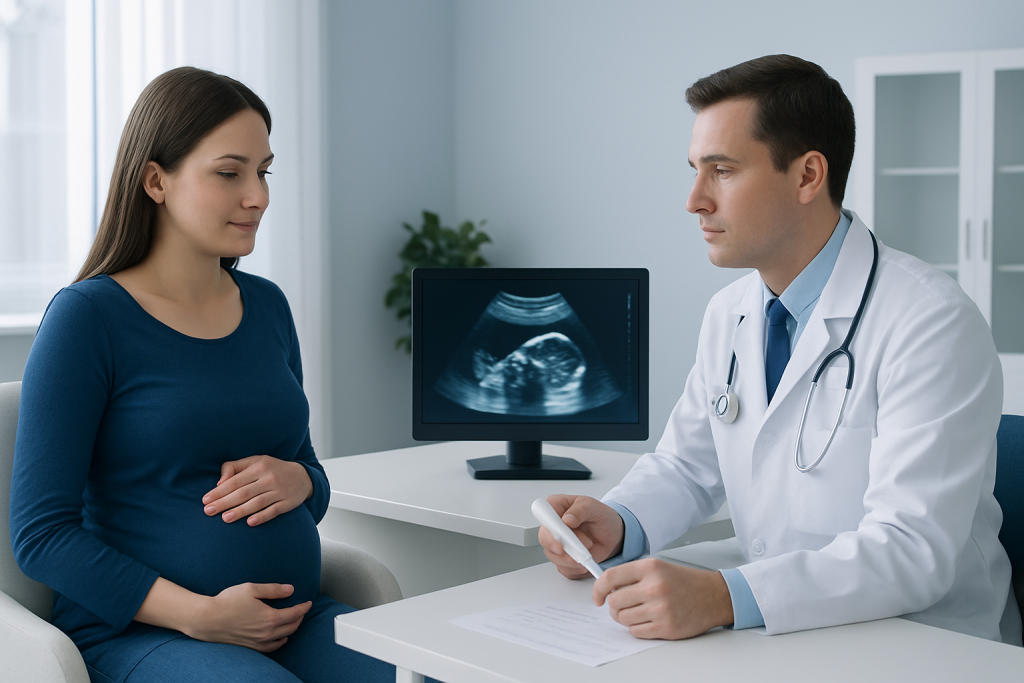
Most pregnant people have an ultrasound assessment of fetal anatomy during the second trimester. A detailed lip cleft ultrasound may be recommended if routine images suggest a facial difference, if the face could not be adequately seen, or if there is a personal or family history that warrants closer evaluation. It may also be offered when other fetal findings raise the need for a more detailed assessment.
Preparation is generally simple. No fasting, medication change, or special diet is usually required. Comfortable clothing that allows access to the abdomen can be helpful. The imaging team may ask about gestational age, previous scan results, family history, and any previous pregnancies affected by a congenital condition.
The procedure usually follows these steps:
- Gel is placed on the abdomen to improve sound-wave transmission.
- The ultrasound probe is moved gently across the skin while facial images are obtained.
- The clinician checks the upper lip, nose, profile, and other anatomy as appropriate.
- If the baby’s position prevents clear views, the parent may be asked to change position, walk briefly, or return for another scan.
- Results are reviewed by the ultrasound professional or referring obstetric team, with further assessment arranged if needed.
The scan itself is noninvasive. It does not enter the body and should not cause pain, although gentle pressure from the probe can sometimes feel uncomfortable.
What Are the Ultrasound Findings for Cleft Lip and Palate?
On ultrasound, cleft lip may appear as a gap or interruption in the normally continuous line of the upper lip. Depending on the view, the examiner may see a difference in the shape of the lip, nostril, or gum line. A cleft can be on the left, right, or both sides, and it may be complete or incomplete.
When a cleft lip is seen, the specialist evaluates other visible facial structures and the baby’s overall anatomy. This helps determine whether the finding appears isolated or whether there are additional differences that need further assessment. The care team may discuss detailed ultrasound, genetic counseling, or diagnostic testing in selected circumstances; these options depend on the complete scan findings and the family’s preferences.
Cleft palate is harder to evaluate because it lies inside the mouth and can be obscured by bone, shadowing, or fetal position. Ultrasound may suggest involvement of the palate in some cases, but it may not confirm or exclude it before birth. After delivery, a physical examination provides the definitive assessment of the lip and palate.
Can an Ultrasound Be Wrong From a Cleft Lip?
Yes. A lip cleft ultrasound can occasionally produce a false-positive result, meaning a scan suggests a cleft that is not confirmed after birth. It can also produce a false-negative result, in which a cleft is not recognized during pregnancy. These situations are usually related to technical limits rather than anything a parent did or did not do.
Image interpretation can be affected by the baby’s position, hand or umbilical cord near the face, maternal abdominal tissue, low amniotic fluid, gestational age, and the quality of the available images. Small or incomplete clefts can be particularly subtle. A repeat targeted scan with an experienced fetal imaging team can often improve the assessment.
When a possible cleft is reported, clinicians usually explain the degree of certainty and what the scan can and cannot show. Families may be offered a consultation with specialists in maternal-fetal medicine, genetics, pediatrics, plastic surgery, dentistry, speech and language therapy, and feeding support, depending on the findings.
How Accurate Is Ultrasound for a Cleft Lip?
Ultrasound is generally more accurate for cleft lip than for cleft palate alone. Detection is most reliable when the upper lip is well seen during a detailed second-trimester examination and when the scan is performed and interpreted by clinicians experienced in fetal facial imaging.
Accuracy varies rather than being the same for every pregnancy. Larger or bilateral clefts may be easier to identify than smaller, incomplete clefts. Detection of cleft lip with palate involvement may be possible, but determining the exact extent of palate involvement before birth can remain uncertain.
A detailed ultrasound is therefore best viewed as an important planning tool, not a final surgical description. After birth, a cleft team assesses the baby’s lip, gum line, palate, hearing, feeding, and general health before developing an individualized care plan.
Can Doctors Tell If Baby Has a Cleft Lip Ultrasound?
Doctors can often identify a cleft lip on ultrasound, especially during the mid-pregnancy anatomy scan or a dedicated follow-up examination. In many cases, clear images allow clinicians to tell families that a cleft lip is likely and whether it seems to affect one or both sides of the upper lip.
However, doctors may not always be able to tell whether the palate is also affected. They may also be unable to complete the assessment if the baby’s face cannot be visualized adequately on that day. A repeat examination, advanced fetal imaging, or referral to a fetal medicine service may be recommended to obtain clearer information.
If a cleft is confirmed after birth, treatment is coordinated by a specialist team. Care can include feeding guidance, hearing monitoring, dental and orthodontic support, speech therapy, and cleft lip and palate surgery when appropriate. Timing and treatment choices are individualized for the child.
Benefits, Risks, Results and When to Seek Medical Care
The main benefit of prenatal identification is preparation. Parents can meet a cleft-care team before delivery, learn about feeding support, discuss the likely care pathway, and plan delivery at a facility able to provide appropriate newborn assessment. Ultrasound itself has no known radiation risk and is considered safe when used appropriately by trained professionals.
There is no physical recovery period after a lip cleft ultrasound. The parent can usually return to normal activities immediately. Emotionally, however, an uncertain or unexpected result can be difficult. Asking for a follow-up appointment, written information, and time to discuss questions can be helpful.
Medical review should be sought promptly if an obstetric clinician recommends further imaging after an incomplete or unusual scan result. Families should also contact their maternity team for urgent pregnancy concerns such as vaginal bleeding, fluid leakage, severe abdominal pain, or a noticeable reduction in fetal movements later in pregnancy. These symptoms are not specific to cleft lip but require timely obstetric assessment.
For international patients, Acibadem International’s multidisciplinary specialists and JCI-accredited hospitals can support prenatal assessment and coordinated care for cleft lip and palate. A qualified obstetric or fetal medicine professional can explain what an individual scan result means and the most appropriate next steps.
Frequently asked questions
What is a lip cleft ultrasound?
A lip cleft ultrasound is a prenatal imaging examination that checks the baby’s upper lip and facial structures for a possible cleft. It is usually part of, or follows, a routine pregnancy anatomy scan. It uses sound waves and does not use radiation.
When is a cleft lip usually seen on ultrasound?
Cleft lip is often evaluated during the second-trimester anatomy scan, when fetal facial features can usually be examined in detail. If images are unclear or a concern is seen, a more targeted ultrasound may be arranged. The best timing can vary with gestational age and fetal position.
Does a cleft lip ultrasound require special preparation?
Most people do not need special preparation, fasting, or medication changes. Wearing comfortable clothing and bringing prior ultrasound records, if available, may be useful. The imaging center will provide any specific instructions before the appointment.
Can ultrasound detect cleft palate without cleft lip?
An isolated cleft palate is more difficult to detect than cleft lip on prenatal ultrasound. The palate is inside the mouth and may be hidden by bone shadows or the baby’s position. A normal facial ultrasound cannot always rule out an isolated cleft palate.
What happens if a cleft lip is suspected before birth?
The obstetric team may recommend a detailed ultrasound and refer the family to fetal medicine and a multidisciplinary cleft-care team. Additional discussions may include feeding support after birth, newborn evaluation, and the likely sequence of treatment. Further testing is considered individually based on the complete findings.
Is a cleft lip ultrasound painful or risky?
The scan is noninvasive and is not usually painful, though mild pressure from the probe may be felt. Diagnostic pregnancy ultrasound does not use radiation and is considered safe when performed for an appropriate clinical reason by trained professionals. There is no recovery time after the scan.
References
- American College of Obstetricians and Gynecologists
- International Society of Ultrasound in Obstetrics and Gynecology
- Centers for Disease Control and Prevention
- Cleft Lip and Palate Association
This article is for general information only and is not a substitute for professional medical advice. Please consult a qualified doctor about your individual situation.
Ultrasound in Turkey — costs, top hospitals & a free quote
JCI-accredited · board-certified surgeons · reply within 24h

Check-up & Preventive Medicine
Comprehensive health screenings designed for early detection and prevention.
3 specialists in this unitMore from the Health Library



Related Specialists

Dr. Tansel Yıldıran
Cardiology
Dr. Beyhan Levent Erdoğan
Pediatrics
Prof. Dr. Nezihe Seden Küçücük
Radiation Oncology
Assoc. Prof. Dr. Çağlar Ruhi
Nephrology