Melanoma Immunotherapy: How It Works, Results and What to Expect

Melanoma immunotherapy most commonly uses immune checkpoint inhibitors given through a vein. It can be used at different stages of melanoma, including after surgery and for advanced disease.
Key Takeaways
- Melanoma immunotherapy most commonly uses immune checkpoint inhibitors given through a vein.
- It can be used at different stages of melanoma, including after surgery and for advanced disease.
- Response varies: some people achieve long-lasting disease control, while others need a different or combined approach.
- Immune-related side effects can affect almost any organ, so early reporting of new symptoms is important.
- Treatment planning is individualized by a multidisciplinary cancer team and may include surgery, targeted therapy, radiation therapy, or clinical trials.
Melanoma immunotherapy is a cancer treatment that helps a person’s immune system identify and destroy melanoma cells more effectively. It may be used after surgery to lower the chance of recurrence or to treat melanoma that is unresectable, recurrent, or has spread to other parts of the body.
Overview: What Is Melanoma Immunotherapy?
Melanoma immunotherapy helps the body’s own immune system recognize and attack melanoma cells. In practical terms, it is most often used through medicines called immune checkpoint inhibitors, which remove signals that can prevent immune cells from responding fully to cancer. For many people with high-risk or advanced melanoma, this approach has become an important part of modern treatment.
Unlike chemotherapy, which directly targets rapidly dividing cells, immunotherapy changes how the immune system interacts with cancer. It may be used after complete surgical removal of melanoma to reduce the risk of return, before surgery in selected cases, or when melanoma cannot be removed completely or has spread. The best timing and combination depend on the melanoma stage, genetic features, previous treatment, general health, and personal preferences.
Melanoma begins in pigment-producing skin cells called melanocytes. Anyone with a suspicious changing mole or skin lesion should have it assessed promptly, as early diagnosis remains important even when effective systemic treatments are available. More information about melanoma can help patients understand how stage and spread influence care decisions.
How Immunotherapy Works in Melanoma
The immune system regularly checks the body for abnormal cells. Cancer cells can sometimes avoid detection by using “checkpoint” pathways, which are natural brakes that limit immune activity and help prevent excessive inflammation. Melanoma cells may exploit these pathways to reduce the immune response against them.
Checkpoint inhibitor medicines block specific checkpoint signals, allowing T cells and other immune cells to respond more actively against melanoma. Treatments may target the PD-1 pathway, the CTLA-4 pathway, or, in selected circumstances, more than one pathway. Combining medicines can strengthen anti-cancer immune activity for some people, but it also generally increases the chance of side effects.
Immunotherapy is not the same as a vaccine, and it does not guarantee that every melanoma will shrink. When it works, however, responses can sometimes continue after treatment has ended because the immune system may retain an anti-tumor response. Regular examinations and imaging help the oncology team determine whether treatment is working safely and effectively.
Who May Be a Candidate?

A specialist may recommend melanoma immunotherapy for people with stage III melanoma that has been removed but carries a meaningful risk of recurrence, or for stage IV melanoma that has spread to distant organs. It may also be considered for melanoma that is locally advanced and cannot be fully removed with surgery. In certain situations, treatment may be given before surgery to help shrink or control the cancer and to assess its response.
Candidacy is based on more than cancer stage. The care team considers pathology findings, imaging results, whether the tumor has a BRAF gene change, the location and extent of disease, prior therapies, organ function, and everyday health. Testing the tumor for relevant genetic changes can help identify whether targeted therapy is another appropriate option.
People with autoimmune conditions, organ transplants, chronic viral infections, or a history of serious immune-related illness may still be considered for immunotherapy, but require especially careful individual assessment. These conditions can change the balance of potential benefit and risk. A medical oncologist can explain whether immunotherapy treatment is suitable within a personalized melanoma care plan.
What Happens During Treatment?
Before treatment begins, the oncology team reviews biopsy and staging results and may order blood tests, scans, and baseline assessments of organs that could be affected by treatment. Patients are encouraged to discuss all medicines, supplements, allergies, chronic health conditions, and plans for pregnancy or breastfeeding. This preparation gives the team a clear reference point for monitoring during treatment.
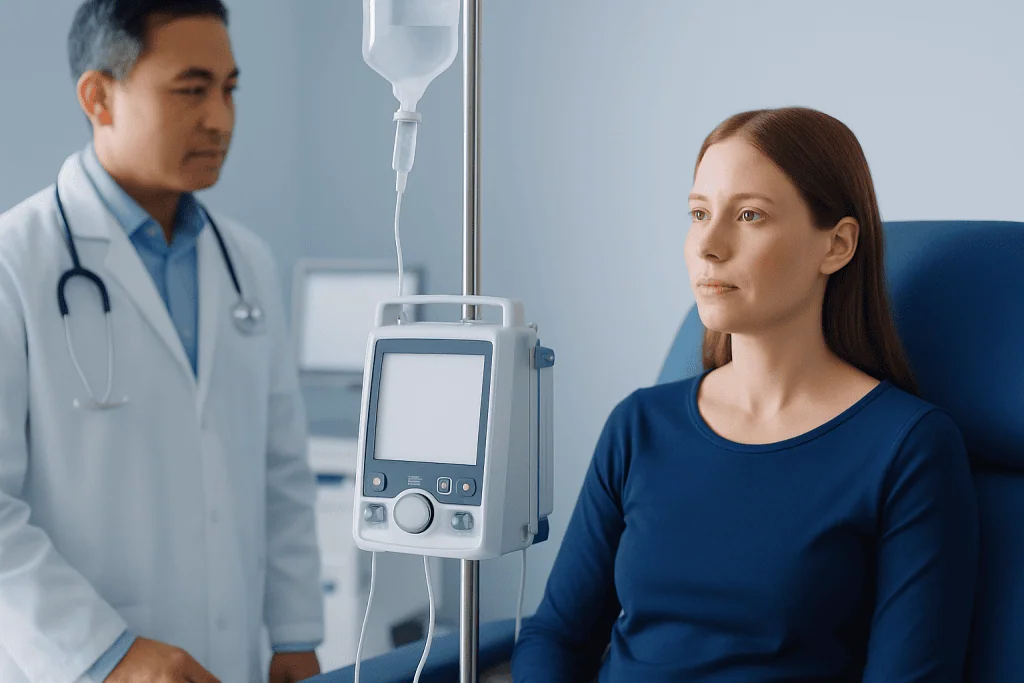
Most checkpoint inhibitor medicines are delivered as an intravenous infusion in an outpatient treatment unit. A nurse checks vital signs and asks about new symptoms before each visit. The infusion itself usually takes a limited period, followed by observation when appropriate, and the person commonly goes home the same day. The exact medicine and schedule vary according to the treatment goal and regimen.
Follow-up appointments are an essential part of the process, not simply a review after treatment. The team monitors symptoms, performs examinations, checks laboratory results, and arranges scans at intervals appropriate to the person’s melanoma. If side effects occur, treatment may be delayed, paused, or changed; additional medicines may be used to calm immune inflammation when necessary.
- Before each cycle: symptom review, examination as needed, and blood tests.
- During infusion: intravenous treatment with clinical monitoring.
- Between visits: prompt communication about new or worsening symptoms.
- At planned intervals: imaging and oncology review to assess response.
Expected Results and Recovery Timeline
Results from melanoma immunotherapy differ widely. Some tumors shrink substantially, some remain stable for a prolonged period, and some continue to grow despite treatment. In the adjuvant setting, where treatment is given after surgery, the aim is usually to reduce the likelihood that melanoma will return rather than to measure visible tumor shrinkage.
Scans may not always tell the full story immediately. Immune cells entering a tumor can occasionally make it appear larger before it later improves, although true cancer progression is also possible. Oncology teams interpret scan findings alongside symptoms, physical examination, laboratory results, and the overall pattern over time rather than relying on a single image alone.
There is usually no surgical-style recovery period after an infusion. Many people continue usual daily activities, although fatigue or other side effects may temporarily affect routines. Treatment courses vary, and follow-up continues after treatment finishes because melanoma surveillance remains important. Depending on the melanoma type and stage, management may also involve melanoma treatment options such as surgery, targeted medicines, or radiation therapy.
Benefits, Risks and Side Effects
The main potential benefit of immunotherapy is more effective immune control of melanoma. For people with advanced disease, it may shrink tumors, slow disease progression, relieve cancer-related symptoms, or provide durable control. For people treated after surgery, it may lower the chance of recurrence. The likely benefit depends on the individual clinical situation and cannot be predicted with certainty for one person.
Because immunotherapy activates immune responses, it can cause inflammation in healthy tissues. Common symptoms may include tiredness, skin rash or itching, diarrhea, nausea, joint aches, and changes in thyroid function. Some side effects are mild and manageable, but inflammation can occasionally affect the lungs, liver, intestines, kidneys, nerves, heart, hormone-producing glands, eyes, or other organs.
New symptoms should be reported early, even if they seem minor. Severe diarrhea, persistent abdominal pain, yellowing of the skin or eyes, shortness of breath, chest pain, severe headache, confusion, marked weakness, fever, or a rapidly worsening rash require urgent medical advice. Patients should not start medicines such as steroids on their own unless directed by their treating clinician, as management needs to be tailored to the suspected reaction.
Living Well During Immunotherapy and When to Seek Medical Care
During melanoma immunotherapy, practical self-care can support comfort and safety. Patients should attend scheduled blood tests and scans, keep a record of symptoms and their timing, stay well hydrated unless advised otherwise, and maintain nourishing meals and gentle activity as tolerated. Sun protection remains important for everyone with a history of melanoma, including broad-spectrum sunscreen, protective clothing, shade, and regular skin checks.
It is helpful to tell every healthcare professional involved in care that immunotherapy is being received or was received recently. Immune-related side effects can arise during treatment and, less commonly, after it ends. Before taking a new medicine, supplement, or herbal product, patients should check with their oncology team to avoid interactions or confusion when evaluating symptoms.
Medical care should be sought promptly for a changing or bleeding skin lesion, a new enlarged lymph node, unexplained ongoing pain, or symptoms that could indicate treatment toxicity. Emergency assessment is appropriate for severe breathing difficulty, chest pain, fainting, sudden neurological symptoms, or a severe allergic-type reaction. Acibadem International’s multidisciplinary specialists and JCI-accredited hospitals provide diagnosis and treatment planning for international patients with melanoma.
Frequently asked questions
Is melanoma immunotherapy a cure?
Melanoma immunotherapy can produce long-lasting control for some people, particularly in advanced melanoma, but it is not a guaranteed cure. When it is used after surgery, its goal is often to reduce the risk of melanoma returning. The oncology team can explain the intended goal in an individual case.
How long does melanoma immunotherapy take?
Treatment length depends on the medicine used, the melanoma stage, the treatment goal, response, and side effects. Infusions are commonly given at regular intervals in an outpatient setting. Some people stop earlier because of side effects, disease progression, or completion of the planned course.
Can immunotherapy be used with surgery for melanoma?
Yes. Immunotherapy may be given after surgery for high-risk melanoma to reduce recurrence risk, and in selected cases it may be considered before surgery. Surgery remains an important treatment for many localized melanomas, while systemic treatment may be added based on stage and risk.
What are the first signs of immunotherapy side effects?
Early symptoms can include unusual tiredness, rash, itching, diarrhea, cough, breathlessness, nausea, headache, or changes in appetite. These symptoms can have many causes, but they should be reported to the oncology team because immune-related inflammation is easier to manage when identified early. Severe or rapidly worsening symptoms need urgent assessment.
Does BRAF status affect melanoma immunotherapy?
BRAF testing can influence treatment choices because some melanomas with a BRAF gene change may respond to targeted therapy. Immunotherapy may still be an appropriate option whether or not a BRAF change is present. The choice depends on disease extent, how quickly treatment is needed, previous therapy, and individual health factors.
Can someone work or travel during melanoma immunotherapy?
Many people can continue some work, family activities, or travel between treatments if they feel well enough. However, appointments, blood tests, possible fatigue, and the need to respond quickly to side effects should be considered. Patients should discuss travel plans with their oncology team and know how to access medical help away from home.
References
- National Cancer Institute
- American Cancer Society
- European Society for Medical Oncology
- American Society of Clinical Oncology
- National Comprehensive Cancer Network
This article is for general information only and is not a substitute for professional medical advice. Please consult a qualified doctor about your individual situation.
Immunotherapy in Turkey — costs, top hospitals & a free quote
JCI-accredited · board-certified surgeons · reply within 24h