Entomophobia: What Patients Need to Know

Entomophobia is a type of specific phobia involving intense fear of insects. Symptoms may include panic, avoidance, racing heart, sweating, and distress when seeing or thinking about insects.
Key Takeaways
- Entomophobia is a type of specific phobia involving intense fear of insects.
- Symptoms may include panic, avoidance, racing heart, sweating, and distress when seeing or thinking about insects.
- Diagnosis is based on symptoms, how long they last, and how much they affect daily life.
- Treatment often includes cognitive behavioral therapy and gradual exposure therapy.
- Professional care is important when fear interferes with work, school, sleep, travel, or relationships.
Entomophobia is a persistent, excessive fear of insects that goes beyond normal dislike or caution. It can cause strong anxiety, avoidance, and physical symptoms, but effective treatment is available and many people improve with the right support.
Overview
Entomophobia is an intense fear of insects. While many people feel uncomfortable around bugs, entomophobia is different because the fear is much stronger than the actual threat and may interfere with normal daily activities. A person may become highly distressed not only when an insect is present, but also when thinking about one, seeing a picture, or entering places where insects might appear.
This condition is usually classified as a specific phobia, a type of anxiety disorder. The fear response is real, even when the person understands that it may be out of proportion to the situation. The body can react quickly with physical symptoms such as a fast heartbeat, sweating, shakiness, or a sense of panic.
Entomophobia can affect children, teenagers, and adults. Some people fear all insects, while others react mainly to certain ones such as bees, cockroaches, flies, ants, or spiders-like creatures mistakenly grouped with insects. Fear may center on being stung, contaminated, bitten, startled, or losing control.
Importantly, entomophobia is treatable. Many people improve with structured therapy, practical coping tools, and guidance from a qualified mental health professional. In some cases, related anxiety conditions such as anxiety disorders may also need attention as part of care.
Symptoms and How It Affects Daily Life
The main symptom of entomophobia is intense fear or anxiety triggered by insects or situations associated with them. The reaction can happen immediately and may feel overwhelming. Some people know the fear is excessive, while others simply feel unable to control it in the moment.
Common emotional and physical symptoms may include:
- Sudden panic or dread
- Racing heart or palpitations
- Sweating, trembling, or shortness of breath
- Nausea, dizziness, or chest tightness
- A strong urge to escape the situation
- Difficulty concentrating or thinking clearly
- Persistent worry before going outdoors, traveling, or sleeping
Behavioral changes are often what make the condition most disruptive. A person may avoid parks, gardens, basements, public transport, open windows, certain foods, or travel to warm climates. They may repeatedly inspect rooms, use excessive cleaning or pest-control routines, or ask others for repeated reassurance.
When this fear becomes severe, it can affect work, school, family life, and sleep. It may also increase general stress levels and contribute to low mood or social withdrawal. If fear starts to shape everyday choices, professional assessment can be helpful.
Causes and Risk Factors
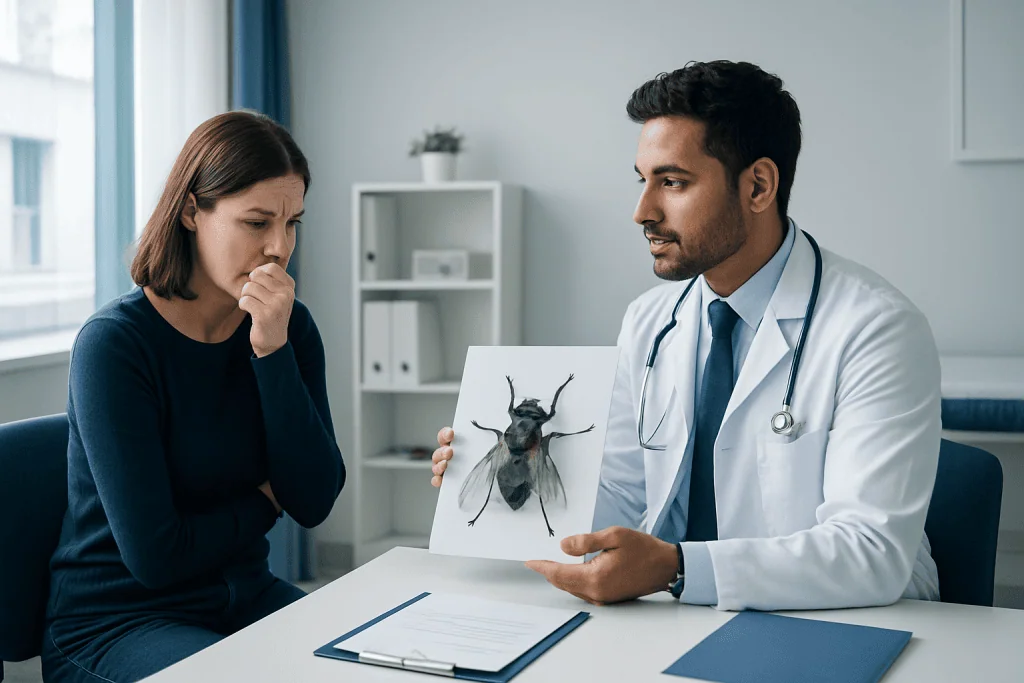
There is rarely a single cause of entomophobia. In many cases, it develops through a mix of life experiences, learned behavior, and underlying anxiety sensitivity. A frightening encounter with an insect, such as a painful sting or a sudden swarm, may trigger lasting fear in some people.
Children can also learn fear by observing parents, siblings, or other adults react strongly to insects. Repeated warnings, dramatic media portrayals, or distressing stories may strengthen the idea that insects are highly dangerous, even when the actual risk is low. This does not mean the fear is imagined; it means the brain has learned to link insects with threat.
Risk factors may include:
- A personal or family history of anxiety disorders or phobias
- A traumatic or highly distressing insect-related experience
- Temperament traits such as high sensitivity or behavioral inhibition
- Ongoing stress, which can increase anxious responses
- Other mental health conditions that involve fear, avoidance, or intrusive thoughts
Sometimes entomophobia overlaps with broader concerns about contamination, unpredictability, or being trapped. It may also occur alongside other specific fears, including fear of animals or enclosed spaces. Understanding these patterns helps guide treatment and can distinguish entomophobia from other conditions such as obsessive-compulsive disorder.
How Entomophobia Is Diagnosed
Entomophobia is diagnosed clinically, meaning there is no blood test or scan that confirms it. A doctor, psychologist, or psychiatrist usually diagnoses the condition by asking about symptoms, triggers, avoidance behaviors, and how much the fear affects daily life. The goal is to understand both the intensity of the fear and its impact.
Diagnosis often focuses on whether the fear is persistent, excessive, and out of proportion to the actual danger. The clinician may ask how long the problem has been present, whether panic symptoms occur, and whether the person avoids places or activities because of insects. They may also explore whether another condition better explains the symptoms.
In some cases, a broader mental health evaluation is useful. This can help identify panic disorder, generalized anxiety, trauma-related symptoms, or compulsive behaviors that may need separate or additional treatment. People who have severe physical symptoms during episodes may also need medical evaluation to rule out other causes.
A clear diagnosis is important because it guides treatment planning. Once the pattern is understood, many patients feel relieved to learn that their symptoms fit a recognized and treatable condition rather than a personal weakness.
Treatment Options
The most effective treatment for entomophobia is often psychotherapy, especially cognitive behavioral therapy. This approach helps a person identify fear patterns, challenge unhelpful beliefs, and gradually build confidence in situations that trigger anxiety. It is structured, practical, and tailored to the individual.
Exposure therapy is a common part of treatment. Under professional guidance, the person is gradually and safely exposed to feared situations in small steps, such as talking about insects, looking at drawings, viewing photographs, or eventually being in a controlled environment where insects may be present. Over time, the brain can learn that the trigger is tolerable and not as dangerous as expected. This may be included within psychotherapy plans for phobias and anxiety.
Additional support may include relaxation techniques, breathing exercises, mindfulness-based strategies, and education about how the body responds to fear. In some situations, a doctor may consider medication to help with significant anxiety symptoms, especially if they occur alongside another mental health condition. Medication is usually not the only treatment and should be discussed individually with a qualified clinician.
If fear is severe, a multidisciplinary approach can be useful. Specialists may assess whether symptoms are linked to broader mental health concerns and create a coordinated care plan. Evaluation through psychiatry services may be appropriate when anxiety is intense, persistent, or affecting overall functioning.
Self-care, Coping Strategies, and Prevention
Self-care cannot replace treatment when entomophobia is severe, but it can support recovery and reduce day-to-day stress. One helpful step is learning to notice early signs of anxiety, such as muscle tension, quick breathing, or catastrophic thoughts. Recognizing these signs can make it easier to use calming techniques before fear escalates.
Useful coping strategies may include:
- Slow breathing or grounding exercises during anxious moments
- Limiting repeated checking or avoidance rituals
- Learning accurate information about common insects and their real level of risk
- Gradually approaching mild triggers instead of avoiding all reminders
- Maintaining good sleep, regular movement, and stress management habits
It is usually best not to force sudden exposure without guidance, especially if reactions are intense. Gradual steps tend to be more effective and less distressing. Family members can help by staying calm, avoiding ridicule, and not reinforcing avoidance when reassurance is repeatedly sought.
Prevention is not always possible, especially when fear follows a strong past experience. However, early support can keep symptoms from becoming more disruptive. For people whose symptoms are part of broader emotional strain, psychological counseling may help strengthen coping skills and resilience.
When to Seek Medical Care
Medical or mental health support is appropriate when fear of insects begins to limit normal life. This includes avoiding work or school, canceling travel, sleeping poorly, refusing outdoor activities, or feeling distressed for long periods before or after possible exposure. Frequent panic symptoms are another reason to seek professional evaluation.
It is also wise to seek care if the fear seems to be getting worse, if home coping strategies are not enough, or if the person is developing depression, isolation, or obsessive routines around cleaning and checking. Children who cry, freeze, cling, or refuse ordinary activities because of insect fear may also benefit from assessment.
Urgent medical care may be needed for symptoms such as severe chest pain, fainting, or breathing difficulty, because not all physical symptoms are caused by anxiety. Care is also important if there is concern about an actual allergic reaction to an insect sting or bite. A clinician can help distinguish a phobia from a medical emergency.
Near the end of the care pathway, some patients may benefit from coordinated assessment by mental health and medical specialists. Acibadem International’s multidisciplinary specialists in JCI-accredited hospitals diagnose and treat anxiety-related conditions for international patients when further evaluation or structured therapy is needed.
Frequently asked questions
What is entomophobia?
Entomophobia is an intense, persistent fear of insects. It is more than simple dislike and can cause anxiety, avoidance, and physical symptoms that interfere with daily life.
Is entomophobia a real medical condition?
Yes. It is generally considered a specific phobia, which is a recognized type of anxiety disorder. The fear response is genuine, even when the person realizes it may be excessive.
What causes fear of insects to become a phobia?
A phobia may develop after a frightening experience, through learned behavior, or in people who are already prone to anxiety. Often, several factors work together rather than one single cause.
Can entomophobia go away on its own?
Mild fears may improve over time, especially with supportive coping strategies. However, when the fear is strong or long-lasting, professional treatment is often the most effective way to reduce symptoms.
What is the best treatment for entomophobia?
Cognitive behavioral therapy, often including gradual exposure therapy, is commonly recommended. Treatment helps people change fear patterns and build tolerance in a safe, structured way.
When should someone see a doctor for entomophobia?
A person should seek help if fear of insects disrupts work, school, sleep, travel, relationships, or ordinary daily activities. Medical advice is also important if symptoms include frequent panic or if there is concern about another mental health condition.
References
- National Institute of Mental Health
- American Psychiatric Association
- National Health Service
- Mayo Clinic
- World Health Organization
This article is for general information only and is not a substitute for professional medical advice. Please consult a qualified doctor about your individual situation.
Explore treatments in Turkey — costs, top hospitals & a free quote
JCI-accredited · board-certified surgeons · reply within 24h

More from the Health Library



Related Specialists

Dr. Elmın Imanov
Cardiology
Prof. Dr. Rana Karayalçın
Gynecology & Obstetrics
Assoc. Prof. Dr. Muharrem Koçyiğit
Anesthesiology
Dr. Ahmet Fırat Küçükköse
Inpatient Clinic Physicians Clinical Service