

Episcleritis: Symptoms, Causes, and Treatment Options

Episcleritis usually causes localized eye redness with mild irritation rather than severe pain. It is often self-limited, but recurrent cases may be linked to autoimmune or inflammatory conditions.
Key Takeaways
- Episcleritis usually causes localized eye redness with mild irritation rather than severe pain.
- It is often self-limited, but recurrent cases may be linked to autoimmune or inflammatory conditions.
- An eye examination helps distinguish episcleritis from more serious causes of red eye, especially scleritis.
- Treatment may include lubricating drops, cold compresses, and sometimes anti-inflammatory medication.
- Urgent medical review is important if redness comes with severe pain, light sensitivity, or vision changes.
Medically reviewed by the Acıbadem International Medical Board — July 23, 2026
Episcleritis is a common, usually harmless inflammation of the thin tissue between the conjunctiva and the white of the eye. It often causes a patch of redness, mild discomfort, and tearing, and many cases improve on their own or with simple treatment.
What is episcleritis?
Episcleritis is inflammation of the episclera, a thin layer of tissue that lies between the clear surface covering of the eye and the white part of the eye. It usually appears as a red or pink patch in one eye, although both eyes can be affected. In most people, it is mild, short-lived, and does not threaten vision.
This condition is different from simple eye irritation caused by dryness or allergy, and it is also different from deeper inflammatory diseases of the eye. The main reason it matters is that episcleritis can resemble other causes of red eye. A proper eye assessment helps confirm that the inflammation is superficial and not a more serious condition such as uveitis or scleritis.
Doctors often describe episcleritis as either diffuse or nodular. Diffuse episcleritis causes a broader area of redness, while nodular episcleritis causes a small raised tender bump in the inflamed area. Both forms are usually manageable, but nodular episcleritis may last longer and be more uncomfortable.
Symptoms and how it may feel
The most noticeable symptom of episcleritis is redness, often affecting one sector of the eye rather than the entire white area. The eye may look pink, bright red, or mildly bloodshot. Some people also notice watering, tenderness, or a gritty sensation.
Unlike deeper inflammatory eye diseases, episcleritis usually causes only mild discomfort. Severe pain is uncommon. Vision typically stays normal, and although some people feel mild sensitivity, marked light sensitivity is less typical and should prompt further evaluation.
Common symptoms can include:
- Localized or diffuse redness of the white of the eye
- Mild soreness or tenderness
- A burning, gritty, or irritated feeling
- Watery eyes
- A small raised nodule in nodular episcleritis
If symptoms include deep aching pain, blurred vision, headache, marked light sensitivity, or a very dark red-violet appearance of the eye, another diagnosis may need to be considered. In that situation, an ophthalmology review is important rather than assuming the problem is simple irritation.
Causes and risk factors

In many cases, episcleritis develops without a clear cause. This is called idiopathic episcleritis. It can appear suddenly, settle within days to weeks, and may never return. For many patients, there is no infection and no lasting damage.
Sometimes episcleritis is associated with underlying inflammatory or autoimmune disease. Conditions that may be linked include rheumatoid arthritis, inflammatory bowel disease, lupus, and other connective tissue disorders. Less commonly, infections, rosacea, gout, or reactions related to certain systemic conditions may play a role.
Risk factors and associations may include:
- A personal history of autoimmune or connective tissue disease
- Recurrent episodes of unexplained red eye
- Inflammatory bowel disease or systemic inflammatory disorders
- Rosacea or other chronic inflammatory skin conditions
- Rarely, infectious triggers identified by a doctor
When episcleritis keeps coming back, doctors may look beyond the eye itself and consider whether broader inflammatory disease is present. This does not mean an underlying illness will always be found, but recurrence can justify a more complete medical assessment.
How doctors diagnose episcleritis
Diagnosis usually begins with symptoms, medical history, and a detailed eye examination. An ophthalmologist or eye specialist checks the pattern of redness, asks about pain, visual changes, contact lens use, recent illness, and whether episodes have happened before. This helps distinguish episcleritis from conjunctivitis, dry eye, corneal problems, or more serious inflammatory disease.
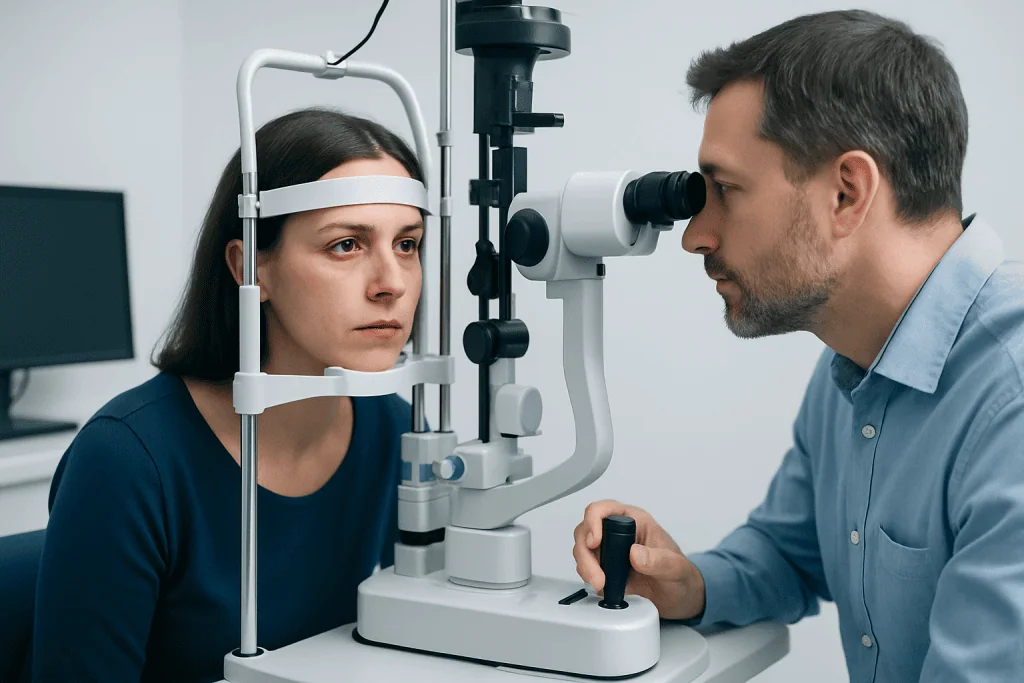
A slit-lamp exam is often used to examine the eye under magnification. In episcleritis, the inflamed blood vessels are superficial. Doctors may gently assess whether the redness appears mobile and limited to the outer tissues. In some settings, eye drops may be used during the exam to help confirm the layer involved.
Additional tests are not always necessary for a first mild episode. However, recurrent episcleritis, nodular disease, symptoms in both eyes, or signs suggesting deeper inflammation may lead to blood tests or referral for broader evaluation. If another eye condition is suspected, related assessments such as a comprehensive eye examination may be recommended to guide care safely.
Treatment options and expected recovery
Many episodes of episcleritis improve without intensive treatment. Because the condition is often self-limited, the first goal is usually comfort. Artificial tears, lubricating eye drops, and cool compresses may reduce irritation while the inflammation settles. Resting the eyes and avoiding rubbing can also help.
If discomfort is more noticeable or symptoms last longer, a doctor may suggest anti-inflammatory treatment. This may include oral nonsteroidal anti-inflammatory medication or, in selected cases, prescription eye drops. Steroid eye drops are sometimes used, but they should only be started under medical supervision because eye steroids are not suitable for every red eye condition and may cause side effects if used incorrectly.
Most people recover within a few days to a few weeks. Nodular episcleritis may take longer than diffuse episcleritis. Follow-up may be advised if symptoms persist, return often, or do not respond as expected. When another inflammatory eye problem is a concern, a specialist may also evaluate for related conditions and advanced care, including ophthalmology assessment and treatment.
If episcleritis is linked to an underlying systemic disorder, managing that condition is an important part of long-term care. Treatment then focuses not only on the eye inflammation but also on controlling the broader disease process that may be driving recurrence.
Self-care, prevention, and living with recurrent episcleritis
There is no guaranteed way to prevent episcleritis, especially when no specific cause is found. Even so, gentle self-care can make episodes easier to manage. Lubricating drops can reduce surface irritation, and cool compresses may calm redness and discomfort. Sunglasses may help if the eyes feel sensitive outdoors.
People with repeated episodes may benefit from tracking triggers, timing, and associated symptoms. It can be helpful to note whether flare-ups happen during periods of systemic illness, skin inflammation, joint symptoms, bowel symptoms, or stress. This kind of pattern can support a more complete medical review.
Practical self-care steps include:
- Using preservative-free artificial tears if recommended
- Avoiding eye rubbing and unnecessary contact lens wear during a flare
- Following medication instructions carefully
- Attending follow-up visits if redness keeps returning
- Seeking care for symptoms that are more painful or affect vision
People who have recurrent red eye should avoid self-treating repeatedly with leftover steroid drops or over-the-counter redness relievers without medical advice. These products can mask symptoms or create new problems. If recurrence suggests another disease, doctors may investigate related eye or immune conditions such as dry eye or systemic inflammatory illness.
When to seek medical care
Medical care is appropriate for any new red eye that does not have an obvious and harmless explanation. Although episcleritis is often mild, it can look similar to conditions that need prompt treatment. A clinician can confirm the diagnosis and advise the safest way to manage symptoms.
Urgent assessment is especially important if there is severe pain, reduced vision, marked sensitivity to light, eye injury, discharge suggesting infection, or redness in a contact lens wearer. These features are not typical of simple episcleritis and may point to a deeper or more urgent eye problem.
People with repeated episodes, inflammation in both eyes, or known autoimmune disease should also seek evaluation. In those cases, doctors may look for an underlying cause and plan follow-up more carefully. Near the end of the care pathway, patients who need specialist support may be assessed by multidisciplinary eye teams; Acibadem International’s specialists in JCI-accredited hospitals diagnose and treat eye conditions for international patients when further evaluation is needed.
Frequently asked questions
Is episcleritis serious?
Episcleritis is usually not serious and often resolves without causing lasting damage to vision. However, it should still be assessed if the diagnosis is uncertain, especially when symptoms are more painful or unusual.
How long does episcleritis last?
Many cases improve within several days to two weeks, though some episodes can last longer. Nodular episcleritis may persist longer than diffuse episcleritis and sometimes needs more active treatment.
Can episcleritis affect vision?
Episcleritis usually does not affect vision. If blurred vision occurs, a doctor should evaluate the eye promptly because another condition may be present.
What is the difference between episcleritis and scleritis?
Episcleritis affects a superficial layer of the eye and generally causes mild discomfort and redness. Scleritis involves deeper tissues, is often much more painful, and can be associated with more serious inflammation that requires urgent specialist care.
Can episcleritis come back?
Yes, some people experience recurrent episodes. When episcleritis returns repeatedly, doctors may look for an underlying inflammatory or autoimmune condition, although a clear cause is not always found.
Should contact lenses be worn during episcleritis?
It is usually best to avoid contact lenses until the eye has healed and a clinician says it is safe to resume wearing them. Contact lens wear can worsen discomfort and may make it harder to recognize other causes of red eye.
References
- American Academy of Ophthalmology
- National Eye Institute
- NHS
- Merck Manual Professional Edition
This article is for general information only and is not a substitute for professional medical advice. Please consult a qualified doctor about your individual situation.
Explore treatments in Turkey — costs, top hospitals & a free quote
JCI-accredited · board-certified surgeons · reply within 24h

More from the Health Library



Related Specialists

Dr. Memiş Ali Mutlu
Gynecology & Obstetrics
Dr. Tural Khalilov
Orthopedic Surgery & Traumatology
Dr. Bilginar Kovancı
Emergency Service
Dr. Uğur Ömer Bayır
Anesthesiology