Eye Scraping Treatment: How It Works, Results and What to Expect

Eye scraping treatment usually refers to corneal epithelial debridement or superficial keratectomy. The procedure is commonly performed with numbing eye drops and typically takes only a short time.
Key Takeaways
- Eye scraping treatment usually refers to corneal epithelial debridement or superficial keratectomy.
- The procedure is commonly performed with numbing eye drops and typically takes only a short time.
- Discomfort, light sensitivity and blurred vision are expected during the first days of healing.
- A protective bandage contact lens and prescribed drops may support comfort and corneal healing.
- Recovery speed depends on the reason for treatment, the area treated and individual eye health.
- Increasing pain, worsening redness, discharge or declining vision need prompt ophthalmic assessment.
Eye scraping treatment is a surface-eye procedure in which an ophthalmologist gently removes unhealthy or loose cells from the cornea, the clear front layer of the eye. It may help the cornea heal more smoothly, reduce recurrent pain and, in selected cases, improve vision affected by surface irregularities.
Eye Scraping Treatment: What It Is and How It Works
Eye scraping treatment is a general term used for procedures that remove damaged, loose or irregular cells from the corneal surface. The cornea is the transparent tissue at the front of the eye that helps focus light. When its outer cell layer, called the epithelium, does not heal normally or becomes uneven, it can cause pain, grittiness, light sensitivity, tearing and fluctuating vision.
Depending on the problem being treated, the ophthalmologist may call the procedure corneal epithelial debridement, corneal scraping or superficial keratectomy. The aim is not to “scrape” deeply into the eye. Instead, the clinician carefully removes abnormal surface tissue so healthy epithelial cells can grow back and form a smoother protective layer.
For some corneal conditions, superficial keratectomy may also involve polishing an irregular surface or treating deposits close to the surface. When a laser is used to reshape the cornea after surface tissue removal, it is a different but related procedure called phototherapeutic keratectomy. The most appropriate option depends on the diagnosis, corneal examination and the person’s visual needs.
Who May Benefit From Corneal Scraping?

Corneal scraping may be considered when the epithelial layer is repeatedly breaking down, poorly attached or affected by a localized surface problem. A frequent reason is recurrent corneal erosion, in which the corneal surface repeatedly opens after a previous injury or because of an underlying corneal condition. People may notice sudden eye pain on waking, watering, redness and sensitivity to light.
The procedure may also be used to remove certain superficial corneal deposits, scar tissue or irregular tissue that affects comfort or vision. In some circumstances, it helps the eye specialist assess or manage persistent epithelial problems. It is not suitable for every cause of blurred vision or eye discomfort; dry eye disease, infection, inflammation, cataracts and retinal conditions require different evaluation and treatment.
Before recommending treatment, an ophthalmologist considers the location and depth of the corneal problem, prior injuries or surgery, contact lens use, dry eye symptoms, diabetes, immune conditions and current medicines. People with an active eye infection or significant uncontrolled inflammation may need treatment for those issues first. The final decision should be based on a slit-lamp examination and an individual discussion of expected benefits and limitations.
What Happens During the Procedure?
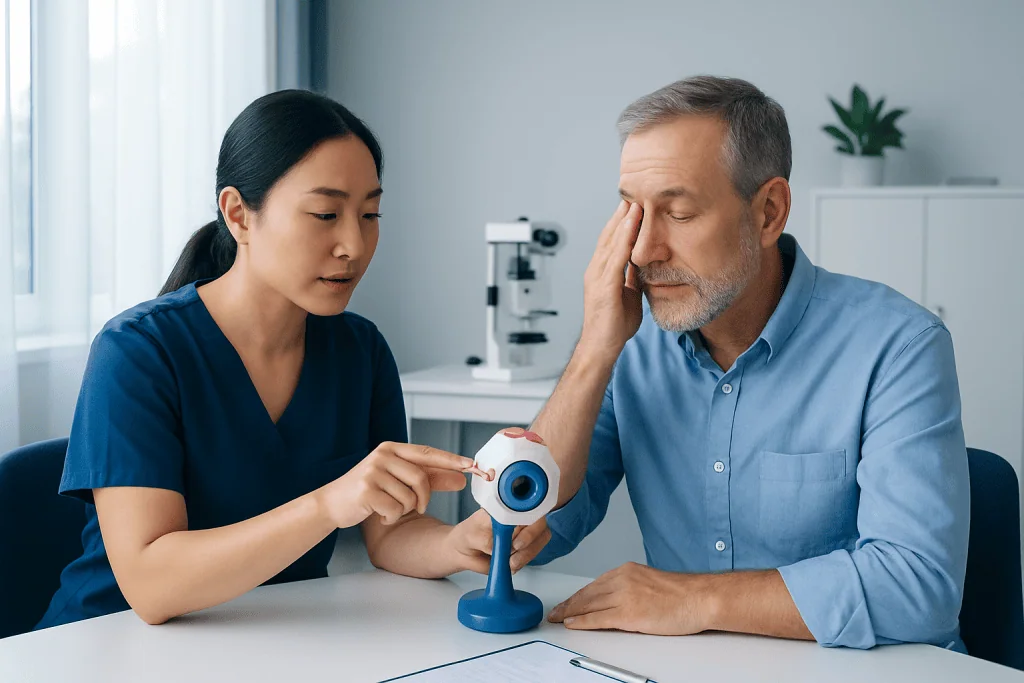
Eye scraping treatment is often performed as an outpatient procedure. The person remains awake, and anesthetic eye drops numb the surface of the eye. A small lid holder may be used to help keep the eye open. Patients may feel gentle pressure or awareness of touch, but sharp pain during the procedure is not expected.
The ophthalmologist examines the cornea and then uses a delicate instrument, sponge or other appropriate device to lift away loose or abnormal epithelial cells. If superficial keratectomy is being performed for a particular surface irregularity, the clinician may gently smooth the affected area. The exact method varies according to the condition being treated.
Afterward, antibiotic drops may be placed in the eye and a soft bandage contact lens may be fitted to protect the healing surface. The clinician provides instructions for prescribed drops, pain relief and follow-up. It is important not to rub the eye, remove the bandage lens unless instructed, or restart contact lens wear without medical approval.
People should arrange for someone else to take them home, as vision can be blurred and the eye may be sensitive after treatment. The eye care team will explain when it is safe to return to work, driving and other normal activities.
Benefits, Limits and Possible Risks
The potential benefit of eye scraping treatment is that it removes an unhealthy corneal surface and gives new epithelial cells an opportunity to heal in a more stable, even pattern. For the right condition, this may reduce repeated episodes of pain, improve comfort and support clearer vision once healing is complete. Results vary because the underlying cause of the corneal problem also affects long-term outcomes.
The procedure does not guarantee that symptoms will never return. For example, recurrent erosions can recur in some people, particularly where there is an inherited or ongoing corneal disorder. Ongoing management of dry eye, eyelid disease or other contributing factors may remain important after the procedure.
Possible risks include temporary pain, light sensitivity, tearing, blurred vision, delayed epithelial healing, infection, corneal haze and scarring. Serious complications are uncommon but can affect vision, which is why follow-up and correct use of prescribed medication are essential. The ophthalmologist will discuss the risks that are most relevant to the individual’s eye condition.
Acibadem International’s ophthalmology teams can evaluate corneal surface conditions and discuss appropriate procedural and non-surgical care for international patients at JCI-accredited hospitals.
How Long Does It Take to Recover From Corneal Scraping?
The outer corneal layer commonly begins to heal within a few days, and many people feel substantially more comfortable once the epithelium has closed. However, full recovery from corneal scraping is not identical for everyone. The treated area, the reason for treatment, the health of the cornea and whether additional smoothing or laser treatment was performed can all affect recovery time.
During the first several days, the eye may feel scratchy, watery and sensitive to light. A bandage contact lens is often kept in place until the ophthalmologist confirms that the surface has healed adequately. Vision may continue to fluctuate after the initial healing period while the corneal surface becomes smoother.
Follow-up appointments are an important part of recovery. They allow the clinician to check epithelial healing, remove or replace the bandage lens when appropriate, and identify early signs of infection or inflammation. People should use only the drops recommended by their eye specialist, attend scheduled reviews and ask before returning to contact lenses, swimming or strenuous activities.
Can I Watch TV After Superficial Keratectomy?
Watching television after superficial keratectomy is usually possible when the person feels comfortable, but it is often best to limit screen time during the first day or two. Bright screens, reduced blinking and visual effort can make dryness, light sensitivity or discomfort more noticeable while the corneal surface is healing.
Short periods of television viewing in a dim, comfortable environment may be better tolerated than prolonged viewing. Taking regular breaks, blinking consciously and avoiding screen brightness that causes discomfort can help. The person should not force the eye to work through significant pain or strain.
Instructions from the treating ophthalmologist should take priority, particularly if a bandage contact lens is in place or the procedure was combined with another treatment. If television viewing causes increasing pain, marked tearing or worsening blur, it is sensible to stop and contact the eye care team if symptoms do not settle.
How Painful Is Corneal Scraping?
Corneal scraping itself is generally not painful because numbing drops are used before treatment. Some people notice pressure, mild discomfort or a sensation that the eye is being touched. The anesthetic effect wears off after the procedure, and the first one to three days can be uncomfortable because the corneal surface contains many sensitive nerve endings.
Symptoms after the procedure may include burning, a foreign-body sensation, tearing, light sensitivity and eyelid spasms. The intensity differs between individuals and depends partly on the size of the treated area. A bandage contact lens, prescribed eye drops and clinician-recommended pain relief are commonly used to make recovery more manageable.
Severe pain that is increasing rather than gradually improving should not be ignored. It may indicate a healing problem, inflammation or infection and should be assessed promptly by an ophthalmologist. Patients should avoid using over-the-counter numbing eye drops unless specifically prescribed, as these can interfere with corneal healing.
How Long Is Vision Blurry After Superficial Keratectomy?
Blurry vision after superficial keratectomy is expected while the corneal epithelium regrows and the surface stabilizes. Vision may be noticeably hazy or variable during the first few days, especially with a bandage contact lens in place. Many people experience gradual improvement as the epithelial defect closes.
Clear, stable vision can take longer than the initial surface healing. It may take days to weeks depending on the underlying corneal problem, the extent of treatment and the presence of dry eye or pre-existing corneal irregularity. If vision was affected by a deeper scar or a condition not fully addressed by surface treatment, improvement may be limited.
People should not drive until they can see comfortably and safely and have been advised that it is appropriate to do so. Sudden reduction in vision, new floaters or flashes, increasing redness, pus-like discharge, or worsening pain should be reported urgently rather than waiting for the next routine appointment.
Frequently asked questions
Is eye scraping treatment the same as superficial keratectomy?
Eye scraping treatment is a broad, non-technical phrase that may refer to corneal epithelial debridement or superficial keratectomy. Both involve removing unhealthy tissue from the corneal surface, but superficial keratectomy may include additional smoothing or treatment of a specific superficial corneal problem. An ophthalmologist can explain the exact procedure being recommended.
How long does it take to recover from corneal scraping?
The corneal surface often closes within several days, although comfort and vision may improve gradually over a longer period. Recovery varies with the size of the treated area, the cause of the corneal problem and individual healing. Follow-up is needed to confirm that the epithelium has healed properly.
Can I watch TV after superficial keratectomy?
Television can usually be watched for brief periods when it feels comfortable, but screen use may worsen light sensitivity or dryness in the first days after treatment. Limiting viewing time, reducing screen brightness and taking breaks can help. The treating ophthalmologist’s specific instructions should be followed.
How painful is corneal scraping?
Numbing drops mean the procedure itself is usually not painful, although some pressure or touch may be felt. Afterward, burning, grittiness, tearing and light sensitivity are common for a few days while the surface heals. Increasing or severe pain should be reported promptly to the eye care team.
How long is vision blurry after superficial keratectomy?
Blurred or fluctuating vision is common for the first days after superficial keratectomy and may persist for days to weeks as the corneal surface stabilizes. The duration depends on the original condition and the extent of treatment. Worsening vision or a sudden change in sight requires prompt assessment.
What should be avoided after corneal scraping?
People should avoid rubbing the eye, using unapproved eye drops, swimming and returning to contact lenses until their ophthalmologist says it is safe. They should also avoid driving while vision is blurred or the eye is sensitive. Prescribed drops and follow-up visits are important for safe healing.
References
- American Academy of Ophthalmology
- National Eye Institute
- Mayo Clinic
- Merck Manual Consumer Version
This article is for general information only and is not a substitute for professional medical advice. Please consult a qualified doctor about your individual situation.
Explore treatments in Turkey — costs, top hospitals & a free quote
JCI-accredited · board-certified surgeons · reply within 24h