Fungal Acne Treatment: Diagnosis, Outlook, and Modern Treatment Approaches

“Fungal acne” usually refers to Malassezia folliculitis, a yeast-related inflammation of hair follicles. It often causes itchy, uniform small bumps or pustules on the chest, back, shoulders, forehead, or hairline.
Key Takeaways
- “Fungal acne” usually refers to Malassezia folliculitis, a yeast-related inflammation of hair follicles.
- It often causes itchy, uniform small bumps or pustules on the chest, back, shoulders, forehead, or hairline.
- Standard acne products or antibiotics may not help and can sometimes make the condition harder to control.
- Diagnosis is often clinical, but a dermatologist may use skin scraping, microscopy, or other tests when needed.
- Treatment may include topical or oral antifungal medicines plus changes in skin care, clothing, and sweat management.
- Medical review is important if the rash is persistent, spreading, painful, or repeatedly returning.
Fungal acne treatment focuses on treating an overgrowth of yeast in hair follicles, not typical acne bacteria. Most people improve with the right diagnosis, antifungal treatment, and simple skin-care changes that reduce heat, sweat, and irritation.
Overview: What fungal acne treatment involves
Fungal acne treatment usually means treating Malassezia folliculitis, a condition caused by an overgrowth of yeast that normally lives on the skin. Despite the common name, it is not the same as regular acne. Because the cause is different, the most effective treatment is often antifungal care rather than standard acne therapy.
This condition develops when yeast grows too much inside hair follicles, leading to many small, similar-looking bumps or pustules. It is more likely in warm, humid conditions and in people who sweat heavily, have oily skin, wear tight clothing, or have recently used antibiotics. The rash commonly appears on the chest, back, shoulders, neck, forehead, or along the hairline.
One reason fungal acne can be frustrating is that it may be mistaken for acne vulgaris or bacterial folliculitis. When the diagnosis is missed, people may continue using products that do not help, or they may receive antibiotics that disrupt the skin’s balance further. A clear diagnosis helps guide the right treatment plan and improves the outlook.
How to recognize fungal acne
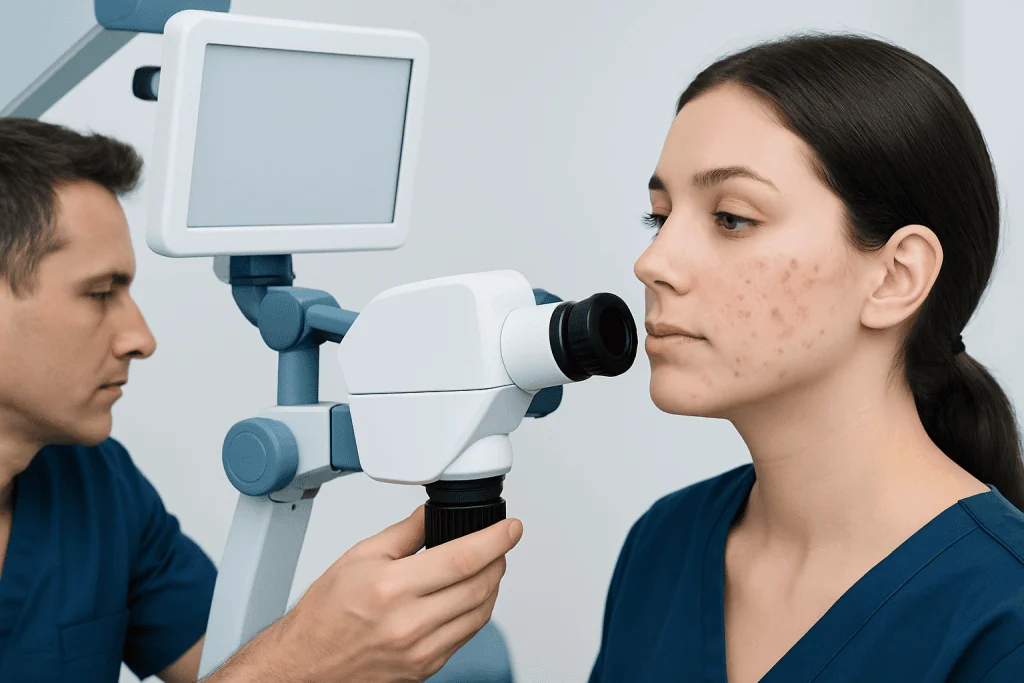
Fungal acne often causes clusters of very similar, small red bumps or white-tipped pustules. Unlike regular acne, the spots tend to be monomorphic, meaning they look much alike in size and shape. Itching is common and can be a helpful clue, especially when the rash flares after sweating or being in hot weather.
The distribution also matters. Many people notice breakouts on the upper trunk, shoulders, upper arms, neck, jawline, forehead, or scalp margin. These areas are rich in oil glands and more prone to heat and friction. The skin may feel rough or bumpy rather than deeply tender.
There are also some features that may point away from regular acne. Blackheads and deep cystic lesions are usually less prominent in fungal acne than in acne vulgaris. If a person has been treating presumed acne for weeks without improvement, or if the rash worsens with antibiotic use, clinicians may consider acne and yeast folliculitis as separate possibilities that need different management.
- Small, uniform papules or pustules
- Often itchy rather than painful
- Common on chest, back, shoulders, forehead, and hairline
- May flare with heat, humidity, exercise, or occlusive clothing
- Often does not respond well to usual acne treatments alone
Why it happens: causes and risk factors
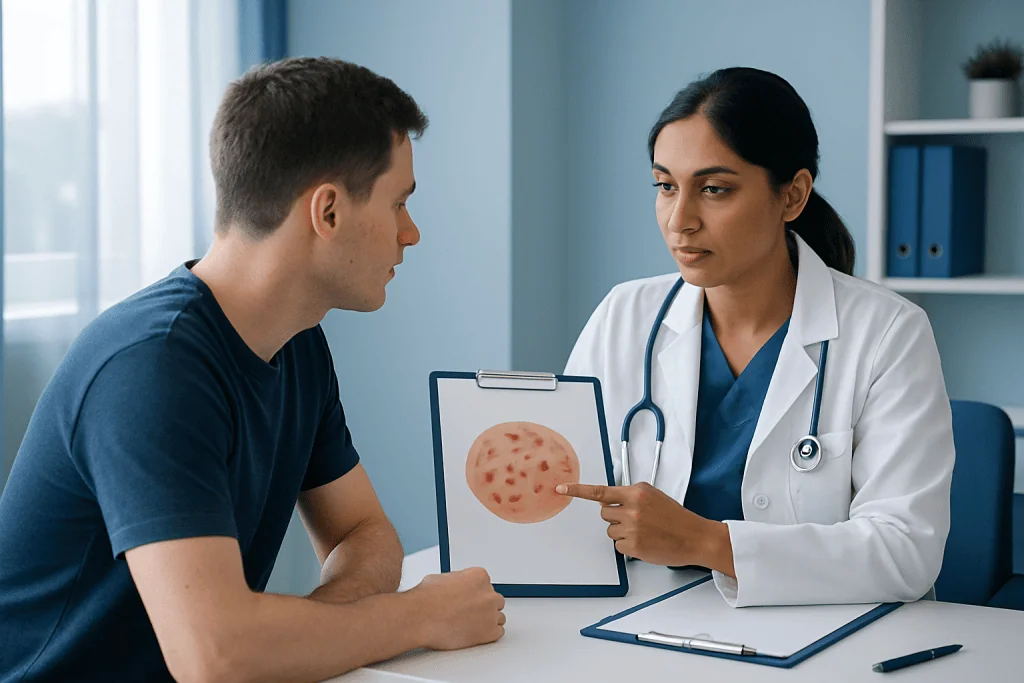
The yeast involved in fungal acne is usually from the Malassezia family, which is a normal part of the skin microbiome. Problems arise when the environment on the skin favors overgrowth inside follicles. Excess oil, sweat, trapped heat, friction, and occlusion can all create conditions in which yeast thrives.
Several risk factors can increase the chance of developing this condition. Recent or repeated antibiotic use is a well-known trigger because antibiotics can reduce competing bacteria on the skin. Oily or acne-prone skin, high humidity, intense exercise, tight athletic clothing, and heavy or greasy skin products may also contribute. In some people, immune system changes or underlying health conditions can make recurrent infections more likely.
It can overlap with other skin disorders, which is another reason expert assessment matters. For example, a person may have both yeast folliculitis and seborrheic dermatitis, since both involve Malassezia yeast. Others may have accompanying irritation, eczema, or bacterial folliculitis that needs a different treatment approach.
Diagnosis: how doctors confirm the cause
Diagnosis often starts with a careful skin examination and medical history. A dermatologist will usually ask where the rash appears, whether it itches, what treatments have already been tried, and whether there has been recent antibiotic use, sweating, gym exposure, or use of occlusive products. In many cases, the pattern and distribution strongly suggest Malassezia folliculitis.
When the diagnosis is uncertain, the doctor may recommend simple office-based tests. These can include examining skin scrapings or follicular contents under a microscope, taking a culture in selected situations, or performing other tests to rule out bacterial folliculitis, acne vulgaris, contact dermatitis, or other rashes. A biopsy is not always needed, but it may be considered if the presentation is unusual or persistent.
Accurate diagnosis matters because treatment differs from routine acne care. A person who keeps using only antibacterial acne washes or oral antibiotics may see little improvement. In some cases, clinicians may also review whether there are signs of broader skin inflammation that could benefit from a more comprehensive dermatology evaluation.
Modern treatment approaches for fungal acne
The main goal of fungal acne treatment is to reduce the yeast overgrowth in hair follicles and calm inflammation. Doctors may recommend topical antifungal treatments for milder or localized cases. These may include medicated creams, gels, or washes chosen according to the body area involved, skin sensitivity, and how widespread the rash is.
For more extensive, stubborn, or recurrent cases, a clinician may prescribe oral antifungal medicine. This is usually considered when the rash affects large areas of the chest or back, keeps coming back, or has not improved with topical treatment alone. Because oral antifungals can interact with other medicines and may not be suitable for everyone, they should be used under medical supervision.
Treatment plans often also address overlapping skin conditions. Some people have both acne and fungal folliculitis, so a dermatologist may suggest a balanced routine that targets each problem without over-irritating the skin. In selected cases, support from skin diseases treatment services can help when symptoms are persistent, mixed, or difficult to distinguish.
People should avoid self-prescribing strong medications or combining many products at once. Too many active ingredients can disrupt the skin barrier, increase dryness, and make the rash look worse. A simpler routine, guided by the diagnosis, is often more effective than trying multiple acne treatments without knowing the cause.
Skin care, prevention, and self-care
Daily habits can make a real difference in preventing flare-ups and supporting medical treatment. Gentle cleansing after sweating, changing out of damp workout clothes promptly, and choosing breathable fabrics may reduce the warm, moist environment that encourages yeast growth. People who exercise frequently may benefit from showering soon after activity rather than staying in tight clothing.
Skin products also matter. Heavy oils, very occlusive creams, and greasy hair products can worsen follicular blockage in some people, especially around the forehead, hairline, upper back, and shoulders. Non-comedogenic, fragrance-light products are often easier to tolerate. However, “non-comedogenic” does not always mean suitable for every person, so it helps to watch for patterns of flare-ups.
Those with recurrent symptoms should avoid overusing harsh scrubs, picking at bumps, or layering too many exfoliating acids. These steps can irritate the skin and do not remove the underlying yeast. If dandruff or scalp flaking is present at the same time, doctors may sometimes recommend coordinated care because controlling scalp yeast can support overall skin management. In some settings, patients with broader hairline or scalp involvement may also be assessed through hair loss treatment pathways when shedding or scalp irritation is a concern.
- Shower after sweating and dry the skin well
- Wear loose, breathable clothing when possible
- Avoid heavy oily products on acne-prone areas
- Use gentle cleansers and avoid over-exfoliating
- Follow the full course of prescribed treatment
- Seek review if the rash keeps returning
Outlook and what to expect over time
The outlook is generally good when fungal acne is correctly identified and treated. Many people notice improvement once antifungal treatment begins and triggers such as sweat retention, occlusive clothing, or certain products are addressed. The time to clear can vary depending on how widespread the rash is and whether there are other skin conditions present at the same time.
Recurrence can happen, especially in hot climates, during athletic training, or after future antibiotic courses. This does not necessarily mean treatment failed. Instead, it often means the skin environment is again favoring yeast overgrowth, and maintenance strategies or follow-up care may be needed.
Long-term control usually depends on having the right diagnosis, using treatment as directed, and adjusting routines that contribute to flare-ups. Near the end of care, some patients benefit from a review of prevention steps and whether they still need active medication. Acibadem International’s multidisciplinary specialists and JCI-accredited hospitals diagnose and treat skin conditions for international patients when expert assessment is needed.
When to seek medical care
Medical care is advisable if a rash that looks like acne is very itchy, appears suddenly in uniform clusters, involves large areas of the chest or back, or does not improve with basic skin care. A dermatologist should also assess symptoms that repeatedly return, worsen after antibiotics, or leave marks from scratching.
Prompt review is especially important if there is pain, significant redness, crusting, fever, drainage, or concern for another infection. These features can suggest bacterial folliculitis or a different skin problem that needs separate treatment. People who are pregnant, immunocompromised, or taking multiple medications should consult a qualified doctor before using prescription or oral antifungal medicines.
In-person evaluation can help avoid trial-and-error treatment and unnecessary irritation. It also allows clinicians to distinguish fungal acne from eczema, contact reactions, heat rash, and typical acne so that treatment matches the true cause.
Frequently asked questions
Is fungal acne really acne?
Not exactly. “Fungal acne” is a common name for Malassezia folliculitis, which is caused by yeast overgrowth in hair follicles rather than the main processes behind acne vulgaris. It can look similar to acne, but the cause and treatment are different.
What is the best fungal acne treatment?
The best fungal acne treatment depends on how widespread and persistent the rash is. Doctors often use topical antifungal products for mild cases and may prescribe oral antifungal medicine for more extensive or recurrent cases. The most important step is getting the diagnosis right before starting treatment.
Can acne antibiotics make fungal acne worse?
They can in some people. Antibiotics may change the balance of microorganisms on the skin, which can make yeast overgrowth more likely. If a person’s “acne” becomes itchier or more uniform while on antibiotics, a doctor may reassess the diagnosis.
How can someone tell fungal acne from regular acne?
Fungal acne often causes many small bumps or pustules that all look similar and may itch. Regular acne more often includes a mix of blackheads, whiteheads, inflamed pimples, and sometimes deeper nodules. Because the two can overlap, a dermatologist may be needed to confirm the difference.
Does fungal acne go away on its own?
Mild cases may improve if triggers are reduced, such as heat, sweat, and occlusive skin products. However, many cases persist or keep recurring without targeted antifungal treatment. If symptoms continue, medical assessment is recommended.
Can diet alone cure fungal acne?
Diet is not usually the main treatment. While overall skin health may benefit from balanced habits, fungal acne is primarily managed with antifungal treatment and changes that reduce sweat, friction, and follicle occlusion. A doctor can advise if any individual triggers seem relevant.
References
- American Academy of Dermatology
- National Health Service
- Merck Manual Professional Edition
- Mayo Clinic
- British Association of Dermatologists
This article is for general information only and is not a substitute for professional medical advice. Please consult a qualified doctor about your individual situation.
Acne in Turkey — costs, top hospitals & a free quote
JCI-accredited · board-certified surgeons · reply within 24h

More from the Health Library



Related Specialists
Assoc. Prof. Dr. Alper Karakuş
Cardiology
Dr. Güven Genç
Orthopedic Surgery & Traumatology
Dr. Azad Bairamovi
Inpatient Clinic Physicians Clinical Service
Dr. Hakan Erkman
Pediatrics